By Leo
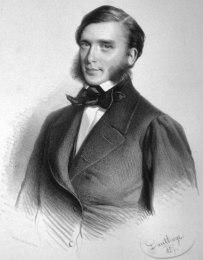
The Austrian writer, adventurer, and academic, Karl Ritter von Scherzer traveled the United States along with Moritz Wagner in 1852 and 1853. Their original German-language publication of Reisen in Nordamerika is free online through Google Books (image: wikimedia commons).
Chapter 21 of Wagner and Scherzer’s Reisen in Nordamerika in den Jahren 1852 und 1853 appeared on Chequamegon History in three posts in 2013. Chapter 22 continues the story, as Carl Scherzer describes his trip up the full length of the Brule River in September 1852, riding in a birchbark canoe guided by two La Pointe voyageurs: Souverain Denis and Jean Baptiste Belanger.
Chapter 22 lacks the variety and historical significance of chapter 21 (Ontonagon to the Mouth of the Bois-Brule), but even in Google-based translation, it maintains much of Scherzer’s beautiful (often comical) prose, that should be appreciated by readers with a fondness for canoeing. It also includes the lyrics of an authentic voyageur song that does not appear to be published anywhere else on the web.
Themes in this chapter also continue ideas explored in other Chequamegon History posts. If you wish to read more about the absolute misery encountered by inexperienced canoeists on the Brule, be sure to read the account of Lt. James Allen who accompanied Henry Schoolcraft to Lake Itasca in 1832. If reading Chapter 22 makes you think that mid 19th-century European travel writers superficially appreciated Ojibwe culture more than American writers, but that their romanticism contained the seeds of dangerously-racist ideas, be sure to check out J. G. Kohl’s Remarks on the Conversion of the Canadian Indians, another Google-aided German translation first published in English right here on Chequamegon History.
Enjoy:
XXII
A Canoe Ride through the Wisconsin Wilderness
The Rivière du Bois Brülé or Burnt Wood River (Indian: Wisakoda) has a rocky riverbed and runs east-southeast. Its serpentine curves are navigable close to 100 miles, nearly from the source to the mouth by canoes. It has 240 rapids, varying in length, alternating with smooth surface for a length of eighty miles. Most of the rapids have a one-foot, but many an eight to ten-foot slope. Four of them are so dangerous, they require portage, that is, they must be bypassed, and the boat and baggage are carried past the most dangerous points on land.
The width of the river changes tremendously. At its mouth, it is probably ninety feet wide, then sometimes narrows down to a few feet, and then expands just as quickly to the dimension of a considerable waterway. Its total slope from its source to its mouth in Lake Superior is about 600 feet. We therefore had the doubly-difficult task of overcoming river and the slope.
We took our frugal lunch of bacon and tea on a small mound of sand. We looked back and saw, probably for the last time in our eyes, but lasting forever in our memories, Lake Superior.
It should be noted that such letters are not uncommon in this great primeval forest, where bald towering tree trunks are more reliable postmen than the whims of hunting Indians, ignorant of their duties. Suddenly, Baptiste cried out, “Une lettre! Une lettre!” Mounted on a high pole, a letter hung wrapped in birch bark. It was addressed to a “Surveyor in the wilds of Lake Superior”–truly, an extended address! The letter was accompanied by a slip of paper, also in English, in which the readers, insofar as it did not concern them, were requested to leave it undamaged in its eye-catching position.
In winter, when Lake Superior is often unnavigable for months, the postal connection with La Pointe is an arduous forest path taking nine days to reach St. Croix Falls. Since it sometimes happens that the frivolous mix-bloods, growing weary of their postal duties hang their letters on the next branch and happily return to their favorite activity: hunting the wild forest thickets. The pack sits on the tree until a more-conscientious wanderer happens upon it. Thus, it takes three months to travel a road that would be covered in as many days in civilized area with modern transportation.
Birches (betula papyracea), elms, poplars, ash trees (fraxinus sambucifolia), and oak trees make up the bulk of these primeval forests. However, spruce, pine (pinus resinosa), firs, (abies balsamea and alba), cedars and juniper trees appear in such a pleasant mixture that their dark green forms a magnificent base note for the deciduous wood, as it bleaches golden in the autumn.
Within a half hour, the clear light-green water, 6 feet deep at the entrance, dropped to half a foot. From this, one may get a sense of the lightness of our birch-barked vehicle. In spite of the people, travel utensils, and provisions, probably amounting to 800 pounds of load, it glided gently, without even brushing the shallow riverbed.
The further we went up the river, the more virgin and primeval the forest, and the wilder and wilder the little waterway became. At places, tree trunks had fallen across the river and completely blocked our way. We had to take up the handy carpenter’s ax to cut a passage through. Under such navigational conditions, the oars lay quietly against the walls of the canoe, and long, hand-hewn poles were our only means of locomotion.
A heavy rain left us short on time to look for a bivouac. We spent the night in the woods under old spruce trees. Their trunks were more than 120 feet in height. Every night, we tied the thermometer to a tree branch out of the wind, and then recorded our observations in the morning. That was the only time we were able to maintain a regular hour of observation.
Friday, September 24, 53°F. Yesterday’s heavy rain has stopped, and as far as you can tell from under our green jungle canopy, the sky is quite clear and cloudless.
We continued the journey at 8 o’clock. At points, wind-broken spruce and beech hung from both sides, their still-green jewelry forming arcs of triumph across the river.
The splendorous color of the forests is enhanced by the mighty brush of autumn. You can already notice the work of this brilliant painter on the foliage of the oaks and elms. Only the stiff firs and ancient spruces, seen against the sky, allow the autumn storms to rush past without changing their defiant green.
We had a short portage to make, and a part of the provisions and effects had to be carried over the rapids. Landed at 12 o’clock for lunch. Our canoe was already severely damaged by the low water level and numerous rocky cliffs, and it began to fill with water. Now, all our luggage had to be brought to the shore and the empty boat had to be turned over to wrap the leaky areas watertight again.
For the whole afternoon’s journey, the same wild character of nature prevailed. Trees on opposite banks bent in pyramids and wrapped around each other at the summit. Sturdy roots of ash, elms, oaks having lost their balance, hung like an arched bridge over the surface of the water. All around, the eye sees the rugged beauty of the forest. Little has changed in nature or navigation in the two hundred years since the first missionary in a birch canoe passed through this wilderness.
At points, the thicket clears, the land becomes flatter, the river broadens, small lush archipelagoes rise, and the scenery gains the prestige of a modern park. In such areas, the wild rice (Zizania aquatica) comes into view. Along with hunting and fishing, it constitutes a staple food of the Indians. A marsh plant, it usually grows only in lowlands (sloughs), which are 8 to 10 inches under water for most of the year.
The harvest happens in the autumn, in a simple and effortless way. The Indians drive their slender canoes through the reeds into the middle of the rice fields. They bend the ears from both sides over the boat, and then beat out the fruit with fists and sticks, where it falls to the floor of the canoe. Most of the time, they roast the rice (Oumalouminee) and enjoy it boiled in water. Sometimes, however, when this seems too much trouble for them, the humble forest-dwellers are content to chew the raw fruit like kinikinik or smoking tobacco as a noonday meal.
When we asked Souverain how far we still had to go to the next portage, he replied that it might still be a distance of two pipes (deux pipes), by which he meant to say that we would arrive after the time in which one is able to smoke two pipes.
The black rocky bottom of the river makes the water so dark, it becomes very difficult to distinguish the sharp slightly-covered, rocks from the water, and so our boat received more than one jolt and leak. At half past four, we had to make a second portage of half a mile in length. Both the boat and the baggage had to be carried through the forest. We camped at the other end of the trail at the edge of a northern beech forest. Evening, 7 o’clock 48° F.
Saturday, 25th of September, 40° F. Heavily clouded horizon, windless, rainy. Our matches got wet and prevented us from starting a fire. Finally, a flint was found in a tin, but the gathered wood was green and wet, and took a long time to burn. After 7 o’clock, we set out. Exclusively hardwood vegetation, now, namely ash, elm, silver poplar and birch, which would seem to indicate a milder climate.
The remnants of Indian night camps are noticed at many points in the forest: the charred fire, the fresh tree-branches placed in the ground where the kettle hung above the flame, the dry wooden skeletons that were once wigwams.
Several jumbles of tree branches had to be chopped in half this morning with the ax in order to make a passage for us. Only half an hour after our departure from bivouac, we arrived at the third portage. Under heavy rain, we carried the effects through the forest on a trail that only occasionally hinted at ancient, long-weathered tracks. This time, the canoe could be pulled over the rapids, but only through a heroic decision of the two leaders to wade alongside it in the frosty, cold river. At 8:30, this painstaking portage was over, and the journey across the less-dangerous rapids continued in the canoe.
In the afternoon, more coniferous trees appeared, especially on the right bank. The rapids often continued for miles, and Souverain, the admiral of our birch-barked frigate, to whom was entrusted our destiny, had more than a hard row to hoe. Twice, shying away from the effort of cutting, we boldly passed over mighty tree trunks fallen into the river. Several times, our barge slid so narrowly under tree trunks hanging over the water there was scarcely enough space left us, lying with our backs against the bottom, to squeeze under with our slender canoe.
Despite the reappearance of softwood vegetation, the area visibly takes on a different character as it gradually changes from the hilly landscape of Lake Superior to the flat prairie ground of the West. The trees in the forest become less dense, while willows, cypresses, larches, and Thuja occidentalis are more frequently seen. On the banks, young saplings proudly take the place of the noble-stemmed spruce.
Based on our experiences so far, we would not recommend that future travelers rely too much on hunting and fishing while traveling through these wilderness areas. The almost incessant rapids give the river a current far too strong for it to be a popular habitat for fish, and the game is usually scanty along the shore. In addition, the gun often suffers much from the water, which the powerful sweep of the poles and paddles sends over the side of the canoe. Due to this moisture, which is almost unavoidable in such a small space, even the best-measured shots often fail.
Once, it was inspiring to see the keen-eyed Souverain pick out a water snipe among the bushes. Not knowing its mortal danger, it promenaded itself carelessly in search of food. We approached quietly with the boat, drawing near to fell the victim with the shotgun, and Souverain shot his enemy-snipe-weapon. The shot failed. A second and third had the same fate. The charges had been dampened by prolonged rain.
 (wikimedia) Wasserschnepfe is a generic German term for several species in the family Scolopacidae (snipes and sandpipers). Wilson’s Snipe (left) or the American Woodcock (right) are likely candidates for the suicidal Brule bird. Hypochondria was used as a synonym for depression in the 19th century–see the opening paragraph of Moby Dick for an example.
Quite remarkably, the poor animal had still not left its dangerous post, as if it were overpowered by melancholy, and would receive the mortal shot as a blessing. The fourth charge finally did its duty. The snipe staggered and fell dead in a nearby bush. She was haggard and skinny, and seemed to have truly suffered from hypochondria. In the evening, we shot a duck. General joy was had over their fatigue, and we lustily enjoyed a good evening meal.
In the final hours of the journey, the river assumes a regular, almost canal-like course, which for some miles continued in a straight line. The rapids become rarer, but the river is densely covered with rock, which hides itself under the smooth barren surface of the water. Surprised by nightfall, and in the deceitful twilight not daring to go further among the aforementioned jagged rocks, we bivouacked close to the shore in a flat, swampy area.
As a rule, since we were on the Bois-Brülé river, we drove for ten hours a day, from 7 o’clock in the morning until 5 o’clock in the evening, unless rain or canoe repairs prevented us. Every morning, before we left, we prepared our breakfast, and made a very short stop at lunchtime. We pitched our tent only at the resting hour of the evening, when possible on a hill in an area where the presence of numerous dry logs could suffice for preparing a comfortable night fire.
After the two voyageurs had cut down and brought in 12 to 18 pieces of spruce or birch trunks in the forest, they usually left it to us to keep the fire at proper heat. No sooner had our evening meal been consumed, which, like the selection at the court of an Irish emigrant’s table–one day bacon and tea, and the next day tea and bacon–the two voyageurs, fatigued by the hard work of the day, would fall asleep. Our traveling companion, wrapped in a thick buffalo robe, found no more attraction in this body-strengthening pleasure. So we were faced with a choice, stoke or freeze.
Every night, we would get up four or five times to set new tree trunks on the dying glow. And when the fire flared up again, we’d sit a while and watch the joyous flaming wave, and think of our friends across the ocean. And as this new flame intensified, new glowing thoughts and feelings rose in us again and again, for the fire possesses the same miraculous power as the sea or the blue sky. One can gaze into it for hours and yet cannot get enough of it. One laughs and cries, becomes sad then cheerful again. – The logs that we burned last night, certainly amounted to half a cord of wood!
Sunday, September 25, 5:30, snowfall. A good fire in front of our tent makes it easier for us to bear the cold and the bad weather. All night long, we heard the cries of many flocks of ducks moving cheerfully off to the west. In the forest, now, one hears only the lonely lamentations of a woodpecker, his flight inhibited and decrepit, he could not follow the young flyers and is left behind. The snowfall prevents the boat from popping up, and we are forced to wait for better weather in this swampy, frosty wilderness.
7 o’clock, 35° F. A shot was fired nearby. It was probably the hunting rifle of wandering Indians.
Around 9:30, a canoe came up with an Indian and his squaw (Indian woman). It was the postman of La Pointe who had picked up the letters in St Croix and was on the way home. As soon as he saw our camp, he stopped, got out, and he and his wife warmed themselves by our brightly-lit fire.
He was a poor, one-eyed devil. In his little boat he brought wild rice (folle avoine) tucked under animal skins, which he wished to exchange for resin to repair his damaged canoe. The shot we heard a few hours earlier fell from his shotgun, but the duck he aimed never did. The postman did not seem to be in a hurry. He talked to the voyageurs for more than an hour, then said good-bye and Boshu* to the fire’s warmth and to us.
[*Boshu, also bojoo or bojo, is undoubtedly a corruption of the French “Bon jour,” which is used by all Indian tribes on this side of the Mississippi for all kinds of greetings in the widest sense of the word. In general, the Chippewa language is teeming with English expressions, for which they have no name in their own language. The same is the case with the Indians of British Guiana, who have included many Spanish words in their language: cabarita, billy goat (Indian: cabaritü), sapatu, shoe (Indian zapato), aracabusca, firearm (Indian: arcabug). It deserves great attention at a time when we seem more inclined than ever to draw conclusions about the descent of peoples from certain similarities in languages. Comp. Dr. W. H. Brett, Dr. Thomas Jung, etc.]
11 o’clock in the morning. After the snow stopped, we quickly patched some areas on the boat, damaged by the sharp rocks. After a short snack of bacon and salt meat, we proceeded further up the river. We intended to continue, without further delay in a southwesterly direction, until dawn, hoping to escape this frighteningly-cold region.
The scenery and nature remained the same as yesterday. Hardwood, among which the American elm (ulmus americana) prevails. With its imposing height and rich crown of leaves, it is a major ornament of the American forests. With the shallow shores, rice marshes and trees hanging over the river under the weight of their leaves, our canoe laboriously sighs under its oppressive cargo. The rapids start again. The river is about 40 feet wide.
About 2:30, we passed through ten minutes of rapids, whose completion required the full effort of our two canotiers. In addition to the countless rocks, we passed through the lowest water levels, over uprooted trees that had fallen into the river. Our journey now resembled the pushing of a cart than it did the light gliding of a birch canoe. It was a fight with the water and nature. We were in danger of wounds to our heads and eyes, passing close under the wild bushy oaks and spruces that jutted into the water.
The landscape afforded variety of rich, picturesque views. Every bend, every new opening, showed the visitor a new image. At times, the river extended to the breadth of a lake, and cedars, cypresses, thujas, and all the green foliage of the swamp vegetation becomes visible. Where the rapids stop, the mirror-clear, calm water comes alive with trout and swimming birds. All at once, however, the picture will close, and the two shores form an incessantly-bright green alley, through which the smooth river stretches like a long white vein of silver.
By evening, our little boat was suffering greatly from the incoming cold. At sunset, we camped on the so-called Victory Grounds (pakui-aouon). It is a cleared piece of forest, about 40 feet above the river, that forms a kind of plateau, upon which bloody battles must have taken place in former centuries between the Sioux and Chippewas.
The cause of the hatred between these two tribes of Indians remains an object of research. However, one only needs to mention the name one tribe, to a person of the other in order to provoke his rage. Against this, even the hatred of the Czechs, who in the blessed year of Revolution wished to devour all of Germany, pales in comparison. For as often as the Sioux come into contact with Chippewa Indians, they will certainly commit a murder, because according to their legal concepts, it is their duty to scalp as many Chippewas as possible.
In the evening, when the tent is pitched, the night’s wood is felled and carried in from the forest, the fire is lighted and a small meal is prepared and consumed, the four of us would sit still for a while around the warming fire. We would listen to the voyageurs tell us about their experiences and destinies, and about the savagery of the whites and the gentleness of the Indians. Sometimes, they also sing songs that have strangely found their way from the home of the troubadours to these soundless primeval forests of the north*. Here we repeat one that Jean Baptiste sang out this evening with much emotion, as he lay carelessly, disregarding the flickers of the burning fire:
Chanson canadienne
(Canadien song)
Buvons tous le verre à la main,
Buvons du vin ensemble;
Quand on boit du vin sans dessein,
Le meilleur n’en vaut guère.
Pour moi je trouve le vin bon,
Quand j’en bois avec ma Lison.
(Let’s drink down the glasses, in our hands,
Let’s drink wine together;
When you drink wine without purpose,
Even the best is not worth it.
For me, I find the wine tastes good,
When I drink with my Lison.)
Depuis longtemps que je vous dis:
Belle Iris je vous aime,
Je vous aime si tendrement,
Soyez moi donc fidèle,
Car vous auriez en peu de temps,
Un amant qui vous aime.
(For a long time I have been telling you:
Beautiful Iris I love you,
I love you so dearly,
Be faithful to me,
For in a short time you will have,
A lover who loves you.)
Belle Iris, de tous vos amants
Faites une différence,
Je ne suis pas le plus charmant
Mais je suis le plus tendre.
Si j’étais seul auprès de vous,
Je passerais les moments les plus doux.
(Beautiful Iris, of all your lovers
Make a difference,
I am not the most charming
But I am the most tender.
If I were alone with you,
I would have the sweetest moments.)
Allons donc nous y promener,
Sous ces sombres feuillages,
Nous entendrons le rossignol chanter
Qui dit dans son langage,
Dans son joli chant d’oiseau,
Adieu amants volages.
(Let’s go for a walk,
Under the dark foliage,
We will hear the nightingale
Who sings in his language,
In his pretty bird song,
Farewell lovers.)
“Ah! rendez-moi mon coeur,
Maman me le demande.”
“”Il est à vous, si vous, pouvez le reprendre.
Il est confondu dans le mien,
Je ne saurais lequel est le tien.””
(“Ah! Give me back my heart,
Mother asks me.”
“It’s yours, if you can, take it back.
It is mixed up with mine,
I will not know which is yours.”)
[*It is a common observation that the painted native forest dwellers of America are not as eloquent as their much-simpler dressed German counterparts. Although we passed through the forests of Wisconsin, Missouri, and Ohio in all seasons, we never heard as beautiful and funny singing as in the German hall. It is as if nature wanted to compensate the German forest singer for his lack of splendor through the richer gift of song. Comp. Franz v. Neuwied and Agassiz, Lake superior etc., p. 68 u. 382, respectively.]
Monday, September 27th, 35°F. Sky is completely changed, haunting cold. The snow began to fall so thickly, we had to stop again, after a short time, to build an invigorating fire in a cedar forest amidst swamp and morass. But when the flame began to grow, its warmth reached the snowy branches of the cedar trees. The snow turned to water and fell upon us as heavy rain. We were all thoroughly soaked, and the fingers of the two canoe handlers were so frozen by the biting snow they could not paddle the ship. So we sought, as well as it was possible under such unfavorable weather conditions, to warm ourselves, and finally resumed our journey at noon under snow, rain, and a sharp north wind.
12 o’clock, 42°F. Soon after our embarkation, we had to make a small portage, and happily bypassed La Clef de Brülé, a number of rapids, which in their dangerous places are called by the voyageurs “The Key to the River”.
Cedarwood now grows almost exclusively on both banks, down to the river’s edge. They sometimes seem so harshly thrown over one another that the canoe can pass through only with difficulty.

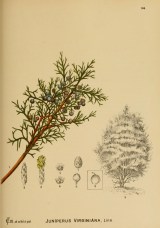 “Cedar,” used generically on today’s Brule River could only mean the Whitecedar or Arbor Vitae Thuja occidentalis (top). Curiously, however, Scherzer specifically distinguishes Thuja from Juniperus virginiana or redcedar (bottom) and describes the latter as more common, even though J. virginiana is not found this far north.
2:30 48°F. The snowflakes have changed to raindrops with the increasing temperature. Gradually, the rain stopped, and there was overcast, but rain-free weather. We now reached the Campement des Cedres, the only place up to the source of the river, where one still finds enough wood to prepare a night fire as all tree species except cedars (juniperus virginiana) are now becoming sparse along the shores. The discomfort of travel is now joined by a feeling of an unshakeable cold.
We therefore resolved to reach the navigable end of the Bois Brülé river that evening, and our captains endeavored to reach it before nightfall.
The rapids had now stopped, but another no-less uncomfortable and dangerous guest turned against us. The bushes of alders (alnus incana), willows, berberis, etc. grew on both banks. In their undisturbed growth, they had become so impenetrable that at the first sight of these thousands of closely intertwined branches, we often thought it impossible to break through with a canoe. The river was completely invisible in these thick, shady hangings, and hoe, pole, and fists had to be activated to fight all these natural hindrances.
Sometimes, we could only pass through horizontally, with our heads back to the bottom of the canoe. Closing our eyes to the relentless branches, we completely abandoned ourselves to the care of the brave Souverain. His face and hands scratched by the tiny branches, he undauntedly strove forward with unspeakable effort. Only a few times, when these forest barricades grew too overpowering, we heard a half-desperate, “mais c’est impossible!”
This wild overgrowth of the two banks, which gave our boat journey more of a character of first voyage of discovery than that of following a well-trodden path, can only be explained by the circumstance that the river is only seldom traveled up to its source. Earlier, when La Pointe was the Fur Company’s trading post, several hundred canoes loaded with commodities traveled this route every year, and from there they crossed to the various trading places of Upper Mississippi. But since Indians, forest animals and fur traders have moved westward, the cheerful waters of the Bois Brülé often trickle by, through entire seasons, without being cut by the keel of a boat, and the lush vegetation of its shores is free to reach across and embrace in wild passion.
Around 5 o’clock, we found the water of the river so low in several places that we decided to give some relief to the canoe by continuing the rest of the journey to the source of the river on foot. We walked back a mile and a half along a forest path, under the most unfavorable conditions. Our bodies wrapped from head to toe in India rubber, we sat with our travel companions against the moving forest, while the two voyageurs with canoe and effects followed the course of the river to meet us again at the grand portage.
Hardly could a hike offer more variety. Without the slightest indication of the path to be taken by the usual old footprints and tree cuts, we fought thorn bushes through deep snow, then passed through wild grain as tall as man, swiftly mowing it under our boots. In the hurry to disembark, we left our compass in the boat, so we could only guess what direction we should start navigating to find the so-called “Great Carrying Place.”
We wandered the wilderness, sweaty and fatigued, unable to move with any speed. The night was already falling, and as our innumerable “hallos,” went unanswered by our captain, we fell silent in the solitude of the forest, coming to terms with the idea of spending the night in these cold, fever-inducing swamps. All of the sudden, the voices of the voyageurs resounded like a hallelujah. We had to be very close to them, so we gained fresh courage against the complaints of pressing each step forcibly through dense undergrowth of thorny shrubs.
Drenched and chilled, we finally reached the Portage on a hill above some young cedars, and found the Voyageurs already occupied with the clearing and patching of the canoe. Unlike ourselves, our travel companion and the two Canadians had no rain-resistant rubber outfits, and were even more exposed to the cold, wet weather. For a time, the shivering appearance of our companion made us fear for his health.
In addition, we soon learned of a new misfortune. The snow cover and lack of wood in the vicinity prevented us from pitching our tent preparing a good fire as fast as our condition might desire. Besides, all our packs had gotten wet, and the provisions were in a poor state of edibility.
Our first concern, when we finally succeeded in pitching the tent and building a fire, was to dry our underwear and garments. All around us, hanging from tree branches and ropes were scattered cloths, spread out and drained of color. In our haste to remove the uncomfortable liquid from our needed garments through the warming power of the flame, we brought them into too-close contact with the wildly-flickering fire. Regrettably, they were soon covered in traces of scorch marks.
Nothing in our preceding traveling conditions had so deeply embittered us or made us as morose as these recent events. It is true that none of us complained, but each man stood in perfect silence before the burning logs, and regrettably stared at whatever soaked garment he was holding in his outstretched arms before the drying glow. Our medicines in vulgar condition, and our books, writings, documents, and physical instruments, all partially corrupted or totally broken, there was not a single piece of our effects which did not bear some lasting trace of damage.
The only consolation was that the snowstorm ended, and the overcast sky dissipated into a bright, starry, moonlit night, which made the prospect of a more favorable morning and forgetting the troubles of today, less and less difficult to fathom.
A short distance from the Portage is the inconspicuous source of the Bois-Brule River, in the marshes all around.* Only a single small stream pours into it during its long, winding course to Lake Superior. The Campement du Portage, where the travelers usually camp, is situated on a small hill, adorned with a serene cedar and spruce approach. While it may present a charming bivouac during a pleasant, warmer season. The eerie conditions under which we spent the night on the cold, damp ground could not possibly give us an idea of their summer loveliness.
[*The water of the Bois-brule River is about 12-14° Fahrenheit cooler than that of the La Croix River, for which may be explained by its forest-shaded banks being almost inaccessible to sunbeams, as well as its proximity to Lake Superior.]
In winter, when the river freezes along its entire length, it must be a marvelous sight: the wild rapids suddenly frozen by the harsh power of frost, and transformed into the strangest shapes and ice formations.
S.
By Leo
In April, the Supreme Court heard arguments in the case Department of Commerce v. New York and could render a decision any day on whether or not the 2020 federal census should include a question asking about citizenship status. In January, a Federal District Court in New York ruled that commerce secretary, Wilbur Ross, violated the law by pushing for that question.
Those in agreement with the District ruling suggest that the Trump administration wants to add the question as a way of discouraging immigrants from participating in the census, thereby diminishing the political power of immigrant communities. This, they say, would violate the Constitution on the grounds that the census must be an “actual enumeration” of all persons within the United States, not only citizens.
Proponents of the citizenship question counter that citizenship status is a perfectly natural question to ask in the census, that any government would want to know how many citizens it has, and that several past iterations of the 10-year count have included similar questions.
It remains to be seen how the Supreme Court will rule, but chances are it will not be the last time an issue of race, identity, or citizenship pops up in the politics of the census. From its creation by the Constitution as a way to apportion seats in congress according to populations of the states, the count has always begged tricky questions that essentially boil down to:
Who is a real American? Who isn’t? Who is a citizen? Who is three-fifths of a human being? Who might not be human at all? What does it mean to be White? To be Colored? To be civilized? How do you classify the myriad of human backgrounds, cultures and stories into finite, discrete “races?”
The Civil War and Fourteenth Amendment helped shed light on some of these questions, but it would be a mistake to think that they belong to the past. The NPR podcast Codeswitch has done an excellent series on census, and this episode from last August gives a broad overview of the history.
Here at Chequamegon History, though, we aren’t in the business broad overviews. We are going to drill down right into the data. We’ll comb through the 1850 federal census for La Pointe County and compare it with the 1860 data for La Pointe and Ashland Counties. Just for fun, we’ll compare both with the 1855 Wisconsin State Census for La Pointe County, then double back to the 1840 federal census for western St. Croix County. Ultimately, the hope is to help reveal how the population of the Chequamegon region viewed itself, and ultimately how that differed from mainstream America’s view. With luck, that will give us a framework for more stories like Amorin’s recent post on the killing of Louis Gurnoe.
Background
 Judge Daniel Harris Johnson of Prairie du Chien had no apparent connection to Lake Superior when he was appointed to travel northward to conduct the census for La Pointe County in 1850. The event made an impression on him. It gets a mention in his short memorial biography in the 1902 Proceedings of the State Bar Association.
Two years after statehood, Lake Superior’s connection to the rest of Wisconsin was hardly existent. This was long before Highways 51 and 53 were built, and commerce still flowed west to east. Any communication to or from Madison was likely to first go through Michigan via Mackinaw and Sault Ste. Marie, or through Minnesota Territory via St. Paul, Stillwater, and Sandy Lake. La Pointe County had been created in 1845, and when official business had to happen, a motley assortment of local residents who could read and write English: Charles Oakes, John W. Bell, Antoine Gordon, Alexis Carpentier, Julius Austrian, Leonard Wheeler, etc. would meet to conduct the business.
It is unclear how much notice the majority Ojibwe and French-patois speaking population took of this or of the census generally. To them, the familiar institutions of American power, the Fur Company and the Indian Agency, were falling apart at La Pointe and reorganizing in St. Paul with dire consequences for the people of Chequamegon. When Johnson arrived in September, the Ojibwe people of Wisconsin had already been ordered to remove to Sandy Lake in Minnesota Territory for their promised annual payments for the sale of their land. That fall, the government would completely botch the payment, and by February, hundreds of people in the Lake Superior Bands would be dead from starvation and disease.
So, Daniel Johnson probably found a great deal of distraction and anxiety among the people he was charged to count. Indians, thought of by the United States as uncivilized federal wards and citizens of their own nations, were typically not enumerated. However, as I wrote about in my last post, race and identity were complicated at La Pointe, and the American citizens of the Chequamegon region also had plenty to lose from the removal.
Madison, for its part, largely ignored this remote, northern constituency and praised the efforts to remove the Ojibwe from the state. It isn’t clear how much Johnson was paying attention to these larger politics, however. He had his own concerns:


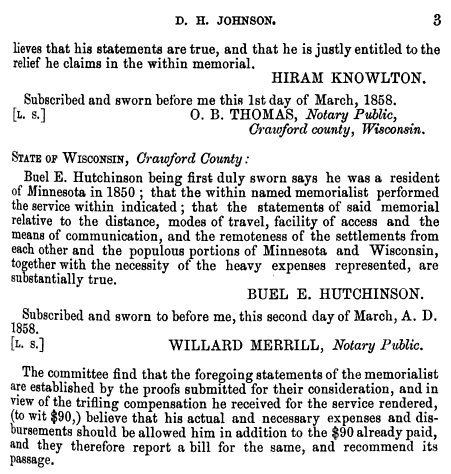
House Documents, Volume 119, Part 1. U.S. Government Printing Office, 1859. Google Books.
So, in “that thinly settled and half civilized region,” Johnson only found a population of about 500, “exclusive of Indians.” He didn’t think 500 was a lot, but by some counts, that number would have seemed very high. Take the word of a European visitor to La Pointe:
Among 200 Indians, only a few white families live there. One of the boatmen gave us a name, with which we found Mr. Austrian.
And, from this Mr. Austrian, himself:
There were only about 6 white American inhabitants on the Island, about 50 Canadian Frenchmen who were married to squaws, and a number of full blooded Indians, among whom was chief Buffalo who was a descendant of chiefs & who was a good Indian and favorably regarded by the people.
~Joseph Austrian, Brother of Julius and La Pointe resident 1851-52
Who lived around La Pointe in 1850?
In her biography, William W. Warren: the Life, Letters, and Times of an Ojibwe Leader, Theresa Schenck describes the short life of an ambitious young man from La Pointe. William Whipple Warren (1825-1853) grew up on the Island speaking Ojibwe as his first language. His father was a Yankee fur trader from New York. His mother was a daughter of Michel and Madeline Cadotte. In his famous History of the Ojibways Warren describes the Ojibwe as people with whom he readily claims kinship, but he doesn’t write as if he is an Ojibwe person himself. However, he helped interpret the Treaty of 1847 which had definitively made him an Indian in the eyes of the United States (a fact he was willing to use for economic gain). Still, a few years later, when he became a legislator in Minnesota Territory he dismissed challenges to his claims of whiteness.
If he were alive today, Warren might get a chuckle out of this line from the South African comedian Trevor Noah.
People mocked me. Gave me names like mixed breed, half caste — I hate that term ‘half’. Why half? Why not double? Or twice as nice, I don’t know.
— Trevor Noah
William Warren did not see himself as quite the walking contradiction we might see him as today. He was a product of the time and place he came from: La Pointe. By 1850, he had left that place, but his sister and a few hundred of his cousins still lived there. Many of them were counted in the census.
What is Metis?
Half-breeds, Mixed-bloods, Frenchmen, Wiisakodewininiwag, Mitif, Creoles, Metis, Canadiens, Bois Brules, Chicots, French-of-the-country, etc.–at times it seems each of these means the same thing. At other times each has a specific meaning. Each is ambiguous in its own way. In 1850, roughly half the families in the Chequamegon area fit into this hard-to-define category.


Kohl, J. G. Kitchi-Gami: Wanderings around Lake Superior. London: Chapman and Hall, 1860. pg. 260-61.
We were accompanied on our trip throughout the lakes of western Canada by half-Indians who had paternal European blood in their veins. Yet so often, a situation would allow us to spend a night inside rather than outdoors, but they always asked us to choose to Irish camp outside with the Indians, who lived at the various places. Although one spoke excellent English, and they were drawn more to the great American race, they thought, felt, and spoke—Indian! ~Carl Scherzer
In describing William Warren’s people, Dr. Schenck writes,
Although the most common term for people of mixed Indian and European ancestry in the nineteenth century was “half-breed,” the term “mixed blood” was also used. I have chosen to use the latter term, which is considered less offensive, although biologically inaccurate, today. The term “métis” was not in usage at the time, except to refer to a specific group of people of mixed ancestry in the British territories to the north. “Wissakodewinini,” the word used by the Ojibwe, meant “burned forest men,” or bois brulés in French, so called because half-breeds were like the wood of a burned forest, which is often burned on one side, and light on the other (pg. xv).
Schenck is correct in pointing out that mixed-blood was far more commonly used in 19th-century sources than Metis (though the latter term did exist). She is also correct in saying that the term is more associated with Canada and the Red River Country. There is an additional problem with Metis, in that 21st-century members of the Wannabe Tribe have latched onto the term and use it, incorrectly, to refer to anyone with partial Native ancestry but with no affiliation to a specific Indian community.
That said, I am going to use Metis for two reasons. The first is that although blood (i.e. genetic ancestry) seemed to be ubiquitous topic of conversation in these communities, I don’t think “blood” is what necessarily what defined them. The “pure-blooded French Voyageur” described above by Kohl clearly saw himself as part of Metis, rather than “blanc” society. There were also people of fully-Ojibwe ancestry who were associated more with Metis society than with traditional Ojibwe society (see my post from April). As such, I find Metis the more versatile and accurate term, given that it means “mixed,” which can be just as applicable to a culture and lifestyle as it is to a genetic lineage.
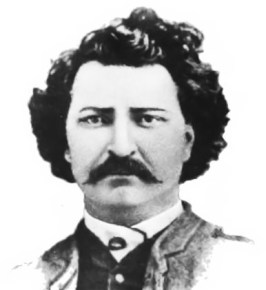
One time Canadian pariah turned national hero, Louis Riel and his followers had cousins at La Pointe (Photo: Wikipedia)
The second reason I prefer Metis is precisely because of the way it’s used in Manitoba. Analogous to the mestizo nations of Latin America, Metis is not a way of describing any person with Native and white ancestry. The Metis consider themselves a creole-indigenous nation unto themselves, with a unique culture and history. This history, already two centuries old by 1850, represents more than simply a borrowed blend of two other histories. Finally, the fur-trade families of Red River came from Sault Ste. Marie, Mackinac, Grand Portage, and La Pointe. There were plenty of Cadottes, Defaults, Roys, Gurnoes, and Gauthiers among them. There was even a Riel family at La Pointe. They were the same nation
Metis and Ojibwe Identity in the American Era
When the 1847 Treaty of Fond du Lac “stipulated that the half or mixed bloods of the Chippewas residing with them shall be considered Chippewa Indians, and shall, as such, be allowed to participate in all annuities which shall hereafter be paid…” in many ways, it contradicted two centuries of tradition. Metis identity, in part, was dependent on not being Indian. They were a minority culture within a larger traditional Anishinaabe society. This isn’t to say that Metis people were necessarily ashamed of their Native ancestors–expressions of pride are much easier to find than expressions shame–they were just a distinct people. This was supposedly based in religion and language, but I would argue it came mostly from paternal lineage (originating from highly-patriarchal French and Ojibwe societies) and with the nature of men’s work. For women, the distinction between Ojibwe and Metis was less stark.
The imposition of American hegemony over the Chequamegon region was gradual. With few exceptions, the Americans who came into the region from 1820 to 1850 were adult men. If new settlers wanted families, they followed the lead of American and British traders and married Metis and Ojibwe women.
Still, American society on the whole did not have a lot of room for the racial ambiguity present in Mexico or even Canada. A person was “white” or “colored.” Race mixing was seen as a problem that affected particular individuals. It was certainly not the basis for an entire nation. In this binary, if Metis people weren’t going to be Indian, they had to be white.
The story of the Metis and American citizenship is complicated and well-studied. There is risk of overgeneralizing, but let’s suffice to say that in relation to the United States government, Metis people did feel largely entitled to the privileges of citizenship (synonymous with whiteness until 1865), as well as to the privileges of Ojibwe citizenship. There wasn’t necessarily a contradiction.
Whatever qualms white America might have had if they’d known about it, Metis people voted in American elections, held offices, and were counted by the census.
Ojibwe “Full-bloods” and the United States Census
Representatives and direct Taxes shall be apportioned among the several States which
may be included within this Union, according to their respective Numbers, which shall be determined by adding to the whole Number of free Persons, including those bound to Service for a Term of Years, and excluding Indians not taxed, three fifths of all other Persons. The actual Enumeration shall be made within three Years after the first Meeting of the Congress of the United States, and within every subsequent Term of ten Years, in such Manner as they shall by Law direct.~Excerpt from Article I Section II, U. S. Constitution
As I argued in the April post, our modern conception of “full-blood” and “mixed-blood” has been shaped by the “scientific” racism of the late 19th and early 20th centuries. The distinction, while very real in a cultural sense, was not well-grounded in biology.
The relationship of Indians (i.e. full-bloods or those living a traditional lifestyle) to American society and citizenship was possibly more contradictory then that of the Metis. In one sense, America saw Indians as foreigners on their own continent: either as enemies to be exterminated, or as domestic-dependent ward nations to be “protected.” The constitutional language about the census calls for slaves to be counted as three-fifths of a person. It says Indians shouldn’t be counted at all.
In another sense, however, the path to personhood in America was somewhat clearer for Indians than it was for African Americans. Many New England liberals saw exodus to Liberia as the only viable future for free blacks. These same voices felt that Indians could be made white if only they were separated from their religions, cultures, and tribal identities. In 1834, to avoid a second removal, the Brothertown Indians of Wisconsin petitioned congress for citizenship and the termination of collective title to their tribal lands. In 1839, their request was granted. In the eyes of the law, they had effectively become white. Other communities would follow suit. However, most Native people did not gain any form of American citizenship until 1924.
How did that play out for the Ojibwe people of Chequamegon, and how did it impact the 1850 census? Well, it’s complicated.
Race, the Census, and Classifying Households
The enumeration forms Daniel H. Johnson carried to La Pointe had more rows and columns than ever. The Seventh Census was the first to count everyone in the household by name (previous versions only listed the Head of Household with tally marks). It was also the first census to have a box for “color.” Johnson’s choices for color were “white,” “black,” and “mulatto,” forcing him to make some decisions.
He seems to have tried to follow the Indians not taxed clause strictly. 40-50% of households in the region were headed by a full-blood Ojibwe person, possibly only two of them were enumerated. You won’t find Chief Buffalo, Makadebinesi (Blackbird), Oshkinaawe, Omizhinaawe, Edawegiizhig, and their immediate families in the 1850 census. Jechiikwii’o (often called Little Buffalo) is not in the document, even though he was an early Catholic convert, dressed in “white” clothing, and counted more Metis Ojibwe among his followers than full-bloods. However, his son, Antoine Buffalo Sr. (Antoine Jachequaon) is counted. Antoine, along with George Day, were counted as white heads of household by the census, though it is unclear if they had any European ancestry (Sources conflict. If anyone has genealogical information for the Buffalo and Day families, feel free to comment on the post). A handful of individuals called full-bloods in other sources, were listed as white. This includes 90-year old Madeline Cadotte, Marie Bosquet, and possibly the Wind sisters (presumably descendants of Noodin, one of the St. Croix chiefs who became Catholic and relocated to La Pointe around this time). They were married to Metis men or lived in Metis households. All Metis were listed as white.
Johnson did invent new category for five other Ojibwe people: “Civilized Indian,” which he seemed to use arbitrarily. Though also living in Metis households, Mary Ann Cadotte, Osquequa Baszina, Marcheoniquidoque, Charlotte Houle, and Charles Loonsfoot apparently couldn’t be marked white the way Madeline Cadotte was. These extra notations by Johnson and other enumeration marshals across the country are why the Seventh Federal Census is sometimes referred to as the first to count Native Americans.

So, out of 470 individuals enumerated at La Pointe and Bad River (I’ve excluded Fond du Lac from my study) Johnson listed 465 (99%) as white. By no definition, contemporary or modern, was the Chequamegon area 99% white in 1850. The vast majority of names on the lines had Ojibwe ancestry, and as Chippewas of Lake Superior, were receiving annuities from the treaties.
There were a few white American settlers. The Halls had been at La Pointe for twenty years. The Wheelers were well-established at Odanah. Junius and Jane Welton had arrived by then. George Nettleton was there, living with a fellow Ohioan James Cadwell. The infamous Indian agent, John Watrous, was there preparing the disastrous Sandy Lake removal. Less easy to describe as American settlers, but clearly of European origins, Fr. Otto Skolla was the Catholic priest, and Julius Austrian was the richest man it town.
There were also a handful of American bachelors who had drifted into the region and married Metis women. These first-wave settlers included government workers like William VanTassel, entrepreneurs like Peter VanderVenter, adventurers with an early connection to the region like Bob Boyd and John Bell, and homesteaders like Ervin Leihy.
It is unclear how many of French-surnamed heads of household were Chicots (of mixed ancestry) and how many were Canadiens (of fully-French ancestry). My sense is that it is about half and half. Some of this can be inferred from birthplace (though a birthplace of Canada could indicate across the river at Sault Ste. Marie as easily it could a farm in the St. Lawrence Valley). Intense genealogical study of each family might provide some clarifications, but I am going to follow Kohl’s voyageurs and not worry too much about it. Whether it was important or not to Jean Baptiste Denomie and Alexis Carpentier that they had no apparent Indian ancestry and that they had come from “the true homeland” of Quebec, for all intents and purposes they had spent their whole adult lives in “the Upper Country,” and their families were “of the Country.” They were Catholic and spoke a form of French that wasn’t taught in the universities. American society would not see them as white in the way it saw someone like Sherman Hall as white.
So, by my reckoning, 435 of the 470 people counted at La Pointe (92.5%) were Metis, full-blood Ojibwe living in Metis households, or Canadians in Metis families. Adding the five “Civilized Indians” and the six Americans married into Metis families, the number rises to 95%. I am trying to track down accurate data on the of Indians not taxed (i.e. non-enumerated full-bloods) living at or near La Pointe/Bad River at this time. My best estimates would put it roughly the same as the number of Metis. So, when Johnson describes a land with a language and culture foreign to English-speaking Americans, he’s right.
Birthplace, Age, and Gender
Ethnic composition is not the only data worth looking at if we want to know what this area was like 169 years ago. The numbers both challenge and confirm assumptions of how things worked.
Let’s take mobility for example:

The young voyageur quoted by Kohl may have felt like he didn’t have a home other than en voyage, but 86% of respondents reported being born in Wisconsin. Except for ten missionary children, all of these were Metis or “Civilized Indian.” Wisconsin could theoretically mean Lac du Flambeau, Rice Lake, or even Green Bay, this but this number still seemed high to me. I’m guessing more than 14% of 21st-century Chequamegon residents were born outside the state, and 19th-century records are all about commerce, long-distance travel, and new arrivals in new lands. We have to remember that most of those records are coming from that 14%.
In September of 1850 the federal government was telling the Ojibwe of Wisconsin they needed to leave Wisconsin forever. How the Metis fit into the story of the Sandy Lake Tragedy has always been somewhat fuzzy, but this data would indicate that for a clear majority, it meant a serious uprooting.
For those born outside Wisconsin, more than two-thirds reported being born in Michigan, Canada, or Minnesota Territory. These are overwhelmingly Metis or in the case of Anglo-Canadians like Robert Morrin, heads of Metis households from areas with a fur-trade tradition. Only eighteen individuals reported being born in the eastern United States. Only three reported Europe.
I had more questions than assumptions about the gender and age breakdown of the population. Would there be more women than men because of the dangerous jobs done by men or would mortality from childbirth balance that out? Or maybe widows wouldn’t be counted if they returned to the wigwams of their mothers? How would newcomers skew the age and gender demographics of the area?
Let’s take a look:
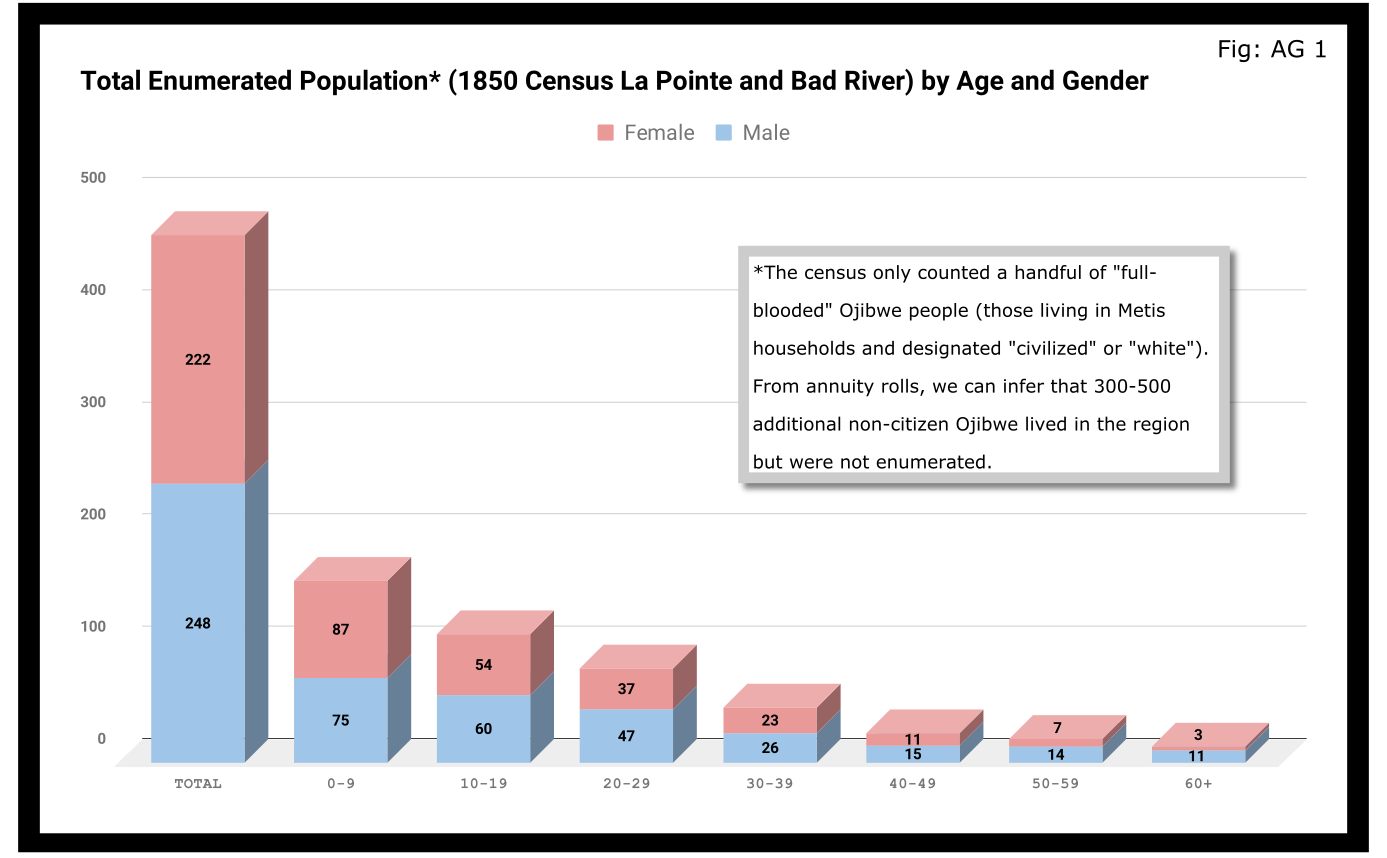
A quick glance at Figure AG 1 shows that the population skewed male 248-222 and skewed very young (61% under 20 years old). On the eve of Sandy Lake, the natural increase in the population seemed to be booming.

The hypotheses that women had higher mortality rates and were more likely to be undercounted looked good until we limit the data to the Wisconsin-born population. In Figure AG 2, we see that the male majority disappears entirely. The youthful trend, indicating large families and a growing population, continues with 66% of the Wisconsin-born population being under 20.

The male skew of the total population was entirely due to those born outside Wisconsin. This is not surprising given how much we’ve emphasized the number of men who came into the Lake Superior country to marry local women.
A look at the oldest residents in chart AG 2 and AG 3 hints at another story. Madeline Cadotte is the only Wisconsin-born person over seventy to be counted. The oldest men all came from Michigan and Canada. Why? My hypothesis is that between the fall of New France in 1759 and the establishment of Michel Cadotte’s post sometime around 1800, there wasn’t a large population or a very active fur trade around La Pointe proper. That meant Cadotte’s widow and other full bloods were the oldest locally-born residents in 1850. Their Metis contemporaries didn’t come over from the Soo or down from Grand Portage until 1810 or later.
Economics
Before the treaties, the economy of this area was built on two industries: foraging and trade. Life for Ojibwe people revolved around the seasonal harvest of fish, wild rice, game, maple sugar, light agriculture, and other forms of gathering food directly from the land. Trade did not start with the French, and even after the arrival of European goods into the region, the primary purpose of trade seemed to be for cementing alliances and for the acquisition of luxury goods and sacred objects. Richard White, Theresa Schenck, and Howard Paap have all challenged the myth of Ojibwe “dependence” on European goods for basic survival, and I find their arguments persuasive.
Trade, though, was the most important industry for Metis men and La Pointe was a center of this activity. The mid-19th century saw a steep decline in trade, however, to be replaced by a toxic cycle of debts, land sales, and annuity payments. The effects of this change on the Metis economy and society seem largely understudied. The fur trade though, was on its last legs. Again, the Austrian travel writer Carl Scherzer, who visited La Pointe in 1852:
After this discussion of the of the rates of the American Fur Company and its agents, we want to add some details about the men whose labor and time exerted such a great influence on the fate and culture of the Indian tribes. We wish to add a few explanatory words about the sad presence on La Pointe of the voyageurs or courriers du bois.
This peculiar class of people, which is like a vein of metal that suddenly disappears within the bedrock and reappears many hundreds of miles away under the same geological conditions, their light reaches the borders of the eastern Canadas. The British people, with their religion and customs, reappeared on the shores of these northern lakes only in 1808 with the Fur Company. For labor they drew on those who could carry their wares across the lakes and communicate with the Indians.
Many young men of adventurous natures left the old wide streets of Montreal and moved into the trackless primeval forests of the West. Young and strong as laborers, they soon started to adopt the lifestyle and language of the aborigines. They married with the Indians and inhabit small settlements scattered throughout those mighty lands which begin at Mackinow Island and come up the upper lake to the region of Minnesota. They almost all speak the Canadian patois along with the language of the Chippewas, the tribe with which they came into kinship. We found only a few, even among the younger generation, who understood English.
Since then, every day the population of the otherwise deserted shore of Lake Superior increases with the discovery of copper mines. The animals driven away by the whirlwind of civilization toward the west, attract the Indians with their sensitive guns, leaving La Pointe, abandoned by the Company for their headquarters at St. Paul in Minnesota. Most voyageurs left the island, having seen their business in ruins and lacking their former importance. Just a few families remain here, making a meager livelihood of hunting, fishing, and the occasional convoy of a few travelers led by business, science, or love of nature who purchase their limited resources.
From Scherzer’s description, two things are clear. It’s pretty clear from the flowery language of the Viennese visitor.Washington Irving and other Romantic-Era authors had already made the Voyageur into the stock stereotypical character we all know today. Th only change, though, is these days voyageurs are often depicted as representatives of white culture, but that’s a post for another time.
The second item, more pertinent to this post, is that a lot of voyageurs were out of work. This is especially relevant when we look at our census data. Daniel Johnson recorded the occupations of all males fifteen or over:
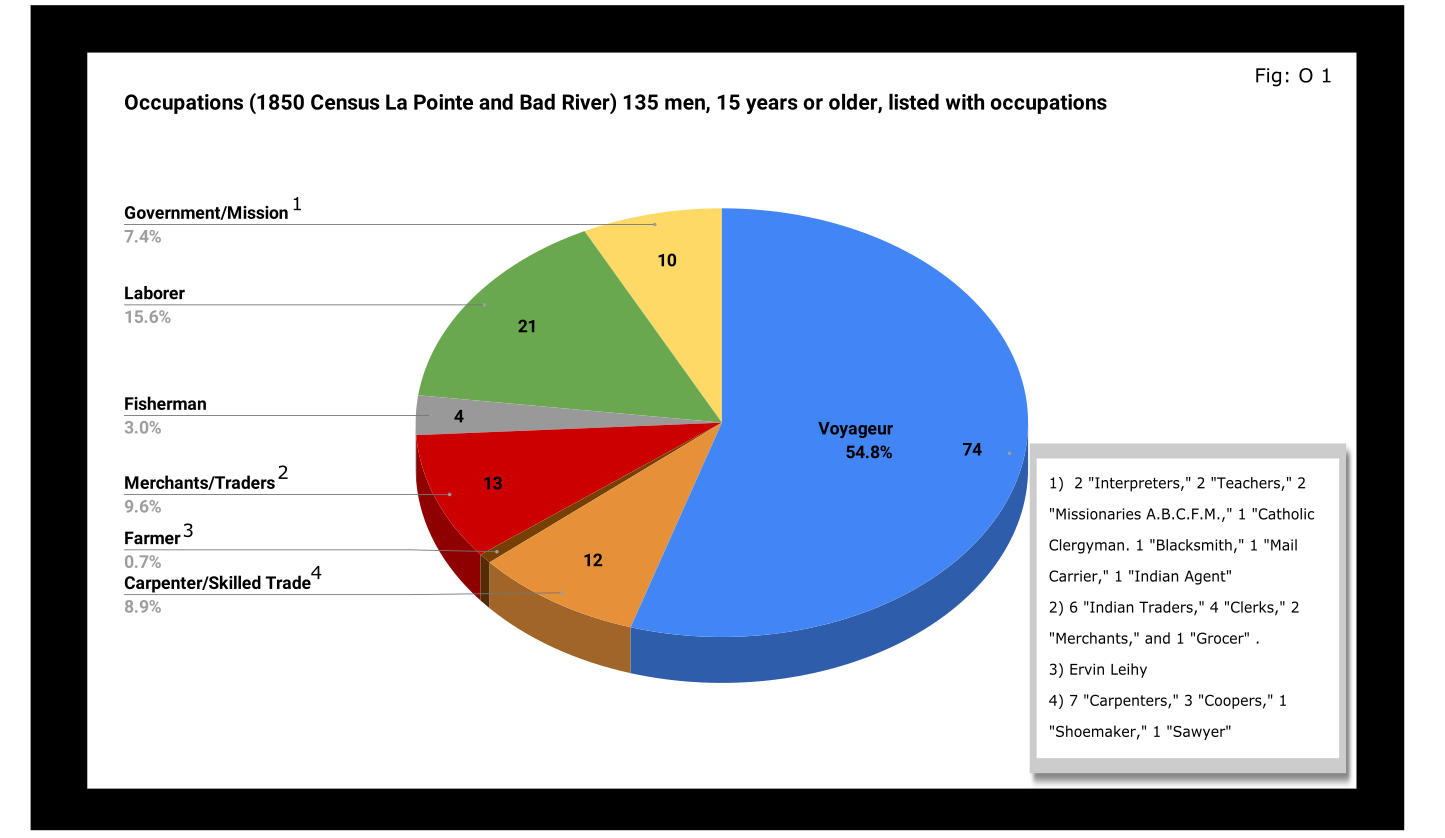
A full 55% of enumerated men fifteen and older still identified themselves as voyageurs in 1850. This included teenagers as well as senior citizens. All were from Metis households, though aside from farmer, all of the other occupation categories in Figure O 1 included Metis people.

A look at household sizes did not show voyageurs having to support significantly larger or smaller families when compared to the other occupation categories.
The other piece of economic data collected was value of real estate. Here we see some interesting themes:

If real estate is a good proxy for wealth in a farming community, it is an imperfect one in the Chequamegon area of 1850. If a voyageur had no home but the river and portage, then we might not expect him to put his coin into land and buildings. A teacher or Indian agent might draw a consistent salary but then live in supplied housing before moving on. With that caveat, let’s dig into the data.
Excluding the single farmer, men in the merchant/trader group controlled the most wealth in real estate, with Julius Austrian controlling as much as the other merchants combined. Behind them were carpenters and men with specific trades like cooper or shoemaker. Those who reported their occupation generally as “laborer” were not far behind the tradesmen. I suspect their real estate holdings may be larger and less varied than expected because of the number of sons and close relatives of Michel Cadotte Sr. who identified themselves as laborers. Government and mission employees held relatively little real estate, but the institutions they represented certainly weren’t lacking in land or power. Voyageurs come in seventh, just behind widows and ahead of fishermen of which there were only four in each category.
It is interesting, though, that the second and third richest men (by real estate) were both voyageurs, and voyageur shows a much wider range of households than some of the other categories: laborers in particular. With the number of teenagers calling themselves voyageurs, I suspect that the job still had more social prestige attached to it, in 1850, than say farmer or carpenter.
With hindsight we know that after 1854, voyageurs would be encouraged to take up farming and commercial fishing. It is striking, however, how small these industries were in 1850. Despite the American Fur Company’s efforts to push its Metis employees into commercial fishing in the 1830s, and knowing how many of the family names in Figure O 3 are associated with the industry, commercial fishing seemed neither popular nor lucrative in 1850. I do suspect, however, that the line between commercial and subsistence fishing was less defined in those days and that fishing in general was seen as falling back on the Indian gathering lifestyle. It wouldn’t be surprised if all these families were fishing alongside their Ojibwe relatives but didn’t really see fishing (or sugaring, etc.) as an occupation in the American sense.
Finally, it could not have escaped the voyageurs notice that while they were struggling, their former employers and their employers educated sons were doing pretty well. They also would have noticed that it was less and less from furs. Lump annuity payments for Ojibwe land sales brought large amounts of cash into the economy one day a year. It must have felt like piranhas with blood in the water. Alongside their full-blood cousins, Metis Ojibwe received these payments after 1847, but they had more of a history with money and capitalism. Whether to identify with the piranha or the prey would have depended on all sorts of decisions, opportunities and circumstances.
Education and Literacy
The census also collected data on education and literacy, asking whether children had attended school within the year, and whether adults over twenty could read and write. The history of white education efforts in this area are fairly well documented. The local schools in 1850 were run by the American Board of Commissioners of Foreign Missions (A.B.C.F.M.) at the La Pointe and Odanah missions, and an entire generation had come of age at La Pointe in the years since Rev. Sherman Hall first taught out of Lyman Warren’s storehouse in 1831. These Protestant ministers and teachers railed against the papists and heathens in their writings, but most of their students were Catholic or traditional Ojibwe in religion. Interestingly, much of the instruction was done in the Ojibwe language. Unfortunately, however, the census does not indicate the language an individual is literate in. I highly recommend The Ojibwe Journals of Edmund F. Ely, 1833-1849 if you are interested in these topics.
To start with, though, let’s look at how many people were going to school:

Thirty-nine students had gone to school in the previous year. There is a lot of sample-size noise in the data, but it seems like ages 7-11 (what we would call the upper-elementary years) were the prime years to attend school.
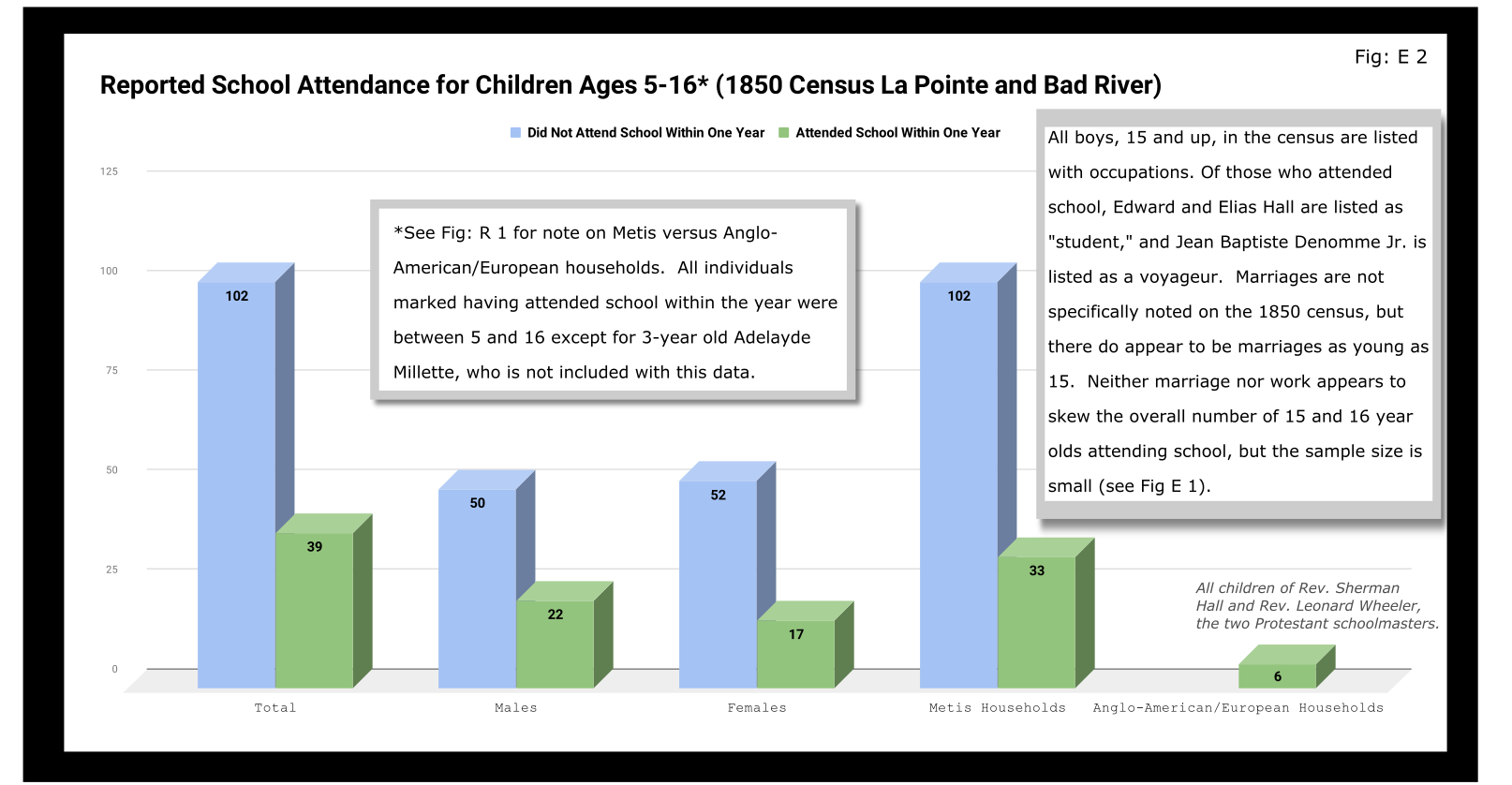
Overall, most children had not attended school within the year. Attendance rates were slightly higher for boys than for girls. White children, all from two missionary families, had a 100% attendance rate compared to 24% for the Metis and “Civilized Indian” children.
We should remember, however, that not attending school within the year is not the same as having never attended school. Twelve-year-old Eliza Morrin (later Morrison) is among the number that didn’t attend school, but she was educated enough to write her memoirs in English, which was her second language. They were published in 2002 as A Little History of My Forest Life, a fascinating account of Metis life in the decades following 1854.
Eliza’s parents were among the La Pointe adults who could read and write. Her aunt, uncle, and adult cousins in the neighboring Bosquet (Buskey) house were not. Overall, just over half of adults over 20 were illiterate without a significant gender imbalance. Splitting by birthplace, however, shows the literacy rate for Wisconsin-born (i.e. Metis and “Civilized Indian”) was only 30%, down from the overall male literacy rate of 48%. For Wisconsin-born women, the drop is only three points, from 47% to 44%. This suggests Metis women were learning to read while their husbands and brothers (perhaps en voyage) were not.

And this is exactly what the data say when we split by occupation. The literacy rate for voyageurs was only 13%. This beats fisherman–all four were illiterate–but lagged far behind all other types of work.
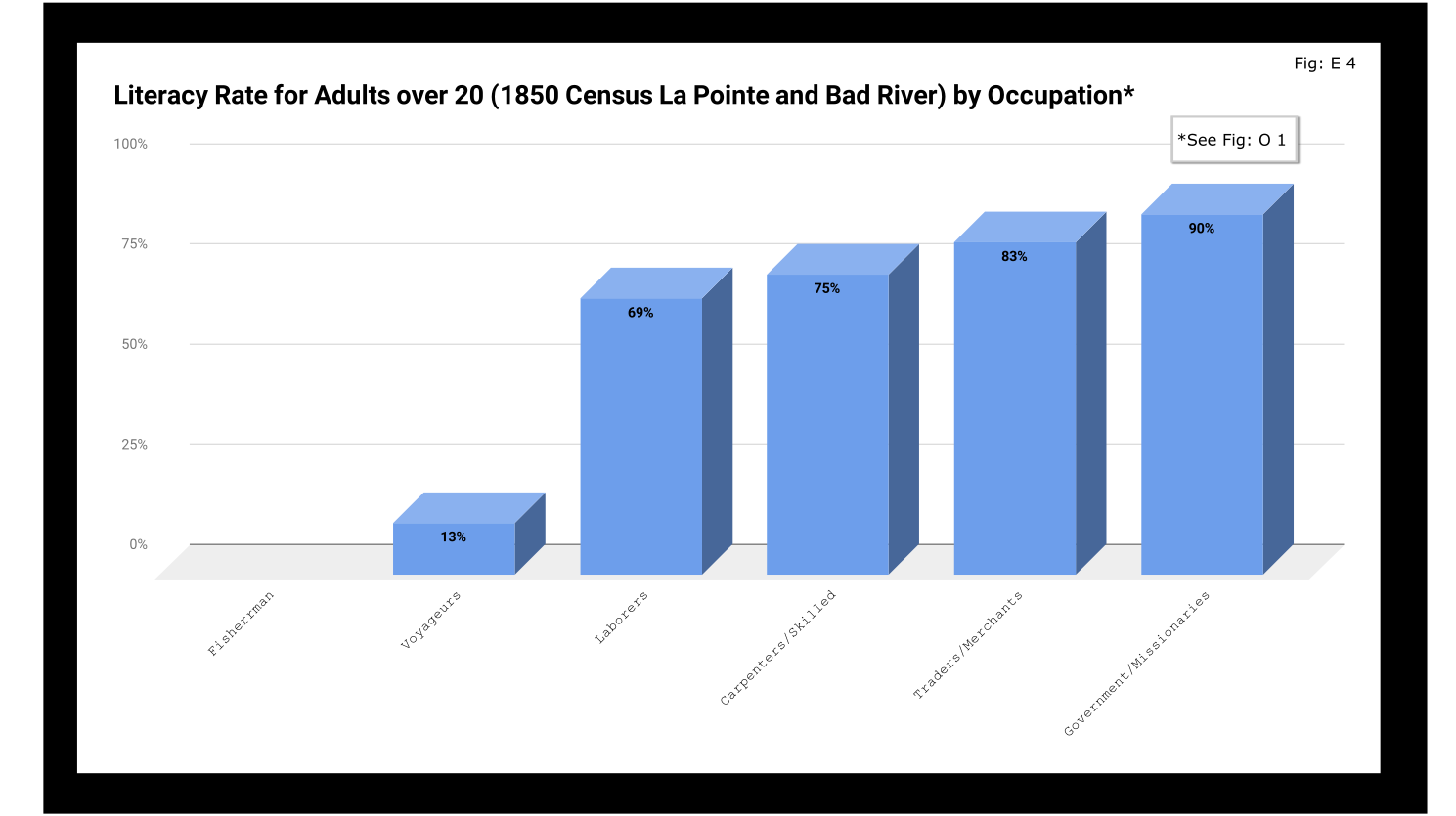
If education was going to be a factor in the economic mobility of unemployed voyageurs, the trends weren’t looking good.
Odds and Ends
Two marriages were reported as occurring in the year previous to the census: Peter and Caroline Vanderventer and Pierre and Marguerite Robideaux (ak.a. Peter and Margaret Rabideaux). Though married, however, Caroline was not living with her husband, a 32-year old grocer from New York. She (along with their infant daughter) was still in the home of her parents Benjamin and Margaret Moreau (Morrow). The Vanderventers eventually built a home together and went on to have several more children. It appears their grandson George Vanderventer married Julia Rabideaux, the granddaughter of Peter and Margaret.
I say appears in the case of George and Julia, because Metis genealogy can be tricky. It requires lots of double and triple checking. Here’s what I came across when I once tried to find an unidentified voyageur known only as Baptiste:

Sometimes it feels like for every Souverain Denis or Argapit Archambeau, there are at least 15 Jean-Baptiste Cadottes, 12 Charles Bresettes, 10 Francois Belangers and 8 Joseph DeFoes. Those old Canadian names had a way of persisting through the generations. If you were a voyageur at La Pointe in 1850, there was nearly a 30% chance your name was Jean-Baptiste. To your friends you might be John-Baptist, Shabadis, John, JB, or Battisens, and you might be called something else entirely when the census taker came around.
The final column on Daniel Johnson’s census asked whether the enumerated person was “deaf and dumb, blind, insane, idiotic, pauper, or convict.” 20 year-old Isabella Tremble, living in the household of Charles Oakes, received the unfortunate designation of idiotic. 26-year-old Francois DeCouteau did not have a mark in that column, but had “Invalid” entered in for his occupation. It’s fair to say we’ve made some progress in the treatment of people with disabilities.
Final Thoughts
I am not usually a numbers person when it comes to history. I’ll always prefer a good narrative story, to charts, tables, and cold numbers. Sometimes, though, the numbers help tell the story. They can help us understand why when Louis Gurnoe was killed, no one was held accountable. At the very least, they can help show us that the society he lived in was under significant stress, that the once-prestigious occupation of his forefathers would no longer sustain a family, and that the new American power structure didn’t really understand or care who his people were.
Ultimately, the census is about America describes itself. From the very beginning, it’s never been entirely clear if in E. pluribus unum we should emphasize the pluribus or the unum. We struggled with that in 1850, and we still struggle today. To follow the Department of Commerce v. New York citizenship case, I recommend Scotusblog. For more census posts about this area in the 19th century, keep following Chequamegon History.
Sources, Data, and Further Reading
-
Paap, Howard D. Red Cliff, Wisconsin a History of an Ojibwe Community ; Volume 1 The Earliest Years: the Origin to 1854. North Star Press of St. Cloud, Inc., 1854.
-
Satz, Ronald N. Chippewa Treaty Rights: the Reserved Rights of Wisconsin’s Chippewa Indians in Historical Perspective. University of Wisconsin Press, 1997.
-
Original Census Act of May 23, 1850 (includes form and instructions for marshals). (PDF)
-
Compiled data spreadsheets (Google Drive Folder) I’ll make these a lot more user friendly in future census posts. By the time it occurred to me that I should include my tables in this post, most of them were already done in tally marks on scrap paper.
-
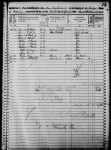
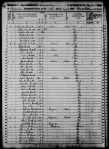
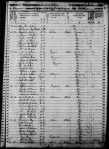
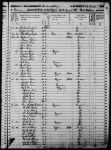
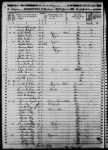
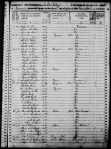
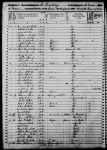
Finally, these are the original pages, scanned from microfilm by FamilySearch.com. I included the image for Fond du Lac (presumably those living on the Wisconsin side of the St. Louis River) even though I did not include it in any of the data above.
-

- Bad River
-
- Fond du Lac (not included in above data)





By Leo
If you haven’t seen a lot of posts lately, it’s because I’ve given up the the lucrative history-blogging business to become a mad scientist. I have a time machine that will make me wealthy beyond belief. Unfortunately, there are still some kinks to work out with the time-space continuum. Until they’re fixed, I plan to fund my research with my state-of-the-art genetic-ancestry testing business, 1823andMe™. Just spit into a tube, and in three to four weeks we can tell you, with scientific precision, what your actual true race and ethnicity are. You thought you were English? Ha Ha–you’re actually Scottish!
I had hoped to be collecting modern spit by now, but my stupid investors were frightened off by a simple trademark lawsuit. This has really slowed the field testing, so I’ve been reduced to taking the time machine back to eras where I can get saliva on the cheap. In fact, I just returned from a trip to the Lake Superior country!
Originally, I was just going to visit Sault Ste. Marie in 1830, but on the ride back, I just had to stop in at La Pointe in 1850 and 1855. I mean, I used to write a lot about that place and time, so it seemed only right to collect some stories and anecdotes for old-time’s sake.
But, disaster! My briefcase spilled out all over the floor and the notecards got all jumbled. The genetic profiles of the seven donors, and their descriptions, are all out of order. Can you help me sort them?
Here are the seven genetic ancestry profiles I collected according to my proprietary SuperDNA™analysis system:
- 100% Native American
- 88% Native American, 12% European (Mediterranean)
- 50% Native American, 50% West African
- 50% European (British Isles), 50% Native American
- 100% European (Mediterranean)
- 75% Native American, 25% European (Mediterranean)
- 100% European (British Isles)
And here are the descriptions of the seven people they belong to:
- I met him talking to a group of American pioneers who were planning to settle in the new city of Superior. Being one of the few English speakers around, he informed them that he was the first white man born in the area where the city was being built.
- He was a young man of the Lac Vieux Desert band. He arrived at La Pointe in his bark canoe for the payment and Midewiwin ceremonies. We tried to talk a little, but he only spoke Ojibwe.
- This kindly old woman was the matriarch of the leading family on the island. The federal census taker was in the middle of getting her information. I asked if he was going over to Bad River next, and he said he didn’t need to because he only had to count white people.
- We talked for quite a while because there were so few people who spoke English around. He was a clerk and he told me about how he “trades with the Indians,” but now his boss wants him to go into politics. His boss is a prominent Democrat who is friends with John Calhoun and all the other pro-slavery politicians.
- His name was Shaw-shaw-wa-ne-ba-se of the Snake clan, and you could tell he’d led a rough life out in the prairies of Manitoba. He had stolen horses from the Mandan around the time Lewis and Clark stayed with them. Later, his family considered joining Tenskwatawa and Tecumseh in their prophecy to give up white ways so the Great Spirit would send the whites back across the ocean.
- This old Frenchman was loved by almost everyone around. He took great pride in being descended from the French nobility and saw himself as a link back to the old French days at La Pointe. He was proud of his role in getting the Catholic church re-established on the island.
- He was one of the most imposing and respected Ojibwe chiefs around. He was great at playing the American and British authorities off each other. He did the same with the churches, and his influence on other Ojibwe bands was impressive.
Can you sort them accurately?
Ack! Absent-minded professor here–I forgot I had already compiled those notes with names and a few pictures. Sorry for wasting your time. Here are the actual results:
 I met him talking with a group of American pioneers who were planning to settle in the new city of Superior. Being one of the few English speakers around, he informed them that he was the first white man born in the area where the city was being built. I met him talking with a group of American pioneers who were planning to settle in the new city of Superior. Being one of the few English speakers around, he informed them that he was the first white man born in the area where the city was being built.
Bonga, Stephen 1823andMe™ SuperDNA™: 50% Native American, 50% West African |
| He was a young man of the Lac Vieux Desert band. He arrived at La Pointe with his bark canoe, for the payment and Midewiwin ceremonies. We tried to talk a little, but he only spoke Ojibwe.
Gendron, Antoine 1823andMe™ SuperDNA™: 100% European (Mediterranean) |
| This kindly old woman was the matriarch of the leading family on the island. The federal census taker was in the middle of getting her information. I asked if he was going over to Bad River next, and he said he didn’t need to because he only had to count white people.
Cadotte, Mdme. Madeleine Equaysayway 1823andMe™ SuperDNA™: 100% Native American |
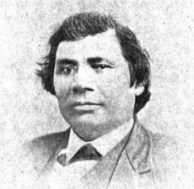 We talked for quite a while because there were so few people who spoke English around. He was a clerk and he told me about how he “trades with the Indians,” but now his boss wants him to go into politics. His boss is a prominent Democrat who is friends with John Calhoun and all the other pro-slavery politicians. We talked for quite a while because there were so few people who spoke English around. He was a clerk and he told me about how he “trades with the Indians,” but now his boss wants him to go into politics. His boss is a prominent Democrat who is friends with John Calhoun and all the other pro-slavery politicians.
Roy Jr., Vincent 1823andMe™ SuperDNA™: 75% Native American, 25% European (Mediterranean) |
 His name was Shaw-shaw-wa-ne-ba-se of the snake clan, and you could tell he’d led a rough life out in prairies of Manitoba. He had stolen horses from the Mandan around the time Lewis and Clark stayed with them. Later, his family considered joining Tenskwatawa and Tecumseh in their prophecy to give up white ways so that the Great Spirit would send the whites back across the ocean. His name was Shaw-shaw-wa-ne-ba-se of the snake clan, and you could tell he’d led a rough life out in prairies of Manitoba. He had stolen horses from the Mandan around the time Lewis and Clark stayed with them. Later, his family considered joining Tenskwatawa and Tecumseh in their prophecy to give up white ways so that the Great Spirit would send the whites back across the ocean.
Tanner, John Shawshawwanebase 1823andMe™ SuperDNA™: 100% European (British Isles) |
| This old Frenchman was loved by almost everyone around. He took great pride in being descended from the French nobility and saw himself as a link back to the old French days at La Pointe. He was proud of his role in getting the Catholic church re-established on the island.
Cadotte Jr., Michel (Mishoons) 1823andMe™ SuperDNA™: 88% Native American 12% European (Mediterranean) |
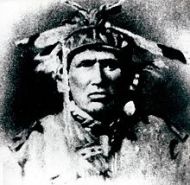 He was one of the most imposing and respected Ojibwe chiefs I met. He was great at playing the Americans and British off of each other. He did the same with the churches, and his influence on other bands was impressive. He was one of the most imposing and respected Ojibwe chiefs I met. He was great at playing the Americans and British off of each other. He did the same with the churches, and his influence on other bands was impressive.
Shingwaukonse 1823andMe™ SuperDNA™: 50% European (British Isles) 50% Native American |
Whew! Disaster averted.

Okay, back to reality. I don’t have a time machine, I don’t have much to say about Elizabeth Warren’s campaign roll-out, and I actually had my DNA done by Ancestry.com and enjoyed the process. So, why the snarky attempt to dabble in anthropology, where I have no business dabbling?
Is it because I really am retiring from teaching* at the ripe-old age of 35 but still have a compulsion to quiz and lesson-plan?
No! It’s because I have some upcoming posts on the concepts of race, identity and citizenship in the census records from 1850-1860 and I wanted to hammer home the following points:
- We, as Americans, have been conditioned to think of race as an immutable, biological aspect of identity. However, this current form of racialized thinking did not fully take hold until the later 19th and early 20th centuries. Earlier times also had racialized thinking, but it was different.
- In the pre-Civil War Lake Superior country, one’s race had as much or more to do with his or her lifestyle, culture, religion, or assigned paternal lineage than it did with perceived genetic ancestry (i.e. amount of “blood” or DNA). Therefore, the race a person had at birth wasn’t necessarily the one he or she would have at death.
- Racial identity in the Lake Superior country was not a matter of black and white (or Native and white for that matter). There was a great deal of nuance in a person’s identity that could not be inferred simply from skin tone or facial features.
- Our modern definitions of a “white person,” a “Native person,” or a “biracial person” did not exist then.
- The idea of race as arbitrary and defined by society is not a new concept, nor is it hard to grasp on a superficial level. However, with race and racism in their current form (and the consequences thereof) being so present in our modern thinking, it is very difficult to remove our present notions from study of the past.
- I mostly like to collect old documents and create narratives. Smarter people than I can continue to fill libraries on these headier topics. That said, if we want to get a good discussion going on the census, we better get close to the same wavelength.
See you soon,
Leo
Notes:
Stephen Bonga, his father, and his brothers have figured in a number of historical studies of African-Americans in the west. See pages 7 and 43 of The Eye of the Northwest by Frank Flower (1890) for this particular story.
This description of Antoine Gendron comes directly from pages 34-37 of Kohl’s Kitch-Gami. Kohl often used pseudonyms, so “Gendron” might not be the actual name of the man he met at La Pointe in 1855.
Madeline Cadotte is an ancestor to so many of the families of this region, and such an important part of regional folklore, we sometimes lose track of Mdme. Cadotte the historical figure who lived to a very old age and was still around into the 1850s. Written sources in English, when compared to contemporaries like Chief Buffalo and Ozhaguscodaywayquay (Susan Johnston), are surprisingly sparse. There are some discrepancies in sources about her early life, but I’ve yet to encounter a source that disputes that she was born to two Ojibwe parents and raised in an Ojibwe household.
Verwyst devotes the final few pages of his biography of Father Baraga, (1900) to a short biography of Vincent Roy Jr., calling the elderly Roy “the best Indian of the Northwest.” In their younger lives, however, Roy and contemporaries like the Warren cousins, Paul and Clement Beaulieu, and Antoine Gordon self-identified variously as white, mix-blood, or Indian depending on the appropriateness of the context. This didn’t mean he wasn’t subject to discrimination, however. The land, business and political ambitions Roy and his brother-in-law, Vincent Cournoyer, were challenged by rivals on the basis of their Ojibwe ancestry.
John Tanner’s narrative (1830) is a fascinating view on the Ojibwe society of the Red River prairies at the dawn of the 19th century. He was kidnapped from American settlers at age 10 by a Saginaw Ojibwe war party. He was later adopted into a prominent Arbre Croche Ottawa family and moved with them to the prairies. By adulthood, he had forgotten English and was fully integrated into the Anishinaabe world. Though his white origins were a liability at times, he was generally perceived as an Ottawa by the Ojibwe, Cree and Assiniboine of the region. He was of the clan of the Saginaw chief who had originally taken him from his birth parents.
The marriage of Misho’s parents, Michel and Madeline, is often portrayed as the coming together of Native and European culture in the region. However, few modern-day Americans would describe Michel Cadotte Sr. as a white man if they met him on the street. His father was half Huron, and his mother was Anishinaabe from the Lake Nipissing region. Michel Jr. and his siblings had seven Native great-grandparents and one European great-grandparent. The direct paternal line being French, both Anishinaabe and French-Canadian society of the time would consider them French. This would not necessarily imply shame or rejection toward their Native ancestry, just an acknowledgement that children belonged to their father’s village.
Janet Chute’s biography of Shingwaukonse (1998), devotes significant time to his origins and how and why he fit into the Ojibwe society of the Soo rather than the area’s large Metis community.
Shameless advertisement:
*I am actually leaving the K-12 teaching field, so hopefully that will leave me with more time and mental energy for Chequamegon History. Also, let me know if you have any job openings for old-document readers and/or transcribers.
Translation Help Needed: Ojibwe and French placenames on Joseph Nicollet’s manuscript map of Wisconsin
December 31, 2018
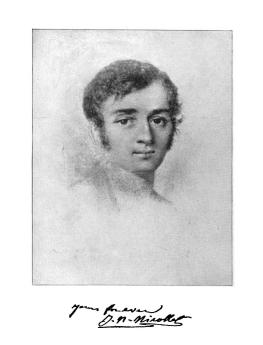
Joseph Nicholas Nicollet 1786-1843 (Wikipedia) *Not to be confused with Jean Nicolet, the explorer who visited Green Bay 200 years before this.
By Leo
Joseph Nicollet* is a name familiar to many in the Upper Midwest. The French-born geographer is remembered in numerous place names, particularly in Minnesota. For followers of Chequamegon History, though, he is best known for his 1843 Map of the Hydrographical Basin of the Upper Mississippi. The map remains very popular for its largely-accurate geography and its retention of original Ojibwe and French placenames for rivers, lakes and other land features. I’ve always found it an attractive map, and use the Chequamegon portion of it to decorate the side panels of the blog.
So, one can imagine the excitement when Brian Finstad emailed and told me there was another version of the map, and that it was available online from St. Olaf College. This version, covering the country between the St. Croix and Wisconsin rivers (what is now the northwestern half of Wisconsin) is handwritten and contains information and names that never made it onto the published map. For those unfamiliar with Brian Finstad’s work, he is a long-time correspondent of Chequamegon History and has a keen and detailed understanding of the Gordon/Upper St. Croix region and the history of the St. Croix-La Pointe trail.

Click to Enlarge or visit the zoomable version at the Nicollet Project at St. Olaf College
The manuscript is also differs from the published map in that the placement of lakes, rivers, and portages. At first glance, to those of us used to Google and the modern highway system, to be less accurate in terms of actual fixed latitude and longitude. Instead, it seems more reflective of how Wisconsin’s geography would have been perceived at the time–as chains of water routes and portages. I need to look into it further, but my current understanding is that Nicollet did not travel extensively in Wisconsin. Therefore, one can assume that he got most of this information from his hired Ojibwe and Metis guides and voyageurs.

Zhagobe (Shakopee, Chagobai, Little Six), a Snake River chief worked with Nicollet and may have been an informant for the map. (Painting by Charles Bird King from James Otto Lewis portrait 1825 or 1826)
The handwritten map is challenging to read. Parts of it are ripped and faded, and the labels are oriented in all directions, including upside-down. Perhaps most difficult for me, as a monolingual English speaker, the map is in no fewer than four languages. French predominates, but there is a great deal of Ojibwe (especially in place names) and some English in descriptions. Near the mouth of the Chippewa River, there is another language, probably Dakota, but I don’t know Siouan languages well enough to say it is not Ho-Chunk.
After spending a few minutes with the map, I knew that the only way I would be able to engage with it fully would be to make it a project. So, I set out to reproduce the map, as faithfully as possible to the original, but with more legible text oriented according to more-modern cartographic conventions. Here is the result:

My hope is that the reproduction will make comparisons with the published map easier for scholars, or at the very least, provide a guide for working with the manuscript. However, this is where I’ll need help from readers, especially those who are good with Ojibwe and French grammar.
Here are some of the challenges we’re up against:


Familiarity of Locations
Being most familiar with the parts of Wisconsin within the Lake Superior basin, a map that focuses on the Mississippi watershed is not necessarily in my wheelhouse. Unfortunately, that’s what this truly is a map. Locations on the lakeshore are barely shown on the manuscript. There is far better detail in Nicollet’s published map showing that he must have used different sources to fill in that section of his finished product. However, because the Chequamegon area is the most ripped, faded, and difficult part to read on the entire map, familiarity was an asset. In the snippet on the left, I am fairly confident that the ripped part under “Chagwamigon” should read Long Ile ou Lapoint or something very similar. Whereas, the snippet on the right, showing the Eau Galle River area west of Eau Claire, has much clearer script, but I am far less confident in my transcription because I have not been able to locate any online references to Jolie Butte or Rhewash. Waga online. So, if there are any French or Dakota speakers out there who live near the mouth of the Chippewa let me know if there is a place called “Pretty Mound” or something similar and if I got my letters correct.
Colloquial Nouns in Poor Handwriting

Readers of the blog know that I am a big fan of Google Translate. Compared with the early days of online translation, it is amazing how close one can to reading text in an unfamiliar language these days. No online translation is ever perfect, especially with grammar, but Google usually steers me in the right direction for nouns. That said, there are some problems. The French language, as translated by Google, is more or less the 20th-century version of what Nicollet was educated in. However, neither of those is the French that was spoken in this area. What European visitors called Patois and what Manitobans call Michif or Metis French is truly a language of its own and a product of the fur trade. The “French” of 19th-century La Pointe contained a great deal of Ojibwe and numerous archaic words from colonial Quebec. This can create challenges in translation, especially when the handwriting is ambiguous. The snippet on the left, for example, appears to be the Poplar River in Douglas County. However, the label doesn’t appear to say anything like peuplier or tremble (aspen). I played around with “frondes” or considered other river names entirely, until I stumbled across the word liard. Liard does not seem to have the meaning in modern French, but in colloquial Quebecois, it is regionally used to describe several different species of popple tree. Riv. aux Soles (right), however, has proved much more difficult. I initially saw the French name of the Totagatic as Riv. aux Lobes, but after some emails with Brian Finstad, Soles seems like the best guess. But, what is a Sole? Is it the sun? The bottom of a foot? A flounder? The same fish name can often be applied to different species in different regions. Is a sculpin a sole? Is a bullhead? Do we need to talk to old fishermen in Quebec to find out?
Lack of Grammatical Knowledge
If Google Translate is my go-to place for French, the Ojibwe People’s Dictionary is where I go to try to confirm words in Ojibwe. Again, it’s great for nouns and verb-parts, but unless you speak these languages better than I do, knowing the gist of what the word means doesn’t mean you’ll get the translation right. In the snippet on the left, I transcribed the Ojibwe name for Cross Lake on the Snake River as Kapemijigonian. This word has elements of the meaning “flows through” in Ojibwe, but the word is nonsensical grammatically. Charles Lippert, who works for the Mille Lacs Band and has a wealth of information about Ojibwe linguistics, knew the real name, and was kind enough to offer Kapemijigoman as the correct transcription. Who knows how many similar errors could have been made? French can be tricky too. Mistaking ou for on, which is very possible with Nicollet’s handwriting, might not alter the meaning of a large chunk of text on Google Translate, but it sure can make you sound like a two-year old. Check out the snippet of French on the right. How can a non-Francophone read that?

I used the Inkscape vector graphics illustration program to trace the reproduction from the original.

As always, thanks for reading and please send feedback.
Kohl, J. G. “Remarks on the Conversion of the Canadian Indians and some Stories of Conversion” Part 2 of 2
June 21, 2018
By Leo
Part 1|Part 2
This is part two of, Bemerkungen über die Bekehrung canadischer zum Christenthum und einige Bekehrungsgeschichten (1859) (Remarks on the Conversion of the Canadian Indians and some Stories of Conversion), by Johann Georg Kohl published in the Augsburg-based, German-language magazine, Das Ausland. For information on the translation process and significance of this article, see part one. For Chequamegon History’s concluding analysis, scroll to the bottom of this post.
Das Ausland: Eine Wochenschrift Fur Kunde des geistigen und sittlichen Lebens der Völker
[The Foreign Lands: A weekly for scholars of the moral and intellectual lives of foreign nations]
Nr. 3 15 January 1859
Remarks on the conversion of Canadian Indians to Christianity and some conversion stories
By J.G. Kohl
(conclusion)
Since pagan marriage ties are usually very loose, and can be dissolved under Indian laws and customs at the slightest opportunity, a baptism of a married man is at the same time a re-marriage and a firm Christian marriage. It is all the more necessary to state something about this, since the Indian nations all permit polygamy. Of course, most men have only one wife because they find it difficult to feed several. If this isn’t the case with a baptized man, he must renounce the majority of his wives. The missionaries leave him the choice. He can keep the one whom he most loves. Usually, these ungrateful husbands then have the cruelty to leave the loyal old ones. Women who have been with them the longest are told goodbye, and the man settles down with the last and youngest in the bosom of the church.
Even in the language of the Indians, some reforms must be made upon baptism. These are often the hardest changes to perform. The pagan language of the Indians has many peculiarities which cannot be used after baptism, and permitting their use in Christianity would violate the dignity of religion.
 From Dr. Rand Valentine via email: “Many languages in the world have a special grammatical system called Evidentiality, by which one is essentially required to indicate the source of information that one is reporting. Lots of languages make grammatical distinctions between first hand (visually observed, and in some languages, auditorily heard), hearsay (you heard it from someone else, who might have been a first-hand observer), inference (Joe must be sick, he was not feeling well and didn’t come into work today), common knowledge (everyone knows that frogs can’t fly), etc. The Ojibwe definitely have an evidential system grammatically, so when they talked in the 19th century about things from the Bible, they would say, “the alleged Jesus,” meaning, “I didn’t personally see this, and no one I know did,” etc. This hugely annoyed Baraga, who wanted them to treat the Bible as truth.” (Image: Baraga, F. A Theoretical and Practical Grammar of the Otchipwe Language. (1850). pg. 95.
 For example, the language is full of expressions of vagueness and uncertainty. One finds in it expressions and final suffixes that designate the degree of knowledge which the speaker has acquired from a thing or a person. For example, the Indians have heard talk of Moses, the great lawgiver, but rumor has only given them a dark idea of him. They have not seen Moses, himself, and have not yet gotten to know him better through his writings or his particular life story. Since their whole conception of “Moses” still hovers in vague outlines like a cloud, they do not even say Moses, but instead attach a certain syllable to the name in order to indicate in the idea we would express by paraphrasing, as follows: “a certain Moses” or “Moses, of whom people speak of so much.” These final suffixes are highly-varied and express different nuances and levels of acquaintance or of the celebrity of the person. With one final suffix, they can express “the famous and universally-vaunted Moses,” with another, the person of which one just speaks is merely notorious. Again, with another, they can express that they themselves still very much doubt the actual existence of this Moses, where we might say, “the often-mentioned but still very doubtful Moses.”
As long as they are still pagans, Indians never call the saints and holy persons of our religion “Moses” or “Isaiah” or “Mary” or “Christ.” These names are always spoken so that doubt or mere rumor is expressed. Of “Christ,” for example, one would say “a certain Christ,” and they always bring these expressions to Christianity, where they are supposed to believe in the existence of these personalities. I was told that it was very difficult for them to get used to this fixed and definite way of speaking.
All of these external changes are comparatively easy, of course. But while the christianization and remoulding of the inner man may look successful in these conversions, the degree of these successes is always a more-difficult question.
It is a point that is so intimately-connected with so many other great questions about the often-discussed civilizability of the Indian tribes, it could only be adequately illuminated in a great and profound work. Of course, when I share my little experiences about the Indians, I can not engage in the discussion of this great subject; but I would like to say a lot about what I personally saw and heard myself. Many of these experiences may also confirm long-standing remarks.
One sad observation that comes to mind when you travel around Lake Superior is that there are so few of missions and churches among the local Indians. It has been more than 200 years since the first Christian missionaries came to this lake. They announced to the world, in their lettres édifiantes, their beautiful, rapid, and seemingly-great successes among the Indians. 200 years after Charlemagne had defeated the barbarian Saxons and converted them “to prayer,” there were already many flourishing bishoprics, many beautiful churches, and progressive communities in Saxony, fertilized with much martyrdom and heathen blood. Here on Lake Superior, however, one hardly finds any trace of those first chapels and churches which the fathers: Jogues, Raymbaut, Ménard, Allouez, Marquette, and others built here as early as the middle of the 17th century. Their Indian communities have dissolved in the course of time. They were probably restored, but then they are, again, scattered like chaff. Little or nothing of what those men founded held firm root, and nothing has grown.
Nor does it seem that the number of Protestant missions along the lake is any different. Protestant missionary work has only begun here in recent times, but one still encounters many traces of relapses, abandoned attempts, and ruins of redeemed communities.All of the Catholic churches, congregations, and missions that we saw, and which total no more than a dozen, are a completely new work. They are all the products of the devotional efforts of the venerable and noble Father Baraga, an Austrian, who is now elevated to the position of bishop of the tidy new church and bishopric erected around Lake Superior, and who may well be called the new apostle of that lake.
Yes, everywhere the Protestant work seems far-less laid in stone than the works of the Catholics.
 In Greek myth, the Dainaides were punished for killing their husbands and condemned to fill a sieve with water until full for eternity–a task impossible to complete (Painting by John William Waterhouse Wikipedia).
In short, missionary work among the Indians, if followed through the course of the centuries, looks almost like the labors of the Danaides. A lot of water was poured into the sieve, but it kept dribbling out. As in a garden with weeds, they always regained the upper hand without the gardener constantly present to manage and keep watch constantly.
The few successes among the Protestants can be attributed, in part, to the fragmentation of their powers through the disunity of their jealous sects, their lack of sacrificial zeal, and the tendencies of so many missionaries to have less a sense of gaining martyrdom than of gaining a livelihood. It is also very natural that the Protestant conception of Christianity appeals to the Indian less than the Catholic one. But the reason why the Catholics, even with their their vast church, which triumphs in so many wild nations and counts corps of zealous servants, has so often failed in this Indian endeavor and has created so-little independence, must have something to do with the Indians, themselves.
The wild nature-man is in us all. He lives and works away, even in the most civilized among us. He is a piece of, or rather the basis of, our nature. Civilization is, more or less, just something artificially-constructed and planted. Not only are human civilizations somewhat prone to relapse and recklessness, every individual is as well. Culture requires a constant struggle for renewal and rebirth in all of us. We are often terrified of ourselves as occasionally whole organs and systems of our soul are stunted. We do not see how recently our nature ossified, how recently we became relaxed, or how each day we either lose our susceptibility or regain it through work and specific attention to becoming cultured. Constantly, we dust ourselves off and pull the forever-proliferating weeds. That, after we leave the schoolmaster, we do not completely degenerate, is less to our individual credit than it is a happy consequence of the fact that everything around us struggles and strives for us. This whole river of influences surrounds us and holds us in suspense like drops of water.
 Here, Kohl is clearly drawing on Jean-Jacques Rousseau and other 18th-Century Enlightenment philosophers.
 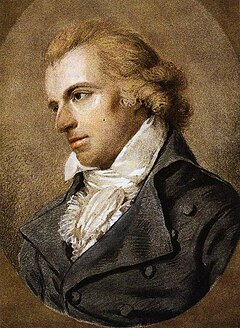 German Enlightment poet, Friedrich Schiller (1759-1805) modified Rosseau’s famous quote, “Man is born free, and everywhere he is in chains.” to “Man is created free, and is free, Though he be born in chains.” (Images: Wikipedia)
How easy barbarism is for all men? Or rather, what magic enchants the wild, free, casual nature of this life? How do they easily renounce the artist’s civilization, seen in the lands of the Indians, throughout the entire period of conflict and contact?
Members of the “most civilized nation in the world,” the Frenchmen, quickly and easily become so fierce that one could scarcely distinguish them from the native savages. And it is not only the gruff French voyageurs who say that they prefer their laborious life to all the pleasures of a comfortable urban existence.
Even British officers, in the wilds of Hudson’s Bay, will tell you that they are very content in their wooden barracks. I spoke to one who seemed to talk dispassionately about his beautiful gardened island of England, which he had recently returned to on a visit. “I no longer have any desire,” he said. With a quick and eager step he rushes back to his Hudson’s Bay and will hardly ever return to Britain.
Likewise, I was told by a Protestant missionary on Lake Superior, who had recently seen Paris, Rome, and the other miraculous cities of the ancient world. He said that life there had disgusted him, and that he had now returned to Lake Superior to finish his career there. Even the Catholic missionaries are so absorbed in their work, the lake and in the Indians, that one should not even ask whether they prefer that semi-wild missionary life or a fat benefice in Lombardy. And yet, these same people later wonder why it is so hard to wean the Indian from his wild life.
“Man is free, but he would be been born in chains.” Beautiful words, they are, in the sense that our Schiller pronounced them; but in many other ways, the dear human child is born in chains and remains unfree. The civilized man is the servant of tradition and is a product of civilization. The wild forest child is a product of nature, and a slave to its overpowering elemental forces. “The Indians,” as stated by the excellent Heckewelder, “consider the whole living creation as one great society. People are indeed placed at the head of the creatures, but nevertheless exist, in intimate relation, among all the animals down to the toad. Humans are, in their opinion, in only the primus inter pares. All of living nature, in their eyes, is one great whole of which they have not dared to break away. Yes, they even go so far as to include the plants and trees, to a certain extent, in their society. Moreover they do not even exclude animals from the spirit world, their paradise, and they intend for them to go with them after death.”
 (Google Books link: includes libraries it can be found in)
 This is not just a philosophical system or theory, but a life-practice. Not only do they think of themselves as an intimate part of all living nature, but since they do think so, they are so, and because they are so, they think so. So, how can one wonder, and how can one still ask, why it is so difficult to civilize a man for whom the bear is “his brother,” the fox “his cousin,” the wolf his “forefather?” He calls the white stag his “prophet” and fears that the beaver, the rattlesnake, or the bullfrog may be angry with him if he betrays one of his religious secrets to a stranger.
Still more, they do not just see these creatures as relatives. No, they identify with them, too. “I have the soul of a buffalo in me,” they may say. But they are not merely content with that. “I am a buffalo,” or “I am a moose,” is often their decisive statement. They do not joke about this, and this is far more than a mere figure of speech, as can be shown by the thoughtful and foolishly-solemn air with which they bring these matters forward.
We have enough examples among ourselves in long-ago civilized Europe, though more-delicate and less-immediately visible, of these extremely strong bonds struck between nature and the human soul. We have the example of the half-wild gypsy tribe in mind. Cultivation conquers him only when it has completely assimilated and destroyed him. Individuals of this tribe are worked and taught by the culture and the school until the education seems to take hold. However, upon leaving and starting their employment, the overwhelming impressions of the youth, and the peculiarities of the tribes and the blood take supreme power in the fermentation process, and all these restraints are broken.
Yes, even if we want to refrain from using the example of these half-wild children of India, we need only to look around among our own people, and there is sufficient material for comparison to discover. There we find the son of the Scottish Highlands, whom no one can play the bagpipe around for fear he will forget all strict doctrines and all threats of military discipline,* and be swept away by his irresistible instinct for nature, to rush back to his beggars and his little islands. We continue with the child of the Alpine glaciers, well-educated and intelligent. He has become wealthy through speculation and industry. Suddenly, in the midst of the hustle and bustle of the city, like a tree snatched from its native stand to grow for a time before withering and dying in foreign soil, this seemingly fortunate man is seized with a terrible homesickness after hearing the ghost of a cow’s breath on the wind and he is taken with a mysterious longing pain.
(*The Highland regiments guard with bagpipe music, as we have seen. D.R.)
If something like this can happen with green wood, how surprising can it be that these people, who for millennia have grown twisted and knotty in the forest, also cannot bend into the yoke? With the above quote I gave from Heckewelder, one could consider the whole question answered and settled, C’est tout dire! one could say. If the Indian thinks of himself as part of a family that includes snakes, fishes, and fir trees, and if this belief is rooted in the whole tribe, is born in the children, and is incorrigibly in the blood, it seems incurable. Civilization seems difficult! Too difficult! –impossible?
I only say; “it seems.” For if psychological questions were all simple, if human nature were not capable of so many contrasts, then one could soon arrive at a simple “yes” or “no.” But this same man, that same “bear’s cousin” who has just quite earnestly assured you that he is descended from the wolf, or that the soul of a buffalo is in him, or that he is a moose, will soon talk to you like a philosopher. If you lead him to another field, he thinks and opines about the highest matters that you do. He rejects lies and evil with disgust. He recognizes a supreme being. He prays to him. He believes in the immortality of the soul, and in a paradise. He often practices works of unselfish hospitality, love and charity. You believe to recognize a beautiful spirit under the wild mask. You feel very friendly and connected in the soul. He is already a half Christian. He has only a few quibbles and stumbling blocks. He is like a madman, who has a “fixed idea,” but otherwise speaks like a wise man. You draw new courage and take him to your school, hoping to drive him out of this “obsession,” these “little mosquitoes and pitfalls”. To be completely safe, you take him when he is quite young–from the mother’s breast. You work on him until he grows up. But to your chagrin, even in this child of the mother’s breast, when he has come of age, those pitfalls, those wild elements and juices regain their upper hand, and destroy all your laborious work. With horror, you perceive how your adult pupil begins to suffer, to look melancholy and wistful as he goes out into the great outdoors and returns adorned with wild flowers, as he sits for hours in the garden watching the birds arrive in spring like a kitten that has been innocent up until now, but now that it has become a cat, the innate instincts show. The migratory birds pass above while the captured crane watches from the henhouse and calls to his brothers in the clouds.
One day, you are missing your foster child. He stays out into the evening and all night. Only the next day, he comes back with a concerned expression, and confesses to you that he made a journey in the forest–he could not resist–it’s so beautiful there. Of course, you become angry and admonish him severely. Your pupil is now closed-off. He loses trust and love for you, the wrathful one. He is now thinking of his complete liberation, and he obtains it on some pretext that you cannot evade–for example, by being reclaimed by his Indian father. He probably takes his right into his own hands, spreads his wings, and transformed back to bird, fish or animal– natura semper recurrit— he flies, floats or runs away from it into his native element and becomes, again, the wild hunter.
If you meet him again later, you will find him wrapped in furs, his face is painted, he is beating the drum, murmuring magic songs, worshiping the “great spirit”, and you do not know him again, since he has forgotten your hymnbook and your catechism, has completely forgotten your writing and computing tablets.
It was an English teacher who described to me a case of this kind that had come to him in his practice. I saw, myself, a few parts and pieces of this story, which are often repeated. For example, those suffering, melancholy, thoughtful, and quiet creatures are observed to have something pining in their expression (as the English often express themselves), when Indian captives grow up in the schools of Europeans, or their circumstances force them to live semi-educated among the Europeans.
I vividly recall a visit a friend and I made to an Indian woman in a big city of the American West, and the dim impression that this visit left me. This woman was estranged from the people of her earliest youth and educated in a European institution. She spoke excellent French and conversed with ease about the ordinary occurrences of life. She had been the wife of a French Canadian, who had left her a wealthy widow after his death. She lived in perfectly fortunate circumstances, and was physically well, yet she made me feel that she was a suffering person. She had something very timid in her nature. She spoke very quietly and very slowly. She did not complain, but nevertheless, everything that she said (even when we touched on completely innocuous things, as when she praised the beautiful weather we were enjoying at the time), seemed like a lament. When she talked about her half-grown daughters, the lamentation became clearer. She regretted that her children, who, as half-breeds, could never quite melt into the surrounding world and would never be fully of this world. She nearly had tears in her eyes when she talked about her children.
Those same eyes shone soft and bright as my companion mentioned her old mother, and reminded her that the summer time was already at her door, when she would see her mother out on the prairie. Her mother, an ancient Indian woman of the tribe of Ottowas*, had not decided to move with her daughter to the city, so the good daughter had bought her a piece of prairie, thirty miles from the city, and built her a log cabin. There, the mother lived by some Indian relatives, who had also found each other, and who also partly lived at the expense of the wealthy daughter, throughout the entire year in the Indian way. And in the summer, when her children’s education did not push her to the city, the daughter would go out to the prairie, exchange her pretty townhouse for the Indian bark lodge and turn into a cinderella taking care of the old mother’s domestic affairs.
(*The Ottowas live in the State of Michigan.)
Once we mentioned the mother and the prairies, there was no way around it. It remained the topic of discussion until the end of the conversation, which, as I mentioned, had felt up until that point like the reading of an elegy.
Another time, I received a similar impression during a visit to an institute for the education of Indians on Lake Superior. It was led by a Baptist preacher and his wonderful family. I just started talking to this family when a gentle song, with double-vocals, was heard in the house. “It’s Mani and Magit,” (Maria and Margarethe), I was told, “our two Indian schoolgirls singing their evening duet up in the classroom.”
“Could we not go up to them,” I begged, “and see and hear them from nearby?”
“Oh no, that will not work!” was the answer. “Our girls are as shy as deer. If they knew we were there, they would fall silent at the very least. At the most, we can stand on the stairs.”
The good old preacher and I went to the stairs and listened. The voices were exceedingly delicate and lovely, the notes round and velvety, the intonation extremely accurate, and the sound as of some soft metal. The character of the whole was of a soft, melancholy color.
As my old friend, the preacher, watched me attentively, his face became transfigured into a curious joy, as though he himself were hearing something new. So softly, softly, we crept up the stairs like the beat of a clock until, almost against our will, we stood in the classroom opposite the dark faces of the two girls.
But heavens! What had we done there!?! – Lala la la – like a torn harp string, the sound halted and the girls disappeared like a mist. They had rescued themselves by running into the next room.
“Mani! Magit! You fools! Come back. I have to introduce you to a stranger, a friend of music, who would like to hear you sing!” No answer came, no sound, just deathly silence! I think they had fainted on their sophas. The good daughters of the house went over to console them. After much convincing, they finally brought back the younger, Magit, so that we could give our apology and concern. But the older one, Mani, was unable to move. She could not recover. She disappeared, melted away like the mist, unable to regain her composure and form and did not come down to the tea afterwards, while the younger sister invited herself and later even performed a pretty solo song.
“Strange,” I thought to myself, “and these are the same bold, wild girls, the cousins of the bears, who, as long as they remain unaffected, they are not afraid to break into the camp of their enemies beside their brothers and lovers, and cut off the scalps from the dead?* Is it that they become twice ashamed and three times shy after having enjoyed the fruit of knowledge?”
(*It is not uncommon for girls to take scalps.)
“Yes,” said one of the daughters of the house, “Mani often makes me very worried. She already has that nature. Her shy manner only increases among men. In the wild she is more than normal. She has such an exaggerated romantic fondness for nature and the forest. She can sit outside for hours and look at the clouds and other things. Then, she’ll come rushing in at once, moved by an almost wild joy, to tell me she just heard the robin singing for the first time this spring, ‘I saw her red plumage shining clearly in the green foliage of the tree!’ But ‘Mani, Mani!’ I reply to her, ‘Calm yourself. It’s only a robin. What’s so special?’ ‘Oh, alas!’ she says, ‘I am so glad, so glad, to have seen the robin.’ Then she sits down at the piano and sings a melancholy song to me.”
This serious melancholy, this something pining, that the Indians adopt when transplanted from their wilderness into the so-called “garden of culture,” never comes out of them again. One notices it in their children and in their children’s children, when they are produced in the midst of whites or after marriage to whites. It stays in the blood and dies only with the blood.
Moreover, this does not only manifest itself in a suffering soul, but it also manifests itself in blood of the body itself, through peculiar diseases and ailments. I have been told many times that the habits and tendencies of civilization are incompatible with the habits and tendencies of the wild state of nature, so that the blood of the whites and the reds is hostile and far too different to amalgamate favorably. Usually, as I have been told, the first mixture still gives a tolerable product, but in the second or third mixture, degeneracy occurs, and the fruits of the tribe sicken. I mean the children become feeble and die prematurely, and in the end the whole mixed race completely loses itself by being unable to reproduce further. “It seems, then,” I replied, “that something quite different from what we see in Europe in mixtures of the related Caucasian tribes. For example, in the case of the English, the mingling of the Britons, the Normans, and the Anglo-Saxons, created such an overwhelmingly good and healthy race.”
“That’s the way it is!” they replied, “Nature, on the one hand, does not want to mix the too-closely related, as is shown in the races of many of your European countries, where through in and in breeding, the cohabitation of the cousins with cousins does not make a strong race. On the other hand, it does not want the distance to be too great. The red and the white race are set too far apart for mixing to complete. It is necessary to have certain contrasts but also certain affinities, and the latter are altogether wanting in this extremity. Therefore, very similar phenomena appears as with other extreme of close kinship: mental retardation, weakness of nerves, scrofulous diseases, and finally, lethargy and idiocy.”
I had several such or similar conversations, before I was able to observe a few cases and form my own opinion about them.

In the first stage, as it is said, everything seems to be quite beneficial, For example, with my good Canadian, Jean Picard,* he is a Canadian-born thoroughbred Frenchman. His forefathers came from Normandy. His Canadian ancestor left France as Lieutenant du Roi. He was of an old aristocratic race. Almost all of these Canadian voyageurs on Lake Superior have a head full of aristocratic ancestors, as unpretentious and miserly they must now be obliged to live. Picard’s father, mother, grandfather, grandmother, and so on, were all white, he claims, and his own snow-white complexion and all his being are a sufficient guarantor he is telling the truth.
(*It is a very common name in Canada, and I only use it here because it is convenient to have a name to use, and because his name does not matter. My man had another name.)
Despite his white blood, Picard decided to marry a dark red or brown Indian, and despite his aristocratic pretensions, he lives no better than an Indian. He has a log cabin in the interior, where he spends the winter hunting for the fur trade, and in summer, he builds a bark tent on the lake and catches fish. His wife is a genuine thoroughbred Indian; she is fat and round, not pretty, almost feisty, and looks much older than he, who is still in the prime of his manhood. But he is very pleased with her, for she is extremely patient and careful, and will spend the whole day diligently working for him in the hut, whether he is at home or not. She nurtures and educates the children with great care and indulgence, and often mends their constantly-torn clothes, sewing them for a long time, and making them so strong and good that the cloth subsequently holds far better where it has been mended than where it hasn’t been.* She cooks the fish very well for him, and from the venison he brings, she knows how to prepare a strong, nutritious soup. In addition, she has a great deal of home remedies, herbs, decoctions, and tinctures for illnesses–more than he needs, and many of them are the source of infallible relief and healing. Picard firmly believes in the Indian method of healing, and if his wife can not cure something, he turns even more confidently to an Indian doctor than to a French one.** To be sure, he does away with the hocus-pocus of the drum, the calabash, the breaking of the bones, and the necromancy of the spirits. There are Indian doctors who are sensible enough to rely on the power of their remedies and herbs. His wife is especially clever in curing the little wounds that occur daily in the rough pursuits of the husband. She knows how to treat him, excellently, and has all kinds of soothing ointments.*** In short, Mrs. Picard is a true example of an Indian housewife. And the strangest thing is that the American Indian housewives are almost all such examples. Everyone I saw said something similar to what I just described. They are all well-fed, fat, older, soft-spoken, demure, modest, industrious, busy, loyal to their husbands and patient as lambs. Even those whom I did not get to know had been described to me in this way, which is why it happens that the often impatient Frenchmen so gladly take them for their wives. They always find gentle and submissive companions in them.
(*I found out about this myself, for I once had one of these Indian women mend my skirt. Of course, she spent half a day doing this, and I, sitting next to her, smoked my whole tobacco pouch. But it was also good. The rock never tore me again in the same place, but it did elsewhere.)
(**I have seen more than one sick French-Canadian fisherman being treated by an Indian. Once I met one who had tried changing to a European doctor. He was not satisfied with him at all, so he sent him away, and returned to his Indian.)
(***How clever are the Indian women are in wound healing? I experienced it once myself. I had a sore foot. The ankle was cut, and I could not walk. It was an Indian woman, from whom I received my advice. She rubbed the wound with a fat ointment, so daintily and so cautiously, that I immediately felt relief from it. Then, out of the softest reindeer she possessed, she made me a velvet-like covering over the whole foot, especially over the wound. This quickly- improvised moccasin fit so tightly, I was able to easily slide it into my boot and walk as comfortably as if she had given me new skin).
Picard already has a half-dozen children with his wife. To me, the marriages of the French with Indian women always seemed quite blessed. The children are all cheerful, well-educated, and indeed petite! In spite of their Indian way of life, they all suggest something of the father rather than the mother. Though in their dark complexions and raven hair, they clearly show the traces of their mixed descent. The eldest Picard daughter, a girl of fourteen, has grown tall, slim and extremely proportionately built. Yes, she is gracious and moves in and out of the tent like a nimble little nymph. In her new straw cap, decorated with a red ribbon of silk, her tight flowered calico dress, and silk apron, she looks like a little Parisian middle-class girl. If you could move her directly from her hut on Lake Superior to the boulevards in Paris, so, as long as she did not betray herself of course, no discerning dandy would know that she was not born in Rue Ste. Geneviève or otherwise in the neighborhood, but that her maternal fores had been “cousins of bears.”
“Vous êtes si bonne, Mademoiselle, je vous remercie infiniment, Mademoiselle!” I said to her when, for the first time, I entered her hut and received a boiled piece of fish from her dainty hand for my breakfast. She stared at me with wide and questioning eyes, and then turned to her father to find out what I said, and whether I found something wrong with the fish. It was then that I learned that this grazie did not understand a word of French, and that she only spoke Anishinabemong (in Indian).
Of course, these “Metif ladies” have adopted a great deal of European dress. But because the mother, of course, has never been able to learn French, and because the father speaks Indian with the mother, conserving his French as much as possible for outside commerce, Indian is the language of the house, family, and children. This is what I found in all mixed French-Indian households. The little boys then start to go out and study the father’s French, and probably pick up some English as well, because once they are grown up, these Metif sons all speak French. This is their second native language. Most of the time, they also understand English, by the way. And since they have soaked up Indian with mother’s milk, they usually make the best interpreters between Europeans and Indians. In French or English alike, all the interpreters I met, including those of the American Government, were Metifs. As with the French Metis, the English or Scottish halfbreeds also mostly learn the French language and they speak it here better than most full-blood Anglo-Saxons.
I saw such dainty and pretty girls, like Picard’s daughter, quite often in the huts of the French married to Indians. They were no more like their brown, fat mothers than a duckling is to a hen. And even from their dad, they stood out clearly. The apple seemed to have fallen far away from both tribes. It was like a whole new product. For the Metif sons and young men, I did not notice it that much, but that depends more on their later lifestyle and employment. If this throws him more toward the European side, then the Frenchman starts to show more. But if they are driven back toward the Indians, the Indians seems to get the upper hand. If you watch them closely, both types always shine through.
Once, while I was on one of the elegant steamboats of Lake Huron, a young, elegant, very graceful lady, seemingly composed entirely of milk and rose-color, drew all eyes at the table upon herself and decisively won the beauty contest from all present. A friend told me he wanted to show me her birth mother, and I found an old, well-dressed, good-natured, brown, dark-clothed Indian woman. The daughter seemed to me like Preciosa, adopted by a gypsy mother. I am told that this woman has no less than 12 or 13 such lovely biological children, some of whom are more gifted than the daughter present. All are healthy, prosperous and strong. The wife is married to a very wealthy man–I no longer remember whether Scots or Frenchman.
As with Picard, I found it almost everywhere on the first level. Now I wish to show a case from the second stage where the parents both belong to a mixed race. I have known of several such cases, and if I now recall them all, it seems to me that all the children who have come out of such marriages have consistently had a decidedly-similar family resemblance whether they come from the Sioux, Ojibwe, or Iroquois.
I was visiting a Metif who will not mind if I give him the name Monsieur Favard, because he will never know in his thick woods that I have ever spoken of him anywhere. And since no one but myself knows who I mean when I say “Monsieur Favard,” there is nothing indelicate in it when, for the illumination of this subject, I speak of the domestic affairs, of this fictitious Mr. Favard.
“Favard,” though having sprung from two vivacious nationalities: the gay French and the childlike Indian, is himself neither sanguine nor childlike in character. On the contrary, I would call his bearing almost self-conscious. He seems to me like a man who has sat down between two chairs. Although he has inherited from his French father decidedly more intelligence than the Indians usually possess, and although he feels spiritually superior to the latter, he is far from entirely possessing the French mentality. A good piece of Indian indifferentism shimmers through. This expresses itself in his facial features, for they still present the bony stiffness of the Indian face, and only occasionally, like a piece of embroidery applied to a larger canvas, he shows the jovial French face more like a cruel twitch around his mouth. He speaks Canadian-French but it is mixed with some Indian expressions, and he often fell into his native tongue. He sometimes told me how much he regretted that I do not speak Indian because he explains things much better in Indian. I have been told that once, during a fairly long period of his life, he had been a hopeless and bottomless drinker, but that he had now been healed of this passion and had made a vow of renunciation. Of course, there is still much to be desired in this last relationship with the French Canadians, but it is generally said, and fairly so, that the Metifs very often degenerate into boundless indulgence, and that even if they have lived an exemplary life for a time, they could never be completely certain that the rampant Indian would not prevail in them and do away will all good intentions.
Favard’s wife, also a Metif, was probably petite and pretty as a girl. She has aged early, though, and now seemed almost more Indian than her husband. Presumably, the worries, hardships, and work of the household, which she has always done alone, have contributed to her condition. For though the family is in good circumstances, they live more or less by Indian. laws and customs, according to which, the woman gets the lion’s share of domestic labor. In her essence and nature, she has much of the something pining which, as I said, is inherent in the Indians themselves when one seeks to inculcate them with civilization. As for the rest, while the father and mother seemed physically strong and healthy, this was by no means the case with the children.
A few children (daughters) have died at a young age. Of the living three, who are almost grown, none are very healthy or strong. Two of them are girls. In general, as in this case, when I met a mixed marriage of Metifs, the female sex predominates. I would like to know if, as I suspect there is a natural law behind it. The children are all stunted, and none are very “smart” as the Americans express it. It is as if there is a hostile decomposition processes in their blood, for they all suffer from the scrofula, and have lean muscles and weak nerves. The girls are particularly shy and timid. They speak or should I say whimper, in a very squeaky, almost whiny voice. They do not talk much at all and avoided me everywhere. They only laugh at French, and are not much better at Indian. Their mental capacities are very limited. Their ideas, thoughts and manners are reminiscent of the nature of imbeciles. The poor parents, who so much want to make something of them, see with deep sorrow the sad fate of their children. The observation of this case astonished me greatly because I remember experiencing something quite similar in another mixed marriage near the Upper Mississippi.
Unfortunately, my own experiences do not go further, and as I well know, how varied nature, (despite its rules) always works and how many exceptions it makes and allows everywhere, I am far from declaring the characters and cases I described above as typical or generally-valid. It is well-known that there are many Metifs who show a superior and great spirit, and especially when they join the Indians, they become famous and imperious tribal chiefs. Conversely others, when they turn to the European side, have become very useful, honorable and even distinguished members of civil society. It may also be true that such a deterioration of the race, as I have described it, does not always appear so neatly, or perhaps even at all in the second stage.
But I am certain that all observers in the country are of the opinion that this atrophy will prove decisive over time, and that if the mixed-race wish to mingle with the mixed-race, very soon everything will come to a standstill, and end with infertility, sickness, disease, and death.
“If the half-breeds,” the American observers from different parts of the country told me, “do not return to the white or red stem, then it is over for them.” The two pure and unmixed tribes are their pillars, and their lifebloods have to straighten up and refresh.” It is well known that a very similar phenomenon has been observed in this land in cases of continued mixing between negroes and whites. Here, too, the vitality and fertility soon run out.
As I said, I give here only the contributions of a traveler; and I am well aware of how many interesting questions I leave untouched on this occasion. I have no experience of how the case will turn out if a Metif is married to an Indian or a white man, or if a Metif marries an Indian or a white woman, and whether there are particular psychological and physiological manifestations.
 Selkirk’s Settlement, or the Red River Colony, was originally conceptualized in 1811 as a Scottish colony centered on what is now Manitoba, northeastern North Dakota, and northwestern Minnesota. By the time of the Red River Rebellion (1870), its population was primarily Metis of Ojibwe, Cree, Assiniboine, French and Scottish origins. Scottish Metis were pejoratively called “Bungees,” from the Ojibwe baangi (a little bit). Many of the Red River families were related to the mix-blood families of Lake Superior: Cadotte, Roy, Gurnoe, etc.
How interesting would it be to judge the physiology of the various possible mixtures of the Red with the various European peoples? In this respect, I have only noticed how all people here agree that the marriage of a Highland Scot with an Indian gives the strongest and best Metifs. Nowhere else has this mix been stronger than in the well-known colony founded by Lord Selkirk at Pembina on the Red River. A formal mixed race of Indians and High Scots has almost formed. All the world seems to have a high regard for the substance of this mixed Scottish tribe. Everyone describes these people as vigorous, enterprising, and warlike. One told me that when a general war with the Sioux threatened: “O ho, just let the Scottish half-breeds of Pembina on them once. They are enough to keep all the Sioux in check and cut the tribe in two. They can bring 5000 men or more to arms. In the tribulations of life on the prairies where they roam and hunt buffalo as well as the Indians, they are well-accustomed to the Sioux. They have more intelligence and discipline than the Sioux, and they also have a great national hatred for them for they have each taken enough scalps off the other.”
Since, in the opinion of many, the Indians have the bony physiognomy of the Mongolian race and come from eastern Asia, and that since then, mass immigration has once-again taken place from eastern Asia. As the Chinese (who have the high-peaked bones and similar skin color as the Indian) have appeared in California, I was very eager to learn what impression these two related races make of one another. I asked about this to a gentleman from California, who had occupied himself much with the article. His answer was so strange and new to me that I cannot refrain from ending by giving it to the German reader, to whom probably seems so novel, “The Californian Indians,” my acquaintance told me, “seem to have immediately recognized the resemblance between themselves and the Eastern Asians who have appeared among them, for they generally call them: the foreign Indians.” However, they do not love them, and the Chinese have just as little sympathy for the Indians. Both are startled when they meet each other, like enemy brothers. Never does a Chinese marry an Indian, and no Indian woman ever indulges in a Chinese. The Indians harm the Chinese, they attack, they shoot them down wherever they can, which they do not do with the offspring of the other tribes of which we have in so many varieties in California. Even against the Indians of the South Sea Islands, who also come to us, they have no such antipathy. “I suppose,” my friend added, “old Indian traditions are behind it.”
In the first post in this series, I asked: “So, with most of what we know about Johann Kohl coming from Kitchi-Gami, questions remain. Do his progressive racial and religious attitudes show up in all his writings from that era? Was he truly as modern and unbiased in his thinking as we have widely been led to believe?”
So, how does he hold up?
Das Ausland billed itself as, “A weekly for scholars of the moral and intellectual lives of foreign nations.” From a cursory look at other parts of the journal (from a non-German speaker) it featured articles on Russia, Africa, East Asia, the Middle East, and the South Pacific, as well as on American Indians. Some of the articles are in support of missionary work, but that doesn’t seem to be the primary driving force behind the journal. More than anything, it feels like an 1850s version of National Geographic, designed to give information on the foreign and exotic. The word Ausland, itself would literally translate as “Outlands.” This may hold the key to understanding Kohl’s worldview.
By 1859, America still had to fight a great Civil War before it could reexamine its national character. European intellectuals, however, were already emerging from the beliefs that characterized the Romantic Period and the Second Great Awakening. Charles Darwin’s On the Origins of Species saw its first printing that year, and across the continent an emphasis on reason and science would become intellectual main-place again as it had been in 1700s.
For racists, however, that just meant that they had to use science, rather than the bible, to justify their racism.
Kohl often gets credit for being less racist than his contemporaries, but it may just be that he was just ahead of his time in his style of racism. He was not 150 years ahead of his time, but maybe he was 15 years ahead. I don’t know if Francis Galton or Herbert Spencer (who twisted Darwin’s theories into ideas of eugenics and social Darwinism) read Das Ausland as they formed the intellectual underpinnings of modern racism over the next few decades, but it’s easy to believe that they did.
Remember, it was the liberal and educated of their day who gave us Indian boarding schools, colonialism, and eugenics.
Historians are told to avoid presentism. That is, we should hold people accountable to the standards and ethics of their time and place, not ours. That is tricky for someone like Kohl, who is lauded for being an especially-modern thinker.
You don’t get to entertain ideas that, “…the blood of the whites and the reds is hostile and far too different to amalgamate favorably” and be considered a modern thinker. Kohl is gives this as second-hand information and gives disclaimers to the contrary, but he lingers on the subject at length and peppers it with other statements like, “Although he has inherited from his French father decidedly more intelligence than the Indians usually possess…” Even if Kohl was indeed less racist than his contemporaries, his work here could certainly fuel ideas of biological racism in his own time.
Kohl does not seem especially enlightened with regard to sex. Looks are clearly his way of defining women. He lusts after teenagers while deriding their mother’s physical appearance, and generally rates a woman’s competence by the quality of her domestic labor. In this, he also wasn’t forward-thinking or unusual for his times.
It is also somewhat shocking to the modern reader how Kohl uses convoluted explanations of “natural law” to explain what we in the 21st century would easily ascribe to psychological and family trauma. Mani’s shyness around men is explained as her need to be in the forest rather than by the simple fact that she had been ripped from her family to live with a strange older clergyman. Kohl makes no connection between the troubles of the “Favard” children and the depression and alcoholism of their parents. Msr. Favard has defective blood even though, as Kohl himself explains, “He seems to me like a man who has sat down between two chairs,” i.e. has been dislocated from the cultures and economies of his own ancestral communities.
So if Kohl’s worldview and understanding of the differences in people wasn’t especially modern, what is it that does separate Johann Georg Kohl from his contemporaries? Why does his work have such lasting popularity?
He was definitely a thorough and perceptive scholar. Some of his ideas are odd and outdated, but he never seems overly-wedded to them and always seeks out more information. His ego doesn’t seem so large that he would ever close himself off. More than that, however, my sense is that he was a kind, trustworthy person who took the time to listen to people. Let’s go back to line Bieder quoted from Kohl’s Travels in Canada:
“When I was in Europe, and I knew them [Indians] only from books, I must own I considered them rude, cold-blooded, rather uninteresting people, but when I had once shaken hands with them, I felt that they were ‘men and brothers,’ and had a good portion of warm blood and sound understanding, and I could feel as much sympathy for them as for any other human creatures.”
On one hand, this statement is haughty and patronizing. No modern writer would ever phrase anything this way, and I eagerly await critiques of Kohl from Native feminist authors. On the other hand, though, isn’t this all that really matters when meeting people from unfamiliar cultures: to listen to them and see their humanity? Kohl does this, and he does it over and over again in both Kitchi-Gami and Bemerkungen über die Bekehrung canadischer zum Christenthum und einige Bekehrungsgeschichten. He saw foreigners as fellow human beings: something that was all-too rare in 1855 and remains all-too rare in 2018. That is why it only took him a few months on Lake Superior to consistently able to earn people’s trust, enter their homes and hear their stories. He got some good ones. Lucky for us, he wrote them down.
Baraga, Frederic, and Albert Lacombe. A Theoretical and Practical Grammar of the Otchipwe Language: for the Use of Missionaries and Other Persons Living among the Indians. Beauchemin & Valois, 1878.
Ely, Edmund Franklin, and Theresa M. Schenck. The Ojibwe Journals of Edmund F. Ely, 1833-1849. Lincoln: University of Nebraska, 2012. Print.
Kohl, J. G. Kitchi-Gami: Wanderings round Lake Superior. Minneapolis: Minnesota UP, 1985. Print.
Valentine, J. Rand. “Re: J.G. Kohl on Ojibwe Suffixes and Obstacles to Christian Conversion.” Received by Leon T. Filipczak, Re: J.G. Kohl on Ojibwe Suffixes and Obstacles to Christian Conversion, 10 June 2018.
Part 1|Part 2
Kohl, J. G. “Remarks on the Conversion of the Canadian Indians and some Stories of Conversion” Part 1 of 2
June 11, 2018
By Leo
Part 1|Part 2
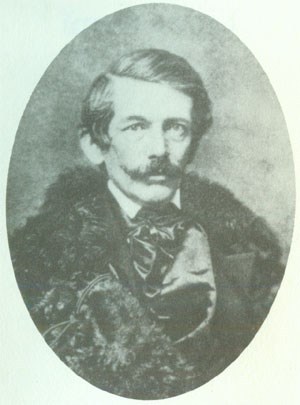
Four years ago, while searching for buried treasure in the archives of Google Books, I stumbled on an article, Bemerkungen über die Bekehrung canadischer zum Christenthum und einige Bekehrungsgeschichten (1859) (Remarks on the Conversion of the Canadian Indians and some Stories of Conversion), by Johann Georg Kohl published in the Augsburg-based, German-language magazine, Das Ausland. Since I neither read nor speak German, to understand the content of the article, I used the laborious process of artificial translation. This was done by pasting the article, paragraph by paragraph, into Google Translate, reinserting the original punctuation, and then clearing up the grammar.
At the time, I chose to only translate the first 900 words, or so, of the 14,000-word article and published it here on Chequamegon History as the bulk of the April 2014 post Chief Buffalo’s Death and Conversion: A new perspective. Recently, a friend of the site asked when the rest of the article would appear online. I resisted, knowing how much work it would be, and used the excuse that the article was not directly about the Chequamegon area. Apparently, I could not resist the lure of Kohl for very long.
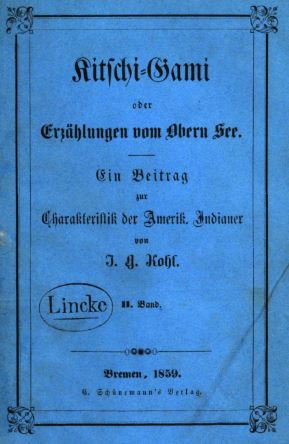
J. G. Kohl (1808-1878) was a German travel writer and pioneering ethnographer, best known in the United States for his 1859 work, Kitchi-Gami: Life Among the Lake Superior Ojibway, a highly-detailed description of travels to La Pointe, L’Anse, and Garden River/Sault Ste. Marie in the summer of 1855. Regular readers of Chequamegon History will know excerpts of this work from Maangozid’s Family Tree, Blackbird’s Speech at the 1855 Payment, Steamboats, Celebrities, Soo Shipping, and Superior Speculation, and other posts.
Kohl’s reputation among scholars of American Indian studies is largely positive. Considering the sheer level of detail he provides in his observations on Ojibwe life, he is perceived as being rare among 19th-century writers for his comparative lack of prejudice of Indian peoples and practices. Robert E. Bieder, in his introduction to the 1985 reprint published by the Minnesota Historical Society, outlines this perception.
The ethnology of Kohl was a sharp contrast to that of Schoolcraft. Kohl seemed to have an empathy for Indian cultures that the American lacked. As Kohl noted in Travels in Canada, “When I was in Europe, and I knew them [Indians] only from books, I must own I considered them rude, cold-blooded, rather uninteresting people, but when I had once shaken hands with them, I felt that they were ‘men and brothers,’ and had a good portion of warm blood and sound understanding, and I could feel as much sympathy for them as for any other human creatures. (Bieder in Kohl, xxxi)”
Racist is a term that comes with a lot of baggage, complexity, and controversy in 2018. As a white man whose primary interest is in collecting old documents, I can quickly get in over my head when it comes to questions of philosophy, sociology, and theories of race. At a bare minimum, however, my definition of non-racist is one who can acknowledge the humanity of other humans when they look or act differently from oneself.
The contrast between Kohl’s writing and that of his contemporaries: Schoolcraft, Ely, Boutwell, etc. is what initially attracted me to Kitchi-Gami. More than once, I have recommended the book to friends as, “The least-racist 19th-century book about the Chequamegon area.” The German’s unbiased outsider perspective comes as a breath of fresh air, even in comparison to Ojibwe ethnographers like Warren and Copway who were very much caught up in the politics of their times:
Kohl’s objective was to produce an ethnological account of a rich and unique culture. In his preface to the German edition of Kitchi-Gami, Kohl explained, “I only take credit for having endeavored to understand them [Ojibway stories and ways of life] correctly and to present them clearly…(xxxii-xxxiii)”
Kohl is especially given credit for his treatment of Ojibwe religion:
The differences between Kohl and Schoolcraft are quickly evident in a comparison of how each described Ojibway religion. Schoolcraft saw Ojibway religious practices as the “darkest and gloomiest picture of Indian life”… Kohl, in contrast, was willing to see much of value in Ojibway practices that compared favorably with the teachings of Christianity…
Where Schoolcraft found “a body of subtile [sic–noted by Bieder] superstitions, and widely-spread popular error … ” Kohl found merely another way of approaching the unknown…(xxxi-xxxii)
Bieder was clearly struck, as I was the first time reading Kitchi-Gami, by how modern it seemed to be:
In short, people behaved in different ways not only because of racial variations but also because they lived in different environments. While several of these assumptions today seem rather commonplace, in the mid-nineteenth century, when many believed race determined a people’s culture and capability, such thinking proved controversial (xxxiv).
Bieder does not completely let Kohl off the hook for his racial attitudes–taking particular issue with the romantic and flowery nature of the prose and his speaking of all Indian nations in general terms–but his final assessment of the author is very positive. This is the same impression I have heard from several others.
Kohl also sometimes saw cultural traits in racial terms. This is not surprising, however, when one considers ethnological assumptions at mid-century, when some German ethnologists like Bastian believed in polygenism and others like Ritter could talk about “passive-indolent” races and “active-energetic” ones. Yet with this said about Kitchi-Gami, one is struck by Kohl’s rather modern notion of the acculturation process. In general, Kohl portrayed Ojibway culture with great sensitivity and found among the Ojibway people beauty, honor, and integrity (xxxvi).
So, with most of what we know about Johann Kohl coming from Kitchi-Gami, questions remain. Do his progressive racial and religious attitudes show up in all his writings from that era? Was he truly as modern and unbiased in his thinking as we have widely been led to believe?
These were the questions I wrestled with while translating Remarks on the Conversion of the Canadian Indians and some Stories of Conversion. In many ways, it read like an bonus chapter of Kitchi-Gami (the two texts were published in the same year). In other ways, the reader will have to decide:

Das Ausland.
Eine Wochenschrift Fur Kunde des geistigen und sittlichen Lebens der Völker
[The Foreign Lands: A weekly for scholars of the moral and intellectual lives of foreign nations]
Augsburg. Nr. 2. 8 January 1859
Remarks on the Conversion of the Canadian Indians and some Stories of Conversion
By J.G. Kohl
A few years ago, when I was at “La Pointe,” one of the so-called “Apostle Islands” in the western corner of the great Lake Superior, an old chief of the local Indians, the Chippeway or Ojibbeway people. His name was “Buffalo,” a man “of nearly a hundred years.” He himself was still a pagan, but many of his children, grandchildren and closest relatives, were already Christians.
I was told that even the aged old Buffalo himself ébranlé, and that his state of mind was wavering. “He thinks highly of the Christian religion,” they told me, “To him, it’s not right that he and his family be of a different faith. He is afraid that they will be separated in death. He knows he will not be near them, and that not only his body should be brought to another cemetery but also he believes his spirit shall go into another paradise away from his children.”
From page 419 of Kohl’s Reisen im Nordwesten der Vereinigten Staaten (1857): “The chiefs [at La Pointe] seemed to have assumed a kind of supremacy over the rest of the Lake Chippewas. Here was an old chief, called Buffalo, who made pretensions to master a very wide stretch of land. The small tribe led by him was now called the La Pointe Band by the Americans.”
William W. Warren, in his History of the Ojibway People, argued that the Crane Totem provided the hereditary chiefs, and that the Loons were made chiefs by the French. See page 51 of the 2009 Second Edition edited by Theresa Schenck.
But Buffalo was the main representative of his people, the living embodiment, so to speak, of the old traditions and stories of his tribe, which once ranged over the whole group of the Apostle Islands and far and wide across the hunting grounds of mainland northern Wisconsin. His ancestors and his family, “the Totem of the Loons” (from the diver)* make claim to be the most distinguished chiefly family of the Ojibwes. Indeed, they believe that from them and their village, a far-reaching dominion once reached across all the tribes of the Ojibbeway Nation. In a word, a kind of monarchy existed with them at the center.
(*The Loon, or Diver, is a well-known large North American bird).
Old Buffalo, or Le Boeuf, as the French call him, or Pishiki, his Indian name, was like the last reflection of that long-vanished glory. He was stuck too deep in the old superstition. He was too intertwined with the Medä Order, the Wabanos, and the Jossakids, or priesthood, of his people. A conversion to Christianity would have destroyed his influence in a still mostly-pagan tribe. It would have been the equivalent of voluntarily stepping down from the throne. Therefore, in spite of his “doubting” state of mind, he could not decide to accept the act of baptism.
One evening, I visited old Buffalo in his bark lodge and found in him grayed and stooped by the years, but nevertheless still quite a sprightly old man. Who knows what kind of fate he had as an old Indian chief on Lake Superior, passing his whole life near the Sioux, and trading with the North West Company, with the British and later with the Americans. With the Wabanos and Jossakids (priests and sorcerers) he conjured for his people, and communed with the sky, but here, people would call him an “old sinner.”
But still, due to his advanced age I harbored a certain amount of respect for him. He took me in, so kindly, and never forgot afterwards, promising to remember my visit as if it had been an honor for him. He told me much of the old glory of his tribe, of the origin of his people, and of his religion from the East. I gave him tobacco, and he, much more generously, gave me a beautiful fife. I later learned from the newspapers that my old host, being ill, departed from this earth soon after my departure from the island. I was seized by a genuine sorrow and grieved for him. Those papers, however, reported a certain cause for consolation, in that Buffalo had said on his deathbed that he desired to be buried in a Christian way. Therefore, shortly before his death, he received Christianity and the Lord’s Supper from the Catholic missionaries, along with the last rites of the Church, a church funeral, and a burial in the Catholic cemetery, where in addition to those already resting, his family would be buried.
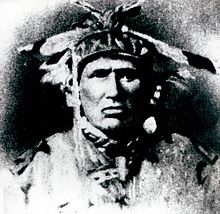 On page 383 of Kitchi-Gami, Kohl expresses very similar sentiments regarding the late-life conversion of the well-known Garden River chief, Zhingwaakoons (Shingwaukonse) to the Anglican faith. Image Source: Wikipedia
The story and end of the old Buffalo are not unique. Rather, it was something rather common for the ancient pagan to proceed only on his deathbed to Christianity, and it starts not only with the elderly adults on their deathbeds, but with their Indian families beginning with their young children. The parents are won over by the children. For the children, while they are young and largely without religion, the betrayal of the old gods and laws is not so great. Therefore, the parents allow it more easily. You yourself are probably already convinced that there is something fairly good behind Christianity, and that your children “could do quite well.” They desire for their children to attain the blessing of the great Christian God and therefore often lead them to the missionaries, though, they themselves may not decide to give up their own ingrained heathen beliefs. The Christians, therefore, also prefer to first contact the youth, and know well that if they have this first, the parents will follow sooner or later because they will not long endure the idea that they are separated from their children in the faith. Because they believe that baptism is “good medicine” for the children, they bring them very often to the missionaries when they are sick.
I was extremely interested in the stories told me about the conversion of children, and then through them, of parents and grandparents. A Protestant clergyman informed me of one instance, which shows it seems to me, that such a conversion often does not take place without fierce resistance in the minds of the Indian converts and other difficulties. It follows:
A pagan Indian, a man of good mind, had been several times to mission Baptist Church and was attentive and solemn while in attendance at the service. Finally, one day, he presented himself to the head of the Mission, which was also a school for the education of Indian children. He came accompanied by his two sons, boys from 8 to 10 years old. He expressed the wish that the eldest should be taken to school and educated in Christianity. He thought it would do his son good. At the same time, he requested that the younger brother stay with him for a while. They were so accustomed to each other that he feared the separation might be too difficult for his eldest. For the time being, however, the younger man did not attend school. He wanted to see how the other would get along. After a little while under this arrangement, the younger was supposed to return to his family in the forest, for the father could not spare both boys for long.
So it happened as desired. The father came to the institution from time to time to see how his son was doing and was pleased with his progress in the arts and sciences. After two years, the education in reading, writing, and arithmetic, etc. was considered complete. The father then brought his second son, and at the same time the third, but again only for the time being “for company” but also to give him a small taste.
Thus, in the end, all three of his sons were brought up in Christianity and in all kinds of useful skills. I was assured that the education had lasted. The three Indian boys had not yet forgotten what they learned in the two years and were until the present still quite literate from their reading, which was eagerly made use of by happy fur traders in a trading post by the lake
But before they became that, and while the youngest of them was still at school, once every autumn, the pagan father came to see the teacher and preacher and told them to say goodbye to him for a while, thinking that his approaching hunts would take him far into the woods on a grand expedition and that he would hardly be able to see them before the spring.
He left, but against all expectations, he was back in the middle of winter, a few weeks after Christmas. He brought with him a great wealth of furs and animal skins, all negotiated and sold at good prices. He came to the preacher and told him that he was right all along. He walked day by day, week after week, in the woods of the interior chasing and checking his traps, alone. He had the fortunate misfortune to have not have killed anything at all. Perhaps, thoughts of his children were disturbing him. He may have continued to think of them and how much good they learned from the Christians. His sleep would be very restless, and he would not have had a good hunting dream. He would have drummed his medicine bag once again, and sang his Wabano songs alone, but no deer, no beaver, no bear, appeared. One evening, having set up his night fire and tent on the bank of a wild stream, and having been taken again by very gloomy and pessimistic ideas, he suddenly jumped up, dug a deep hole for his otter bag and buried it with all its content and magic. Then, he prayed to the Great Spirit, and promised he would become a Christian. That night, he had nothing but bright dreams in which his sons played the leading role, and the next morning, when he was refreshed, he scarcely went a hundred paces and was met by a big moose that he was soon to kill. Driven by longing, he then started on the way back to the mission. On this way back, he shot one animal after the other, day by day, and arrived there with a rich harvest. He now thought that as soon as he could get his wife to baptize herself, he would also be married to his wife in the Christian way. He arranged a time with the preacher, and with this assurance, he took leave of his Christian friend.
It seemed to this good preacher, though, that it took a while before the man reappeared to fulfill his promise. He inquired after him here and there, and heard his Indian was still undecided in relation to conversion to Christianity.
“What do I hear?” said the preacher to him when he once met him, “Have you changed your mind, you are not coming to baptism, do not see your sons anymore, what is that?” “Give me some time,” replied the Indian seriously. “My mind is not yet completely calm, and after some time, I want to tell you everything. “The thing was that the Indians had decided for themselves in favor of Christianity, for the Christianity of the Baptists. But upon the discovery of this resolution, external obstacles, trials, and conflicts appeared, as they, more or less, occur in every transition from one religion to another, and they do not fail to appear in the conversions of these forest children.
Many of his pagan relatives had sought his resolve, and this made him fickle.
 The presence of the Baptists suggests this took place at Garden River, Ontario, (one of Kohl’s stops) where the Anglican church was the dominant Protestant sect, but Baptist Rev. Abel Bingham had a nearby mission. See Chute, Janet E. The Legacy of Shinguakonse: A Century of Native Leadership. U of Toronto Press, 1998. Image Source: findagrave.com
Another, more-powerful Christian Protestant influence, but a non-Baptist one, also appeared. Enemies of the Baptists had told the Indian that he should become a Christian, and a Protestant, but not a Baptist. They even threatened him with confiscation, exclusion from taking part in tribute, and such things, if he would join that sect. The poor man, whose soul was devoted to the Baptists because of his children, had not been able to find his way through everything.
After four weeks, however, he reappeared to his son’s teacher and said that he was now ready. He said that after arranging all his business, he went again to the forest, “to avoid the voices of men,” and to think and pray there alone to the Great Spirit. He went deeper and deeper into the forest, always praying more and more zealously, and became very firm in his convictions. He came directly from the interior, saw and spoke to no one, brought his wife to the preacher, and now wanted to baptize and marry her.
And so it happened, and nobody had cause to regret it afterwards. In the end, the “enemies” stopped threatening, and the sons, as I have already mentioned, prospered.
 The Ven. Bishop Frederic Baraga is Kohl’s likely informant for this and other stories of Catholic mission work in this article. (St. Peter Cathedral, Marquette)
Another story of conversion was shared with me by an excellent friend* from the rich treasury of his experiences. It belongs here as well, and is also characteristic, in many respects, of the local conditions.
(*It was a Catholic missionary.)
An Indian family, consisting of a father, mother and five children, lived far north of Lake Superior on the banks of “Long Lake,” which leads to Hudson’s Bay. They were pagans, like most of the Indian of these lands where a missionary is rarely found.
The oldest of the five children, a boy, fell ill, to the great distress and despair of his parents. The illness reached a dangerous crisis. The terrified parents stayed up all night, with the little boy in feverish dreams, in their lap. Finally, he fell asleep. Gently, he opened his eyes the next morning and said that he felt better and was recovering.
“A splendid dream,” said the boy, “healed him.” “A wind,” he said, “came from the north, going down south to Lake Superior,” and from the wind, a soft voice spoke to him: “The drumming* was not good, and the spells were not good. They do not help. The Indians should refrain from them. The prayer is far better, and only prayer, alone, can help them and comfort them in misfortune, illness, and suffering.” He had a deep longing for hearing the kind voice of the Christ, whom the whites worshiped, and he fervently vowed to obey him, and immediately thereafter he slept gently, and now he was healed.
(*As the Indians accompany all their magic songs and religious performances with drums, the drumming here represents the pagan faith.)
The parents attentively listened to the miracle of their son as he went hunting with them. After a short time, they decided they wanted to immediately obey the voice in his dream and all be baptized. For that purpose, the next spring, they went to Lake Superior, descending southwards in the direction of the dream wind. Over the winter, they collected some provisions, and when spring came, they made their journey of several weeks.
For the further explanation of the matter, I will say as an aside, that Indian parents pay much attention to the dreams of their children, who they love so much, and that in many ways they follow them. For example, it is not uncommon for a good son to assist his father in a bear hunt “with his dreams.” “Father,” the son speaks one morning to the hunter, who may have been unhappy for a long time on the hunt and brought home nothing, “Father I dreamed of a bear for you this night.” “Tell my child.” “Yes, I have only seen him vaguely in the distance, but there by that lake on the banks of that river he must roam about.” The father goes to the designated area, searches the whole day at the river or lake mentioned by the son, but finds nothing and comes back tired in the evening, without prey. “Dream again my son,” speaks the father, “Dream better my child.” The good son lies down on his ear and speaks the next morning, “Father I have again dreamed of the bear. Now I have seen him quite clearly. Oh, it is a big and beautiful animal. It is a female, and she has a cub. Now I know the place where they are. You must search on the southern shore of the lake.” The father gets up again and ransacks the whole south shore of the lake, but in the evening, he comes home again and speaks as before, ”I bring nothing yet my child, although I have seen the footprints of a bear. My son’s dreams are getting better!” In the meantime, the little boy has been fasting, his face is painted a jet-black, and he beats the drum all day and sings all the magic songs he knows. He goes back to sleep. Before the sun comes up, he wakes up and cries out, “Father! Father! The bear! The bear! This time, he came very close to me. I collided with him, head to head, and mouth to muzzle. Run! If you go around here and there and come to that rock, then you will find the bear and her cub on the corner. They dig their roots.” The little one immediately turns his face black again, beats the drum, refuses his breakfast–as hungry as he may be, and again fasts all day to assist his father from afar
In the meantime, the father goes to the corner of the rock. He finds the bears at the ditch, hunts them, brings both home, and now lets his brave and obedient little dreamer have a wonderful meal, and all the rest of the family too: neighbors and relatives, and so on–in general, the whole village.
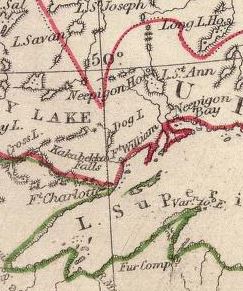 Longlac (Long Lake) appears in the upper-right corner of this 1836 Map of British North America, about 100 miles northeast of Nipigon.
Curious as these things may seem to a European, they are not uncommon in Indian life. At least, I heard of such things all along the way. It will therefore be said, quite understandably and naturally, that our Indians of Long Lake, immediately after the dream of their boy, decided to be baptized and undertook the arduous journey to Lake Superior. They had heard that on the north shore of this lake, at a certain time in spring, a Christian priest was passing to see the sheep of his little flock.
This priest–who was the friend who told me this whole story–sometimes travels in his own canoe and sometimes with a small schooner from the Hudson’s Bay Company. He sails to the north shore of the lake, to those from the northern Indians who descend at appointed dates to the various stations to trade their fur supplies. The merchant ship now carries the missionary, because this is the most certain way to meet with the nomadic Indians, who are otherwise hard to locate.
It annoys me that I did not catch the names of those good Long Lake Indians. “The Long Lake family”–unfortunately, I cannot call them anything else–with their five children had been sitting in their hut of birch bark for five or six weeks, on a promontory overlooking the lake from which they could see far. They did not know the date of arrival of the “Black Robe” of whom they regarded like a savior. Their eagerness to miss nothing had brought them down too early. Their small supplies of dried meat and flour were soon consumed and the fishing at the chosen station was not very productive either.
So when my friend, the good black robe*, finally arrived in his own canoe, he found them all very thin and starving. They had only a handful of flour. The missionary, himself, did not have much and could not help them as abundantly as he might have wished. Yet the people had endured and held fast to their purpose and were glad the expected messenger of God had arrived. In the midst of mutual their poverty, both parties began to work as far as circumstances permitted. The clergyman prepared his catechumens with instruction and prayer, and then at last performed the holy act of baptism on the recovering boy who had the vision, and then on the whole family, leading seven souls at once into the bosom of the church.
(*”Black Robes” is the name the Indians often give to Catholic missionaries.)
Because his labors soon ordered him to hurry along the shore, where still others longed for his soul’s appetite, he had to leave his new candidates after a short time. But when he said goodbye, he did not forget to give them a piece of paper on which a Christian calendar was printed, and a pin.
This gift is common in Catholic conversions and its meaning and purpose can be said as follows. The baptized go right back into the woods, in groups of a few families, to hunt and fish all year round for food and to win some furs for the next trading period with the Hudson’s Bay Company. Since it is naturally impossible for them to meet their pastor before the next year, when they return to the Lake, a calendar serves them as a magnet and guidepost through the passage of a year in the Christian version, and a way to set up an ecclesiastical way of life. I own such a curious calendar page or “Book of Days*,” as the Indians call it, and want to describe it.
(*Gijiyado masinai yan, literally, “paper of the days”)
It is, on one hand, a scheme or a brief survey of all the days of the year, with the outline of the months, and with the description of the ordinary and extraordinary festive or high-festive significance of each day. Every Sunday, or as they say here every “day of prayer” (jour de prière) has a cross (a crooked cross). Every typical day of everyday life has a dash. Every high-feast day of the church has two crooked crosses. Every fasting Friday has a zero, every other ordinary fasting day an asterisk, every other strict fasting day two asterisks, etc. On the other side of the paper, these signs and the names of the months are explained in Anishinabemong (Indian), Wemitikoschimong (French), and Jaganaschimong (English).
Of course, for the full use of such a calendar, an Indian should also be able to at least read what is given. However, during the course of the year, the calendar owner comes in contact with Frenchmen, Englishmen and half-Indians who help him interpret the signs, if he forgot them, from the instructions of the printed reminder.
Partly, however, it helps the Indian to have the same pin that was given to him along with the calendar. With this, the clergyman dabs the day when he had to leave his converts to themselves, and then instructs them in a similar way, to punctuate or stroke each succeeding day, and thus mark through the whole year, from Sunday to Sunday, from feast day to feast day.
Usually, the Indians conscientiously carry out this laborious way of determining the date while in their forests, and find their way to fast at the right time, and pray at the right hour.
But sometimes, it happens that their calendars get out of order. An example was told to me that two days had been lost to an Indian family, and that when they returned to the lake in the spring, it turned out that for the previous six months, they had taken Friday for Sunday and Sunday for Tuesday. Something like this happens to sailors when they arrive at the antipodes after circling the world.

As shown here in Bruegel the Elder’s Netherlandish Proverbs (1559) “looking through your fingers” is a proverb in several European languages that is equivalent to the English, “turn a blind eye.” According to this article from the Catholic News Agency, the Vatican has historically “looked through its fingers” by labeling several semi-aquatic American tetrapods: beaver, muskrat, capybara, iguana, alligator, and puffin as fish for Lenten purposes (Wikipedia).
The Catholic clergy should not be overly strict about observing fasts here. You have to “look through your fingers.” For example, they can not make a crime of it if Indians, during Lent, enjoy various animals instead of only fish, because sometimes they have nothing else, and cannot catch any fish. Our fasting rules are made in cities where the markets offer a wealth of things. Also, our fasting rules are made only in reference to our European animals and food. For some American animals, an appeal had to be made to Rome for an interpretation. And if I am not mistaken, this happened in particular with regard to the frequently-consumed water animal, the beaver, which was then equated by the pope with the fish. The Loon and the Canadian duck were allowed during fast, but not the Canards de France (the common French duck which also occurs in America). Also, one must allow the Indians to check their beaver traps on Sunday because such an omission could bring substantial harm.
In the manner I described, my good Indian family was taught and equipped. They took leave of their stalwart teacher, the Black Robe, and returned to their northern deserts. They roamed the woods, hunting. Through the following year and a second year, they roamed to Hudson’s Bay and on. They were unhappy in the hunt, and had not been able to gain enough furs to make a journey south to Lake Superior rewarding or even possible. They were only able to happily make a return journey after two years, and by the second spring, they were sitting on their promontory again. After waiting for several weeks, their Habit Noir returned to examine them.
Now the missionary wanted them to confess their sins. First they did not understand what that meant, and the father had to explain to them that he wanted to know if they had done any harm in the meantime.They had not seen a priest in all that time. Nonetheless, the calendar, was dotted twice a day for two years of days was completely in line with that of the priest. They had precisely marked every half and every whole fast day and every day of prayer. Even the Ten Commandments, which they had to learn before their baptism, were memorized word for word, and they had taught them to all their children and often repeated them for themselves.
“Did you,” said he, “speak nothing wrong of your neighbor?” “No!” they said, “We have no neighbors. Only a couple of times, in the two years, did hunters come to us who were even poorer and more hungry than we were, and we gave them plenty to eat.”
“Did not you rob or steal something from someone else?” “What?” they said quite indignantly, “that would be most disgusting! Father, how is it possible that you can ask such things to us? Are there any people who could do such things after you gave them teachings and laws, and after they had known Christ? How can you do this to us?”
In short, the Father had to give up his attempt to hold confession, so that he would not discredit himself with his children. He left them quite content, conversing with them on other Christian matters during the following evenings, telling them some new beautiful, unforgettable stories of Christ, the apostles and the prophets, Moses, and Adam, sending them back to the forest with them so that the seeds of divinity might make their way through their simple minds.
This remarkable story is by no means isolated. The missionaries, could otherwise still tell some similar ones. Of course, one has to keep in mind, as I do, that these stories play out in the north of the big freshwater sea. There, the Indians are more frank than ever, as frank, true, open, and– “as impartial as children.”
Taken as a whole, it can be said that the farther away they are from the whites, the more indigenous and better all Indians are. Yes, they are more receptive to Christianity and more pious. I have heard it from many Catholic and Protestant missionaries here, as well as from the Mississippi, that they greatly prefer the conversion of a wild and untouched tribe to the further cultivation of a field which is already riddled or “infected” with so-called civilization. Examples, especially from earlier times, were told of entire Indian tribes that adopted Christianity with eagerness and jubilation, and even more so than the Christian doctrine itself, the Christian legends and stories, especially those of the Old Testament. They were at times so engrossed in these stories that greedy Canadian voyageurs or fur traders charged considerable prices for narrating such a story. For “the story of Adam” they charged a few beaver pelts. If the Indians were charmed by it and demanded more, they took advantage of this excited passion, and “the story of Noah” cost some more beaver-skins or a few gracefully-designed decorated pipes. If the Indians wanted more stories, they would have to give a horse. The story of Joseph’s imprisonment in Egypt cost a horse. It went just the same in the trade with fire water. The inebriated would have to pay for each subsequent glass twice the price of the previous cup.
Indeed, those vile traders even went as far, as I have been told by distinguished men, that at times they made a shameful usury, selling single sayings and words from the Bible. They wrote the name “Noah” or “Adam” or “Mani” (Mary) on a piece of paper and took the furs, while the Indians carried around the paper with the name in an amulet.
But these are probably events of comparatively old age. I have already given an example of how these names and stories then remain as traditions–of course as altered and highly-distorted traditions among the Indians.
From the history of the ancient missions of Canada, it is well-known, that heartfelt and touching desires have sometimes been expressed by Indian tribes to have a missionary among them, and that Indians have undertaken laborious journeys to Montreal and Quebec to invite a Habit noir to lead them into triumph.
 A quick glance through online published works of Fr. Pierre De Smet mention the request by the Bitterroot Salish (Flathead) for a Jesuit missionary, but I was unable to locate any mention of the dream of the white stag (Wikipedia).
But even in recent times, there have been isolated instances of this kind, and it is not uncommon for the desire for a clergyman to be instilled into a whole tribe through a dream, as was the case with my just-described Long Lake family. I was told, as a completely new example, the case of the well-known missions donated by the Jesuit father De Smett in the Rocky Mountains and Oregon among the Flatheads. Even when these dreams occur, though, the missions have much to do.
The so-called Flatheads are one of the most well-educated Indian tribes. They are faithful to the whites, and even other Indians praise them as one of the best tribes. Twenty-five years ago, among these Flatheads, there was an old Jossakid*, who in a dream visited a ghost in the form of a white stag who revealed that the Flatheads were to become Christians and to invite a missionary to join them. As the white stag often repeated this admonition, they finally held a council and sent a deputation to travel across the Rocky Mountains, and all the way down the Missouri to St. Louis to request that the authorities inform the Jesuit Collegium. But the deputies did not come down. On the way they endured so much distress, hunger, misery, and bad winter weather, that as a group, they succumbed to their tribulations.
(*Prophet, sorcerer)
After some time, as the white deer continued to admonish, they sent a second deputation over the 2,000-mile road. But even this did not reach the destination. The enemies of the Flatheads, the Blackfeet, took them by surprise and killed them all.
The whole nation of the Flatheads, however, was inspired by such a longing for a Christian missionary that they still had a counsel, and once again, six young people came forward under the guidance of an elder, and again– of such true martyrs one can hardly speak of in Christianity–offered to go down the thorny path to St. Louis out of the desire for these untasted blessings.
This third deputation finally arrived in that city, bringing their yearning, and that famous father, De Smett, decided to go up to them and become their apostle. That they had really arrived, and that “the missionary” in his suit was coming, was hard-baked into this tribe of the mountains, for one night the white stag reappeared to that old Jossakid and told him he was coming for the last time. He would not return because he clearly saw the Habits Noirs on the Missouri and that salvation was close to them.
It is scarcely necessary, however, to remark that such a desire among an Indian people is not merely a pure thirst for the salvation of their souls, and that no other account is added to it. Sometimes, there are a lot of politics and selfish considerations in the game. The Catholic missionaries, especially the French, know how to conform to the customs and habits of the Indians to a high degree. They live entirely among and with them. They walk with them around the prairies. They go with them on the buffalo hunts. They pray with them for rain or sunshine if either is missing. They perform their masses and devotions with them on the prairies, and ask Heaven for auspicious success and a rich harvest before attacking the buffaloes. They mingle in their tribal and family disputes and seek to balance and reconcile them with much care and effort. They have all the women, children, and elders on their side because with the appearance of a missionary in the village, the lot of these classes always improves significantly. By virtue of the institution of the confessional in their church, they conveniently know everything in advance and are in a position to head off impending threats.
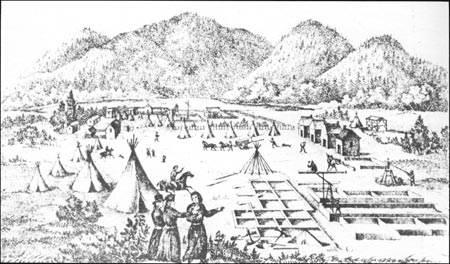 De Smet seems like most likely suspect as the author of this diary. His Bitterroot St. Mary’s Mission was initially successful, but the Salish (Flathead) became disillusioned with the Jesuit, in part due to his attempts to convert the Blackfeet. It’s possible, that De Smet’s contemporary, Baraga, allowed Kohl to view the manuscript diary but did not give permission for Kohl to share it with the public. Image Source: National Park Service
Once, I read an excellent unpublished diary of a Catholic missionary of his 10 years of missionary work and deeds among the Indians. It was full of the most admirable traits and was evidence of the dedication and sacrifice of the author to his profession, and full of the strangest and most interesting contributions to the knowledge of the traits of the Indian character. The good father also illustrated the whole thing with cute pictures and depictions of the Mariancapelle he built, the tents the Flatheads built and adorned, with “flower altars” he erected on the prairies, of the masses and blessings which he gave to the tribe when they went out with him to attack the buffaloes, and of his consultations with hostile tribes with whom he smoked the peace-pipe. I have never seen such nice printed matter, and would still share more if I did not consider it inappropriate for a variety of reasons.
How well the Catholic missionaries, through the means of their confessional, had an effect upon the Indians, I was told of many colorful examples by a Protestant gentleman. Once an Indian woman had lost a richly-embroidered and variegated shawl. No one could discover where it had been. Finally, after many years, one day she found to her great joy her precious cloth again in her tent on her bed. Soon afterwards, her neighbor asked her for a silent and secret conversation in which she confessed to being the thief. The beautiful cloth had her eyes so blinded, she wished very much to possess it. She had stolen it from her at that time, but had never been able to use it for fear of being discovered. She kept it locked in her box and only looked at it at times. Recently, however, she had become ill and had to make such a cumbersome confession to the Catholic priest of all her previous actions that she could no longer conceal the theft. He must have reproached her severely, punished her with a severe penance, and at the same time ordered the cloth to be returned to her neighbor to try to win her forgiveness and otherwise offer her compensation. The Protestant clergyman could hardly have resolved this whole affair so quietly and easily.
Now, if an Indian sees that a neighboring tribe has a beneficial-seeming missionary, under whose mediation things flourish, wandering with his people for weeks in the prairies and praying until the buffalos finally appear, he would like also have something like that. Often, they are even inclined to take away the missionaries from each other, and cases of war for the possession of missionaries have actually occurred.
~~~~~~~
anami’aa– to pray or be a Christian. nindanami’aa– I pray/am a Christian. anami’aad- they pray. anami’aasiig- they do not pray. (Ojibwe People’s Dictionary)
A baptized Indian is usually called by the Canadians un Indian de la prière (a praying Indian). Originally the expression was probably invented by the Indians themselves. The silent reading of the breviary and solitary prayer on the knees, were the first religious acts they observed among their missionaries. The first acts that were required of them when they were converted were the bending of the knee, the folding of the hands, and the worship of God before the cross and before the images of the saints. Therefore they called the Christians “the praying men” (in the Ojibwe, anamiad*) and their religion “the praying” (anamiawin). In contrast to this, the pagans afterward called themselves the “non-praying” (anamiassig).
(*The word comes from nind anamia, “I pray.”)
The French Canadians have faithfully translated and used this saying of the Indians. Of a convert, they say, il s’est mis prière, (he has joined the prayer) and of a pagan, il n’est pas de la prière (he is not yet of the prayers). I have also heard the phrase the praying Indians from the English.
For a long time (probably 150 years), the Indians of these areas saw only one Christian religion. But when the British conquered Canada (in the middle of the last century), they became acquainted with a different kind of Christian with completely different religious customs and ceremonies. They therefore made a distinction between the “French” and the “English” religion. With the first name, they call the Catholics, and with the second, the Protestants.*
(*In Ojibwe, the first is Wemitigodschi-anamiewin, and the second is Jaganashi-anamiewin.)
If an Indian “joins the prayer,” that is to say, is baptized, he is first of all required to renounce all his old pagan superstition. His “medicine bag” and its whole content of magic remedies, amulets, and birchbark scriptures, if not already burned or buried, is destroyed when his decision to become a worshiper is fulfilled.
At times, the clergy have the opportunity to gather up many of these pagan curiosities, but they burn up or eliminate them quickly, often too quickly for the avid ethnographer. I have rarely been able to find any of these things in the places where I visited, not even of the interesting pictures Indians put on birch bark. These should be kept, collected, and donated to science.
But of course, this is easier said than done. In the first place, the Indians, when they become Christians, quite often give their old bark-books to their pagan friends, as they are eager to trade them or give them away. And then, when a clergyman gets his hands on them, it’s not up to him to collect objects that he considers unholy and evil, and are the very thing he takes away from the Indians. A conscientious clergyman must not subordinate the serious demands of religion to the desires of science, and he is almost forced to burn such things. This is how, at the mercy of those bishops in Mexico, the whole heap of splendid old Aztec writings was burned.
Usually the conversion of an Indian “to prayer” is associated with some changes in his personal appearance. In particular, he must renounce the coloring and painting of his face. This coloring cannot be considered as meaningless a pleasure as the makeup of our ladies. Their wild warriors prefer to paint for their religious ceremonies and magic dances. The colors, therefore, are too reminiscent of paganism, and it is de rigueur that a praying Indian should wash himself, and deliver his “vermillion tin,” his green, blue, and yellow paint-powder, and his brush and pallet to the priest.
Finally, he has to wear and comb his hair like a Christian. The pagan Indians have their hair arranged differently. Some cut all around except for a tuft or knotted tuft (a scalp lock) in the middle. The local Ojibwes mostly wear two long thick braids like our Croats. The Canadians call these braids cornettes. Our Croats and Slavonians, when they became Christians, were not asked to renounce this ornament. That one requires it of the Indians may have its reason in that those hairstyles are not of so innocent a nature. They were most likely grown to hold the bloody eagle feathers, the scalps of their enemies, and other military badges reminiscent of their unchristian deeds. Therefore, they must be cut off at baptism, as a sign of the renunciation of the pagan warrior craft.*
(*A Canadian, with whom I discussed these things, told in the following unique way of the changes that a pagan must make to his person upon baptism:
1) On leur coupe les “cornettes” les deux queues qu’ils portent à la tête, et qu’ils appellent dans leur language “Otokoschaman.”
2) On les fait renoncer au Vermillon et à toute autre terre et couleur.
3) Aussi a la danse sauvage et aux jeux payens.
4) De méme à tout ce quientre dans leurs sacs et à toute autre médicine, qui fait du tort à leurs semblables.
5) Finalement ils renoncent aussi au commandement de leurs chefs, c’est à dire quant à la guerre et pour la médicine: mais pas pour les annuités et pas pour la police.)
(To be continued)
Remarks on the Conversion of the Canadian Indians and some Stories of Conversion was published in two consecutive issues of Das Ausland. Each section is about 7000 words. Read Part 2 for the rest of the article and some final thoughts.
Part 1|Part 2

“Considerable Altercation Ensued”
March 11, 2017
By Leo
Here is another gem from Wheeler. It appears to be a short description of a meeting in Odanah that quickly devolves into absurdity. It appears without any associated documents in the chronological professional papers of the Wheeler Family Collection at the Northern Great Lakes Visitor Center. For what it lacks in length and context, it makes up for in insight into the personalities of some prominent Chequamegon residents.
Odanah July 6, 1856
Council of Indians called by Mr Warren to make regulations in regard to the partitions of Domestic Arrivals & crops here. Mr S. C. Collins was appointed chairman & L. H. Wheeler Secretary.
Mr Warren presented some resolutions stating the object of the meeting , which was interpreted to the Indians.
After reading the paper Mr. Warren added remarks explaining the importance of some such regulations for the good of both the Whites & Indians.
After he stopped Blackbird spoke. The substance of his remarks was that the commissioner & agent told him to be still and do nothing till the agent should come, and therefore he should have nothing to do with what was proposed to them.
Out of contempt to Mr Warren he proposed that he should be made chief. He said it was treating them like children for Mr W to pass laws & rules for them to observe, just as though they were not able to take care of their own interests. He was asked more fully Mr Stoddard regarding the concluding remarks of Black Bird in substance, as a motion, to drop the whole subject, seconded the motion upon which considerable altercation ensued. The result of which was that the question should be considered still open for discussion and free remarks be allowed on both sides.
Odanah in 1856, just two years removed from the Treaty of 1854, was a community in flux. The cities of Ashland and Bayfield were growing rapidly with white American settlers. Being the largest of the newly-created reservations, Bad River was also growing as some of the Ojibwe bands from the Island, Ontonagon, St. Croix and the Chippewa River relocated there. In contrast to the Buffalo Bay (Red Cliff) reservation whose population included numerous mix-blood and Catholic families, the people of Bad River were largely full-bloods practicing traditional ways.
A handful of mix-blood and white families did live in Odanah, sponsored by the US Government and eastern missionary societies for Christianizing and “civilizing” the Ojibwe. These included the families of Reverend Leonard H. Wheeler founder of the Odanah mission, Truman A. Warren the government farmer, and John Stoddard the government carpenter. At this point in history, each of these men had lived in or around Odanah for several years and were well-known to area residents.

Truman A. Warren, brother of William W. Warren (Wisconsin Historical Society).
From the document, it appears that Warren called a meeting to create rules for the distribution of crops and goods to the Bad River Band. Warren was born at La Pointe in the mid-1820s to fur-trader Lyman Warren and Marie Cadotte Warren. Most Ojibwe men of the era avoided farming as it was considered women’s work. Warren, however, did not appear to share this view. He was a Christian mix-blood whose grandfather, Michel Cadotte, planted numerous crops on the Island. As a teenager, Truman, spent several years at school in New York learning English and doing farm labor.
Getting the farmer position, which had been created by the Treaty of 1842, was seen as a stroke of good fortune. His sister, Julia Warren Spears later described it as such:
My brother Truman A. Warren was the government farmer for the Indians, who lived at Bad River about 15 miles on the main land from La Pointe. That is where they made there garden and what other farming they did. The government farmer, carpenter, and blacksmith all had good houses to live in and received good salaries. (Spears to Bartlett; October 26, 1924)

Leonard H. Wheeler (Wisconsin Historical Society)
S. C. Collins is listed as the chairman of the meeting. I have been unable to find any other information about his connection to this area. I suspect he may have been a visitor or brief resident enlisted by Leonard Wheeler as a neutral party to conduct the meeting.
The Wheelers and Warrens were very close. Truman’s father was the original force behind bringing the Protestant missions into the area and Leonard and Harriet Wheeler helped raise Truman’s younger sister.
John Stoddard, the government carpenter has been identified by Amorin Mello as the most likely author of the mystery journal found in the Wheeler Collection. He was also close to Wheeler. As was Blackbird, the most prominent chief of the Bad River Ojibwe.
I’ve written before on how Blackbird and Wheeler were an odd couple. Wheeler was dedicated to the destruction of Ojibwe culture while Blackbird was perhaps the strongest advocate for maintaining traditional ways. Even so, the primary sources seem to indicate the men had a strong respect for one another.
Blackbird’s affections for Wheeler, however, don’t appear to extend to Warren. This isn’t overly surprising. Truman, and his deceased brother William, had run counter to the chief’s wishes on multiple occasions. William Warren criticized Blackbird directly at the time of the Martell Delegation. Blackbird also wanted to limit the power of Henry Rice’s “Indian Ring,” which employed numerous La Pointe mix-bloods including the Warrens.
In Theresa Schenck’s excellent William W. Warren: The Life, Letters, and Times of an Ojibwe Leader, the Warrens occasionally betray a paternalistic attitude toward their Ojibwe relatives. For example, William and Truman both initially supported the tragic Sandy Lake Removal of 1850-51 even though the Ojibwe leadership was rightfully opposed to it. Blackbird, of all the chiefs, seemed the least willing to accept condescension and threats to tribal sovereignty so it’s not surprising that a “considerable altercation ensued.”
For Wheeler’s part, I haven’t found any evidence he tried to force Robert’s Rules of Order on this area again.
Davidson, John N. In Unnamed Wisconsin. N.p.: Nabu, 2010. Print.
Paap, Howard D. Red Cliff, Wisconsin: A History of an Ojibwe Community. St. Cloud, MN: North Star of St. Cloud, 2013. Print.
Schenck, Theresa M. William W. Warren: The Life, Letters, and times of an Ojibwe Leader. Lincoln, Neb.: U of Nebraska, 2009. Print.
Comic Book
September 24, 2016
To whom it may concern,
One of the biggest complaints I get about Chequamegon History from friends and family is that the posts on the website are too densely-packed with historical information to be understandable to those who don’t have extensive background in the early history of this area. One comment, from my brother, went something like this:
You and Amorin need to write more clickbait stuff like “Top 10 Chequamegon Villains Compared to Game of Thrones Characters.” Otherwise only historians will read it.
While Cersei Lannister seems unlikely to appear on this site any time soon, my brother has a point. Not everyone who is interested in this history has hours of leisure time for diving into Warren, Schoolcraft, and old speeches and letters. While the introductory texts have gotten better in recent years (Patty Loew’s Indian Nations of Wisconsin and Howard Paap’s Red Cliff being notable examples), most of the mainstream secondary literature about this area’s history remains riddled with inaccuracies and misconceptions that offer little in the way of a bridge to the pre-1860 primary sources.


A couple years ago, the idea of a graphic novel came to me as a way to tackle this problem of access. Starting on Inkscape and finishing with pen and paper, I scratched out thirty pages of the first chapter of what could be a book about the American colonization of Chequamegon (c.1795-1855) and how it impacted the people who lived here. I quickly came to several realizations:
- A graphic novel on this topic can and should be done, but it needs to be awesome, not mediocre.
- It will not be able to get beyond mediocre unless people who actually do this kind of thing for a living take it over.
- Chequamegon History has enough material to easily make this thing exceed 200-300 pages.
- I don’t know if I’ve watched Little Big Man too many times or if the old stereotypes are too hard to shake, but transcribing old documents does not make one able to write cross-cultural 19th-century dialog. It’s hard. If most of the characters in this story are Ojibwe people, someone who can write a good joke, sexy pickup line, or solemn speech in realistic Ojibwe rhetorical style is desperately needed on this project. Otherwise it will just be the same old “Cowboys and Indians” crap, which is exactly what this shouldn’t be. The characters need to be real and multi-dimensional.
- There are many directions/perspectives this project could take that would be interesting. My brain always tends toward written documents and Euro/Western historical thinking, but a diverse group of people could make something like this a lot richer.
- My knowledge of of 18th and 19th-century clothing, material culture and manners is woefully limited.
- I never really did learn how to draw basic shadows, birds, and perspectives.
- Comic-Sans is a terrible font.
Anyways, the rough draft of Chapter One has been sitting on my shelf for over a year collecting dust. Finally, I have the courage to put it up here in all its imperfect glory:
Click to download the full 34-page pdf.
This does not mean this project is actually happening any time soon–at least not with my involvement. However, I am curious what people think. Does there need to be a Chequamegon History graphic novel? What should it cover? Who should do it?
~Leo
La Pointe Bands Part 1
April 19, 2015
By Leo Filipczak

(Click to Enlarge)
On March 8th, I posted a map of Ojibwe people mentioned in the trade journals of Perrault, Curot, Nelson, and Malhoit as a starting point to an exploration of this area at the dawn of the 19th Century. Later the map was updated to include the journal of John Sayer.
In these journals, a number of themes emerge, some of which challenge conventional wisdom about the history of the La Pointe Band. For one, there is very little mention of a La Pointe Band at all. The traders discuss La Pointe as the location of Michel Cadotte’s trading depot, and as a central location on the lakeshore, but there is no mention of a large Ojibwe village there. In fact, the journals suggest that the St. Croix and Chippewa River basins as the place where the bulk of the Lake Superior Ojibwe could be found at this time.
In the post, I repeated an argument that the term “Band” in these journals is less identifiable with a particular geographical location than it is with a particular chief or extended family. Therefore, it makes more sense to speak of “Giishkiman’s Band,” than of the “Lac du Flambeau Band,” because Giishkiman (Sharpened Stone) was not the only chief who had a village near Lac du Flambeau and Giishkiman’s Band appears at various locations in the Chippewa and St. Croix country in that era.
In later treaties and United State’s Government relations, the Ojibwe came to be described more often by village names (La Pointe, St. Croix, Fond du Lac, Lac du Flambeau, Lac Courte Oreilles, Ontonagon, etc.), even though these oversimplified traditional political divisions. However, these more recent designations are the divisions that exist today and drive historical scholarship.
So what does this mean for the La Pointe Band, the political antecedent of the modern-day Bad River and Red Cliff Bands? This is a complicated question, but I’ve come across some little-known documents that may shed new light on the meaning and chronology of the “La Pointe Band.” In a series of posts, I will work through these documents.
This series is not meant to be an exhaustive look at the Ojibwe at Chequamegon. The goal here is much narrower, and if it can be condensed into one line of inquiry, it is this:
Fourteen men signed the Treaty of 1854 as chiefs and headmen of the La Pointe Band:
Ke-che-waish-ke, or the Buffalo, 1st chief, his x mark. [L. S.]
Chay-che-que-oh, 2d chief, his x mark. [L. S.]
A-daw-we-ge-zhick, or Each Side of the sky, 2d chief, his x mark. [L. S.]
O-ske-naw-way, or the Youth, 2d chief, his x mark. [L. S.]
Maw-caw-day-pe-nay-se, or the Black Bird, 2d chief, his x mark. [L. S.]
Naw-waw-naw-quot, headman, his x mark. [L. S.]
Ke-wain-zeence, headman, his x mark. [L. S.]
Waw-baw-ne-me-ke, or the White Thunder, 2d chief, his x mark. [L. S.]
Pay-baw-me-say, or the Soarer, 2d chief, his x mark. [L. S.]
Naw-waw-ge-waw-nose, or the Little Current, 2d chief, his x mark. [L. S.]
Maw-caw-day-waw-quot, or the Black Cloud, 2d chief, his x mark. [L. S.]
Me-she-naw-way, or the Disciple, 2d chief, his x mark. [L. S.]
Key-me-waw-naw-um, headman, his x mark. [L. S.]
She-gog headman, his x mark. [L. S.]
If we consider a “band” as a unit of kinship rather than a unit of physical geography, how many bands do those fourteen names represent? For each of those bands (representing core families at Red Cliff and Bad River), what is the specific relationship to the Ojibwe villages at Chequamegon in the centuries before the treaty?
The Fitch-Wheeler Letter
Chequamegon History spends a disproportionately large amount of time on Ojibwe annuity payments. These payments, which spanned from the late 1830s to the mid-1870s were large gatherings, which produced colorful stories (dozens from the 1855 payment alone), but also highlighted the tragedy of colonialism. This is particularly true of the attempted removal of the payments to Sandy Lake in 1850-1851. Other than the Sandy Lake years, the payments took place at La Pointe until 1855 and afterward at Odanah.
The 1857 payment does not necessarily stand out from the others the way the 1855 one does, but for the purposes of our investigation in this post, one part of it does. In July of that year, the new Indian Agent at Detroit, A.W. Fitch, wrote to Odanah missionary Leonard Wheeler for aid in the payment:
Office Michn Indn Agency
Detroit July 8th 1857
Sir,
I have fixed upon Friday August 21st for the distribution of annuities to the Chippewa Indians of Lake Supr. at Bad River for the present year. A schedule of the Bands which are to be paid there is appended.
I will thank you to apprise the LaPointe Indians of the time of payment, so that they should may be there on the day. It is not necessary that they should be there before the day and I prefer that they should not.
And as there was, according to my information a partial failure in the notification of the Lake De Flambeau and Lake Court Oreille Indians last year, I take the liberty to entrust their notification this year to you and would recommend that you dispatch two trusty Messengers at once, to their settlements to notify them to be at Bad River by the 21st of August and to urge them forward with all due diligence.
It is not necessary for any of these Indians to come but the Chiefs, their headmen and one representative for each family. The women and children need not come. Two Bands of these Indians, that is Negicks & Megeesee’s you will notice are to be notified by the same Messengers to be at L’Anse on the 7th of September that they may receive their pay there instead of Bad River.
I presume that Messengers can be obtained at your place for a Dollar a day each & perhaps less and found and you will please be particular about giving them their instructions and be sure that they understand them. Perhaps you had better write them down, as it is all important that there should be no misunderstanding nor failure in the matter and furthermore you will charge the Messenger to return to Bad River immediately, so that you may know from them, what they have done.
It is my purpose to land the Goods at the mo. of Bad River somewhere about the 1st of Aug. (about which I will write you again or some one at your place) and proceed at once to my Grand Portage and Fond Du Lac payments & then return to Bad River.
Schedule of the Bands of Chipps. of Lake Supr. to be notified of the payment at Bad River, Wisn to be made Friday August 21st for the year 1854.
____________________________
La Pointe Bands.
__________
Maw kaw-day pe nay se [Blackbird]
Chay, che, qui, oh, [Little Buffalo/Plover]
Maw kaw-day waw quot [Black Cloud]
Waw be ne me ke [White Thunder]
Me she naw way [Disciple]
Aw, naw, quot [Cloud]
Naw waw ge won. [Little Current]
Key me waw naw um [Canoes in the Rain] {This Chief lives some distance away}
A, daw, we ge zhick [Each Side of the Sky]
Vincent Roy Sen. {head ½ Breeds.}
Lakes De Flambeau & Court Oreille Bands.
__________
Keynishteno [Cree]
Awmose [Little Bee]
Oskawbaywis [Messenger]
Keynozhance [Little Pike]
Iyawbanse [Little Buck]
Oshawwawskogezhick [Blue Sky]
Keychepenayse [Big Bird]
Naynayonggaybe [Dressing Bird]
Awkeywainze [Old Man]
Keychewawbeshayshe [Big Marten]
Aishquaygonaybe–[End Wing Feather]
Wawbeshaysheence [Little Marten] {I do not know where this Band is but notify it.}
__________
And Negick’s [Otter] & Megeesee’s [Eagle] Bands, which (that is Negicks and Megeesees Bands only) are to be notified by the same Messengers to go to L’Anse the 7th of Sept. for their payt.
Very respectfully
Your Obedt Servt,
A W Fitch
Indn. Agent
Rev. L H Wheeler
Bad River msn.
Source: Wheeler Family Papers, Wisconsin Historical Society, Ashland, WI
This letter reveals that in 1857, three years after the Treaty of La Pointe called for the creation of reservations for the La Pointe, Lac du Flambeau, and Lac Courte Oreilles Bands, the existence of these bands as singular political entities was still dubious. The most meaningful designation attached to the bands in the instructions to Wheeler is that of the chief’s name.
Canoes in the Rain and Little Marten clearly live far from the central villages named in the treaty, and Nigig (Otter) and Migizi (Eagle) whose villages at this time were near Lac Vieux Desert or Mole Lake aren’t depicted as attached to any particular reservation village.

Edawigijig (Edawi-giizhig “Both Sides of the Sky”), 1880 (C.M. Bell, Smithsonian Digital Collections)
Additionally, Fitch makes no distinction between Red Cliff and Bad River. Jechiikwii’o (Little Buffalo) and Vincent Roy Sr. representing the La Pointe mix-bloods could be considered “Red Cliff” chiefs while the rest would be “Bad River.” However, these reservation-based divisions are clearly secondary to the kinship/leadership divisions.
This indicates that we should conceptualize the “La Pointe Band” for the entire pre-1860 historical period as several bands that were not necessarily all tied to Madeline Island at all times. This means of thinking helps greatly in sorting out the historical timeline of this area.
This is highlighted in a curious 1928 statement by John Cloud of Bad River regarding the lineage of his grandfather Edawi-giizhig (Each Side of the Sky), one of the chiefs who signed the 1854 Treaty), to E. P. Wheeler, the La Pointe-born son of Leonard Wheeler:
AN ABRAHAM LINCOLN INDIAN MEDAL
Theodore T. Brown
This medal was obtained by Rev. E. P. Wheeler during the summer of 1928 at Odanah, on the Bad River Indian Reservation, from John Cloud, Zah-buh-deece, a Chippewa Indian, whose grandfather had obtained it from President Abraham Lincoln. His grandfather, A-duh-wih-gee-zhig, was a chief of the La Pointe band of Chippewa. His name signifies “on both sides of the sky or day.” His father was Mih-zieh, meaning a “fish without scales.” The chieftain- ship of A-duh-wih-gee-zhig was certified to by the U. S. Commissioner of Indian Affairs on March 22, 1880.
His father, Mih-zieh, was one of the three chiefs who led the original migration of the Chippewa to Chequamegon Bay, the others being Uh-jih-jahk, the Crane, and Gih-chih-way-shkeenh, or the “Big Plover.” The latter was also sometimes known as Bih-zih-kih, or the “Buffalo.”
A-duh-wih-gee-zhig was a member of the delegation of Lake Superior Chippewa chiefs who went to Washington to see President Lincoln under the guidance of Benjamin G. Armstrong, during the winter of 1861…
~WISCONSIN ARCHEOLOGIST. Vol. 8, No. 3 pg.103
The three chiefs mentioned as leading the “original migration” are well known to history. Waabajijaak, the White Crane, was the father of Ikwezewe or Madeline Cadotte, the namesake of Madeline Island. According to his great-grandson, William Warren, White Crane was in the direct Crane Clan lineage that claimed chieftainship over the entire Ojibwe nation.
Mih-zieh, or Mizay (Lawyerfish) was a prominent speaker for the La Pointe band in the early 19th Century. According to Janet Chute’s research, he was the brother of Chief Buffalo, and he later settled at Garden River, the village of the great “British” Ojibwe chief Zhingwaakoons (Little Pine) on the Canadian side of the Sault.
Bizhiki, of course, is Chief Buffalo, the most famous of the La Pointe chiefs, who died in 1855. Gichi-Weshkii, his other name, is usually translated meaning something along the lines of “Great First Born,” “Great Hereditary Chief,” or more literally as “Great New One.” John Cloud and E. P. Wheeler identify him as the “Big Plover,” which is interesting. Buffalo’s doodem (clan) was the Loon, but his contemporary Zhingwaakoons was of the Plover doodem (Jiichiishkwenh in Ojibwe). How this potentially relates to the name of Buffalo’s son Jechiikwii’o (identified as “Snipe” by Charles Lippert) is unclear but worthy of further investigation.
The characterization of these three chiefs leading the “original migration” to Chequamegon stands at odds with everything we’ve ever heard about the first Ojibwe arrival at La Pointe. The written record places the Ojibwe at Chequamegon at least a half century before any of these chiefs were born, and many sources would suggest much earlier date. Furthermore, Buffalo and White Crane are portrayed in the works of William Warren and Henry Schoolcraft as heirs to the leadership of the “ancient capital” of the Ojibwes, La Pointe.
Warren and Schoolcraft knew Buffalo personally, and Warren’s History of the Ojibways even includes a depiction of Buffalo and Daagwagane (son of White Crane, great uncle of Warren) arguing over which of their ancestors first reached Chequamegon in the mists of antiquity. Buffalo and Daawagane’s exchange would have taken a much different form if they had been alive to see this “original migration.”
Still, Cloud and Wheeler’s statement may contain a grain of truth, something I will return to after filling in a little background on the controversies and mysteries surrounding the timeline of the Ojibwe bands at La Pointe.
TO BE CONTINUED
 Chequamegon History