1839 Petitions against Payments at La Pointe
October 10, 2025
Collected & edited by Amorin Mello
Previously we featured 1837 Petitions from La Pointe to the President about $100,000 Payments to Chippewa Mixed-Bloods from the 1837 Treaty of Saint Peters, and 1838 more Petitions from La Pointe to the President about relocating the Payments from St. Croix River to Lake Superior. Those earlier Petitions were from Chief Buffalo and dozens of Mixed-Bloods from the Lake Superior Chippewa Bands, setting precedence for La Pointe to host the 1842 Treaty and 1854 Treaty in later decades.
Today’s post features 1839 Petitions against Payments at La Pointe. These petitioners appear to be looking to get a competitive edge against the American Fur Company monopoly at La Pointe, by moving the payments south across the Great Divide into the Mississippi River Basin.
For more information about the $100,000 Payments at La Pointe in 1839, we strongly recommend Theresa M. Schenck’s excellent book All Our Relations: Chippewa Mixed-Bloods and the Treaty of 1837.
Letters Received by the Office of Indian Affairs:
La Pointe Agency 1831-1839
National Archives Identifier: 164009310

April 9, 1839
from Joseph Rolette at Prairie du Chien
to the Superintendent of Indian Affairs
Received April 27, 1839
Prairie du Chiene 9th April 1839
T.H. Crawford Esq’r
Commissioner of Ind’n affairs
Washington
You must excuse the liberty I take in addressing you once more – presuming you are not well acquainted yet with this Country, I am requested by the Chippewaw half Breeds that remain in this Country, that it is with regret they have heard that the payment allowed to them in the treaty of the 29th July 1837 is to be made on Lake Superior. They have to State, that it will be impossible for them to reach that place as the American Fur Co. are the only Co. who have vessels on Lake Superior & Notwithstanding they could procure on Passage Gratis on the Lake.
This distance between Sault Ste Mary, and the Mississippi is great and expensive. They also represent that the half Breeds born on Lake Superior are not entitled to any Share of the money allowed.
Whereas if the Payment was made at the Falls of St. Croix, there would be Competition amongst traders, whereas in Lake Superior they can be done none. They humbly beseech that you will have Mercy on them and not allow them to be deprived by intrigue of the Sum due them. So Justly to go in other hands but the real owners.
Respectfully
your most obd’t Serv’t
Joseph Rolette
on behalf of the Chippewaw
Half Breeds of
Prairie du Chiens

June 21, 1839
from the Indian Agent at Saint Peters
via the Governor of Wisconsin Territory
to the Superintendent of Indian Affairs
Received July 16, 1839
Answered July 24, 1839
Superintendency of Indn Affairs
for the Territory of Wisconsin
Mineral Point June 20, 1839
Sir,

Henry Dodge
Governor of Wisconsin Territory
I have the honor to transmit, enclosed herewith, three letters from Major Taliaferro, Indian Agent at St Peters, dated 10th, 16th, & 17th inst, with two Indian talks of 3rd & 14th, for the information of the Department.
Very respectfully
Yours obedt sevt
Henry Dodge
Supt Ind Agy
T Hartley Crawford Esq
Com. of Indian Affairs
North Western Agency St Peters
Upper Mississippi June 10th 1839
Governor,
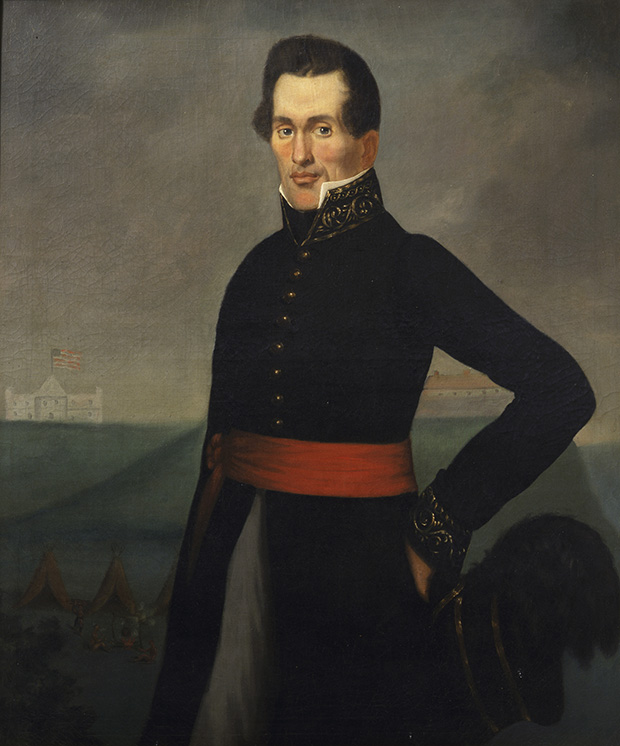
Lawrence Taliaferro
Indian Agent at Fort Snelling
I deem it to be most adviseable that the enclosed paper, addressed to the Agent, and Commanding Officer on this Station from the Chippewa Chief “Hole in the Day” should be forwarded to you, the Indians addressing us being within your Excellency’s Superintendency. It may be well to add that a similar document proceeding from the Chippewa Chiefs of St Croix was on the 4th inst forwarded for the information of the Office of Indian Affairs at Washington.
The consolidation of the two Chippewa Sub Agencies and located at Lapointe, it is feared may lead to rather unpleasant results. I know the Chippewas well, and may have as much influence with those of the Mississippi particularly as most men, yet were I to say “you are not to have an agent in your Country, and you must go to Lapointe in all time to come for your Annuity, and treaty Stipulations.” I should not expect to hold their confidence for one day.
With high respect Sir
Your mo obt Serv
Law Taliaferro
Indian Agent
at S. Peters
His Excellency
Governor Henry Dodge
Suprt of Indi Affairs
at Mineral Point
For Wisconsin
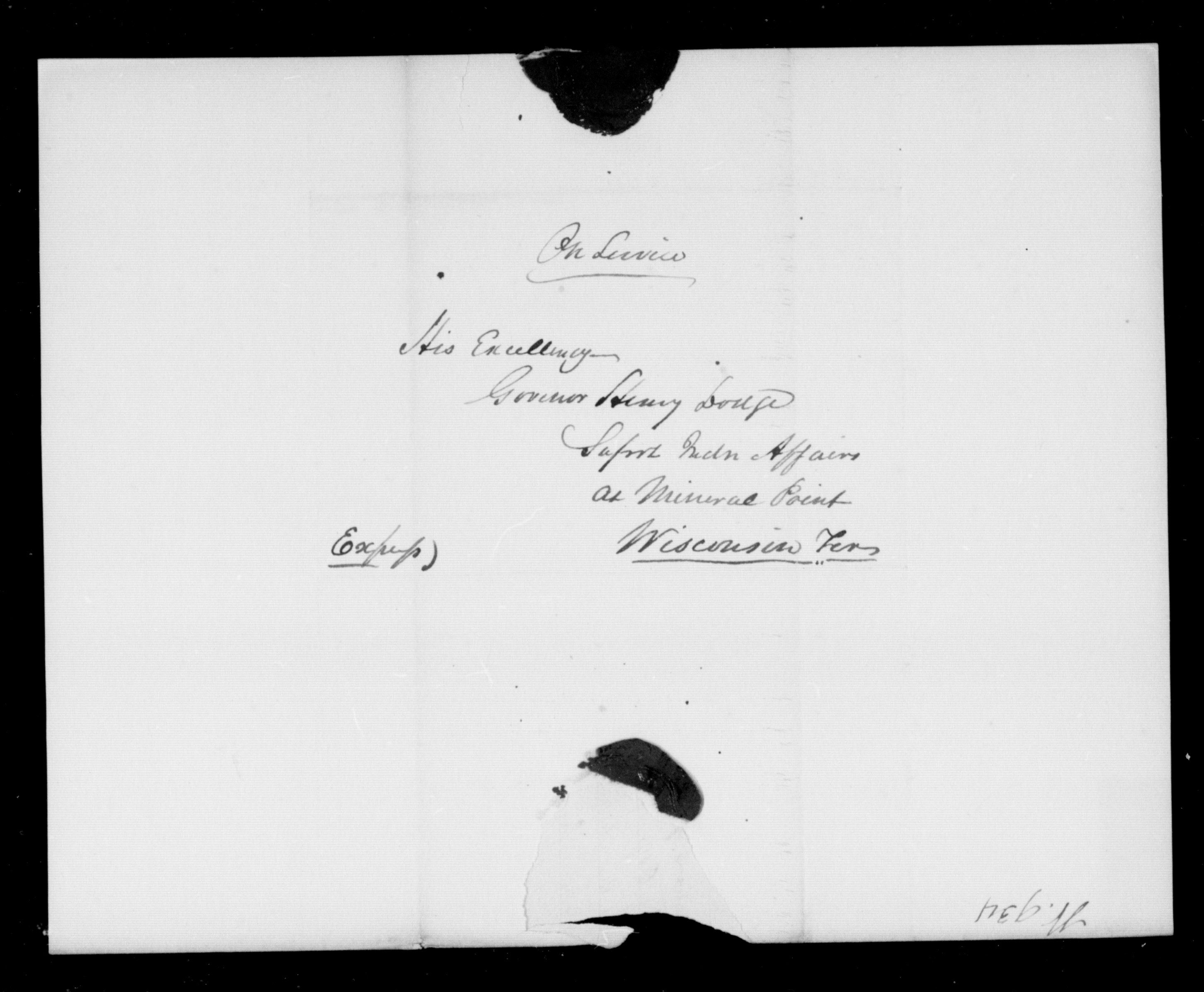
North Western Agency S. Peters
Upper Mississippi June 16th, 1839
Governor
I have been earnestly selected by a number of the respectable half breed Chippewas resident, and others of the Mississippi, interested in the $100,000 set apart in the treaty of July 29, 1837 of S. Peters, to ask for such information as to their final disposal of this Sum, as may be in your possession.
The claimants referred to have learned through the medium of an unofficial letter from the Hon Lucius Lyon to H. H. Sibley Esqr. of this Post, that the funds in question as well as the Debts of the Chippewas to the traders was to be distributed by him as the Commissioner of the United States at Lapointe on Lake Superior, and for this purpose should reach that place on or about the 10th of July. The individuals Seeking this information are those who were were so greatly instrumental in bungling your labours at the treaty aforesaid to a successful issue in opposition to the combinations formed to defeat the objects of the government.
There remains 56,000$ in specie at this post being the one half of the sum appropriated or applicable to the objects in contemplation, and upon which the authorities here have had as yet no official instructions to transfer some special information would relieve the minds of a miserably poor class of people and who fear the entire loss of their just claims.
With high respect, Sir
your mo obt Sevt
Law Taliaferro
Indn Agent
at S. Peters
His Excellency
Gov Henry Dodge
Suprt of Ind. Affairs
for Wisconsin
North Western Agency S. Peters
Upper Mississippi June 17th 1839
Governor
On the 20th of May past I dispatched Peter Quin Express to the Chippewas of the Upper Mississippi with a letter from Maj D. P. Bushnell agent for this tribe at Lapointe notifying the Indians, and half breeds that they would be paid at Lapointe hereafter, and at an earlier period than the last year. I informed you of the result of his mission on the 10th inst. enclosing at the same time the written sentiments of the principle Chief for his people. I now forward by Express a second communication from the Same Source received late last night. I would make a plain copy, but have not time. So the original is Sent.
In four days there will be a large body of Chippwas here, and they cannot be Stopped. There are now also 880 Sioux from remote Sections of the Country at this Post and of course we may calculate on some difficulty between these old enemies. Your presence is deemed essential, or such instructions as may soothe the Angry feelings of the Chippewas, on account of the direction given to their annuity, & treaty Stipulations.
With high respect Sir
Your mo ob Sevt
Law Taliaferro
Indn Agent
at S Peters
His Excellency
Governor Henry Dodge
Suprt of Indi Affairs
Mineral Point
(NB) The Chippewas are to be understood as to the point of payment indicated to be the St.Croix, and not the S.Peters, as deemed by the written Talks. It never could be admited in the present state of the Tribes to pay the Chippewas at this Post, but they might with safety to all parties be paid at or above the Falls of S.Croix, by an agent who they ought to have or some special person assigned to this duty.
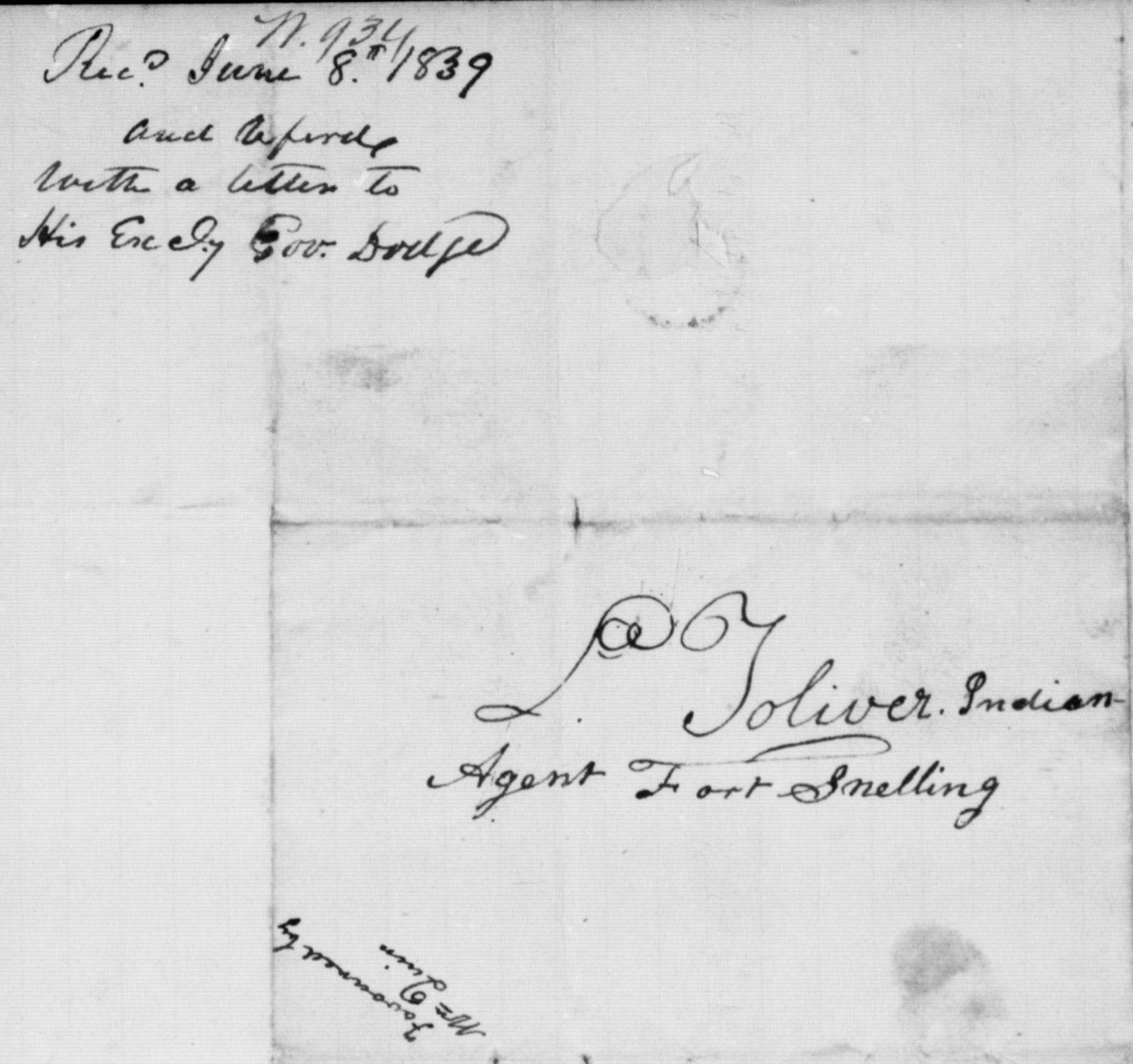
Elk River, June 3rd 1839
Maj Toliver. Maj Plimpton.
My respects to you both, and my hand: I am to let you know that I intend to pay you a visit, with my chiefs as braves, the principle of my warriors are verry anxious to pay you a visit.
The above mentioned men are verry anxious to see Gov. Dodge with whom we made the treaty, that we may have a talk with him. It was with him commissioner of the United-States we made the treaty, and we are verry much disappointed to hear the newes, we hear this day (IE that we must go to Lake Sup. for our pay) which we have this day decided we will not do; that we had rather die first: it is on this account we wish to pay you a visit, and have a talk with Gov. Dodge. You sir, Maj Toliver know verry well our situation, and that the distance is so great for us to go to Lake Sup. for to get our pay &c. or even a gun repaired; that it is inconsistent for such a thing to be required of us; even if we did literally place the matter in the hands of Government. We are all living yet that was present at the treaty when we ceded the land to the Unitedstates, and remember well what was our understanding in the agreement.
We now wish Maj Toliver; to mention to your children that it is a fals report that we had any intention to have more difficulty with the Sioux, as our Missionaries can attest as far as they understand us. We will be at the Fort in seventeen days to pay you a friendly visit as soon as we received the news; we sent expressed to our brethren to meet us at the mouth of Rum Riv. and accompany us to the Fort.
It is my desire that Maj Plimpton would keep fast hold of the money appropriated for my children the half breeds, in this section, and not let it go to Lake Sup. as they are like ourselves and it would cost them a great deal to go there for it.
Pah-ko-ne-ge-zeck or Hole in the Day
Maj Toliver
Maj Plimpton

Elk River June 14 1839
Maj L. Toliphero,
My hand, It is twelve dayes since we have the newes and are all qouiet yet. My father I shall not forget what was promiced us below, I think of what you promiced us when you were buing our lands.
My father this is the thing that you & we me to take care of when you bougt our lands & I remember all that you said to me. My father I am the cheif of all the Indians that sold there land and this is the time when all of your children are coming down to receive their payment where you promiced to pay us.
My father I am the cheif and hold the paper containing the promices that you made us. The Gov. D. promised us that in one year from the date of the treaty that we should receive our first payment and so continue anually.
My father; I have done for manny years what the white men have told me and have done well, and now I must look before we are to know what I have to do.
When I buy anything I pay immediately the Great Spirit knows this Now when we get below we are expecting all that you promiced us Ministers and Black Smiths and cattle.
I say my father that we want our payment at St Peters where you promiced us. I said that I wanted the half breeds to be payed there with us. I told you that when the half breeds were payed that there was some French that should have something ((ie) of the half breed money) because they had lived with us for many years and allways gave us some thing to eat when we went to their houses.
My father all of your children are displeased because you are to pay us in another place and not at St Peters it is to hard and far for us to be payed at Lapointe.
My father I did not know that the payment was to be made at Lapointe until we heard by Mr Quin.
My father it is so far to Lapointe that we should lose all of our children before we could get their and if we should brake our Gun we may throw it in the water for we cannot go there to get it mended, and if we have a [illegible] holding a coppy of the Treaty in his hand
Black Smith we want him here and not at Lapoint.
My father I want that you should tell me who it was told you that we all wanted our payment at Lapoint. All of the Cheifs are alive that hear what you said to us below. You Mr Toliphero hear me ask Gov Do’ for an Agen and to have him located here and he promiced that it should be so. I want that the Agent should be here because our enemies come here sometimes and if he was here perhaps they would not come. My father we are all of us very sorry that we did not ask you to come and be our Agent. I don’t know who made all of the nois about our being payed at Lapoint. I don’t look above where we should all starve for our payment but below where the Treaty was made.
My father give my compliments to all of the officers at the Fort.
Hole in The Day X
Maj L Toliphereo
1842 Treaty Speeches at La Pointe in the News
May 15, 2024
Collected by Amorin Mello & edited by Leo Filipczak

Green Bay Republican:
Saturday, November 5, 1842, Page 2.

Robert Stuart was a top official in Astor’s American Fur Company in the upper Great Lakes region. Apparently, it was not a conflict of interest for him to also be U.S. Commissioner for a treaty in which the Fur Company would be a major beneficiary.
A gentleman who has recently returned from a visit to the Lake Superior Indian country, has furnished us with the particulars of a Treaty lately negotiated at La Pointe, during his sojourn at that place, by ROBERT STUART, Esq., Commissioner of Indian Affairs for the district of Michigan, on the part of the United States, and by the Chiefs and Braves of the Chippeway Indian nation on their own behalf and their people. From 3 to 4000 Indians were present, and the scene presented an imposing appearance. The object of the Government was the purchase of the Chippeway country for its valuable minerals, and to adopt a policy which is practised by Great Britain, i.e. of keeping intercourse with these powerful neighbors from year to year by paying them annuities and cultivating their friendship. It is a peculiar trait in the Indian character of being very punctual in regard to the fulfillment of any contract into which they enter, and much dissatisfaction has arisen among the different tribes toward our Government, in consequence of not complying strictly to the obligations on their part to the Indians, in the time of making the payments, for they are not generally paid until after the time stipulated in the treaty, and which has too often proven to be the means of losing their confidence and friendship.
On the 30th of September last, Mr. Stuart opened the Council, standing himself and some of his friends under an awning prepared for the occasion, and the vast assembly of the warlike Chippeways occupying seats which were arranged for their accommodation. A keg of Tobacco was rolled out and opened as a present to the Indians, and was distributed among them; when Mr. Stuart addressed them as follows:-
The Passenger Pigeon (Ectopistes migratorius) was a metaphor for infinite abundance in 1842. In less than 75 years, the species would be extinct. What that means for Stuart’s metaphor is hard to say (Biodiversity Heritage Library).
The chiefs who had been to Washington were the St. Croix chiefs Noodin (pictured below) and Bizhiki. They were brought to the capital as part of a multi-tribal delegation in 1824, which among other things, toured American military facilities.I am very glad to meet and shake hands with so many of my old friends in good health; last winter I visited your Great Father in Washington, and talked with him about you. He knows you are poor and have but little for your women and children, and that your lands are poor. He pities your condition, and has sent me here to see what can be done for you; some of your Bands get money, goods, and provisions by former Treaty, others get none because the Great Council at Washington did not think your lands worth purchasing. By the treaty you made with Gov. Cass, several years ago, you gave to your lands all the minerals; so the minerals belong no longer to you, and the white men are asking him permission to take the minerals from the land. But your Great Father wishes to pay you something for your lands and minerals before he will allow it. He knows you are needy and can be made comfortable with goods, provisions, and tobacco, some Farmers, Carpenters to aid in building your houses, and Blacksmiths to mend your guns, traps, &c., and something for schools to learn your children to read and write, and not grow up in ignorance. I hear you have been unpleased about your Farmers and Blacksmiths. If there is anything wrong I wish you would tell me, and I will write all your complaints to your Great Father, who is ever watchful over your welfare. I fear you do not esteem your teachers who come among you, and the schools which are among you, as you ought. Some of you seem to think you can learn as formerly, but do you not see that the Great Spirit is changing things all around you. Once the whole land was owned by you and other Indian Nations. Now the white men have almost the whole country, and they are as numerous as the Pigeons in the spring. You who have been in Washington know this; but the poor Indians are dying off with the use of whiskey, while others are sent off across the Mississippi to make room for the white men. Not because the Great Spirit loves the white men more than the Indians, but because the white men are wise and send their children to school and attend to instructions, so as to know more than you do. They become wise and rich while you are poor and ignorant, but if you send your children to school they may become wise like the white men; they will also learn to worship the Great Spirit like the whites, and enjoy the prosperity they enjoy. I hope, and he, that you will open your ears and hearts to receive this advice, and you will soon get great light. But said he, I am afraid of you, I see but few of you go to listen to the Missionaries, who are now preaching here every night; they are anxious that you should hear the word of the Great Spirit and learn to be happy and wise, and to have peace among yourselves.
The 1837 Treaty of St. Peters was mostly negotiated by Maajigaabaw or “La Trappe” of Leech Lake and other chiefs from outside the territory ceded by that treaty. The chiefs from the ceded lands were given relatively few opportunities to speak. This created animosity between the Lake Superior and Mississippi Bands.Your Great Father is very sorry to learn that there are divisions among his red children. You cannot be happy in this way. Your Great Father hopes you will live in peace together, and not do wrong to your white neighbors, so that no reports will be made against you, or pay demanded for damages done by you. These things when they occur displease him very much, and I myself am ashamed of such things when I hear them. Your Great Father is determined to put a stop to them, and he looks that the Chiefs and Braves will help him, so that all the wicked may be brought to justice; then you can hold up your heads, and your Great Father will be proud of you. Can I tell him that he can depend upon his Chippeway children acting in this way.
One other thing, your Great Father is grieved that you drink whiskey, for it makes you sick, poor, and miserable, and takes away your senses. He is determined to punish those men who bring whiskey among you, and of this I will talk more at another time.
Stuart would become irritated after the treaty when the Ojibwe argued they did not cede Isle Royale in 1842. This lead to further negotiations and an addendum in 1844. The Grand Portage Band, who lived closest to Isle Royale, was not party to the 1842 negotiations.When I was in New York about three moons ago I found 800 blankets which were due you last year, which by some mismanagement you did not get. Your Great Father was very angry about it, and wished me to bring them to you, and they will be given you at the payment. He is determined to see that you shall have justice done you, and to dismiss all improper agents. He despises all who would do you wrong. Now I propose to buy your lands from Fond du Lac, at the head of Lake Superior, down Lake Superior to Chocolate River near Grand Island, including all the Islands in the limits of the United States, in the Lake, making the boundary on Lake Superior about 250 miles in extent, and extending back into the country on Lake Superior about 100 miles. Mr. Stuart showed the Chiefs the boundary on the map, and said you must not suppose that your Great Father is very anxious to buy your lands, the principal object is the minerals, as the white people will not want to make homes upon them. Until the lands are wanted you will be permitted to live upon them as you now do. They may be wanted hereafter, and in this event your Great Father does not wish to leave you without a home. I propose that the Fond du Lac lands and the Sandy Lake tract (which embrace a tract 150 miles long by 100 miles deep) be left you for a home for all the bands, as only a small part of the Fond du Lac lands are to be included in the present purchase. Think well on the subject and counsel among yourselves, but allow no black birds to disturb you, your Great Father is now willing and can do you great good if you will, but if not you must take the consequences. To-morrow at the fire of the gun you can come to the Council ground and tell me whether the proposal I make in the name of your Great Father is agreeable to you; if so I will do what I can for you, you have known me to be your friend for many years. I would not do you wrong if I could, but desire to assist you if you allow me to do so. If you now refuse it will be long before you have another offer.

October 1st. At the sound of the Cannon the Council met, and when all were ready for business, Shingoop, the head Chief of the Fond du Lac band, with his 2d and 3d Chiefs, came forward and shook hands with the Commissioner and others associated with him, then spoke as follows:
Zhingob (Balsam), also known as Nindibens, signed the 1837, 1842, and 1854 treaties as chief or head chief of Fond du Lac. The Zhingob on earlier treaties is his father. See Ely, ed. Schenck, The Ojibwe Journals of Edmund F. ElyNaagaanab (Foremost Sitter) is likely the 2nd Fond du Lac chief mentioned here.
My friend, we now know the purpose you came for and we don’t want to displease you. I am very glad there are so many Indians here to hear me. I wish to speak of the lands you want to buy of me. I don’t wish to displease the Traders. I don’t wish to displease the half-breeds; so I don’t wish to say at once, right off. I want to know what our Great Father will give us for them, then I will think and tell you what I think. You must not tell a lie, but tell us what our Great Father will give us for our lands. I want to ask you again, my Father. I want to see the writing, and who it is that gave our Great Father permission to take our minerals. I am well satisfied of what you said about Blacksmiths, Carpenters, Schools, Teachers, &c., as to what you said about whiskey, I cannot speak now. I do not know what the other Chiefs will say about it. I want to see the treaty and the name of the Chiefs who signed. The Chief answered that the Indians had been deceived, that they did not so understand it when they signed it.

Mr. Stuart replied that this was all talk for nothing, that the Government had a right to the minerals under former treaty, yet their Great Father wishes now to pay for the minerals and purchase their lands.
The Chief said he was satisfied. All shook hands again and the Chief retired.
The next Chief who came forward was the “Great Buffalo” Chief of the La Pointe band. Had heavy epaulettes on his shoulders and a hat trimmed with tinsel, with a heavy string of bear claws about his neck, and said:-
“Big Buffalo (Chippewa),” 1832-33 by Henry Inman, after J.O. Lewis (Smithsonian).
My father, I don’t speak for myself only, but for my Chiefs. What you said here yesterday when you called us your children, is what I speak about. I shall not say what the other Chief has said, that you have heard already.

He then made some remarks about the Missionaries who were laboring in their country and thought as yet, little had been done. About the Carpenters, he said, that he could not tell how it would work, as he had not tried it yet.
We have not decided yet about the Farmers, but we are pleased at your proposal about Blacksmiths. Can it be supposed that we can complete our deliberations in one night. We will think on the subject and decide as soon as we can.
The great Antonaugen Chief came next, observing the usual ceremony of shaking hands, and surrounded by his inferior Chiefs, said:-
The great Ontonagon Chief is almost certainly Okandikan (Buoy), depicted here in a reproduction of an 1848 pictograph carried to Washington and reproduced by Seth Eastman. Okandikan is depicted as his totem symbol, the eagle (largest, with wing extended in the center of the image).
My father and all the people listen and I call upon my Great Father in Heaven to bear witness to the rectitude of my intentions. It is now five years since we have listened to the Missionaries, yet I feel that we are but children as to our abilities. I will speak about the lands of our band, and wish to say what is just and honorable in relation to the subject. You said we are your children. We feel that we are still, most of us, in darkness, not able fully to comprehend all things on account of our ignorance. What you said about our becoming enlightened I am much pleased; you have thrown light on the subject into my mind, and I have found much delight and pleasure thereby. We now understand your proposition from our Great Father the President, and will now wait to hear what our Great Father will give us for our lands, then we will answer. This is for the Antannogens and Ance bands.

Mr. Stuart now said, that he came to treat with the whole Chippeway Nation and look upon them all as one Nation, and said
I am much pleased with those who have spoken; they are very fine orators; the only difficulty is, they do not seem to know whether they will sell their lands. If they have not made up their minds, we will put off the Council.
Lac du Flambeau Chief, “the Great Crow,” came forward with the strict Indian formalities but had but little to say, as he did not come expecting to have any part in the treaty, but wished to receive his payment and go home.
The 2d Chief of this band wished to speak. He was painted red with black spots on each cheek to set off his beauty, his forehead was painted blue, and when he came to speak, he said:-
What the last Chief has said is all I have to say. We will wait to hear what your proposals are and will answer at a proper time.
Next came forward “Noden,” or the “Great Wind,” Chief of the Mill Lac band, and said:-

Noodin (Wind) is mentioned here as representing the Mille Lacs Band, though his village was usually on Snake River of the St. Croix.
I have talked with my Great Father in Washington. It was a pity that I did not speak at the St. Peters treaty. My father, you said you had come to do justice. We do not wish to do injustice to our relations, the half-breeds, who are also our friends. I have a family and am in a hurry to get home, if my canoes get destroyed I shall have to go on foot. My father, I am hurry, I came for my payment. We have left our wives and children and they are impatient to have us return. We come a great distance and wish to do our business as soon as we can. I hope you will be as upright as our former agent. I am sorry not to see him seated with you. I fear it will not go as well as it would. I am hurry.
Mr Stuart now said that he considered them all one nation, and he wished to know whether they wished to sell their lands; until they gave this answer he could do nothing, and as it regards any thing further he could say nothing, and said they might now go away until Monday, at the firing of the Cannon they might come and tell him whether they would sell their country to their Great Father.
We intend giving the remainder of the proceedings of the treaty in our next.
Green Bay Republican:
SATURDAY, NOVEMBER 12, 1842, Page 2.
(Treaty with the Chippeways Concluded.)
Monday morning three guns were fired as a signal to open the Treaty. When all things were in readiness, Mr. Stuart said:
I am glad you have now had time for reflection, and I hope you are now ready like a band of brothers to answer the question which I have proposed. I want to see the Nation of one heart and of one mind.
Shingoop, Chief of the Fond du Lac band, came forward with full Indian ceremony, supported on each side by the inferior Chiefs. He addressed the Chippeway nation first, which was not fully interpreted; then he turned to the Commissioner and said:
in this Treaty which we are about to make, it is in my heart to say that I want our friends the traders, who have us in charge provided for. We want to provide also for our friends the half-breeds – we wish to state these preliminaries. Now we will talk of what you will give us for our country. There is a kind of justice to be done towards the traders and half-breeds. If you will do justice to us, we are ready to-morrow to sign the treaty and give up our lands. The 2d Chief of the band remarked, that he considered it the understanding that the half-breeds and traders were to be provided for.
The Great Buffalo, of La Pointe band, and his associate Chiefs came next, and the Buffalo said:
My Father, I want you to listen to what I say. You have heard what one Chief has said. I wish to say I am hurry on account of keeping so many men and women here away from their homes in this late season of the year, so I will say my answer is in the affirmative of your request; this is the mind of my Chiefs and braves and young men. I believe you are a correct man and have a heart to do justice, as you are sent here by our Great Father, the President. Father, our traders are so related to us that we cannot pass a winter without them. I want justice to be done them. I want you and our Great Father to assist us in doing them justice, likewise our half-breed children – the children of our daughters we wish provided for. It seems to me I can see your heart, and you are inclined to do so. We now come to the point for ourselves. We wish to know what you will give us for our country. Tell us, then we will advise with our friends. A part of the Antaunogens band are with me, the other part are turned Christians and gone with the Methodist band, (meaning the Ance band at Kewawanon) these are agreed in what I say.
The Bird, Chief of the Ance band, called Penasha, came forward in the usual form and said:
My Father, now listen to what I have to say. I agree with those who have spoken as far as our lands are concerned. What they say about our traders and half-breeds, I say the same. I speak for my band, they make use of my tongue to say what they would say and to express their minds. My Father, we listen to what you will offer for our country, then we will say what we have to say. We are ready to sell our country if your proposals are agreeable. All shook hands – equal dignity was maintained on each side – there was no inclination of the head or removing the hat – the Chiefs took their seats.
The White Crow next appeared to speak to the Great Father, and said:-
White Crow is apparently unaware that in the eyes of the United States, his lands, (Lac du Flambeau) were already sold five years earlier at St. Peters. Clearly, the notion of buying and selling land was not understood by him in the same way it was understood by Stuart.
Listen to what I say. I speak to the Great Father, to the Chiefs, Traders, and Half-breeds. You told us there was no deceit in what you say. You may think I am troublesome, but the way the treaty was made at St. Peters, we think was wrong. We want nothing of the kind again. We think you are a just man. You have listened to those Chiefs who live on Lake Superior. What I say is for another portion of country. It appears you are not anxious to buy the lands where I live, but you prefer the mineral country. I speak for the half-breeds, that they may be provided for: they have eaten out of the same dish with us: they are the children of our sisters and daughters. You may think there is something wrong in what I say. As to the traders, I am not the same mind with some. The old traders many years ago, charged us high and ought to pay us back, instead of bringing us in debt. I do not wish to provide for them; but of late years they have had looses and I wish those late debts to be paid. We do not consider that we sell our lands by saying we will sell them, so we consent to sell if your proposals are agreeable. We will listen and hear what they are.
Several others of the Chiefs spoke well on the subject, but the substance of all is contained in the above.
Hole-in-the-day, who is at once an orator and warrior, came forward; he had an Arkansas tooth pick in his hand which would weigh one or two pounds, and is evidently the greatest and most intelligent man in the nation, as fine a form of body, head and face, as perhaps could be found in any country.
Father, said he, I arise to speak. I have listened with pleasure to your proposal. I have come to tie the knot. I have come to finish this part of the treaty, and consent to sell our country if the offers of the President please us. Then addressing the Chiefs of the several bands he said, the knot is now tied, and so far the treaty is complete, not to be changed.

Zhaagobe (“Little” Six) signed as first chief from Snake River, and he is almost certainly the “Big Six” mentioned here. Several Ojibwe and Dakota chiefs from that region used that name (sometimes rendered in Dakota as Shakopee).
Big Six now addressed the whole Nation in a stream of eloquence which called down thunders of applause; he stands next to Hole-in-the-day in consequence and influence in the nation. His motions were graceful, his enunciation rather rapid for a fine speaker. He evidently possesses a good mind, though in person and form he is quite inferior to Hole-in-the-day. His speech was not interpreted, but was said to be in favor of selling the Chippeway country if the offer of the Government should meet their expectations, and that he took a most enlightened view of the happiness which the nation would enjoy if they would live in peace together and attend to good counsel.
Mr. Stuart now said,
I am very happy that the Chippewa nation are all of one mind. It is my great desire that they should continue to for it is the only way for them to be happy and wise. I was afraid our “White Crow” was going to fly away, but am happy to see him come back to the flock, so that you are all now like one man. Nothing can give me greater pleasure than to do all for you I can, as far as my instructions from your Great Father will allow me. I am sorry you had any cause to complain of the treaty at St. Peters. I don’t believe the Commissioner intended to do you wrong, but perhaps he did not know your wants and circumstances so as to suit. But in making this treaty we will try to reconcile all differences and make all right. I will now proceed to offer you all I can give you for your country at once. You must not expect me to alter it, I think you will be pleased with the offer. If some small things do not suit you, you can pass them over. The proposal I now make is better than the Government has given any other nation of Indians for their lands, when their situations are considered. Almost double the amount paid to the Mackinaw Indians for their good lands. I offer more than I at first intended as I find there are so many of you, and because I see you are so friendly to our Government, and on account of your kind feelings for the traders and half-breeds, and because you wish to comply with the wishes of your Great Father, and because I wish to unite you all together. At first I thought of making your annuities for only twenty years but I will make them twenty-five years. For twenty-five years I will offer you the following and some items for one year only.
$12,500 in specie each year for 25 years, $312,500
10,500 in goods ” ” ” ” ” 262,500
2,000 in provisions and tobacco, do. 50,000$625,000
This amount will be connected with the annuity paid to a part of the bands on the St. Peters treaty, and the whole amount of both treaties will be equally distributed to all the bands so as to make but one payment of the whole, so that you will be but one nation, like one happy family, and I hope there will be no bad heart to wish it otherwise. This is in a manner what you are to get for your lands, but your Great Father and the great Council at Washington are still willing to do more for you as I will now name, which you will consider as a kind of present to you, viz:
2 Blacksmiths, 25 years, $2000, $50,000
2 Farmers, ” ” 1200, 30,000
2 Carpenters, ” ” 1200, 30,000
For Schools, ” ” 2000, 50,000
For Plows, Glass, Nails, &c. for one year only, 5000
For Credits for one year only, 75,000
For Half-breeds ” ” ” 15,000$255,000
Total $880,000
With regards to the claims. I will not allow any claim previous to 1822; none which I deem unjust or improper. I will endeavor to do you justice, and if the $75,000 is not all required to pay your honest debts, the balance shall be paid to you; and if but a part of your debts are paid your Great Father requires a receipt in full, and I hope you will not get any more credits hereafter. I hope you have wisdom enough to see that this is a good offer. The white people do not want to settle on the lands now and perhaps never will, so you will enjoy your lands and annuities at the same time. My proposal is now before you.
The Fond du Lac Chief said, we will come to-morrow and give our answer.
October 4th, Mr. Stuart opened the Council.
Clement Hudon Beaulieu, was about thirty at this time and working his way up through the ranks of the American Fur Company at the beginning of what would be a long and lucrative career as an Ojibwe trader. His influence would have been very useful to Stuart as he was a close relative of Chief Gichi-Waabizheshi. He may have also been related to the Lac du Flambeau chiefs–though probably not a grandson of White Crow as some online sources suggest.
We have now met said he, under a clear sun, and I hope all darkness will be driven away. i hope there is not a half-breed whose heart is bad enough to prevent the treaty, no half-breed would prevent he treaty unless he is either bad at heart or a fool. But some people are so greedy that they are never satisfied. I am happy to see that there is one half-breed (meaning Mr. Clermont Bolio) who has heart enough to advise what is good; it is because he has a good heart, and is willing to work for his living and not sponge it out of the Indians.

We now heard the yells and war whoops of about one hundred warriors, ornamented and painted in a most fantastic manner, jumping and dancing, attended with the wild music usual in war excursions. They came on to the Council ground and arrested for a time the proceedings. These braves were opposed to the treaty, and had now come fully determined to stop the treaty and prevent the Chiefs from signing it. They were armed with spears, knives, bows and arrows, and had a feather flag flying over ten feet long. When they were brought to silence, Mr. Stuart addressed them appropriately and they soon became quiet, so that the business of the treaty proceeded. Several Chiefs spoke by way of protecting themselves from injustice, and then all set down and listened to the treaty, and Mr. Stuart said he hoped they would understand it so as to have no complaints to make afterwards.
The provisions of the treaty are the same as made in the proposals as to the amount and the manner of payment. The Indians are to live on the lands until they are wanted by the Government. They reserve a tract called the Fond du Lac and Sandy Lake country, and the lands purchased are those already named in the proposals. The payment on this treaty and that of the St. Peters treaty are to be united, and equal payments made to all the bands and families included in both treaties. This was done to unite the nation together. All will receive payments alike. The treaty was to be binding when signed by the President and the great Council at Washington. All the Chiefs signed the treaty, the name of Hole-in-the-day standing at the head of the list, and it is said to be the greatest price paid for Indian lands by the United States, their situation considered, though the minerals are said to be very valuable.
The Commissioner is said to have conducted the treaty in a very just, impartial and honorable manner, and the Indians expressed the kindest feelings towards him, and the greatest respect for all associated with him in negotiating the treaty and the best feelings towards their Agent now about leaving the country, and for the Agents of the American Fur Company and for the traders. The most of them expressed the warmest kind of feelings toward the Missionaries, who had come to their country to instruct them out of the word of the Great Spirit. The weather was very pleasant, and the scene presented was very interesting.
Indian Agency’s Instructions for the 1854 Treaty
September 26, 2020
Collected and edited by Amorin Mello
Indian Agency’s Instructions to
Henry C. Gilbert and David B. Herriman
for the 1854 Treaty at La Pointe
from Office of Indian Affairs federal archives
Department of the Interior
Office Indian Affairs
August 11, 1854

Indian Agent
Henry C. Gilbert
~ Branch County Photographs
Gilbert, Henry C.
Indian Agent
Detroit, Michigan
Sir:
The Bill to provide for the Extinguishment of the title of the Chippewas to the lands owned and claimed by them in Wisconsin and Minnesota, which passed the House early in the Sessions, failed in the Senate.
In view however of the importance of extinguishing the Indian title to portions of the Chippewa Country, it is deemed proper to confide to you certain conditional instructions, to the end that if in your judgement it be practicable to conclude a treaty at the period when you assemble the Indians to pay them their annuities this fall, that object may be accomplished.
You will therefore consider yourself in conjunction with Major Herriman as the Officers of the Indian Department designated to make a treaty with the Chippewa Indians of Lake Superior and the Mississippi.
~ Indian Agent Gilbert’s Explanation after the 1854 Treaty
When you arrive at La Pointe, if you are satisfied that you can send a runner over to the Mississippi & have Major Herriman come over immediately, with the principal Chief and three or four of the Headmen of each of the bands who receive pay at the Agency, and who reside on or near the Mississippi, or between that stream & the Lake, you will do so. The design is that the principal Chief and Head Men to the number stated of all the bands, other than those to be paid by you, be present on the Occasion. The latter will of course be represented.
I am informed that that the Mississippi Indians can be brought over in the way I suggest, as soon as you can assemble yours. If you are satisfied of this fact you are authorized to send over the runner, but it is not my wish that any attempt be made, and a failure follow.
If delegates from all the bands can be assembled and negotiations had with them, you are authorized to offer the Chippewas the sum of $500,000 for all the country they now own or claim in the territory of Minnesota, the state of Wisconsin or elsewhere excepting and reserving for the future home of said Indians a quantity of land equal to 743,000 acres which may be selected in one body or in two or three locations, as the Indians may desire, and if the reservations be selected in more than one locality, the quantity of land fixed upon, as the Maximum amount of the reserve must be divided between the different locations of the Indians according to the population of the bands who may elect to inhabit such reservation or reservations. If the Indians could all be placed on one reserve, so that an Agent could always have a perfect Oversight over them it would be much better for their future interests; but if this cannot be effected, the several sub-reserves should be located in such proximity to each other, as to enable the Agent to exercise a watchful care over the Indians.
The future home or reserves should not be in the avenues by which the white population will approach the ceded country, or embrace any of the mineral lands which are now becoming desirable.
I send herewith a copy of the instructions of the Secretary of War of the date of 4th of June 1847, when a former Commission attempted to treat with these Indians, but failed. According to the Estimates of this Office, the Chippewas own about 10,743,000 Acres of land, the greater part of which is of no value to them, and never will be. Some portions of it will be valuable to the White population.
Nevertheless, the condition of Affairs with the Chippewas is such that it is the duty of the Government to Offer them an Opportunity to dispose of their tenure to their Country, and in lieu thereof, to give them a small tract as a permanent home, with such means of support & neutral & moral improvement, as may be of great advantage to them.
I transmit herewith a copy of the bill alluded to and also a copy of a recent treaty with the Ottoe & Missouri Indians, remarking that if a provision is inserted for allowing individual reservations within the general reservations that Eighty Acres to the family, as provided in the bill is deemed ample. These documents may be useful as affording you indications of the views of the Department and of such provisions as it may be desirable to have incorporated in a treaty.
In view of the fact that it is necessary to enter upon this business without permitting those adverse influences, which are always at work to thwart the purposes, and objects of the Government, in its efforts to treat with the Indians, you will not divulge the nature of your instructions, or indeed say any thing about them to any person.

Julius Austrian
~ Madeline Island Museum
When you get to La Point, if you conclude to send for Maj. Herriman, and the principal Men of his bands, you can do so, leaving the impression on those who may be privy to it, that their presence is necessary, in order that a better understanding may exist as to a proper disposition of the present annuities between the Lake bands and those on the Mississippi.
Mr. Austrian who resides at La Point, and who was here last winter, tendered his services to the Office in collecting Indians etc. etc. at any time, and he is recommended to me as a faithful man. He would perhaps be a faithful man to whom to confide the message to Major Herriman.
I have caused a remittance, to be made to you, by requisition of this date for the sum of $1900 as follows:
Provisions for Indians $1500
Presents for 100 $300
Contingencies $100
$1900
which will be applicable to this object, but to be used only in case negotiations are had with the Chippewas. Except so far as the provisions & expenses of a runner may be necessary.
As far as these amounts are expended, to be accounted for under the proper heads of account.

George Washington Manypenny
~ Commons.Wikimedia.org
Very Respect’y Your Ob’t Servant
Geo. W. Manypenny
Commissioner
N.B. I learn that a boat leaves the Sault of St Marie on the 21st instant for Lapoint. If so you should avail yourself of the opportunity to go forward. The enclosed communication to Maj Herriman, you will forward to him by the runner, if you determine to send one, and be satisfied that the expedition will be successful before you send it states the whole matter to Major H. From the instructions to the Commissioners of June 4th 1847, and the Ottoe & Missouri treaty, you will form an idea of the necessary stipulations for the payment of the purchase money, the amount of it that should be invested etc. and the necessary provisions for Stock, Agricultural Implements etc. etc. in place of money. A map showing the country of the Chippewas is also herewith.
Geo. W. Manypenny
Commissioner
Department of the Interior
Office Indian Affairs
August 12th, 1854
Gilbert, H. C.
Indian Agent
Detroit, Michigan
Sir:
Referring to my letter of instruction to you of the 11th instant, I have to remark that should you succeed in having the proposed negotiations with the Chippewas, and a treaty be made, you will provide to pay the $500,000 as follows:
One hundred thousand dollars to be invested at five percent interest, which interest shall be expended annually under the President’s direction for purposes of Education, and the moral improvement of the Indians. The residue to be paid say in twenty annual installments of twenty thousand dollars each without interest, or these deferred payments may be extended over twenty five or thirty years, all of them however to be subject to the President’s discretion, as in Article 4 of the Ottoe & Missouri treaty.
If necessary to accomplish the object, although $500,000 is deemed the value of the Chippewa tenure to the land, you may go as high as $600,000 payments as above.
Should a treaty be made, it is submitted whether the new locations reserved & to the Indians, may not be of such a character as to render some of the smiths, farmers etc. stipulated for under former treaties of no use, and if so, that provisions be inserted cancelling such of these provisions, under former treaties, as can be dispensed with, and providing that a sum equal to the amount, now paid annually for such, may be appropriated for the unexpired term of former treaty stipulations to be expended by the President, for the use of the Indians, as other funds are provided to be expended.
Very Respectfully
Your Ob’t Servant
Geo. W. Manypenny
Commissioner
Department of the Interior
Office Indian Affairs
August 14, 1854
Gilbert, H. C.
Indian Agent
Detroit, Michigan
Sir:
~ Indian Agent Gilbert’s Explanation after the 1854 Treaty
Referring to my letters of instruction of the 11th & 12th instant, both of which were prepared in great haste, I am inclined to the opinion that a state of things may exist that you might feel embarrassed at the suggestions that if the land reserved by the Indians was located in more than one tract the several sub-reserves should be in such close proximity as to enable the agent to have a constant oversight over all the Indians. It may however occur that there may be partialities and predilections among the different bands for different and widely separated districts, and that these partialities cannot be overcome. I am clearly of the opinion that all the land reserved should be in one body and every reasonable effort should be employed to impress the Indians with this view; and if it fail the fewest sub-reserves that can be got along with should be allowed and if possible they should be in the same region of Country; but if the Indians have the predilections alluded to, and they cannot be changed in their views, you will accede to their wishes to a reasonable extent in this particular. And if it should so happen that they select locations widely distant from each other so that it would be more for their interests that one portion might be under one Agent and another under another, it would be well perhaps to adjust all matters between the bands thus located, naming all of them by bands which select a reservation. Setting apart according to the population their portion of such reserved land, and providing to pay them by the same rule, their proportion of the purchase money at their reserve, and so with the bands on each of the reserves. And indeed a clause might be inserted, adjusting and dividing by population to the Indians of each reserve the annuities to become due under former treaties, whether of money or in kind so that no difficulties could hereafter arise provided one part should be in one agency and others in another.
Several members of the Indian Committee of the Senate having expressed a wish that a clause or article of the following import should be inserted in all treaties hereafter made. You will please put it in the treaty which I hope you may be able to enter into with the Chippewas. It is thus:
“The United States agree that an examination shall be made, and all sums that may be found equitably due to the Indians, for arrearages of annuity or other thing, under the provisions of former treaties, shall be paid as the chiefs may direct.”
And; It is agreed between the United States and the said Chippewa Indians, that should it at any time hereafter be considered necessary, and for the benefit of said Indians, it shall be discretionary with the President by & with the advise and consent of the Senate to change the annuities herein provided for or any part thereof into a fund establishing farms among and for them.
Very Respectfully
Your Ob’t Servant
Geo. W. Manypenny
Commissioner
Wisconsin Territory Delegation: La Pointe
April 23, 2016
By Amorin Mello
A curious series of correspondences from “Morgan”
… continued from The Copper Region.
The Daily Union (Washington D.C.)
“Liberty, The Union, And The Constitution.”
August 9, 1845.
La Pointe, Lake Superior
July 26, 1845
To the Editor of the Union:

View of La Pointe, circa 1843.
“American Fur Company with both Mission churches. Sketch purportedly by a Native American youth. Probably an overpainted photographic copy enlargement. Paper on a canvas stretcher.”
~ Wisconsin Historical Society
I have just time to state that, having spent five days at Copper Harbor, examining the copper mine, &c. at that place, and having got everything in readiness, we set off for this place, along the coast, in an open Mackinac boat, travelling by day, and camping out at night. We reached this post on yesterday, the 25th instant. We have now been under tents 21 nights. In coming up the shore of the lake, we on one occasion experienced a tremendous rain accompanied with thunder, which wetted our things to a considerable extent, and partly filled the boat with water.
On our way we spent a good part of a day at Eagle river, and examined the mine in the process of being worked at that place, but found it did not equal our expectations.
We also stopped at the Ontonagon, the mineral region bordering which, some fifteen miles from the lake, promises to be as good as any other portion of the mineral region, if not better.
I have not time at present to enter fully into the results of observations I have made, or to describe the incidents and adventures of the long journey I have performed along the lake shore for the distance of about 500 miles, from Sault Ste. Marie to La Pointe. There are many things I wish to say, and to describe, &c.; but as the schooner “Uncle Tom,” by which I write, is just about leaving, I have not time at present. I must reserve these things for a future opportunity.
I am, very respectfully,
Your obedient servant,
MORGAN.
P.S. – I set off in a day or two for the Mississippi and Falls of St. Anthony, via the Brulé and St. Croix rivers.
Yours, &c., M.
The Daily Union (Washington D.C.)
“Liberty, The Union, And The Constitution.”
August 25, 1845
EDITOR’S CORRESPONDENCE
—
[From our regular Northern correspondant.]
La Pointe, Lake Superior,
July 28, 1845.

Map of the Mineral Lands Upon Lake Superior Ceded to the United States by the Treaty of 1842 With the Chippeway Indians.
~ Wisconsin Historical Society
In what I said in my last letter of this date, in relation to the extent, value, and prospects of the copper-mines opened on Lake Superior, I had no wish to dampen the ardor, would the feelings or injure the interest of any one concerned. My only wish is to state facts. This, in all cases, I feel it my duty to do; although, in so doing, as in the present case, my individual interest suffers thereby. Could I have yielded to the impulses and influences prevailing in the copper region, I might have been greatly benefited in a pecuniary point of view by pursuing a different course ; but, knowing those whom I represented, as well as the public and the press for which I write, wanted the truth, the whole truth, and nothing but the truth, I could do nothing less than make the statement I did. Previous to visiting the country, I could, of course, know nothing of its real character. I had to judge, like others, from published reports of its mineral wealth, accompanied with specimens, &c., which appeared very flattering; but which, I am now convinced, have been rather overdrawn, and the mineral region set out larger and richer than it really is. The authors of the reports were, doubtlessly, actuated by pure motives. They, no doubt, had a wish, in laying down the boundaries of the mineral region, so to extend it as to leave out no knoll or range of trap-rock, or other formation, if any indicative of mineral deposites, which usually appear in connexion with them, occurred.
I consider, in conclusion, that the result thus far is this: that the mines opened may possibly, in their prosecution, lead to rich and permanent veins; and probably pay or yield something, in some cases, while exploring them. But, however rich the specimens of one raised, at present there is nothing in them, geologically speaking, that indicates, conclusively, that they have reached a vein, or that the mines will continue permanently as rich as they are at present. This would be my testimony, according to the best of “my knowledge and belief,” on the witness’s stand, under oath.
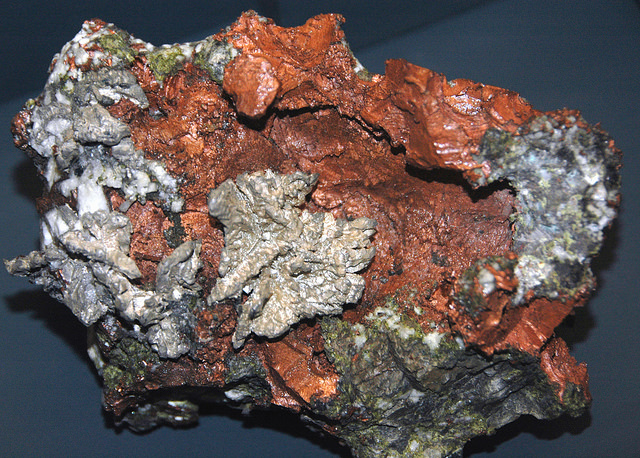
“The remarkable copper-silver ‘halfbreed’ specimen shown above comes from northern Michigan’s Portage Lake Volcanic Series, an extremely thick, Precambrian-aged, flood-basalt deposit that fills up an ancient continental rift valley.”
~ Creative Commons from James St. John
That the region, as before said, is rich in copper and silver ores, cannot be denied. And I think the indications that veins may or do exist somewhere in great richness, are sufficiently evident to justify continued explorations in search of them, by those who have the means and leisure to follow them up for several years. To find the veins, and most permanent deposites, must be the work of time; and as the season is short, on Lake Superior, for such operations, several years may be necessary before a proper and practical examination can be made of the country.
The general features of Lake Superior are very striking, and differ very much in appearance from what I have ever met with in any other part of the continent. The vastness and depth of such a body of pure fresh cold water so far within the continent, is an interesting characteristic. When we consider it is over 900 feet deep, with an area of over 30,000 square miles, and yet that, throughout its whole extent, it presents as pure and as fresh-tasted water as though it were taken from a mountain brook, the question naturally arises, Where can such a vast supply of pure water come from? It is true, it has great many streams flowing into it, but they are nearly all quite small, and would seem to be wholly inadequate to supply such a vast mass of water, and preserve it in such a state of purity. The water supplied by most of the rivers is far less pure than that in the lake itself. East of Keweena point, we found the water of the rivers discolored, being tinged by pine and other roots, clay, &c., often resembling the hue of New England rum. Such rivers, or all combined, would seem to be inadequate to supply such a vast quantity of pure clear water as fills this inland ocean!
~ United States Geological Survey
It is possible that this great lake is freely supplied with water from subterranean springs opening into it from below. The river St. Mary’s also seems inadequate, from its size, to discharge as much water as comes into the lake from the rivers which it receives. In this case, evaporation may be so great as to diminish the water that would otherwise pass out at it.
As relates to tides in the other lakes, we have nothing to say; but, as far as Lake Superior is concerned, we feel assured, from observation, as well as from the reports of others upon whom we can rely, that there are tides in it – variously estimated at from 8 to 12 inches; influenced, we imagine, by the point of observation, and the season of the year at which such tides are noticed.
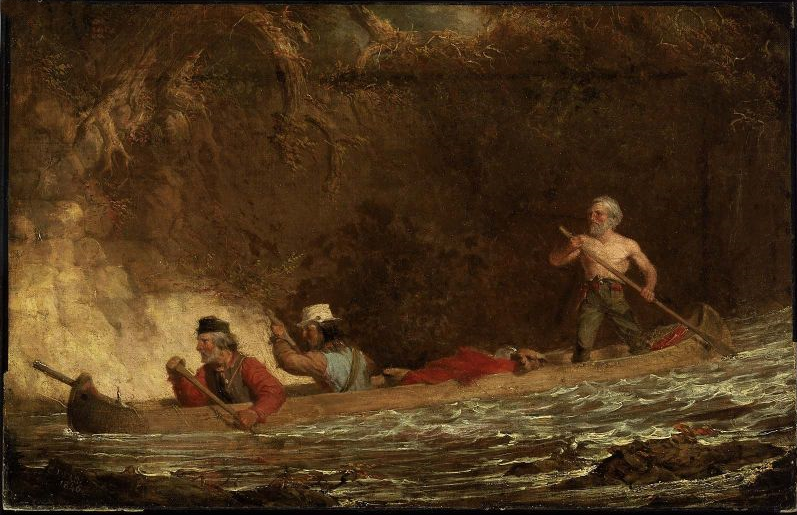
The Voyageurs (1846) by Charles Deas.
~ Commons.Wikimedia.org
What strikes the voyageur with the most interest, in the way of scenery, is the wild, high, bold, and precipitous coast of the southern shore, for such much of the whole distance between Grand Sable and La Pointe, and, indeed, for some distance beyond La Pointe ; the picturesque appearance of which often seemed heightened to us, as on a clear morning, or late afternoon, or voyageurs would conduct our boat for miles near their bases. Above us, the cliffs would rise in towering heights, while the bald eagle would be soaring in grand circular flights above their summits; our voyageurs, at the same time, chanting in chorus many of their wildest boat songs, as we glided along on the smooth and silent bosom of the lake. I have heard songs among various nations, and in various parts of the world; but, whether it was the wild scenery resting in solemn grandeur before me, with the ocean-like waste of water around us, which lent wilderness to the song, I never listened to any which appeared to sing a verse in solo, and then repeat a chorus, in which the whole crew would join. This would often be continued for several miles at a time, as the boat glided forward over smooth water, or danced along over the gentle swells of a moderate sea; the voyageurs, at the same moment, keeping time with their oars.
Jean Baptiste, our pilot, had an excellent voice, full, loud, and strong. He generally led off, in singing; the others falling in at the choruses. All their songs were in French, sometimes sentimental or pathetic, sometimes comic, and occasionally extempore, made, as sung, from the occurrences of the preceding day, or suggested by passing scenes.
The Chippewa Indians are poor singers; yet they have songs (such as they are) among them; one of which is a monotonous air repeated at their moccasin games.
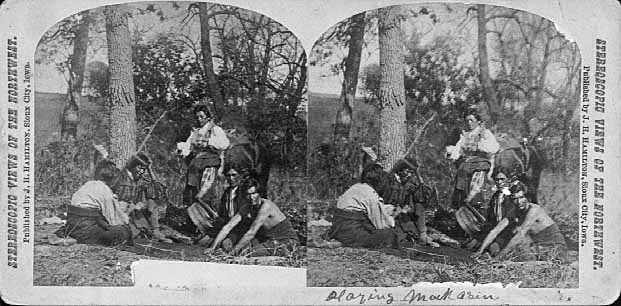
Stereographic view of a moccasin game, by J. H. Hamilton, 1880.
~ University of Minnesota Duluth
Next to the love of liquor, many of the Indians have a most unconquerable passion for gambling. While at La Pointe, I had an opportunity of seeing them play their celebrated moccasin game. They were to the number of two, or three aside, seated on the ground opposite to each other, which a blanket spread out between them, on which were placed four or five moccasins. The had two lead bullets, one of which was made rough, while the other remained smooth. Two f the gamesters were quite young men, with their faces painted with broad horizontal red and blue stripes, their eyelashes at the same time being dyed of a dark color. They played the game, won and lost, with as much sang froid as old and experienced gamblers. Those who sat opposite, especially one of them, was much older, but no means a match, at the time of my visit, for the young rascals, his antagonists. One takes the balls in his hands, keeps his eye directly on the countenance of the opposite party, at the same time tossing the balls in his hands, and singing, in a changing voice, words which sound somewhat like “He-he-hy-er-he-he-hy-er-haw-haw-haw-yer. He-he-hy-er,” &c. During which he keeps raising, shifting, and putting down the moccasins, till, finally, he raises his hands, having succeeded in concealing the balls under two of the moccasins, for which the other proceeds to search; and if he succeeds, on the first trial, in finding the rough ball, he wins. Then he takes the balls to hide, and commences singing himself. If he fails, he loses; and the first party repeats the song and the secretion of the balls. They hold in their hands small bundles of splinters of wood. When one loses, he gives to the winner so many sticks of wood. A certain number of them gained by any one of the party, wins the game. When I saw them, they had staked up their beads, belts, garters, knife-cases, &c. Their love of gaming is so strong, as to cause them to bet and lose everything they possess in the world – often stripping the last blanket from their naked backs, to stake on the game. It is said that some Indians acquire so much dexterity at this game, that others addicted to it refuse to play with them. In playing the game, they keep up a close watch on each other’s eyes, as being the best index to the movement of the hands. The song is repeated, no doubt, to diver the attention of the antagonists.
Among other peculiarities of Lake Superior, and one of its greatest recommendations, is the abundance and superiority of its fish, consisting of trout of large size, white fish, siskomit, ( a species of salmon,) and bass. The trout and siskomit are the finest and noblest fresh-water fish I ever saw. Almost every day we could catch trout by trailing a hook and line in the water behind out boat. In this way we caught one fine siskomit. Its meat, when fresh-cooked, we found about the color of salmon. The fish itself is about as heavy as a common-sized salmon, but less flat, being more round in form.

Detail of “The 12 Apostles” from Captain Jonathan Carver’s journal of his travels with maps and drawings, 1766.
~ Boston Public Library
If you will look at a map of Lake Superior, you will find, near its upper end, a labyrinth of islands, called by the early French voyageurs, of whom P. Charlevoix was one, (a Jesuit,) “the Madelaine islands.” They are sometimes called “the Twelve Apostles.” The largest island is now generally known as “the Madelaine island” – being the largest of the group. Just inside, and near its southern extremity, at the head of a large, regular bay, with a sandy beach, with an open and gently-rising scattered pine and spruce land in the rear of the beach, stands La Pointe – one of the most pleasant, beautiful, and desirable places for a residence on Lake Superior, and the very place where Fort Wilkins should have been placed, instead of its present location, which must be conceded, by every impartial person, to be among the very worst that could have been selected on the whole lake.
The garrison at Copper harbor, located, as it is, upon the rocky surface of trap conglomerate, affording a surface so scantily supplied with soil amidst masses of pebbly rock and trap fragments as to be wholly unfit for any sort of cultivation whatever, is altogether out of place. It is wholly inaccessible by land, and can only be reached by water in summer. It is at a spot where Indians usually never passed within forty miles of it, till since its occupation.
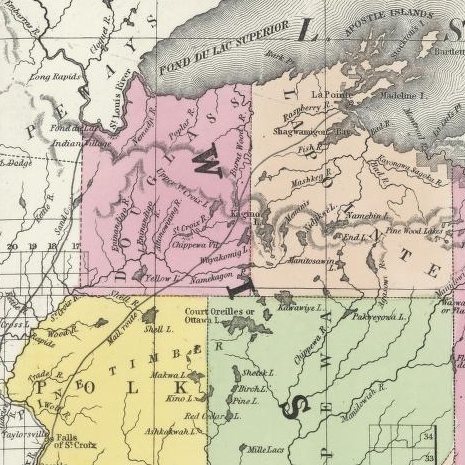
Detail of the Indian trail or “mail route” between La Pointe and St. Anthony Falls.
~ A new map of the State of Wisconsin, by Thomas, Cowperthwait & Co., 1850
The very next Congress should direct its prompt removal to La Pointe. Here, from the foot of the bay in front of the Madelaine island, there is an Indian trail, connecting La Pointe with St. Anthony’s Falls, and over which the mail is carried in winter by voyageurs on foot. La Pointe is the favorite resort of the Indians. Their lodges, in villages, bark canoes, &c. are found here the year round.
They delight to paddle and sail their canoes about the beautiful bays, harbors, &c. of these islands, employing their time in canoe building, hunting, fishing, &c. At every annual payment of their annuities, they flock to La Pointe in great numbers. Not only is that section of the great Chippewa nation sharing in the annuities brought together, but large parties of the same tribe, who receive no annuity, come at the same time from the British possessions to the north of Pigeon river. The Chippewas, called the “Pillageurs,” (so called from their thievish propensities,) inhabiting the country about Mille and Leech lakes, also attend – to meet relations, to traffic , and, perhaps, to steal a little. The great advantage of a government outpost is felt in the moral effect it exercises over the Indians. I know of no place where this influence would be more decidedly and beneficially exerted than at La Pointe. here should be daily unfurled the “stars and stripes,” and the sound of the evening gun be heard over the beautiful bays, and along the shores of the Twelve Apostles, which the Indians would learn to reverence with little less respect than they do the voice of the Manitou – the guardian spirit of the mines, embowelled in the dark trap hills of the lake.
Here, too, is an exceedingly healthy place, a good soil, and every convenience for raising the finest potatoes, turnips, and every kind of garden stuff.

1856 oil painting of Doctor Charles William Wulff Borup, a native of Copenhagen, Denmark. Borup married Elizabeth Beaulieu, a Lake Superior Chippewa daughter of Bazil Hudon Beaulieu and Ogimaagizzhigokwe. Borup and his brothers-in-law Charles Henry Oakes and Clement Hudon Beaulieu were co-signers of the 1842 Treaty with the Chippewa at La Pointe. Borup and Oakes became the first bankers of Minnesota.
Dr. Borup, the agent for the American Fur Company, (who have an extensive trading-post at this place,) has a superb garden. In walking through it with him, I saw very fine crops of the usual garden vegetables growing in it. His red currant bushes were literally bent down beneath their weight of ripe fruit. His cherry-trees had also borne well. Gooseberries also succeed well. The doctor also had some young apple-trees, that were in a thriving condition. Poultry, likewise, does well. Mrs. B. had her yard well stocked with turkeys, geese, ducks, and chickens. There was also a good garden at the mission-house of the American board.
However infinitely better is such a place for a United States garrison than Copper harbor, located, as it were, on a barren rock, where no Indians are seen, unless induced to go there by the whites – where there is nothing to protect – where intercourse is cut off in winter, and food can only reach it in summer – where there is no soil on which to raise a potato or a cabbage. I can only say that a greater blunder, in the location of a military post, was probably never committed. And if made (of which I am assured it was not) by a military man, he ought to be court-martialed and cashiered.
The mouth of the Ontonagon river is a far better spot for the fort than Copper harbor. It has a good soil, and a beautiful site for a fort. Furthermore, the country between it and Fort Winnebago, on the Wisconsin river, is favorable to the construction of a military road, which ought, at no distant day, to be opened. Another road should be cut from Fort Snelling, near the falls of St. Anthony, to La Pointe. In cutting these roads, it would seem to me as if the United States soldiers themselves might be usefully employed.
~ FortWiki.com
While at Copper harbor, I frequently visited Fort Wilkins, in command of Captain Cleary, whom I consider in every way an ornament and an honor to the service. In the brief space of time he has been at this post, and with the slender materials at command afforded by the country, he has nevertheless succeeded in making an “oasis” in a wilderness. He has erected one of the neatest, most comfortable, and best-planned garrisons it has been my lot to enter on the western frontier. He keeps all in excellent condition. His men look clean, healthy, and active. He drills them daily, and keeps them under most excellent discipline. He seems to take both pleasure and ride in the service. He says he never has any difficulty with is soldiers while he can exclude ardent spirits from them, as he succeeds in doing here, notwithstanding the great number of visitors to Copper harbor this summer.
To all travellers who are interested in objects of leading curiosity, the character of the Indians they fall in with cannot fail to arrest a share of attention.
The Chippewas are the only Indians now met with from the Sault Ste. Marie and Mackinac, extending from thence west along the southern shore of Lake Superior, to Fond du Lac, and from thence, in the same direction, to the Mississippi river. Within the United States they extend over the country south from the British boundary, to the country low down on the St. Croix and Chippewa rivers. The same tribe extends from our boundary northwest of the lake, entirely around its northern shore on British territory, till they reach the Sault Ste. Marie, opposite the American shore. It is said this tribe, spread over such a vast tract of country, is a branch of the powerful race of the Algonquins. They are sometimes called O-jib-was. They do not exist as a consolidated nation, or strictly as a confederation of bands. The entire nation on both sides of the line is divided into a great number of bands, with a chief at the head of each, which not uncommonly go by his name, such as “Old Martin’s band,” “Hole in the Day’s band,” &c.
The chief’s son, especially if he exhibits the right qualities, is expected to succeed his father at the head of the band; but very frequently the honor is reached by usurpation. The whole nation, which widely differ in circumstances, according to the part of the country they inhabit, nevertheless all speak the Chippewa language, and have extensive connexion by marriage, &c. The bands inhabiting the southern shore of Lake Superior are by far the best of any others. Though polygamy still prevails among them, and especially among their chiefs, it is nevertheless said to be becoming less common, especially where they are much influenced by Catholic and other missions. While at La Pointe, an Indian wedding was consummated, being conducted according to the ceremonies of the Catholic church, and performed by the missionary priest of that persuasion stationed at the Pointe.
There is one trait of character possessed by the Chippewas, (if we except, perhaps, the band of “pillageurs,” who have a kind of “Bedouin Arab” reputation among their countrymen,) which, I am sorry to say, the whites do not possess in an equal degree – that is, “very great honesty.”
White men can travel among them with the most perfect safety as to life and property. I will venture to say, that a man may carry baskets filled with gold and silver, and set them down in Indian villages, or leave them lying where he likes, or go to sleep by them, with Indians encamped all around him, and not one cent will be touched. Such a thing as a house being broken open and robbed at a Chippewa Indian trading-post was never heard of – within between two and three years’ intercourse with them – in time of peace. Dr. Borup said he would not be afraid, if concealed to look on, to leave his store door open all night; and the fact alone of its being left open, might be made known to the Indians at the Pointe. He would expect to see no Indian enter the store, nor would he expect to lose anything; such was his confidence in their honesty!!
Last winter, flour at the Pointe rose to $40 per barrel. The poor Indians were nearly famished for bread, but were unable to purchase it at such a price. They knew the American Fur Company had a considerable lot in store, guarded by nothing stronger than a padlock, yet they never offered the least violence towards the company’s agents or store! Would white people have acted as honestly? The poor Indians, by nature honest, have too often known the whites by the wrongs inflicted upon them, which God can forgive, but time can never blot out! They are very superstitious, but not as basely and insanely so, but a great deal, as the Mormons, Millerites, and other moon-stricken sects among the whites. They believe in one Great and Good Spirit, or a Being who can at will inflict good or evil on mankind; and there’s an end of it. They often denominate the mysterious spirit of evil import the Manitou, making him to dwell in the wild hills, islands, grottoes, and caves of Lake Superior.
From these huge birds the Indians obtained their first knowledge of fire, which they kindled with fire-sticks. These mythical birds were the most powerful of the animal deities of the Indians of the woodlands and of the plains. When the weather was stormy they flew about high in the heavens. When they flapped their great wings, one heard the crashes of thunder, when they opened and closed their eyes flashes of lightning were seen. Some carried lakes of water on their backs, these slopped over and caused downpours of rain. Their arrows, or thunderbolts, were the eggs which they dropped in their flight. These shattered the rocks and set fire to the forests and prairies.
A Chippewa Indian hunter, who was carried away to his nest by a Thunderer, saved his life by killing one of the young birds and flying back to earth in its feathered hide.
In the Smoky Mountains, a wild and rugged region in the southwestern part of Bayfield County, was the home of Winneboujou (Nenebozho), the fabled hero of the Ojibwa Indians. This all-powerful manitou was a blacksmith, and had his forge on the flat top of the highest mountain. Here he shaped the native copper of the Lake Superior region into useful implements for his Indian children. Much of his work at his forge was done at night, and the ringing blows of his great hammer could be heard throughout the Brule Valley and Lake Superior region. The fire of his forge reddened the sky. When he was not busy at his forge he was away hunting or seeking other adventures. Many stories of the exploits of this giant manitou have been told by the Chippewa and other Wisconsin Algonquian tribes.”
~ Legends of the Hills of Wisconsin by Dorothy Moulding Brown; The Wisconsin Archaeologist, Volume 18, Number 1, 1937, pages 20-21.
At times, it is said, a peculiar noise issues from the Porcupine mountains, and from the high hills on the main land, both east and west of La Pointe, some distance off. It is said to resemble the distant discharge of ordnance, or thunder. At one time, they said it was so loud and frequent, that they mistook it for signal guns fired from the brig Astor, which they thought might be in distress, and actually sent out a boat in search of her.
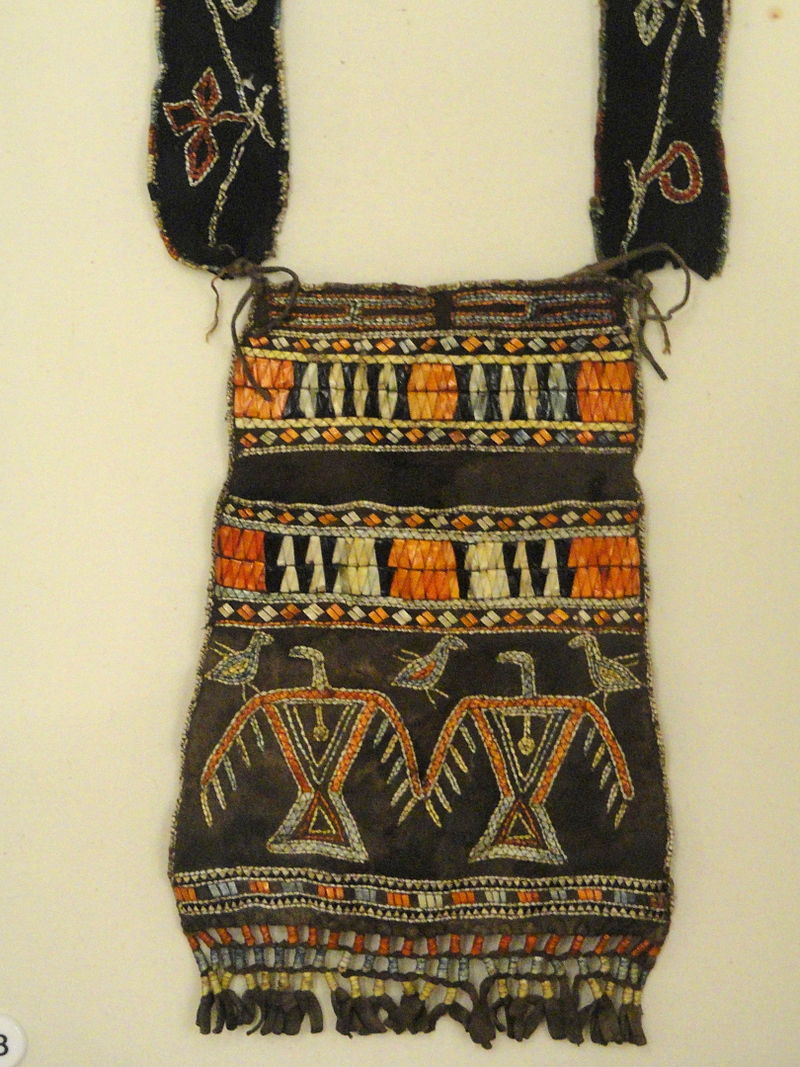
“Ojibwe shoulder pouch depicting two thunderbirds in quillwork, Peabody Museum, Harvard University.”
~ Commons.Wikimedia.org
These sounds the Indians believe to be the voice of the spirit “Manitou,” who guards the deposites of mineral wealth embowelled beneath the hills, and to whom any attempt made to dig them up, and carry them off, would be highly offensive, and followed by some kind of punishment. I have never yet heard of an Indian’s leading a white man to a locality of copper, or telling where he has found a piece when picked up!
Some have supposed that the noise in question arises from volcanic action; but, as no vibration is felt in the earth, and no other proof exists of such being the case, we are led to believe that the noise is produced by the lashing of the waves of the lake after a storm, as they are driven forward into the grottoes, caves, &c. of the tall sandstone cliffs, formed at their bases by the disintegrating effects of water and ice. Some distance east of La Pointe, about the Little Girl’s Point and Montreal river, as well as west of the same place, some fifteen or twenty miles, high red sandstone cliffs occur. At their bases, near the water’s edge, a great many curiously-shaped caves and grottoes appeared. In places, the sandstone had been so cut away, that only pillars remained standing at some ten or fifteen feet in the lake, from the top of which a high rude arch would extend to the main shore, and beneath which boats could easily pass. This was particularly the case near where the islands are parted with going west up the southern shore of the lake. Some caves, with small openings for mouths, run for a long distance back beneath the hills, expanding, likely, into large halls with high vaulted roofs, &c. After a storm, a heavy sea continues to roll into these grottoes and caverns, the waves lashing themselves against their sides and roofs – thus producing sounds resembling those heard at La Pointe, &c.
As the weather is generally calm after a storm, before the sea goes down, it is likely at such times these sounds are heard.
We had occasion to pass these places when a considerable sea would be on, close to the cliffs, and could hear the hollow heavy sounds of the waves as they broke into the caverns within the cliffs and hills. Every day, while we remained, parties of Indians continued to arrive, to be present at the payment.
We finally became prepared to leave for the Mississippi, having bought two bark canoes, and hired four new voyageurs – two for each canoe – one Indian, one half-breed, and two descendants of Canadian French; and, with a stock of provisions, we were ready to be off. From this place, I sent back three voyageurs to the Sault Ste. Marie, all that I hired to come as far as La Pointe. So, after paying our respects to Mr. Hays, our worthy Indian agent, and to Dr. Borup, (to both of whom I had borne letters of introduction,) and having many “bon voyages” heaped upon us by our friends and the friends of the voyageurs, we bade adieu to La Pointe.
You will not hear from me again till I reach the Falls of St. Croix.
I am yours, very truly, &c.
MORGAN.
 Chequamegon History