Bishop Baraga Crosses Lake Superior
February 18, 2025
Collected & edited by Amorin Mello

Bishop Irenaeus Frederic Baraga
~ Madeline Island Museum
This post features oral legends recorded about two of Bishop Irenaeus Frederick Baraga’s traverses from La Pointe across Lake Superior:
A) to Minnesota’s Cross River by canoe.
B) to Michigan’s Ontonagon River by ice.
In chronological order of publication, the first record was from a German traveloguer, the next two were from Catholic missionaries, and the last two were from Bad River tribal members.
- Kitchi-Gami, by Johann Georg Kohl, 1859/1860.
- Life and Labors of Bishop Baraga, by Rev. Chrysostom Verwyst, 1896.
- Life and Labors of Rt. Rev. Frederick Baraga, by Rev. Verwyst, 1900.
- Chippewa Indian Historical Project, by United States WPA, 1936-1942.
- Chippewa Indian Historical Project, by United States WPA, 1936-1942.

Originally published in German as
Kitschi-Gami; Oder, Erzählungen Vom Obern See
by Johann Georg Kohl, 1859.
Translated and republished in English as
Kitch-Gami: Wanderings Round Lake Superior,
By Johann Georg Kohl, 1860,
Pages 180-183.

German traveloguer
Johann Georg Kohl
Du Roy: “Do you known the summer voyage our most reverend friend, your companion, once made in a birch-bark canoe right across Lake Superior? Ah! that is a celebrated voyage, which everybody round the lake is acquainted with. Indeed, there is hardly a locality on the lake which is not connected with the history of his life, either because he built a chapel there, or wrote a pious book, or founded an Indian parish, or else underwent danger and adventures there, in which he felt that Heaven was protecting him.
“The aforesaid summer voyage, which I will tell you here as companion to his winter journey, was as follows:
“He was staying at that time on one of the Islands of the Apostles, and heard that his immediate presence was required at one of the little Indian missions or stations on the northern shore of the lake. As he is always ready to start at a moment, he walked with his breviary in his hand, dressed in his black robe, and with his gold cross fastened on his breast – he always travels in this solemn garb, on foot or on horseback, on show-shoes or in a canoe – he walked, I say, with his breviary in his hand and his three-corned hat on his head, into the hut of my cousin a well-known Voyageur, and said to him: ‘Dubois, I must cross the lake, direct from here to the northern shore. Hast thou a boat ready?’
” ‘My boat is here,’ said my cousin, ‘but how can I venture to go with you straight across the lake? It is seventy miles, and the weather does not look very promising. No one ever yet attempted this “traverse” in small boats. Our passage to the north shore is made along the coast, and we usually employ eight days in it.’
” ‘Dubois, that is too long; it cannot be. I repeat it to thee. I am called. I must go straight across the lake. Take thy paddle and “couverte,” and come!’ And our reverend friend took his seat in the canoe, and waited patiently till my obedient cousin (who, I grant, opened his eyes very wide, and shook his head at times) packed up his traps, sprang after him and pushed the canoe on the lake.
“Now you are aware, monsieur, that we Indians and Voyageurs rarely make greater traverses across the lake than fifteen miles from cape to cape, so that we may be easily able to pull our boats ashore in the annoying caprices of our weather and water. A passage of twenty-five or thirty miles we call a ‘grand traverse,’ and one of seventy miles is a impossibility. Such a traverse was never made before, and only performed this once. My cousin, however, worked away obediently and cheerfully, and they were soon floating in their nutshell in the middle of the lake like a loon, without compass and out of sight of land. Very soon, too, they had bad weather.
“It began to grow stormy, and the water rose in high waves. My cousin remarked that he had prophesied this, but his pious, earnest passenger read on in his breviary quietly, and only now and then addressed a kind word of encouragement to my cousin, saying that he had not doubted his prophecy about the weather, but he replied to it that he was called across the lake, and God would guide them both to land.
“They toiled all night through the storm and waves, and, as the wind was fortunately with them, they moved along very rapidly, although their little bark danced like a feather on the waters. The next morning they sighted the opposite shore. But how? With a threatening front. Long rows of dark rocks on either side, and at their base a white stripe, the dashing surf of the terribly excited waves. There was no opening in there, no haven, no salvation.
” ‘We are lost, your reverence,’ my cousin said, ‘for it is impossible for me to keep the canoe balanced in those double and triple breakers; and a return is equally impossible, owing to the wind blowing so stiffly against us.’
” ‘Paddle on, dear Dubois – straight on. We must get through, and a way will offer itself.’
“My cousin shrugged his shoulder, made his last prayers, and paddled straight on, he hardly knew how. Already they heard the surf dashing near them; they could no longer understand what they said to each other, owing to the deafening noise, and my cousin slipped his couverte from his shoulders, so as to be ready for a swim, when, all at once, a dark spot opened out in the white edge of the surf, which soon widened. At the same time the violent heaving of the canoe relaxed, it glided on more tranquilly, and entered in perfect safety the broad mouth of a stream, which they had not seen in the distance, owing to the rocks that concealed it.
” ‘Did I not say, Dubois, that I was called across, that I must go, and that thou wouldst be saved with me? Let us pray!’ So the man of God spoke to the Voyageur after they had stepped ashore, and drawn their canoe comfortably on the beach. They then went into the forest, cut down a couple of trees, and erected a cross on the spot where they landed, as a sign of their gratitude.
“Then they went on their way to perform their other duties. Later, however, a rich merchant, a fur trader, came along the same road, and hearing of this traverse, which had become celebrated, he set his men to work, and erected at his own expense, on the same spot, but on a higher rock, a larger and more substantial cross, which now can be seen a long distance on the lake, and which the people call ‘the Cross of —–‘s Traverse.’”

Historical Collections and Researches of Michigan Pioneer and Historical Society: Vol. XXVI,
by Michigan State Historical Society, 1896,
pages 541-542.
LIFE AND LABORS OF BISHOP BARAGA
A short sketch of the life and labors of Bishop Baraga
The Great Indian Apostle of the Northwest.
By Rev. Chrysostom Verwyst O.S.F. of Ashland, Wis.
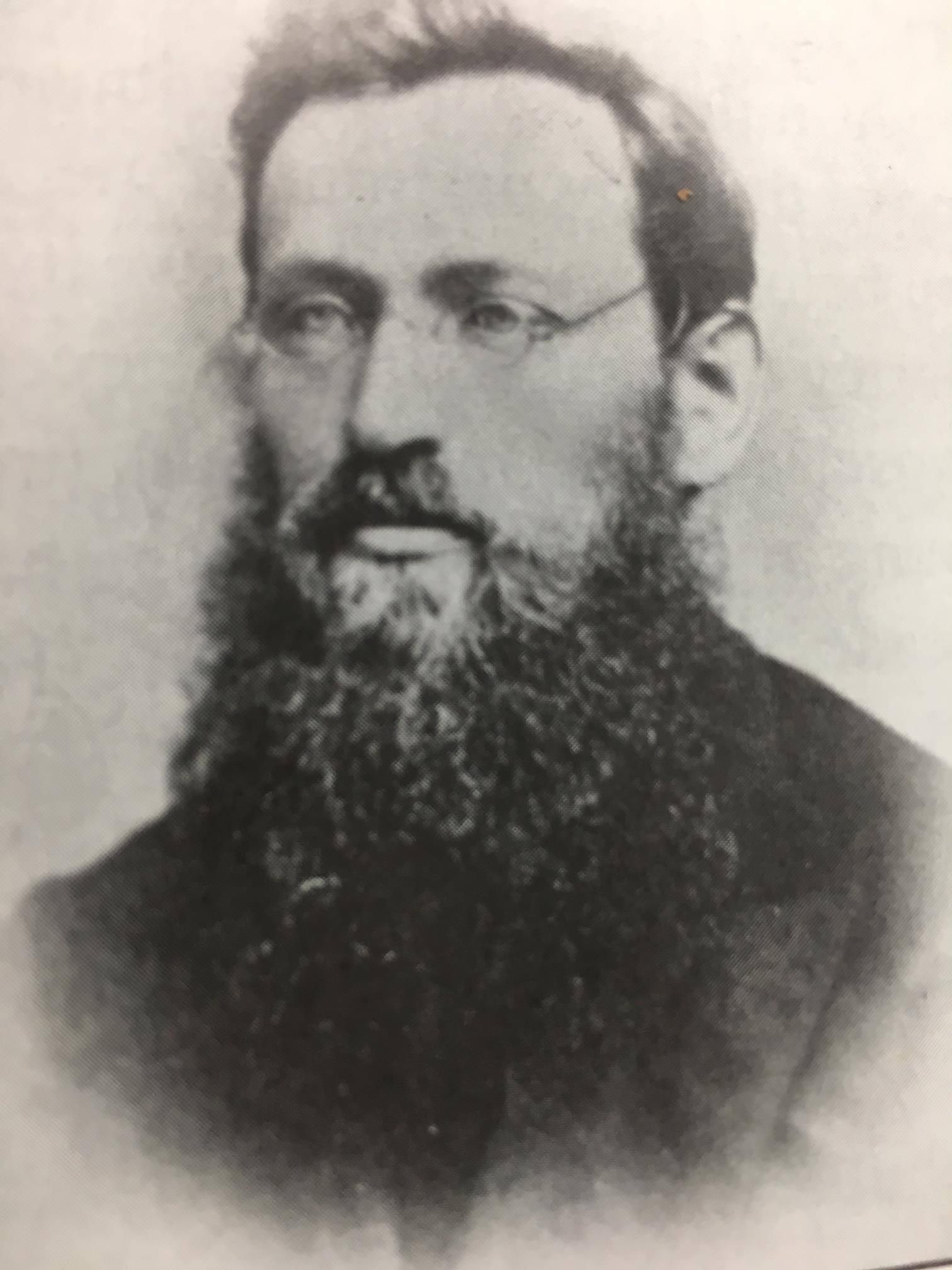
Father John Chebul arrived on Lake Superior at the Sault in October 1859 to assist his fellow Slovanian Bishop Baraga. Chebul spent the winter at Ontonagon with miners before arriving at La Pointe in May 1860.
On another occasion Father Baraga went to Ontonagon from La Pointe. We will relate the incident as told to the writer by Rev. John Cebul, of Newberry, Mich. He was well acquainted with Bishop Baraga, being a fellow countryman who had been sent to La Pointe in 1860, where he labored amongst the Chippewas of that island and Bayfield, Bad River Reserve, Superior and other places, for about thirteen years, being universally loved and esteemed by all. He says:
Bishop Baraga was intending to go on the ice to Ontonagon. He was accompanied by a man from the island. The reason they took to the ice was because it was much nearer and the walking a great deal better than on the main land. During March and April the ice on Lake Superior becomes honey-combed and rotten. If a strong wind blows, it cracks and moves from the shore if the wind blows from the land. Such fields of ice does not notice that he is in danger till he comes to the edge of the ice and then to his horror discovers a large expanse of open water between him and the mainland. Should the ice float out towards the middle of the lake or break up, he is lost. Father Baraga and his companion had traveled on the ice for some time, thinking all was right. All at once they came to the edge of the ice and saw it was impossible to reach land, as the wind had driven the ice from the shore out into the Lake. His companion became greatly alarmed. Father Baraga remained calm, praying, no doubt, fervently to Him who alone could save them. Finally the wind changed and drove the cake of ice on which they were floating to the shore. They landed at Cadotte point, about 20 or 30 miles from Ontonagon, having been carried by the wind on their ice raft about sixty miles. “See,” said the good priest to his companion, “we have traveled a great distance and yet have not labored.” It seems the good God wanted to save the saintly missionary a long and painful walk, by giving him a ride of sixty miles on a cake of ice.

Life and labors of Rt. Rev. Frederic Baraga
by P. Chrysostomus Verwyst, 1900,
pages 219-222.
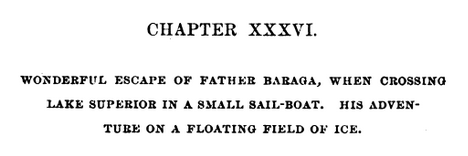
“Louis Gaudin“ was one of several legendary children born to Jean Baptiste Gaudin, Sr. and Awenishen (a sister of Hole-in-the-day):
– Antoine Gordon
– Elizabeth (Gordon) Belanger
– Louison Gordon, Sr.
– Harriet (Gordon) Lemon
– John Baptiste Gordon, Jr.
– Angelique Gordon
– Joseph GordonLouison Gordon, Sr. (1814-1899) married Julia Brebant, whose sisters were married to Henry Bresette and Judge John W. Bell.Wizon is an objibwecized form of the francophone name Louison.
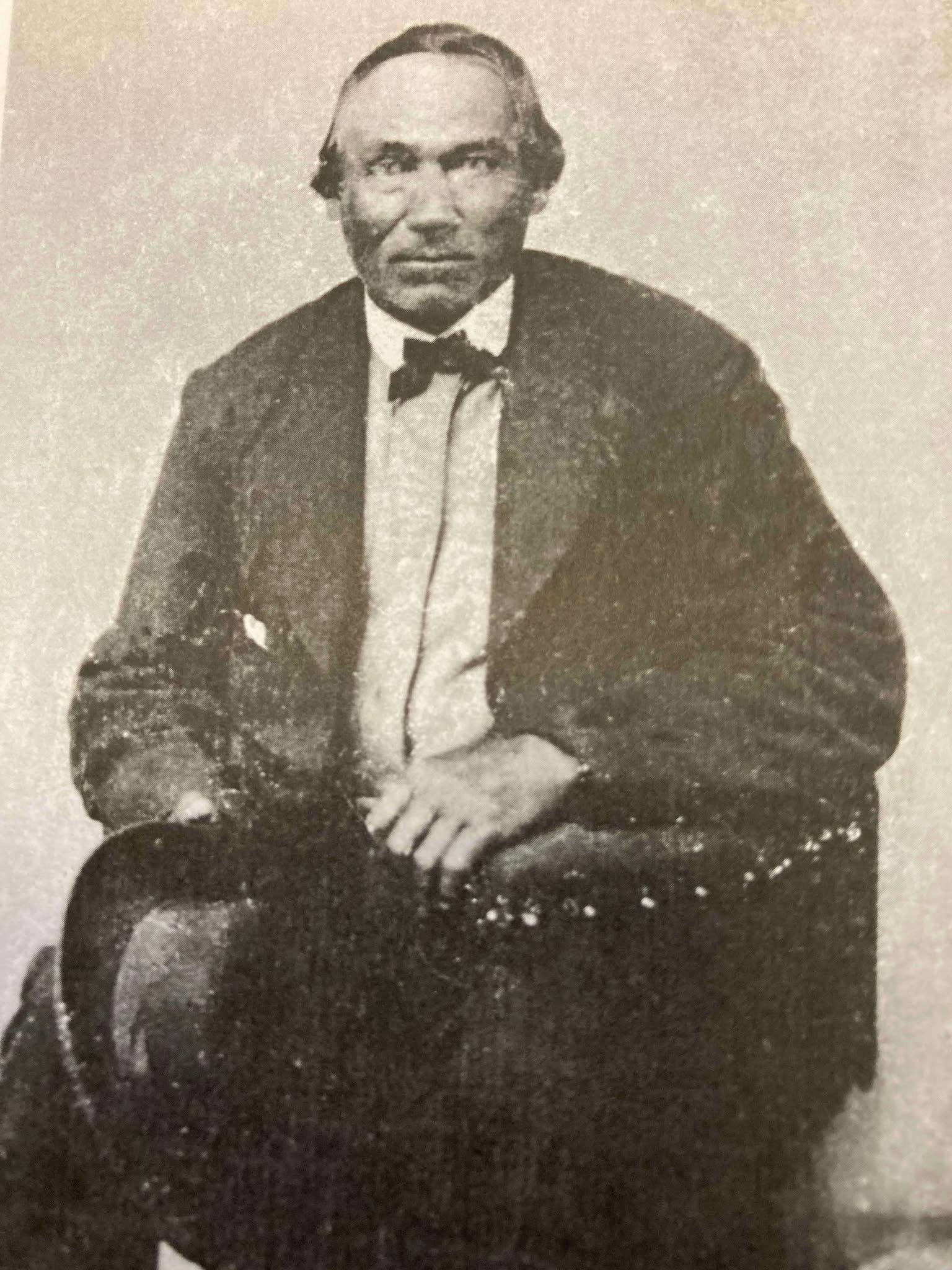
Undated photo from the Gordon Museum thought to be a brother of Antoine Gordon:
possibly Louis Gordon?

Chippewa Entrepreneur
Antoine Gordon
~ Noble Lives of a Noble Race (pg. 207) published by the St. Mary’s Industrial School in Odanah, 1909.
We learn from F. Baraga’s letter, written in October, 1845, that he intended to go to Grand Portage, Minn., the next fall to build a church there. It is, therefore, highly probable that he made that trip in the fall of 1846. He first went to La Pointe, where, no doubt, he spent some time attending to the spiritual wants of the good people. He then engaged a half-breed Indian, named Louis Gaudin, to go with him to Grand Portage. They had but a small fishing boat with a mast and sail, without keel or centre-board. Such a boat might do on a river or small lake, but would be very unsafe on a large lake, where it would easily founder or be driven lake a cork before the wind. The boat was but eighteen feet long. When they started from La Pointe, the people laughed at them for attempting to make the journey. They said it would take them a month to make the voyage, as they would have to keep close to the shore all the way, going first west some seventy miles to the end of the lake and then, doubling, turn northward, coasting along the northern shore of Lake Superior. this would make the distance about two hundred miles, perhaps even more.
However, Father Baraga and his guide set out on their perilous journey. At Sand Island they awaited a favorable wind to cross the lake, which is about forty miles wide at that place. By so doing they would save from eight to one hundred miles, but would expose themselves to great danger, as a high wind might arise, whilst they were out on the open lake, and engulf their frail bark.
They set sail on an unusually calm day. Father Baraga steered and Louis rowed the boat. Before they got midway a heavy west wind arose and the lake grew very rough. They were constantly driven leeward and when they finally reached the north shore they were at least thirty miles east of their intended landing place, having made a very perilous sail of seventy miles during that day.
While in the height of the storm, in mid-ocean, it might be said, Louis became frightened and exclaimed in Chippewa to the Father, who was lying on his back in the boat, reciting his office in an unconcerned manner: “Nosse, ki ga-nibomin, gananbatch” – Father, perhaps we are going to perish!” The Father answered quietly: “Kego segisiken, Wizon” (Chippewa for Louis) – “Don’t be afraid, Wizon; the priest will not die in the water. If he died here in the water the people on the other shore, whither we are going, would be unfortunate.”
When nearing the north shore the danger was even greater than out on the open water, for there were huge breakers ahead. Louis asked the Father whither to steer, and, as if following a certain inspiration, F. Baraga told him to steer straight ahead for the land. Through a special disposition of Divine Providence watching over the precious life of the saintly missionary, they passed through the breakers unharmed and ran their boat into the mouth of a small river, heretofore unnamed, but now called Cross River.
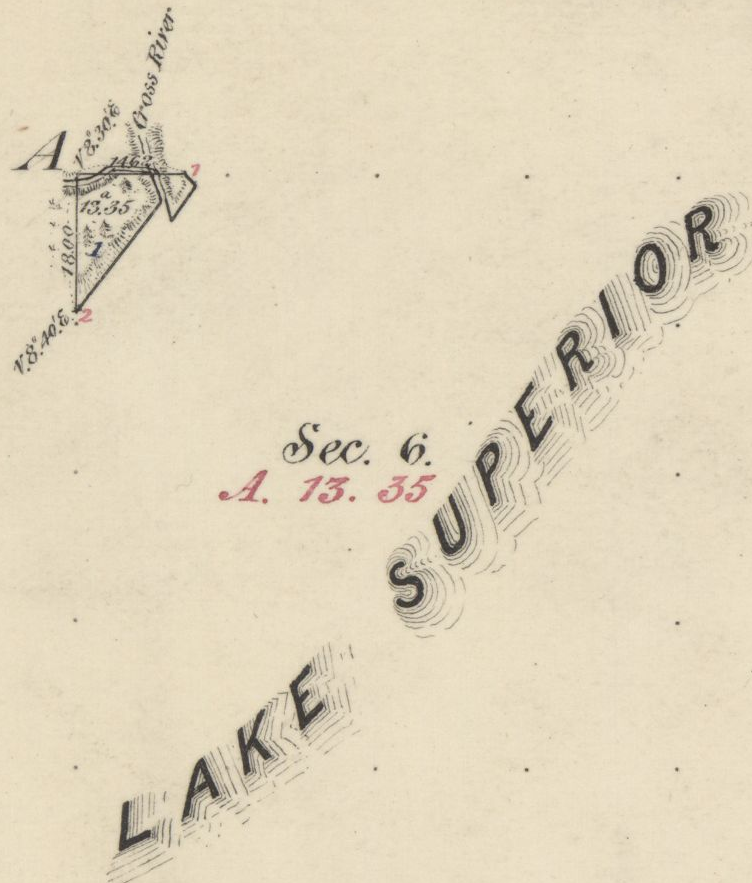
1859 PLSS detail of trees at the mouth of “Cross River”.
Full of gratitude for their miraculous escape, they at once proceeded to erect a cross. Hewing a tree in a rough manner, they cut off the top as far up as they could reach, and taking a shorter piece, they nailed it cross-wise to the tree. “Wizon,” said the Father, “let us make a cross here that the Christian Indians may know that the priest coming from La Pointe landed here.” The cross was, it is true, unartistic, but it was emblem of their holy faith and it gave the name, Tchibaiatigo-Sibi, “Cross River,” to the little stream where they landed.
They arrived none too soon. Ascending an eminence and looking out on the immense lake they saw that the storm was increasing every moment; high waves with white caps, which would surely have engulfed their little bark. They landed about six o’clock in the evening. Having spent the night there, they continued their journey next day, and in two days arrived at Grand Portage, having made the whole journey in three days. May we not think with Louis Gaudin that their safe passage across the stormy lake, and their deliverance from a watery grave, was due to a special intervention of Divine Providence in favor of the saintly missionary?

Missionary Labors of Fathers Marquette, Menard and Allouez, in the Lake Superior Region by Rev. Chrysostom Verwyst of Bayfield, 1886.
In 1667 Father Claude Allouez, S. J., then stationed at the mission of the Holy Ghost at the head of Chequamegon Bay, made the voyage across the lake from Sand Island. He made the voyage in a birch-canoe with three Indians. He remarks that they paddled their canoe all day as hard as they could without intermission, for fear of losing any of the beautiful calm weather they had. It took them twelve hours to make the trip across. The Father was then on his way to visit some Christian Indians residing at Lake Nipigon – “Animibigong” in Chippewa. For the particulars of this journey we refer the reader to “Missionary Labors of Fathers Marquette, Allouez, and Menard in the Lake Superior Region.”
The following narrative is not to be found in any of Baraga’s published letters, but the writers has it from the mouth of trustworthy persons, among whom is Father Chebul, a countryman of F. Baraga, who was stationed at Bayfield for many years. We will give the account, as we have it from Rev. F. Chebul.
Francois Newago, Sr. is the “man named Newagon” from Madeline Island, as his children were still young teenagers then.One time F. Baraga was going to Ontonagon in company with an Indian half-breed in the month of March or April. At that season of the year the ice, though thick, becomes honey-combed and rotten. Some say that Baraga’s companion was a man named Newagon. They went on the ice at La Pointe Island. As the walking on the sandy beach would have been very fatiguing and long, they determined to make straight for Ontonagon over the ice. By so doing they would not only have better walking, but also shorten their way a great deal.
A strong southwest wind was blowing at the time, and the ice, becoming detached from the shore, began drifting lakeward. After they had traveled for some time, they became aware of what hat happened, for they could see the blue waters between them and the shore. Newagon became greatly alarmed, for almost certain death stared them in the face. Had the wind continued blowing in the same direction, the ice would have been driven far out into the lake and broken up into small fragments. They would surely have perished.
To encourage the drooping spirit of his companion, F. Baraga kept telling him that they would escape all right and that they must trust in God, their loving Father and Protector. He also sang Chippewa hymns to divert Newagon’s attention and calm his excitement. Finally the wind shifted and blew the field of ice back towards the shore.
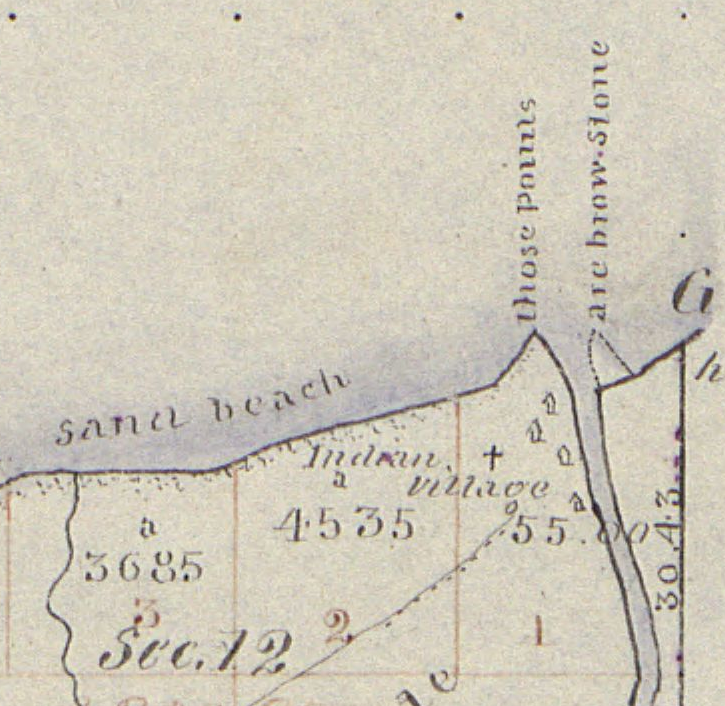
1847 PLSS detail of brownstone points, village, cross, and trailhead at the mouth of Iron River.
“Cadotte Point, near Union Bay“
appears to be located at what is now Silver City at the mouth of Iron River and eastern trailhead to the Porcupine Mountains.Michel Cadotte, Sr. ran a trading post by the Old French Fort on Madeline Island around 1800 and smaller stations scattered along the Wisconsin / Michigan shoreline of Lake Superior. Cadotte first worked for the British North West Company and later the American Fur Company after The War of 1812.They landed near Cadotte Point, near Union Bay, a short distance from Ontonagon, which they reached that same day. “See,” said the missionary to his companion, “we have traveled a great distance and have worked little.” The distance from La Pointe to Ontonagon is about sixty or seventy miles by an air line. Had they been obliged to walk the whole distance around the bend of the lake, it would probably have taken them two or three days of very hard and fatiguing traveling. So what at first seemed to threaten certain death was used by God’s fatherly providence to shorten and facilitate the saintly priest’s journey.
United States. Works Progress Administration:
Chippewa Indian Historical Project Records 1936-1942
(Northland Micro 5; Micro 532)
Reel 1, Envelop 3, Item 5
BISHOP BARAGA’S TRIP TO ONTONAGON
As related by William Obern to John Teeple.
Francois Belanger, Sr.
and Elizabeth (Gordon) Belanger. The Belanger Settlement was founded by their son Frank Belanger, Jr. and Elizabeth (Morrow) Belanger.
The journey I am about to describe is taken from the many experiences of Bishop Baraga, which were related to me by my grandfather. It deals with a journey made at an almost impossible time for ice travel on any of the Great Lakes, and portrays the important part the elements can play in a man’s life, for good or bad, for weal or for woe, as well as Bishop Baraga’s unfaltering confidence in Divine Providence.
The season of the year in which this incident took place was in the spring – along in April. Bishop Baraga and his faithful guide, Louis Gordon, started from LaPointe enroute to Ontonagon, Michigan, a distance of some eighty or ninety miles from LaPointe, straight across as the crow flies over the frozen water of Lake Superior. Dogs were used to a very large extent in those days for the purpose of transportation.
On account of the prevailing soft weather, the ice on the lake was not very solid, and with the right kind of wind, a general break-up was apt to occur at any time. In this instance, when the Bishop and his guide were about ten miles from LaPointe a south-west wind began to blow, increasing in velocity with each passing hour. The ice broke away from the shore, and began drifting outward into the open waters of Lake Superior, carrying its passengers with it. The guide, seeing the danger, suggested to the Bishop that they land on one of the islands, but the Bishop told him not to worry and to keep going in the direction of Ontonagon; that with the help of God they would reach their destination in safety.
With the coming of night the wind increased, and the two travelers were drifting out into the open waters with considerable speed. Soon the mainland was lost to view, and the guide knew that to remain on the ice mean ultimate death by freezing or drowning, but it was too late to do anything now. They had passed up the opportunity of getting off.
The missionary told Louis to look out for the dogs, and after taking a lunch, he wrapped himself up and went to sleep. He advised the guide to do likewise. The guide wrapped himself up, but he did not sleep. He kept constant vigil; about midnight the wind changed, coming from the opposite direction.
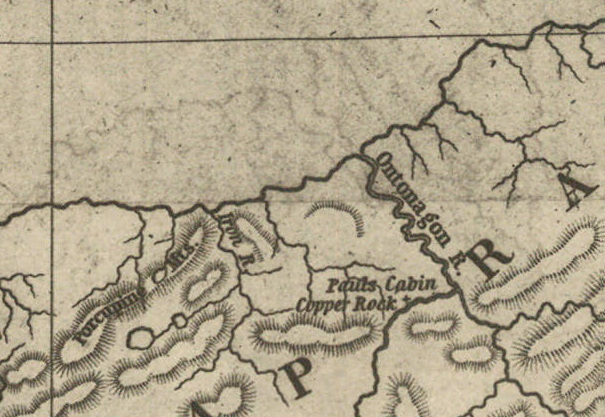
Detail of Porcupine Mountains, Iron River and Ontonagon River on the Map of the Mineral Lands Upon Lake Superior Ceded to the United States by the Treaty of 1842 With the Chippeway Indians, 1845.
The guide woke Bishop Baraga, telling him that the wind had changed. The priest asked his guide from what direction it was blowing, and upon being told that it was coming from the north-east remarked, “It is just what I hoped for and suspected.” He again told his guide to lie down and go to sleep, but the guide fearing that the plate of ice they were on might break up, would not sleep. They began to drift back almost in the same direction they had come, and when daylight came the outline of the Porcupine Mountains could be plainly seen in the distance. They were traveling at a very high rate of speed, and about mid afternoon they landed on the south shore of Lake Superior, one mile from Ontonagon, their destination.
“There,” said the bishop after they got off the ice and stepped on to the mainland, “this is just what I expected.”
At the time of this narrative, Ontonagon was a small settlement of Indians with but a few white men, who were engaged in the fur trade with the Indians and represented the American Fur Company.
* According to the description furnished by the guide, the piece of ice they were on was about one hundred by two hundred feet.
United States. Works Progress Administration:
Chippewa Indian Historical Project Records 1936-1942
(Northland Micro 5; Micro 532)
Reel 1, Envelop 3, Item 6
Cross River
ORIGIN OF THE NAME
Related by William Obern
To John Teeple.
Ojibwe, Activist, Priest
The Life of Father Philip Bergin Gordon, Tibishkogijik
by Tadeusz Lewandowski, 2019.
The story I am about to relate deals with an incident of one of the many experiences of Bishop Baraga. The narrative was related to me by my grandmother, Elizabeth Bellanger, who before her marriage was Elizabeth Gordon. She was a blood relative of Father Philip Gordon. The Gordon family consisted of the parents; sons, John, Louis and Antoine, and daughters My grandmother (Elizabeth) and Angelique.
Louis Gordon acted as the guide and all-around servant of Bishop Baraga, the missionary priest. The latter had a very large territory to cover; the northern and southern shores of Lake Superior, thence to the Dakotas and down to the waters known as Chippewa River, which emptied into the Mississippi below St. Paul.
Louis Gordon, the guide, (my grand-uncle) told of many of the experiences he had on these trips with Bishop Baraga. In speaking of my grand-uncle, Louis Gordon, I wish to state first, upon my honor as a gentleman, that he was a Christian in every sense of the word; he never took a drink of intoxicating liquor in his life; and never used profane language.
The stories related to me by my grandmother I well remember, and coming from a man like my grand-uncle, I believe them.
One day Bishop Baraga and his guide, Louis Gordon, started from LaPointe, on the western end of Lake Superior, near the place now known as Bayfield, on the shore of the lake, and about twenty-five miles from the present city of Ashland. At the time of this incident there were no white settlements to speak of at the western end of Lake Superior and the “head of the lakes” region. Bayfield, Washburn, Ashland, Superior and Duluth did not exist in those days. There were few white men among the Indians, and those few represented the American Fur Company. A few, mostly Frenchmen, had in former years settled in Minnesota and Wisconsin.
As formerly stated the trip started from LaPointe. It was to be made by water, and the boat used by the missionary and his guide, from the description given, could not have been more than 16 or 18 feet long. It was just large enough to accommodate the Bishop and his guide and to take care of their camping equipment, and although small, it came out the victor in many storms, proving itself quite seaworthy. These voyagers had a make-shift sail, which furnished them power when the wind was fair, probably a blanket which was raised on a pole; but in calm weather, or when the seas became too rough, the craft was usually propelled with oars. Wind and weather conditions in those days controlled lake travel largely, and when the lake became too rough and the seas too choppy, the voyageurs usually made a landing in some bay or stream outlet.
In this instance, the missionary and his guide were headed for Grand Marias, on the north shore of Lake Superior, a distance of fifty or fifty-five miles from the group of islands known as “Apostle Islands.” Leaving LaPointe, it was necessary for them to cross Lake Superior, traveling directly North. In the event of a severe storm, there is, of course, no place for shelter in the open waters of Lake Superior, and when once started it was necessary for them to continue their voyage until they reached Grand Marias, the point of their destination.
When the Bishop and his guide were about to leave the Apostle Islands, Louis Gordon, the guide, said to Bishop Baraga: “No-say,” (meaning father in Chippewa), “it would not be safe for us to cross the lake in this small boat today. The wind is from the south-west, and it is getting stronger. The lake will become very rough, the seas high, and I am afraid we may perish if we venture out in this wind. We had better not leave this island today, or else follow the south shore around to the end of the lake, so we can find a place to land should the seas become too rough.”
Bishop Baraga replied, “My son, have faith in God. Across that lake my Indians are waiting they must be expecting me, and it is my duty to get there as soon as possible. It would be a waste of time for us to go along the south shore, then along the north shore from the St. Louis River to Grand Marias, when we can cross here and save many miles of hard rowing and precious time. We will trust in God and make the crossing in safety.”
So, Louis Gordon, having unbounded faith in the Bishop, obeyed him, and they began their voyage across the lake, notwithstanding the fact that the wind was increasing in fury and the seas becoming higher and rougher with each passing moment. After they got into the open waters, the guide had considerable difficulty in manning the boat and keeping it from being swamped by the breaking seas. He stood up, and turning to Bishop Baraga said, “No-say, we will never reach the shore.” The Bishop was sitting at the stern of the boat, reciting his breviary. “Louis,” he said, “do not lose faith in God; fear not, He is with us.” The guide was kept busy in keeping the boat in its course, and bailing it out, to prevent it from being filled as the white caps would break over it. He headed it to a point west of Grand Marias in order that he might be better able to ride the crest of the seas, praying and hoping that when they reached the shore, which he hoped would be before dark, they would find a place to land in safety.
I wish to state here that I have seen the north shore of Lake Superior. After leaving Duluth, going east along the north shore, one will find a very rugged shore, ledges of rock from 20 to 200 feet in height standing perpendicularly along the shore line. In these rock ledges are great caves that have been fashioned by angry waves of Lake Superior during centuries. To fully appreciate this story it is well for the reader to know a little concerning the dangers of Lake Superior. Salt-water sailors who have been on the five oceans prefer to be on the ocean in a storm rather than on Lake Superior. The fact that Lake Superior is more dangerous than the oceans is conceded by sailors generally, particularly in the fall of the year. In the ocean, the billows are longer with great spaces between them; while on Lake Superior they are short, choppy, and heavy; and create much more hazard.
Night overtook the missionary and the guide before they reached the north shore; the wind became stronger and the billows higher. The only light they had to guide them was the distant glimmer of the stars, and the guide was able to keep his course by keeping his craft nosed in the direction of the North Star.
After many hours of hard pulling on the oars, the guide knew that they were reaching the shore because he was familiar with the shoreline, and knew that the noise which was all but deafening was created by the breakers dashing against the rock-bound shore.
The guide said to his companion, “No-say, we are nearing the shore, but I am sure we are many miles from Grand Marias. There is no river known in this region and on account of the precipitous formation of the shore line, we have no place to land in safety in this storm.” Bishop Baraga answered, “My son, do as I say, and we will make a landing in safety.” The guide obeyed. His hand were blistered; his strength was leaving his body, but he managed to keep up his struggle against the angry seas. The back-wash created by the billows dashing against the perpendicular rocks of the shore-line made conditions more perilous. The guide said, “Father, there is nothing but certain death ahead of us. We cannot survive this storm.” The noise was so great that it was impossible for the two voyagers to hear each other without shouting, though they were only fifteen or sixteen feet apart; but the Bishop simply said, “Louis, keep going straight ahead.”
Much water had entered their little boat, and it was coming in faster now that they were nearing the ledges of rocks, and the seas, augmented by the back-wash, were becoming rougher, so that destruction seemed imminent. Then amid the tumult and tossing of the boat upon the choppy seas, the boat was suddenly driven from the rough sea into tranquil waters, seemingly guided by some supernatural power. The guide knew that the craft was not being directed by his efforts, and that they were nearing the shore with each sweep of the waves. To his amazement, the boat grounded, and by feeling the depth of the water with his oar he knew that they were in shallow water, but he was unable to determine whether they were in a cave or at the mouth of some stream.
“Father,” Louis cried delightedly, “it seems to me that we are in a cave or at the mouth of some stream, because by feeling around with my oar I can feel a current coming from the land direction.” The missionary then told him to take out their bundle, and light the lantern so that they could see where they were and explore their surroundings.
After lighting the lantern, they made a survey of their surroundings and found that they were at the mouth of a large stream. They climbed out of the river and to higher ground, and there made their camp for the night.
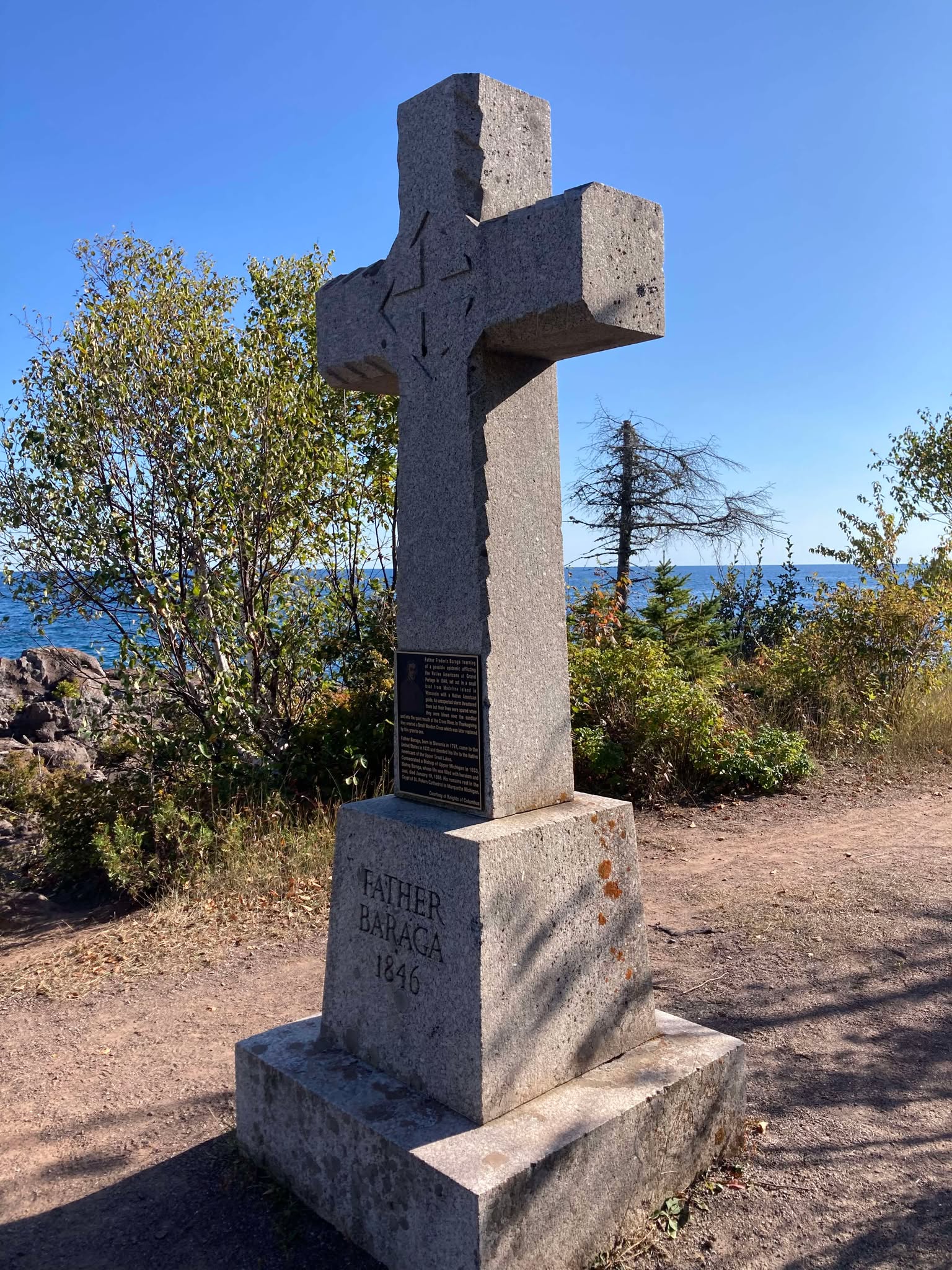
Cross River Historical Marker
Photo by Brian Finstad, 2024.
The following morning, Bishop Baraga told his guide that they would stay there that day, that they would construct and erect a cross in token of thanksgiving to God for his help and guidance to safety. So, all that day they worked. They cut down some large cedar trees and erected a large cedar cross, which they set up on the shore at the mouth of the stream. The next morning Bishop Baraga and his guide went down to the site of the cross they had erected, and again offered thanks to God for their safe deliverance. The missionary told his guide: “Hereafter this stream shall be known as “Cross River”. It has been thus known from that time on.
About twenty or twenty-five years ago, a large number of people from Duluth, Superior, and other towns and cities in the Lake Superior region, regardless of creed, made a trip to Cross River and erected a substantial cross there in place of the old cedar cross set up by Bishop Baraga and his guide, Louis Gordon, in thanksgiving to God for the wonderful guidance and loving care of his servants who landed safely at the mouth of this stream after such a perilous voyage.
Bishop Baraga stopped at Superior on their way back from the North Shore. They did not venture another lake-crossing. This zealous Lake Superior Chippewa Indian Missionary died at Marquette, Michigan, on January 19, 1868.
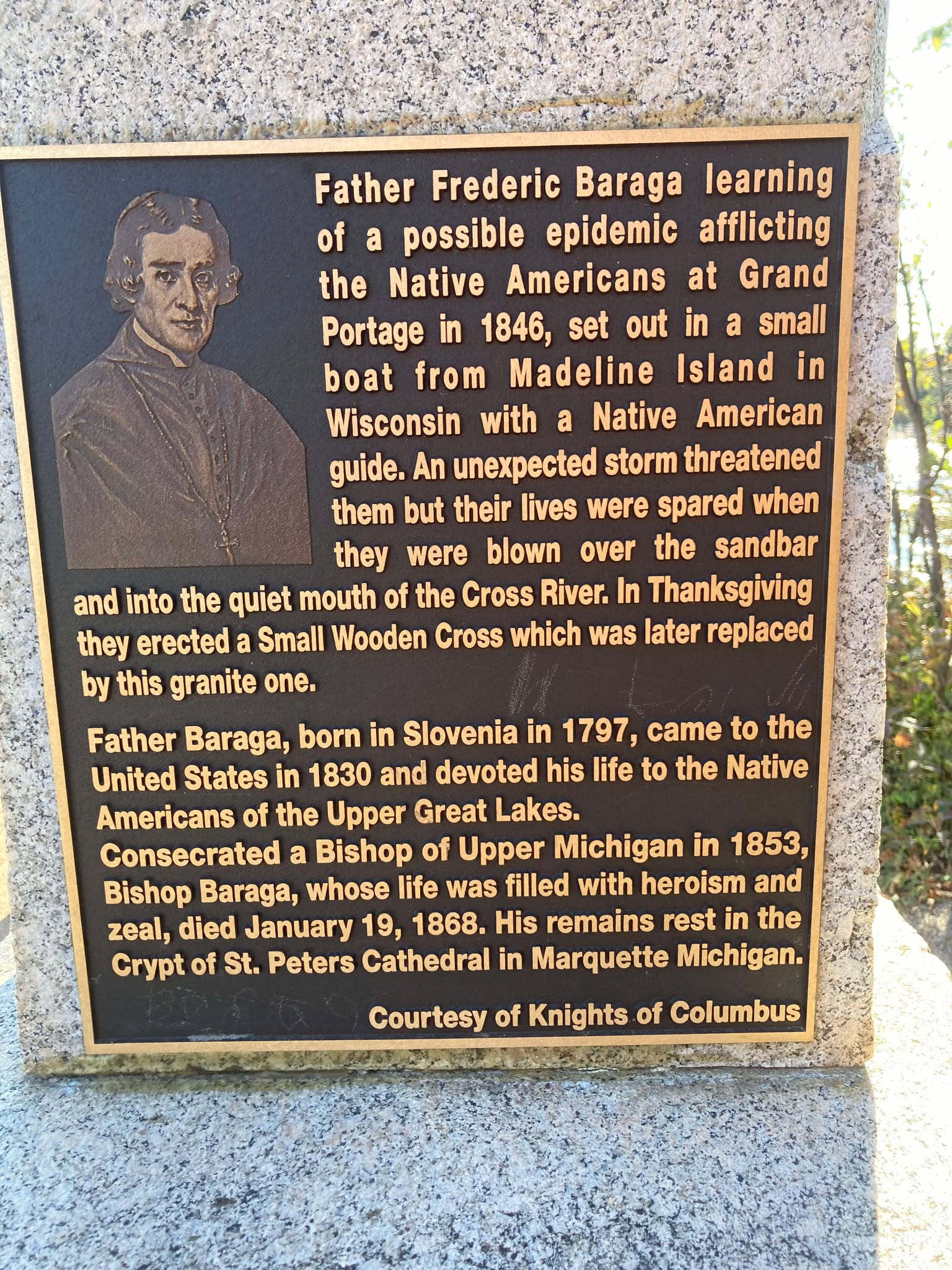
Cross River Historical Marker
Photo by Brian Finstad, 2024.
1838 more Petitions from La Pointe to the President
April 16, 2023
Collected & edited by Amorin Mello
Letters Received by the Office of Indian Affairs:
La Pointe Agency 1831-1839
National Archives Identifier: 164009310
O.I.A. Lapointe W.692.
Governor of Wisconsin
Mineral Pt. 15 Oct. 1838.
Encloses two communications
from D. P. Bushnell; one,
to speech of Jean B. DuBay, a half
breed Chippewa, delivered Aug. 15, ’38,
on behalf of the half breeds then assembled,
protesting against the decision
of the U.S. Court on the subject of the
murder of Alfred Aitkin by an Ind,
& again demanding the murderer;
with Mr Bushnell’s reply: the other,
dated 14 Aug. 1838, being a Report
in reference to the intermeddling of
any foreign Gov’t or its officers, with
the Ind’s within the limits of the U.S.
[Sentence in light text too faint to read]
12 April 1839.
Rec’d 17 Nov 1838.
See letter of 7 June 39 to Hon Lucius Lyon
Ans’d 12 April, 1839
W Ward
Superintendency of Indian Affairs
for the Territory of Wisconsin
Mineral Point Oct 15, 1838.

Henry Dodge
Sir:
I have the honor to enclose herewith two communications from D. P. Bushnell Esq, Subagent of the Chippewas at La Pointe; the first, being the Speech of Jean B. DuBay, a half breed Chippewa, on behalf of the half-breeds assembled at La Pointe, on the 15th august last, in relation to the decision of the U.S. Court on the subject of the murder of Alfred Aitkin by an Indian; the last, in reference to the intermeddling of any foreign government, or the officers thereof, with the Indians within the limits of the United States.
Very respectfully
Your obed’t serv’t.
Henry Dodge
Sup’t Ind. Affs.
Hon. C. A. Harris
Com of Ind. Affairs.
D. P. Bushnell Aug. 14, 1838
W692
Subagency
La Pointe Aug 14th 1838
Sir
I have the honor to acknowledge the receipt of your communication dated 7 ultimo enclosing an extract from a Resolution of the House of the Representatives of the 19th of March, 1838. No case of intermeddling by any foreign government on the officers, or subject thereof with the Indians under my charge or any others, directly , or indirectly, has come to my knowledge. It is believed that the English government has been in the Habit of distributing presents at a point on Lake Huron below Drummonds Island to the Chippewa for a series of years.
The Indians from this region, until recently, visited that place for their share of the annual distribution. But the Treaty made last summer between them and the United States, and the small distribution of presents that has been made within the Last Year, under the direction of our government, have had the effect to permit any of them from visiting, the English Territory this year. These Indians have generally manifested a desire to live upon terms of friendship with the American people. All of the Chiefs from the region of Lake Superior have expressed a desire to visit the seat of Gov’t where none of them have yet been. There is no doubt, but such a visit with the distribution of a few presents among them would be productive: of much good, and render their attachment to our Gov’t still stronger.
Very Resp’y
yr ms ob sev’t
D. P. Bushnell.
I. O. A.
To
His Excellency Henry Dodge
Ter, Wisconsin Sup’t Ind Affs
Half breed Speech
Speech of Jean B. DuBay,
a half breed Chippewa, on behalf of the half breeds assembled in a numerous body at the United States Sub Indian Agency office at La Pointe, on the 15th day of August 1838.
Father. We have come to you for the purpose of speaking on the subject of the murder that was committed two years ago by an Indian on one of our Brothers. I allude to Alfred Aitken. We have always considered ourselves Subject to the Laws of the United States and have consequently relied upon their protection. But it appears by the decision of the United Sates court in this case. “That it was an Indian Killed an Indian, on Indian ground, and died not therefore come under its jurisdiction,” that we have hitherto laboured under a delusion, and that a resort to the laws can avail nothing. We come therefore to you, at the agent of the Government here, to tell you that we have councilled with the Indians and, have declared to them and we have solemnly pledged ourselves in your presence, to each other, that we will enforce in the Indian Country, the Indian Law, Blood for Blood.
We pay taxes, and in the Indian Country are held amenable to the Laws, but appeal to them in vain for protection. Sir we will protect ourselves. We take the case into our own hands. Blood shall be shed! We will have justice and who can be answerable for the consequences? Our brother was a gentlemanly young man. He was educated at a Seminary in Louville in the State of New York. He was dear to us. We remember him as the companion of our childhood. The voice of his Blood now cries to us from the ground for vengence! But the stain left by his you shall be washed out by one of a deeper dye!
For injuries committed upon the persons or property of whites, although within the Indian Country we are still willing to be held responsible to the Laws of the United States, notwithstanding the decision of a United States Court that we are Indians. And for like injuries committed upon us by whites we will appeal to the same tribunal.
Sir our attachments to the American Government and people was great. But they have cast us off. The Half breeds muster strong on the northwestern frontier & we Know no distinction of tribes. In one thing at least we are all united. We might muster into the service of the United States in case of a war and officered by Americans would compose in frontier warfare a formidable corps. We can fight the Indian or white man, in his own manner, & would pledge ourselves to Keep peace among the different Indian tribes.
Sir we will do nothing rashly. We once more ask from your hands the murder of Mr. Aitken. We wish you to represent our case to the President and we promise to remain quiet for one year, giving ample time for his decision to be made Known. Let the Government extend its protection to us and we will be found its staunchest friends. If it persists in abandoning us the most painful consequences may ensue.
Sir we will listen to your reply, and shall be Happy to avail ourselves of your advice.
Reply of the Subagent.
My friends, I have lived several years on the frontier & have Known many half breeds. They have to my Knowledge paid taxes, & held offices under State, Territorial, and United States authorities, been treated in every respect by the Laws as American Citizens; and I have hitherto supposed they were entitled to the protection of the Laws. The decision of the court is this case, if court is a virtual acknowledgement of your title to the Indians as land, in common with the Indians & I see no other way for you to obtain satisfaction then to enforce the Indian Law. Indeed your own safety requires it. in the meantime I think the course you have adopted, in awaiting the results of this appeal is very proper, and cannot injure your cause although made in vain. At your request I will forward the words of your speaker, through the proper channel to the authorities at Washington. In the event of your being compelled to resort to the Indian mode of obtaining satisfaction it is to be hoped you will not wage an indiscriminate warfare. If you punish the guilty only, the Indians can have no cause for complaint, neither do I think they will complain. Any communication that may be made to me on this subject I will make Known to you in due time.
O.I.A. Lapointe. D.333.
Hon. Ja’s D. Doty.
New York. 25 March, 1839
Encloses Petition, dated
20 Dec. last, of Michel Nevou & 111
others, Chippewa Half Breeds, to the
President, complaining of the delay
in the payment of the sum granted
them, by Treaty of 29 July, 1837,
protesting against its payments on the
St Croix river, & praying that it be
paid at La Pointe on Lake Superior.
Recommends that the payment
be made at this latter place,
for reasons stated.
Rec’d 28 March, 1839.
Ans 29 Mch 1839.
(see over)
Mr Ward
D.100 3 Mch 28
Mch 38, 1839.
Indian Office.
The within may be
an [?] [?] [?] –
[guest?]. in fact will be
in accordance with [?]
[lat?] opinions and not of
the department.
W. Ward
New York
March 25, 1839
The Hon.
J.R. Pointsett
Secy of War
Sir,
I have the honour to submit to you a petition from the Half-breeds of the Chippewa Nation, which has just been received.
It must be obvious to you Sir, that the place from which the Indian Trade is prosecuted in the Country of that Nation is the proper place to collect the Half Breeds to receive their allowance under the Treaty. A very large number being employed by the Traders, if they are required to go to any other spot than La Pointe, they must lose their employment for the season. Three fourths of them visit La Pointe annually, in the course of the Trade. Very few either live or are employed on the St. Croix.
As an act of justice, and of humanity, to them I respectfully recommend that the payment be made to them under the Treaty at La Pointe.
I remain Sir, with very great respect
Your obedient Servant.
J D Doty
[D333-39.LA POINTE]
Hon.
J. D. Doty
March 29, 1839
Recorded in N 26
Page 192
[WD?] OIA
Mch 29, 1839
Sir
I have the honor to acknowledge the receipt of your letter of the 25th with the Petition of the Chippewa half breeds.
It is only necessary for me to observe his reply that it had been previously determined that the appropriation for them should be distributed at Lapointe, & the instructions with be given accordingly.
Very rcy
Hon.
J.D. Doty
New York
D100
D.333.

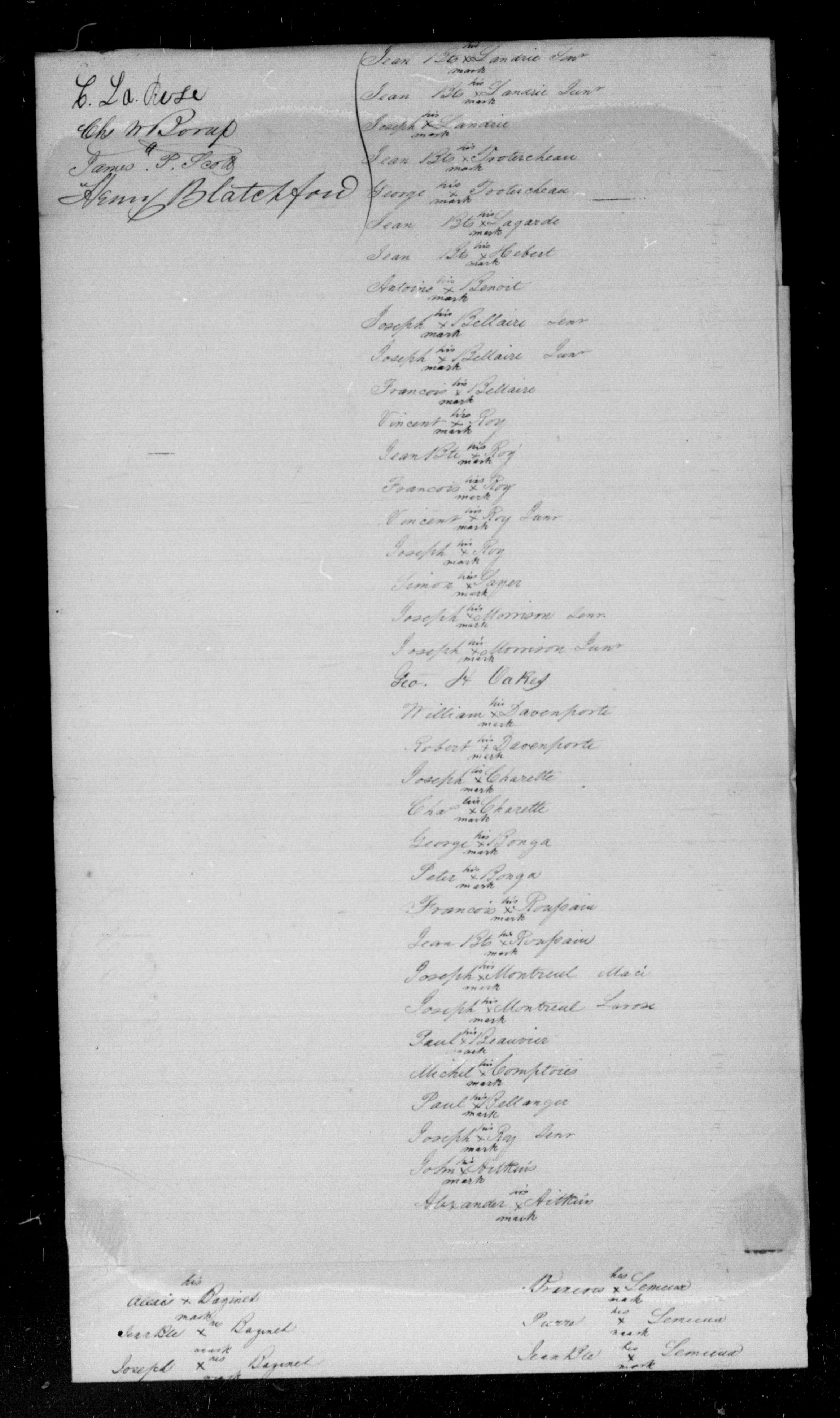

To the President of the United States of America
The Petition of the Half Breeds of the Chippewa nation respectfully shareth.
That we, Half Breeds of the Chippewa Nation, have recently learned, that the payment of the sum granted to the Chippewa Half Breeds, by virtue of the Treaty of 29th July 1837, has been deferred to next Spring, and, that the St Croix River has been selected as the place of payment.
That the delay in not having received our share of the above grant to the Chippewa Half Breeds, last summer, has caused us much loss, by keeping us from our regular vocations for several months, and by leaving many of us without means of support during winter, and that the arrangement of having the payment made next spring on the St Croix, will oblige us to perform a long and expensive Journey, leaving our families in our absence without any means of subsistance, and depriving us of all chance of being employed either in the Indian Trade or at fishing, by which means alone, we are able to earn our daily bread.
Your Petitioners with great deference and implicit submission to the pleasure of the President of the United States, respectfully pray, that an alteration may be made in the place assigned for payment and that Lapointe on Lake Superior may be fixed upon as the place of payment that place being the annual rendezvous of the Chippewa Half Breeds and the Chippewa Indians Traders, by whom we are employed.
And your Petitioners as in duty bound shall ever pray &c. &c.
Lake Superior Lapointe Dec. 20th 1838
Michel Neveu X his mark
Louis Neveu X his mark
Newel Neveu X his mark
Alexis Neveu X his mark
Joseph Danis X his mark
Benjamin Danis X his mark
Jean Bts Landrie Sen’r X his mark
Jean Bts Landrie Jun’r X his mark
Joseph Landrie X his mark
Jean Bts Trotercheau X his mark
George Trotercheau X his mark
Jean Bts Lagarde X his mark
Jean Bts Herbert X his mark
Antoine Benoit X his mark
Joseph Bellaire Sen’r X his mark
Joseph Bellaire Jun’r X his mark
Francois Bellaire X his mark
Vincent Roy X his mark
Jean Bts Roy X his mark
Francois Roy X his mark
Vincent Roy Jun’r X his mark
Joseph Roy X his mark
Simon Sayer X his mark
Joseph Morrison Sen’r X his mark
Joseph Morrison Jun’r X his mark
Geo. H Oakes
William Davenporte X his mark
Robert Davenporte X his mark
Joseph Charette X his mark
Chas Charette X his mark
George Bonga X his mark
Peter Bonga X his mark
Francois Roussain X his mark
Jean Bts Roussain X his mark
Joseph Montreal Maci X his mark
Joseph Montreal Larose X his mark
Paul Beauvier X his mark
Michel Comptories X his mark
Paul Bellanger X his mark
Joseph Roy Sen’r X his mark
John Aitkins X his mark
Alexander Aitkins X his mark
Alexis Bazinet X his mark
Jean Bts Bazinet X his mark
Joseph Bazinet X his mark
Michel Brisette X his mark
Augustin Cadotte X his mark
Joseph Gauthier X his mark
Isaac Ermatinger X his mark
Alexander Chaboillez X his mark
Michel Bousquet X his mark
Louis Bousquet X his mark
Antoine Cournoyer X his mark
Francois Bellanger X his mark
John William Bell, Jun’r
Jean Bts Robidoux X his mark
Robert Morin X his mark
Michel Petit Jun X his mark
Joseph Petit X his mark
Michel Petit Sen’r X his mark
Pierre Forcier X his mark
Jean Bte Rouleaux X his mark
Antoine Cournoyer X his mark
Louis Francois X his mark
Francois Lamoureaux X his mark
Francois Piquette X his mark
Benjamin Rivet X his mark
Robert Fairbanks X his mark
Benjamin Fairbanks X his mark
Antoine Maci X his mark
Joseph Maci X his mark
Edward Maci X his mark
Alexander Maci X his mark
Joseph Montreal Jun. X his mark
Peter Crebassa X his mark
Ambrose Davenporte X his mark
George Fairbanks X his mark
Francois Lemieux X his mark
Pierre Lemieux X his mark
Jean Bte Lemieux X his mark
Baptist St. Jean X his mark
Francis St Jean X his mark
Francis Decoteau X his mark
Jean Bte Brisette X his mark
Henry Brisette X his mark
Charles Brisette X his mark
Jehudah Ermatinger X his mark
Elijah Eramtinger X his mark
Jean Bte Cadotte X his mark
Charles Morrison X his mark
Louis Cournoyer X his mark
Jack Hotley X his mark
John Hotley X his mark
Gabriel Lavierge X his mark
Alexis Brebant X his mark
Eunsice Childes
Etienne St Martin X his mark
Eduard St Arnaud X his mark
Paul Rivet X his mark
Louisan Rivet X his mark
John Fairbanks X his mark
William Fairbanks X his mark
Theodor Borup
James P Scott
Bazil Danis X his mark
Alexander Danis X his mark
Joseph Danis X his mark
Souverain Danis X his mark
Frances Dechonauet
Joseph La Pointe X
Joseph Dafault X his mark
Antoine Cadotte X his mark
Signed in Presnce of
John Angus
John Wood
John William Bell Sen’r
Antoine Perinier
Grenville T. Sproat
Jay P. Childes
C. La Rose
Chs W. Borup
James P. Scott
Henry Blatchford
1837 Petitions from La Pointe to the President
January 29, 2023
Collected & edited by Amorin Mello
Letters Received by the Office of Indian Affairs:
La Pointe Agency 1831-1839
National Archives Identifier: 164009310
O. I. A. La Pointe J171.
Hon Geo. W. Jones
Ho. of Reps. Jany 9, 1838
Transmits petition dated 31st Augt 1837, from Michel Cadotte & 25 other Chip. Half Breeds, praying that the amt to be paid them, under the late Chip. treaty, be distributed at La Pointe, and submitting the names of D. P. Bushnell, Lyman M. Warren, for the appt of Comsr to make the distribution.
Transmits it, that it may receive such attention as will secure the objects of the petitioners, says as the treaty has not been satisfied it may be necessary to bring the subject of the petition before the Comsr Ind Affrs of the Senate.
Recd 10 Jany 1838
file
[?] File.
House of Representatives Jany 9th 1838

Sir
I hasten to transmit the inclosed petition, with the hope, that the subject alluded to, may receive such attention, as to secure the object of the petitioners. As the Chippewa Treaty has not yet been ratified it may be necessary to bring the subject of the petition before the Committee of Indian Affairs of the Senate.
I am very respectfully
Your obt svt
Geo W. Jones
C. A. Harris Esqr
Comssr of Indian Affairs
War Department

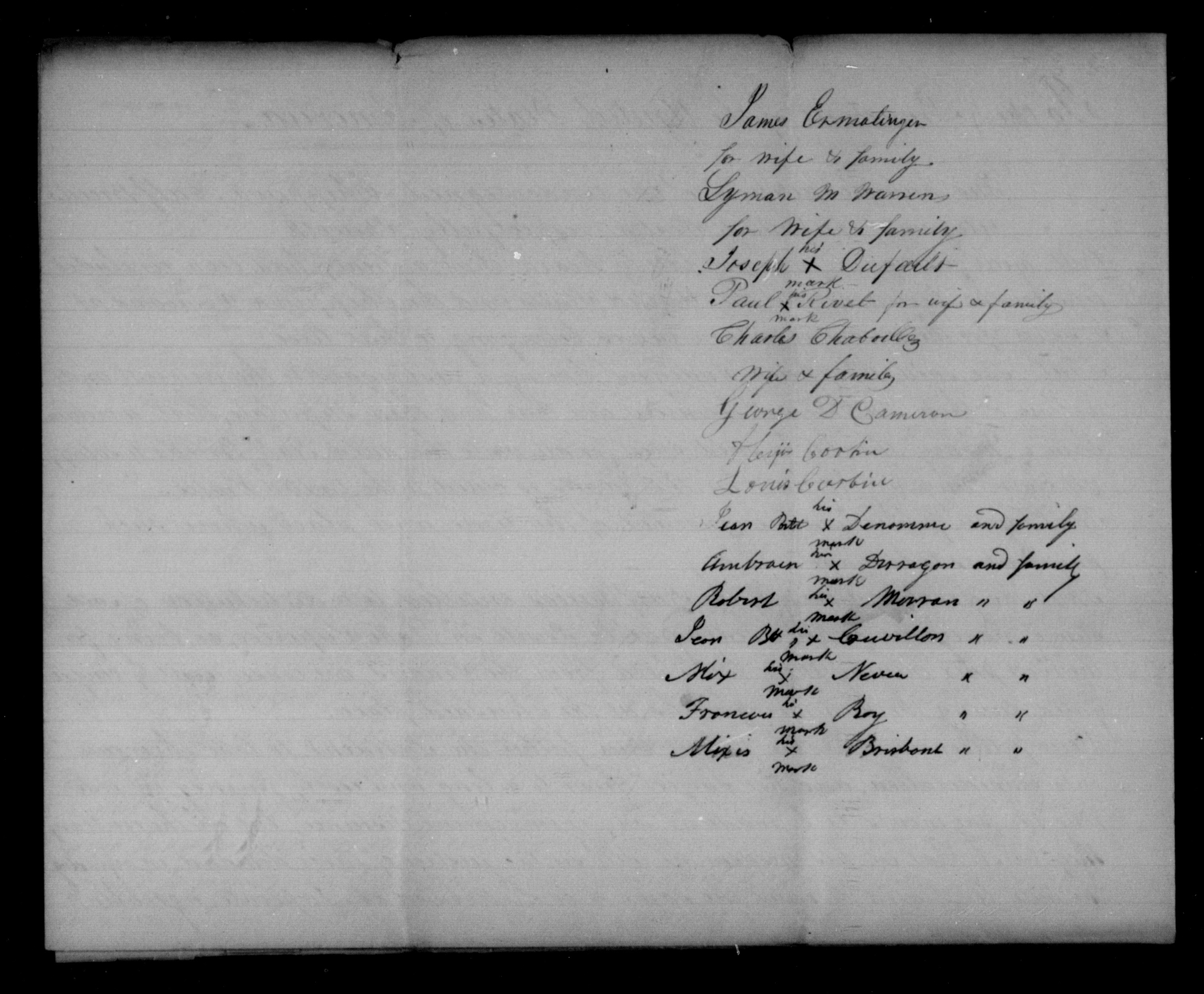
To the President of the United States of America
The humble petition of the undersigned Chippewa Half-Breeds citizens of the United Sates, respectfully Shareth:

Bizhiki (Buffalo), Dagwagaane (Two Lodges Meet), and Jechiikwii’o (Snipe, aka Little Buffalo) signed the 1837 Treaty of St Peters for the La Pointe Band.
That, your petitioners having lately heard that a Treaty had been concluded between the Government of the United Sates and the Chippewa Indians at St Peters, for the cession of certain lands belonging to that tribe:
ARTICLE 3.
“The sum of one hundred thousand dollars shall be paid by the United States, to the half-
breeds of the Chippewa nation, under the direction of the President. It is the wish of the
Indians that their two sub-agents Daniel P. Bushnell, and Miles M. Vineyard, superintend
the distribution of this money among their half-breed relations.”
That, the said Chippewa Indians X, having a just regard to the interest and welfare of their Half Breed brethren, did there and then stipulate; that, a certain sum of money should be paid once for all unto the said Half-Breeds, to satisfy all claim they might have on the lands so ceded to the United States.
That, your petitioners are ignorant of the time and place where such payment is to be made.
That the great majority of the Half-Breeds entitled to a distribution of said sum of money, are either residing at La Pointe on Lake Superior, or being for the most part earning their livelihood from the Traders, are consequently congregated during the summer months at the aforesaid place.
Your petitioners humbly solicit their father the President, to take their case into consideration, and not subject them to a long and costly journey in ordering the payments to be made at any inconvenient distance, but on the contrary they trust that in his wisdom he will see the justice of their demand in requiring he will be pleased to order the same to be distributed at Lapointe agreeable to their request.
Your petitioners would also intimate that, although they are fully aware that the Executive will make a judicious choice in the appointment of the Commissioners who will be selected to carry into effect the Provisions of said Treaty, yet, they would humbly submit to the President, that they have full confidence in the integrity of D. P. Bushnell Esqr. resident Indian Agent for the United States at this place and Lyman M Warren Esquire, Merchant.
Your petitioners entertain the flattering hope, that, their petition will not be made in vain, and as in duty bound will ever pray.
La Pointe, Lake Superior,
Territory of Wisconsin 31st August 1837
Michel Cadotte
Michel Bosquet X his mark
Seraphim Lacombe X his mark
Joseph Cadotte X his mark
Antoine Cadotte X his mark
Chs W Borup for wife & Children
A Morrison for wife & children
Pierre Cotte
Henry Cotte X his mark
Frances Roussan X his mark
James Ermatinger for wife & family
Lyman M Warren for wife & family
Joseph Dufault X his mark
Paul Rivet X his mark for wife & family
Charles Chaboullez wife & family
George D. Cameron
Alixis Corbin
Louis Corbin
Jean Bste Denomme X his mark and family
Ambrose Deragon X his mark and family
Robert Morran X his mark ” “
Jean Bst Couvillon X his mark ” “
Alix Neveu X his mark ” “
Frances Roy X his mark ” “
Alixis Brisbant X his mark ” “
Signed in presence of G. Pauchene
John Livingston
O.I.A. La Pointe W424.
Governor of Wisconsin
Mineral Pt. Feby 19, 1838
Transmits the talk of “Buffalo,” a Chip. Chief, delivered at the La Pointe SubAgt, Dec. 9, 1837, asking that the am. due the half-breeds under the late Treaty, be divided fairly among them, & paid them there, as they will not go to St Peters for it, &c.
Says Buffalo has great influence with his tribe, & is friendly to the whites; his sentiments accord with most of those of the half-breeds & Inds in that part of the country.
File
Recd 13 March 1838
[?] File.
Superintendency of Indian Affairs
for the Territory of Wisconsin
Mineral Point, Feby 19, 1838
Sir,
I have the honor to inclose the talk of “Buffalo,” a principal chief of the Chippewa Indians in the vicinity of La Pointe, delivered on the 9th Dec’r last before Mr Bushnell, sub-agent of the Chippewas at that place. Mr. Bushnell remarks that the speech is given with as strict an adherence to the letter as the language will admit, and has no doubt the sentiments expressed by this Chief accord with those of most of the half-breeds and Indians in that place of the Country. The “Buffalo” is a man of great influence among his tribe, and very friendly to the whites.
Very respectfully,
Your obed’t sevt.
Henry Dodge
Supt Ind Affs
Hon C. A. Harris
Com. of Ind. Affairs
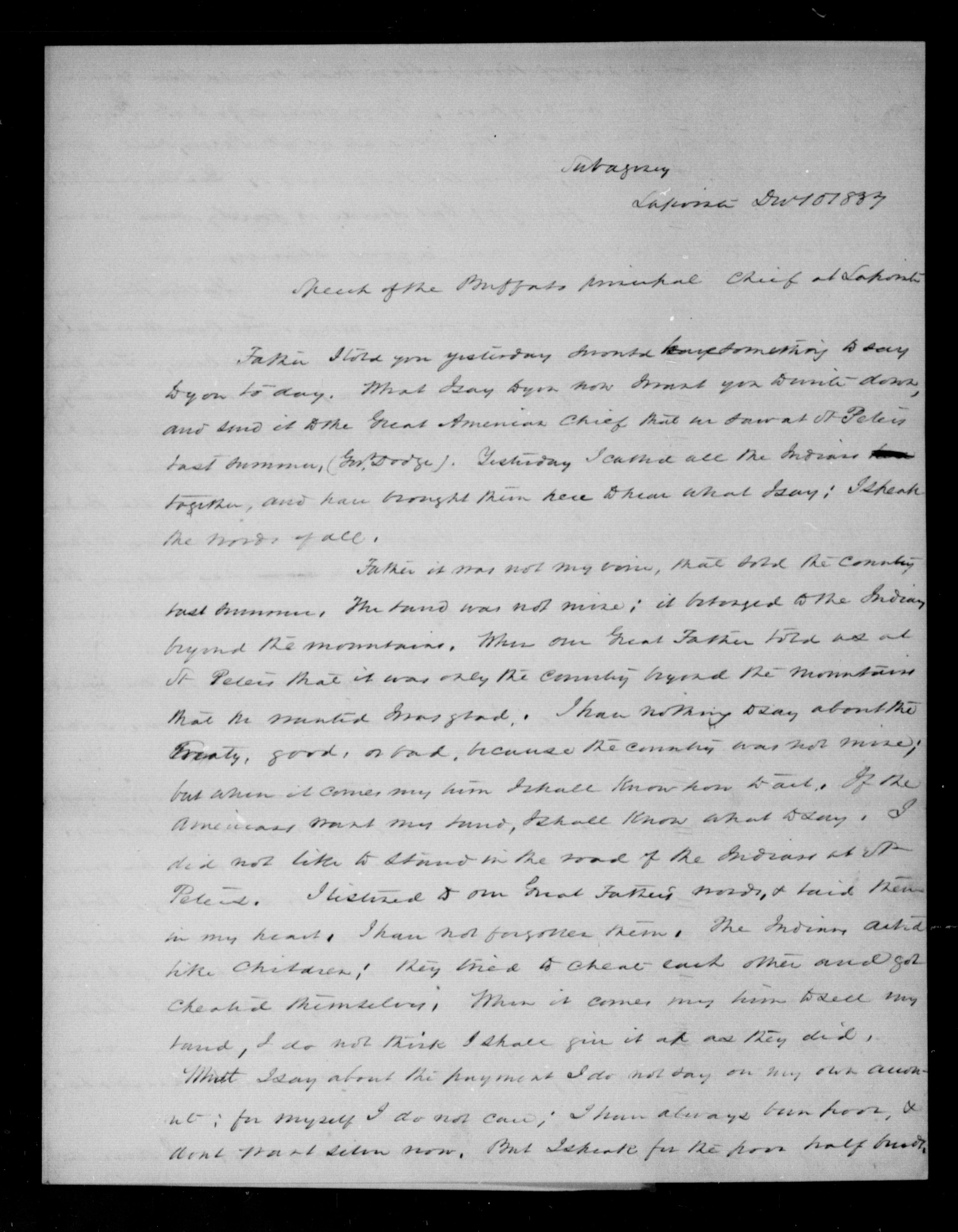
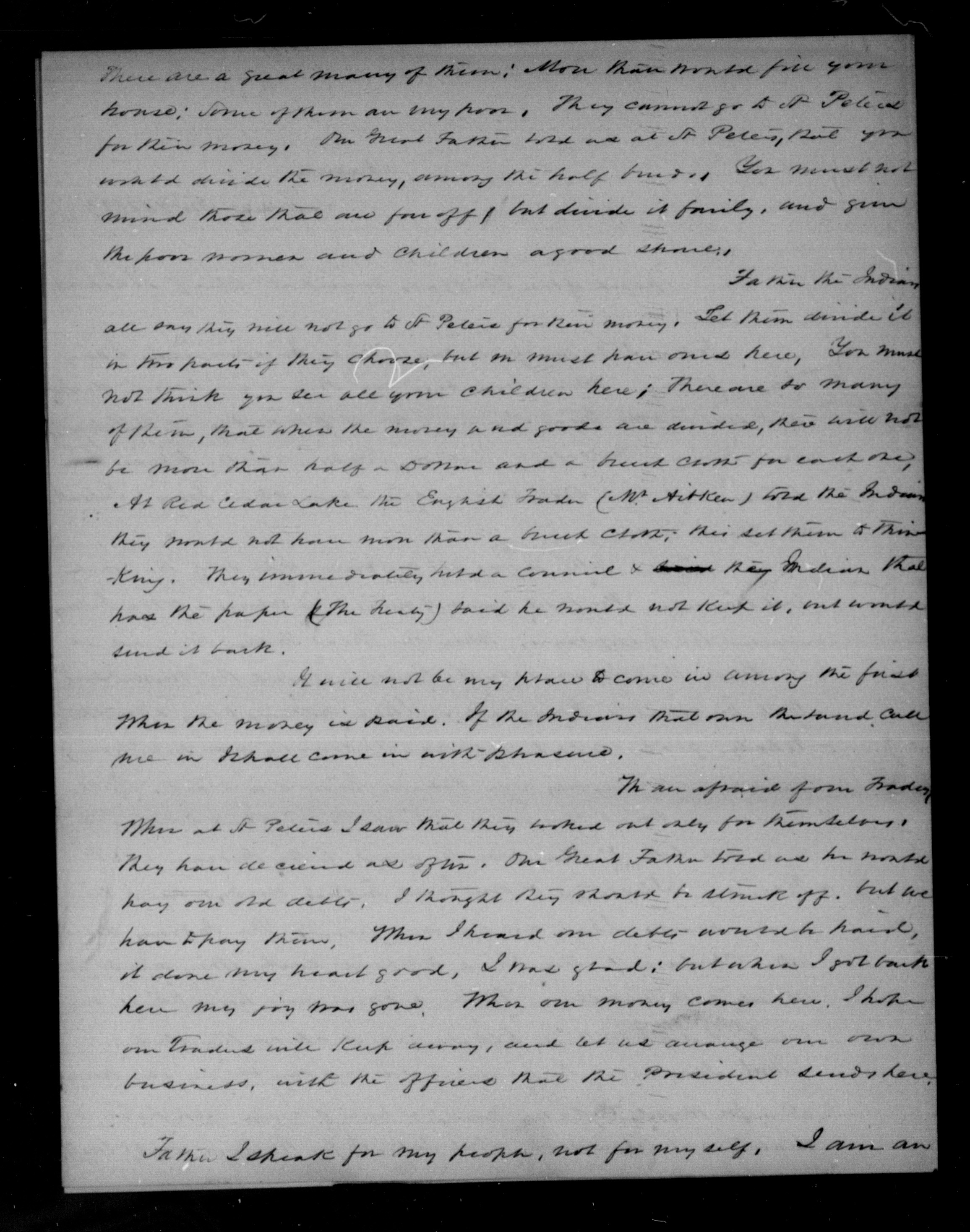
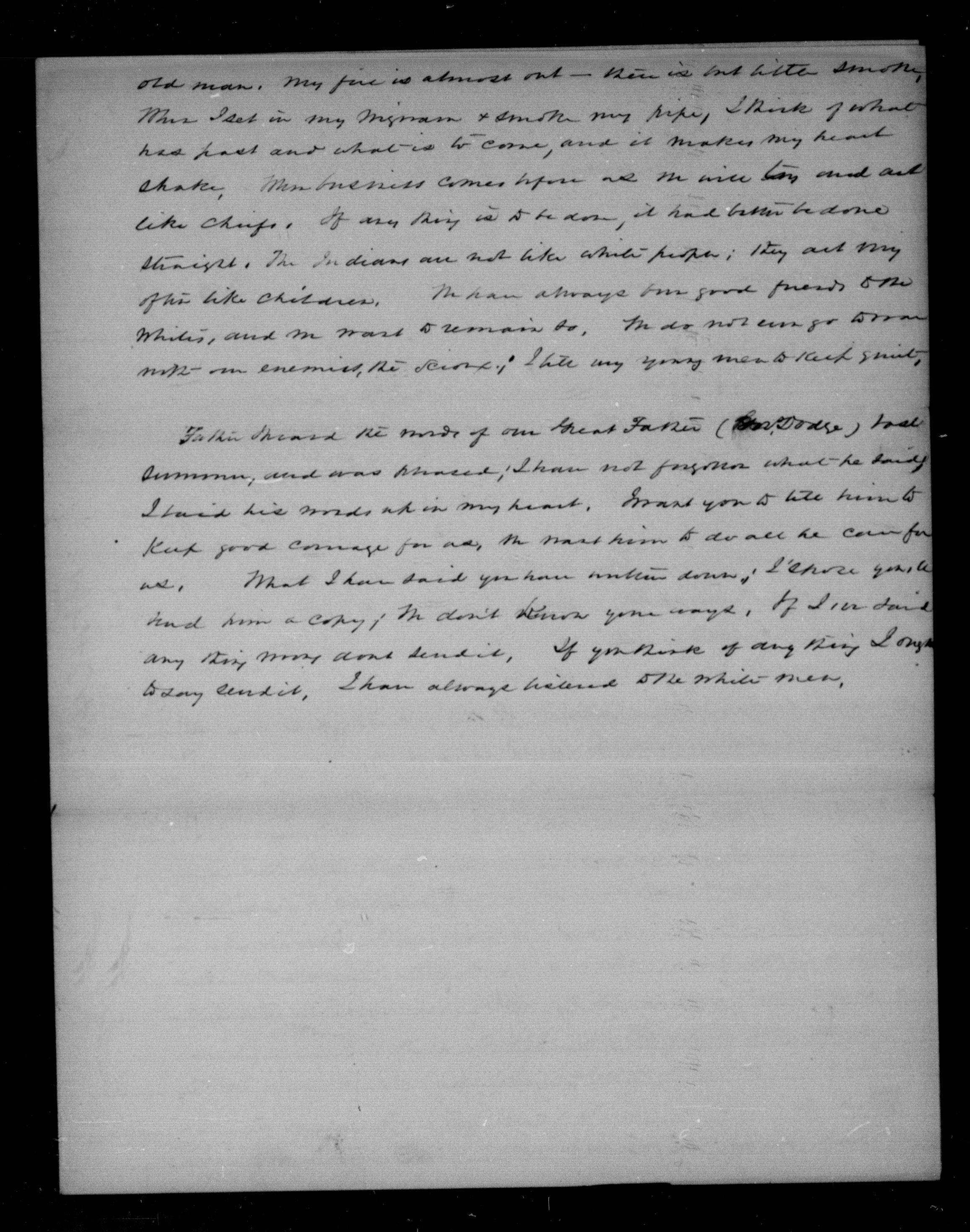
Subagency
Lapointe Dec 10 1837
Speech of the Buffalo principal Chief at Lapointe
Father I told you yesterday I would have something to say to you today. What I say to you now I want you to write down, and send it to the Great American Chief that we saw at St Peters last summer, (Gov. Dodge). Yesterday, I called all the Indians together, and have brought them here to hear what I say; I speak the words of all.
ARTICLE 1.
“The said Chippewa nation cede to the United States all that tract of country included
within the following boundaries:
[…]
thence to and along the dividing ridge between the waters of Lake Superior and those of the Mississippi
[…]“
Father it was not my voice, that sold the country last summer. The land was not mine; it belonged to the Indians beyond the mountains. When our Great Father told us at St Peters that it was only the country beyond the mountains that he wanted I was glad. I have nothing to say about the Treaty, good, or bad, because the country was not mine; but when it comes my time I shall know how to act. If the Americans want my land, I shall know what to say. I did not like to stand in the road of the Indians at St Peters. I listened to our Great Father’s words, & said them in my heart. I have not forgotten them. The Indians acted like children; they tried to cheat each other and got cheated themselves. When it comes my time to sell my land, I do not think I shall give it up as they did.
What I say about the payment I do not say on my own account; for myself I do not care; I have always been poor, & don’t want silver now. But I speak for the poor half breeds.
There are a great many of them; more than would fill your house; some of them are very poor They cannot go to St Peters for their money. Our Great Father told us at St Peters, that you would divide the money, among the half breeds. You must not mind those that are far off, but divide it fairly, and give the poor women and children a good share.
Father the Indians all say they will not go to St Peters for their money. Let them divide it in this parts if they choose, but one must have ones here. You must not think you see all your children here; there are so many of them, that when the money and goods are divided, there will not be more than half a Dollar and a breech cloth for each one. At Red Cedar Lake the English Trader (W. Aitken) told the Indians they would not have more than a breech cloth; this set them to thinking. They immediately held a council & their Indian that had the paper (The Treaty) said he would not keep it, and would send it back.
It will not be my place to come in among the first when the money is paid. If the Indians that own the land call me in I shall come in with pleasure.
ARTICLE 4.
“The sum of seventy thousand dollars shall be applied to the payment, by the United States, of certain claims against the Indians; of which amount twenty eight thousand dollars shall, at their request, be paid to William A. Aitkin, twenty five thousand to Lyman M. Warren, and the balance applied to the liquidation of other just demands against them—which they acknowledge to be the case with regard to that presented by Hercules L. Dousman, for the sum of five thousand dollars; and they request that it be paid.“
We are afraid of one Trader. When at St Peters I saw that they worked out only for themselves. They have deceived us often. Our Great Father told us he would pay our old debts. I thought they should be struck off, but we have to pay them. When I heard our debts would be paid, it done my heart good. I was glad; but when I got back here my joy was gone. When our money comes here, I hope our Traders will keep away, and let us arrange our own business, with the officers that the President sends here.
Father I speak for my people, not for myself. I am an old man. My fire is almost out – there is but little smoke. When I set in my wigwam & smoke my pipe, I think of what has past and what is to come, and it makes my heart shake. When business comes before us we will try and act like chiefs. If any thing is to be done, it had better be done straight. The Indians are not like white people; they act very often like children. We have always been good friends to the whites, and we want to remain so. We do not [even?] go to war with our enemies, the Sioux; I tell my young men to keep quiet.
Father I heard the words of our Great Father (Gov. Dodge) last summer, and was pleased; I have not forgotten what he said. I have his words up in my heart. I want you to tell him to keep good courage for us, we want him to do all he can for us. What I have said you have written down; I [?] you to hand him a copy; we don’t know your ways. If I [?] said any thing [?] dont send it. If you think of any thing I ought to say send it. I have always listened to the white men.
O.I.A. Lapointe, B.458
D. P. Bushnell
Lapointe, March 8, 1838
At the request of some of the petitioners, encloses a petition dated 7 March 1838, addressed to the Prest, signed by 167 Chip. half breeds, praying that the amt stipulated by the late Chip. Treaty to be paid to the half breeds, to satisfy all claims they ma have on the lands ceded by this Treaty, may be distributed at Lapointe.
Hopes their request will be complied with; & thinks their annuity should likewise be paid at Lapointe.
File
Recd 2nd May, 1838
Subagency
Lapointe Mch 6 1838
Sir
I have the honor herewith to enclose a petition addressed to the President of the United States, handed to me with a request by several of the petitioners that I would forward it. The justice of the demand of these poor people is so obvious to any one acquainted with their circumstances, that I cannot omit this occasion to second it, and to express a sincere hope that it will be complied with. Indeed, if the convenience and wishes of the Indians are consulted, and as the sum they receive for their country is so small, these should, I conciev, be principle considerations, their annuity will likewise as paid here; for it is a point more convenient of access for the different bands, that almost any other in their own country, and one moreover, where they have interests been in the habit of assembling in the summer months.
I am sir, with great respect,
your most obt servant,
D. P. Bushnell
O. I. A.
C. A. Harris Esqr.
Comr Ind. Affs
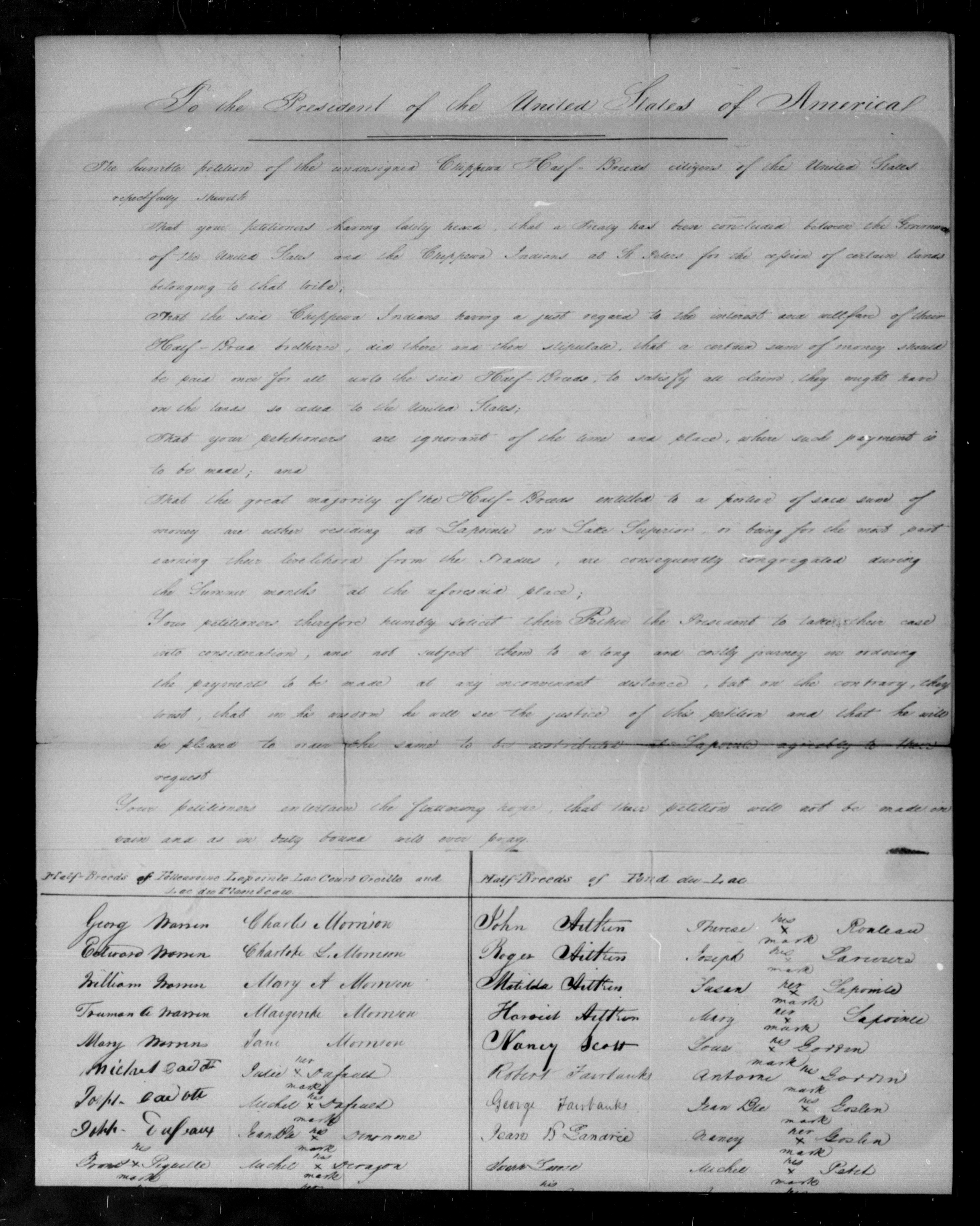
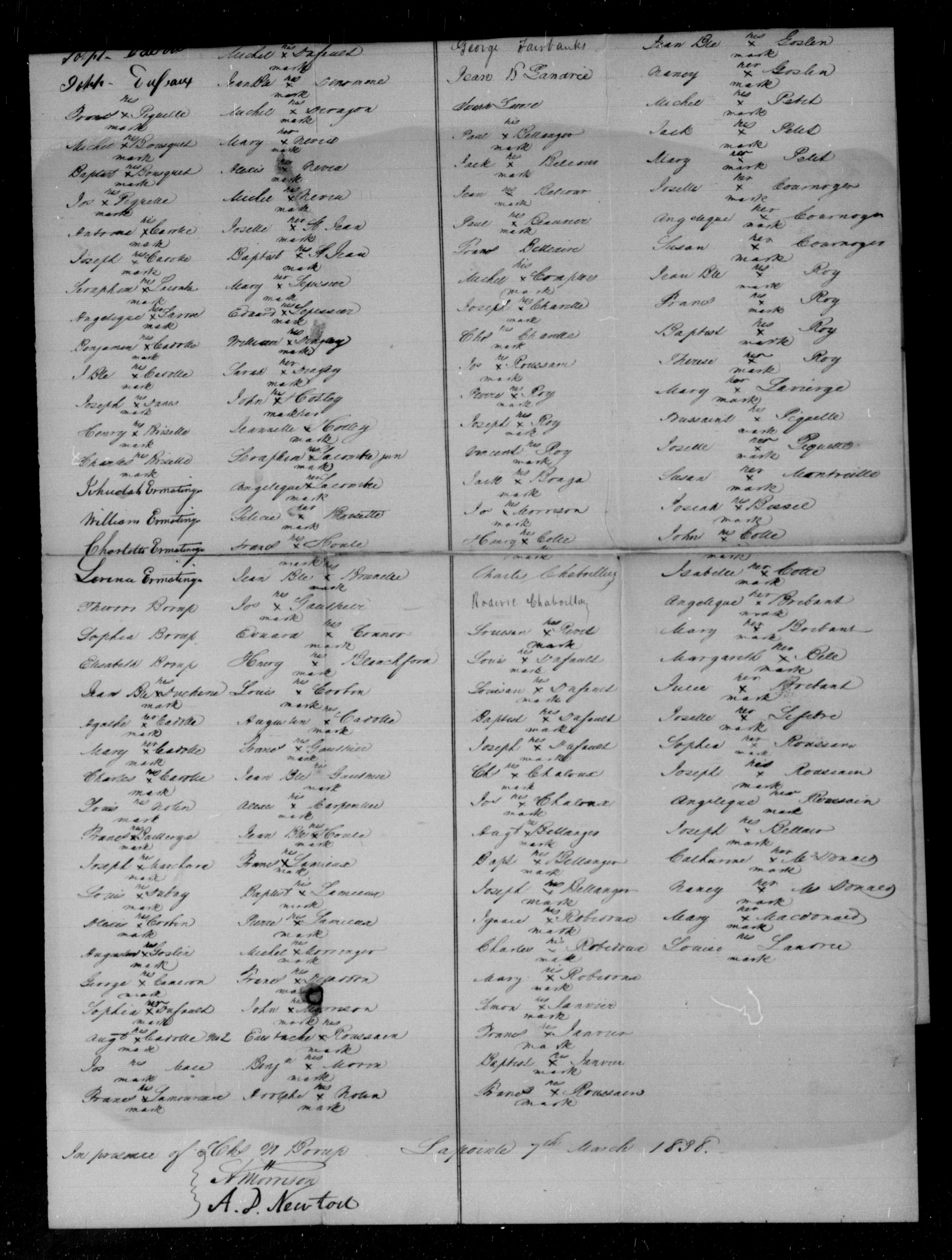
To the President of the United States of America
The humble petition of the undersigned Chippewa Half-Breeds citizens of the United States respectfully shareth
That your petitioners having lately heard, that a Treaty has been concluded between the Government of the United States and the Chippewa Indians at St Peters for the cession of certain lands belonging to that tribe;
That the said Chippewa Indians having a just regard to the interest and wellfare of their Half-Breed brethern, did there and then stipulate, that a certain sum of money should be paid once for all unto the said Half-Breeds, to satisfy all claims, they might have on the lands so ceded to the United States;
That your petitioners are ignorant of the time and place, where such payment is to be made; and
That the great majority of the Half-Breeds entitled to a portion of said sum of money are either residing at Lapointe on Lake Superior, or being for the most part earning their livelihood from the Traders, are consequently congregated during the summer months at the aforesaid place;
Your petitioners therefore humbly solicit their Father the President to take their case into consideration, and not subject them to a long and costly journey on ordering the payment to be made at any convenient distance, but on the contrary, they wish, that in his wisdom he will see the justice of this petition and that he will be pleased to order the same to be distributed at Lapointe agreeably to their request.
Your petitioners entertain the flattering hope, that their petition will not be made in vain and as in duly bound will ever pray.
Half Breeds of Folleavoine Lapointe Lac Court Oreilles and Lac du Flambeau
Georg Warren
Edward Warren
William Warren
Truman A Warren
Mary Warren
Michel Cadott
Joseph Cadotte
Joseph Dufault
Frances Piquette X his mark
Michel Bousquet X his mark
Baptiste Bousquet X his mark
Jos Piquette X his mark
Antoine Cadotte X his mark
Joseph Cadotte X his mark
Seraphim Lacombre X his mark
Angelique Larose X her mark
Benjamin Cadotte X his mark
J Bte Cadotte X his mark
Joseph Danis X his mark
Henry Brisette X his mark
Charles Brisette X his mark
Jehudah Ermatinger
William Ermatinger
Charlotte Ermatinger
Larence Ermatinger
Theodore Borup
Sophia Borup
Elisabeth Borup
Jean Bte Duchene X his mark
Agathe Cadotte X her mark
Mary Cadotte X her mark
Charles Cadotte X his mark
Louis Nolin _ his mark
Frances Baillerge X his mark
Joseph Marchand X his mark
Louis Dubay X his mark
Alexis Corbin X his mark
Augustus Goslin X his mark
George Cameron X his mark
Sophia Dufault X her mark
Augt Cadotte No 2 X his mark
Jos Mace _ his mark
Frances Lamoureau X his mark
Charles Morrison
Charlotte L. Morrison
Mary A Morrison
Margerike Morrison
Jane Morrison
Julie Dufault X her mark
Michel Dufault X his mark
Jean Bte Denomme X his mark
Michel Deragon X his mark
Mary Neveu X her mark
Alexis Neveu X his mark
Michel Neveu X his mark
Josette St Jean X her mark
Baptist St Jean X his mark
Mary Lepessier X her mark
Edward Lepessier X his mark
William Dingley X his mark
Sarah Dingley X her mark
John Hotley X his mark
Jeannette Hotley X her mark
Seraphim Lacombre Jun X his mark
Angelique Lacombre X her mark
Felicia Brisette X her mark
Frances Houle X his mark
Jean Bte Brunelle X his mark
Jos Gauthier X his mark
Edward Connor X his mark
Henry Blanchford X his mark
Louis Corbin X his mark
Augustin Cadotte X his mark
Frances Gauthier X his mark
Jean Bte Gauthier X his mark
Alexis Carpentier X his mark
Jean Bte Houle X his mark
Frances Lamieux X his mark
Baptiste Lemieux X his mark
Pierre Lamieux X his mark
Michel Morringer X his mark
Frances Dejaddon X his mark
John Morrison X his mark
Eustache Roussain X his mark
Benjn Morin X his mark
Adolphe Nolin X his mark
Half-Breeds of Fond du Lac
John Aitken
Roger Aitken
Matilda Aitken
Harriet Aitken
Nancy Scott
Robert Fairbanks
George Fairbanks
Jean B Landrie
Joseph Larose
Paul Bellanges X his mark
Jack Belcour X his mark
Jean Belcour X his mark
Paul Beauvier X his mark
Frances Belleaire
Michel Comptois X his mark
Joseph Charette X his mark
Chl Charette X his mark
Jos Roussain X his mark
Pierre Roy X his mark
Joseph Roy X his mark
Vincent Roy X his mark
Jack Bonga X his mark
Jos Morrison X his mark
Henry Cotte X his mark
Charles Chaboillez
Roderic Chaboillez
Louison Rivet X his mark
Louis Dufault X his mark
Louison Dufault X his mark
Baptiste Dufault X his mark
Joseph Dufault X his mark
Chs Chaloux X his mark
Jos Chaloux X his mark
Augt Bellanger X his mark
Bapt Bellanger X his mark
Joseph Bellanger X his mark
Ignace Robidoux X his mark
Charles Robidoux X his mark
Mary Robidoux X her mark
Simon Janvier X his mark
Frances Janvier X his mark
Baptiste Janvier X his mark
Frances Roussain X his mark
Therese Rouleau X his mark
Joseph Lavierire X his mark
Susan Lapointe X her mark
Mary Lapointe X her mark
Louis Gordon X his mark
Antoine Gordon X his mark
Jean Bte Goslin X his mark
Nancy Goslin X her mark
Michel Petit X his mark
Jack Petit X his mark
Mary Petit X her mark
Josette Cournoyer X her mark
Angelique Cournoyer X her mark
Susan Cournoyer X her mark
Jean Bte Roy X his mark
Frances Roy X his mark
Baptist Roy X his mark
Therese Roy X her mark
Mary Lavierge X her mark
Toussaint Piquette X his mark
Josette Piquette X her mark
Susan Montreille X her mark
Josiah Bissel X his mark
John Cotte X his mark
Isabelle Cotte X her mark
Angelique Brebant X her mark
Mary Brebant X her mark
Margareth Bell X her mark
Julie Brebant X her mark
Josette Lefebre X her mark
Sophia Roussain X her mark
Joseph Roussain X his mark
Angelique Roussain X her mark
Joseph Bellair X his mark
Catharine McDonald X her mark
Nancy McDonald X her mark
Mary Macdonald X her mark
Louise Landrie X his mark
In presence of
Chs W Borup
A Morrison
A. D. Newton
Lapointe 7th March 1838
By Leo
In April, the Supreme Court heard arguments in the case Department of Commerce v. New York and could render a decision any day on whether or not the 2020 federal census should include a question asking about citizenship status. In January, a Federal District Court in New York ruled that commerce secretary, Wilbur Ross, violated the law by pushing for that question.
Those in agreement with the District ruling suggest that the Trump administration wants to add the question as a way of discouraging immigrants from participating in the census, thereby diminishing the political power of immigrant communities. This, they say, would violate the Constitution on the grounds that the census must be an “actual enumeration” of all persons within the United States, not only citizens.
Proponents of the citizenship question counter that citizenship status is a perfectly natural question to ask in the census, that any government would want to know how many citizens it has, and that several past iterations of the 10-year count have included similar questions.
It remains to be seen how the Supreme Court will rule, but chances are it will not be the last time an issue of race, identity, or citizenship pops up in the politics of the census. From its creation by the Constitution as a way to apportion seats in congress according to populations of the states, the count has always begged tricky questions that essentially boil down to:
Who is a real American? Who isn’t? Who is a citizen? Who is three-fifths of a human being? Who might not be human at all? What does it mean to be White? To be Colored? To be civilized? How do you classify the myriad of human backgrounds, cultures and stories into finite, discrete “races?”
The Civil War and Fourteenth Amendment helped shed light on some of these questions, but it would be a mistake to think that they belong to the past. The NPR podcast Codeswitch has done an excellent series on census, and this episode from last August gives a broad overview of the history.
Here at Chequamegon History, though, we aren’t in the business broad overviews. We are going to drill down right into the data. We’ll comb through the 1850 federal census for La Pointe County and compare it with the 1860 data for La Pointe and Ashland Counties. Just for fun, we’ll compare both with the 1855 Wisconsin State Census for La Pointe County, then double back to the 1840 federal census for western St. Croix County. Ultimately, the hope is to help reveal how the population of the Chequamegon region viewed itself, and ultimately how that differed from mainstream America’s view. With luck, that will give us a framework for more stories like Amorin’s recent post on the killing of Louis Gurnoe.
Background
 Judge Daniel Harris Johnson of Prairie du Chien had no apparent connection to Lake Superior when he was appointed to travel northward to conduct the census for La Pointe County in 1850. The event made an impression on him. It gets a mention in his short memorial biography in the 1902 Proceedings of the State Bar Association.
Two years after statehood, Lake Superior’s connection to the rest of Wisconsin was hardly existent. This was long before Highways 51 and 53 were built, and commerce still flowed west to east. Any communication to or from Madison was likely to first go through Michigan via Mackinaw and Sault Ste. Marie, or through Minnesota Territory via St. Paul, Stillwater, and Sandy Lake. La Pointe County had been created in 1845, and when official business had to happen, a motley assortment of local residents who could read and write English: Charles Oakes, John W. Bell, Antoine Gordon, Alexis Carpentier, Julius Austrian, Leonard Wheeler, etc. would meet to conduct the business.
It is unclear how much notice the majority Ojibwe and French-patois speaking population took of this or of the census generally. To them, the familiar institutions of American power, the Fur Company and the Indian Agency, were falling apart at La Pointe and reorganizing in St. Paul with dire consequences for the people of Chequamegon. When Johnson arrived in September, the Ojibwe people of Wisconsin had already been ordered to remove to Sandy Lake in Minnesota Territory for their promised annual payments for the sale of their land. That fall, the government would completely botch the payment, and by February, hundreds of people in the Lake Superior Bands would be dead from starvation and disease.
So, Daniel Johnson probably found a great deal of distraction and anxiety among the people he was charged to count. Indians, thought of by the United States as uncivilized federal wards and citizens of their own nations, were typically not enumerated. However, as I wrote about in my last post, race and identity were complicated at La Pointe, and the American citizens of the Chequamegon region also had plenty to lose from the removal.
Madison, for its part, largely ignored this remote, northern constituency and praised the efforts to remove the Ojibwe from the state. It isn’t clear how much Johnson was paying attention to these larger politics, however. He had his own concerns:


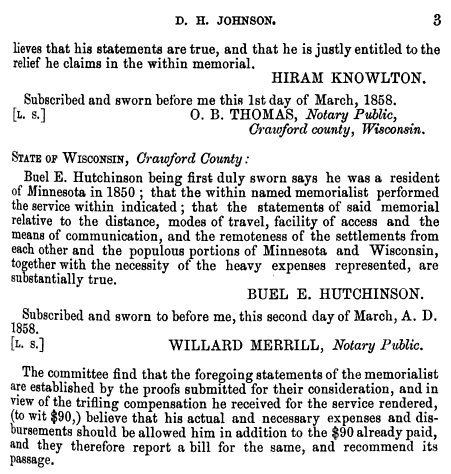
House Documents, Volume 119, Part 1. U.S. Government Printing Office, 1859. Google Books.
So, in “that thinly settled and half civilized region,” Johnson only found a population of about 500, “exclusive of Indians.” He didn’t think 500 was a lot, but by some counts, that number would have seemed very high. Take the word of a European visitor to La Pointe:
Among 200 Indians, only a few white families live there. One of the boatmen gave us a name, with which we found Mr. Austrian.
And, from this Mr. Austrian, himself:
There were only about 6 white American inhabitants on the Island, about 50 Canadian Frenchmen who were married to squaws, and a number of full blooded Indians, among whom was chief Buffalo who was a descendant of chiefs & who was a good Indian and favorably regarded by the people.
~Joseph Austrian, Brother of Julius and La Pointe resident 1851-52
Who lived around La Pointe in 1850?
In her biography, William W. Warren: the Life, Letters, and Times of an Ojibwe Leader, Theresa Schenck describes the short life of an ambitious young man from La Pointe. William Whipple Warren (1825-1853) grew up on the Island speaking Ojibwe as his first language. His father was a Yankee fur trader from New York. His mother was a daughter of Michel and Madeline Cadotte. In his famous History of the Ojibways Warren describes the Ojibwe as people with whom he readily claims kinship, but he doesn’t write as if he is an Ojibwe person himself. However, he helped interpret the Treaty of 1847 which had definitively made him an Indian in the eyes of the United States (a fact he was willing to use for economic gain). Still, a few years later, when he became a legislator in Minnesota Territory he dismissed challenges to his claims of whiteness.
If he were alive today, Warren might get a chuckle out of this line from the South African comedian Trevor Noah.
People mocked me. Gave me names like mixed breed, half caste — I hate that term ‘half’. Why half? Why not double? Or twice as nice, I don’t know.
— Trevor Noah
William Warren did not see himself as quite the walking contradiction we might see him as today. He was a product of the time and place he came from: La Pointe. By 1850, he had left that place, but his sister and a few hundred of his cousins still lived there. Many of them were counted in the census.
What is Metis?
Half-breeds, Mixed-bloods, Frenchmen, Wiisakodewininiwag, Mitif, Creoles, Metis, Canadiens, Bois Brules, Chicots, French-of-the-country, etc.–at times it seems each of these means the same thing. At other times each has a specific meaning. Each is ambiguous in its own way. In 1850, roughly half the families in the Chequamegon area fit into this hard-to-define category.


Kohl, J. G. Kitchi-Gami: Wanderings around Lake Superior. London: Chapman and Hall, 1860. pg. 260-61.
We were accompanied on our trip throughout the lakes of western Canada by half-Indians who had paternal European blood in their veins. Yet so often, a situation would allow us to spend a night inside rather than outdoors, but they always asked us to choose to Irish camp outside with the Indians, who lived at the various places. Although one spoke excellent English, and they were drawn more to the great American race, they thought, felt, and spoke—Indian! ~Carl Scherzer
In describing William Warren’s people, Dr. Schenck writes,
Although the most common term for people of mixed Indian and European ancestry in the nineteenth century was “half-breed,” the term “mixed blood” was also used. I have chosen to use the latter term, which is considered less offensive, although biologically inaccurate, today. The term “métis” was not in usage at the time, except to refer to a specific group of people of mixed ancestry in the British territories to the north. “Wissakodewinini,” the word used by the Ojibwe, meant “burned forest men,” or bois brulés in French, so called because half-breeds were like the wood of a burned forest, which is often burned on one side, and light on the other (pg. xv).
Schenck is correct in pointing out that mixed-blood was far more commonly used in 19th-century sources than Metis (though the latter term did exist). She is also correct in saying that the term is more associated with Canada and the Red River Country. There is an additional problem with Metis, in that 21st-century members of the Wannabe Tribe have latched onto the term and use it, incorrectly, to refer to anyone with partial Native ancestry but with no affiliation to a specific Indian community.
That said, I am going to use Metis for two reasons. The first is that although blood (i.e. genetic ancestry) seemed to be ubiquitous topic of conversation in these communities, I don’t think “blood” is what necessarily what defined them. The “pure-blooded French Voyageur” described above by Kohl clearly saw himself as part of Metis, rather than “blanc” society. There were also people of fully-Ojibwe ancestry who were associated more with Metis society than with traditional Ojibwe society (see my post from April). As such, I find Metis the more versatile and accurate term, given that it means “mixed,” which can be just as applicable to a culture and lifestyle as it is to a genetic lineage.
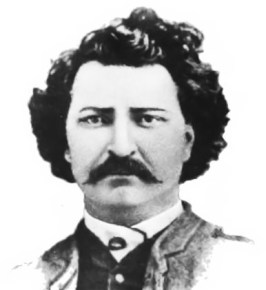
One time Canadian pariah turned national hero, Louis Riel and his followers had cousins at La Pointe (Photo: Wikipedia)
The second reason I prefer Metis is precisely because of the way it’s used in Manitoba. Analogous to the mestizo nations of Latin America, Metis is not a way of describing any person with Native and white ancestry. The Metis consider themselves a creole-indigenous nation unto themselves, with a unique culture and history. This history, already two centuries old by 1850, represents more than simply a borrowed blend of two other histories. Finally, the fur-trade families of Red River came from Sault Ste. Marie, Mackinac, Grand Portage, and La Pointe. There were plenty of Cadottes, Defaults, Roys, Gurnoes, and Gauthiers among them. There was even a Riel family at La Pointe. They were the same nation
Metis and Ojibwe Identity in the American Era
When the 1847 Treaty of Fond du Lac “stipulated that the half or mixed bloods of the Chippewas residing with them shall be considered Chippewa Indians, and shall, as such, be allowed to participate in all annuities which shall hereafter be paid…” in many ways, it contradicted two centuries of tradition. Metis identity, in part, was dependent on not being Indian. They were a minority culture within a larger traditional Anishinaabe society. This isn’t to say that Metis people were necessarily ashamed of their Native ancestors–expressions of pride are much easier to find than expressions shame–they were just a distinct people. This was supposedly based in religion and language, but I would argue it came mostly from paternal lineage (originating from highly-patriarchal French and Ojibwe societies) and with the nature of men’s work. For women, the distinction between Ojibwe and Metis was less stark.
The imposition of American hegemony over the Chequamegon region was gradual. With few exceptions, the Americans who came into the region from 1820 to 1850 were adult men. If new settlers wanted families, they followed the lead of American and British traders and married Metis and Ojibwe women.
Still, American society on the whole did not have a lot of room for the racial ambiguity present in Mexico or even Canada. A person was “white” or “colored.” Race mixing was seen as a problem that affected particular individuals. It was certainly not the basis for an entire nation. In this binary, if Metis people weren’t going to be Indian, they had to be white.
The story of the Metis and American citizenship is complicated and well-studied. There is risk of overgeneralizing, but let’s suffice to say that in relation to the United States government, Metis people did feel largely entitled to the privileges of citizenship (synonymous with whiteness until 1865), as well as to the privileges of Ojibwe citizenship. There wasn’t necessarily a contradiction.
Whatever qualms white America might have had if they’d known about it, Metis people voted in American elections, held offices, and were counted by the census.
Ojibwe “Full-bloods” and the United States Census
Representatives and direct Taxes shall be apportioned among the several States which
may be included within this Union, according to their respective Numbers, which shall be determined by adding to the whole Number of free Persons, including those bound to Service for a Term of Years, and excluding Indians not taxed, three fifths of all other Persons. The actual Enumeration shall be made within three Years after the first Meeting of the Congress of the United States, and within every subsequent Term of ten Years, in such Manner as they shall by Law direct.~Excerpt from Article I Section II, U. S. Constitution
As I argued in the April post, our modern conception of “full-blood” and “mixed-blood” has been shaped by the “scientific” racism of the late 19th and early 20th centuries. The distinction, while very real in a cultural sense, was not well-grounded in biology.
The relationship of Indians (i.e. full-bloods or those living a traditional lifestyle) to American society and citizenship was possibly more contradictory then that of the Metis. In one sense, America saw Indians as foreigners on their own continent: either as enemies to be exterminated, or as domestic-dependent ward nations to be “protected.” The constitutional language about the census calls for slaves to be counted as three-fifths of a person. It says Indians shouldn’t be counted at all.
In another sense, however, the path to personhood in America was somewhat clearer for Indians than it was for African Americans. Many New England liberals saw exodus to Liberia as the only viable future for free blacks. These same voices felt that Indians could be made white if only they were separated from their religions, cultures, and tribal identities. In 1834, to avoid a second removal, the Brothertown Indians of Wisconsin petitioned congress for citizenship and the termination of collective title to their tribal lands. In 1839, their request was granted. In the eyes of the law, they had effectively become white. Other communities would follow suit. However, most Native people did not gain any form of American citizenship until 1924.
How did that play out for the Ojibwe people of Chequamegon, and how did it impact the 1850 census? Well, it’s complicated.
Race, the Census, and Classifying Households
The enumeration forms Daniel H. Johnson carried to La Pointe had more rows and columns than ever. The Seventh Census was the first to count everyone in the household by name (previous versions only listed the Head of Household with tally marks). It was also the first census to have a box for “color.” Johnson’s choices for color were “white,” “black,” and “mulatto,” forcing him to make some decisions.
He seems to have tried to follow the Indians not taxed clause strictly. 40-50% of households in the region were headed by a full-blood Ojibwe person, possibly only two of them were enumerated. You won’t find Chief Buffalo, Makadebinesi (Blackbird), Oshkinaawe, Omizhinaawe, Edawegiizhig, and their immediate families in the 1850 census. Jechiikwii’o (often called Little Buffalo) is not in the document, even though he was an early Catholic convert, dressed in “white” clothing, and counted more Metis Ojibwe among his followers than full-bloods. However, his son, Antoine Buffalo Sr. (Antoine Jachequaon) is counted. Antoine, along with George Day, were counted as white heads of household by the census, though it is unclear if they had any European ancestry (Sources conflict. If anyone has genealogical information for the Buffalo and Day families, feel free to comment on the post). A handful of individuals called full-bloods in other sources, were listed as white. This includes 90-year old Madeline Cadotte, Marie Bosquet, and possibly the Wind sisters (presumably descendants of Noodin, one of the St. Croix chiefs who became Catholic and relocated to La Pointe around this time). They were married to Metis men or lived in Metis households. All Metis were listed as white.
Johnson did invent new category for five other Ojibwe people: “Civilized Indian,” which he seemed to use arbitrarily. Though also living in Metis households, Mary Ann Cadotte, Osquequa Baszina, Marcheoniquidoque, Charlotte Houle, and Charles Loonsfoot apparently couldn’t be marked white the way Madeline Cadotte was. These extra notations by Johnson and other enumeration marshals across the country are why the Seventh Federal Census is sometimes referred to as the first to count Native Americans.

So, out of 470 individuals enumerated at La Pointe and Bad River (I’ve excluded Fond du Lac from my study) Johnson listed 465 (99%) as white. By no definition, contemporary or modern, was the Chequamegon area 99% white in 1850. The vast majority of names on the lines had Ojibwe ancestry, and as Chippewas of Lake Superior, were receiving annuities from the treaties.
There were a few white American settlers. The Halls had been at La Pointe for twenty years. The Wheelers were well-established at Odanah. Junius and Jane Welton had arrived by then. George Nettleton was there, living with a fellow Ohioan James Cadwell. The infamous Indian agent, John Watrous, was there preparing the disastrous Sandy Lake removal. Less easy to describe as American settlers, but clearly of European origins, Fr. Otto Skolla was the Catholic priest, and Julius Austrian was the richest man it town.
There were also a handful of American bachelors who had drifted into the region and married Metis women. These first-wave settlers included government workers like William VanTassel, entrepreneurs like Peter VanderVenter, adventurers with an early connection to the region like Bob Boyd and John Bell, and homesteaders like Ervin Leihy.
It is unclear how many of French-surnamed heads of household were Chicots (of mixed ancestry) and how many were Canadiens (of fully-French ancestry). My sense is that it is about half and half. Some of this can be inferred from birthplace (though a birthplace of Canada could indicate across the river at Sault Ste. Marie as easily it could a farm in the St. Lawrence Valley). Intense genealogical study of each family might provide some clarifications, but I am going to follow Kohl’s voyageurs and not worry too much about it. Whether it was important or not to Jean Baptiste Denomie and Alexis Carpentier that they had no apparent Indian ancestry and that they had come from “the true homeland” of Quebec, for all intents and purposes they had spent their whole adult lives in “the Upper Country,” and their families were “of the Country.” They were Catholic and spoke a form of French that wasn’t taught in the universities. American society would not see them as white in the way it saw someone like Sherman Hall as white.
So, by my reckoning, 435 of the 470 people counted at La Pointe (92.5%) were Metis, full-blood Ojibwe living in Metis households, or Canadians in Metis families. Adding the five “Civilized Indians” and the six Americans married into Metis families, the number rises to 95%. I am trying to track down accurate data on the of Indians not taxed (i.e. non-enumerated full-bloods) living at or near La Pointe/Bad River at this time. My best estimates would put it roughly the same as the number of Metis. So, when Johnson describes a land with a language and culture foreign to English-speaking Americans, he’s right.
Birthplace, Age, and Gender
Ethnic composition is not the only data worth looking at if we want to know what this area was like 169 years ago. The numbers both challenge and confirm assumptions of how things worked.
Let’s take mobility for example:

The young voyageur quoted by Kohl may have felt like he didn’t have a home other than en voyage, but 86% of respondents reported being born in Wisconsin. Except for ten missionary children, all of these were Metis or “Civilized Indian.” Wisconsin could theoretically mean Lac du Flambeau, Rice Lake, or even Green Bay, this but this number still seemed high to me. I’m guessing more than 14% of 21st-century Chequamegon residents were born outside the state, and 19th-century records are all about commerce, long-distance travel, and new arrivals in new lands. We have to remember that most of those records are coming from that 14%.
In September of 1850 the federal government was telling the Ojibwe of Wisconsin they needed to leave Wisconsin forever. How the Metis fit into the story of the Sandy Lake Tragedy has always been somewhat fuzzy, but this data would indicate that for a clear majority, it meant a serious uprooting.
For those born outside Wisconsin, more than two-thirds reported being born in Michigan, Canada, or Minnesota Territory. These are overwhelmingly Metis or in the case of Anglo-Canadians like Robert Morrin, heads of Metis households from areas with a fur-trade tradition. Only eighteen individuals reported being born in the eastern United States. Only three reported Europe.
I had more questions than assumptions about the gender and age breakdown of the population. Would there be more women than men because of the dangerous jobs done by men or would mortality from childbirth balance that out? Or maybe widows wouldn’t be counted if they returned to the wigwams of their mothers? How would newcomers skew the age and gender demographics of the area?
Let’s take a look:
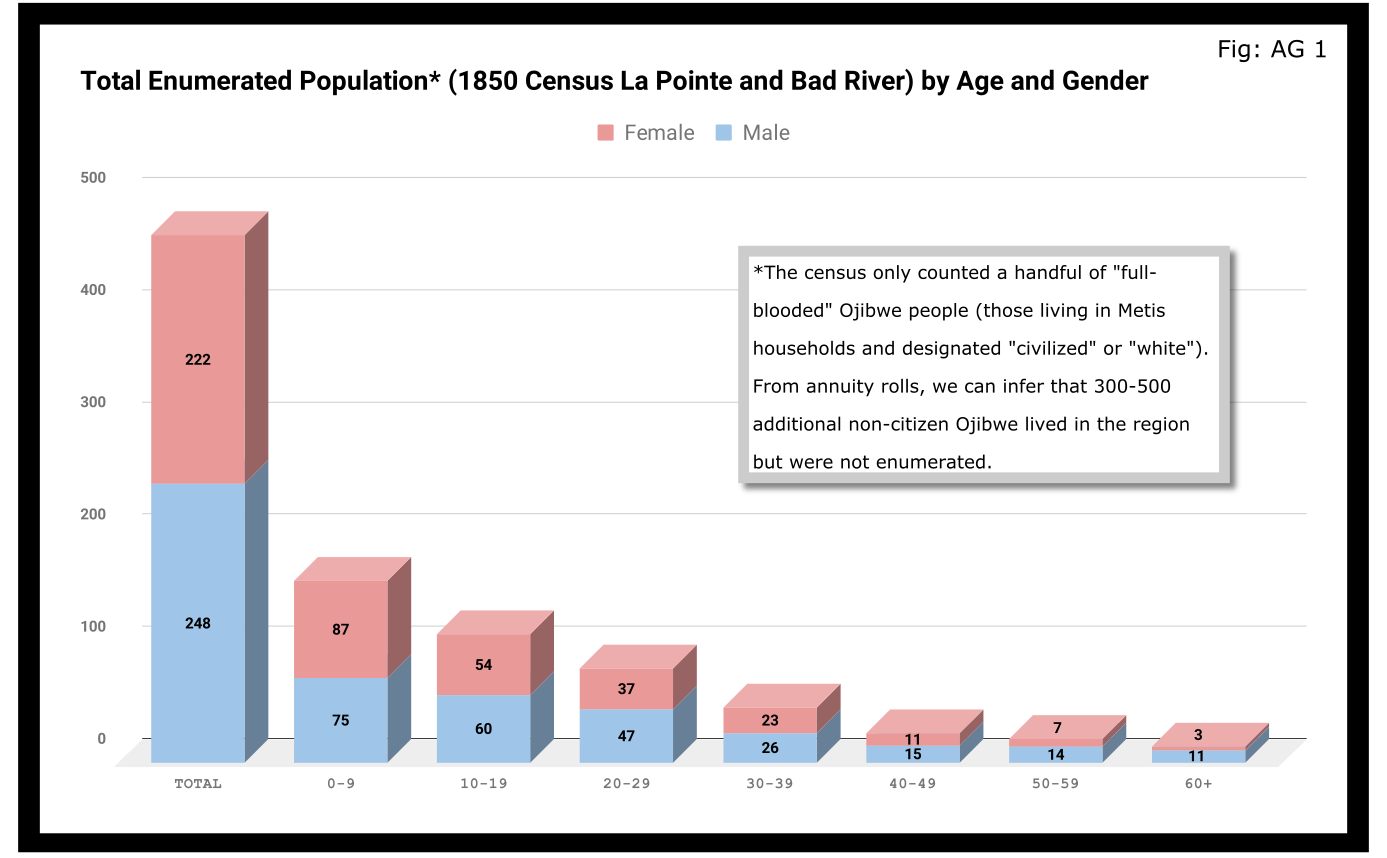
A quick glance at Figure AG 1 shows that the population skewed male 248-222 and skewed very young (61% under 20 years old). On the eve of Sandy Lake, the natural increase in the population seemed to be booming.

The hypotheses that women had higher mortality rates and were more likely to be undercounted looked good until we limit the data to the Wisconsin-born population. In Figure AG 2, we see that the male majority disappears entirely. The youthful trend, indicating large families and a growing population, continues with 66% of the Wisconsin-born population being under 20.

The male skew of the total population was entirely due to those born outside Wisconsin. This is not surprising given how much we’ve emphasized the number of men who came into the Lake Superior country to marry local women.
A look at the oldest residents in chart AG 2 and AG 3 hints at another story. Madeline Cadotte is the only Wisconsin-born person over seventy to be counted. The oldest men all came from Michigan and Canada. Why? My hypothesis is that between the fall of New France in 1759 and the establishment of Michel Cadotte’s post sometime around 1800, there wasn’t a large population or a very active fur trade around La Pointe proper. That meant Cadotte’s widow and other full bloods were the oldest locally-born residents in 1850. Their Metis contemporaries didn’t come over from the Soo or down from Grand Portage until 1810 or later.
Economics
Before the treaties, the economy of this area was built on two industries: foraging and trade. Life for Ojibwe people revolved around the seasonal harvest of fish, wild rice, game, maple sugar, light agriculture, and other forms of gathering food directly from the land. Trade did not start with the French, and even after the arrival of European goods into the region, the primary purpose of trade seemed to be for cementing alliances and for the acquisition of luxury goods and sacred objects. Richard White, Theresa Schenck, and Howard Paap have all challenged the myth of Ojibwe “dependence” on European goods for basic survival, and I find their arguments persuasive.
Trade, though, was the most important industry for Metis men and La Pointe was a center of this activity. The mid-19th century saw a steep decline in trade, however, to be replaced by a toxic cycle of debts, land sales, and annuity payments. The effects of this change on the Metis economy and society seem largely understudied. The fur trade though, was on its last legs. Again, the Austrian travel writer Carl Scherzer, who visited La Pointe in 1852:
After this discussion of the of the rates of the American Fur Company and its agents, we want to add some details about the men whose labor and time exerted such a great influence on the fate and culture of the Indian tribes. We wish to add a few explanatory words about the sad presence on La Pointe of the voyageurs or courriers du bois.
This peculiar class of people, which is like a vein of metal that suddenly disappears within the bedrock and reappears many hundreds of miles away under the same geological conditions, their light reaches the borders of the eastern Canadas. The British people, with their religion and customs, reappeared on the shores of these northern lakes only in 1808 with the Fur Company. For labor they drew on those who could carry their wares across the lakes and communicate with the Indians.
Many young men of adventurous natures left the old wide streets of Montreal and moved into the trackless primeval forests of the West. Young and strong as laborers, they soon started to adopt the lifestyle and language of the aborigines. They married with the Indians and inhabit small settlements scattered throughout those mighty lands which begin at Mackinow Island and come up the upper lake to the region of Minnesota. They almost all speak the Canadian patois along with the language of the Chippewas, the tribe with which they came into kinship. We found only a few, even among the younger generation, who understood English.
Since then, every day the population of the otherwise deserted shore of Lake Superior increases with the discovery of copper mines. The animals driven away by the whirlwind of civilization toward the west, attract the Indians with their sensitive guns, leaving La Pointe, abandoned by the Company for their headquarters at St. Paul in Minnesota. Most voyageurs left the island, having seen their business in ruins and lacking their former importance. Just a few families remain here, making a meager livelihood of hunting, fishing, and the occasional convoy of a few travelers led by business, science, or love of nature who purchase their limited resources.
From Scherzer’s description, two things are clear. It’s pretty clear from the flowery language of the Viennese visitor.Washington Irving and other Romantic-Era authors had already made the Voyageur into the stock stereotypical character we all know today. Th only change, though, is these days voyageurs are often depicted as representatives of white culture, but that’s a post for another time.
The second item, more pertinent to this post, is that a lot of voyageurs were out of work. This is especially relevant when we look at our census data. Daniel Johnson recorded the occupations of all males fifteen or over:
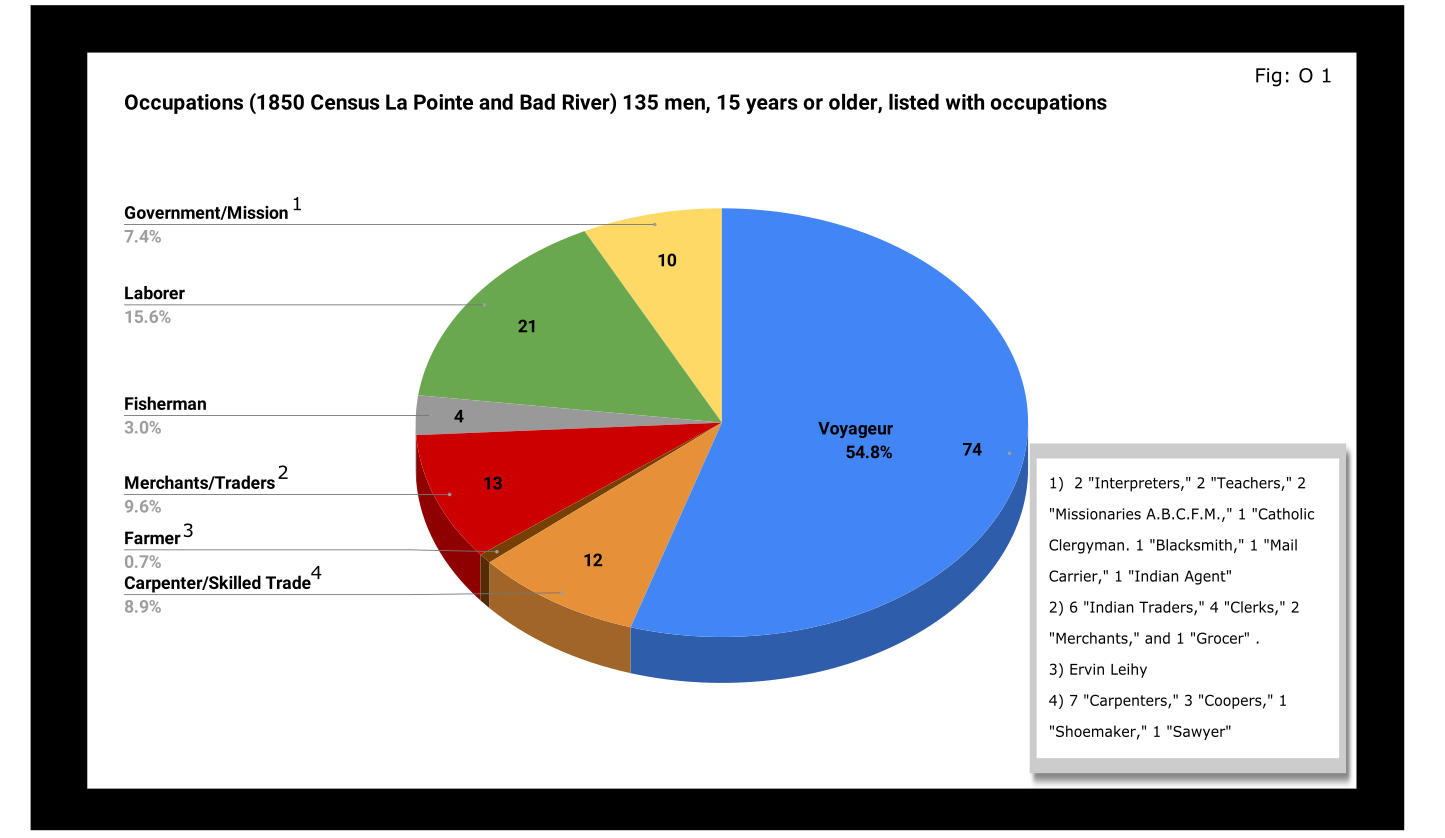
A full 55% of enumerated men fifteen and older still identified themselves as voyageurs in 1850. This included teenagers as well as senior citizens. All were from Metis households, though aside from farmer, all of the other occupation categories in Figure O 1 included Metis people.

A look at household sizes did not show voyageurs having to support significantly larger or smaller families when compared to the other occupation categories.
The other piece of economic data collected was value of real estate. Here we see some interesting themes:

If real estate is a good proxy for wealth in a farming community, it is an imperfect one in the Chequamegon area of 1850. If a voyageur had no home but the river and portage, then we might not expect him to put his coin into land and buildings. A teacher or Indian agent might draw a consistent salary but then live in supplied housing before moving on. With that caveat, let’s dig into the data.
Excluding the single farmer, men in the merchant/trader group controlled the most wealth in real estate, with Julius Austrian controlling as much as the other merchants combined. Behind them were carpenters and men with specific trades like cooper or shoemaker. Those who reported their occupation generally as “laborer” were not far behind the tradesmen. I suspect their real estate holdings may be larger and less varied than expected because of the number of sons and close relatives of Michel Cadotte Sr. who identified themselves as laborers. Government and mission employees held relatively little real estate, but the institutions they represented certainly weren’t lacking in land or power. Voyageurs come in seventh, just behind widows and ahead of fishermen of which there were only four in each category.
It is interesting, though, that the second and third richest men (by real estate) were both voyageurs, and voyageur shows a much wider range of households than some of the other categories: laborers in particular. With the number of teenagers calling themselves voyageurs, I suspect that the job still had more social prestige attached to it, in 1850, than say farmer or carpenter.
With hindsight we know that after 1854, voyageurs would be encouraged to take up farming and commercial fishing. It is striking, however, how small these industries were in 1850. Despite the American Fur Company’s efforts to push its Metis employees into commercial fishing in the 1830s, and knowing how many of the family names in Figure O 3 are associated with the industry, commercial fishing seemed neither popular nor lucrative in 1850. I do suspect, however, that the line between commercial and subsistence fishing was less defined in those days and that fishing in general was seen as falling back on the Indian gathering lifestyle. It wouldn’t be surprised if all these families were fishing alongside their Ojibwe relatives but didn’t really see fishing (or sugaring, etc.) as an occupation in the American sense.
Finally, it could not have escaped the voyageurs notice that while they were struggling, their former employers and their employers educated sons were doing pretty well. They also would have noticed that it was less and less from furs. Lump annuity payments for Ojibwe land sales brought large amounts of cash into the economy one day a year. It must have felt like piranhas with blood in the water. Alongside their full-blood cousins, Metis Ojibwe received these payments after 1847, but they had more of a history with money and capitalism. Whether to identify with the piranha or the prey would have depended on all sorts of decisions, opportunities and circumstances.
Education and Literacy
The census also collected data on education and literacy, asking whether children had attended school within the year, and whether adults over twenty could read and write. The history of white education efforts in this area are fairly well documented. The local schools in 1850 were run by the American Board of Commissioners of Foreign Missions (A.B.C.F.M.) at the La Pointe and Odanah missions, and an entire generation had come of age at La Pointe in the years since Rev. Sherman Hall first taught out of Lyman Warren’s storehouse in 1831. These Protestant ministers and teachers railed against the papists and heathens in their writings, but most of their students were Catholic or traditional Ojibwe in religion. Interestingly, much of the instruction was done in the Ojibwe language. Unfortunately, however, the census does not indicate the language an individual is literate in. I highly recommend The Ojibwe Journals of Edmund F. Ely, 1833-1849 if you are interested in these topics.
To start with, though, let’s look at how many people were going to school:

Thirty-nine students had gone to school in the previous year. There is a lot of sample-size noise in the data, but it seems like ages 7-11 (what we would call the upper-elementary years) were the prime years to attend school.
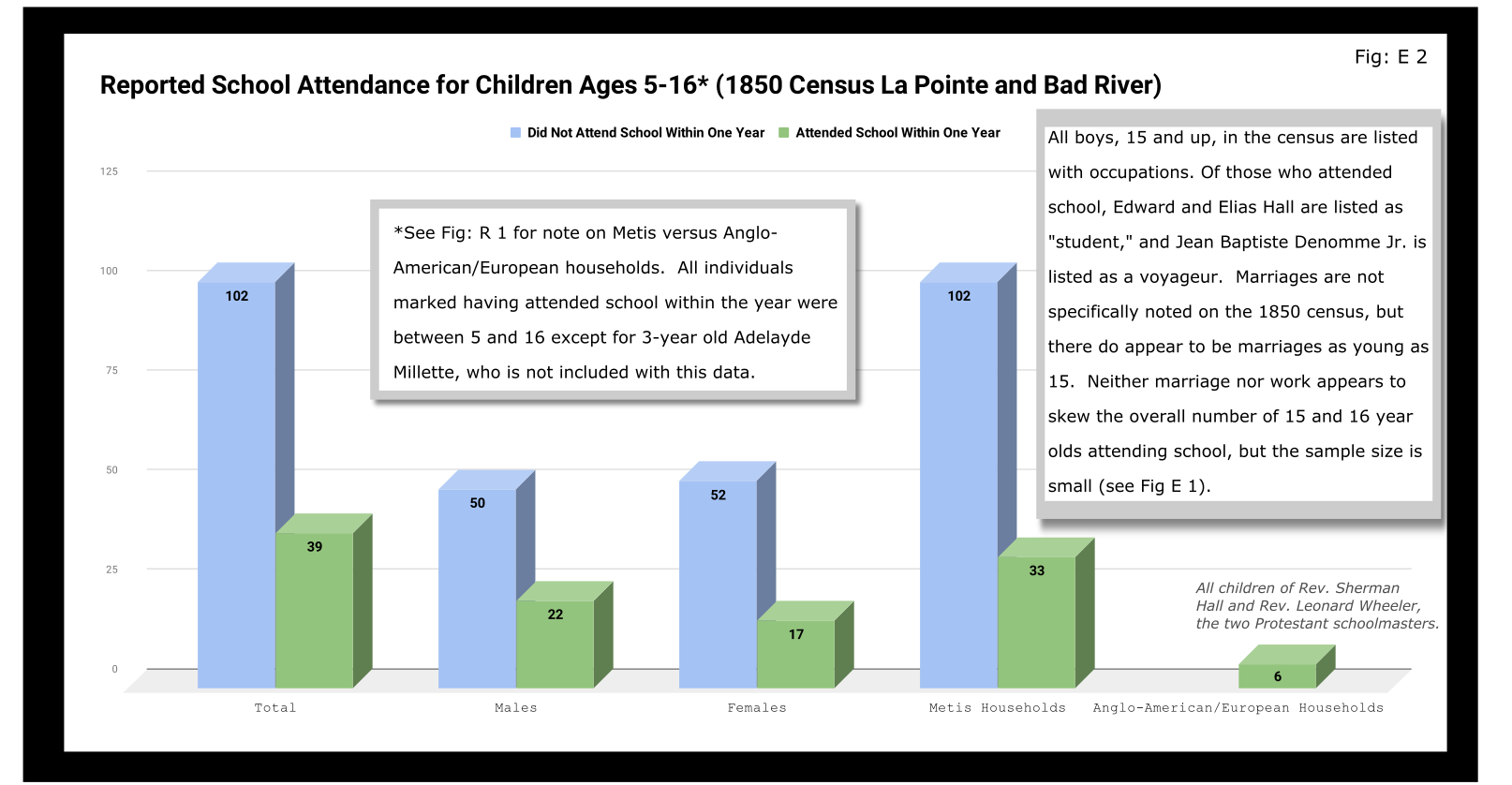
Overall, most children had not attended school within the year. Attendance rates were slightly higher for boys than for girls. White children, all from two missionary families, had a 100% attendance rate compared to 24% for the Metis and “Civilized Indian” children.
We should remember, however, that not attending school within the year is not the same as having never attended school. Twelve-year-old Eliza Morrin (later Morrison) is among the number that didn’t attend school, but she was educated enough to write her memoirs in English, which was her second language. They were published in 2002 as A Little History of My Forest Life, a fascinating account of Metis life in the decades following 1854.
Eliza’s parents were among the La Pointe adults who could read and write. Her aunt, uncle, and adult cousins in the neighboring Bosquet (Buskey) house were not. Overall, just over half of adults over 20 were illiterate without a significant gender imbalance. Splitting by birthplace, however, shows the literacy rate for Wisconsin-born (i.e. Metis and “Civilized Indian”) was only 30%, down from the overall male literacy rate of 48%. For Wisconsin-born women, the drop is only three points, from 47% to 44%. This suggests Metis women were learning to read while their husbands and brothers (perhaps en voyage) were not.

And this is exactly what the data say when we split by occupation. The literacy rate for voyageurs was only 13%. This beats fisherman–all four were illiterate–but lagged far behind all other types of work.
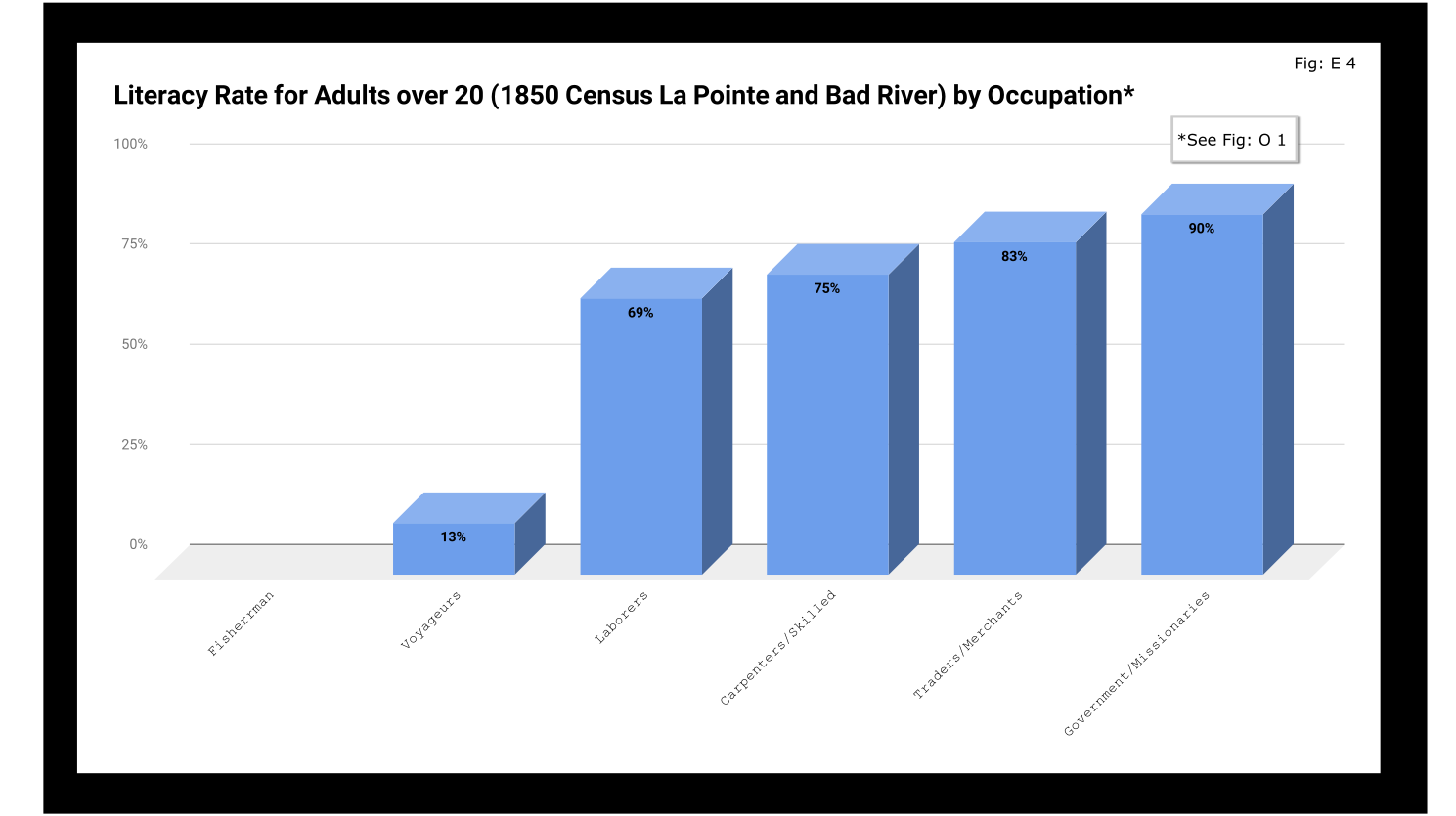
If education was going to be a factor in the economic mobility of unemployed voyageurs, the trends weren’t looking good.
Odds and Ends
Two marriages were reported as occurring in the year previous to the census: Peter and Caroline Vanderventer and Pierre and Marguerite Robideaux (ak.a. Peter and Margaret Rabideaux). Though married, however, Caroline was not living with her husband, a 32-year old grocer from New York. She (along with their infant daughter) was still in the home of her parents Benjamin and Margaret Moreau (Morrow). The Vanderventers eventually built a home together and went on to have several more children. It appears their grandson George Vanderventer married Julia Rabideaux, the granddaughter of Peter and Margaret.
I say appears in the case of George and Julia, because Metis genealogy can be tricky. It requires lots of double and triple checking. Here’s what I came across when I once tried to find an unidentified voyageur known only as Baptiste:

Sometimes it feels like for every Souverain Denis or Argapit Archambeau, there are at least 15 Jean-Baptiste Cadottes, 12 Charles Bresettes, 10 Francois Belangers and 8 Joseph DeFoes. Those old Canadian names had a way of persisting through the generations. If you were a voyageur at La Pointe in 1850, there was nearly a 30% chance your name was Jean-Baptiste. To your friends you might be John-Baptist, Shabadis, John, JB, or Battisens, and you might be called something else entirely when the census taker came around.
The final column on Daniel Johnson’s census asked whether the enumerated person was “deaf and dumb, blind, insane, idiotic, pauper, or convict.” 20 year-old Isabella Tremble, living in the household of Charles Oakes, received the unfortunate designation of idiotic. 26-year-old Francois DeCouteau did not have a mark in that column, but had “Invalid” entered in for his occupation. It’s fair to say we’ve made some progress in the treatment of people with disabilities.
Final Thoughts
I am not usually a numbers person when it comes to history. I’ll always prefer a good narrative story, to charts, tables, and cold numbers. Sometimes, though, the numbers help tell the story. They can help us understand why when Louis Gurnoe was killed, no one was held accountable. At the very least, they can help show us that the society he lived in was under significant stress, that the once-prestigious occupation of his forefathers would no longer sustain a family, and that the new American power structure didn’t really understand or care who his people were.
Ultimately, the census is about America describes itself. From the very beginning, it’s never been entirely clear if in E. pluribus unum we should emphasize the pluribus or the unum. We struggled with that in 1850, and we still struggle today. To follow the Department of Commerce v. New York citizenship case, I recommend Scotusblog. For more census posts about this area in the 19th century, keep following Chequamegon History.
Sources, Data, and Further Reading
-
Paap, Howard D. Red Cliff, Wisconsin a History of an Ojibwe Community ; Volume 1 The Earliest Years: the Origin to 1854. North Star Press of St. Cloud, Inc., 1854.
-
Satz, Ronald N. Chippewa Treaty Rights: the Reserved Rights of Wisconsin’s Chippewa Indians in Historical Perspective. University of Wisconsin Press, 1997.
-
Original Census Act of May 23, 1850 (includes form and instructions for marshals). (PDF)
-
Compiled data spreadsheets (Google Drive Folder) I’ll make these a lot more user friendly in future census posts. By the time it occurred to me that I should include my tables in this post, most of them were already done in tally marks on scrap paper.
-
Finally, these are the original pages, scanned from microfilm by FamilySearch.com. I included the image for Fond du Lac (presumably those living on the Wisconsin side of the St. Louis River) even though I did not include it in any of the data above.
-

- Bad River
-
- Fond du Lac (not included in above data)


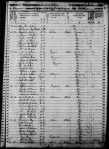

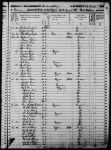
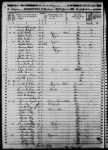


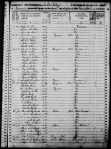
 Chequamegon History