American Fur Company: 1834 Reinvention of La Pointe
October 4, 2023
Collected & edited by Amorin Mello
The below image from the Wisconsin Historical Society is a storymap showing La Pointe in 1834 as abstract squiggles on an oversized Madeline Island surrounded by random other Apostle Islands, Bayfield Peninsula, Houghton Point, Chequamegon Bay, Long Island, Bad River, Saxon Harbor, and Montreal River.

“Map of La Pointe”
“L M Warren”
“~ 1834 ~”
Wisconsin Historical Society
citing an original map at the New York Historical Society
My original (ongoing) goal for publishing this post is to find an image of the original 1834 map by Lyman Marcus Warren at the New York Historical Society to explore what all of his squiggles at La Pointe represented in 1834. Instead of immediately achieving my original goal, this post has become the first of a series exploring letters in the American Fur Company Papers by/to/about Warren at La Pointe.
New York Historical Society
American Fur Company Papers: 1831-1849
America’s First Business Monopoly
#16,582

Map of Lapointe
by L M Warren
~ 1834 ~
New York Historical Society
scanned as Gale Document Number GALE|SC5110110218
#36

Ramsay Crooks
~ Madeline Island Museum
Lapointe Lake Superior
September 20th ’34
Ramsey Crooks Esqr
Dear Sir
Starting in 1816, the American Fur Company (AFC) operated a trading post by the “Old Fort” of La Pointe near older trading posts built by the French in 1693 and the British in 1793.
In 1834, John Jacob Astor sold his legendary AFC to Ramsay Crooks and other trading partners, who in turn decided to relocate the AFC’s base of operations at Mackinac Island to Madeline Island, where our cartographer Lyman Marcus Warren was employed as the AFC’s trader at La Pointe.
Instead of improving any of the older trading posts on Madeline Island, Warren decided to move La Pointe to the “New Fort” of 1834 to build new infrastructure for growing business demands.

GLO PLSS 1852 survey detail of the “Am Fur Co Old Works” near Old Fort.
on My Way In as Mr Warren was was detained So Long at Mackinac I did not Wait for him at this Place as time was of So Much Consequence to me to Get my People Into the County that I Proceeded Immediately to Fond Du Lac with the Intention with the Intention of Returning to this Place When I Had Sent the Outfit off but When I Got There I Had News from the Interior Which Required me to Go In and Settle the Business there; the [appearance?] In the Interior for [????] is tolerable. Good Provision there is [none?] Whatever I [have?] Seen the [Country?] [So?] Destitute. The Indians at [Fort?] [?????] Disposed to give me Some trouble when they found they have to Get no Debts and buy their amunition and tobacco and not Get it For Nothing as usual but at Length quieted down [?????] and have all gone off to their Haunts as usual.
I Received your Instructions contained in your Circular and will be very Particular In Following them. The outfits were all off when I Received them but the men’s acts and the Invoices of the Goods Had all been Settled according to your Wishes and Every Care Will be taken not to allow the men to get In Debt the Clerks Have Strict orders on the Subject and it is made known to them that they will be Held for any of the Debts the men may Incur.
I Enclose to you the Bonds Signed and all the Funds we Received from Mr Johnston Excepting those Which Had been given to the Clerks and I could not Get them Back In time to Send them on at Present.
Mr Warren And myself Have Committed on What is to be done at this Place and I am certain all that Can be done Will be done by him. I leave here tomorrow For the Interior of Fond Du Lac Where I must be as Soon as possible.
I have written to Mr Schoolcraft as he Inquested me. Mr Brewster’s men would not Give up their [??????] and [???] [????] is [??] [?????] [????] [????] [to?] [???????] [?????] [to?] [persuade?] [more?] People for Keeping [his?] [property?] [Back?] [and] [then?] [???] by some [???] ought to be sent out of the Country [??] they are [under?] [the?] [???] [?] and [Have?] [no?] [Right?] to be [????] [????] they are trouble [????] [???] [their?] [tongues?].

GLO PLSS 1852 survey detail of the AFC’s new “La Point” (New Fort) and the ABCFM’s “Mission” (Middleport).
The Site Selected Here For the Buildings by Mr Warren is the Best there is the Harbour is good and I believe the work will go on well.
as For the Fishing we Will make Every Inquiry on the Subject and I Have no Doubt on My Mind of Fairly present that it will be more valuable than the Fur trade.
In the Month of January I will Write you Every particular How our affairs stand from St Peters. Bailly Still Continues to Give our Indians Credits and they Bring Liquor from that Place which they Say they Get from Him.
Please let Me know as Early as possible with Regard to the Price of Furs as it will Help me In the trade. the Clerks all appear anxious to do their Duty this year as the wind is now Falling and I am In Haste I Will Write you Every particular of our Business In January.
Wishing that God may Long Prosper you and your family.
In health and happiness.
I remain most truly,
and respectfully
yours $$
William A. Aitken
#42
Lake Superior
LaPointe Oct 16 1834
Ramsey Crooks Esqr
Agent American Fur Co
Honoured Sir
Your letter dated Mackinac Sept [??] reached me by Mr Chapman’s boat today.-
I will endeavour to answer it in such a manner as will give you my full and unreserved opinion on the different subjects mentioned in it.
I feel sorry to see friend Holiday health so poor, and am glad that you have provided him a comfortable place at the Sault. As you remark it is a fortunate circumstance that we have no opposition this year or we would certainly have made a poor resistance. I can see no way on which matters would be better arranged under existing circumstances than the way in which you have arranged it. If Chaboillez, and George will act in unison and according to your instructions, they will do well, but I am somewhat affeared, that this will not be the case, as I think George might perhaps from jealously refuse to obey Chaboillez or give him the proper help. Our building business prevents me from going there myself. I suppose you have now received my letter of last Sept, in which I mentioned that I had kept the Doctor here. I shall send him in a few days to see how matters comes on at the Ance. The Davenports are wanted at present in FDLac should it be necessary to make any alteration. I shall leave the Doctor at the Ance.

Undated photograph of the ABCFM Presbyterian Mission Church at it’s original 1830s location along the shoreline of Sandy Bay.
~ Madeline Island Museum

Reverend Sherman Hall
~ Madeline Island Museum
In addition to the AFC’s new La Pointe, Warren was also committed to the establishment of a mission for the American Board of Commissioners for Foreign Missions (ABCFM) as a condition of his 1827 Deed for Old La Pointe from his Chippewa wife’s parents; Madeline & Michel Cadotte.
Starting in 1830, the ABCFM built a Mission at La Pointe’s Middleport (second French fort of 1718), where they were soon joined by a new Catholic Mission in 1835.
Madeline Island was still unceded territory until the 1842 Treaty of La Pointe. The AFC and ABCFM had obtained tribal permissions to build here via Warren’s deed, while the Catholics were apparently grandfathered in through French bloodlines from earlier centuries.
I think we will want about 2 Coopers but as you suggest I if they may be got cheaper than the [????] [????]. The Goods Mr Hall has got is for his own use that is to say to pay his men [??]. The [??] [??????] [has?] to pay for a piece of land they bot from an Indian woman at Leech Lake. As far as my information goes the Missionaries have never yet interfered with our trade. Mr Hall’s intention is to have his establishment as much disconnected with regular business as he possibly can and he gets his supplies from us.
[We?] [have?] received the boxes [Angus?] [??] [???]. [You?] mention also a box, but I have not yet received it. Possible it is at the Ance.
The report about Dubay has no doubt been exaggerated. When with me at the Ance he mentioned to me that Mr Aitkin told him he had better tell the Indians not to kill their beaver entirely off and thereby ruin their country. The idea struck me as a good one and as far as I recollect I told him, it would perhaps be good to tell them so. I have not yet heard from any one, that he has tried to prevent the Indians from paying their old Debts and I should not be astonished to fend the whole is one of those falsehoods which Indians are want to use to free themselves from paying old Debts. I consider Dubay a pretty active man, but the last years extravagancies have made it necessary to have an eye upon him to prevent him from squandering.

“The Doctor” Charles William Wulff Borup, M.D.
~ Madeline Island Museum
My health had been somewhat impaired by my voyage from the Sault to this place. Instead of going to Lac Du Flambeau myself as I intended I sent the Doctor. He has just now returned and tells me that Dubay gets along pretty well, though there were some small difficulties which toke place, but which the Dr settled. The prospect are very discouraging, particularly on a/c of provisions. We have plenty opposition and all of them with liquor in great abundance. It is provoking to see ourselves restricted by the laws from taking in liquor while our opponents deal in it as largely as ever. The traders names are as far as could be ascertained Francois Charette and [Chapy?]. The liquor was at Lac du Flambeau while the Doctor was there. I have furnished Dubay with means to procure provisions, as there is actually not 1 Sack of Corn or Rice to be got.
The same is the case on Lac Courtoreilie and Folleavoigne no provisions and a Mr Demarais on the Chippeway River gives liquor to the Indians.
You want my ideas upon the fishing business. If reliance can be put in Mr Aitkin’s assertions we will at least want the quantity of Net thread mentioned in our order. Besides this we will want for our fishing business 200 Barrels Flour, [??] Barrels Pork, 10 Kegs Butter, 1000 Bushels Corn, [??] Barrels Lard, 10 or 11 Barrels Tallow.

Undated photograph of the ABCFM mission house built in 1832.
~ Madeline Island Museum
Besides this we want over and above the years supply an extra supply for our summer Establishments. say about 80 Barrels Flour, 30 Barrels Pork, 1500 # Butter, 400 Bushels Corn, 5 Barrels Lard, 5 Barrels Tallow. This will is partly to sell. be sold.
Mr Roussain will be as good as any if not better in my opinion for our business than Holiday. Ambrose Davenport might take the charge of the Ance but Roussain will be more able on account of his knowledge in fishing. I would recommend to take him as a partner. say take Holidays share if he could not be got for less.
I have not done much yet toward building. The greatest part of my men have been in the exterior to assist our people to get in. But they have now all arrived. We have got about 4 acres of land cleared, a wintering house put up and a considerable quantity of boards sawed. Mr Aitkin did not supply me with two Carpenters as he promised at Mackinac. I will try to get along as well as I can without them. I engaged Jos Dufault and Mr Aitkin brot me one of Abbott’s men, who he engaged. But I will still be under the necessity of hiring Mr Campbell of the mission to make our windows sashes and to superintend The framing of the buildings. Mr Aitkins have done us considerable damage by not fulfilling his promise in this respect. I told you in Mackinac that Mr Aitkin was far from being exact in business. Your letter to him I will forward by the first opportunity. I think it will have a good effect and you do right in being thus plain in stating your views. His contract deserves censure, and I will hope that your plain dealing with him will not be lost upon him. Shall I beg you to be as faithfull to me by giving me the earliest information whenever you might disapprove of any transaction of mine.
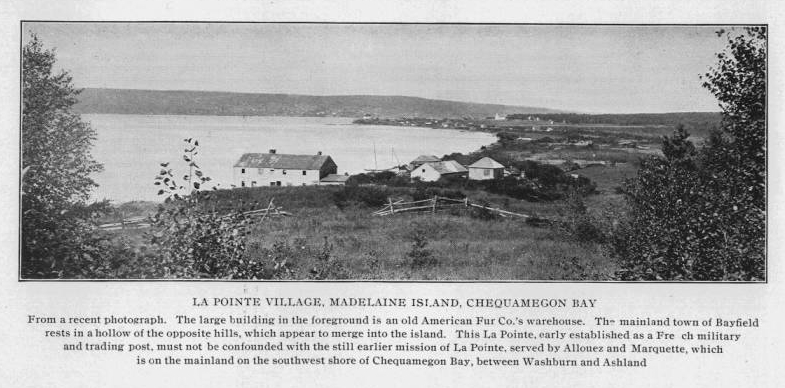
Photograph of La Pointe from Mission Hill circa 1902.
~ Wisconsin Historical Collections, Volume XVI, page 80.
I have received a supply of provisions from Mr Chapmann which will enable me to get through this season. The [?] [of?] [???] [next?], the time you have set for the arrival of the Schooner, will be sufficient, early for our business. The Glass and other materials for finishing of the buildings would be required to be sent up in the first trip but if [we?] [are?] [??] better to have them earlier. If these articles could be sent to the Sault early in the Spring a boat load might be formed of [Some?] and Provisions and sent to the Ance. From there men could be spared at that season of the year to bring the load to this place. In that way there would be no heavy expense incurred and I would be able to have the buildings in greater forwardness.
If the plan should meet your approbation please let me know by the winter express. While Mr Aitkin was here we planned out our buildings. The House will be 86 feet by 26 feet in the clear, the two stores will be put up agreeable to your Draft. We do not consider them to large.
I am afraid I shall not be able to build a wharf in season, but shall do my best to accomplish all that can be done with the means I have.

Undated photograph of Captain John Daniel Angus’ boat at the ABCFM mission dock.
~ Madeline Island Museum
I would wish to call your attention towards a few of the articles in our trade. I do not know how you have been accustomed to buy the Powder whether by the Keg or pound. If a keg is estimated at 50#, there is a great deception for some of our kegs do not contain more than 37 or 40 #s.
Our Guns are very bad particularly the barrels. They splint in the inside after been fired once or twice.
Our Holland twine is better this year than it has been for Years. One dz makes about 20 fathoms, more than last year. But it would be better if it was bleached. The NW Company and old Mr Ermantinger’s Net Thread was always bleached. It nits better and does not twist up when put into the water. Our maitre [??] [???] are some years five strand. Those are too large we have to untwist them and take 2 strands out. Our maitre this year are three strand they are rather coarse but will answer. They are not durable nor will they last as long as the nets of course they have to be [renewed?]. The best maitres are those we make of Sturgeon twine. We [?????] the twine and twist it a little. They last twice as long as our imported maitres. The great object to be gained is to have the maitres as small as possible if they be strong enough. Three coarse strands of twisted together is bulky and soon nits.
Our coarse Shoes are not worth bringing into the country. Strong sewed shoes would cost a little more but they would last longer. The [Booties?] and fine Shoes are not much better.
Our Teakettles used to have round bottoms. This year they are flat. They Indians always prefer the round bottom.
In regard to the observations you have made concerning the Doctor’s deviating from the instructions I gave him on leaving Mackinac, I must in justice to him say that I am now fully convinced in my own mind that he misunderstood me entirely, merely by an expression of mine which was intended by me in regard to his voyage from Mackinac to the Sault but by him was mistaken for the route through Lake Superior. The circumstances has hurt his feelings much and as he at all times does his best for the Interest of the Outfit I ought to have mentioned in my last letter, but it did not strike my mind at that time.

Detail from Carte des lacs du Canada by Jacques Nicolas Bellin in 1744.
When Mr Aitkin was here he mentioned to me some information he had obtained from somebody in Fond du Lac who had been in the NW Co service relating to a remarkable good white fish fishery on the “Milleau” or “Millons” Islands (do not know exactly the proper name). They lay right opposite to Point Quiwinau. a vessel which passes between the island and the point can see both. Among Mr Chapmann’s crew here there is an old man who tells me that he knew the place well, he says the island is large, say 50 or 60 miles. The Indian used to make their hunts there on account of the great quantity of Beaver and Reindeer. It is he says where the NWest Co used to make their fishing for Fort William. There is an excellent harbour for the vessel it is there where the largest white fish are caught in Lake Superior. Furthermore the old man says the island is nearer the American shore than the English. Some information might be obtained from Capt. McCargo. If it proves that we can occupy the grounds I have the most sanguine hopes that we shall succeed in the fisheries upon a large scale.
I hope you will gather all the information you can on the subject. Particular where the line runs. If it belongs to the Americans we must make a permanent post on the Island next year under the charge of an active person to conduct the fisheries upon a large scale.
Jh Chevallier one of the men I got in Mackinac is a useless man, he has always been sick since he left Sault. Mr Aitkin advised me to send him back in Chapman’s Boat. I have therefore send him out to the care of Mr Franchere.
By the Winter Express I will to give you all the informations that I may be able to give. I will close by wishing you great health and prosperity. Please present my Respects to Mr Clapp.
I remain Dear Sir.
Very Respectfully Yours
Most Obedient Servant
Lyman M. Warren
To be Continued in 1835…
By Leo
In April, the Supreme Court heard arguments in the case Department of Commerce v. New York and could render a decision any day on whether or not the 2020 federal census should include a question asking about citizenship status. In January, a Federal District Court in New York ruled that commerce secretary, Wilbur Ross, violated the law by pushing for that question.
Those in agreement with the District ruling suggest that the Trump administration wants to add the question as a way of discouraging immigrants from participating in the census, thereby diminishing the political power of immigrant communities. This, they say, would violate the Constitution on the grounds that the census must be an “actual enumeration” of all persons within the United States, not only citizens.
Proponents of the citizenship question counter that citizenship status is a perfectly natural question to ask in the census, that any government would want to know how many citizens it has, and that several past iterations of the 10-year count have included similar questions.
It remains to be seen how the Supreme Court will rule, but chances are it will not be the last time an issue of race, identity, or citizenship pops up in the politics of the census. From its creation by the Constitution as a way to apportion seats in congress according to populations of the states, the count has always begged tricky questions that essentially boil down to:
Who is a real American? Who isn’t? Who is a citizen? Who is three-fifths of a human being? Who might not be human at all? What does it mean to be White? To be Colored? To be civilized? How do you classify the myriad of human backgrounds, cultures and stories into finite, discrete “races?”
The Civil War and Fourteenth Amendment helped shed light on some of these questions, but it would be a mistake to think that they belong to the past. The NPR podcast Codeswitch has done an excellent series on census, and this episode from last August gives a broad overview of the history.
Here at Chequamegon History, though, we aren’t in the business broad overviews. We are going to drill down right into the data. We’ll comb through the 1850 federal census for La Pointe County and compare it with the 1860 data for La Pointe and Ashland Counties. Just for fun, we’ll compare both with the 1855 Wisconsin State Census for La Pointe County, then double back to the 1840 federal census for western St. Croix County. Ultimately, the hope is to help reveal how the population of the Chequamegon region viewed itself, and ultimately how that differed from mainstream America’s view. With luck, that will give us a framework for more stories like Amorin’s recent post on the killing of Louis Gurnoe.
Background
 Judge Daniel Harris Johnson of Prairie du Chien had no apparent connection to Lake Superior when he was appointed to travel northward to conduct the census for La Pointe County in 1850. The event made an impression on him. It gets a mention in his short memorial biography in the 1902 Proceedings of the State Bar Association.
Two years after statehood, Lake Superior’s connection to the rest of Wisconsin was hardly existent. This was long before Highways 51 and 53 were built, and commerce still flowed west to east. Any communication to or from Madison was likely to first go through Michigan via Mackinaw and Sault Ste. Marie, or through Minnesota Territory via St. Paul, Stillwater, and Sandy Lake. La Pointe County had been created in 1845, and when official business had to happen, a motley assortment of local residents who could read and write English: Charles Oakes, John W. Bell, Antoine Gordon, Alexis Carpentier, Julius Austrian, Leonard Wheeler, etc. would meet to conduct the business.
It is unclear how much notice the majority Ojibwe and French-patois speaking population took of this or of the census generally. To them, the familiar institutions of American power, the Fur Company and the Indian Agency, were falling apart at La Pointe and reorganizing in St. Paul with dire consequences for the people of Chequamegon. When Johnson arrived in September, the Ojibwe people of Wisconsin had already been ordered to remove to Sandy Lake in Minnesota Territory for their promised annual payments for the sale of their land. That fall, the government would completely botch the payment, and by February, hundreds of people in the Lake Superior Bands would be dead from starvation and disease.
So, Daniel Johnson probably found a great deal of distraction and anxiety among the people he was charged to count. Indians, thought of by the United States as uncivilized federal wards and citizens of their own nations, were typically not enumerated. However, as I wrote about in my last post, race and identity were complicated at La Pointe, and the American citizens of the Chequamegon region also had plenty to lose from the removal.
Madison, for its part, largely ignored this remote, northern constituency and praised the efforts to remove the Ojibwe from the state. It isn’t clear how much Johnson was paying attention to these larger politics, however. He had his own concerns:


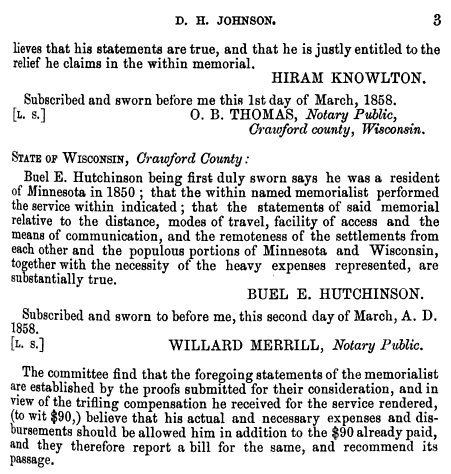
House Documents, Volume 119, Part 1. U.S. Government Printing Office, 1859. Google Books.
So, in “that thinly settled and half civilized region,” Johnson only found a population of about 500, “exclusive of Indians.” He didn’t think 500 was a lot, but by some counts, that number would have seemed very high. Take the word of a European visitor to La Pointe:
Among 200 Indians, only a few white families live there. One of the boatmen gave us a name, with which we found Mr. Austrian.
And, from this Mr. Austrian, himself:
There were only about 6 white American inhabitants on the Island, about 50 Canadian Frenchmen who were married to squaws, and a number of full blooded Indians, among whom was chief Buffalo who was a descendant of chiefs & who was a good Indian and favorably regarded by the people.
~Joseph Austrian, Brother of Julius and La Pointe resident 1851-52
Who lived around La Pointe in 1850?
In her biography, William W. Warren: the Life, Letters, and Times of an Ojibwe Leader, Theresa Schenck describes the short life of an ambitious young man from La Pointe. William Whipple Warren (1825-1853) grew up on the Island speaking Ojibwe as his first language. His father was a Yankee fur trader from New York. His mother was a daughter of Michel and Madeline Cadotte. In his famous History of the Ojibways Warren describes the Ojibwe as people with whom he readily claims kinship, but he doesn’t write as if he is an Ojibwe person himself. However, he helped interpret the Treaty of 1847 which had definitively made him an Indian in the eyes of the United States (a fact he was willing to use for economic gain). Still, a few years later, when he became a legislator in Minnesota Territory he dismissed challenges to his claims of whiteness.
If he were alive today, Warren might get a chuckle out of this line from the South African comedian Trevor Noah.
People mocked me. Gave me names like mixed breed, half caste — I hate that term ‘half’. Why half? Why not double? Or twice as nice, I don’t know.
— Trevor Noah
William Warren did not see himself as quite the walking contradiction we might see him as today. He was a product of the time and place he came from: La Pointe. By 1850, he had left that place, but his sister and a few hundred of his cousins still lived there. Many of them were counted in the census.
What is Metis?
Half-breeds, Mixed-bloods, Frenchmen, Wiisakodewininiwag, Mitif, Creoles, Metis, Canadiens, Bois Brules, Chicots, French-of-the-country, etc.–at times it seems each of these means the same thing. At other times each has a specific meaning. Each is ambiguous in its own way. In 1850, roughly half the families in the Chequamegon area fit into this hard-to-define category.


Kohl, J. G. Kitchi-Gami: Wanderings around Lake Superior. London: Chapman and Hall, 1860. pg. 260-61.
We were accompanied on our trip throughout the lakes of western Canada by half-Indians who had paternal European blood in their veins. Yet so often, a situation would allow us to spend a night inside rather than outdoors, but they always asked us to choose to Irish camp outside with the Indians, who lived at the various places. Although one spoke excellent English, and they were drawn more to the great American race, they thought, felt, and spoke—Indian! ~Carl Scherzer
In describing William Warren’s people, Dr. Schenck writes,
Although the most common term for people of mixed Indian and European ancestry in the nineteenth century was “half-breed,” the term “mixed blood” was also used. I have chosen to use the latter term, which is considered less offensive, although biologically inaccurate, today. The term “métis” was not in usage at the time, except to refer to a specific group of people of mixed ancestry in the British territories to the north. “Wissakodewinini,” the word used by the Ojibwe, meant “burned forest men,” or bois brulés in French, so called because half-breeds were like the wood of a burned forest, which is often burned on one side, and light on the other (pg. xv).
Schenck is correct in pointing out that mixed-blood was far more commonly used in 19th-century sources than Metis (though the latter term did exist). She is also correct in saying that the term is more associated with Canada and the Red River Country. There is an additional problem with Metis, in that 21st-century members of the Wannabe Tribe have latched onto the term and use it, incorrectly, to refer to anyone with partial Native ancestry but with no affiliation to a specific Indian community.
That said, I am going to use Metis for two reasons. The first is that although blood (i.e. genetic ancestry) seemed to be ubiquitous topic of conversation in these communities, I don’t think “blood” is what necessarily what defined them. The “pure-blooded French Voyageur” described above by Kohl clearly saw himself as part of Metis, rather than “blanc” society. There were also people of fully-Ojibwe ancestry who were associated more with Metis society than with traditional Ojibwe society (see my post from April). As such, I find Metis the more versatile and accurate term, given that it means “mixed,” which can be just as applicable to a culture and lifestyle as it is to a genetic lineage.
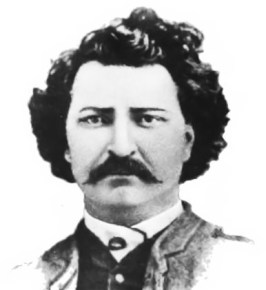
One time Canadian pariah turned national hero, Louis Riel and his followers had cousins at La Pointe (Photo: Wikipedia)
The second reason I prefer Metis is precisely because of the way it’s used in Manitoba. Analogous to the mestizo nations of Latin America, Metis is not a way of describing any person with Native and white ancestry. The Metis consider themselves a creole-indigenous nation unto themselves, with a unique culture and history. This history, already two centuries old by 1850, represents more than simply a borrowed blend of two other histories. Finally, the fur-trade families of Red River came from Sault Ste. Marie, Mackinac, Grand Portage, and La Pointe. There were plenty of Cadottes, Defaults, Roys, Gurnoes, and Gauthiers among them. There was even a Riel family at La Pointe. They were the same nation
Metis and Ojibwe Identity in the American Era
When the 1847 Treaty of Fond du Lac “stipulated that the half or mixed bloods of the Chippewas residing with them shall be considered Chippewa Indians, and shall, as such, be allowed to participate in all annuities which shall hereafter be paid…” in many ways, it contradicted two centuries of tradition. Metis identity, in part, was dependent on not being Indian. They were a minority culture within a larger traditional Anishinaabe society. This isn’t to say that Metis people were necessarily ashamed of their Native ancestors–expressions of pride are much easier to find than expressions shame–they were just a distinct people. This was supposedly based in religion and language, but I would argue it came mostly from paternal lineage (originating from highly-patriarchal French and Ojibwe societies) and with the nature of men’s work. For women, the distinction between Ojibwe and Metis was less stark.
The imposition of American hegemony over the Chequamegon region was gradual. With few exceptions, the Americans who came into the region from 1820 to 1850 were adult men. If new settlers wanted families, they followed the lead of American and British traders and married Metis and Ojibwe women.
Still, American society on the whole did not have a lot of room for the racial ambiguity present in Mexico or even Canada. A person was “white” or “colored.” Race mixing was seen as a problem that affected particular individuals. It was certainly not the basis for an entire nation. In this binary, if Metis people weren’t going to be Indian, they had to be white.
The story of the Metis and American citizenship is complicated and well-studied. There is risk of overgeneralizing, but let’s suffice to say that in relation to the United States government, Metis people did feel largely entitled to the privileges of citizenship (synonymous with whiteness until 1865), as well as to the privileges of Ojibwe citizenship. There wasn’t necessarily a contradiction.
Whatever qualms white America might have had if they’d known about it, Metis people voted in American elections, held offices, and were counted by the census.
Ojibwe “Full-bloods” and the United States Census
Representatives and direct Taxes shall be apportioned among the several States which
may be included within this Union, according to their respective Numbers, which shall be determined by adding to the whole Number of free Persons, including those bound to Service for a Term of Years, and excluding Indians not taxed, three fifths of all other Persons. The actual Enumeration shall be made within three Years after the first Meeting of the Congress of the United States, and within every subsequent Term of ten Years, in such Manner as they shall by Law direct.~Excerpt from Article I Section II, U. S. Constitution
As I argued in the April post, our modern conception of “full-blood” and “mixed-blood” has been shaped by the “scientific” racism of the late 19th and early 20th centuries. The distinction, while very real in a cultural sense, was not well-grounded in biology.
The relationship of Indians (i.e. full-bloods or those living a traditional lifestyle) to American society and citizenship was possibly more contradictory then that of the Metis. In one sense, America saw Indians as foreigners on their own continent: either as enemies to be exterminated, or as domestic-dependent ward nations to be “protected.” The constitutional language about the census calls for slaves to be counted as three-fifths of a person. It says Indians shouldn’t be counted at all.
In another sense, however, the path to personhood in America was somewhat clearer for Indians than it was for African Americans. Many New England liberals saw exodus to Liberia as the only viable future for free blacks. These same voices felt that Indians could be made white if only they were separated from their religions, cultures, and tribal identities. In 1834, to avoid a second removal, the Brothertown Indians of Wisconsin petitioned congress for citizenship and the termination of collective title to their tribal lands. In 1839, their request was granted. In the eyes of the law, they had effectively become white. Other communities would follow suit. However, most Native people did not gain any form of American citizenship until 1924.
How did that play out for the Ojibwe people of Chequamegon, and how did it impact the 1850 census? Well, it’s complicated.
Race, the Census, and Classifying Households
The enumeration forms Daniel H. Johnson carried to La Pointe had more rows and columns than ever. The Seventh Census was the first to count everyone in the household by name (previous versions only listed the Head of Household with tally marks). It was also the first census to have a box for “color.” Johnson’s choices for color were “white,” “black,” and “mulatto,” forcing him to make some decisions.
He seems to have tried to follow the Indians not taxed clause strictly. 40-50% of households in the region were headed by a full-blood Ojibwe person, possibly only two of them were enumerated. You won’t find Chief Buffalo, Makadebinesi (Blackbird), Oshkinaawe, Omizhinaawe, Edawegiizhig, and their immediate families in the 1850 census. Jechiikwii’o (often called Little Buffalo) is not in the document, even though he was an early Catholic convert, dressed in “white” clothing, and counted more Metis Ojibwe among his followers than full-bloods. However, his son, Antoine Buffalo Sr. (Antoine Jachequaon) is counted. Antoine, along with George Day, were counted as white heads of household by the census, though it is unclear if they had any European ancestry (Sources conflict. If anyone has genealogical information for the Buffalo and Day families, feel free to comment on the post). A handful of individuals called full-bloods in other sources, were listed as white. This includes 90-year old Madeline Cadotte, Marie Bosquet, and possibly the Wind sisters (presumably descendants of Noodin, one of the St. Croix chiefs who became Catholic and relocated to La Pointe around this time). They were married to Metis men or lived in Metis households. All Metis were listed as white.
Johnson did invent new category for five other Ojibwe people: “Civilized Indian,” which he seemed to use arbitrarily. Though also living in Metis households, Mary Ann Cadotte, Osquequa Baszina, Marcheoniquidoque, Charlotte Houle, and Charles Loonsfoot apparently couldn’t be marked white the way Madeline Cadotte was. These extra notations by Johnson and other enumeration marshals across the country are why the Seventh Federal Census is sometimes referred to as the first to count Native Americans.

So, out of 470 individuals enumerated at La Pointe and Bad River (I’ve excluded Fond du Lac from my study) Johnson listed 465 (99%) as white. By no definition, contemporary or modern, was the Chequamegon area 99% white in 1850. The vast majority of names on the lines had Ojibwe ancestry, and as Chippewas of Lake Superior, were receiving annuities from the treaties.
There were a few white American settlers. The Halls had been at La Pointe for twenty years. The Wheelers were well-established at Odanah. Junius and Jane Welton had arrived by then. George Nettleton was there, living with a fellow Ohioan James Cadwell. The infamous Indian agent, John Watrous, was there preparing the disastrous Sandy Lake removal. Less easy to describe as American settlers, but clearly of European origins, Fr. Otto Skolla was the Catholic priest, and Julius Austrian was the richest man it town.
There were also a handful of American bachelors who had drifted into the region and married Metis women. These first-wave settlers included government workers like William VanTassel, entrepreneurs like Peter VanderVenter, adventurers with an early connection to the region like Bob Boyd and John Bell, and homesteaders like Ervin Leihy.
It is unclear how many of French-surnamed heads of household were Chicots (of mixed ancestry) and how many were Canadiens (of fully-French ancestry). My sense is that it is about half and half. Some of this can be inferred from birthplace (though a birthplace of Canada could indicate across the river at Sault Ste. Marie as easily it could a farm in the St. Lawrence Valley). Intense genealogical study of each family might provide some clarifications, but I am going to follow Kohl’s voyageurs and not worry too much about it. Whether it was important or not to Jean Baptiste Denomie and Alexis Carpentier that they had no apparent Indian ancestry and that they had come from “the true homeland” of Quebec, for all intents and purposes they had spent their whole adult lives in “the Upper Country,” and their families were “of the Country.” They were Catholic and spoke a form of French that wasn’t taught in the universities. American society would not see them as white in the way it saw someone like Sherman Hall as white.
So, by my reckoning, 435 of the 470 people counted at La Pointe (92.5%) were Metis, full-blood Ojibwe living in Metis households, or Canadians in Metis families. Adding the five “Civilized Indians” and the six Americans married into Metis families, the number rises to 95%. I am trying to track down accurate data on the of Indians not taxed (i.e. non-enumerated full-bloods) living at or near La Pointe/Bad River at this time. My best estimates would put it roughly the same as the number of Metis. So, when Johnson describes a land with a language and culture foreign to English-speaking Americans, he’s right.
Birthplace, Age, and Gender
Ethnic composition is not the only data worth looking at if we want to know what this area was like 169 years ago. The numbers both challenge and confirm assumptions of how things worked.
Let’s take mobility for example:

The young voyageur quoted by Kohl may have felt like he didn’t have a home other than en voyage, but 86% of respondents reported being born in Wisconsin. Except for ten missionary children, all of these were Metis or “Civilized Indian.” Wisconsin could theoretically mean Lac du Flambeau, Rice Lake, or even Green Bay, this but this number still seemed high to me. I’m guessing more than 14% of 21st-century Chequamegon residents were born outside the state, and 19th-century records are all about commerce, long-distance travel, and new arrivals in new lands. We have to remember that most of those records are coming from that 14%.
In September of 1850 the federal government was telling the Ojibwe of Wisconsin they needed to leave Wisconsin forever. How the Metis fit into the story of the Sandy Lake Tragedy has always been somewhat fuzzy, but this data would indicate that for a clear majority, it meant a serious uprooting.
For those born outside Wisconsin, more than two-thirds reported being born in Michigan, Canada, or Minnesota Territory. These are overwhelmingly Metis or in the case of Anglo-Canadians like Robert Morrin, heads of Metis households from areas with a fur-trade tradition. Only eighteen individuals reported being born in the eastern United States. Only three reported Europe.
I had more questions than assumptions about the gender and age breakdown of the population. Would there be more women than men because of the dangerous jobs done by men or would mortality from childbirth balance that out? Or maybe widows wouldn’t be counted if they returned to the wigwams of their mothers? How would newcomers skew the age and gender demographics of the area?
Let’s take a look:
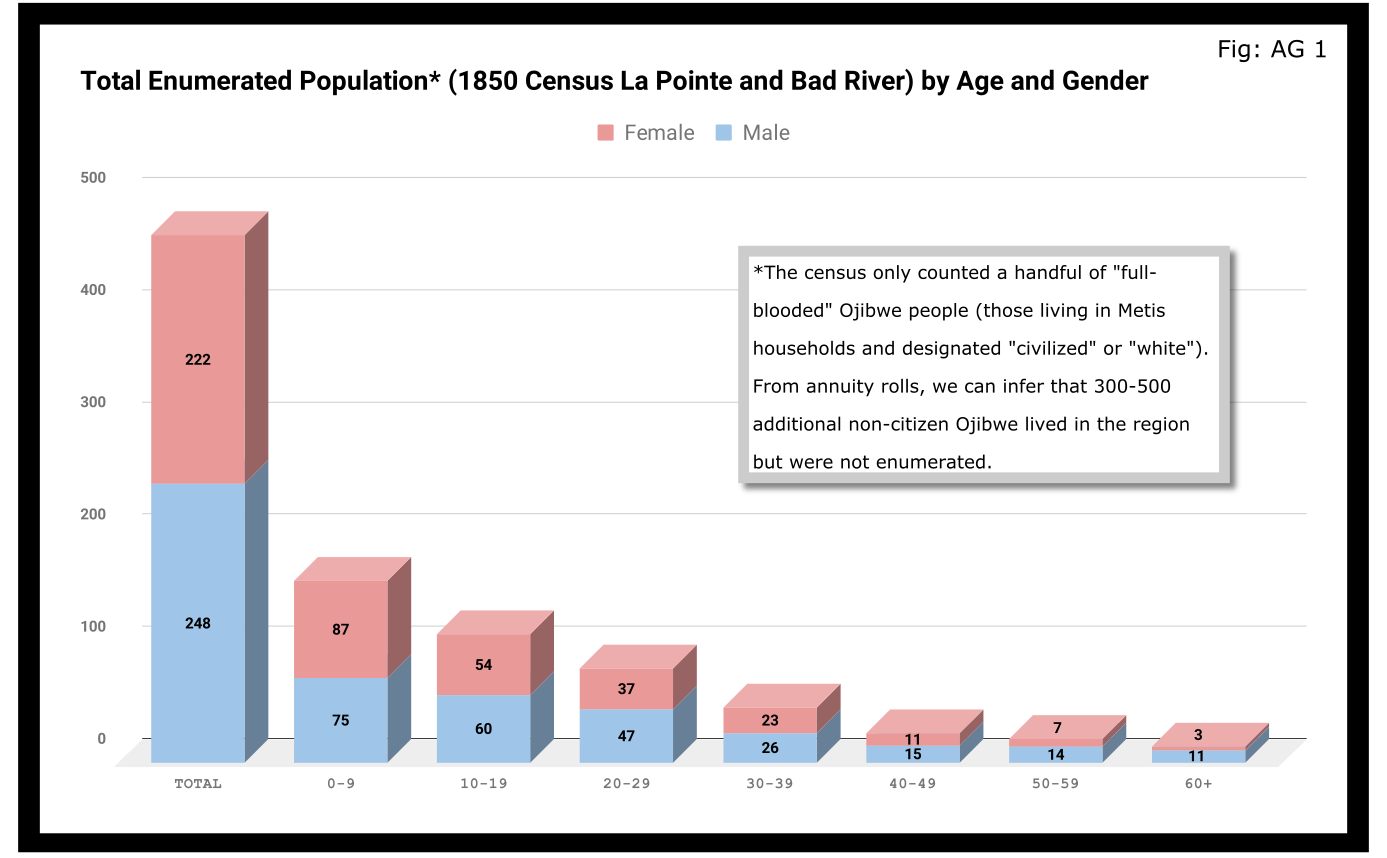
A quick glance at Figure AG 1 shows that the population skewed male 248-222 and skewed very young (61% under 20 years old). On the eve of Sandy Lake, the natural increase in the population seemed to be booming.

The hypotheses that women had higher mortality rates and were more likely to be undercounted looked good until we limit the data to the Wisconsin-born population. In Figure AG 2, we see that the male majority disappears entirely. The youthful trend, indicating large families and a growing population, continues with 66% of the Wisconsin-born population being under 20.

The male skew of the total population was entirely due to those born outside Wisconsin. This is not surprising given how much we’ve emphasized the number of men who came into the Lake Superior country to marry local women.
A look at the oldest residents in chart AG 2 and AG 3 hints at another story. Madeline Cadotte is the only Wisconsin-born person over seventy to be counted. The oldest men all came from Michigan and Canada. Why? My hypothesis is that between the fall of New France in 1759 and the establishment of Michel Cadotte’s post sometime around 1800, there wasn’t a large population or a very active fur trade around La Pointe proper. That meant Cadotte’s widow and other full bloods were the oldest locally-born residents in 1850. Their Metis contemporaries didn’t come over from the Soo or down from Grand Portage until 1810 or later.
Economics
Before the treaties, the economy of this area was built on two industries: foraging and trade. Life for Ojibwe people revolved around the seasonal harvest of fish, wild rice, game, maple sugar, light agriculture, and other forms of gathering food directly from the land. Trade did not start with the French, and even after the arrival of European goods into the region, the primary purpose of trade seemed to be for cementing alliances and for the acquisition of luxury goods and sacred objects. Richard White, Theresa Schenck, and Howard Paap have all challenged the myth of Ojibwe “dependence” on European goods for basic survival, and I find their arguments persuasive.
Trade, though, was the most important industry for Metis men and La Pointe was a center of this activity. The mid-19th century saw a steep decline in trade, however, to be replaced by a toxic cycle of debts, land sales, and annuity payments. The effects of this change on the Metis economy and society seem largely understudied. The fur trade though, was on its last legs. Again, the Austrian travel writer Carl Scherzer, who visited La Pointe in 1852:
After this discussion of the of the rates of the American Fur Company and its agents, we want to add some details about the men whose labor and time exerted such a great influence on the fate and culture of the Indian tribes. We wish to add a few explanatory words about the sad presence on La Pointe of the voyageurs or courriers du bois.
This peculiar class of people, which is like a vein of metal that suddenly disappears within the bedrock and reappears many hundreds of miles away under the same geological conditions, their light reaches the borders of the eastern Canadas. The British people, with their religion and customs, reappeared on the shores of these northern lakes only in 1808 with the Fur Company. For labor they drew on those who could carry their wares across the lakes and communicate with the Indians.
Many young men of adventurous natures left the old wide streets of Montreal and moved into the trackless primeval forests of the West. Young and strong as laborers, they soon started to adopt the lifestyle and language of the aborigines. They married with the Indians and inhabit small settlements scattered throughout those mighty lands which begin at Mackinow Island and come up the upper lake to the region of Minnesota. They almost all speak the Canadian patois along with the language of the Chippewas, the tribe with which they came into kinship. We found only a few, even among the younger generation, who understood English.
Since then, every day the population of the otherwise deserted shore of Lake Superior increases with the discovery of copper mines. The animals driven away by the whirlwind of civilization toward the west, attract the Indians with their sensitive guns, leaving La Pointe, abandoned by the Company for their headquarters at St. Paul in Minnesota. Most voyageurs left the island, having seen their business in ruins and lacking their former importance. Just a few families remain here, making a meager livelihood of hunting, fishing, and the occasional convoy of a few travelers led by business, science, or love of nature who purchase their limited resources.
From Scherzer’s description, two things are clear. It’s pretty clear from the flowery language of the Viennese visitor.Washington Irving and other Romantic-Era authors had already made the Voyageur into the stock stereotypical character we all know today. Th only change, though, is these days voyageurs are often depicted as representatives of white culture, but that’s a post for another time.
The second item, more pertinent to this post, is that a lot of voyageurs were out of work. This is especially relevant when we look at our census data. Daniel Johnson recorded the occupations of all males fifteen or over:
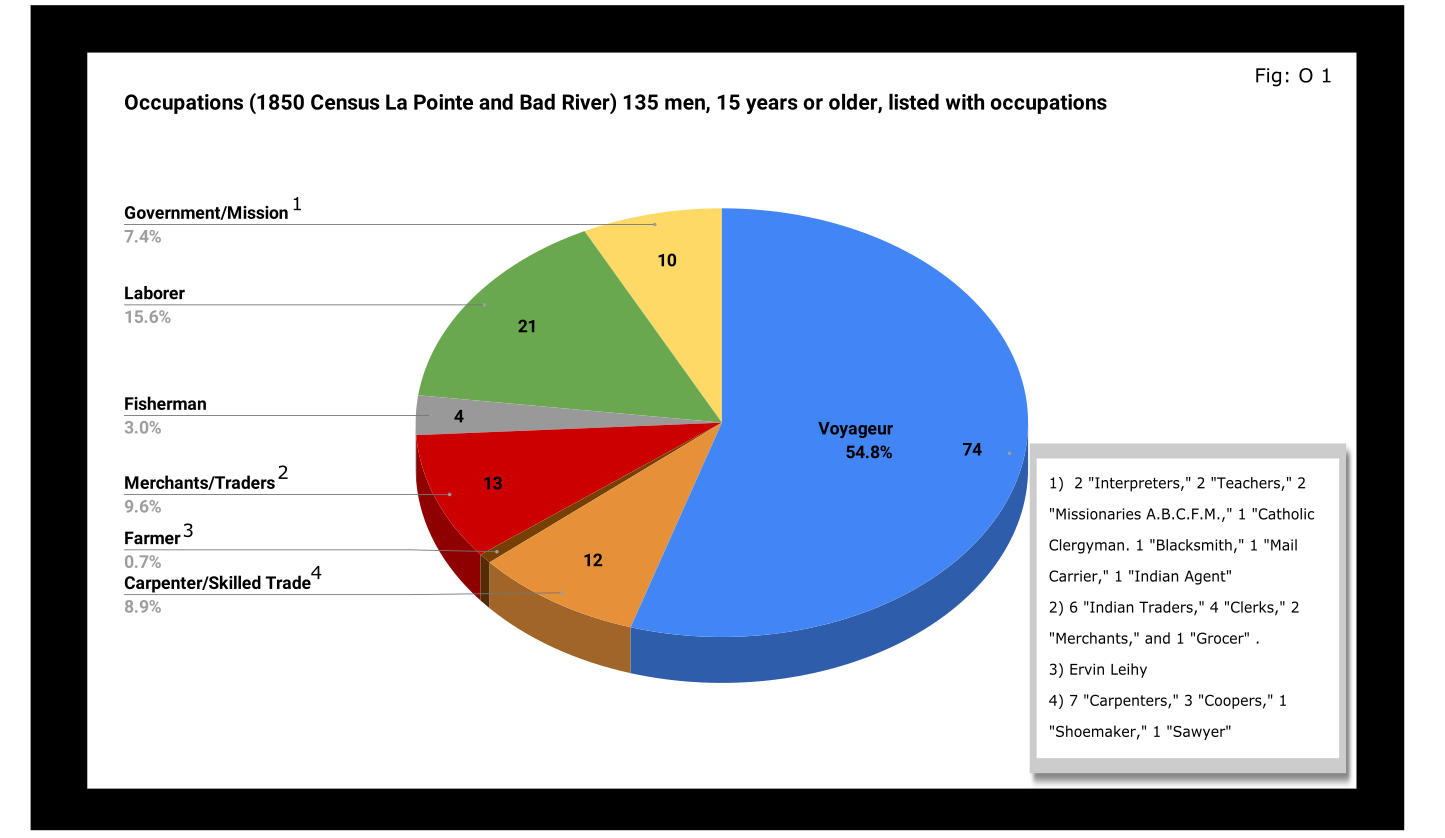
A full 55% of enumerated men fifteen and older still identified themselves as voyageurs in 1850. This included teenagers as well as senior citizens. All were from Metis households, though aside from farmer, all of the other occupation categories in Figure O 1 included Metis people.

A look at household sizes did not show voyageurs having to support significantly larger or smaller families when compared to the other occupation categories.
The other piece of economic data collected was value of real estate. Here we see some interesting themes:

If real estate is a good proxy for wealth in a farming community, it is an imperfect one in the Chequamegon area of 1850. If a voyageur had no home but the river and portage, then we might not expect him to put his coin into land and buildings. A teacher or Indian agent might draw a consistent salary but then live in supplied housing before moving on. With that caveat, let’s dig into the data.
Excluding the single farmer, men in the merchant/trader group controlled the most wealth in real estate, with Julius Austrian controlling as much as the other merchants combined. Behind them were carpenters and men with specific trades like cooper or shoemaker. Those who reported their occupation generally as “laborer” were not far behind the tradesmen. I suspect their real estate holdings may be larger and less varied than expected because of the number of sons and close relatives of Michel Cadotte Sr. who identified themselves as laborers. Government and mission employees held relatively little real estate, but the institutions they represented certainly weren’t lacking in land or power. Voyageurs come in seventh, just behind widows and ahead of fishermen of which there were only four in each category.
It is interesting, though, that the second and third richest men (by real estate) were both voyageurs, and voyageur shows a much wider range of households than some of the other categories: laborers in particular. With the number of teenagers calling themselves voyageurs, I suspect that the job still had more social prestige attached to it, in 1850, than say farmer or carpenter.
With hindsight we know that after 1854, voyageurs would be encouraged to take up farming and commercial fishing. It is striking, however, how small these industries were in 1850. Despite the American Fur Company’s efforts to push its Metis employees into commercial fishing in the 1830s, and knowing how many of the family names in Figure O 3 are associated with the industry, commercial fishing seemed neither popular nor lucrative in 1850. I do suspect, however, that the line between commercial and subsistence fishing was less defined in those days and that fishing in general was seen as falling back on the Indian gathering lifestyle. It wouldn’t be surprised if all these families were fishing alongside their Ojibwe relatives but didn’t really see fishing (or sugaring, etc.) as an occupation in the American sense.
Finally, it could not have escaped the voyageurs notice that while they were struggling, their former employers and their employers educated sons were doing pretty well. They also would have noticed that it was less and less from furs. Lump annuity payments for Ojibwe land sales brought large amounts of cash into the economy one day a year. It must have felt like piranhas with blood in the water. Alongside their full-blood cousins, Metis Ojibwe received these payments after 1847, but they had more of a history with money and capitalism. Whether to identify with the piranha or the prey would have depended on all sorts of decisions, opportunities and circumstances.
Education and Literacy
The census also collected data on education and literacy, asking whether children had attended school within the year, and whether adults over twenty could read and write. The history of white education efforts in this area are fairly well documented. The local schools in 1850 were run by the American Board of Commissioners of Foreign Missions (A.B.C.F.M.) at the La Pointe and Odanah missions, and an entire generation had come of age at La Pointe in the years since Rev. Sherman Hall first taught out of Lyman Warren’s storehouse in 1831. These Protestant ministers and teachers railed against the papists and heathens in their writings, but most of their students were Catholic or traditional Ojibwe in religion. Interestingly, much of the instruction was done in the Ojibwe language. Unfortunately, however, the census does not indicate the language an individual is literate in. I highly recommend The Ojibwe Journals of Edmund F. Ely, 1833-1849 if you are interested in these topics.
To start with, though, let’s look at how many people were going to school:

Thirty-nine students had gone to school in the previous year. There is a lot of sample-size noise in the data, but it seems like ages 7-11 (what we would call the upper-elementary years) were the prime years to attend school.
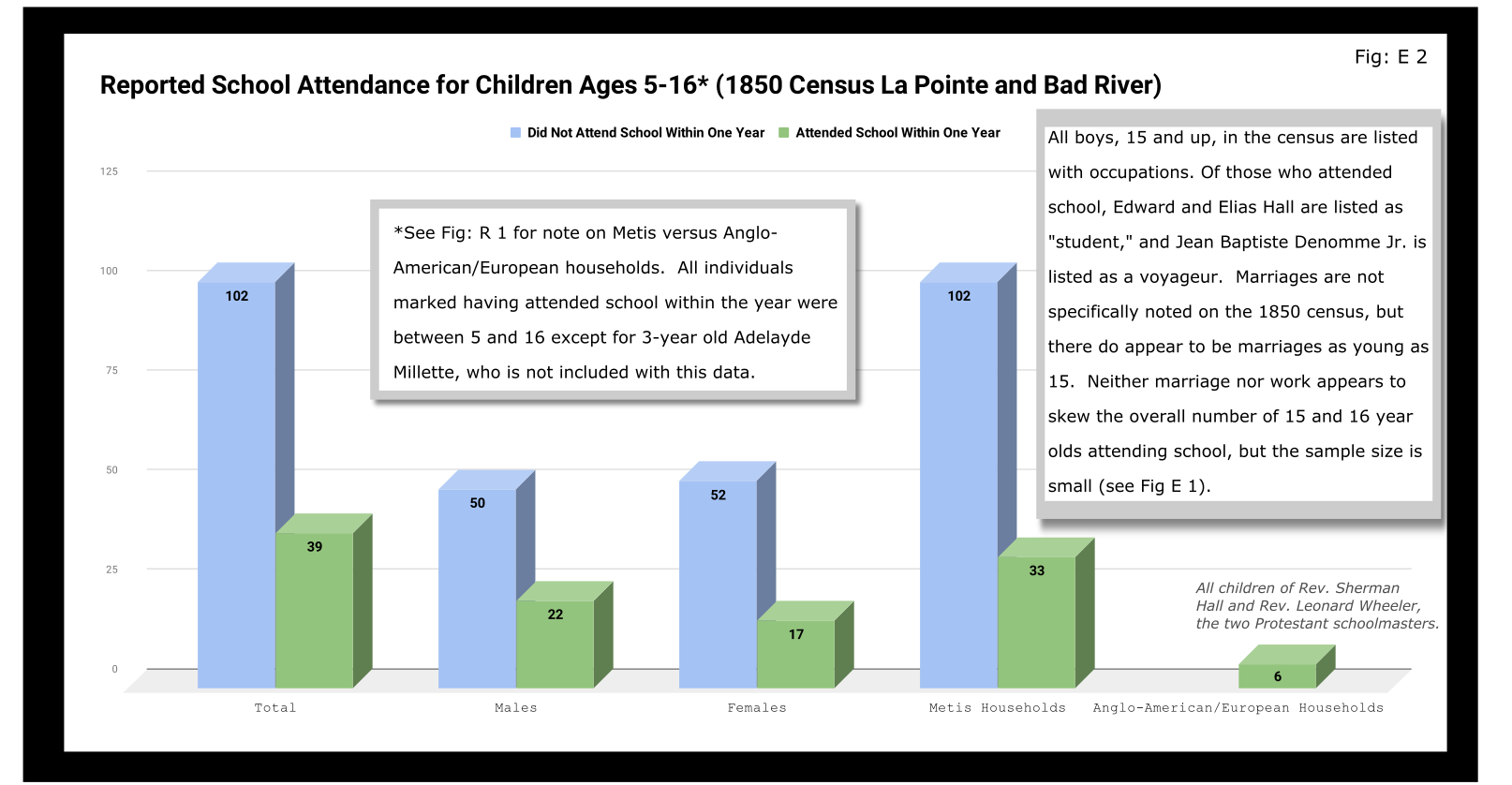
Overall, most children had not attended school within the year. Attendance rates were slightly higher for boys than for girls. White children, all from two missionary families, had a 100% attendance rate compared to 24% for the Metis and “Civilized Indian” children.
We should remember, however, that not attending school within the year is not the same as having never attended school. Twelve-year-old Eliza Morrin (later Morrison) is among the number that didn’t attend school, but she was educated enough to write her memoirs in English, which was her second language. They were published in 2002 as A Little History of My Forest Life, a fascinating account of Metis life in the decades following 1854.
Eliza’s parents were among the La Pointe adults who could read and write. Her aunt, uncle, and adult cousins in the neighboring Bosquet (Buskey) house were not. Overall, just over half of adults over 20 were illiterate without a significant gender imbalance. Splitting by birthplace, however, shows the literacy rate for Wisconsin-born (i.e. Metis and “Civilized Indian”) was only 30%, down from the overall male literacy rate of 48%. For Wisconsin-born women, the drop is only three points, from 47% to 44%. This suggests Metis women were learning to read while their husbands and brothers (perhaps en voyage) were not.

And this is exactly what the data say when we split by occupation. The literacy rate for voyageurs was only 13%. This beats fisherman–all four were illiterate–but lagged far behind all other types of work.
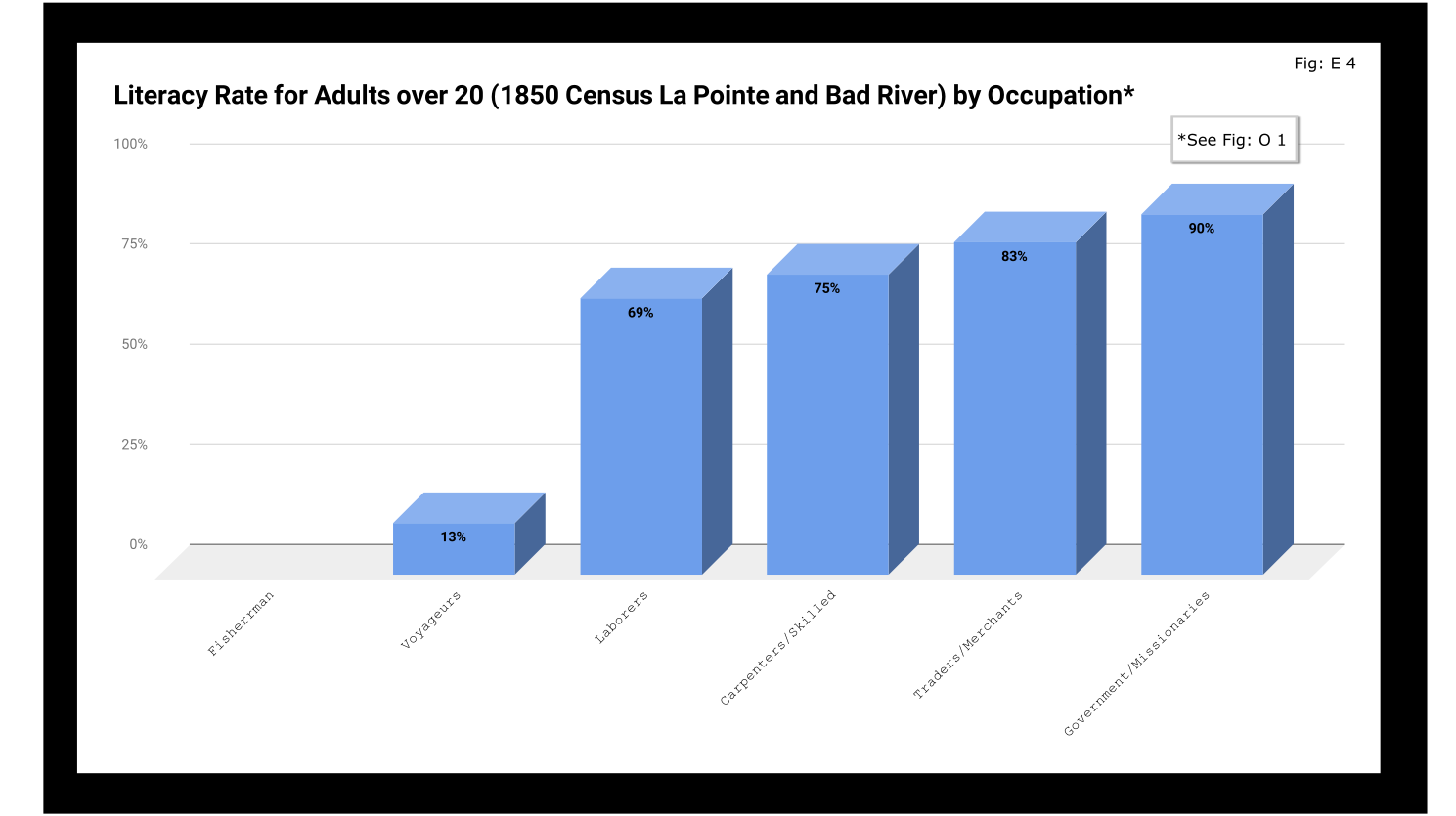
If education was going to be a factor in the economic mobility of unemployed voyageurs, the trends weren’t looking good.
Odds and Ends
Two marriages were reported as occurring in the year previous to the census: Peter and Caroline Vanderventer and Pierre and Marguerite Robideaux (ak.a. Peter and Margaret Rabideaux). Though married, however, Caroline was not living with her husband, a 32-year old grocer from New York. She (along with their infant daughter) was still in the home of her parents Benjamin and Margaret Moreau (Morrow). The Vanderventers eventually built a home together and went on to have several more children. It appears their grandson George Vanderventer married Julia Rabideaux, the granddaughter of Peter and Margaret.
I say appears in the case of George and Julia, because Metis genealogy can be tricky. It requires lots of double and triple checking. Here’s what I came across when I once tried to find an unidentified voyageur known only as Baptiste:

Sometimes it feels like for every Souverain Denis or Argapit Archambeau, there are at least 15 Jean-Baptiste Cadottes, 12 Charles Bresettes, 10 Francois Belangers and 8 Joseph DeFoes. Those old Canadian names had a way of persisting through the generations. If you were a voyageur at La Pointe in 1850, there was nearly a 30% chance your name was Jean-Baptiste. To your friends you might be John-Baptist, Shabadis, John, JB, or Battisens, and you might be called something else entirely when the census taker came around.
The final column on Daniel Johnson’s census asked whether the enumerated person was “deaf and dumb, blind, insane, idiotic, pauper, or convict.” 20 year-old Isabella Tremble, living in the household of Charles Oakes, received the unfortunate designation of idiotic. 26-year-old Francois DeCouteau did not have a mark in that column, but had “Invalid” entered in for his occupation. It’s fair to say we’ve made some progress in the treatment of people with disabilities.
Final Thoughts
I am not usually a numbers person when it comes to history. I’ll always prefer a good narrative story, to charts, tables, and cold numbers. Sometimes, though, the numbers help tell the story. They can help us understand why when Louis Gurnoe was killed, no one was held accountable. At the very least, they can help show us that the society he lived in was under significant stress, that the once-prestigious occupation of his forefathers would no longer sustain a family, and that the new American power structure didn’t really understand or care who his people were.
Ultimately, the census is about America describes itself. From the very beginning, it’s never been entirely clear if in E. pluribus unum we should emphasize the pluribus or the unum. We struggled with that in 1850, and we still struggle today. To follow the Department of Commerce v. New York citizenship case, I recommend Scotusblog. For more census posts about this area in the 19th century, keep following Chequamegon History.
Sources, Data, and Further Reading
-
Paap, Howard D. Red Cliff, Wisconsin a History of an Ojibwe Community ; Volume 1 The Earliest Years: the Origin to 1854. North Star Press of St. Cloud, Inc., 1854.
-
Satz, Ronald N. Chippewa Treaty Rights: the Reserved Rights of Wisconsin’s Chippewa Indians in Historical Perspective. University of Wisconsin Press, 1997.
-
Original Census Act of May 23, 1850 (includes form and instructions for marshals). (PDF)
-
Compiled data spreadsheets (Google Drive Folder) I’ll make these a lot more user friendly in future census posts. By the time it occurred to me that I should include my tables in this post, most of them were already done in tally marks on scrap paper.
-
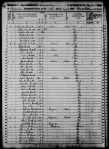
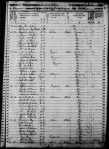
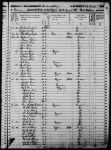
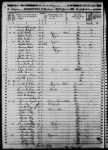
Finally, these are the original pages, scanned from microfilm by FamilySearch.com. I included the image for Fond du Lac (presumably those living on the Wisconsin side of the St. Louis River) even though I did not include it in any of the data above.
-

- Bad River
-
- Fond du Lac (not included in above data)





Wheeler Papers: 1854 La Pointe before the Treaty
August 7, 2017
By Amorin Mello
Selected letters from the
Wheeler Family Papers,
Box 3, Folders 11-12; La Pointe County.
Crow-wing, Min. Ter.
Jan. 9th 1854
Brother Wheeler,

Reverend Leonard Hemenway Wheeler ~ In Unnamed Wisconsin by Silas Chapman, 1895, cover image.
Though not indebted to you just now on the score of correspondence, I will venture to intrude upon you a few lines more. I will begin by saying we are all tolerably well. But we are somewhat uncomfortable in some respects. Our families are more subject to colds this winter than usual. This probably may be attributed in part at least to our cold and open houses. We were unable last fall to do any thing more than fix ourselves temporarily, and the frosts of winter find a great many large holes to creep in at. Some days it is almost impossible for us to keep warm enough to be comfortable.
Our prospects for accomplishing much for the Indians here I do not think look more promising than they did last fall. There are but few Indians here. These get drunk every time they can get whiskey, of which there is an abundance nearby. Among the white people here, none are disposed to attend meetings much except Mr. [Welton?]. He and his wife are discontented and unhappy here, and will probably get away as soon as they can. We hear not a word from the Indian Department. Why they are minding us in this manner I cannot tell. But I should like it much better, if they would tell us at once to be gone. I have got enough of trying to do anything for Indians in connection with the Government. We can put no dependence upon any thing they will do. I have tried the experiment till I am satisfied. I think much more could be done with a boarding school in the neighborhood of Lapointe than here And my opinion is, that since things have turned out as they have here, we had better get out of it as soon as we can. With such an agent as we now have, nothing will prosper here. He is enough to poison everything, and will do more moral evil in such a community, as this, than a half a dozen missionaries can do good. My opinion is, that if they knew at Washington how things are and have been managed here, there would be a change. But I do not feel certain of this. For I sometimes am tempted to adopt the opinion that they do not care much there how things go here. But should there be a change, I have little hope that is would would make things materially better. The moral and social improvement of the Indians, I fear, has little to do with the appointment of agents and superintendents. I do not think I ought to remain here very long and keep my family here, as things are now going. If we were not involved with the Government with regard to the school matter, I would advise the Committee to quit here as soon as we can find a place to go to. My health is not very good. The scenes, and labors and attacks of sickness which I have passed through during the past two years have made almost a wreck of my constitution. It might rally under some circumstances. But I do not think it will while I stay here, so excluded from society, and so harassed with cares and perplexities as I have been and as I am likely to be in future, should we go on and try to get up a school. My wife is in no better spirits than I am. She has had several quite ill turns this winter. the children all wish to get away from here, and I do not know that I shall have power to keep them here, even if I am to stay.
But what to do I do not know. The Committee say they do not wish to abandon the Ojibwas. I cannot in future favor the removal of the lake Indians. I believe that all the aid they will receive from the Government will never civilize or materially benifit them. I judge from the manner in which things have been managed here. Our best hope is to do what we can to aid them where they are to live peaceably with the whites, and to improve and become citizens. The idea of the Government sending infidels and heathens here to civilize and Christianize the Indians is rediculous.
I always thought it doubtful whether the experiment we are trying would succeed. In that case it was my intention to remove somewhere below here, and try to get a living, either by raising my potatoes or by trying to preach to white people, or by uniting both. but I do not hardly feel strong enough to begin entirely anew in the wilderness to make me a home. I suppose my family would be as happy at Lapointe, as they would any where in the new and scattered settlements for fifty or a hundred miles below here. And if thought I could support myself then, I might think of going back there. There are our old friends for whose improvement we have laborred so many years. I feel almost as much attachment for them as for my won children. And I do not think they ought to be left like sheep upon the mountains without a shepherd. And if the Board think it best to expend money and labor for the Ojibwas, they had better expend it there than here, as things now are at least. I think we were exerting much much more influence there before we left, then we have here or are likely to exert. I have no idea that the lake Indians will ever remove to this place, or to this region.
Reverend Sherman Hall
~ Madeline Island Museum
What do you think of recommending to the Board to day to exert a greater influence on the people in the neighborhood of Lapointe[?/!] I feel reluctant to give up the Indians. And if I could get a living at Lapointe, and could get there, I should be almost disposed to go back and live among those few for whom I have labored so long, if things turn out here as I expect they will. I have not much funds to being life with now, nor much strength to dig with. But still I shall have to dig somewhere. The land is easier tilled in this region than that about the lake. But wood is more scarce. My family do not like Minesota. Perhaps they would, if they should get out of the Indian country. Edwin says he will get out of it in the spring, and Miles says he will not stay in such a lonesome place. I shall soon be alone as to help from my children. My boys must take care of themselves as soon as they arrive at a suitable age, and will leave me to take care of myself. We feel very unsettled. Our affairs here must assume a different aspect, or we cannot remain here many months longer. Is there enough to do at Lapointe; or is there a prospect that there will soon be business to draw people enough then, to make it an object to try to establish the institution of the gospel there? Write me and let me know your views on such subjects as these.
[Unsigned, but appears to be from Sherman Hall]
Crow-wing Feb. 10th 1854
Brother Wheeler:
I received your letter of jan. 16th yesterday, and consequently did not sleep as much as usual last night. We were glad to hear that you are all well and prosperous. We too are well which we consider a great blessing, as sickness in present situation would be attended with great inconvenience. Our house is exceedingly cold and has been uncomfortable during some of the severe cold weather have had during the last months. Yet we hope to get through the winter without suffering severely. In many respects our missionary spirit has been put to a severer test than at any previous time since we have been in the Indian country, during the past year. We feel very unsettled, and of course somewhat uneasy. The future does not look very bright. We cannot get a word from the Indian Department whether we may go on or not. If we cannot get some answer from them before long I shall be taking measures to retire. We have very little to hope, I apprehend, from all the aid the Government will render to words the civilization and moral and intellectual improvement of the Indians. For missionaries or Indians to depend on them, is to depend on a broken staff.
~ Minnesota Historical Society
“The American Fur Company therefore built a ‘New Fort’ a few miles farther north, still upon the west shore of the island, and to this place, the present village, the name La Pointe came to be transferred. Half-way between the ‘Old fort’ and the ‘New fort,’ Mr. Hall erected (probably in 1832) ‘a place for worship and teaching,’ which came to be the centre of Protestant missionary work in Chequamegon Bay.”
~ The Story of Chequamegon Bay
I do not see that our house is so divided against itself, that it is in any great danger of falling at present. My wife never did wish to leave Lapointe and we have ever, both of us, thought that the station ought not to be abandoned, unless the Indians were removed. But this seemed not to be the opinion of the committee or of our associates, if I rightly understood them. I had a hard struggle in my mind whether to retire wholly from the service of the Board among the Indians, or to come here and make a further experiment. I felt reluctant to leave them, till we had tried every experiment which held out any promise of success. When I remove my family here our way ahead looked much more clear than it does now. I had completed an arrangement for the school which had the approval of Gov. Ramsey, and which fell through only in consequence of a little informality on his part, and because a new set of officers just then coming into power must show themselves a little wiser than their predecessors. Had not any associates come through last summer, so as to relieve me of some of my burdens and afford some society and counsel in my perplexities I could not have sustained the burden upon me in the state of my health at that time. A change of officers here too made quite an unfavorable change in our prospects. I have nothing to reproach myself with in deciding to come here, nor in coming when we did, though the result of our coming may not be what we hoped it would be. I never anticipated any great pleasure in being connected with a school connected in any way with the Government, nor did I suppose I should be long connected with it, even if it prospered. I have made the effort and now if it all falls, I shall feel that Providence has not a work for us to do here. The prospects of the Indians look dark, what is before me in the future I do not know. My health is not good, though relief from some of the pressure I had to sustain for a time last fall and the cold season has somewhat [?????] me for the time being. But I cannot endure much excitement, and of course our present unsettled affairs operate unfavorably upon it. I need for a time to be where I can enjoy rest from everything exciting, and when I can have more society that I have here, and to be employed moderately in some regular business.

Antoine Gordon [Gaudin]
~ Noble Lives of a Noble Race by the St. Mary’s Industrial School (Bad River Indian Reservation), 1909, page 207.

Charles Henry Oakes
~ Findagrave.com
As to your account I have not had time to examine it, but will write you something about it by & by. As to any account which Antoine Gaudin has against me, I wish you would have him send it to me in detail before you pay it. I agreed with Mr. Nettleton to settle with him, and paid him the balance due to Antoine as I had the account. I suppose he made the settlement, when he was last at Lapointe. As to the property at Lapointe, I shall immediately write to Mr. Oakes about it. But I suppose in the present state of affairs, it will be perhaps, a long time before it will be settled so as to know who does own it. It is impossible for me to control it, but you had better keep posession of it at present. I cannot send Edwin [??] through to cultivate the land & take care of it. He will be of age in the spring, and if he were to go there I must hire him. He will probably leave us in the spring. Please give my best regards to all. Write me often.
Yours truly
S. Hall
Crow-wing, Min. Ter.
Feb. 21st 1854
Brother Wheeler,
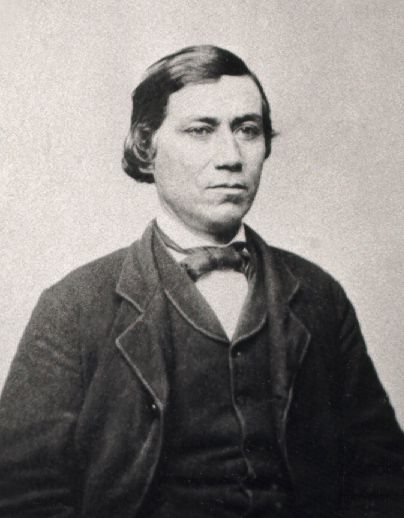
Paul Hudon Beaulieu
~ FamilySearch.org
I wrote you a few days ago, and at the same time I wrote to Mr. Oakes inquiring whether he had got possession of the Lapointe property. I have not yet got a reply from him, but Mr. Beaulieu tells me that he heard the same report which you mentioned in your letter, and that he inquired of Mr. Oakes about it when he saw him on a recent visit to St. Paul, and finds that it is all a humbug. Oakes has nothing to do with it. Mr. Beaulieu said that the sale of last spring has been confirmed, and that Austrian will hold Lapointe. So farewell to all the inhabitants’ claims then, and to anything being done for the prosperity of the peace for the present, unless it gets out of his hands.
I have written to Austrian to try to get something for our property if we can. But I fear there is not much hope. If he goes back to Lapointe in the spring, do the best you can to make him give us something. I feel sorry for the inhabitants there that they are left at his mercy. He may treat them fairly, but it is hardly to be expected.

Clement Hudon Beaulieu
~ TreatiesMatter.org
As to our affairs here, there has been no particular change in their aspects since I wrote a few days ago. There must be a crisis, I think, in a few weeks. We must either go on or break up, I think, in the spring. We are trying to get a decision. I understand our agent has been threatened with removal if he carries on as he has done. I believe there is no hope of reformation in his case, and we may get rid of him. Perhaps God sent us here to have some influence in some such matters, so intimately connected with the welfare of the Indians. I have never thought I [????] can before I was sent in deciding to come here. Some trials and disappointments have grown out of my coming, but I feel conscious of having acted in accordance with my convictions of duty at this time.
If all falls through, I know not what to do in the future. The Home Missionary Society have got more on their hands now than they have funds to pay, if I were disposed to offer myself to labor under them. I may be obliged to build me a shanty somewhere on some little unoccupied piece of land and try to dig out a living. In these matters the Lord will direct by his providence.
You must be on your guard or some body will trip you up and get away your place. There are enough unprincipled fellows who would take all your improvements and send you and all the Indians into the Lake if they could make a dollar by it. I should not enlarge much, without getting a legal claim to the land. Neither would I advise you to carry on more family than is necessary to keep what team you must have, and to supply your family with milk and vegetables. It will be advantage/disadvantage to you in a pecuniary point of view, it will load you with and tend to make you worldly minded, and give your establishment the air of secularity in the eyes of the world. If I were to go back again to my old field, I would make my establishment as small as I could & have enough to live comfortable. I with others have thought that your tendency was rather towards going to largely into farming. I do not say these things because I wish to dictate or meddle with your affairs. Comparing views sometimes leads to new investigations in regard to duty.
May the Lord bless you and yours, and give you success and abundant prosperity in your labours of love and efforts to Save the Souls around you.
Give my best regards to Mrs. W., the children, Miss S and all.
Yours truly,
S. Hall
I forgot to say that we are all well. Henry and his family have enjoyed better health here, then they used to enjoy at Lapointe.
Feb 27
Brother Wheeler.
My delay to answer your note may require an explanation. I have not had time at command to attend to it conveniently at an earlier period. As to your first questions. I suppose there will be no difference of opinion between us as to the correctness of the following remarks.
- The Gospel requires the members of a church to exercise a spirit of love, meekness and forbearance towards an offending brother. They are not to use unnecessary severity in calling him to account for his errors. Ga. 6:1.
- The Object of Church discipline is, not only to [pursue/preserve?] the Church pure in doctrine & morals, that the contrary part may have no evil thing to say of them; but also to bring the offender to a right State of mind, with regard this offense, and gain him back to duty and fidelity.
- If prejudice exist in the mind of the offender towards his brethren for any reason, the spirit of the gospel requires that he be so approached if possible as to allay that prejudice, otherwise we can hardly expect to gain a candid hearing with him.
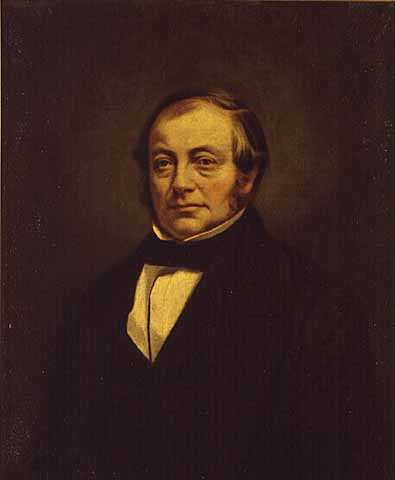
Charles William Wulff Borup, M.D. ~ Minnesota Historical Society
I consider that these remarks have some bearing on the case before us. If it was our object to gain over Dr. B. to our views of the Sabbath, and bring him to a right State of mind with regard this Sabbath breaking, the manner of approaching him would have, in my view, much to do with the offence. He may be approached in a Kind and [forbearing?] manner, when one of sternness and dictation will only repel him from you. I think we ought, if possible, and do our duty, avoid a personal quarrel with him. To have brought the subject before the Church & made a public affair of it, before [this/then?] and more private means have been tried to get satisfaction, would, I am sure, have resulted in this. I found from my own interviews with him, that there was hope, if the rest of the brethren would pursue a similar course. I felt pretty sure they would obtain satisfaction. IF they had [commenced?] by a public prosecution before the church, it would only have made trouble without doing any good. The peace of our whole community would have been disturbed. I thought one step was gained when I conversed with him, and another when you met him on the subject. I knew also that prejudices existed both in his mind towards us, & in our minds towards him which were likely to affect the settlement of this affair, and which as I thought, would be much allayed by individuals going to him and speaking face to face on this subject in private. He evidently expected they would do so. Mutual conversations and explanations allay these feelings very much. At least it has been so in my experience.

Reverend Edmund Franklin Ely.
~ Duluth Public Library
As to your second question. I do not say that it was Mr. Ely’s duty to open the subject to Doc. Borup at the preparatory lecture. If he had done so, it would have been only a private interview; for there [was?] not enough present to transact business. All I meant to affirm respecting that occasion is, that it afforded a good opportunity to do so, if he wishes, and that Dr. B. expected he would have done so, as I afterwards learnt, if he has any objection to make against his coming to the communion.
As to your third question. I have no complaint to make of the church, that I have urged them to the performance of any “duties“ in this case they have refused to perform.
And now permit me to ask in my turn.
What “duties” have they urged me to perform in this case, which I “have been unwilling, or manifested a reluctance to perform?”
Did you intend by anything which wrote to me or said verbally, to request me to commence a public prosecution of Doc. Borup before the Church?
Will you have the goodness to state in writing, the substance of what you said to me in your study as to your opinion and that of others suspecting my delinquency in maintaining church discipline.
A reply to these questions would be gratefully received.
Your brother in Christ
S. Hall
Crow Wing. March 12th 1854
Brother Wheeler:
Your letter of Feb 17th came to hand by our last mail; and though I wrote you but a short time ago, I will say a few words in relation to one or two topics to which you allude. Shortly after I received your former letter I wrote to Mr. Oakes enquiring about the property at Lapointe. In reply, says that himself and some others purchased Mr. Austrian’s rights at Lapointe of Old Hughes on the strength of a power of attorney which he held. Austrian asserts the power of attorney to be fraudulent, and that they cannot hold the property. Oakes writes as if he did not expect to hold it. Some time ago I wrote to Mr. Austrian on the same subject, and said to him that if I could get our old place back, I might go back to Lapointe. He says in reply —

Julius Austrian
~ Madeline Island Museum
“I should feel much gratified to see you back at Lapointe again, and can hold out to you the same inducements and assurances as I have done to all other inhabitants, that is, I shall be at Lapointe early in the spring and will have my land surveyed and laid out into lots, and then I shall be ready to give to every one a deed for the lot he inhabits, at a reasonable price, not paying me a great deal more than cost trouble, and time. But with you, my dear Sir, will be no trouble, as I have always known you a just and upright man, and have provided ways to be kind towards us, therefore take my assurance that I will congratulate myself to see you back again; and it shall not be my fault if you do not come. If you come to Lapointe, at our personal interview, we will arrange the matter no doubt satisfactory.”
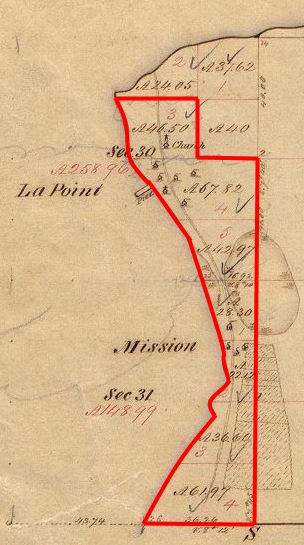
“The property” from the James Hughes Affair is outlined in red. This encompassed the Church at La Pointe (New Fort) and the Mission (Middleport) of Madeline Island. 1852 PLSS survey map by General Land Office.
I suppose Austrian will hold the property and probably we shall never realize anything for our improvements. You must do the best you can. Make your appeal to his honor, if he has any. It will avail nothing to reproach him with his dishonesty. I do not know what more I can do to save anything, or for any others whose property is in like circumstances with ours.
You speak discouragingly of my going back to Lapointe. I do not think the Home Miss. Soc. would send a missionary there only for the few he could reach in the English language. If the people want a Methodist, encourage them to get one. It is painful to me to see the place abandoned to irreligion and vices of every Kind, and the labours I have expended there thrown away. I can hardly feel that it was right to give up the station when we did. If I thought I could support myself there by working one half the time and devoting the rest to ministerial labors for the good of those I still love there, I should still be willing to go back, if could get there & had a shelter for my head, unless there is a prospect of being more useful here. But the land at Lapointe is so hard to subdue that I am discouraged about making an attempt to get a living there by farming. I am not much of a fisherman. There is some prospect that we may be allowed to go on here. Mr. Treat has been to Washington, and says he expects soon to get a decision from the Department. We have got our school farm plowed, and the materials are drawn out of the woods for fencing it. If I have no orders to the contrary, I intend to go on & plant a part of it, enough to raise some potatoes. We may yet get our school established. If we can go ahead, I shall remain here, but if not, I think it is not my duty to remain here another year, as I have the past. In other circumstances, I could do more towards supporting myself and do more good probably.
I have felt much concerned for the people of Lapointe and Bad River on account of the small pox. May the Lord stay this calamity from spreading among you. Write us every mail and tell us all. It is now posted here today that the Old Chief [Kibishkinzhugon?] is dead. I hardly credit the report, though I should suppose he might be one of the first victims of the disease.
I can write no more now. We are all very well now. Give my love to all your family and all others.
Tell Robert how the matters stands about the land. It stands him in how to be on good terms with the Jew just now.
Yours truly,
S. Hall
The snow is nearly all off the ground and the weather for two or three weeks has been as mild as April.
Crow Wing M.H. Apr. 1 1854
Dear Br. & Sr. Wheeler.
I have received a letter from you since I wrote to you & am therfore in your debt in that matter. I have also read your letters to Br. & Sr. Welton I suppose you have received my letter of the 13th of Feb. if so, you have some idea of our situation & I need say no more of that now; & will only say that we are all well as usual & have been during the winter. Mrs. P_ is considerably troubled with her old spinal difficulty. She has got over her labors here last summer * fall. Harriet is not well I fear never will be, because the necessary means are not likely to be used, she has more or less pain in her back & side all the time, but she works on as usual & appears just as she did at LaPointe, if she could be freed from work so as to do no more than she could without injury & pursue uninterruptedly & proper medical course I think she might regain pretty good health. (Do not, any of you, send back these remarks it would not be pleasing to her or the family.) We have said what we think it best to say) –
Br. Hall is pretty well but by no means the vigorous man he once was. He has a slight – hacking cough which I suppose neither he nor his family have hardly noticed, but Mrs. P_ says she does not like the sound of it. His side troubles him some especially when he is a good deal confined at writing. Mr. & Mrs. W_ are in usual health. Henry’s family have gone to the bush. They are all quite well. He stays here to assist br. H_ in the revision & keeps one or two of his children with him. They are now in Hebrews, with the Revision. Henry I suppose still intends to return to Lapointe in the spring. –
Now, you ask, in br. Welton’s letter, “are you all going to break up there in the spring.” Not that I know of. It would seem to me like running away rather prematurely. When the question is settled, that we can do nothing here, then I am willing to leave, & it may be so decided, but it is not yet. We have not had a whisper from Govt. yet. Wherefore I cannot say.
It looks now as if we must stay this season if no longer. Dr. Borup writes to br. Hall to keep up good courage, that all will come out right by & by, that he is getting into favor with Gov. Gorman & will do all he can to help us. (Br. Hall’s custom is worth something you know).

Henry C. Gilbert
~ Branch County Photographs
By advise of the Agent, we got out (last month) tamarack rails enough to fence the school farm (which was broke last summer) of some 80 acres & it will be put up immediately. Our great father turned out the money to pay for the job. These things look some like our staying awhile I tell br H_ I think we had better go as far as we can, without incurring expense to the Board (except for our support) & thus show our readiness to do what we can. if we should quit here I do not know what will be done with us. Br Hall would expect to have the service of the Board I suppose. Should they wish us to return to Bad River we should not say nay. We were much pleased with what we have heard of your last fall’s payment & I am as much gratified with the report of Mr. H. C. Gilbert which I have read in the Annual Report of the Com. of Indian Affairs. He recommends that the Lake Superior Indians be included in his Agency, that they be allowed to remain where they are & their farmers, blacksmith & carpenter be restored to them. If they come under his influence you may expect to be aided in your efforts, not thwarted , by his influence. I rejoice with you in your brightening prospects, in your increased school (day & Sabbath) & the increased inclination to industry in those around you. May the lord add his blessing, not only upon the Indians but upon your own souls & your children, then will your prosperity be permanent & real. Do not despise the day of small things, nor overlook especially neglect your own children in any respect. Suffer them not to form idle habits, teach them to be self reliant, to help themselves & especially you, they can as well do it as not & better too, according to their ability & strength, not beyond it, to fear God & keep his commandments & to be kind to one another (Pardon me these words, I every day see the necessity of what I have said.) We sympathize with you in your situation being alone as you are, but remember you have one friend always near who waits to [commence?] with you, tell Him & all with you from Abby clear down to Freddy.
Affectionately yours
C. Pulsifer
Write when you can.
Crow wing Min. Ter.
April 3d 1854
Brother Wheeler

George E. Nettleton and his brother William Nettleton were pioneers, merchants, and land speculators at what is now Duluth and Superior.
~ Image from The Eye of the North-west: First Annual Report of the Statition of Superior, Wisconsin by Frank Abial Flower, 1890, page 75.
Since I wrote you a few days ago, I have received a letter from Mr. G. E. Nettleton, in which he says, that when he was at Lapointe in December last, he was very much hurried and did not make a full settlement with Antoine. He says further, that he showed him my account, and told him I had settled with him, and that he would see the matter right with Antoine. A. replied that all was right. I presume therefore all will be made satisfactory when Mr. N. comes up in the Spring, and that you will have need to make yourself no further trouble about this matter.
I have also received a short note from Mr. Treat in which he says,
“I have not replied to your letters, because I have been daily expecting something decisive from Washington. When I was there, I had the promise of immediate action; but I have not heard a word from them”.
“I go to Washington this Feb, once more. I shall endeavor to close up the whole business before I return. I intend to wait till I get a decision. I shall propose to the Department to give up the school, if they will indemnify us. If I can get only a part of what we lose, I shall probably quit the concern”.
Thus our business with the Government stood on March the 9th, I have lost all confidence in the Indian Department of our Government under this administration, to say nothing of the rest of it. If the way they have treated us is an index to their general management, I do not think they stand very high for moral honesty. The prospects for the Indians throughout all our territories look dark in the extreme. The measures of the Government in relation to them are not such as will benefit and save many of them. They are opening the floodgates of vice and destruction upon them in every quarter. The most solemn guarantees that they shall be let alone in the possession of domains expressly granted them mean nothing.
Our prospects here look dark. For some time past I have been rather anticipating that we should soon get loose and be able to go on. But all is thrown into the dark again. What I am to do in future to support my family, I do not know. If we are ordered to quit here and turn over the property, it would turn [illegible] out of doors.
Mr. Austrian expects us back to Lapointe in the Spring & Mr. Nettleton proposes to us to go to Fond du Lac, (at the Entry). He says there will be a large settlement then next season. A company is chartered to build a railroad through from the Southern boundary of this territory to that place. It is probable that Company [illegible] will make a grant of land for that purpose. If so, it will probably be done in a few years. That will open the lake region effectually. I feel the need of relaxation and rest before I do anything to get established anywhere.
We are still working away at the Testament, it is hard work, and we make lately but slow progress. There is a prospect that the Bible Society will publish it but it is not fully decided. I wish I could be so situated that I could finish the grammar.
But I suppose I am repeating what I have said more than once before. We are generally in good health and spirits. We hope to hear from by next mail.
Yours truly
S. Hall
What do you think about the settlements above Lapointe and above the head of the Lake?
Detroit July 10th 1854
Rev. Dr. Bro.
At your request and in fulfilment of my promise made at LaPointe last fall so after so long a time I write: And besides “to do good & to communicate” as saith the Apostle “forget not, for with such sacrifices God is well pleased.”
We did not close up our Indian payments of last year until the middle of the following January, the labors, exposures and excitements of which proved too much for me and I went home to New York sick & nearly used up about the last of February & continued so for two months. I returned here about a week ago & am now preparing for the fall pay’ts.
The Com’sr. has sent in the usual amounts of Goods for the LaPointe Indians to Mr. Gilbert & I presume means to require him to make the payment at La P. that he did last fall, although we have received nothing from the Dep’t. on the subject.

“George Washington Manypenny (1808-1892) was the Director of the Bureau of Indian Affairs of the United States from 1853 to 1857.”
~ Wikipedia.org
In regard to the Treaty with the Chipp’s of La Sup’r & the Miss’i, the subject is still before Congress and if one is made this fall it has been more than intimated that Com’r Manypenny will make it himself, either at LaP’ or at F. Dodge or perhaps at some place farther west. Of course I do not speak from authority or any of the points mentioned above, for all is rumour & inference beyond the mere arrival here of the Goods to Mr G’s care.
From various sources I learn that you have passed a severe winter and that much sickness has been among the Indians and that many of them have been taken away by the Small Pox.
This is sad and painful intelligence enough and I can but pray God to bless & overrule all to the goods of his creasures and especially to the Missionaries & their families.
Notwithstanding I have not written before be assured that I have often [???] of and prayed for you and yours and while in [Penn.?] you made your case my own so far as to represent it to several of our Christian brethren and the friends of missions there and who being actuated by the benevolent principles of the Gospel, have sent you some substanted relief and they promise to do more.
The Elements of the political world both here and over the waters seem to be in fearful & [?????] commotion and what will come of it all none but the high & holy one can know. The anti Slavery Excitement with us at the North and the Slavery excitement at the South is augmenting fact and we I doubt not will soon be called upon to choose between Slavery & freedom.
If I do not greatly misjudge the blessed cause of our holy religion is or seems to be on the wane. I trust I am mistaken, but the Spirit of averice, pride, sensuality & which every where prevails makes me think otherwise. The blessed Christ will reign [recenth-den?] and his kingdom will yet over all prevail; and so may it be.
Let us present to him daily the homage of a devout & grateful heart for his tender mercies [tousward?] and see to it that by his grace we endure unto the end that we may be saved.
My best regards to Mrs. W. to Miss Spooner to each of the dear children and to all the friends & natives to each of whom I desire to be remembered as opportunity occurs.
The good Lord willing I may see you again this fall. If I do not, nor never see you again in this world, I trust I shall see and meet you in that world of pure delight where saints immortal reign.
May God bless you & yours always & ever
I am your brother
In faith Hope & Charity
Rich. M. Smith
Rev Leonard H. Wheeler
LaPointe
Lake Superior
Miss. House Boston
Augt’ 31, 1854
Rev. L. H. Wheeler,
Lake Superior
Dear Brother
Yours of July 31 I laid before the Com’sr at our last meeting. They have formally authorized the transfer of Mr & Mrs Pulsifer to the Lake, & also that of Henry Blatchford.

Robert Stuart was formerly an American Fur Company agent and Acting Superintendent on Mackinac Island during the first Treaty at La Pointe in 1842.
~ Wikipedia.org
In regard to the “claims” their feeling is that if the Govt’ will give land to your station, they have nothing to say as to the quantity. But if they are to pay the usual govt’ price, the question requires a little caution. We are clear that we may authorize you to enter & [???] take up so much land as shall be necessary for the convenience of the [mission?] families; but we do not see how we can buy land for the Indians. Will you have the [fondness?] to [????] [????] on these points. How much land do you propose to take up in all? How much is necessary for the convenience of the mission families?
Perhaps you & others propose to take up the lands with private funds. With that we have nothing to do, so long as you, Mr P. & H. do not become land speculators; of which, I presume, there is no danger.
As to the La Pointe property, Mr Stuart wrote you some since, as you know already I doubt not, and replied adversely to making any bargain with Austrian. I took up the opinion of the Com’sr after receiving your letter of July 31, & they think it the wise course. I hope Mr Stewart will get this matter in some shape in due time.
I will write to him in reference to the Bad River land, asking him to see it once if the gov’ will do any thing.
Affectionate regards to Mrs W. & Miss Spooner & all.
Fraternally Yours
S. B. Treat
P.S. Your report of July 31 came safely to hand, as you will & have seen from the Herald.
 Chequamegon History