Subcarpathia: Chequamegon History Speaker Event
October 9, 2023

Hello loyal readers, Leo here. I wanted to let everyone know about a history event coming up on October 21st in Cornucopia. At the Cornucopia Community Center (Bell Town Hall/School), I will be speaking at 3:00pm on Subcarpathia: Ethnicity and Identity in Carpathian Poland, Ukraine, and Slovakia. Contentious Histories, Hopes for Reconciliation. I hope everyone will attend.
While it may be a stretch to include this in Chequamegon History’s stated purview of Lake Superior before 1860, there are undeniable parallels. Not least, many of today’s Bayfield and Ashland County residents (myself included) are descended from Carpathian immigrants. Furthermore, we’ll examine many of the themes of colonization, folk culture, and identity fluidity that we explore here on the site.
Learn about the development and national awakening of modern Eastern European nations, the horrors of World War II, and the complex legacies that shape the current alliance for a free Ukraine.
There is no charge to get in, though I will be collecting donations for friends in Rzeszow, Poland who are engaged in Ukraine relief. Eastern European snacks will be served.
Government Shutdowns, Slavery, and the Sandy Lake Tragedy
September 29, 2023
By Leo
[Author’s note: This post first appeared in May 2023. I’m reposting it as it is timely once again. The actions (or inactions) of Congress Washington can have far-reaching, unanticipated consequences.]
A minority in congress, feeling threatened by a rapidly changing society, seeks to cling to power and preserve white supremacy. To do this, they abuse institutional rules, make a mockery of the democratic process, and bring the Federal Government to a grinding halt. The consequences prove dire. Stop me if you’ve heard this one before.
The year is 1850. The United States is growing rapidly: settling the Oregon boundary dispute, annexing Texas, and taking New Mexico and California from Mexico. In the north, Irish immigrants are flooding into the urban centers and building railroads that will carry German and Scandinavian farmers to the prairies of the West. This leads to Wisconsin’s statehood in 1848, and Minnesota and Oregon don’t seem far behind. The United States seems to be fulfilling its supposed “Manifest Destiny.”
The Ojibwe of Wisconsin and Upper Michigan are largely out of the way of this “progress.” However, they live on lands already ceded by treaty. Despite promises received upon signing that they could stay on this ceded territory, two things are working against that possibility. The most powerful trading interests have relocated from Lake Superior to the Mississippi They want to bring the Ojibwe bands, and the annuity money and government contracts that accompany them, to Minnesota. Secondly, the Office of Indian Affairs in Washington, is riddled with corruption, cronyism, and general incompetence, and still has Indian Removal as the default policy. All things being equal, in the Government’s eyes, the sooner Indians can get out of the way and be replaced with white settlers, the better.
But not all is sunshine and roses with this unparalleled American expansion. After all, Manifest Destiny is not the only white supremacist force in American society. There is also the complicating factor of the South’s “peculiar institution:” slavery.
For the first half of the 19th century, the slave states and their representatives in Congress were mostly left alone. Systemic protections in the Constitution, and a series of compromises to maintain a “balance of power,” alleviated southern paranoia despite the growing population of the industrial north. Abolitionists were still seen as a radical minority, and most northerners didn’t care one way or the other about slavery.
The Mexican War, however, shook up this uneasy union. One could argue that it had been a war for the expansion of slavery, but when the dust settled, only Texas appeared to be reliable ground for the forces of allowing human beings to own one another. Oregon would be free. The Mormon colony at Salt Lake would be free. And scariest, of all, California might be free.
To make matters worse, a faction of “Free-Soilers” was emerging in Congress. While not full-on abolitionists, these northern representatives, like David Wilmot of Pennsylvania and Abraham Lincoln of Illinois, were bold enough to suggest that owning people should be banned entirely in the newly-acquired territories. In response, the southern presses began to talk openly of dissolving the Union, and the forces for enslavement in Washington dug in.
So, on February 6, 1850, when President Zachary Taylor issued the order to remove the Lake Superior Ojibwe to the Mississippi, few in Washington cared. They were preoccupied by another issue. That same month, California adopted a constitution and applied to enter the Union as a free state.

In theory, it shouldn’t have mattered. Beyond pork projects and nepotistic appointments, Congress and the President rarely took any direct interest in Indian matters, leaving that to the Commissioner of Indian Affairs. The Commissioner, in turn, generally delegated responsibility to his superintendents and agents on the frontier. That was how a corrupt territorial governor named Alexander Ramsey and a barely-literate, sycophantic Indian sub-agent named John S. Watrous ended up in charge of the removal.
Ramsey and Watrous are often portrayed as the primary villains of the failed treaty payment that would become known as the Sandy Lake Tragedy. Hundreds Ojibwe people died of disease, starvation, and exposure in the winter of 1850-51. The governor and sub agent deserve plenty of the blame, for sure, but it should be stated that they stood to gain no benefit from death, misery, or failure. Furthermore, they anticipated the catastrophe and tried to warn Washington of the consequences of inadequate food out or if the money were to somehow not arrive.
That September, Watrous would call on the Ojibwe to skip their fall hunts and assemble at Sandy Lake, while he went to St. Louis to pick up the money for the treaty payments. Why did he not get back until late November, and why did he have no money with him? Slavery.
Every year, Congress had to pass appropriation bills in order for the executive branch to perform its constitutionally required duties. This included the obligations of the United States to fulfill its treaty obligations to Indian nations. This was largely a formality before 1850. Every spring, Congress would pass whatever budget the Indian Department proposed, generally without a lot of debate or delay.
1850 was different. As spring turned to summer preparations for removal were underway at La Pointe, but nothing was happening in Washington. The United States Government was absolutely paralyzed by the California Question. Pro-slavery senators and representatives, feeling their power slipping away, resorted to dirty tricks.
~~~~~~~~~~~~~~~~~~~~~~~~~~~~~~~~~~~~~~~~~~~~~~~~~~~~~~~~~~~~~~~~~~~~~~~~~~~~~~~~~~~~~~~~~~~~~~~~~
Hartford Courant
4 June 1850. Pg. 2
SOUTHERN PLANS.
The Washington correspondent of the New York Commercial Advertiser places the plans and plots of the Southern Members of Congress in the following light.
“The primary object of the arrangements is reported to be the rejection of the claims of California to admission upon any terms whatever, and the defeat of all schemes for the organization of governments for the territories which do not contain an express recognition of slavery.
The leading spirits of this movement in the Senate are reported to be Davis of Miss., Mason of Va. Yulee of Fla., Turney of Tenn. In the House, Clingman of N. C., Inge of Ala., Toombs and Stephens of Ga., and Meade of Va., control and direct the organization.– Seventy-four members of the lower House are claimed as friendly to the proposed course of proceeding, and have, as is alleged, signed a formal agreement to stand by one another in anything necessary to give effect to their designs.
A prominent part of the plan is to prevent the passage of the annual appropriation bills, and if the Northern majority cannot be otherwise overcome, to force an early adjournment. The appropriations for the current year of course expire at the end of June next.– Some few appropriations, such perhaps as the interest on the public debt, and the instalments annually payable in Mexico, are continued from year to year by permanent enactments, but with these exceptions all the expenditures of Government depend upon appropriations annually renewable.
After the 30th of June, no officer of Government from the President down to the lowest messenger, can receive one dollar in payment of his services, until the disbursement be ordered by Congress. The case is the same with expenditures for the support of the judiciary, the army, navy and civil list. They are all dependent for support upon the action of the legislature, under the clause of the Constitution which makes it the duty of Congress to grant supplies and of the executive officers only to make disbursements upon such authorities.”
It is very evident that the ultra slavery leaders came into Congress, this session, with these plans. There has been, ever since the session commenced, an evident determination, as they were the minority, to hinder the transaction of business, and if they cannot defeat the Proviso and the friends of non-extension, in any other way, to do it by procrastination. Such was the design of the ultra Southern Whigs, in their refusal to support Mr. Winthrop. It was believed that months could be spent in delay, but the vote for a plurality choice broke up this plan, and flung the Speakership upon the very man they wished. Such was the design of the ultra Southern Democrats in their refusal to support Mr. Forney for Clerk.
Business has, in this way, been hindered; nothing has been accomplished; a few trifling bills only have been passed; and the whole subject of slavery in the territories as far from being settled as ever. It is very probable, likewise, that when the naked question of the admission of California is brought before the House, if it should ever be reached, the scenes of February 18th would be acted over and with success. In the mean time, one of the latest numbers of the National Intelligencer shows, by its extracts, that uneasiness and agitation has commenced again at the South, and the experienced and shrewd editors of that paper see signs of another storm. Would that the North were now united; that the opponents of slavery in Congress had no foolish party cliques to please, no mere party aggrandizement to plan, but would all march up to the breach in the walls of liberty, shoulder to shoulder, and accomplish their great object.
~~~~~~~~~~~~~~~~~~~~~~~~~~~~~~~~~~~~~~~~~~~~~~~~~~~~~~~~~~~~~~~~~~~~~~~~~~~~~~~~~~~~~~~~~~~~~~~~~
With the end of the fiscal year approaching on June 30th, failure to pass the appropriations bills was tantamount to both a government shutdown and a debt default. Still, the southern hardliners held on to their open obstructionism, trying to prevent California from entering the Union as a free state:
~~~~~~~~~~~~~~~~~~~~~~~~~~~~~~~~~~~~~~~~~~~~~~~~~~~~~~~~~~~~~~~~~~~~~~~~~~~~~~~~~~~~~~~~~~~~~~~~~
Hayneville (AL) Chronicle
29 June 1850, Pg. 2
The following article from the Mobile Register breathes the right spirit. The rights of the minority must be protected in some way; and if the North, who have the majority in the unequal contest now raging between herself and the South, will not do us justice, let the Representatives of the South stop the wheels of government, by resorting to their rights under the rules, and withholding the appropriation bill. Let this be done, and another effort will have been made to save the rights and honor of the South, without resorting to that “last extremity”–disunion, and he who then charges a disunion spirit upon the South, will charge a falsehood, with the facts of its refutation staring him in the face.
Aside from all this, we think such a course would be apt to result in bringing the North to her right senses. The great mass of the funds appropriated by the government is expended and disbursed through the Northern States, and seldom a dollar, comparatively speaking ever reaches the South. It is in fact the great prop of the Northern manufacturers and capitalists, who feed upon the hard-earned substance of the South, and, at the same time, are found vilifying her institutions. ‘Fo show the shallow hypocrisy of these people, whenever they hear the subject broached before Congress: whenever they hear it hinted that the South will resort to this mode of settling the question, by withholding the appropriation bill, their high wrought philanthropy immediately sinks into non-entity. The agitation for a time ceases, and the cry is heard going up from every town and village of the North, to their representatives, “Settle the question, settle the question.”
But, again, on the other hand, we of the South would lose nothing by the appropriation bill being withheld. We gain nothing by it; and therefore are as well off without it as with it. The South lives, emphatically by herself, and upon her own resources; and in no wise dependent upon a disbursement of the public funds. Upon the question of benefit to the South arising from a disbursement of these funds, Mr. Clingman, of North Carolina, whose speech upon this subject was one of the most powerful and convincing among the many able speeches of the present session, and a man too who speaks without investigation, holds the following language:
“The manner of disbursement is also adverse to our interests. Of the forty odd millions which the Government purposes to disburse this year, I do not believe that five millions will in any way be expended in all the slaveholding States. North Carolina, for example, is burdened to the extent of not less than four millions, and yet does not get back one hundred thousand dollars in any way from the Government. The clear loss, in a pecuniary point of view, on account action of the Government, may be set down as not less than three millions annually.–The southern States generally are in the same situation.”
Why should the South hesitate then, to adopt this mode of self-defence, when she loses nothing by it, and when, at the same time, it may be the means of bringing the North to a sense of her duty under the Constitution? But as remarked by the Register, in the discharge of this duty, beset by so many trials and embarrassments, our members will look for support at home. This we know they will receive. Let this mode of baffling the designs of these miserable pseudo-philanthropists, be carried out by the southern members, and they will be greeted by one common should of applause from one end of the southern States to the other:
~~~~~~~~~~~~~~~~~~~~~~~~~~~~~~~~~~~~~~~~~~~~~~~~~~~~~~~~~~~~~~~~~~~~~~~~~~~~~~~~~~~~~~~~~~~~~~~~~
The North had its own hardliners, willing to force California’s statehood at all costs. Though the Free Soilers’ motivations are more understandable to us today, we should acknowledge they were also willing to play games with the process at the expense of keeping the government operating:
~~~~~~~~~~~~~~~~~~~~~~~~~~~~~~~~~~~~~~~~~~~~~~~~~~~~~~~~~~~~~~~~~~~~~~~~~~~~~~~~~~~~~~~~~~~~~~~~~
New York Daily Herald
30 June 1850, Pg.4
WASHINGTON, June 28, 1850.
Compromise Caucus in the House
Pursuant to a call published in this morning’s Union, the members of the House, to the extent of some forty odd in number, friendly to the admission of California into the Union, promptly, and disconnected with all other subjects, met in the Hall of the House this evening at eight o’clock.
Mr. Booth (free soiler) of Connecticut, was called to the chair, and Mr. Amos Tuck, N. H., elected secretary.
The chairman briefly stated the object of the meeting to secure by a co-operation of the friends of California, the prompt action of the House to the admission of California into the Union.
Mr. Preston King (free soiler) with a few remarks, introduced a resolution pledging the caucus to support the admission of California to the precedence of all other subjects whatsoever.
Mr. Hugh White, N. Y., was opposed to pledging the caucus to such a course; and contended that in any event the annual appropriations for the support of the government ought not to be entirely set aside, and that it might become necessary to pass them, even of the admission of California.
Mr. Otis, of N. H. took the same view of the subject.
Mr. Giddings felt confident that by the concerted action of the friends of California, and with a determination to push it through, she could be admitted, as far as the House was concerned, in three days; and all that was required was the determination to stick to it, and sit it out.
Mr. Briggs, of New York, concurred in the object of the meeting. He was in favor of the early admission of California, and though he had been a silent member during the present session, he had paid the most earnest attention to the debates, and was not indifferent by any means to the importance of immediate action. He was in favor of the admission of California as a separate measure. Nothing had occurred to change this opinion. He was in favor of California, free and distinct from any other matter whatsoever. He had listened to the discussions of the last four or five months attentively, but his mind had undergone no particular change. It was time that something should be done. Seven months of the session had been expended, and they had not done more business than should have occupied 30 days. But there were obstacles still in the way. He believed that it was the settled determination of the enemies of California, in the House, to arrest any action upon the bill while another bill was pending before the Senate; and as it might be a useless waste of time to contend against such opposition, he thought rather than do nothing in the meantime, it might be as well to act upon the annual appropriations. Still, he was ready to co-operate with the friends of California, if the bill should be taken up, for her admission, in preference to all other questions. For the present, he suggested that any decision be postponed till Monday, with a view to a more united expression from a fuller attendance of the the friends of California.

Mr. Campbell, of Ohio, (free soiler,) was in favor of California, even to the superseding the appropriation bills. He could not concur with Mr. Briggs in acting upon the appropriations first. There was no danger on that score. Whether they were or were not delayed two or three weeks did not make much difference. Let them go over, for the safest way to secure California is to entertain no other subject till she is admitted.
Mr. Putnam, of New York, offered a resolution, declaring the necessity of the immediate admission of California distinct from all other subjects, and in precedence of all other measures, excepting the annual appropriation bills. He briefly spoke in support of the resolution, in view of the necessity which might arise to pass the appropriations in advance of action upon California.
Mr. Wilmot of Pa., (free soiler) earnestly urged action upon California as the paramount object. He was opposed to considering any other subject till that was disposed of; and charged the friends of California with being derelict in their duty, in allowing other matters to supersede that great measure.
Mr. Otis asked in what instance the friends of California had fallen short of their duty.
Mr. Wilmot did not intend to impugn the motives of any man, but referred to the decision of the House on Monday last as a case in point, when they refused to take up the California bill; but went into committee on the bill of land bounties to the soldiers of the last war.
Mr. Otis was satisfied. He was a young member, and had asked for information, being not as well versed in the rules as the gentleman from Pennsylvania.
Mr. Wilmot maintained that California should take the precedence of the appropriations. There was no danger of it not passing, however long they might be delayed. He advised the friends of California to call for the meeting of the House at ten in the morning on the first day in taking up the bill, and that they sit till six P. M., that on the second day they sit till 12 at night, and that on the third day, if the question be not taken, that they continue in session all night, if necessary, and keep at it till it is taken. Give him the control of the majority of the House, and he could overcome the minority, notwithstanding the rules admit of so many obstructions.
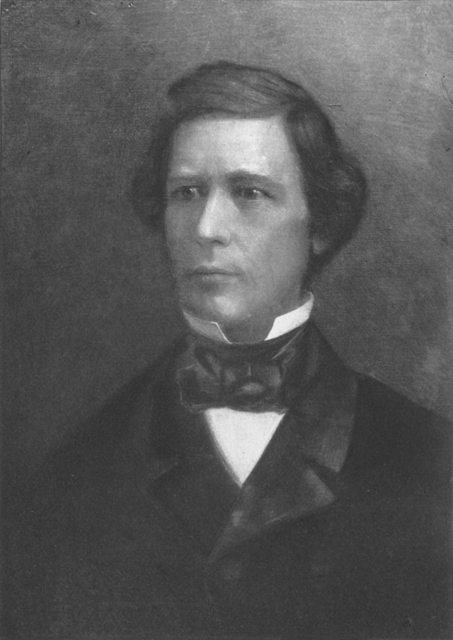
Mr. Howe, of Pennsylvania, supported the views of Mr. Wilmot. He was in favor, if necessary, of camping in the House till California is admitted into the Union.
Mr. King withdrew his resolution, and Mr. Putnam so modified his as to declare substantially, that the friends of California would urge her admission as a distinct measure, to the exclusion of all other measures whatsoever.
Mr. Amos Tuck warmly opposing the resolution, denied that the friends of California had been remiss in their duty. They had done every thing they possibly could do under the rules of the House, crippling their actions in every movement.
Mr. Allen, of Mass. (free soil.) was in favor of California in advance of the appropriations, or after them, if necessary as the caucus might decide.
Mr. Putnam’s resolution, declaring that the friends of California, of the caucus, would contend for her admission till acted upon, in preference to all other measures was finally adopted, with but two or three dissenting voices.
And on motion of Mr. Doty, the caucus adjourned to meet again on Monday next, at 8 P. M.
There were present from the New York delegation this evening, Messrs. Briggs, Hugh White, Putnam, Halloway, Burrows, Schoolcraft, Spalding and Gould, and probably one or two others.
(Your reporter has to say, that he did not hear the caucus was open till too late in the evening to make a full and connected report. He believes, however, that he has the gist of the proceedings.)
~~~~~~~~~~~~~~~~~~~~~~~~~~~~~~~~~~~~~~~~~~~~~~~~~~~~~~~~~~~~~~~~~~~~~~~~~~~~~~~~~~~~~~~~~~~~~~~~~
Further brinksmanship, and President Taylor’s unexpected death, meant it took nearly a month after going over the fiscal cliff before serious debate even started on the appropriations bills. By this point, Watrous and Ramsey had already chosen their new agency site (Sandy Lake), entered into contracts for furnishing provisions and transporting annuity goods, and had notified the Lake Superior Ojibwe bands not to plant gardens because the order to remove to the Mississippi would come any day.
~~~~~~~~~~~~~~~~~~~~~~~~~~~~~~~~~~~~~~~~~~~~~~~~~~~~~~~~~~~~~~~~~~~~~~~~~~~~~~~~~~~~~~~~~~~~~~~~~
Baltimore Sun
26 Jul 1850, Pg. 4
[Reported for the Baltimore Sun]
THIRTY-FIRST CONGRESS-1st Session
WASHINGTON, July 25, 1850.
…
Mr. Bayly, in answer to the inquiry upon the subject, stated that he proposed that the appropriation bills should be taken up in the following order, after the Military Academy bill was disposed of, viz: 1st, The Revolutionary pension bill; 2d, the Navy pension bill; 3d, the Indian appropriation bill; 4th, the Fortification bill; 5th, the bill for the support of the Post-office Department; 6th, the civil and diplomatic bill; 7th, the Navy bill; 8th, the Army bill.

Mr. Harris, of Illinois, inquired whether if California should be admitted, would it not become necessary to pass an additional appropriation bill, should these bills be passed before her admission
Mr. Bayly –If California should come in as a State, a very small modification of the appropriation bills would be necessary; but if a territorial government merely was provided for California, a new appropriation bill would be necessary.
Mr. Harris –Then it would be better to dispose of the California question first.
Mr. Bayly expressed the hope that gentlemen would not open up a general debate on the appropriation bills which he proposed to take up before the civil and diplomatic bill. If so, these appropriation bills could be got through in several days.
Mr. Stanton, of Tennessee, was disposed to take the advice of the chairman of the committee on ways and means, in regard to suppressing general debated on certain of the appropriation bills, but in doing so he would like to know something in regard to the time of adjournment. For the whole debate might be restricted by an order for adjournment, to a day or two, and thus would debate be suppressed entirely. Our course should be shaped in regard to a general debate upon the probability of an adjournment.
Mr. Bayly said it was not his intention to make any proposition for an adjournment. As the fiscal year had already commenced, it was important that these bills should be passed without delay.
Mr. Stanton, What time would it be before the House could adjourn.
Mr. Bayly –So far as the appropriation bills are concerned, we will be in a condition to adjourn on the day on which they shall have passed. He supposed those bills might be disposed of in two weeks.
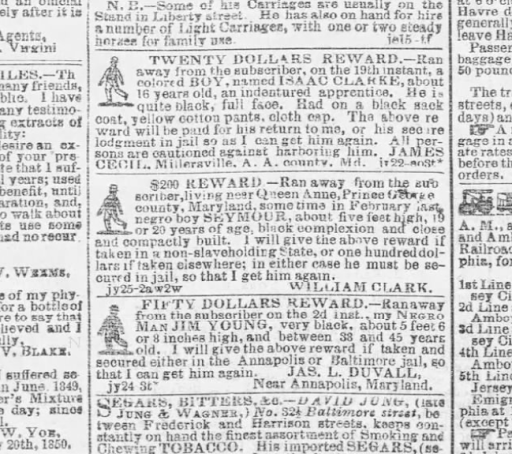
Mr. Bissell –If we pass those bills and adjourn, what will become of California? I am opposed to passing those bills, and thus putting it in the power of Congress to adjourn, until California is disposed of…
~~~~~~~~~~~~~~~~~~~~~~~~~~~~~~~~~~~~~~~~~~~~~~~~~~~~~~~~~~~~~~~~~~~~~~~~~~~~~~~~~~~~~~~~~~~~~~~~~
Washington [DC] Union
14 Aug 1850, Pg. 3
IN CONGRESS OF THE U. STATES.
_____________________________
Thirty-First Congress–First Session.
_____________________________
…
FRIDAY, AUGUST 2, 1850.
______
HOUSE OF REPRESENTATIVES
…
Mr. BAYLY moved to lay aside the subject-matter, and to take up the Indian appropriation bill; and on this motion tellers were called and ordered, when it was agreed to–ayes 98, noes 45.
The Indian appropriation bill being before the committee,
Mr. KAUFMAN moved the rising of the committee to enable him to offer the usual resolution to fix the period for the end of this debate: not agreed to
Mr. SIBLEY next spoke for an hour, principally in explanation of the condition of Indian affairs in Minnesota, and arguing that it was high time to entirely remodel the whole Indian system of the government.
Mr. MASON addressed the House in reply to Mr. SIBLEY, arguing that no efforts of this government could elevate the red man to the condition of the white. He held that the negro was also incapable of being educated so as to give him, as a race, the character and qualities of the white man, and criticised with force and severity the efforts of those who labored to force anti-slavery and negro equality on the South.
After a few remarks from Mr. GIDDINGS in reply to Mr. MASON, the committee rose to enable the chairman of the Committee of Ways and Means to offer the usual resolution for closing the debate on the Indian appropriation bill.

Mr. BAYLY then offered a resolution to close that debate in five minutes after the House should again go into committee on the bill: agreed to.
An ineffectual motion to adjourn over until Monday, when the House should adjourn, was then made.
After which, on motion, the House again went into a Committee of the Whole on the state of Union, and, taking up the annual Indian appropriation bill, amendments thereto were proposed and advocated in five-minute’s speeches by Messrs BAYLY, JOHNSON of Arkansas, CARTTER, EVANS of Maryland, HOUSTON, DUNHAM, FITCH, BISSELL, TOOMBS, CROWELL, THOMPSON of Mississippi, and BROWN of Indian.
The committee next rose, and, after an ineffectual motion to adjourn over until Monday next, the House adjourned.
~~~~~~~~~~~~~~~~~~~~~~~~~~~~~~~~~~~~~~~~~~~~~~~~~~~~~~~~~~~~~~~~~~~~~~~~~~~~~~~~~~~~~~~~~~~~~~~~~
Henry Hastings Sibley, Territorial Delegate to Congress for Minnesota, advocated here for a more humane (i.e. assimilationist) Indian Policy for the United States. He had a long career with the American Fur Company, its successor, the Chouteau Fur Co., and in Minnesota politics. For his own Dakota daughter’s sake, he would have felt compelled to defend the humanity of Native people, but his general record on Native issues was not good. He was no fan of Indian cultures, a believer in Manifest Destiny, and above all, a ruthless businessmen. He was one of the primary architects of the Ojibwe removal, and had to have known that blood would be on his hands if the annuity funds for the Ojibwe, Ho-Chunk, and Dakota failed to materialize.
~~~~~~~~~~~~~~~~~~~~~~~~~~~~~~~~~~~~~~~~~~~~~~~~~~~~~~~~~~~~~~~~~~~~~~~~~~~~~~~~~~~~~~~~~~~~~~~~~
Alexandria [VA] Gazette
5 Aug 1850, Pg. 2
Indian Appropriation Bill.
In the House of Representatives, on Friday, on motion of Mr. BAYLY, the House resolved itself into Committee of the Whole on the state of the Union; and the California bill having been laid aside–ayes 98. noes 49– the committee took up the bill making appropriations for the current and contingent expenses of the Indian department, and for fulfilling treaty stipulations with various Indian tribes for the year ending June 30, 1851.
Mr. SIBLEY, the delegate from Minnesota, after speaking of the privileges of delegates, proceeded to address the committee on the subject of the Indians and the policy which should be pursued with regard to them. It was very important, he insisted, that there should always be good commissioners to negotiate treaties: and the savages should not be left to find out how they have been betrayed and cheated. Not one treaty in ten has been carried out in good faith. The evil of this is not confined to the tribes who have been wronged, but is communicated to others, who are kept in check by the superior power of the Government. The Seminole war, it would be recollected, cost thirty or forty millions of dollars. A principle should be adopted more in accordance with principles of justice and morality. The efforts of the Christian missionaries who go among the Indians to civilize them are in effect obstructed by the conduct of the Government. The Indians doubt the sincerity of its agents. It is a fallacy that the diminution of the Indians is owing altogether to strong drink. This is true to a small extent: but the main reason is, the Indian, having disposed of his land, is cast out as a vagabond. Some stimulus to industry must be placed before him, and he must have confidence in the faith of the Government. The first step to be taken for the improvement of the Indians is to extend over them the laws of the United States. At an early period of the session he proposed to give them those of Minnesota and Oregon, in which he had the concurrence of the delegate from the last named Territory. He could say, with sincerity, that unless this bill be passed all other plans must fail. It was the substratum on which all other measures for the amelioration and improvement of the Indians must rest. If any thing is to be done for them, it must be done now.
Mr. MASON said that as to making the white, red, and black man perfectly equal, he totally despaired. Nature’s God made the black man, and when it is undertaken to make him equal with the white, by law, an impossibility is attempted. Our friends in the free States have manifested as great a desire to elevate the position of the African race–the black man–as his friend from Minnesota had to elevate the condition of the red man. Legislation, in this respect, would have as much effect as the passage of a law to make every variety of birds the same color.
Mr. SIBLEY inquired whether some of the first families of Virginia had not boasted that they had Indian blood in their veins? John Randolph did, as being a descendant of Pocahontas.
Mr. MASON admitted all that, and that there were most able, eloquent, and patriotic men who descended, in part, from the Indian race: but would the gentleman say that this is common, or only an exception to the rule? And then there was a sprinkle of the white man in the exception. Eloquent, able men may be found among the Indians, but the mass is not of that character. The gentleman spoke of manual labor schools, for the purpose of educating them. Now, it is known that they are not formed for labor. They have no natural disposition to labor, and he did not know whether the white man has. [Laughter.]
Mr. SIBLEY remarked that the gentleman was much mistaken when he said that the Indians do not labor. They, as a general thing, labor as much as the white man. The life of the hunter requires more endurance than the ordinary labor of the white man.
Mr. MASON. That is a life above all others, suited to the Indians, and it is a labor and endurance of certain character. Generally, they are averse to labor, and every effort to make them labor, as a mass, is to destroy them. He then proceeded to contrast the happy condition of the negroes of our own country with those of Africa. As to putting them on an equality with the white man, the attempt might as well be made to fly without wings. In the conclusion of his remarks, he spoke of the subjects which now agitate the country, and of the necessity of settling them on a fair and just basis to all parts of the Confederacy.
Mr. GIDDINGS said that the time when Congress ordinarily adjourns had arrived, and he asked gentlemen whether it was not due to themselves and the country that they should now act. This was all he desired to submit.
Mr. STANLY remarked that if the gentleman and his friends would not discuss the Wilmot proviso, in three weeks the California, Territorial, and other bills could be passed, and all go home.
Mr. GIDDINGS said that, if the questions should come up, he would treat them fairly, would not detain the committee one moment beyond what it was his duty to do, and vote with all possible alacrity.
Mr. BAYLY said that there was not a contested item in the bill. All the appropriations were to carry out existing treaties. This being the case, and as two speeches have been made, he moved that the committee rise.
The motion was agreed to: when Mr. Bayly submitted a resolution, that all debate on the bill shall cease in five minutes after the House shall go again into committee.
Mr. STANTON, of Tennessee, said he did not know how long they were to stay here–perhaps during the fall. It was necessary they should have rest: and he proposed that when the House adjourn, it adjourn to meet on Monday next.
The question was then taken, and decided in the negative.
The House again went into committee; and the consideration of the bill making appropriations to defray the expenses of the Indian department, &c., was resumed.
Five minute speeches were made on amendments; and the committee rose without coming to a conclusion, when.
Mr. POTTER moved that when the House adjourn, it adjourn until Monday. The motion was disagreed to–ayes 41, noes 61. And
The House adjourned until next day.
~~~~~~~~~~~~~~
The Delay of Congress.
Congress has been in session eight months, and yet it has not passed a single bill of any consequence. The neglect to pass the usual appropriation bills, which extend only to the first of July, is perhaps the most shameful evidence of its disregard of public duty. Many persons having claims upon the government, are now waiting from day to day to have them satisfied, with scarcely any nearer prospect of its being done than there was seven or eight months ago. This is particularly the case with the wives of seamen in service abroad, whose half pay constitutes, with their own toil, all the dependence of themselves and families.–The scenes at the office of the Navy Agent, are painful to contemplate. The appropriation has run out, and there is no money to give these poor women, whose husbands so hardly earn the poor pittance they receive. They have been kept already one month in suspense, causing no doubt an infinite amount of distress and suffering among them. Of course there is no help for these sufferers. The members at Washington, who are receiving their eight dollars per day for eight months of worse than idle talk, for much of it is positively mischievous, care very little for others, as long as their own wants are supplied. But if anything could add to the disgraceful state of things at Washington, it is this robbing of the poor, by withholding from them so long their just earnings.—Phil. Ledger.

~~~~~~~~~~~~~~~~~~~~~~~~~~~~~~~~~~~~~~~~~~~~~~~~~~~~~~~~~~~~~~~~~~~~~~~~~~~~~~~~~~~~~~~~~~~~~~~~~
As July turned to August, and the government shutdown and debt default entered its second month, the logjam in Washington began to break. This came about with the failure of the centrist “Omnibus Bill” which would have admitted California as a free state, banned the slave trade in Washington D.C., and forced northerners to assist in returning fugitives to their enslavers. The omnibus proved unacceptable to enough northern Free Soilers, and enough southern hardline Democrats, to have no chance. Breaking it into pieces allowed for majorities on each individual measure, but arguably hastened the march toward civil war.
~~~~~~~~~~~~~~~~~~~~~~~~~~~~~~~~~~~~~~~~~~~~~~~~~~~~~~~~~~~~~~~~~~~~~~~~~~~~~~~~~~~~~~~~~~~~~~~~~
[Washington D.C.] Southern Press
5 August 1850, Pg. 2
THE COMPROMISE BILL.–From all the indication derived from Washington, this famous measure has shared a merited fate, and is ere this consigned to the tomb of the Capulets. It has been one of the veriest humbugs of the day. While its friends professed to herald it forth as the harbinger of peace and tranquility, it contained within itself the very elements of discord and seeds of disunion. The most extraordinary efforts were used to gild the nauseous pill and make it palatable to the public taste. But they were mere quack nostrums and fortunately unsuccessful. The South asked for bread, and out politicians were disposed to give them a stone–for a fish, and they offered them a serpent. The scheme is now dead, dead as a mackerel, and there is no power to galvanize it into life and being. The probability is that the bill to admit California into the Union will likewise fail. We hope the true friends to the South will resist it “at every hazard and to the last extremity.” All that is required, is that our own people should be united, and they can dictate their own terms to a sordid and reckless majority.—Southern Argus, Va.
~~~~~~~~~~~~~~~~~~~~~~~~~~~~~~~~~~~~~~~~~~~~~~~~~~~~~~~~~~~~~~~~~~~~~~~~~~~~~~~~~~~~~~~~~~~~~~~~~
The Indian Appropriation Bill had to not only meet the United States’ existing treaty obligations, it also set the agenda and budget for further treaties and removals. It was also a prime target for riders and amendments for congressmen looking to give political patronage. It took several weeks to hammer out the details. It would ultimately include a removal fund for the Lake Superior Chippewa, on top of the regular annuity fund.
Meanwhile, back in Minnesota Territory, sub-agent Watrous finalized details for food to be placed along the removal path and approved licenses for La Pointe-based traders to start trading on the upper Mississippi. All that was waiting was final word from the governor to notify the bands to remove. Ramsey, however, was stuck in limbo. With the government shut down, employees couldn’t be paid, contracts couldn’t be honored, and the annuity funds could not be released. Washington had put him in full command of the removal, but he still wrote them confused if he should proceed. He did not get a clear answer.
~~~~~~~~~~~~~~~~~~~~~~~~~~~~~~~~~~~~~~~~~~~~~~~~~~~~~~~~~~~~~~~~~~~~~~~~~~~~~~~~~~~~~~~~~~~~~~~~~
New York Tribune
12 August 1850, Pg. 6
Our Indian Relations– President Fillmore’s Position.
Correspondence of the Tribune
WASHINGTON, Friday, Aug. 9.
The Indian Appropriation bill ought to have been passed long ago, as annuities past due are still unpaid. This bill is a more important on than is generally supposed, as it contains provisions for extinguishing Indian titles to land in the new Territories. In the bill just passed, appropriations are made for negotiating treaties with the Indians on the borders of Mexico, in Texas, and in Minnesota. The rush of emigration to Minnesota requires that the Government get possession of lands as speedily as possible. It contains over 160,000 square miles, of which only about 15,000 are available. This is but a small portion of a Territory that must be settled with unparalleled rapidity. Gov. RAMSEY and HUGH TYLER, Esq. of Penn. are to be the Commissioners for making the treaties in Minnesota, by whom this high trust will be executed with promptness and fidelity.
It is hoped that in future no treaties will be made with stipulations for annuities in tobacco and the worthless baubles which are give to the Indians, at large cost to the Government, as presents. Such gifts are positively injurious to the Indians, and afford too great opportunity for official harpies to get rich on the appropriations for such purposes. It is derogatory to the character of the nation, and should be corrected. If one half the money paid to Indians had been expended for their education and the arts of civilized life, the condition of the red man would have nearly equalled that of the whites, but as long as treaties are made which bequeath all the vices with none of the blessings of civilization, there can be but little hope of elevating them to the industrious and useful pursuits of life. On this subject, it is believed, The Tribune will not keep silent, as there is but little in the history of our national legislation for the Indians which commends itself to the approval of good men.
If treaties are made hereafter stipulate the payment of tobacco, trinkets and other worthless articles, they should not be ratified; nor should merchandise form any portion of the annuities. It would be far better not to appropriate money to the Indians than to expend it in a manner that encourages rascality among agents, and vicious tastes and habits among those who should be benefited thereby. I go for a “proviso” in regard to the mode of expending money for the Indians.
The flames excited in the breasts of the extreme factionists of the South by the timely and judicious message of President FILLMORE are subsiding, as they find it so direct in its reasonings and so national in tone as to render opposition extremely ridiculous. The President will be sustained with firmness in the position he has wisely taken, and it is generally believed his message will lead to a speedy and satisfactory adjustment of these boundary difficulties, which, after all, constitute the great bone of contention on the questions relating to Slavery. If this be done promptly, Congress will probably adjourn about the first of October; if not, there will be an interim of a few days only, by which mileage will be paid to the members.
Yours, ARGUS
~~~~~~~~~~~~~
Indian Appropriations.
The Bill now before the House of Representatives, making appropriations for the current and contingent expenses of the Indian Department, and for fulfilling Treaty stipulations with various Indian tribes, for the year ending June 30, 1851, contains the following items:
PAY OF OFFICERS, &C.
Superintendent Indian Affairs at St. Louis–with the Indian Agents $18,000
Sub-Agents, Interpreters and Clerks 23,150
Buildings at Agencies 2,000
Presents to Indians 5,000
Contingencies 56,500
____________
TO THE TRIBES.
Christian Indians $400
Chippewas of Saginaw 5,800
Chippewas, Menamonies, Winnebagoes and New Call Indians 1,500
Chippewas of Lake Superior and Mississippi 70,800
Chickasaws 3,000
[31 lines omitted from transcription]
Weas 3,000
Chippewas of Lake Superior and Mississippi 4,600
Pottowatamies 32,150
Creeks 1,275
Iowas 1,500
Ottawas and Chippewas 2,412
Wyandots 1,029
Cherokees 1,500
Choctaws 87,200
~~~~~~~~~~~~~~~~~~~~~~~~~~~~~~~~~~~~~~~~~~~~~~~~~~~~~~~~~~~~~~~~~~~~~~~~~~~~~~~~~~~~~~~~~~~~~~~~~
Summer dragged on, and the shutdown entered its third month. Tensions in congress stayed high. It was now past time when the session should have adjourned. Individual members wanted to go home, and with eight months of gridlock and the grueling procedural processes necessary to move legislation, the opportunities to press personal grievances proved too tempting.
~~~~~~~~~~~~~~~~~~~~~~~~~~~~~~~~~~~~~~~~~~~~~~~~~~~~~~~~~~~~~~~~~~~~~~~~~~~~~~~~~~~~~~~~~~~~~~~~~
[New York] Evening Post
2 September 1850, Pg. 1
CHIVALRY
There were rather characteristic illustrations of chivalry in the House this morning and yesterday. Mr. Bayly has been desirous of having the Indian Appropriation bill passed. Yesterday he called it up, a motion which required unanimous consent. Mr. Sweetser, of Ohio, who sits about three seats removed from Bayly, rose and objected, and of course the motion could not be entertained. Mr. Bayly hereupon rose from his seat, leaned over towards Mr. Sweetzer, shook his finger at him in a very menacing manner, and said, as I understand, “You are a spiteful little cur,” with some additional epithets not necessary to repeat.
This morning the Chairman of the Ways and Means renewed his motion, and again Mr. Sweetzer rose and objected, and sat down. Mr. Bayly again rose, precisely as before, shook his finger in the face of Mr. Sweetzer, and said, among other things, “If you ever object to another motion of mine in this House, I will wring your nose, G-d d–n you.”–These words were spoken so loud as to be distinctly heard across the hall, though, of course, they were not intended to go into the debates. Mr. Sweetzer made a motion with his hand as if he would have thrown an inkstand into the face of his insulter, but Mr. Thompson, of Miss., interposed, and no violence occurred in the House. Mr. Sweetzer soon after left the House; as he was doing so a friend asked him what he was about to do, to which he replied that he would arm himself, and would then determine. It was the opinion of every member whom I heard allude to the affair, that the insult on the part of Bayly was so gross, wanton, and intolerable, that, had Mr. Sweetzer had the means to do it, he would have been warranted in summarily taking his life. X.
~~~~~~~~~~~~~~~~~~~~~~~~~~~~~~~~~~~~~~~~~~~~~~~~~~~~~~~~~~~~~~~~~~~~~~~~~~~~~~~~~~~~~~~~~~~~~~~~~
Back at Sandy Lake, Watrous began to panic. He wrote Ramsey warning that he had only purchased enough food to cover the bands’ journey to Sandy Lake and for the normal duration of a payment. Furthermore, high water had wiped out most of the rice crop. The sub-agent openly expressed his concern that starvation would ensue if the removal funds or the payment were delayed. Still, the two men were mostly concerned with preserving their own reputations for fiscal responsibility. With no word from Washington on when the funds would be available for pickup, and the Ojibwe ready to split off into small groups for fall hunts, Ramsey and Watrous, decided to force the removal through anyway. Watrous sent word to the bands to assemble at Sandy Lake in early October, where they would be fed and receive the money obligated to them by treaty.
Congress, meanwhile, was working through its backlog of legislation. They passed the various parts of the discarded omnibus bill, separately, in what has gone down in American history as the infamous “Compromise of 1850.” California entered the Union, but the accompanying Fugitive Slave Law would force the north to confront the evils of slavery directly. On September 30th, after three months of default, President Fillmore was finally able to sign the appropriation bills.
~~~~~~~~~~~~~~~~~~~~~~~~~~~~~~~~~~~~~~~~~~~~~~~~~~~~~~~~~~~~~~~~~~~~~~~~~~~~~~~~~~~~~~~~~~~~~~~~~
Vicksburg Whig
9 Oct 1850, Pg.2
BY TELEGRAPH
To the N. O. Picayune:
…
BALTIMORE, Monday, Sept. 30.
Congressional,–The Fortification, the Bounty Land, the Navy and Army Appropriation, the Civil and Diplomatic Appropriation, the Indian appropriation, and the Light House bills, have been slightly amended, passed and signed by the President.
…
[BY THE WESTERN LINE.]
THE FUGITIVE SLAVE LAW.–LOUISVILLE, October 3.–Mixed meetings of whites and blacks have been held in the city of New York, and in Springfield and Worcester, Mass., denouncing the Fugitive Slave law. At Springfield, where many runaway negroes have gathered, resolutions have passed to resist the execution of the law at all hazards.
…
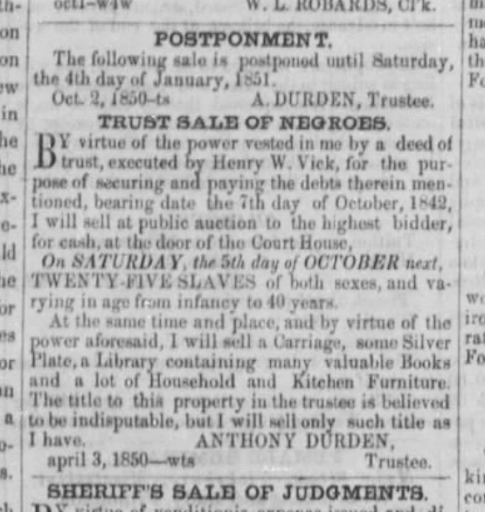
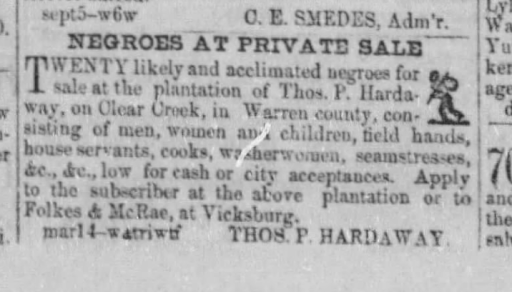
FUGITIVE SLAVE BILL.–The bill for the more easy reclamation of fugitive slaves was signed by President Fillmore on the 18th of August, and is now the law of the land. We shall shortly publish it. What a queer was President Fillmore has of displaying “abolitionism!” He signs territorial bills without the proviso; he keeps appointing Southern men to vacant seats in his cabinet, so as to give the South a majority; and finally he approves of the most stringent fugitive slave bill that the wit of Southern Senators can devise. “By their works ye shall know them.” –Natchez Courier.

~~~~~~~~~~~~~~~~~~~~~~~~~~~~~~~~~~~~~~~~~~~~~~~~~~~~~~~~~~~~~~~~~~~~~~~~~~~~~~~~~~~~~~~~~~~~~~~~~
On October 6th, with some members of the removal bands already arriving at Sandy Lake, Watrous left for St. Louis. If he hesitated any longer the food would surely run out, and the Mississippi might ice over. In 1850, however, there were no wire transfers or debit cards. Treaty payments were made in coin, and it took time to box up and transport coin. The sub-agent found no funds at St. Louis and returned emptyhanded to Sandy Lake in November–a full month later than the scheduled payment. By that time, the food was gone, and disease had broken out in the crowded camps occupied by thousands of Ojibwe people. The Sandy Lake Tragedy had begun and would still get worse. Estimates vary, but up to four hundred would die senselessly before winter was over.
Historians like to speak of proximate versus ultimate causes. Did World War I begin because a Serbian nationalist assassinated an archduke in Sarajevo, or was it the result of unchecked competition among imperial powers in Europe? The answer is both. The assassination was the proximate, or direct, cause, but the ultimate causes went deeper.
It isn’t difficult to find ultimate causes for why hundreds of Ojibwe people died at Sandy Lake in the winter of 1850-51. One can point to deceptive treaties, a corrupt Indian Department, greedy special interests, and a systematic failure to listen to Ojibwe leadership. However, pinning down the proximate cause has proven harder. We feel compelled to find individual villains who through greed, cowardice, or incompetence committed sins of both omission and commission. Among these are Ramsey, Watrous, Rice, Sibley, Hall, Warren, Oakes, Borup, and others. However, all of those men wanted the annuity money to arrive Sandy Lake, as promised, and stood lose something if it didn’t. So, why didn’t the money materialize? Who is to blame for that?

America’s rapid expansion into a world superpower, spanning from sea to shining sea, was built, in part, on two white-supremacist myths. The first held that white people were destined to inevitably own the lands of North America. Just as inevitably, the Indian nations of those lands must disappear: Manifest Destiny. The second myth held that the statement “all men are created equal” did could not apply to people of African descent, and that somehow one human being could own another in this “new nation, conceived in liberty:” Slavery. It is very obvious that the first myth fits into story of the Sandy Lake Tragedy. The deeper you look, the more obvious it becomes that the second does too.
Paap, Howard D. Red Cliff, Wisconsin a History of an Ojibwe Community ; Volume 1 The Earliest Years: the Origin to 1854. North Star Press of St. Cloud, Inc., 1854.

Satz, Ronald N. Chippewa Treaty Rights: the Reserved Rights of Wisconsin’s Chippewa Indians in Historical Perspective. University of Wisconsin Press, 1997.

Schenck, Theresa M. William W. Warren: The Life, Letters, and times of an Ojibwe Leader. Lincoln: University of Nebraska, 2007. Print.

White, Bruce. "The Regional Context of the Removal Order of 1850," in McClurken, James M. et al., Fish in the Lakes, Wild Rice, and Game in Abundance: Testimony on Behalf of Mille Lacs Ojibwe Hunting and Fishing Rights, James M. McClurken, Compiler. East Lansing, MI: Michigan State University Press, 2000.
Slavery, Debt Default, and the Sandy Lake Tragedy
May 14, 2023
By Leo
A minority in congress, feeling threatened by a rapidly changing society, seeks to cling to power and preserve white supremacy. To do this, they abuse institutional rules, make a mockery of the democratic process, and bring the Federal Government to a grinding halt. The consequences prove dire. Stop me if you’ve heard this one before.
The year is 1850. The United States is growing rapidly: settling the Oregon boundary dispute, annexing Texas, and taking New Mexico and California from Mexico. In the north, Irish immigrants are flooding into the urban centers and building railroads that will carry German and Scandinavian farmers to the prairies of the West. This leads to Wisconsin’s statehood in 1848, and Minnesota and Oregon don’t seem far behind. The United States seems to be fulfilling its supposed “Manifest Destiny.”
The Ojibwe of Wisconsin and Upper Michigan are largely out of the way of this “progress.” However, they live on lands already ceded by treaty. Despite promises received upon signing that they could stay on this ceded territory, two things are working against that possibility. The most powerful trading interests have relocated from Lake Superior to the Mississippi They want to bring the Ojibwe bands, and the annuity money and government contracts that accompany them, to Minnesota. Secondly, the Office of Indian Affairs in Washington, is riddled with corruption, cronyism, and general incompetence, and still has Indian Removal as the default policy. All things being equal, in the Government’s eyes, the sooner Indians can get out of the way and be replaced with white settlers, the better.
But not all is sunshine and roses with this unparalleled American expansion. After all, Manifest Destiny is not the only white supremacist force in American society. There is also the complicating factor of the South’s “peculiar institution:” slavery.
For the first half of the 19th century, the slave states and their representatives in Congress were mostly left alone. Systemic protections in the Constitution, and a series of compromises to maintain a “balance of power,” alleviated southern paranoia despite the growing population of the industrial north. Abolitionists were still seen as a radical minority, and most northerners didn’t care one way or the other about slavery.
The Mexican War, however, shook up this uneasy union. One could argue that it had been a war for the expansion of slavery, but when the dust settled, only Texas appeared to be reliable ground for the forces of allowing human beings to own one another. Oregon would be free. The Mormon colony at Salt Lake would be free. And scariest, of all, California might be free.
To make matters worse, a faction of “Free-Soilers” was emerging in Congress. While not full-on abolitionists, these northern representatives, like David Wilmot of Pennsylvania and Abraham Lincoln of Illinois, were bold enough to suggest that owning people should be banned entirely in the newly-acquired territories. In response, the southern presses began to talk openly of dissolving the Union, and the forces for enslavement in Washington dug in.
So, on February 6, 1850, when President Zachary Taylor issued the order to remove the Lake Superior Ojibwe to the Mississippi, few in Washington cared. They were preoccupied by another issue. That same month, California adopted a constitution and applied to enter the Union as a free state.
In theory, it shouldn’t have mattered. Beyond pork projects and nepotistic appointments, Congress and the President rarely took any direct interest in Indian matters, leaving that to the Commissioner of Indian Affairs. The Commissioner, in turn, generally delegated responsibility to his superintendents and agents on the frontier. That was how a corrupt territorial governor named Alexander Ramsey and a barely-literate, sycophantic Indian sub-agent named John S. Watrous ended up in charge of the removal.
Ramsey and Watrous are often portrayed as the primary villains of the failed treaty payment that would become known as the Sandy Lake Tragedy. Hundreds Ojibwe people died of disease, starvation, and exposure in the winter of 1850-51. The governor and sub agent deserve plenty of the blame, for sure, but it should be stated that they stood to gain no benefit from death, misery, or failure. Furthermore, they anticipated the catastrophe and tried to warn Washington of the consequences of inadequate food out or if the money were to somehow not arrive.
That September, Watrous would call on the Ojibwe to skip their fall hunts and assemble at Sandy Lake, while he went to St. Louis to pick up the money for the treaty payments. Why did he not get back until late November, and why did he have no money with him? Slavery.
Every year, Congress had to pass appropriation bills in order for the executive branch to perform its constitutionally required duties. This included the obligations of the United States to fulfill its treaty obligations to Indian nations. This was largely a formality before 1850. Every spring, Congress would pass whatever budget the Indian Department proposed, generally without a lot of debate or delay.
1850 was different. As spring turned to summer preparations for removal were underway at La Pointe, but nothing was happening in Washington. The United States Government was absolutely paralyzed by the California Question. Pro-slavery senators and representatives, feeling their power slipping away, resorted to dirty tricks.
~~~~~~~~~~~~~~~~~~~~~~~~~~~~~~~~~~~~~~~~~~~~~~~~~~~~~~~~~~~~~~~~~~~~~~~~~~~~~~~~~~~~~~~~~~~~~~~~~
Hartford Courant
4 June 1850. Pg. 2
SOUTHERN PLANS.
The Washington correspondent of the New York Commercial Advertiser places the plans and plots of the Southern Members of Congress in the following light.
“The primary object of the arrangements is reported to be the rejection of the claims of California to admission upon any terms whatever, and the defeat of all schemes for the organization of governments for the territories which do not contain an express recognition of slavery.
The leading spirits of this movement in the Senate are reported to be Davis of Miss., Mason of Va. Yulee of Fla., Turney of Tenn. In the House, Clingman of N. C., Inge of Ala., Toombs and Stephens of Ga., and Meade of Va., control and direct the organization.– Seventy-four members of the lower House are claimed as friendly to the proposed course of proceeding, and have, as is alleged, signed a formal agreement to stand by one another in anything necessary to give effect to their designs.
A prominent part of the plan is to prevent the passage of the annual appropriation bills, and if the Northern majority cannot be otherwise overcome, to force an early adjournment. The appropriations for the current year of course expire at the end of June next.– Some few appropriations, such perhaps as the interest on the public debt, and the instalments annually payable in Mexico, are continued from year to year by permanent enactments, but with these exceptions all the expenditures of Government depend upon appropriations annually renewable.
After the 30th of June, no officer of Government from the President down to the lowest messenger, can receive one dollar in payment of his services, until the disbursement be ordered by Congress. The case is the same with expenditures for the support of the judiciary, the army, navy and civil list. They are all dependent for support upon the action of the legislature, under the clause of the Constitution which makes it the duty of Congress to grant supplies and of the executive officers only to make disbursements upon such authorities.”
It is very evident that the ultra slavery leaders came into Congress, this session, with these plans. There has been, ever since the session commenced, an evident determination, as they were the minority, to hinder the transaction of business, and if they cannot defeat the Proviso and the friends of non-extension, in any other way, to do it by procrastination. Such was the design of the ultra Southern Whigs, in their refusal to support Mr. Winthrop. It was believed that months could be spent in delay, but the vote for a plurality choice broke up this plan, and flung the Speakership upon the very man they wished. Such was the design of the ultra Southern Democrats in their refusal to support Mr. Forney for Clerk.
Business has, in this way, been hindered; nothing has been accomplished; a few trifling bills only have been passed; and the whole subject of slavery in the territories as far from being settled as ever. It is very probable, likewise, that when the naked question of the admission of California is brought before the House, if it should ever be reached, the scenes of February 18th would be acted over and with success. In the mean time, one of the latest numbers of the National Intelligencer shows, by its extracts, that uneasiness and agitation has commenced again at the South, and the experienced and shrewd editors of that paper see signs of another storm. Would that the North were now united; that the opponents of slavery in Congress had no foolish party cliques to please, no mere party aggrandizement to plan, but would all march up to the breach in the walls of liberty, shoulder to shoulder, and accomplish their great object.
~~~~~~~~~~~~~~~~~~~~~~~~~~~~~~~~~~~~~~~~~~~~~~~~~~~~~~~~~~~~~~~~~~~~~~~~~~~~~~~~~~~~~~~~~~~~~~~~~
With the end of the fiscal year approaching on June 30th, failure to pass the appropriations bills was tantamount to both a government shutdown and a debt default. Still, the southern hardliners held on to their open obstructionism, trying to prevent California from entering the Union as a free state:
~~~~~~~~~~~~~~~~~~~~~~~~~~~~~~~~~~~~~~~~~~~~~~~~~~~~~~~~~~~~~~~~~~~~~~~~~~~~~~~~~~~~~~~~~~~~~~~~~
Hayneville (AL) Chronicle
29 June 1850, Pg. 2
The following article from the Mobile Register breathes the right spirit. The rights of the minority must be protected in some way; and if the North, who have the majority in the unequal contest now raging between herself and the South, will not do us justice, let the Representatives of the South stop the wheels of government, by resorting to their rights under the rules, and withholding the appropriation bill. Let this be done, and another effort will have been made to save the rights and honor of the South, without resorting to that “last extremity”–disunion, and he who then charges a disunion spirit upon the South, will charge a falsehood, with the facts of its refutation staring him in the face.
Aside from all this, we think such a course would be apt to result in bringing the North to her right senses. The great mass of the funds appropriated by the government is expended and disbursed through the Northern States, and seldom a dollar, comparatively speaking ever reaches the South. It is in fact the great prop of the Northern manufacturers and capitalists, who feed upon the hard-earned substance of the South, and, at the same time, are found vilifying her institutions. ‘Fo show the shallow hypocrisy of these people, whenever they hear the subject broached before Congress: whenever they hear it hinted that the South will resort to this mode of settling the question, by withholding the appropriation bill, their high wrought philanthropy immediately sinks into non-entity. The agitation for a time ceases, and the cry is heard going up from every town and village of the North, to their representatives, “Settle the question, settle the question.”
But, again, on the other hand, we of the South would lose nothing by the appropriation bill being withheld. We gain nothing by it; and therefore are as well off without it as with it. The South lives, emphatically by herself, and upon her own resources; and in no wise dependent upon a disbursement of the public funds. Upon the question of benefit to the South arising from a disbursement of these funds, Mr. Clingman, of North Carolina, whose speech upon this subject was one of the most powerful and convincing among the many able speeches of the present session, and a man too who speaks without investigation, holds the following language:
“The manner of disbursement is also adverse to our interests. Of the forty odd millions which the Government purposes to disburse this year, I do not believe that five millions will in any way be expended in all the slaveholding States. North Carolina, for example, is burdened to the extent of not less than four millions, and yet does not get back one hundred thousand dollars in any way from the Government. The clear loss, in a pecuniary point of view, on account action of the Government, may be set down as not less than three millions annually.–The southern States generally are in the same situation.”
Why should the South hesitate then, to adopt this mode of self-defence, when she loses nothing by it, and when, at the same time, it may be the means of bringing the North to a sense of her duty under the Constitution? But as remarked by the Register, in the discharge of this duty, beset by so many trials and embarrassments, our members will look for support at home. This we know they will receive. Let this mode of baffling the designs of these miserable pseudo-philanthropists, be carried out by the southern members, and they will be greeted by one common should of applause from one end of the southern States to the other:
~~~~~~~~~~~~~~~~~~~~~~~~~~~~~~~~~~~~~~~~~~~~~~~~~~~~~~~~~~~~~~~~~~~~~~~~~~~~~~~~~~~~~~~~~~~~~~~~~
The North had its own hardliners, willing to force California’s statehood at all costs. Though the Free Soilers’ motivations are more understandable to us today, we should acknowledge they were also willing to play games with the process at the expense of keeping the government operating:
~~~~~~~~~~~~~~~~~~~~~~~~~~~~~~~~~~~~~~~~~~~~~~~~~~~~~~~~~~~~~~~~~~~~~~~~~~~~~~~~~~~~~~~~~~~~~~~~~
New York Daily Herald
30 June 1850, Pg.4
WASHINGTON, June 28, 1850.
Compromise Caucus in the House
Pursuant to a call published in this morning’s Union, the members of the House, to the extent of some forty odd in number, friendly to the admission of California into the Union, promptly, and disconnected with all other subjects, met in the Hall of the House this evening at eight o’clock.
Mr. Booth (free soiler) of Connecticut, was called to the chair, and Mr. Amos Tuck, N. H., elected secretary.
The chairman briefly stated the object of the meeting to secure by a co-operation of the friends of California, the prompt action of the House to the admission of California into the Union.
Mr. Preston King (free soiler) with a few remarks, introduced a resolution pledging the caucus to support the admission of California to the precedence of all other subjects whatsoever.
Mr. Hugh White, N. Y., was opposed to pledging the caucus to such a course; and contended that in any event the annual appropriations for the support of the government ought not to be entirely set aside, and that it might become necessary to pass them, even of the admission of California.
Mr. Otis, of N. H. took the same view of the subject.
Mr. Giddings felt confident that by the concerted action of the friends of California, and with a determination to push it through, she could be admitted, as far as the House was concerned, in three days; and all that was required was the determination to stick to it, and sit it out.
Mr. Briggs, of New York, concurred in the object of the meeting. He was in favor of the early admission of California, and though he had been a silent member during the present session, he had paid the most earnest attention to the debates, and was not indifferent by any means to the importance of immediate action. He was in favor of the admission of California as a separate measure. Nothing had occurred to change this opinion. He was in favor of California, free and distinct from any other matter whatsoever. He had listened to the discussions of the last four or five months attentively, but his mind had undergone no particular change. It was time that something should be done. Seven months of the session had been expended, and they had not done more business than should have occupied 30 days. But there were obstacles still in the way. He believed that it was the settled determination of the enemies of California, in the House, to arrest any action upon the bill while another bill was pending before the Senate; and as it might be a useless waste of time to contend against such opposition, he thought rather than do nothing in the meantime, it might be as well to act upon the annual appropriations. Still, he was ready to co-operate with the friends of California, if the bill should be taken up, for her admission, in preference to all other questions. For the present, he suggested that any decision be postponed till Monday, with a view to a more united expression from a fuller attendance of the the friends of California.

Mr. Campbell, of Ohio, (free soiler,) was in favor of California, even to the superseding the appropriation bills. He could not concur with Mr. Briggs in acting upon the appropriations first. There was no danger on that score. Whether they were or were not delayed two or three weeks did not make much difference. Let them go over, for the safest way to secure California is to entertain no other subject till she is admitted.
Mr. Putnam, of New York, offered a resolution, declaring the necessity of the immediate admission of California distinct from all other subjects, and in precedence of all other measures, excepting the annual appropriation bills. He briefly spoke in support of the resolution, in view of the necessity which might arise to pass the appropriations in advance of action upon California.
Mr. Wilmot of Pa., (free soiler) earnestly urged action upon California as the paramount object. He was opposed to considering any other subject till that was disposed of; and charged the friends of California with being derelict in their duty, in allowing other matters to supersede that great measure.
Mr. Otis asked in what instance the friends of California had fallen short of their duty.
Mr. Wilmot did not intend to impugn the motives of any man, but referred to the decision of the House on Monday last as a case in point, when they refused to take up the California bill; but went into committee on the bill of land bounties to the soldiers of the last war.
Mr. Otis was satisfied. He was a young member, and had asked for information, being not as well versed in the rules as the gentleman from Pennsylvania.
Mr. Wilmot maintained that California should take the precedence of the appropriations. There was no danger of it not passing, however long they might be delayed. He advised the friends of California to call for the meeting of the House at ten in the morning on the first day in taking up the bill, and that they sit till six P. M., that on the second day they sit till 12 at night, and that on the third day, if the question be not taken, that they continue in session all night, if necessary, and keep at it till it is taken. Give him the control of the majority of the House, and he could overcome the minority, notwithstanding the rules admit of so many obstructions.

Mr. Howe, of Pennsylvania, supported the views of Mr. Wilmot. He was in favor, if necessary, of camping in the House till California is admitted into the Union.
Mr. King withdrew his resolution, and Mr. Putnam so modified his as to declare substantially, that the friends of California would urge her admission as a distinct measure, to the exclusion of all other measures whatsoever.
Mr. Amos Tuck warmly opposing the resolution, denied that the friends of California had been remiss in their duty. They had done every thing they possibly could do under the rules of the House, crippling their actions in every movement.
Mr. Allen, of Mass. (free soil.) was in favor of California in advance of the appropriations, or after them, if necessary as the caucus might decide.
Mr. Putnam’s resolution, declaring that the friends of California, of the caucus, would contend for her admission till acted upon, in preference to all other measures was finally adopted, with but two or three dissenting voices.
And on motion of Mr. Doty, the caucus adjourned to meet again on Monday next, at 8 P. M.
There were present from the New York delegation this evening, Messrs. Briggs, Hugh White, Putnam, Halloway, Burrows, Schoolcraft, Spalding and Gould, and probably one or two others.
(Your reporter has to say, that he did not hear the caucus was open till too late in the evening to make a full and connected report. He believes, however, that he has the gist of the proceedings.)
~~~~~~~~~~~~~~~~~~~~~~~~~~~~~~~~~~~~~~~~~~~~~~~~~~~~~~~~~~~~~~~~~~~~~~~~~~~~~~~~~~~~~~~~~~~~~~~~~
Further brinksmanship, and President Taylor’s unexpected death, meant it took nearly a month after going over the fiscal cliff before serious debate even started on the appropriations bills. By this point, Watrous and Ramsey had already chosen their new agency site (Sandy Lake), entered into contracts for furnishing provisions and transporting annuity goods, and had notified the Lake Superior Ojibwe bands not to plant gardens because the order to remove to the Mississippi would come any day.
~~~~~~~~~~~~~~~~~~~~~~~~~~~~~~~~~~~~~~~~~~~~~~~~~~~~~~~~~~~~~~~~~~~~~~~~~~~~~~~~~~~~~~~~~~~~~~~~~
Baltimore Sun
26 Jul 1850, Pg. 4
[Reported for the Baltimore Sun]
THIRTY-FIRST CONGRESS-1st Session
WASHINGTON, July 25, 1850.
…
Mr. Bayly, in answer to the inquiry upon the subject, stated that he proposed that the appropriation bills should be taken up in the following order, after the Military Academy bill was disposed of, viz: 1st, The Revolutionary pension bill; 2d, the Navy pension bill; 3d, the Indian appropriation bill; 4th, the Fortification bill; 5th, the bill for the support of the Post-office Department; 6th, the civil and diplomatic bill; 7th, the Navy bill; 8th, the Army bill.
Mr. Harris, of Illinois, inquired whether if California should be admitted, would it not become necessary to pass an additional appropriation bill, should these bills be passed before her admission
Mr. Bayly –If California should come in as a State, a very small modification of the appropriation bills would be necessary; but if a territorial government merely was provided for California, a new appropriation bill would be necessary.
Mr. Harris –Then it would be better to dispose of the California question first.
Mr. Bayly expressed the hope that gentlemen would not open up a general debate on the appropriation bills which he proposed to take up before the civil and diplomatic bill. If so, these appropriation bills could be got through in several days.
Mr. Stanton, of Tennessee, was disposed to take the advice of the chairman of the committee on ways and means, in regard to suppressing general debated on certain of the appropriation bills, but in doing so he would like to know something in regard to the time of adjournment. For the whole debate might be restricted by an order for adjournment, to a day or two, and thus would debate be suppressed entirely. Our course should be shaped in regard to a general debate upon the probability of an adjournment.
Mr. Bayly said it was not his intention to make any proposition for an adjournment. As the fiscal year had already commenced, it was important that these bills should be passed without delay.
Mr. Stanton, What time would it be before the House could adjourn.
Mr. Bayly –So far as the appropriation bills are concerned, we will be in a condition to adjourn on the day on which they shall have passed. He supposed those bills might be disposed of in two weeks.
Mr. Bissell –If we pass those bills and adjourn, what will become of California? I am opposed to passing those bills, and thus putting it in the power of Congress to adjourn, until California is disposed of…
~~~~~~~~~~~~~~~~~~~~~~~~~~~~~~~~~~~~~~~~~~~~~~~~~~~~~~~~~~~~~~~~~~~~~~~~~~~~~~~~~~~~~~~~~~~~~~~~~
Washington [DC] Union
14 Aug 1850, Pg. 3
IN CONGRESS OF THE U. STATES.
_____________________________
Thirty-First Congress–First Session.
_____________________________
…
FRIDAY, AUGUST 2, 1850.
______
HOUSE OF REPRESENTATIVES
…
Mr. BAYLY moved to lay aside the subject-matter, and to take up the Indian appropriation bill; and on this motion tellers were called and ordered, when it was agreed to–ayes 98, noes 45.
The Indian appropriation bill being before the committee,
Mr. KAUFMAN moved the rising of the committee to enable him to offer the usual resolution to fix the period for the end of this debate: not agreed to
Mr. SIBLEY next spoke for an hour, principally in explanation of the condition of Indian affairs in Minnesota, and arguing that it was high time to entirely remodel the whole Indian system of the government.
Mr. MASON addressed the House in reply to Mr. SIBLEY, arguing that no efforts of this government could elevate the red man to the condition of the white. He held that the negro was also incapable of being educated so as to give him, as a race, the character and qualities of the white man, and criticised with force and severity the efforts of those who labored to force anti-slavery and negro equality on the South.
After a few remarks from Mr. GIDDINGS in reply to Mr. MASON, the committee rose to enable the chairman of the Committee of Ways and Means to offer the usual resolution for closing the debate on the Indian appropriation bill.

Mr. BAYLY then offered a resolution to close that debate in five minutes after the House should again go into committee on the bill: agreed to.
An ineffectual motion to adjourn over until Monday, when the House should adjourn, was then made.
After which, on motion, the House again went into a Committee of the Whole on the state of Union, and, taking up the annual Indian appropriation bill, amendments thereto were proposed and advocated in five-minute’s speeches by Messrs BAYLY, JOHNSON of Arkansas, CARTTER, EVANS of Maryland, HOUSTON, DUNHAM, FITCH, BISSELL, TOOMBS, CROWELL, THOMPSON of Mississippi, and BROWN of Indian.
The committee next rose, and, after an ineffectual motion to adjourn over until Monday next, the House adjourned.
~~~~~~~~~~~~~~~~~~~~~~~~~~~~~~~~~~~~~~~~~~~~~~~~~~~~~~~~~~~~~~~~~~~~~~~~~~~~~~~~~~~~~~~~~~~~~~~~~
Henry Hastings Sibley, Territorial Delegate to Congress for Minnesota, advocated here for a more humane (i.e. assimilationist) Indian Policy for the United States. He had a long career with the American Fur Company, its successor, the Chouteau Fur Co., and in Minnesota politics. For his own Dakota daughter’s sake, he would have felt compelled to defend the humanity of Native people, but his general record on Native issues was not good. He was no fan of Indian cultures, a believer in Manifest Destiny, and above all, a ruthless businessmen. He was one of the primary architects of the Ojibwe removal, and had to have known that blood would be on his hands if the annuity funds for the Ojibwe, Ho-Chunk, and Dakota failed to materialize.
~~~~~~~~~~~~~~~~~~~~~~~~~~~~~~~~~~~~~~~~~~~~~~~~~~~~~~~~~~~~~~~~~~~~~~~~~~~~~~~~~~~~~~~~~~~~~~~~~
Alexandria [VA] Gazette
5 Aug 1850, Pg. 2
Indian Appropriation Bill.
In the House of Representatives, on Friday, on motion of Mr. BAYLY, the House resolved itself into Committee of the Whole on the state of the Union; and the California bill having been laid aside–ayes 98. noes 49– the committee took up the bill making appropriations for the current and contingent expenses of the Indian department, and for fulfilling treaty stipulations with various Indian tribes for the year ending June 30, 1851.
Mr. SIBLEY, the delegate from Minnesota, after speaking of the privileges of delegates, proceeded to address the committee on the subject of the Indians and the policy which should be pursued with regard to them. It was very important, he insisted, that there should always be good commissioners to negotiate treaties: and the savages should not be left to find out how they have been betrayed and cheated. Not one treaty in ten has been carried out in good faith. The evil of this is not confined to the tribes who have been wronged, but is communicated to others, who are kept in check by the superior power of the Government. The Seminole war, it would be recollected, cost thirty or forty millions of dollars. A principle should be adopted more in accordance with principles of justice and morality. The efforts of the Christian missionaries who go among the Indians to civilize them are in effect obstructed by the conduct of the Government. The Indians doubt the sincerity of its agents. It is a fallacy that the diminution of the Indians is owing altogether to strong drink. This is true to a small extent: but the main reason is, the Indian, having disposed of his land, is cast out as a vagabond. Some stimulus to industry must be placed before him, and he must have confidence in the faith of the Government. The first step to be taken for the improvement of the Indians is to extend over them the laws of the United States. At an early period of the session he proposed to give them those of Minnesota and Oregon, in which he had the concurrence of the delegate from the last named Territory. He could say, with sincerity, that unless this bill be passed all other plans must fail. It was the substratum on which all other measures for the amelioration and improvement of the Indians must rest. If any thing is to be done for them, it must be done now.
Mr. MASON said that as to making the white, red, and black man perfectly equal, he totally despaired. Nature’s God made the black man, and when it is undertaken to make him equal with the white, by law, an impossibility is attempted. Our friends in the free States have manifested as great a desire to elevate the position of the African race–the black man–as his friend from Minnesota had to elevate the condition of the red man. Legislation, in this respect, would have as much effect as the passage of a law to make every variety of birds the same color.
Mr. SIBLEY inquired whether some of the first families of Virginia had not boasted that they had Indian blood in their veins? John Randolph did, as being a descendant of Pocahontas.
Mr. MASON admitted all that, and that there were most able, eloquent, and patriotic men who descended, in part, from the Indian race: but would the gentleman say that this is common, or only an exception to the rule? And then there was a sprinkle of the white man in the exception. Eloquent, able men may be found among the Indians, but the mass is not of that character. The gentleman spoke of manual labor schools, for the purpose of educating them. Now, it is known that they are not formed for labor. They have no natural disposition to labor, and he did not know whether the white man has. [Laughter.]
Mr. SIBLEY remarked that the gentleman was much mistaken when he said that the Indians do not labor. They, as a general thing, labor as much as the white man. The life of the hunter requires more endurance than the ordinary labor of the white man.
Mr. MASON. That is a life above all others, suited to the Indians, and it is a labor and endurance of certain character. Generally, they are averse to labor, and every effort to make them labor, as a mass, is to destroy them. He then proceeded to contrast the happy condition of the negroes of our own country with those of Africa. As to putting them on an equality with the white man, the attempt might as well be made to fly without wings. In the conclusion of his remarks, he spoke of the subjects which now agitate the country, and of the necessity of settling them on a fair and just basis to all parts of the Confederacy.
Mr. GIDDINGS said that the time when Congress ordinarily adjourns had arrived, and he asked gentlemen whether it was not due to themselves and the country that they should now act. This was all he desired to submit.
Mr. STANLY remarked that if the gentleman and his friends would not discuss the Wilmot proviso, in three weeks the California, Territorial, and other bills could be passed, and all go home.
Mr. GIDDINGS said that, if the questions should come up, he would treat them fairly, would not detain the committee one moment beyond what it was his duty to do, and vote with all possible alacrity.
Mr. BAYLY said that there was not a contested item in the bill. All the appropriations were to carry out existing treaties. This being the case, and as two speeches have been made, he moved that the committee rise.
The motion was agreed to: when Mr. Bayly submitted a resolution, that all debate on the bill shall cease in five minutes after the House shall go again into committee.
Mr. STANTON, of Tennessee, said he did not know how long they were to stay here–perhaps during the fall. It was necessary they should have rest: and he proposed that when the House adjourn, it adjourn to meet on Monday next.
The question was then taken, and decided in the negative.
The House again went into committee; and the consideration of the bill making appropriations to defray the expenses of the Indian department, &c., was resumed.
Five minute speeches were made on amendments; and the committee rose without coming to a conclusion, when.
Mr. POTTER moved that when the House adjourn, it adjourn until Monday. The motion was disagreed to–ayes 41, noes 61. And
The House adjourned until next day.
~~~~~~~~~~~~~~
The Delay of Congress.
Congress has been in session eight months, and yet it has not passed a single bill of any consequence. The neglect to pass the usual appropriation bills, which extend only to the first of July, is perhaps the most shameful evidence of its disregard of public duty. Many persons having claims upon the government, are now waiting from day to day to have them satisfied, with scarcely any nearer prospect of its being done than there was seven or eight months ago. This is particularly the case with the wives of seamen in service abroad, whose half pay constitutes, with their own toil, all the dependence of themselves and families.–The scenes at the office of the Navy Agent, are painful to contemplate. The appropriation has run out, and there is no money to give these poor women, whose husbands so hardly earn the poor pittance they receive. They have been kept already one month in suspense, causing no doubt an infinite amount of distress and suffering among them. Of course there is no help for these sufferers. The members at Washington, who are receiving their eight dollars per day for eight months of worse than idle talk, for much of it is positively mischievous, care very little for others, as long as their own wants are supplied. But if anything could add to the disgraceful state of things at Washington, it is this robbing of the poor, by withholding from them so long their just earnings.—Phil. Ledger.
~~~~~~~~~~~~~~~~~~~~~~~~~~~~~~~~~~~~~~~~~~~~~~~~~~~~~~~~~~~~~~~~~~~~~~~~~~~~~~~~~~~~~~~~~~~~~~~~~
As July turned to August, and the government shutdown and debt default entered its second month, the logjam in Washington began to break. This came about with the failure of the centrist “Omnibus Bill” which would have admitted California as a free state, banned the slave trade in Washington D.C., and forced northerners to assist in returning fugitives to their enslavers. The omnibus proved unacceptable to enough northern Free Soilers, and enough southern hardline Democrats, to have no chance. Breaking it into pieces allowed for majorities on each individual measure, but arguably hastened the march toward civil war.
~~~~~~~~~~~~~~~~~~~~~~~~~~~~~~~~~~~~~~~~~~~~~~~~~~~~~~~~~~~~~~~~~~~~~~~~~~~~~~~~~~~~~~~~~~~~~~~~~
[Washington D.C.] Southern Press
5 August 1850, Pg. 2
THE COMPROMISE BILL.–From all the indication derived from Washington, this famous measure has shared a merited fate, and is ere this consigned to the tomb of the Capulets. It has been one of the veriest humbugs of the day. While its friends professed to herald it forth as the harbinger of peace and tranquility, it contained within itself the very elements of discord and seeds of disunion. The most extraordinary efforts were used to gild the nauseous pill and make it palatable to the public taste. But they were mere quack nostrums and fortunately unsuccessful. The South asked for bread, and out politicians were disposed to give them a stone–for a fish, and they offered them a serpent. The scheme is now dead, dead as a mackerel, and there is no power to galvanize it into life and being. The probability is that the bill to admit California into the Union will likewise fail. We hope the true friends to the South will resist it “at every hazard and to the last extremity.” All that is required, is that our own people should be united, and they can dictate their own terms to a sordid and reckless majority.—Southern Argus, Va.
~~~~~~~~~~~~~~~~~~~~~~~~~~~~~~~~~~~~~~~~~~~~~~~~~~~~~~~~~~~~~~~~~~~~~~~~~~~~~~~~~~~~~~~~~~~~~~~~~
The Indian Appropriation Bill had to not only meet the United States’ existing treaty obligations, it also set the agenda and budget for further treaties and removals. It was also a prime target for riders and amendments for congressmen looking to give political patronage. It took several weeks to hammer out the details. It would ultimately include a removal fund for the Lake Superior Chippewa, on top of the regular annuity fund.
Meanwhile, back in Minnesota Territory, sub-agent Watrous finalized details for food to be placed along the removal path and approved licenses for La Pointe-based traders to start trading on the upper Mississippi. All that was waiting was final word from the governor to notify the bands to remove. Ramsey, however, was stuck in limbo. With the government shut down, employees couldn’t be paid, contracts couldn’t be honored, and the annuity funds could not be released. Washington had put him in full command of the removal, but he still wrote them confused if he should proceed. He did not get a clear answer.
~~~~~~~~~~~~~~~~~~~~~~~~~~~~~~~~~~~~~~~~~~~~~~~~~~~~~~~~~~~~~~~~~~~~~~~~~~~~~~~~~~~~~~~~~~~~~~~~~
New York Tribune
12 August 1850, Pg. 6
Our Indian Relations– President Fillmore’s Position.
Correspondence of the Tribune
WASHINGTON, Friday, Aug. 9.
The Indian Appropriation bill ought to have been passed long ago, as annuities past due are still unpaid. This bill is a more important on than is generally supposed, as it contains provisions for extinguishing Indian titles to land in the new Territories. In the bill just passed, appropriations are made for negotiating treaties with the Indians on the borders of Mexico, in Texas, and in Minnesota. The rush of emigration to Minnesota requires that the Government get possession of lands as speedily as possible. It contains over 160,000 square miles, of which only about 15,000 are available. This is but a small portion of a Territory that must be settled with unparalleled rapidity. Gov. RAMSEY and HUGH TYLER, Esq. of Penn. are to be the Commissioners for making the treaties in Minnesota, by whom this high trust will be executed with promptness and fidelity.
It is hoped that in future no treaties will be made with stipulations for annuities in tobacco and the worthless baubles which are give to the Indians, at large cost to the Government, as presents. Such gifts are positively injurious to the Indians, and afford too great opportunity for official harpies to get rich on the appropriations for such purposes. It is derogatory to the character of the nation, and should be corrected. If one half the money paid to Indians had been expended for their education and the arts of civilized life, the condition of the red man would have nearly equalled that of the whites, but as long as treaties are made which bequeath all the vices with none of the blessings of civilization, there can be but little hope of elevating them to the industrious and useful pursuits of life. On this subject, it is believed, The Tribune will not keep silent, as there is but little in the history of our national legislation for the Indians which commends itself to the approval of good men.
If treaties are made hereafter stipulate the payment of tobacco, trinkets and other worthless articles, they should not be ratified; nor should merchandise form any portion of the annuities. It would be far better not to appropriate money to the Indians than to expend it in a manner that encourages rascality among agents, and vicious tastes and habits among those who should be benefited thereby. I go for a “proviso” in regard to the mode of expending money for the Indians.
The flames excited in the breasts of the extreme factionists of the South by the timely and judicious message of President FILLMORE are subsiding, as they find it so direct in its reasonings and so national in tone as to render opposition extremely ridiculous. The President will be sustained with firmness in the position he has wisely taken, and it is generally believed his message will lead to a speedy and satisfactory adjustment of these boundary difficulties, which, after all, constitute the great bone of contention on the questions relating to Slavery. If this be done promptly, Congress will probably adjourn about the first of October; if not, there will be an interim of a few days only, by which mileage will be paid to the members.
Yours, ARGUS
~~~~~~~~~~~~~
Indian Appropriations.
The Bill now before the House of Representatives, making appropriations for the current and contingent expenses of the Indian Department, and for fulfilling Treaty stipulations with various Indian tribes, for the year ending June 30, 1851, contains the following items:
PAY OF OFFICERS, &C.
Superintendent Indian Affairs at St. Louis–with the Indian Agents $18,000
Sub-Agents, Interpreters and Clerks 23,150
Buildings at Agencies 2,000
Presents to Indians 5,000
Contingencies 56,500
____________
TO THE TRIBES.
Christian Indians $400
Chippewas of Saginaw 5,800
Chippewas, Menamonies, Winnebagoes and New Call Indians 1,500
Chippewas of Lake Superior and Mississippi 70,800
Chickasaws 3,000
[31 lines omitted from transcription]
Weas 3,000
Chippewas of Lake Superior and Mississippi 4,600
Pottowatamies 32,150
Creeks 1,275
Iowas 1,500
Ottawas and Chippewas 2,412
Wyandots 1,029
Cherokees 1,500
Choctaws 87,200
~~~~~~~~~~~~~~~~~~~~~~~~~~~~~~~~~~~~~~~~~~~~~~~~~~~~~~~~~~~~~~~~~~~~~~~~~~~~~~~~~~~~~~~~~~~~~~~~~
Summer dragged on, and the shutdown entered its third month. Tensions in congress stayed high. It was now past time when the session should have adjourned. Individual members wanted to go home, and with eight months of gridlock and the grueling procedural processes necessary to move legislation, the opportunities to press personal grievances proved too tempting.
~~~~~~~~~~~~~~~~~~~~~~~~~~~~~~~~~~~~~~~~~~~~~~~~~~~~~~~~~~~~~~~~~~~~~~~~~~~~~~~~~~~~~~~~~~~~~~~~~
[New York] Evening Post
2 September 1850, Pg. 1
CHIVALRY
There were rather characteristic illustrations of chivalry in the House this morning and yesterday. Mr. Bayly has been desirous of having the Indian Appropriation bill passed. Yesterday he called it up, a motion which required unanimous consent. Mr. Sweetser, of Ohio, who sits about three seats removed from Bayly, rose and objected, and of course the motion could not be entertained. Mr. Bayly hereupon rose from his seat, leaned over towards Mr. Sweetzer, shook his finger at him in a very menacing manner, and said, as I understand, “You are a spiteful little cur,” with some additional epithets not necessary to repeat.
This morning the Chairman of the Ways and Means renewed his motion, and again Mr. Sweetzer rose and objected, and sat down. Mr. Bayly again rose, precisely as before, shook his finger in the face of Mr. Sweetzer, and said, among other things, “If you ever object to another motion of mine in this House, I will wring your nose, G-d d–n you.”–These words were spoken so loud as to be distinctly heard across the hall, though, of course, they were not intended to go into the debates. Mr. Sweetzer made a motion with his hand as if he would have thrown an inkstand into the face of his insulter, but Mr. Thompson, of Miss., interposed, and no violence occurred in the House. Mr. Sweetzer soon after left the House; as he was doing so a friend asked him what he was about to do, to which he replied that he would arm himself, and would then determine. It was the opinion of every member whom I heard allude to the affair, that the insult on the part of Bayly was so gross, wanton, and intolerable, that, had Mr. Sweetzer had the means to do it, he would have been warranted in summarily taking his life. X.
~~~~~~~~~~~~~~~~~~~~~~~~~~~~~~~~~~~~~~~~~~~~~~~~~~~~~~~~~~~~~~~~~~~~~~~~~~~~~~~~~~~~~~~~~~~~~~~~~
Back at Sandy Lake, Watrous began to panic. He wrote Ramsey warning that he had only purchased enough food to cover the bands’ journey to Sandy Lake and for the normal duration of a payment. Furthermore, high water had wiped out most of the rice crop. The sub-agent openly expressed his concern that starvation would ensue if the removal funds or the payment were delayed. Still, the two men were mostly concerned with preserving their own reputations for fiscal responsibility. With no word from Washington on when the funds would be available for pickup, and the Ojibwe ready to split off into small groups for fall hunts, Ramsey and Watrous, decided to force the removal through anyway. Watrous sent word to the bands to assemble at Sandy Lake in early October, where they would be fed and receive the money obligated to them by treaty.
Congress, meanwhile, was working through its backlog of legislation. They passed the various parts of the discarded omnibus bill, separately, in what has gone down in American history as the infamous “Compromise of 1850.” California entered the Union, but the accompanying Fugitive Slave Law would force the north to confront the evils of slavery directly. On September 30th, after three months of default, President Fillmore was finally able to sign the appropriation bills.
~~~~~~~~~~~~~~~~~~~~~~~~~~~~~~~~~~~~~~~~~~~~~~~~~~~~~~~~~~~~~~~~~~~~~~~~~~~~~~~~~~~~~~~~~~~~~~~~~
Vicksburg Whig
9 Oct 1850, Pg.2
BY TELEGRAPH
To the N. O. Picayune:
…
BALTIMORE, Monday, Sept. 30.
Congressional,–The Fortification, the Bounty Land, the Navy and Army Appropriation, the Civil and Diplomatic Appropriation, the Indian appropriation, and the Light House bills, have been slightly amended, passed and signed by the President.
…
[BY THE WESTERN LINE.]
THE FUGITIVE SLAVE LAW.–LOUISVILLE, October 3.–Mixed meetings of whites and blacks have been held in the city of New York, and in Springfield and Worcester, Mass., denouncing the Fugitive Slave law. At Springfield, where many runaway negroes have gathered, resolutions have passed to resist the execution of the law at all hazards.
…
FUGITIVE SLAVE BILL.–The bill for the more easy reclamation of fugitive slaves was signed by President Fillmore on the 18th of August, and is now the law of the land. We shall shortly publish it. What a queer was President Fillmore has of displaying “abolitionism!” He signs territorial bills without the proviso; he keeps appointing Southern men to vacant seats in his cabinet, so as to give the South a majority; and finally he approves of the most stringent fugitive slave bill that the wit of Southern Senators can devise. “By their works ye shall know them.” –Natchez Courier.
~~~~~~~~~~~~~~~~~~~~~~~~~~~~~~~~~~~~~~~~~~~~~~~~~~~~~~~~~~~~~~~~~~~~~~~~~~~~~~~~~~~~~~~~~~~~~~~~~
On October 6th, with some members of the removal bands already arriving at Sandy Lake, Watrous left for St. Louis. If he hesitated any longer the food would surely run out, and the Mississippi might ice over. In 1850, however, there were no wire transfers or debit cards. Treaty payments were made in coin, and it took time to box up and transport coin. The sub-agent found no funds at St. Louis and returned emptyhanded to Sandy Lake in November–a full month later than the scheduled payment. By that time, the food was gone, and disease had broken out in the crowded camps occupied by thousands of Ojibwe people. The Sandy Lake Tragedy had begun and would still get worse. Estimates vary, but up to four hundred would die senselessly before winter was over.
Historians like to speak of proximate versus ultimate causes. Did World War I begin because a Serbian nationalist assassinated an archduke in Sarajevo, or was it the result of unchecked competition among imperial powers in Europe? The answer is both. The assassination was the proximate, or direct, cause, but the ultimate causes went deeper.
It isn’t difficult to find ultimate causes for why hundreds of Ojibwe people died at Sandy Lake in the winter of 1850-51. One can point to deceptive treaties, a corrupt Indian Department, greedy special interests, and a systematic failure to listen to Ojibwe leadership. However, pinning down the proximate cause has proven harder. We feel compelled to find individual villains who through greed, cowardice, or incompetence committed sins of both omission and commission. Among these are Ramsey, Watrous, Rice, Sibley, Hall, Warren, Oakes, Borup, and others. However, all of those men wanted the annuity money to arrive Sandy Lake, as promised, and stood lose something if it didn’t. So, why didn’t the money materialize? Who is to blame for that?
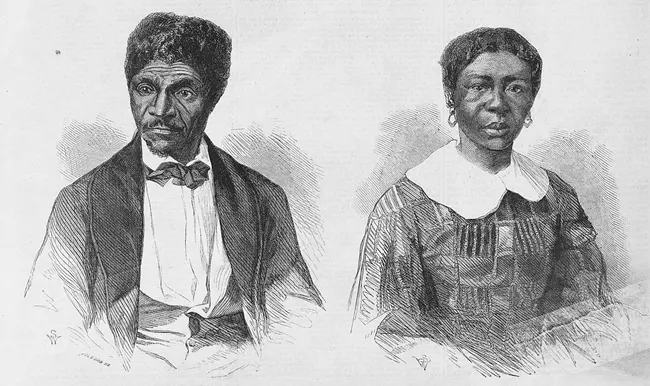
America’s rapid expansion into a world superpower, spanning from sea to shining sea, was built, in part, on two white-supremacist myths. The first held that white people were destined to inevitably own the lands of North America. Just as inevitably, the Indian nations of those lands must disappear: Manifest Destiny. The second myth held that the statement “all men are created equal” did could not apply to people of African descent, and that somehow one human being could own another in this “new nation, conceived in liberty:” Slavery. It is very obvious that the first myth fits into story of the Sandy Lake Tragedy. The deeper you look, the more obvious it becomes that the second does too.
Paap, Howard D. Red Cliff, Wisconsin a History of an Ojibwe Community ; Volume 1 The Earliest Years: the Origin to 1854. North Star Press of St. Cloud, Inc., 1854.

Satz, Ronald N. Chippewa Treaty Rights: the Reserved Rights of Wisconsin’s Chippewa Indians in Historical Perspective. University of Wisconsin Press, 1997.

Schenck, Theresa M. William W. Warren: The Life, Letters, and times of an Ojibwe Leader. Lincoln: University of Nebraska, 2007. Print.

White, Bruce. "The Regional Context of the Removal Order of 1850," in McClurken, James M. et al., Fish in the Lakes, Wild Rice, and Game in Abundance: Testimony on Behalf of Mille Lacs Ojibwe Hunting and Fishing Rights, James M. McClurken, Compiler. East Lansing, MI: Michigan State University Press, 2000.
Patreon!
May 6, 2023
Exciting news! We’ve recently upgraded the site through WordPress. For readers, this means Chequamegon History will no longer have advertisements on posts. It also means we now own the domain chequamegonhistory.com. Of course, the old chequamegonhistory.wordpress.com will still work too.
It does cost some money to maintain these upgrades, so if you are interested in kicking in, please join our Patreon at https://www.patreon.com/ChequamegonHistory We currently have one membership tier. YOU DO NOT NEED TO CONTRIBUTE TO ENJOY CHEQUAMEGON HISTORY AS YOU ALWAYS HAVE. This is merely for those who have an extra $5 a month to throw our way.

Chequamegon History has never been a money-making operation. Any proceeds in excess of website upgrade costs will be cycled back into creating more of the local history content you love.
Chequamegon History Presentation Wednesday 7/13/2022
July 11, 2022

Join us in Red Cliff Wednesday evening for a presentation on the Joseph Austrian memoirs!
Lac du Flambeau Reservation: 1842 Boundaries
October 23, 2021
“We do not feel disposed to go away into a strange & unknown country, we desire to remain where our ancestors lay & where their remains are to be seen.“
By Leo
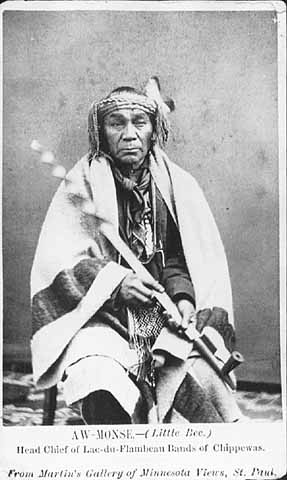
Poking through old archives, sometimes you find the best things where you wouldn’t expect to. The National Archives have been slowly digitizing its Bureau of Indian Affairs microfilms, and for several months, I have been slogging through the thousands of images from the La Pointe Agency. For a change of pace, a few days ago, I checked out the documents on the Sault Ste. Marie Agency films and got my hands on a good one.
In September of 1847, Aamoons (Little Bee) and some headmen of what had been White Crow’s (Waabishkaagaagi) Lac du Flambeau were facing a serious dilemma. They were on their way home from the annuity payment at La Pointe where the main topic of conversation would certainly have been controversy surrounding the recent treaty at Fond du Lac. Several chiefs refused to sign, and the American Fur Company’ Northern Outfit opposed it due to a controversial provision that would have established a second Ojibwe sub agency on the Mississippi River. They saw this provision as a scheme by Missisippi traders to effect the removal west of all bands east of the Mississippi. Aamoons, himself, did not initially sign the document, but his mark can be found on the back of an envelope sent from La Pointe to Washington.
Our old friend George Johnston was returning to his Sault Ste. Marie home from the annuity payments when the Lac du Flambeau men summoned him to the Turtle Portage, near today’s Mercer, Wisconsin. They presented him a map and made speeches suggesting removal would be in direct violation of promises made at the Treaty of La Pointe (1842).
Johnston did not have a position with the American Government at this time, and his trading interests in western Lake Superior were modest. However, he was well known in the country. His grandfather, Waabojiig (White Fisher), was a legendary war chief at Chequamegon, and his parents formed a powerful fur trade couple at the turn of the 19th century. In the 1820s, George served as the first Indian Office sub-agent at La Pointe under his brother-in-law Henry Rowe Schoolcraft. During this time, he developed connections with Ojibwe leaders throughout the Lake Superior country, many of whom he was related to by blood or marriage.
By 1847, Schoolcraft had remarried and left for Washington after the death of his first wife (George’s sister Jane). However, the two men continued to correspond and supply direct intelligence to each other regarding Ojibwe politics. Local Indian Agents attempted to control all communication moving to and from Washington, so in Johnston they likely saw a chance to subvert this system and press their case directly.
The document that emerged from this 174 year old meeting is notable for a few reasons. It further bolsters the argument that the Ojibwe did not view their land cessions in the 1837 and 1842 treaties as requiring them to leave their villages in the east. That point that has been argued for years, but here we have a document where the chiefs speak of specific promises. It also reinforces the notion that the various political factions among the Lake Superior chiefs were coalescing around a policy of promoting reservations as an alternative to removal. This seems obvious now, but reservations were a novel concept in the 1840s, and certainly the United States ceding land back to Indian nations east of the Mississippi would have been unheard of. Knowing this was part of the discussion in 1847 makes the Sandy Lake Tragedy, three years later, all the more tragic. The chiefs had the solution all along, and had the Government just listened to the Ojibwe, hundreds of lives would have been spared.
Finally, the document, especially the map, should be of interest to the modern Lac du Flambeau Band as it appears its reservation should be much larger, encompassing the historical villages at Turtle Portage and Trout Lake as well as Aamoons’ village at Lac du Flambeau proper. The borders also seem to approach, but not include the villages at Vieux Desert and Pelican Lake, which will be interesting to the modern Sokaogon and Lac Vieux Desert Bands.
Saut Ste. Marie
Augt 28th 1848.
Dear sir,
On reaching the turtle portage during the past fall; I was addressed by the Indians inhabiting, the Lac du Flambeau country and they presented me with a map of that region, also a petition addressed to you which I will herein insert, they were under an impression that you could do much in their behalf. The object of delineating a map is to show to the department, the tract of country they reserved for themselves, at the treaty of 1842, concluded by Robert Stuart at Lapointe during that period, and which now appears to be included in that treaty, without any reserve to the Indians of that region, and who expressly stated through me that they were willing to sell their mineral lands, but would retain the tract of country delineated on the map; This forms an important grievance in that region. I designed to have forwarded to you during the past winter their map & petition, but having mislaid it, I did not find it till this day, in an accidental manner, and I now feel that I am bound in duty to forward it to you.
The petition of the Chiefs Ahmonce, Padwaywayashe, Oshkanzhenemais & Say Jeanemay.
My Father (addressing Mr. Schoolcraft.)
Padwaywayashe rose and said, It is not I that will now speak on this occasion, it is these three old men before you, they are related to our ancestors, that man (pointing to Say Jeanemay will be their spokesman,
Sayjeanemay rose and said,
My Father, (addressing himself to Mr. Schoolcraft.)
Padwaywayahshe who has just now ceased speaking is the son of the late Kakabishin an ancient Chief who was lost many years ago in lower Wisconsain, and the white people have not as yet found him, and his Father was one of the first who received the Americans when they landed on the Island of Mackinac. Kishkeman and Kahkahbeshine are the two first chiefs that shook hands with the Americans, The Indian agent then told them that he had arrived and had come to be a friend to them, they who were living in the high mountains, and he saw that they were poor and he was come to rekindle their fire, and the American Indian Agent then gave Kish Keman a large flag and a large silver medal, and said to him, you will never meet with a bad day, the sky will always be bright before you.
My Father.
Our old chief the white crow died last dall, he went to the treaty held at St. Peters, and reached that point when the treaty was almost concluded, and he heard very little of it, and it was not him who sold our lands, it was an Indian living beyond the pillager band of Indians. We feel much grieved at heart, we are now living without a head, and had we reached St. Peters in time, the person who sold our lands would not have been permitted to do so, we should have made provision for ourselves and for our children, We do not now see the bright sky you spoke of to us, we see the return of the bad day I was in the habit of seeing before you came to renew my fire, and now it is again almost extinguished.
My Father;
We feel very much grieved; had my chief been present I should not have parted with my lands, and we find that the commissioner who treated with us, (meaning Mr. R. Stuart) has taken advantage of our ignorance, and bought our lands at his own price, and we did not sell the tract delineated on our map.
My Father;
We do not feel disposed to go away into a strange & unknown country, we desire to remain where our ancestors lay & where their remains are to be seen. We now shake hands with you hope that you will answer us soon.
Turtle portage 11th Sep; 1847.
In presence of}
Geo. Johnston.
Ahmonce his X mark
Padwaywayahshe his X mark
Oshkanzhenemay his X mark
Sayjeaneamy his X mark
To,
Henry R. Schoolcraft Esq.
Washington
N.B. All the country lying within the dotted lines embraces the country, the Chief Monsobodoe & others reserved at the Lapointe treaty and which now is embraced in the Treaty articles, and could not be misunderstood by Mr. Stuart and as I have already remarked forms an important grievance. All of which is respectfully submitted by
Respectfully
Your obt Servant
Geo. Johnston.
Henry R. Schoolcraft Esq.
Washington.
Respectfully referred from my files to the Commissioner of Indian Affairs
H.R.S
14th Feb 1849

Ahmonce (Aamoons), is found in many documents from the 1850s and 60s as the successor chief to the band once guided by his father Waabishkaagaagi (White Crow), uncle Moozobodo (Moose Muzzle), and grandfather Giishkiman (Sharpened Stone). The latter two are spelled Monsobodoe and Kishkeman in this document. Gaakaabishiinh (Kahkabeshine) “Screech Owl,” is probably the “old La Chouette” recorded in Malhiot’s Lac du Flambeau journal in the winter of 1804-05.
“The Americans when they landed on the Island of Mackinac” refers to the surrender of the British garrison at the end of the War of 1812, which is often referenced as the start of American assertions of sovereignty over the Ojibwe country. Despite Sayjeanemay’s lofty friendship rhetoric, it should be noted that many Ojibwe warriors fought with the British against the United States and political relations with the British crown and Ojibwe bands on the American side would continue for the next forty years.
The speaker who dominated the 1837 negotiations, and earned the scorn of the Lake Superior Bands, was Maajigaabaw or “La Trappe.” He, Flat Mouth, and Hole-in-the-Day, chiefs of the Mississippi and Pillager Bands in what is now Minnesota, were more inclined to sell the Wisconsin and Chippewa River basins than the bands who called that land home. This created a major rift between the Lake Superior and Mississippi Ojibwe.
Pa-dua-wa-aush (Padwaywayahshe) is listed under Aamoons’ band in the 1850 annuity roll. Say Jeanemay appears to be an English phonetic rendering of the Ojibwe pronunciation of the French name St. Germaine. A man named “St. Germaine” with no first name given appears in the same roll in Aamoons’ band. The St. Germaines were a mix-blood family with a long history in the Flambeau Country, but this man appears to be too old to be a child of Leon St. Germaine and Margaret Cadotte. From the text it appears this St. Germaine’s family affiliated with Ojibwe culture, in contrast to the Johnstons, another mix-blood family, who affiliated much more strongly with their father’s Anglo-Irish elite background. So far, I have not been able to find another mention of Oshkanzhenemay.
Moozobodo was not present at the Treaty of La Pointe (1842) as he died in 1831. Johnston may be confusing him with his brother Waabishkaagaagi
The timing of Schoolcraft’s submission of this document to the Indian Department is curious. In February 1849, a delegation of chiefs, mostly from villages near Lac du Flambeau was in Washington D.C. to petition President Polk for reservations. Schoolcraft worked to undermine this delegation. Had he instead promoted the cause of reservations over removal, one wonders if he could have intervened to prevent the Sandy Lake debacle.

Map of Lac du Flambeau Reservation as understood by Ojibwe at Treaty of La Pointe 1842. Apparently drawn from memory 11 September 1847 by Lac du Flambeau chiefs, copied and presumably labelled by George Johnston. Microfilm slide made available online by National Archives https://catalog.archives.gov/id/164363909 Image 340.

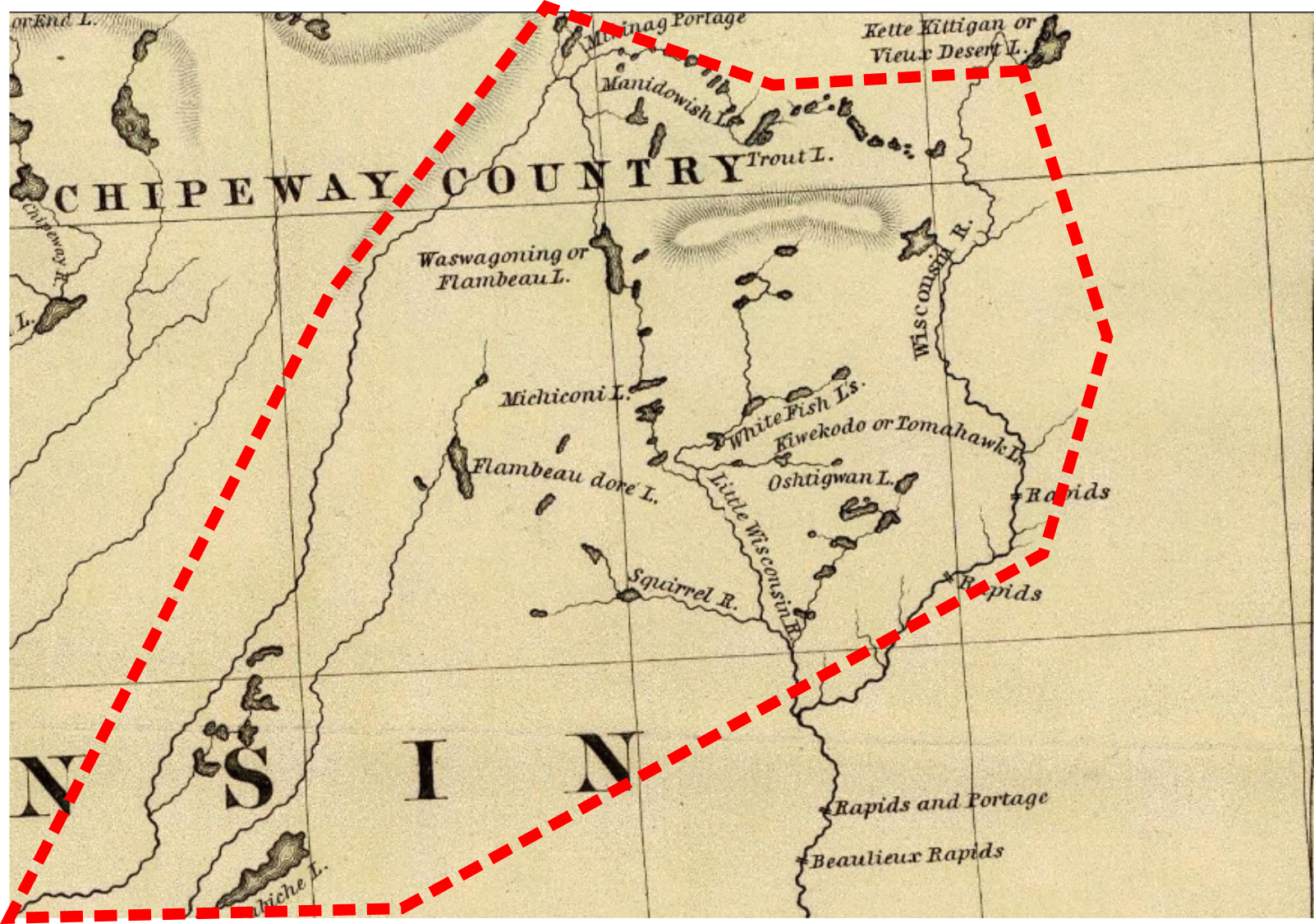

Alleged reservation boundaries agreed to in 1842 roughly superimposed over modern map. The Treaty of La Pointe (1854) called for three townships for the Lac du Flambeau Band–the white square on this map showing the modern reservation. Had the 1842 boundaries held, the reservation would have been much larger and included several popular resort communities.
Chequamegon History Collections: The 1849 Delegation
November 27, 2020

Last month, I teased the introduction of Chequamegon History Collections, a new way of presenting large groupings of primary-source transcriptions without the formatting and analysis of blog posts…just the pure, unfiltered original material! This is a project that has been in the works for a couple years, now, and coincides with the rollout of the Chequamegon History Source Archive.
The first collection currently contains 56 documents (a number that will grow as more are found) and is centered around the delegation of Lake Superior Ojibwe leaders that travelled from La Pointe to Washington D. C. in the winter of 1848-49. They were led by Gezhiiyaash (Swift Flyer) of Lac Vieux Desert and Oshkaabewis (Messenger) of Rice Lake (Oneida Co.), and represented the council of chiefs who met at La Pointe late in the summer of 1848. Their stated goal was to petition the President and Congress to allow the bands in Wisconsin and Michigan to stay in the ceded territory. However, powerful opponents (with vested interests) would attack the delegation’s purpose from the outset.
Because it failed to stop the Sandy Lake removal, and is overshadowed by the 1852 (Chief Buffalo) Washington Delegation, the 1849 effort is largely unknown. Some readers may only know of it through the widely circulated pictographic petitions that accompanied the chiefs.
We have covered certain aspects of it here on the blog.
- …a donation of twenty-four sections of land covering the graves of our fathers, our sugar orchards, and our rice lakes and rivers…
- Gezhiiyaash: Ogimaa, Diplomat, and Grandmaster of the Freemasons?
- Reconstructing the “Martell” Delegation through Newspapers
The documents include this previously published material, as well as additional newspaper articles from the time period and a whole series of letters and petitions (graciously shared by Dr. Theresa Schenck) from the Office of Indian Affairs records in the National Archives. The casual reader will find the documents undaunting as far as primary sources go, and see they paint a compelling, colorful narrative full of heroism, tragedy and comedy with a central unresolved mystery surrounding the motives of a mercurial figure by the name of John Baptiste Martell.
The documents will be of interest to scholars of the removal period, who will find some of the clearest evidence that the Lake Superior chiefs not only had a consensus policy in 1848, but that it would be articulated directly to the United States Government, only to be tragically ignored. The sources are also remarkable for their detailed descriptions of Ojibwe diplomacy and material culture. In addition to the pictographs, the reader will find explanations of the usage of wampum, bark canoes, and sacred scrolls. Finally, the documents are fascinating for the volume of material that appears in the translated words of the chiefs themselves. They forcefully defend their sovereignty, articulate their grievances, and explain how removal would disrupt their patterns of life–all in clear, powerful terms.
Chequamegon History Collections: 1849 Ojibwe Delegation to President Polk is available at this link.
Fall 2020 Update: Introducing the Source Archive
October 1, 2020
By Leo
When I started Chequamegon History in March 2013, I had the ambitious goal of adding one new post every week. It wasn’t long before one a month was more realistic, and lately the pace has been closer to one per year. I could blame life for getting in the way, but life always gets in the way.
The truth is, my interest in primary research and sharing underutilized documents is stronger than ever, but the analysis and writing required in finishing a blog post has become tedious. Therefore, to reinvigorate my contributions to the site, I’ve decided to take some new directions:
Chequamegon History Source Archive
The first new project is the Chequamegon History Source Archive (CHSA). The purpose of this page is simply to archive transcriptions of primary sources and index them in a way that they can be easily searched. The CHSA can be accessed through the main Chequamegon History website here:
At this point, the CHSA is hosted on Google Sites, rather than WordPress, so it will take you to an external site.
I encourage readers to play around with the filter and search functions to see what’s on there. As of October 1, 2020, there were seventy-one documents in the archive, but this number should increase dramatically in the coming month as I will be adding transcriptions, some of which have never appeared on Chequamegon History.

I expect the Source Archive to be of interest to academics and readers who want original source material without the analysis. For more casual readers, who like more context and narrative, these changes and adding a second website might seem unnecessary and cumbersome. Fret not! One goal of the CHSA is to eventually support increased public presentation of Chequamegon History material.
Chequamegon History Collections
For those who like extended reading, we are excited to announce the launch of Chequamegon History Collections. These free documents, ranging from pamphlet to book length, bring together primary document transcriptions around a single topic.
Look out in the coming weeks for preview posts of the two such collections already available on the CHSA: 1849 Ojibwe Delegation to President Polk (56 documents) and 1847 Treaty (62 documents).
The goal is to eventually issue more of these free collections, and if the coronavirus ever lets us, to do an associated lecture series.
Occasional Blog Posts
With all the changes, however, I won’t lose sight of the usefulness of the blog format for certain topics. These will probably be less archival in nature, and tend more toward posts relating to current events (e.g. 19th-Century Deer in the Headlights or Black Lives, White Supremacy, and Confederate Tributes: Chequamegon Connections) or highlight documents that already have a complete narrative and only need a few pictures and annotations to be accessible to most readers (e.g. Ishkigamizigedaa! Bad River Sugar Camps 1844 or Reisen in Nordamerika). Hopefully, they will come more frequently, but I’m not promising anything.
Stay healthy and send feedback,
Leo
By Leo
Promoting justice has never been the explicit goal of Chequamegon History. However, it would be historically irresponsible not to acknowledge that the stories we tell are stories of dispossession, colonialism, and white supremacy. As our country is in a moment of reckoning its racist history, we have been reflecting on how our work relates to the current national discussion, and have come up with a few connections.
Ideas of white supremacy, in relation to European-Ojibwe interactions, were ubiquitous in the early written history of Chequamegon. However, like white identity itself, supremacy was complicated and differed in significant ways from the way it works in today’s racial America. If you are interested in this large and complex topic, I tackled small parts of it in three recent posts: Race, Identity, and Citizenship in the U.S. Census… in 1850, 1823andMe™: Perceptions of Race in Pre-Civil War Chequamegon Society, and Kohl, J. G. “Remarks on the Conversion of the Canadian Indians and some Stories of Conversion” . My co-blogger Amorin Mello, has also recovered stories from the 1850s of individual racism of a more modern flavor. They deserve particular attention: 1855 Inquest on the Body of Louis Gurnoe and They Called Him “Gray Devil.”
This post will zero in on a few anecdotes of Chequamegon History dealing with Black lives, slavery, abolition, and the legacy of the Civil War era. None is a full historical treatment, but we hope this post will inspire you to investigate further:
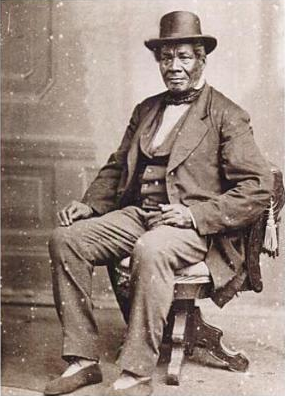
George Bonga (Wikimedia)
The Bonga Family
Pierre Bonga was a child when he arrived, with his parents, at Mackinac in 1782. Growing up on the island, it was probably inevitable that he would grow up to enter the fur trade and work for the North West Company, and the American Fur Company. It was a typical story. What was not typical of the Bongas in Anishinaabe Country, was that they were African and had come into the region enslaved to a British officer. Pierre’s parents, Jean and Marie-Jeanne Bonga obtained their freedom in 1787 and became prominent residents of Mackinac.
Pierre went west to Lake Superior, and had a career in the fur trade until his death in 1831. He was known in Ojibwe as Makadewiiyas (Black Meat, a term that when generally applied to Black people has stirred some recent controversy) and married into Ojibwe society, living mostly around Fond du Lac. I can’t say for certain if Pierre was the first person of African descent to visit western Lake Superior, but he was the first to settle and leave a lasting legacy.
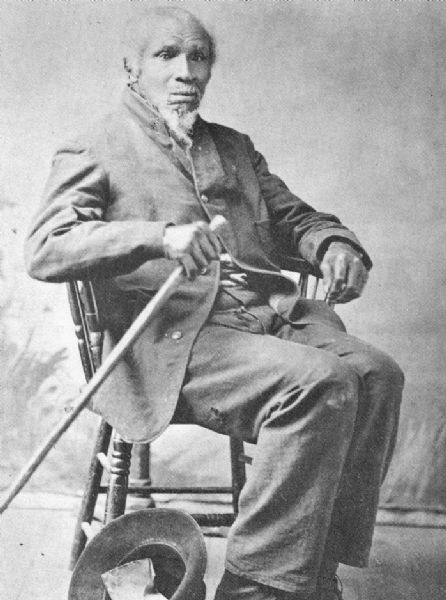
Stephen Bonga (WHS)
His children, George, Stephen, Margaret, and Jack, grew up in the Ojibwe mix-blood culture, and figure into many stories of 19th-century Lake Superior. George and Stephen were sent east to be educated, and their skills with English made them highly desirable to the United States Government as interpreters and guides. Their African ancestry was noted by outsiders, but within Lake Superior society, they were seen as members of a prominent mix-blood family.
However, the American racial system would inevitably crash up against the Bongas. In January 1856, a hearing was held in the Minnesota Territorial Legislature regarding the legislative vote from Superior County. While it appeared Marcus W. McCracken had the most votes, the seat was awarded to John Ludden on the grounds that several of the votes had been fraudulently cast. Mostly, the voters were accused of being Wisconsin residents and therefore ineligible to vote in Minnesota, but Jack Bonga’s vote was rejected for another reason:

This testimony, from Douglas County Sheriff Asa Parker, was not only inaccurate, it was dangerous. There were dire consequences to being labelled a runaway in the era of the Fugitive Slave Act. Fortunately, the record was set straight:

Having the “habits of the white man” and being “regarded as a Half-Breed” apparently did not give Jack the right to vote in Minnesota Territory, however. These words appear in the committee’s decision:

With the end of the fur trade, and the influx of American settlers in the mid 19th-century, the children of Pierre Bonga settled into new careers. George Bonga kept a lodge at Leech Lake. Stephen settled in Superior, where he would glibly nod to the bygone racial order of his youth and inform newcomers that the Bongas were the first “white” family to the live in that city. Bonga (Bunga, Bungo, Bongo) descendants live throughout Ojibwe country, in both Minnesota and Wisconsin. A story on the Bonga legacy was reported by Robin Washington of the Duluth News Tribune in 2009.
Ne na baim
I do not, Ne na baim, own a slave, and I never again expect to be a slave-holder, though it is a high moral vocation to civilize and christianize the heathen, brought to our very doors in the South by the providence of God;–still, in the deepest recesses of my conscience, from the study of the Bible, and my own experiences among Africans all my life, I am so satisfied that slavery is the school God has established for the conversion of barbarous nations, that were I an absolute Queen of these United States, my first missionary enterprise would be to send to Africa, to bring its heathen as slaves to this Christian land, and keep them in bondage until compulsory labor had tamed their beastliness, and civilization and Christianity had prepared them to return as missionaries of progress to their benighted black brethren.
~Mary Howard Schoolcraft, The Black Gauntlet

Mary Howard Schoolcraft (Find a Grave)
An Ojibwe word opens the text of a grotesque novel, The Black Gauntlet: A Tale of Plantation Life in South Carolina. Published in 1860, the book is a prime example of an “anti-Tom,” a genre of southern literature that flourished just prior to the Civil War. Anti-Toms expounded the virtues of slavery in reaction to Harriet Beecher Stowe’s popular abolitionist work, Uncle Tom’s Cabin. Still, how did Ojibwemowin get in such a book?
Ne na baim (ninaabem in the modern spelling) means “my husband,” and the author of The Black Gauntlet was none other than Mrs. Henry Rowe Schoolcraft.
Wait, wait, you might say. “Isn’t Mrs. Henry Schoolcraft” Obabaamwewe-giizhigokwe (Jane Johnston), the sister of George Johnston, and daughter of the early 19th-century Sault Ste. Marie power couple of John Johnston and Ozhaawashkodewekwe?” Readers might recognize that Mrs. Schoolcraft, granddaughter of the famous Chequamegon war chief Waabojiig, among the faces in the Chequamegon History title banner. She is recognized as one of the earliest authors American Indian literature.

Obabaamwewe-giizhigokwe or Jane Johnston Schoolcraft (Wikimedia)
By the 1850s, Henry, her husband, became something of an American celebrity for his numerous works on native culture and history. Much of the content of these works came from Jane and her mother. This included the Ojibwe traditional stories that were co-opted by Longfellow for the Song of Hiawatha.
However, Jane did not live to see all of that. She died in 1842, leaving two teenage children. Henry moved to Washington D.C. and remarried to Mary Howard. From an elite South Carolina family, the second Mrs. Schoolcraft was a fierce defender of slavery. While she was okay with using an Ojibwe term of endearment for her husband, she had no love for his Ojibwe children. Janee and John Schoolcraft would become estranged from their father as Henry’s views drifted towards those of his second wife.
Over time, Anti-Tom novels like The Black Gauntlet have faded into obscurity. However, an argument can be made that their skewed, romanticized view of the planter class and downplaying of the cruelty of slavery influenced later works of profound cultural impact such as Gone With the Wind. The full text of The Black Gauntlet is available online, but it’s a pretty dull read. Instead, I would recommend checking out the works of a certain Obabaamwewe-giizhigokwe, granddaughter of Waabojiig of Chequamegon.
Early Lake Superior Abolitionists
One might ask why Mary Schoolcraft felt it so necessary to couch her defense of slavery in such religious, virtuous terms. To understand this, we need to take a minute to understand her enemy: the Abolitionists.
Anti-slavery efforts, mainly in Black communities, had been around since colonial times, but the movement we typically associate with the term “abolitionism” dates to Boston in the early 1830s, with a small group of white radical religious zealots. For all their passion, the abolitionist message did not reach very far in these early years, even in the northern states. Surprisingly, though, it could be heard on Lake Superior, more than a thousand miles from Boston, New York, or any slave state (hundreds of miles from any free state, for that matter).
Fell into conversation with Mr. Scott on the subject of slavery, the rights of man, sin of withholding education from him, be he black or white–expansion of mind on earth, in heaven–led us to personal religion.
Edmund F. Ely, April 4, 1836, Fond du Lac (Lake Superior) Mission
In 21st-Century America, Conservatives report much higher rates of church attendance, and atheism and agnosticism are often associated with the political left. However, much of what we think of as American liberal and social reformist thought has its roots in the Second Great Awakening, a groundswell of Christian zeal in the early 19th-century. In the northeast young men and women rejected the teachings of their Calvinist Puritan ancestors that only a small preordained Elect would find salvation while the majority of humanity would be cast into the pit of fire. They found an an echo of the Declaration of Independence and latched onto the idea that all were born equal before God. This radical notion of equality, and the accompanying passion to improve the lives of the less-fortunate, would lead to movements for Abolitionism, Women’s Suffrage, Temperance, prison and asylum reform.

E. F. Ely (Duluth Public Library)
While his friends stayed in the northeast and dabbled in those movements, Edmund Ely signed up to work for the American Board of Commissioners of Foreign Missions in 1833. After all, what could be more kind and noble than saving another human’s immortal soul? Rather than send him to China or the South Pacific, however, the Board sent him to that most foreign of places, Lake Superior, to convert the Ojibwe to Protestantism.
The ABCFM missionaries labored in this region for more than three decades, and failed spectacularly in their quest for converts, the number of which could be counted on your fingers. Local Ojibwe people, it seems, did not particularly care for having their religion condemned as devil worship. And while they sometimes sought out the missionaries for Western thoughts on literacy, science, and medicine, the notion that “civilization” required changing one’s name, clothes, and way of life did not seem to hold much appeal. I highly recommend reading Ely’s journals for a window on this conflict.
That isn’t to say the missionaries had no impact on history. They did, and it was decidedly mixed. Their eastern connections allowed them to influence American policy toward the Ojibwe, their efforts laid the groundwork for future assimilation efforts like Indian boarding schools favored by the next generation of benevolent “Friends of the Indian.” Finally, as a vanguard for American settlement, they were a sort of 19th-century version of first wave gentrifiers.
On an individual level, the missionaries also have a mixed legacy. Rev. William T. Boutwell of Leech Lake left his mission for more lucrative work as an Indian trader and helped facilitate the Sandy Lake Tragedy. Rev. Sherman Hall of La Pointe tried to stay out of politics and failed his Ojibwe neighbors, while the Rev. Leonard Wheeler of Odanah took a principled stand against removal, and continued to advocate for his Ojibwe neighbors into the 1860s. Along the way, he earned unexpected friends among the Bad River leadership.
Ely followed Boutwell and washed out of missionary life, but stayed in the Lake Superior region long enough to become something of a pariah in both the Native and non-Native communities around Fond du Lac, Duluth, and Superior. He was one of the primary opponents of McCracken’s election in the McCracken-Ludden affair mentioned above, and despite his professed abolitionist sentiments, he does not appear to have made any defense of Jack Bonga’s right to vote.
The national discourse of the moment includes discussion on the nature of allyship. How can those with privilege best help those without? How do you keep the voices of well-meaning allies from drowning out or distorting the wishes of those in need of justice? (As a white man writing these words, believe me, the irony is not lost.)
Well-meaning do-gooders, prone to getting in the way, failing to listen to the real needs of the community, or worse: promoting policies that harm the communities they are intended to help have long histories in African-American and American Indian communities. White northerners need to acknowledge this and do more than smugly take glee in the destruction of symbols of the Old South. We need to consider the legacy of northern liberalism and whether it has always served good ends. We also need to realize the “Old South” is closer to home than we think.
Rice’s Confederate Cronies
A few years ago, residents of Minneapolis were surprised to find out their beloved Lake Calhoun was named after arguably the foremost political and intellectual advocate of slavery in American history. This led (with significant resistance) to bringing back the original Dakota name of the lake, Bde Maka Ska. For those who wondered how Calhoun’s name got on the lake to begin with, they may have learned that John C. Calhoun was Secretary of War during the establishment of Fort Snelling. However, they may not have realized this wasn’t an anomaly.
We northerners sometimes forget that while slavery was primarily a southern institution, its impacts on the politics and economics of the north were tremendous. Many of the political elites of the northwestern frontier, (what would become Michigan, Wisconsin, Iowa, and Minnesota) were especially sympathetic to southern interests. This started with the Jacksonian Lewis Cass, who led the first major American incursion into Lake Superior. It continued through to George W. Jones, the pro-slavery Iowa governor and senator who played a key role in the 1849 Ojibwe delegation to Washington.
This coziness between southern and western Democrats continued right up to the eve of the Civil War. In 2014, while writing the post Steamboats, Celebrities, Soo Shipping, and Superior Speculation, I stumbled across this photo:

Promoters & Proprietors of Old Superior: (Clockwise from upper left) U.S. Senator W[illiam]. A. Richardson, Sen. R[obert] M. T. Hunter, Sen. Jesse Bright, Sen. John C. Breckinridge, Benjamin Brunson, Col. John W. Fourney, Henry M. Rice (Flower, Frank A. Report of the City Statistician [1890] Digitized by Google Books)
It did come as a bit of a shock to see some of the other faces in the array. Robert M. T. Hunter of Virginia, and John C. Breckinridge of Kentucky would both go on to serve in Jefferson Davis’ cabinet. Breckinridge was also the 14th vice president of the United States, under Buchanan. Senator Jesse Bright of Ohio, also in the picture would go on to be one of the most notorious Copperheads (Northern Confederate sympathizers).
In the Steamboats post, we showed how Rice brought these well-known pro-slavery Democrats to La Pointe in 1855 to encourage them to speculate in real estate and to lobby for a federally funded military road and greater development of the region. We also covered how Breckinridge may have tried to buy Basswood Island before the Great Lakes real estate collapse in 1857. It is notable that the well-known abolitionist senator, Charles Sumner, visited the same summer, in a visit seemingly unconnected with Rice. Infamously, Sumner would go on to beaten near death by South Carolina Senator Preston Brooks on the floor of the United States Senate.
The Superior Chronicle, a brand-new newspaper in 1855, covered these dignitary visits in detail alongside editorials pushing for a military road, Rice’s pet project, from Superior to Stillwater. The Chronicle, itself also seems to have been backed by Rice. However, while the paper espoused the popular sovereignty views of the northern Democrat Stephen Douglas, Rice would go on to support Breckinridge in the election of 1860. Abraham Lincoln defeated both Breckinridge and Douglas, prompting the southern states to secede, something Rice was supportive of until 1861, before switching his allegiance to the North and preserving the Union.
“Panic of 1862”
New readers of Chequamegon History might be surprised at how Rice could get away with playing both sides, but hose who have researched his career, will know that it fits his character to a T. From the Ho-Chunk removals to the Treaty of 1847 to the Sandy Lake Tragedy, we see him operating behind the scenes like a mob boss, always appearing to have clean hands, while profiting from the tragedy of others and switching sides as the political winds shifted direction. This is evident in his actions during the Civil War.
Many readers will be aware of the U.S. Dakota War of 1862, often called the Minnesota Sioux Uprising, and how it ended with the executions of 38 Dakota people in Mankato, the largest mass execution in American history. (The Mankato hangings are one of the reasons why some are currently calling for the removal of Abraham Lincoln statues). Fewer readers, however, will be aware of the ripple effects in Ojibwe country:
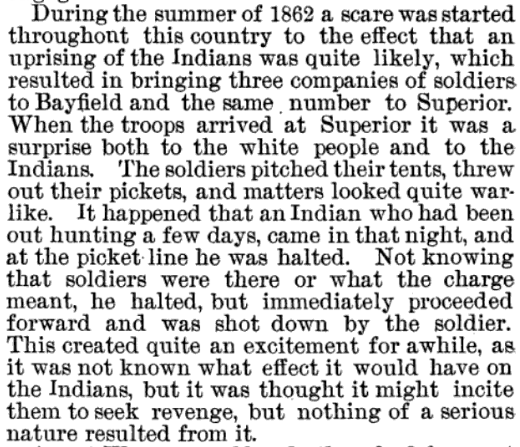
Benjamin Armstrong recalls the Panic of 1862 on page 62 of his memoir, Early Life Among the Indians. Other, more-detailed, sources say the person killed in Superior was a white teenager shot in a “friendly fire” incident.
It is true that white settlements across northern Wisconsin and Minnesota were panicked that summer. It is also true that the Ojibwe had the same grievances as the Dakota–namely that the cash-strapped wartime government chose to pay treaty annuities in paper money rather than in gold. However, aside from some rumblings in the Crow Wing country by Young Hole in the Day, the Ojibwe leadership was against a violent uprising. That did not stop whites in Superior from forming a vigilante group.
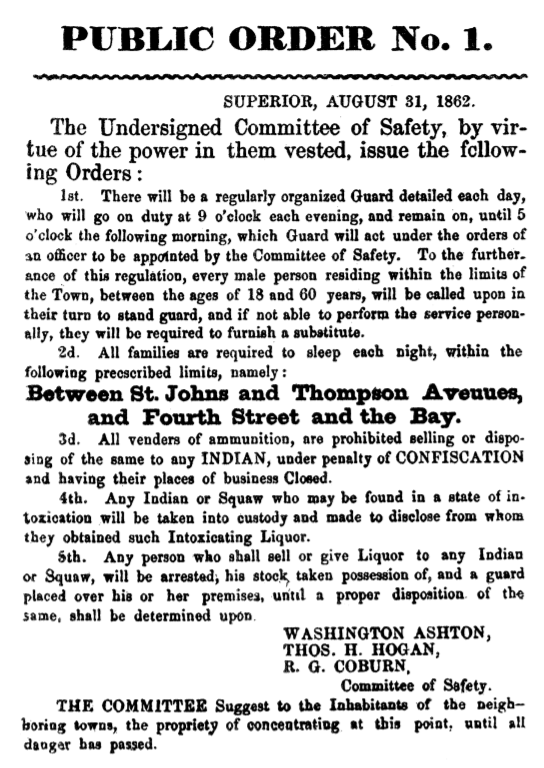
Quaife, M. M. The Panic of 1862 in Wisconsin
The Wisconsin Magazine of History , Dec., 1920, Vol. 4, No. 2 (Dec., 1920), pp.
166-195
In at least one quarter, the dispatch of troops to Bayfield was condemned as unnecessarily adding gasoline to the fire. The Reverend Leonard Wheeler of Odanah spoke out against the diversion of Union troops from the war front. He saw the motives behind the move for what they really were, a scheme by Henry Rice to get his military road.
Who to remember and who to honor?
There is no question that Henry Rice left a profound impact on history and we see his name attached to tributes, statues and place names across Minnesota and Wisconsin. I certainly do not think his legacy should be ignored, and I would encourage the reader to look deeper into his career. You may come to the conclusion, particularly after looking into his machinations during the tragic Ho-Chunk and Ojibwe removals that he, along with Alexander Ramsey, is someone who should be remembered but not necessarily honored with statues. In that vein, I have two places to start.
Should a statue of The Artist replace H. M. Rice in the National Statuary Hall? (Images: Wikimedia)
If you live in Minnesota, write to your state legislators and ask them to revive HF3979, a 2016 bill introduced by Joe Atkins. The bill died in committee but it would have replaced the Rice statue in the U. S. Capitol with one of Minneapolis’ favorite son: Prince.
Closer to home, let’s have a discussion about Rice Avenue in Bayfield. Opponents of changing the name will have a number of arguments against it, namely that Rice is arguably the founder of the city. To that I would argue that he was merely richer and better-connected, so he got the jump on the other land speculators in the region. He did not live in Bayfield, but he reaped its profits and wasn’t above provoking racial tensions in the name of greed.
So, I humbly submit for the consideration of the citizens of Bayfield, “Artishon Avenue.”

Frank Artishon was a local boy, the son of Joseph Artishon (Dejadon, Atichout, etc.) and Naawajiwanokwe (“Current Woman,” also called Adishonikwe “Artishon Woman”). While Rice diverted troops from the front, Frank joined several other young Ojibwe men from the Lake Superior country to go fight for the abolition of slavery.
Artishon was killed on one of the final and most consequential days of the Civil War: the Breakthrough at Petersburg. After a 292-day siege, the Union troops finally got through the Confederate fortifications and put Lee on the run. He would surrender to Grant a week later, effectively ending the war.
Let’s remember Rice, but let’s honor someone more deserving.
By Leo
167 years ago, to the day, the Austrian travel writer Carl Scherzer reached Stillwater in the Minnesota Territory after a week of traveling down the length of the St. Croix River in a birch bark canoe piloted by Souverain Denis and Jean Baptiste (Belanger?), two La Pointe-based voyageurs. His account follows.
Previous installments in this series, covering Scherzer’s journey from Ontonagon to the head of the Brule River via La Pointe can be found here. These posts include information on the translation process from the original German, as well as some analysis of Scherzer’s ethnocentrism in his dealings with the Ojibwe and other groups of people.
XXIII
On the La Croix River to Stillwater
Tuesday, September 28, 33 F. Cheerful, sunny but cold weather. The distance from the Bois-Brule portage to St. Croix Lake is two miles.
Since there is no connection between the Bois-Brule river and the lake, our boat and all the luggage had to be carried to the next point of embarkation. Since we could not remove such a large amount of luggage at once, it ended up taking several hours. The voyageurs had to travel back along the path three times before our last piece of baggage was brought to the other end of the portage.
The path to La Croix Lake leads through spruce forests with young birch and oak* along the fairly high ridges. All around, the horizon is obscured by these thickly wooded hills. There are several small lakes between the portage and St. Croix Lake, but they are of no importance for fishing or navigation.
 Fireweed: Epilobium angustifolium (Wikimedia)
(*Here, as in the west of Canada, we have generally come to the opinion that oak vegetation is always the natural successor of broken spruce, fir, or pine. In places where the trees are burnt, it is well known that Epilobium angustifolium is their stereotypical successor, sometimes growing from the tree before it has a chance to cool. (Agassiz, Lake Superior, 1851. p.50.))
While the Voyageurs carried the luggage and canoe to the lake, and prepared everything for embarkation, we engaged in the preparation of our meal at the western end of the Portage, barely 300 paces from the lakeshore. Fried bacon, tea, and ship’s biscuit were the simple ingredients that made it up. Benefiting from the rays of a mild September sun, we consumed our hearty meal on a natural green carpet. Many a gourmand of the French cuisine, whose taste buds neither véry nor chevet could satisfy, would have been envious.
The La Croix Lake, on which we embarked, now had a breadth of 800 feet and a length of 6 miles. This is the beginning of the La Croix River or Grande Riviere, which has its origin in a swamp on the right bank of the lake, starting in a pond-like pool. Its shores are slate, and for the most part, it is overgrown with poplars, ash, oak, elm, pine, cedar, and thuja, with an undergrowth of oak and birch.
After expanding for almost 6 miles, the lake takes on the more modest, typical shape of a river, flowing around numerous bends. It doubles along the voyage, for about 250 English miles, until at Stillwater it becomes a second lake, extending 25 Miles in length and 3/4 miles in width, finally pouring into the Mississippi at Point Douglas.
On both shores, the trees, weighed down with leaves, extend down to the reflection of the lake, turning it a dark blackish-green color, so that no surface of the valley can be discriminated. As on the Ontonagon River, trees and water gently blur into each other. At the end of this rich lake is a small island covered in deciduous lush. The eastern (left) bank forms the border between the states of Wisconsin and Minesota.
At a quarter past three, we reached the lower end of the lake, now narrowing, to form the La Croix River. In the numerous rice fields, on both shores, we encountered whole flocks of migrating ducks, assumed to be beginning their autumn journey to the mild west. However, they did not fry for us. With the many difficulties in navigating this river through the masses of rolling stone just under the surface of the deceptively dark water, the voyageurs were too preoccupied skilfully guiding the boat through the stone clockwork, to even give attention to the flocks of ducks floating like buoys among the rice fields.
The tourist who wants to benefit from the hunt is not allowed to also designate a destination. He must be content, at times, to cover less than a mile per day. If you wish to move on quickly, your shotgun will bring little duck. In any case, even despite the greatest of care, the difficulty of navigating the ship through the dangerously low water will lead to accidents, which often delay the journey for hours. We could hardly have sailed a mile down the river before we came up on a rugged rock. The canoe crashed and filled with water so quickly that we were forced to seek asylum for the night as quickly as possible, to resurrect the vehicle with waterproof black pitch for its leaks.
The ax echoed through the woods and soon delivered a rich contingent of spruce and cedar logs, so recently brightly green, and now so dead behind us. The elevated place where we pitched our tent was a small, rather dry, spot on the western bank of the river. However, we were surrounded by numerous reedy marshes, exhaling a ghastly atmosphere of cold fever over us. We were saved by the hard edge of the recent frost tempered the foul breath somewhat. At the same time, a mighty fire purified the surrounding air, and the beneficial warmth spread through our limbs.
As Souverain attempted to mend the barge, he remarked that we had been too generous in disposing of our pitch to the Indian postmaster, and that if we were to repeat accidents like the present one, we might soon find the lack of resin regrettable. From this event, the well-intentioned money-maker might learn at once: “Never give anything to your neighbor, even if it is an Indian postmaster;” but in similar tribulations, we confidently expect equal service from our neighbors.
Willing to serve, in the multiple duties that we had to do this evening, we used closely curled birch bark as a torch, and found it far more expansive and attractive than the dim light spilling from many a German student’s ceiling upon Virgil’s Aeneid or Cicero’s Respublica.
Wednesday, September 29th, 62F. Glorious sunrise. The rocks, covered with only a thin surface of water, continue to be the annoyance and concern of our boatmen, who fear the canoes will be snatched upon the sharp reefs at the slightest inattention.
If you look at these countless turrets, of all shapes and sizes, hidden by the deceptively dark color of the water, causing the ship to be in trouble every minute, you almost start to believe that each teasing stone is the avenging spirit of an Indian driven by competition with the whites out of his native wilderness. The shores remain flat, and the vegetation forming the rich forests is coniferous and deciduous in a pleasing mixture.
Towards noon, when the rocks in the river became less numerous and threatening for a stretch, and the river increased remarkably in breadth, we exchanged our hand poles for oars. Suddenly, a soaring southeast wind arose and the water moved as if in flood.* Although we were driving downstream, it whipped against our canoe, and significantly affected the speed of our oar-assisted gliding.
(*The voyageurs call the white foaming waves that form on the surface of the water in strong winds “white caps” and always know, depending on whether the wind is coming from the land or the lake at their formation, whether they make it dangerous or not for the ship.)
On a small hill, under two lonely spruce trees, we had lunch. For a time the shores were prickly, and paddy fields and young, high-stemmed cedars and thujas were the only vegetation in the surrounding landscape. In the afternoon, however, the character of the character changed completely. The river now runs through wide, neat avenues, and the brightly colored leaves of the numerous trees of the shore bathe in its dark flood.
At a distance of 200′ we noticed a broad stone jutting out of the water, decorated with several rough strokes of red color. The voyageurs told us that the Indians sometimes paint a stone, sprinkle it with tobacco, and dance and sing under it, so that the great spirit (Manitou) may send them good hunting, rich fishing, and a bountiful rice harvest.
It is obvious that the Indian pagan, like many a selfish Christian, seeks to combine a practical motivation with his devotion. It seems his crude idea of a higher being is preoccupied with the strength of sighs, the length of the prayers and the number of the sufferers, instead of the world being governed by eternal, iron laws!
We did not see a similar painted stone on the whole journey, and in spite of our most zealous inquiries, we have not been able to find any more authentic details about this type of Indian sacrificial service.
In the afternoon, we passed eight birchbark wigwams, inhabited by about twenty Indians and their families, who were busy with the rice harvest. They had a miserable appearance overall. Their bodies were covered only with ratty wool blankets and short leggings resembling a swimsuit. Two male Indians, their faces blackened with coal and lead, wore short red pants and green coats, and smoked from a long pipe made of red stone. A female was smeared red. She wore a bizarre, makeshift suit and had a kind of shield on her chest.
The more remote and ignorant the Indians are, the more they stick to their vain, colorful adornments, and thereby have the most peculiar notions of beauty and taste. Whatever they beg or catch, they then hang on their brown bodies, and will often decorate themselves with exotic feathers even more than our pretentious poets.
For example, the number of eagle feathers an Indian may carry in his hair depends on the number of enemies he has already killed. But for many a redskin, in deceitful vanity, he might wear such bloody heroes’ jewelery, when his fists were only active in knocking the ripe rice grains over the covering of his birch canoe, which doubles as a seed basket.
Souverain thought, in judging by the appearance of the Indians we passed, that they had recently celebrated la grande medecine, a feast that they usually hold in the event of illness.
The Indians consider every disease to be an evil spirit, put into the patient by a powerful magician at the instigation of some vindictive enemy. They seek the aid of another magician (conjurer, medecine-man), who by means of singing, drumming, and carousing and through the use of certain herbs, cast it out again.
This medecine-man or conjurer exerts an unrestricted influence over the gullible minds of the Indians. He is not only a helper in matters of the body, he is the oracle and counselor in all cases of life, always eager to draw the utmost profit from the superstition and suffering of his fellow-men. It is the “medecine-man” who makes the determination of the various tribes in relation to war or peace, and who reveals the best hunting and fishing grounds to unconditionally trusting questioners. He is also the one who gives every child, usually by the color of his hair, the name of an animal or plant, and receives a gift for it. Judging by the names of the various Chippewa Indians with whom we met, it does not seem much thought is given to the choice of names, as the following list shows: Little Wolf, Black Bird, Big Tortoise, Yellow Beaver, Black Cloud, Cooking Pot, etc.
As soon as a medecine-man is asked for advice, he dresses in the strangest, most comical way. This is how we viewed such a conjuror who dressed himself in the skin of a bear, with the head serving as a mask, stumbling with the monstrous claws on his wrists and ankles. The skin was also decorated with all sorts of frogs, bats, and snakes, so well prepared that their lifelike appearance produced awe in both young and old.
In his left hand, he held a ghastly rattle whose clatter, according to tradition and superstition, is one of the most powerful sounds that can move an Indian heart. He swung a magical spear with his right hand, hopping, dancing, yelling, and howling as if he himself were possessed by a bad spirit.
It is characteristic of these magicians, though great deceivers, that to a certain degree, they believe in their ceremonies and their healing power, as many modern plagiarists lie lastly to the truth and wisdom of their own selves. And while it is an imperfect method to determine where credulity ceases and fraud begins, it remains certain that these Indian doctors treat their own sick children in the same way.
Tobacco plays a major role in these incantations, and its syrup is a major ingredient in the most important and crucial ceremony.
If the patient recovers, it is, of course, a triumph of his magician over the presumed enemy. The deceiving victor, who pretends to have sucked the pain out of the sore spot, then draws out some strange object: a thorn, a stone, a fishbone, a bird’s claw, a serpent’s tooth, or a piece of wire from his mouth, which, as is self-evident, had surely been conjured into the wound of the patient by a bad spirit. Then, the deceiver, depending on his mood, will banish the evil spirit from inside his patient to the sea or to a distant mountain.
If, on the other hand, the patient dies, the spirit-conjuror attributes his death solely to being bested by his opponent’s greater magic power.*
[*First Establishment of Christianity in Ruperts Island by the Church Missionary Society. New York, 1852. — Indian tribes in Guiana by Rd. W. H. Brett. 1852.]
Although the friends and family members of the patient actively participate in all these ceremonies, their highest degree of participation comes with the feast, which always forms a major component. As with most major festivals, we do not know whether it is out of taste, or in symbolic intent,* but a dog is also slaughtered here. We saw, on a grassy portion of La Pointe Island, among the traces of broken-down Indian tents, the skeleton of a dog that had been eaten last fall on a similar occasion by wandering redskins and their entrenched swindler. Even in its skeletal form, the mark of faithful loyalty, so universal in the race of dogs, could be verified.
[*See Cadwallader Coldon, History of the five Indian nations of Canada. London 1747. P. 7.]
Around 3 o’clock we came upon rapids again, and slid down their 2’ height. It is a peculiarly strange feeling to be surrounded by jagged rocks, floating in the midst of small waterfalls, while guided by the steady hand of a river-trained voyageur, to scoot over these rocky ridges of water in swaying comfort.
At times, the canoeists had to climb into the river to clear out the most intrusive and barbarous stones. Once, as we were going down a rapids, it happened that Baptiste’s pole broke in two as he was about to cut past a boulder, and the boat was forcibly thrown to the bank. Besides the loss of the ship’s pole, we suffered no damage. However, the circumstances could not have been more favorable to overthrowing the canoe, tossing our effects into the water, and mortally wounding ourselves upon the masses of sharp rock surrounding us.
Here again, we saw quite clearly how much man is allowed to attempt and endure before he breaks his neck and legs, if only he does not otherwise engage in politics. For in the light and fragile birch bark we have gone through innumerable hazards and innumerable dangers and emerged unscathed, while many of our friends in their cozy, humble rooms were ruined by a piece of paper! – That’s why we prefer the coarse birch bark to the smooth paper and parchment …
Cases have occurred, albeit very rarely, where voyageurs have accidentally crashed from ignorance or carelessness while sliding down the rapids. Such points usually carry the name of the failed boatman.
5 o’clock in the afternoon. We encamped on a beautiful wide plateau close to the western shore of the La Croix river, with spruces, cedars, and oaks forming a background. The eastern shore is flat but densely covered with hardwood. The area in which we bivouacked is called Campement de bataille as a result of a battle which was said to have taken place there between Sioux and Chippewa Indians over a hundred years ago. Its historians were the half-decayed skulls, which according to Souverain, were found in this area in earlier times in such large numbers that can only be compared with the number of the boulders in the river.
A mild evening and clear blue sky gave our bivouac a very homey atmosphere. Imagine a tent made of white, strong canvas, supported by two tree trunks bent vertically into the ground, connected to a third lying across as a roof support, similar (only more peaceful and natural) to those tents seen all over Germany in recent years, until it was overpowered. Next to the entrance, an iron kettle hangs in a tumultuous bustle over the flickering fire. The two voyageurs in their blue blankets, stretched out on the ground with heads tucked on arms and caressed by the heat of the flame, enjoyed a hard-earned rest. The young Frenchman and the scribe of these pages, sat on a buffalo-skin under the light canvas cover, and sketched out the day’s events, with our colorful possessions scattered around, partly drying in the vicinity of the glaze, partly sheltered from the weather, and at some distance the “Bearer of All,” the brown birch-canoe, sat brutally mauled and mended on all sides, every scar a triumphant sign of its struggle with the stone army.
Thursday, September 30, 59 F. On the morning of our tri,p we had to pass several rapids, a miles long and and 1 ½’ in height. The extremely low water level makes navigation even more difficult and dangerous, because when the river is high, the boat glides amicably and safely over many of the stones, which in the current low flowage, are only softly washed over, with their pointed shapes harassing from all sides. This circumstance compels the skippers to often leap into the river, thereby easing the weight on the canoe as they waded through the crevices as best as they could.
As often as the natural conditions of the shores allowed, we left the canoe and took the most difficult parts on foot. So, we made several portages again today.
We walked for a long time through this green labyrinth, over sticks and shrubs, pondering the cause of the elegiac impression these wildernesses, for all their sublimity and natural splendor, had on us. These lonely, gloomy forests without song and scent* may well serve a modern Timon as the desired asylum for his soul searching, but for the philanthropist, who for weeks remains in this solitude, his feelings are powerfully drawn back to those flourishing feats of human activity, where the farmer reaps the blessings of his industriousness, where gentler herds graze on rich, fat pastures, where the sun bends over happy cottages, the cozy ringing of the village bell proclaims the peace of the evening, and healthy, red-cheeked strumpets make the hearts of young boys beat louder!
[*Agassiz, Lake superior. 1850. Wagner, Nordamerika, II.]
At about 12 o’clock, we stopped at the end of rapids on the east bank, and enjoyed tea, butter, ship’s biscuit! The more we were subjected to the climatic vicissitudes of our journey, the more we learned to appreciate the excellent qualities of green tea as both a quenching drink and a warming agent. Three times a day, we took hot tea. It was almost the only liquid we would consume for weeks, when the fresh water, especially near marshes, seemed to be badly influenced by the suspended vegetable matter. After all the exertion, fatigue and cold, it was always the tea that produced the rejuvenating effect on the health and had a pleasantly stimulating effect on the nerves.
 Scherzer’s preference of hard tack over la galette (lugalade, “lug,” bannock) is puzzling to say the least (Wikimedia).
Next to tea is rice and Indian corn (maize), which, due to their rich nutrients and the small amount of space they take up, are especially useful for a long life in the forest. Roasted and finely grated, corn, mixed with sugar and water, also makes a delicious drink. Ship’s biscuit has also done us excellent service. On the other hand, we have not been able to make friends with Galette, a type of bread cake made of flour, baked in a pan by the fire, and when fresh it is enjoyed and piled into the stomach in a highly indigestible manner.*
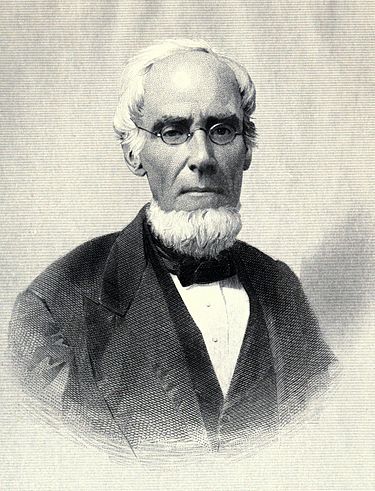 The eccentric preserved food enthusiast Gail Borden had a hit with condensed milk. Meatbiscuit never took off (Wikimedia).
[*The inventor of “Meatbiscuit,” Gail Borden of New York, was so interested in hearing about our intended trip to Central America, he sent us a box to try his new method of preparation, yet we left the same untouched, even in more serious times earlier in the trip. This meatbiscuit, as we have been informed in the printed communication, is so rich in nutrients that one tablespoon of this powdered substance, boiled in water, should be perfectly adequate for a meal.]
In the afternoon, the river increased noticeably in width, and extends to 300′. The landscape now alternates with cypress bouquets looking as if in a park, with small prairies where the Indians gather hay for the winter, and with wild elms and oak forests. Over and over, though, the landscape bears the stamp of seriousness and loneliness: all members of a green society of ennui!
The frightening rapids continue. Storms and rain join in, and significantly hinder our progress. Like scars, traces of unlucky Indian canoes past remain on some of the rocks. Souverain, wanting to propel the canoe with all his strength, in spite of the growing difficulty, bounced off the smooth stone a few times with the pole, and found himself up to his middle in the cold water. But such incidents never upset the good old man. He laughed and joked the most, where the danger seemed most serious and his situation the most uncomfortable.
The Kettle Rapids, which we passed in the evening are 9 miles long. After six o’clock, under heavy downpour, we debarked a mile from the Yellow River near a lovely sycamore forest.
 American Sycamore or Plane Tree: Platanus occidentalis.
For dinner, bacon and tea. The bottle of French brandywine had already been emptied, and the sugar had run out too, so we had to drink our tea without anything to sweeten it. As the ground was very damp, we collected the broad, dry leaves from the sycamores whose mighty branches arched over our heads, and we created a lush green covering, which greatly protected us from the damp ground.
Friday, October 1, 70° F. At about eight o’clock we crossed the Yellow River to the eastern shore, which, like most of the small rivers which flow into La Croix, has its source only a few miles inland in a small lake.
We now drove through broad, pretty channels, adorned on either side with mighty conifers, whose foliage was complemented with fall ornaments in all the nuances of color in a painter’s palette. Orange-yellow sycamores, silver poplars with greyish-red leaves, dark sumac shrubs, golden elm and white birch trees formed the background. Spruce, fir and cedar, with their unaltered green complexion, grew close to the shore. The harsh autumn wind blew through the pale young ones at the water’s edge, sending a shiver through the limbs.
Fall in these forests does not have the withering and dying appearance of the European autumn. The abundance and variety of tree species, with their wonderful foliage, in a season, characterized by weeks of serene weather, appears as nature putting on her makeup again. The trees, in their autumnal decoration, smile like children putting on new clothes.
In the afternoon, we passed six Indian tents pitched on the western shore. The men all seemed to be on the hunt because only women and children thrust their heads out of their miserable wigwams in curious apprehension. It was the barking of a few watchful dogs that betrayed the approach of our unfamiliar apparition.
All the characters we saw had a wild, naked, pathetic appearance. On a square stretched between two tents, a tuft of brown human hair, tied with a red ribbon, hung down vertically between a pair of pyramid-crossed poles. It seemed to be the scalp of a Sioux victim recently hunted down by the Chippewas. These Indian tribes are not hostile to whites, but are biased by an indescribable mistrust.
At 1 o’clock, we passed the Snake River (Kinabic) on the western side. It originates near Sandy Lake in Minesota, and flows here into the St. Croix River.
An hour later, we passed the Riviere du bois blanc, which flows in from the eastern bank, and pitched our tent near it for the night. Unless special accidents occur, tomorrow we intend to reach the first settlement of whites, the falls of St. Croix. This is probably the last night we will bivouac outdoors.
“Jean Baptiste,” cried our old canotier, after the camp had been prepared and he’d taken a good piece of chique (chewing tobacco), “Il faut nous preparer pour demain!” With this, everything was then sewn, repaired, washed, and shaved, as if it were for court or a chamber ball, but yet it was only a dark little hamlet we hoped to reach after twelve days of canoeing through the wilds of Wisconsin and Iowa.
Saturday, October 2, 72° F. As we set off on the journey, a strong southwest wind rose and rain dripped from the trees. The superstitious Canadian captains had placed much of their hopes for favorable travel on the influence of their priest’s prayers at La Pointe. As the heavens grew darker and worse for us every day, the prayers of the Franciscan friar, and notions he had forgotten us, frequently came up.
Our companion, a Catholic from southern France, likewise had a high opinion of the power of his own and bizarre prayers, and it was therefore impossible for us to express our feelings and views, or offer many remarks about the true meaning of prayer and its total ineffectiveness to sway the course of the eternal laws of nature.
The shores are quite flat again, but richly wooded with sycamores, elms and oaks, whose hearty abundance of leaves, shine as the rays of the autumn sun gleam through the branches in a splendid golden color.
At 12 o’clock, we passed the Rivière du lac des cèdres rouges, which originates ten miles west of the La Croix River in two large lakes. At one o’clock, we reached the mouth of the Riviere du soleil levant, also entering from the west shore of the La Croix.
The cheerful name of the Sunrise River derives from a most fierce battle, which took place a few years ago on its banks, when the Chippewa’s met their mortal enemies, the Sioux at sunrise. Perhaps the sun should have set rather than witness such an awful battle between human brothers.
All these tributaries are rich in precious wood species, and their connection to the “Father of the Waters” via the La Croix River will increase their importance for the timber trade of Upper Mississippi with every passing year. Already, every winter their forests are home to a quite peculiar, floating population of the so-called Lumbermen.
The greater part of the country we are traveling in is still the property of the Congress. For a century, the Government has not found it necessary to pass a law forbidding the cutting of these forests by speculators. Perhaps later settlers will only benefit if some stretches of land have already been cleared of lush forest and made easier for plowing. Likewise, such clearings appear to be of great advantage in climatic and health terms, by drying, warming, and rendering the land less polluted.
The manner in which this difficult but profitable business of the timber trade is conducted goes as follows: a speculator hires ten to twenty strong workers for the winter, buys six yoke of draft oxen, thirteen barrels of flour, ten barrels of salted meat, and a barrel of whiskey. All together, this assemblage, known as a team, moves to the wooded forests of the La Croix River. There are then some huts pitched, provisions stored and work begins.
Such a team (train) of 15 to 20 workers usually cuts 3300 spruce logs in the course of one winter. Each of these colossal tree trunks, 60 to 80′ long, is again cut into 3 parts (logs), 16 to 20′ in length. In the winter of 1851, three teams felled three million feet of spruce trees. Each of the hired woodworkers receives 26 dollars a month along with food. The supervisor (teamdriver or teamster) is paid up to 45 dollars a month.
In the course of the last year, 25 to 30 teams moved to the forests of the La Croix, and their five-to-six months of work brought 21,000,000 feet of spruce logs into the market, which, at a thousand feet to four dollars, equates to a value of $ 84,000.*
[*The traffic on all the upper rivers (Mississippi and tributaries) is on average 35 million feet of floatwood, which, marked up at St. Louis, makes a value of half a million dollars. According to a precise calculation, more than 5,000 acres of land have to be stripped each year to deliver the amount of lumber that comes out of the state of Wisconsin alone each year. See D.D. Owen’s, Geological Reconnaissance of Wisconsin. 1848 p. 71.]
In spring, these floatwoods swim with the increasing flow on the colossal waterway extending from the La Croix River to the Gulf of Mexico, sometimes singly, sometimes partly connected, to St. Louis, where in raw condition they are priced at 9 dollars per 1000 feet.
However, many are caught on the way by their own devices and prepared in various sawmills along the banks of the La Croix and Mississippi in the form of slats, moldings, shingles and staves (coopers-stuff) for a variety of construction purposes.*
[*In this footnote, Scherzer inserts a long table of lumber statistics at St. Louis. I have chosen not to translate it. ~LF]
In finished condition, 1000 feet of spruce wood in St. Louis comes to 12 dollars, that is to say, threefold what they are worth at the mouth of the La Croix River. Often 15,000,000 wooden blocks from the upper Mississippi swim down to St. Louis at the same time. It is easy to imagine what torture these wooden travelers are for the pilot, who is in a hurry from St. Paul down to the “Capital of the West.”
But these logs, which only bother navigation in the spring, must not be confused with the famous snags, those uprooted, washed-away trees that sometimes pile up in the middle of the riverbed. With their sharp branches, they are the sworn enemies of the flatboats of the Mississippi throughout the year.
At about 2 o’clock, we stopped on the western bank of La Croix near a forest cabin for a light lunch. The rain, which was now pouring down, did not even allow the benefit of a warming fire. We sent Souverain, as a scout, into the lonely dwelling, but he found such an inhospitable reception from the old matron and a scrawny barking hound, that we preferred to camp outside in spite of the storm. Then, as if the clouds had more compassion for us than the people, we soon saw bright sunbeams, and were able to make fire and boil tea.
Eventually, several people, men and children, appeared, but they all remained, as if awestruck, under the eaves of their cabin, and watched our elaborate cooking preparations from a distance. They were the first white settlers we had seen after several weeks of voyage, and therefore we were doubly sorry to find them so inhospitable. From their language and way of life, the grumpy settlers seemed to be Irish.
It is our peculiar observation that immigrants who leave their fatherland for whatever reason, in order to establish a new livelihood in quiet forest solitude far from all society, are always unsociable and averse to human needs. It seems as if, in having left the world, they have paid back their debts and obligations, and may resign themselves to all their pleasures and bounties, and no longer care to know any duty of hospitality.
At 6 o’clock in the evening, when it was already dark, we finally arrived at the last rapids of the La Croix River requiring portage. If the river is high, you can make the trip across these rapids to the village of St. Croix, two miles away, but with the river lower, the canoe heavily laden, and the night already falling, it was better to continue the journey on foot to St. Croix, or to camp the night outdoors on damp earth on the barren shore.
We moved to the dark but refreshing forest path and set off with our traveling companion. The two voyageurs, with canoes and effects, stayed behind with instructions to meet us again in the village the next morning.
When we left the river and met the fissured, miry, forest road, the landscape had already assumed a hilly character, which we saw more clearly at the top of the falls. The banks rise up to 150′ in height and were richly overgrown with ash trees, oaks, poplars, and prairie. The river itself had again expanded enormously and assumed a linear regular course. It took us almost an hour to get to the village along the muddy, deep-set forest track.
St. Croix has 600 inhabitants, whose main sources of livelihood are the several large sawmills, which are active almost all year round. One may get a sense of this activity from the fact that two thirds of the La Croix spruce logs, about 7 million feet annually, are processed in these sawmills for industry and commerce.
Since there is no inn in the village, we had to rely on the hospitality of a sawmill owner, Mr. Hungerford, and not surprisingly, a man who only works with logs and boards all year fulfills the duty of innkeeper poorly. Although inhabiting a splendid, spacious house, he directed us to the sleeping quarters (boarding-house) of his workers, which we had to share with a number of strangers.
The poor, musty air that prevailed in the room, the broad spiderwebs that hung like a festoon from one end of the room to the other, and the dirty linen set on the floor for us to cover our mattresses, soon left us longing for our camp in the airy tent, and regretting that we did not choose to camp with our fellow travelers in the forest.
We do not mean to say that we feel an aversion to living with workers. On the contrary, we lived for a considerable time in Germany, France and England among the working classes, and drew more entertainment and knowledge from them, than we did from the stiff-lipped “haute volée” of the aristocratic circles.
Rather, we cherish the most sincere respect and sympathy for those whose hard business industry alone make it possible for the man of science to indulge in nobler, more serious research; but it remains a most-embarrassing moment, after weeks of forest bivouac, to spend the first night in a narrow room with people whom one has never seen before, all coming late into the night, and with boots and spurs on their lumbering bodies unable to avoid missing our bed or avoid pulling off our thin blanket.
Sunday, October 3, 50° F. The hilly landscape rises on both sides of the river up to 200’ feet high. The rapids, whose hydropower sets the wheels of the two sawmills in motion, are about 100′ wide, and have a fall of 15′ over 2 miles. In the village itself, they barely reach the height of 5 or 6 feet.
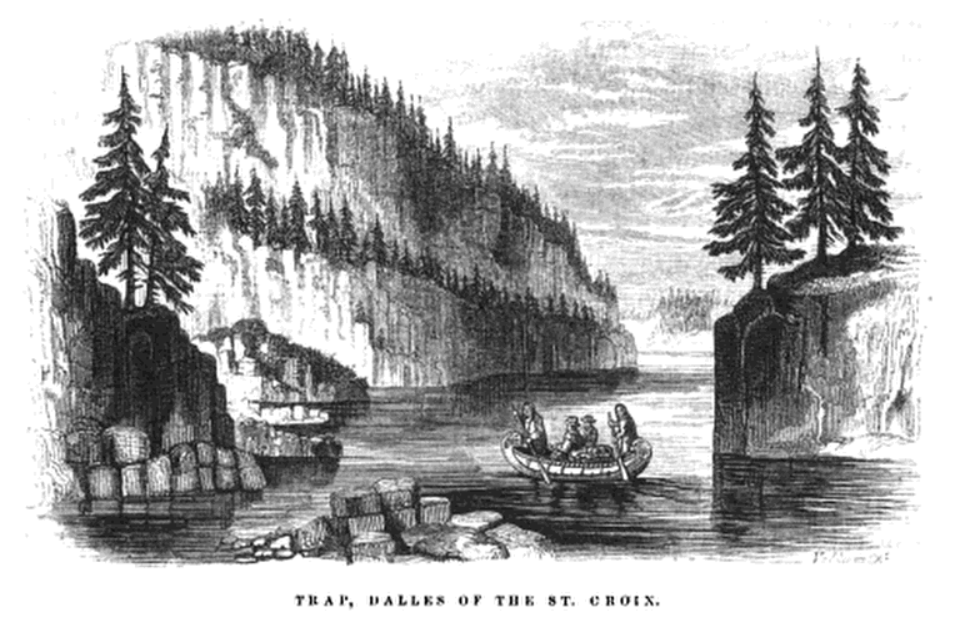
Trap, Dalles of the St. Croix (Reports of David Dale Owen)
Everywhere, the sandstone of the river-bank makes room for trap rock, which, along with scattered copper-pieces, made the inhabitants assume that rich mineral-bearing sites were to be found there. Mr. Hungerford, too, probably more for speculation than out of true conviction, propagated this speculation, and it would not surprise us to read about the “Hungerford diggings” soon, even if it were only as a bait for the Sawmill owner to sell his numerous plots of land more easily and more expensively to simple-minded emigrant ninnies.*
[*S. Owens Reports, 1839. Pag. 66.]
We took breakfast at the common table with the workers of the sawmill, of whom more than fifty were suddenly rushing to the door, and hastily sat down at the long table, when, according to American custom, a bell vigorously rung by a woman announced the readiness of breakfast, or rather gave the sign to start the fork fight.
During the whole meal, which lasted no more than ten minutes at most, there was complete silence except for the clatter of the eating utensils. The workers of the sawmill were tall, hardened figures, with intelligent faces and a decent manner. They get better food than any working class of Europe. For breakfast, fish, cold beef, fried bacon, potatoes, tea, coffee, milk and canned fruits (attacas*) were served. Similar rich, courtly meals are repeated for lunch and dinner. The wages are 30-40 dollars per month.
[*Vaccinium corymbosum grows here wild, as in all of Minesota, and with sugar, makes excellent preserves.]
We would have liked to have known more of the circumstances of St. Croix and its future, but the unkindness and inhospitable behavior of the landlord prevented us from doing so.
Within five years, a railway is to run from Chicago to St. Croix and thence to Fond du Lac, and the railway and waterway are to be so closely connected that for travelers to the states west of the Mississippi, it will be is the quickest, least expensive, and most pleasant route to Lake Superior. A small, state-of-the-art steamer, capable of carrying no more than 20 passengers, runs between here and Stillwater, a thriving town thirty miles below the falls on the western shore of St. Croix Lake. It carries provisions for the woodworkers and residents of St. Croix. His expenses amount to 6 dollars per trip.
We did not make use of this modern mode of transport, however, and preferred to continue our journey in birch-bark with our two Canadian voyageurs, who have led us so bravely and relentlessly through the wilderness of the Lake Superior for weeks.
Above the St. Croix Falls rugged, black trap masses, 3-400′ high, come to the fore. Suddenly, they give the area such a wild romantic character, one is involuntarily reminded of certain rocky parts of Saxon Switzerland or Muggendorf. Pine trees and firs are the only sparse inhabitants of these rugged masses of rock, which, however, disappear a mile’s drive downstream and make way for the usual sandstone formations and hardwood vegetation.
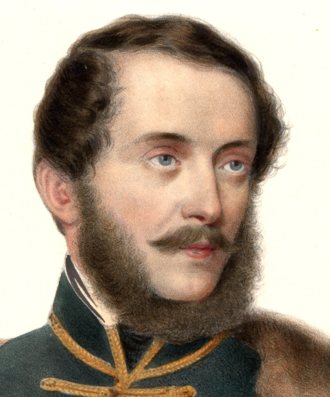 The Revolutions of 1848 loom large over the Reisen, and Scherzer seems to have been supportive of them. However, the Viennese traveler seems less enthused than the American public for nationalist movements in the Austrian Empire, like those of the Hungarian leader Lajos (Louis) Kossuth (wikimedia).
Since it was Sunday, there was a lot of life in the village and on the river. A small pirogue painted white, with the black inscription L. Kossuth, rowed by two workers, scurried past us with lightning speed. It was rapidly disappearing from our eyes, much like the enthusiasm and sympathy of the Americans for the Hungarian agitator whose name she wore.
But at the very least, it is interesting proof of how powerfully the flame of enthusiasm–before which only the ashes of disappointment are left–must have flared in all directions, when the reputation of the Hungarian ex-governor spread from the penitents of Pannonia to penetrate the lonely primeval forests of America, and his name still graces individual inscriptions, half joyful, half elegiac, on ships, shops and taverns in memory of a freedom-loving man!
 The Schanzel was a marketplace on the Vienna riverfront.
We also encountered several rafts heavily laden with sawn wood, driving down the river. They were similar to those numerous flat vessels coming out of the bustling Bavarian country, laden with wood, stones and fruits, descending the Danube to the celebrated Viennese Schanzel.
Soon, after leaving St. Croix, there appears on both sides alluvial land, which stretches along the banks and, often completely separates from them. It is richly overgrown with willows and reeds. This is the first sign that one is approaching the Mississippi and its alluvial formation. The shores, which are more obscure from both sides, retain their sandstone character and their former rich vegetation of oaks, birches, elms, poplars, and spruces, which sometimes close form a background decoration of a lovely hills.
The river, at a breadth of 300′, often stretches for miles in a perfectly straight course, and its forests are interrupted for the whole stretch from St. Croix to Stillwater (30 miles) only by a few clearings, on which are eight sawmills and the associated settler shacks.
At 5 o’clock, just as the sun was hiding behind the hills, we landed in Stillwater, at the top of La Croix Lake. The hills, thus far wooded, are now gradually replaced by sandy bluffs. The vegetation is dwarfed and less drained. Stillwater itself is terraced on a lush green ridge, like a last glimpse of flourishing nature amid the ever present sandstone.
Stillwater, in the state of Minesota, is a small village of 150 houses, founded only in 1846, with 1200 inhabitants, 3 Protestant and 1 Catholic churches, 4 doctors, 1 school and 2 taverns. Its main source of income is the timber trade with the Upper Missisippi. There was also a lot of tourism, and the two inns were crowded with guests.
Since Stillwater is the only place within many miles, where there are doctors and druggists, and at the same time a fairly healthy climate prevails. All types of fever, chest and lung patients from the various environments seek asylum here for their sufferings. It creates a society, which one encounters in the inns and on the streets, a very eerie, hospital-like appearance, and reminds one of those innumerable curiosities of Germany, created by unscrupulous physicians, who for their own medical glory, bring together their incurable patients and do nothing for them.
Only with difficulty, did we succeed in finding a place in the Eaglehouse for our numerous effects. Our guide, so in need of rest, was put off until the night when, at nightfall, the crowded assembly in the smoke-filled inn (parlor) would leave and make room for a bed of straw.
For the time being we leaned into a free corner, and tried to make friends with the colorful company with which we likely had to spend the next night. What a strange assemblage of costumes, figures and faces to observe!
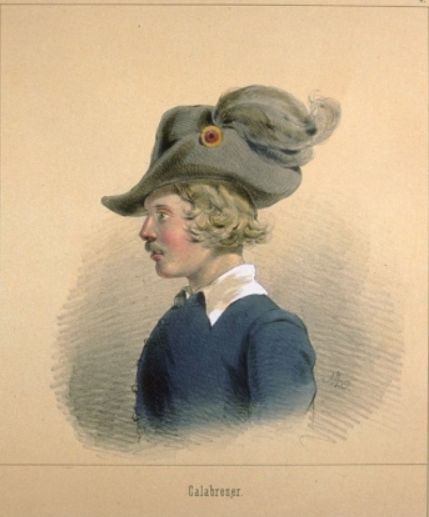 A Calabraser (Calabrian) hat.
Raw, weathered figures in red and blue jackets with wild, comical beards and tangled drooping hair sat silently around a glowing iron stove, with their black and white Calabrians carelessly pressed into the face, and their feet laid over each other, or pressed against the wall.
Most of them seemed absorbed in a prolific speculation, and moved, as if ill-tempered by the long absence of a suggestive idea. The thick tobacco ball moved back and forth between the cheeks, like the Austrian soldier running down the lanes, biting a bullet in his mouth to soothe his excitement. Sometimes, one would go out to the tavern (bar-room), choke down a glass of whiskey or portwine, and then return to his former silent position by the stove.
How unusual this gathering must have seemed to us, compared with a cheerful Sunday circle of German peasants in a village pub, where the glasses sound, fiddle stirs, and song and dance create pleasure and joy.
The silent, gloomy tone and rude manners that made the atmosphere in the dining-room at Stillwater so heavy and oppressive, are by no means a mere accidental phenomenon. They are a feature of the whole American peasantry of the West, and with certain modifications are typical of the American character in general. The American, is not, as we sometimes hold him up to be, the ideal of amiability, but as we generally meet him in public transport, he is a frosty, unmanly and, to put it simply, a boring figure. He has a myriad of small bad habits that often make his company unsettling.
But in order to judge a nation justly, one must not regard it according to the more or less pleasant qualities of the individual. One must regard them in their totality as a people: in their political and social development. There are nations where the individuals seem to be very amiable and easy-going, but as a nation they are immature, weak-minded, cowardly, and blasé, e.g. the French, the Spaniards, the Italians, and the Poles.
On the other hand, we find peoples, who as individuals, come across as odd, unsociable, dry, and selfish, while as a nation they are free-spirited, enthusiastic about progress, self-confident. Among these are the Americans.
And that is why every friend of progress and humanity will pay the deepest respect and warmest appreciation, to the American people, with their great patriotism, with their noble national pride, their practical execution of equality of religion and their restless struggles for independence. —- But, now we return to the bitterly dull inn of Stillwater.
After eleven o’clock at night, when the meditating assembly still did not want to disperse (which, incidentally, seems to prove that in America too, the good get-rich-quick ideas cause lengthy headaches). Drowsily cowering in the corner, we were finally approached by the host who offered us a place to sleep in a room on the upper floor.
Along with our traveling companion, we were pleasantly surprised by the elegant furnishing of this room, so pleasingly contrasting with the room below. We immediately took possession of the mattresses and spread them out over the whole width of the room in the name of “our sleepy majesties.” It is a pleasant feeling, indeed, after weeks of uncomfortable, hard camp in the damp forest, to be able to spread one’s tired dull limbs carelessly and unobtrusively on a soft, broad sleeping surface.
Unfortunately, we were soon informed that several other guests would share this improvised camp with us, and in less than a quarter of an hour there were already five guests, stripped bare of heavy boots, with all the dirt and sweat of the day beside us on the ground. So, there were seven people in total. To add to the eeriness of that night, at the other end of the room, on a divan, lay a sick man, whose haggard lungs breathed with all the effort of one who had spent hours running.
At about 1 o’clock, the host shone in the doorway with a lantern, and shouted in that frightened voice with which it is customary to proclaim a conflagration: “Steamboat! Steamboat!” There was, however, no fire, but only steam, which brought us into a state of alarm, the steam of a boat which was just arriving with passengers from St. Paul, only to drive off at once to Galena. Since none of the seven sleepers present appeared to be on their journey, our room soon became completely dark again.
All at once, a passenger who had likely just arrived by steamboat from St. Paul, rushed into the room, disrobed and, without much asking, lay in the middle of us. Now it had grown so tight in that room that had once been so comfortable, it was almost impossible to move without hitting a part of a neighbor’s body. There could be no question of a refreshing sleep. It was a a trying stretch, yearning for the dawn.
Monday, October 4, 7 o’clock, 57° F. From Stillwater to St. Paul, 18 miles to the west, a comfortable carriage travels daily. Before boarding this wagon to continue our journey to the capital of Minesota, also the largest city in the Territory, where we hoped to recover in a comfortable hotel, we still had to arrange two matters. We had to get rid of the canoes and useless utensils, and finally to say goodbye to our two faithful canoemen with a well-deserved reward for their services.
The former was quicker and easier than the latter. We gave away all the small items that were useful to us in our forest bivouacs and sold the birch bark for a third of the purchase price. It was tougher for us to split from the brave voyageurs with whom we had been in such intimate conversation for weeks.
Since we had been on the road far longer than we expected, owing to the bad weather, their wages were a rather considerable sum, which took them by surprise. The old man smiled and did not want to believe his eyes when he saw the many golden one-dollar pieces falling into his hand. “Mais c’est trop! C’est trop!” he shouted continually, until the whole sum was paid out, and then, without counting them, he shoved the pieces of gold joyfully into his trouser pocket.
We shook hands with both of them, drove on to St. Paul, and our thoughts were soon busy with a hundred new, interesting objects. But old steadfast Souverain, this staid, strict-minded character, who could neither read nor write, will always be a pleasant picture in our memory whenever we encounter in the social life of modern world those whose wisdom and deeds fail to match their education.
S.
 Chequamegon History