Ruelle Chagouamigon du Vieux-Montréal
October 25, 2025
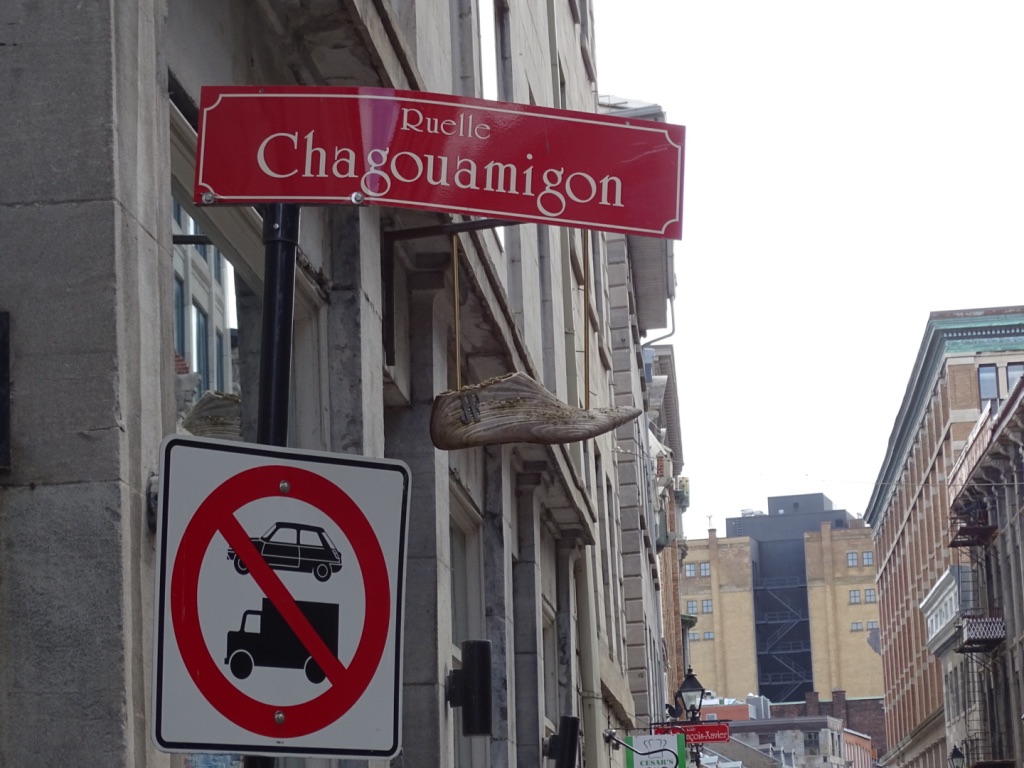
Photo taken by David Trudeau at Ruelle Chagouamigon, 2019.
A Street named for Chequamegon in Montreal.
Guest post by David Trudeau
French North America at the dawn of the 18th century was a vast network of French and Indigenous trading outposts spanning the entire Mississippi and St. Lawrence-Great Lakes watersheds with Montreal as its main hub. Chequamegon was a part of that network, and so notable, that a street in old Montreal was called “Rue Chagouamigon.”
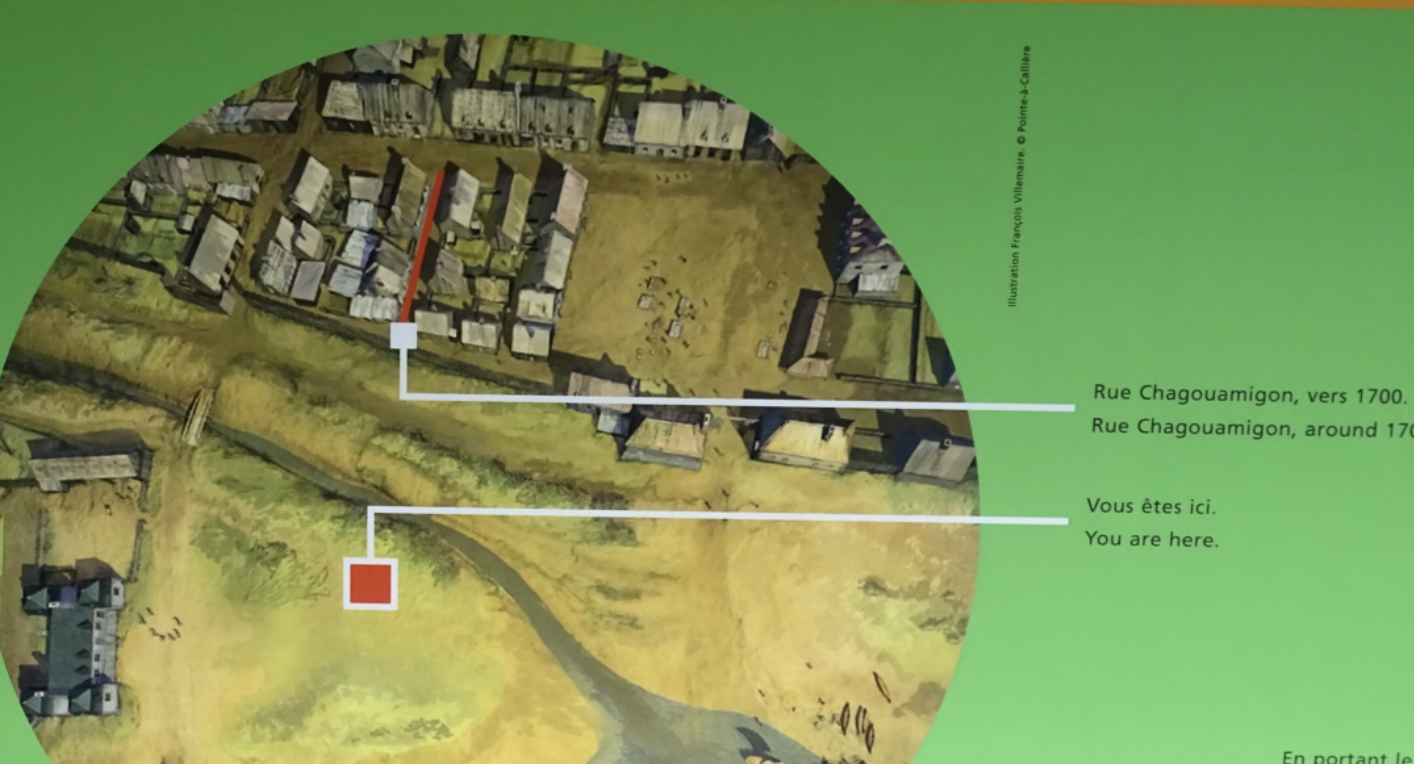
Model of Rue Chagouamigon circa 1700. Photo taken by David Trudeau at the Pointe-à-Callière Museum, 2019.
Madeline Island is approximately 1200 miles from Montreal, a journey of about 6 hours by plane — or one of up to two months by canoe and portage across Superior and Huron and down the Ottawa river. In the days of the voyageurs, the trip of trade goods to Lapointe and the return trip to Montreal of bundled beaver pelts was typically a once a season event. Circa 1700 “Chagouamigon” was a well enough known place in old Montreal to merit a street name.
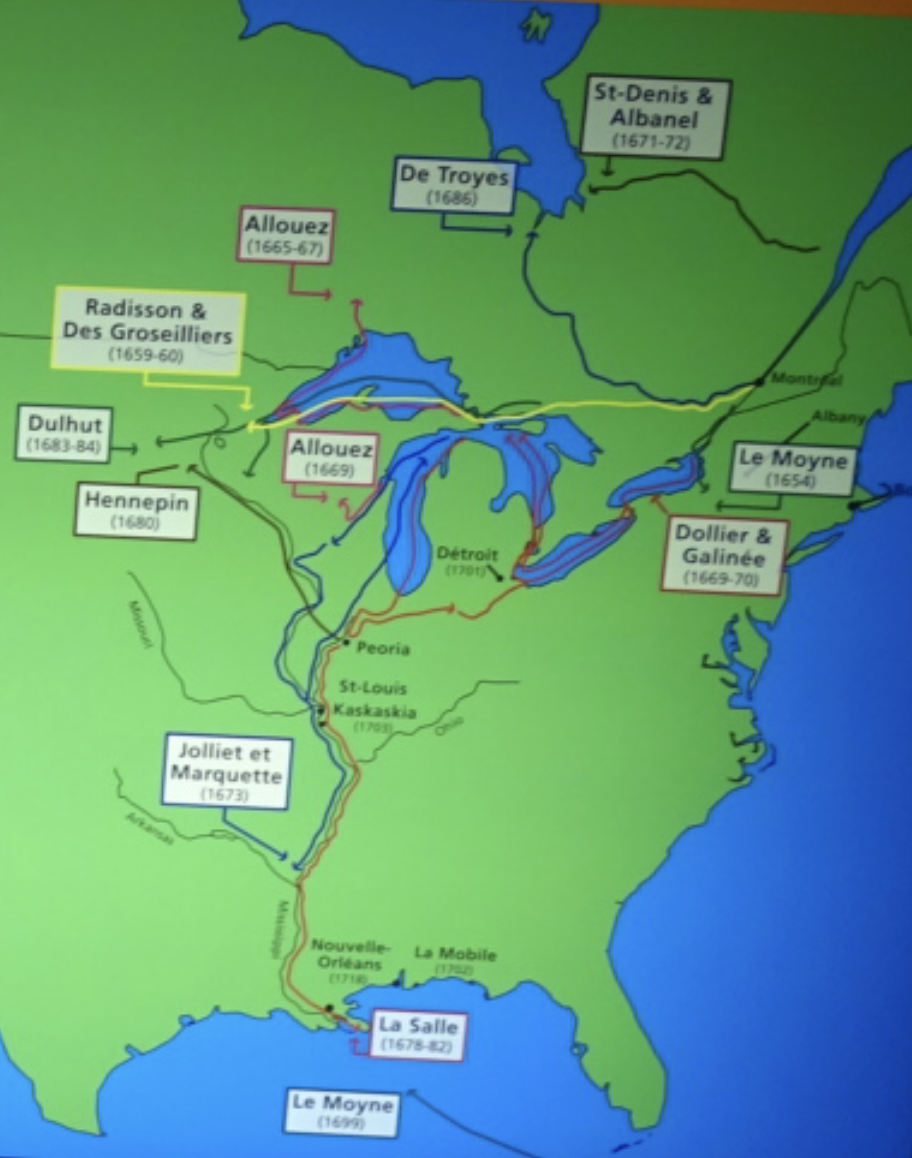
Map of Montreal’s fur trade routes circa late 1600s. Photo taken by David Trudeau at the Pointe-à-Callière Museum, 2019.
The place name is French spelling of the Ojibwe term for “soft beaver dam”1 and a reference to Chequamegon point, so named by a local Ojibwe legend about a giant beaver dam (Long Island) and how the Apostle Islands archipelago was created. Was the name of the street whimsically chosen because of its beaver reference or was it more likely a reference to a place becoming well known to the fur trade. Today the street still exists in the in Vieux-Montreal, the old town. Time has changed its route to a mere one block, and it is now known as a “Ruelle,” a little street. There is a special mention of Ruelle Chagouamigon in the Pointe-à-Callière Museum, built on and incorporating the archaeologic remains of Ville-Marie, the beginnings of Montreal started in 1642.
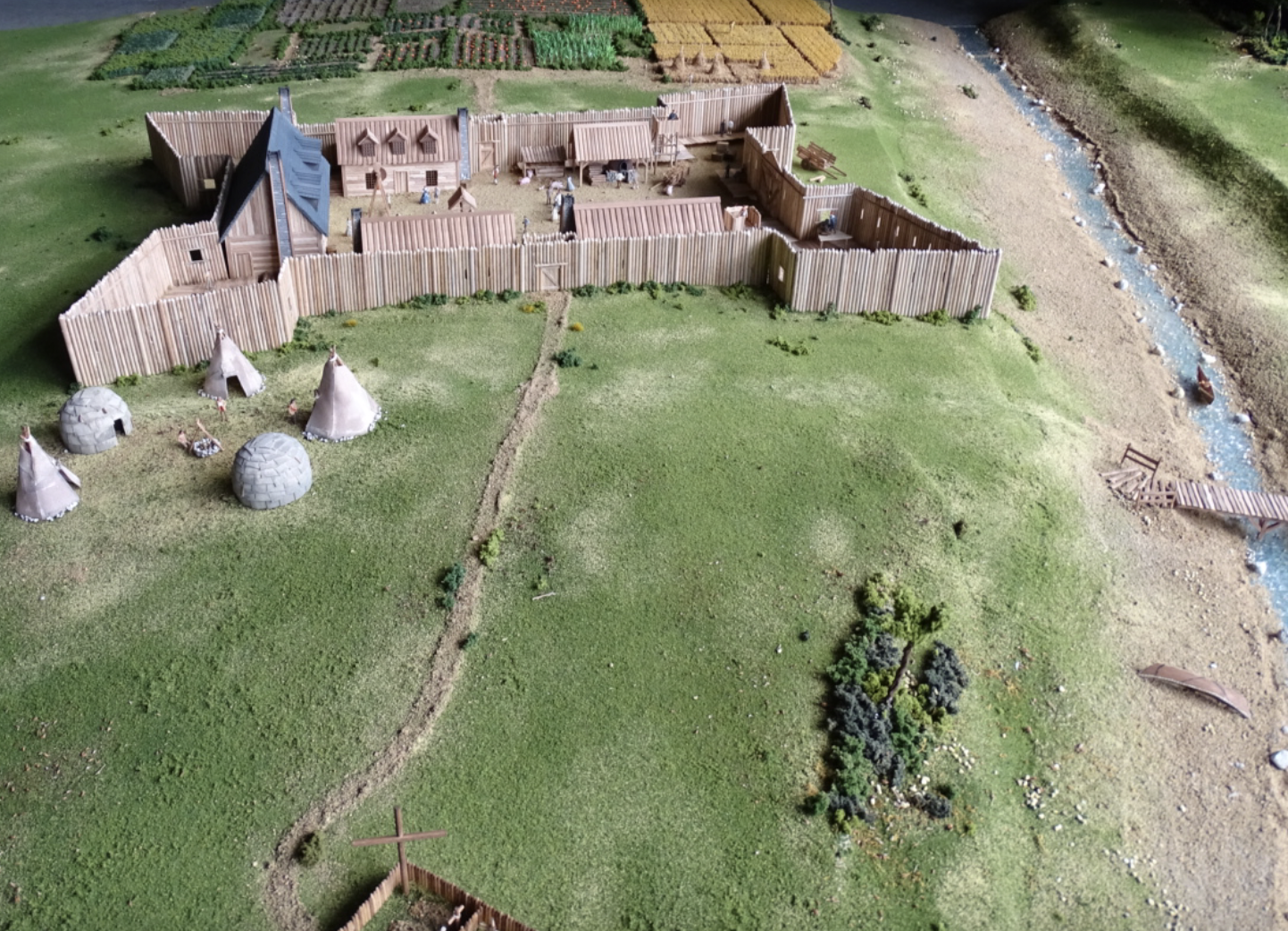
Model of Ville Marie circa 1643. Photo taken by David Trudeau at the Pointe-à-Callière Museum, 2019.

Photo of wife taken by David Trudeau at Ruelle Chagouamigon, 2019.
As I visited the Pointe-à-Callière in May of 2019, researching and learning about my French colonial ancestors who were among Montreal’s founders, I was thrilled to find the exhibit showing the street. I was equally thrilled to walk right up to it as it exists today, and take a photo of my wife Karen on the street. Karen is not a big person, but the tiny narrow street makes her look enormous.

Excavated timbers beneath the Pointe-à-Callière Museum. Photo taken by Amorin Mello, 2023.
Montreal began as a mission outpost, Ville-Marie, founded in 1642 by a lay missionary society, with the objective of building a hospital to care for Indigenous people, and establishing a mission. Many of the missions early contacts and converts were Algonquin speakers. The excavations inside the museum show original posts and timbers of Ville-Marie likely laid out by carpenter Gilbert Barbier, my 8x great grandfather.2
Ville-Marie’s existence was touch and go because of constant predation by Mohawk Haudenosaunee. By 1685, Ville-Marie was home to some 600 colonists, most of them living in modest wooden houses. Ville-Marie became a centre for the fur trade and a base for further exploration3. Etienne Truteau, my 7x great grandfather, arrived in 1659, and had 13 sons with his wife Adrianne Barbier. Many of their boys worked the fur trade routes when they were younger – usually from age 15 to 25. They saved up and bought land and married about age 25.
~ Quebec Commission de Toponymie
~ Montreal.ca
~ WalkMontreal.com
Their son, my 6x great grandfather Pierre, spent 10 years contracted between Montreal, Mackinac and Green Bay. On July 31, 16884, Pierre Truteau dit Barbier (1669-1740), the second son of Etienne, joined Nicolas Perrot for the Outaouais (Ottawa), which probably led him to Baie des Puants (Green Bay, Wisconsin)5. Alone or with other companions, over the next decade, Pierre contracted no less than seven times to equip himself for trading, going to the Maskutins (Sac) of western Lake Michigan, the Huron of Lake Huron and the Ottawa at Michilimackinac. He abandoned the fur trade in 1698 to marry and cultivate the land of his grandfather Gilbert Barbier at Côte Saint-François (Longue-Pointe).6 His nephew Toussaint (1716-1782), a blacksmith and cutter by trade, committed for a period of three years in 17367 to Messrs De la Ronde and Guillory, to go to the post of “Chagouamigon” and help paddle a canoe of trade goods up to the De la Ronde post on Madeline Island and bring it down again loaded with furs. He traveled again in 17488 for the society of Sieurs De Clignancourt, L’Échelle and Monière, on Lake Michigan, namely to the post at Baie des Puants, as part of a group of thirty-eight men in six canoes.9
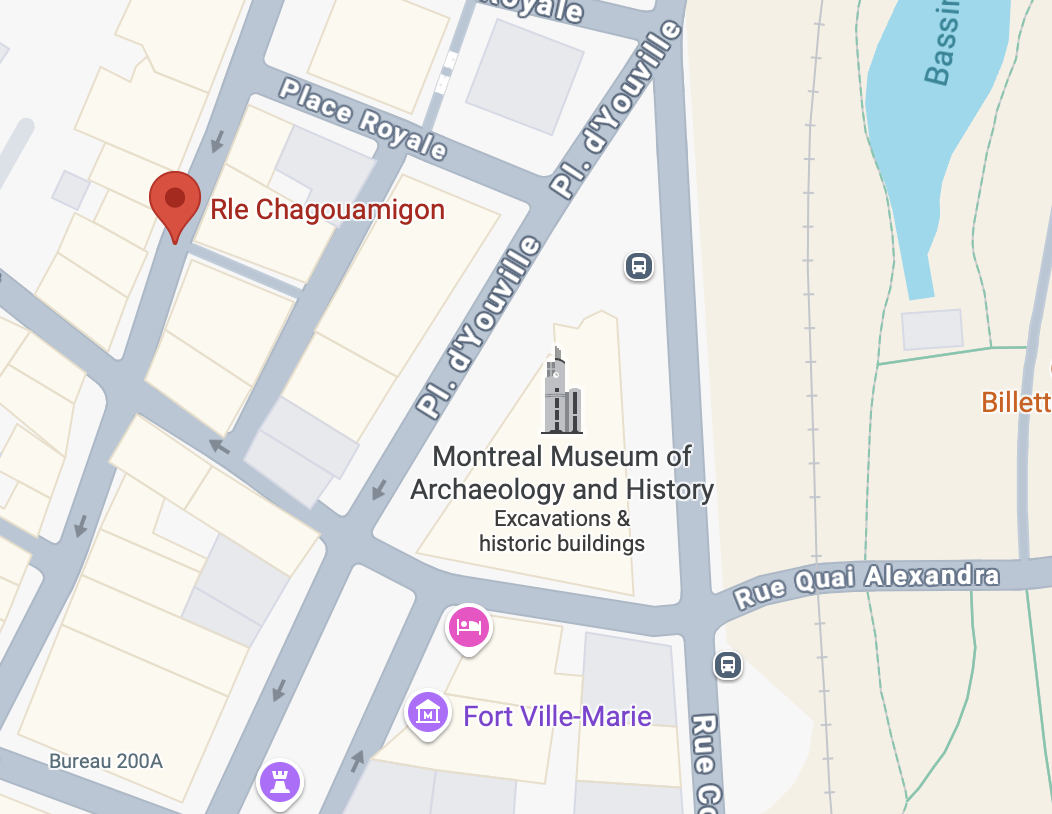
Google Map of Ruelle Chagouamigon and the Pointe-à-Callière Museum in Vieux-Montréal.

La ruelle Chagouamigon (Ebook)
Histoire de Montréal: édition 375e anniversaire de la fondation de Montréal by Yvon Codère, 2016.
Today Montreal is a huge metro area, but in its oldest part there is a tiny street, a block long and so narrow that it is restricted from cars and trucks. The street commemorates Montreal’s historic connections to Chequamegon Bay. And as a personal note, there are also traces there of my French ancestors who arrived almost 400 years ago, some of whom made the long paddle with many portages up the Ottawa and across the great lakes to Madeline Island. They were able to do so only because their friends and trading partners, the Algonkian peoples, showed them the way to survive on the journey, and provided them with food and canoes. I find it amazing that I live in the Chequamegon Bay area and share a surname with long ago Montreal ancestors who are connected to a tiny street there named for the area I call home.
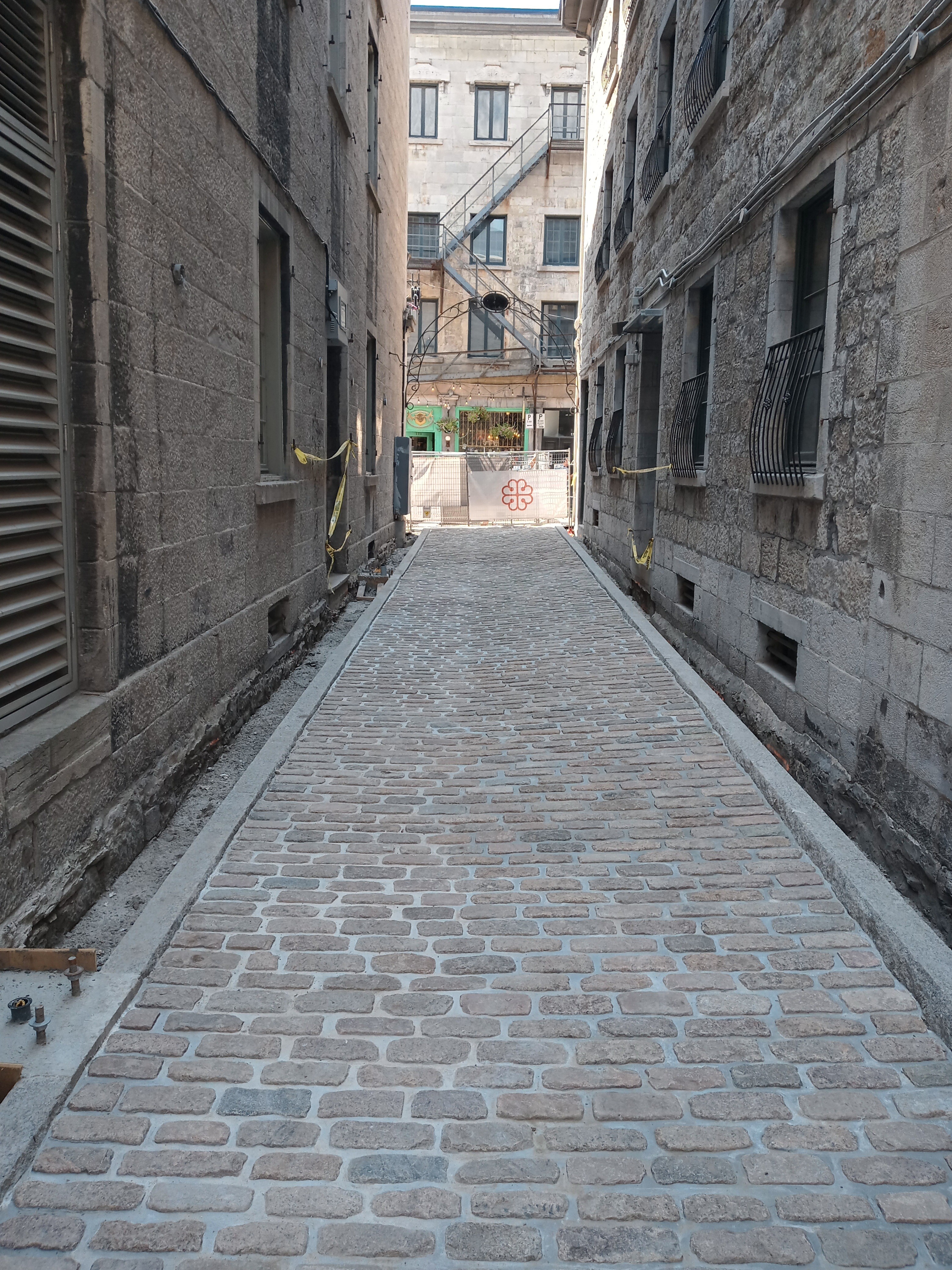
Ruelle Chagouamigon after being completely excavated for archaeological research and rebuilt. Photo taken by Francis Hervieux of the Pointe-à-Callière Museum in 2025.
—————
1 https://chequamegonhistory.com/about/.
2 Dollier de Casson, François (1636-1702) A History of Montreal 1640—1672 from the French of Dollier de Casson, translated and edited with a Life of the Author by Ralph Flenly, 1928. London & Toronto, J. M. Dent & sons, Ltd.; New York, E. P. Dutton & co. p. 103.
3 Miquelon, Dale. “Ville-Marie (Colony)“. The Canadian Encyclopedia. Archived from the original on December 3, 2013. Retrieved 22 October 2025.
4 Notary Antoine Adhémar, Library and Archives nationales du Québec (BANQ).
5 Claude Perrault “PERROT, NICOLAS”, in Dictionary of Canadian Biography, vol. 2, Laval University / University of Toronto, 2003.
6 Louise Trudeau “The History Page” Voyageur Sons Le Charpente December Volume 10 No 3, 2017.
7 Notary François Le Pallieur, Minute # 1022, Library and Archives nationales du Québec (BANQ).
8 Notary Louis-Claude Danré of Blanzy, BANQ.
9 Notary Louis-Claude Danré of Blanzy, BANQ.
 Chequamegon History