Judge Bell Incidents: King No More
October 16, 2025
Collected & edited by Amorin Mello
This post is the second of a series featuring newspaper items about La Pointe’s infamous Judge John William Bell. Today we explore obituaries of Judge Bell that described his life at La Pointe. Future posts of this series will feature articles about the late Judge Bell written by his son-in-law George Francis Thomas née Gilbert Fayette Thomas a.k.a G.F.T.
… continued from King of the Apostle Islands.

Wisconsin State Journal
Saturday, December 31, 1887, Page 1
King of the Apostle Islands No More
ASHLAND, Wis., Dec. 31. – Judge Bell, known far and wide as “King of the Apostle Islands,” died yesterday. For nearly half a century he governed what was practically a little monarchy in the wilderness. He was 83 years old, and was the oldest living settler on the historic spot where Marquette founded his mission, two hundred years ago.

The Saint Paul Globe
Saturday, December 31, 1887, Page 1
KING OF THE ISLANDS.
Judge Bell,
“King of the Apostle Islands,”
Has Given Up His Crown.
The Oldest Living Pioneer
of the Historic Spot
Dies in Apparent Poverty,
Special to the Globe.

San Francisco Examiner
Wednesday, January 3, 1888, Page 2
ASHLAND, Wis., – “The king of the Apostle islands” is dead. He passed away at an early hour this morning at La Pointe, on Madeline, the largest of the group, where he has lived for forty-four years, the oldest living pioneer of the historic spot where Pere Marquette founded his little Indian mission 200 years ago. Judge Bell was a character in the early history of the Lake Superior region, known far and wide as the “king” of the country known as La Pointe, which was organized in 1846 by Judge Bell. The area of the country was as large as many states of the Union, its borders including nearly all of Wisconsin north of the Chippewa river, the Apostle islands and to an almost
ENDLESS DISTANCE WEST.

Wisconsin Historical Society’s copy of Lyman Warren’s 1834 “Map of La Pointe” from the American Fur Company Papers at New York Historical Society.
The population of whites consisted only of a small handful of French voyagers, traders and trappers, most of whom rendezvous at La Pointe. The country was hardly known by the state, and Bell’s county was practically a young monarchy. He bossed everything and everybody, but in such a way that every Indian and every white was his friend and follower. Judge Bell came here in 1832, from Canada, in the employ of the American Fur company, which at that time was a power here. He had rarely left the island, except in years gone by to make occasional pilgrimages through the settlements. During his eventful life he held every office in the county, and for many years, served as county judge. He was a man of great native ability, possessed of a courage that controlled the rough element which surrounded him in the early days when there was no law except his will. He was honest, fearless,
A NATURAL-BORN RULER
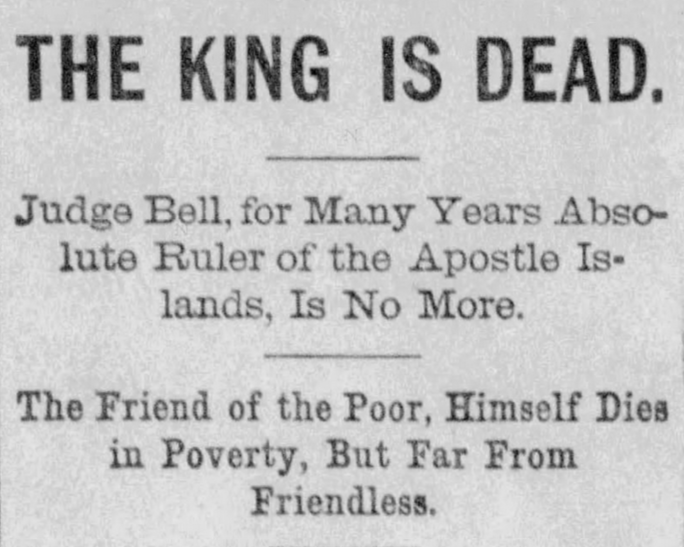
Fargo Daily Argus
Sunday, January 1, 1888, Page 1
of men, and through his efforts the poor and needy were cared for, and in no instance did he fail to befriend them. For this reason among those who survive him, and who lived in the good old pioneer days, all were his firm friends. His power departed only when the advance guard of civilization reached the great inland sea, through the medium of the iron horse, and opened a new era in the history of the new Wisconsin. For many years he has been old and feeble and has suffered for the comforts of life, having become a charge upon the town. He squandered thousands for the people and died poor but not friendless. He was eighty-three years of age.

The Ashland News
Wednesday, January 4, 1888, Page 7
ANOTHER PIONEER GONE
DEATH OF “SQUIRE” BELL, “THE KING OF LAPOINTE.”
Sketch of the Life of the Oldest Settler in the Lake Superior Region.
He comes to La Pointe With John Jacob Astor for the American Fur Co.
Judge John W. Bell died Friday morning at seven o’clock at his home at La Pointe, on Madeline Island, aged eighty-four years.
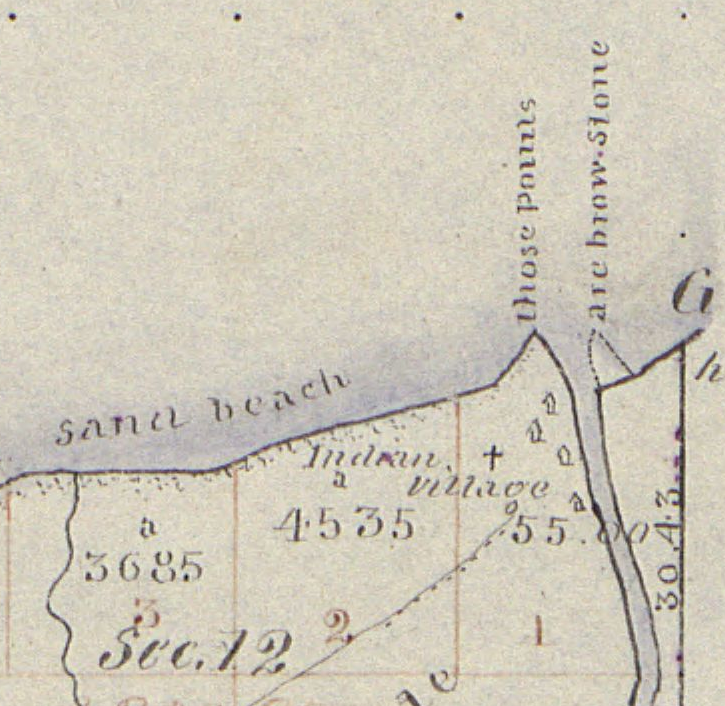
1847 PLSS survey map detailing the mouth of Iron River at what is now Silver City, Michigan along the east entrance to the Porcupine Mountains.
John W. Bell was born in New York City on May 3, 1803, and was consequently eighty-four years and seven months old. He learnt the trade of a cooper, and in this capacity in the year 1835, he came to the Lake superior country for the United States Fur company. He first settled at the mouth of Iron river, in Michigan, about twenty miles west of Ontonagon. Here, at that time, was one of the principal trading and fishing posts of the American Fur company, La Pointe being its headquarters. Remaining at Iron river for a few years, he came to La Pointe about 1840, where he continued to reside till the time of his death.

1845 United States map by John Dower, with the northernmost area of Wisconsin Territory that became La Pointe County.
At the time he came upon this lake its shores were an unbroken wilderness. At the Sault was a United States fort, but from the foot of Lake Superior to the Pacific ocean, no white settlement existed. The American and Northwest Fur companies were lords of this vast empire, and their trading posts and a few mission stations connected with them, held control. A small detachment of United States soldiers formed the distant outposts of Ft. Snelling. The state of Wisconsin had not been organized. No municipal government existed upon this lake. It was many years before Wisconsin was organized.
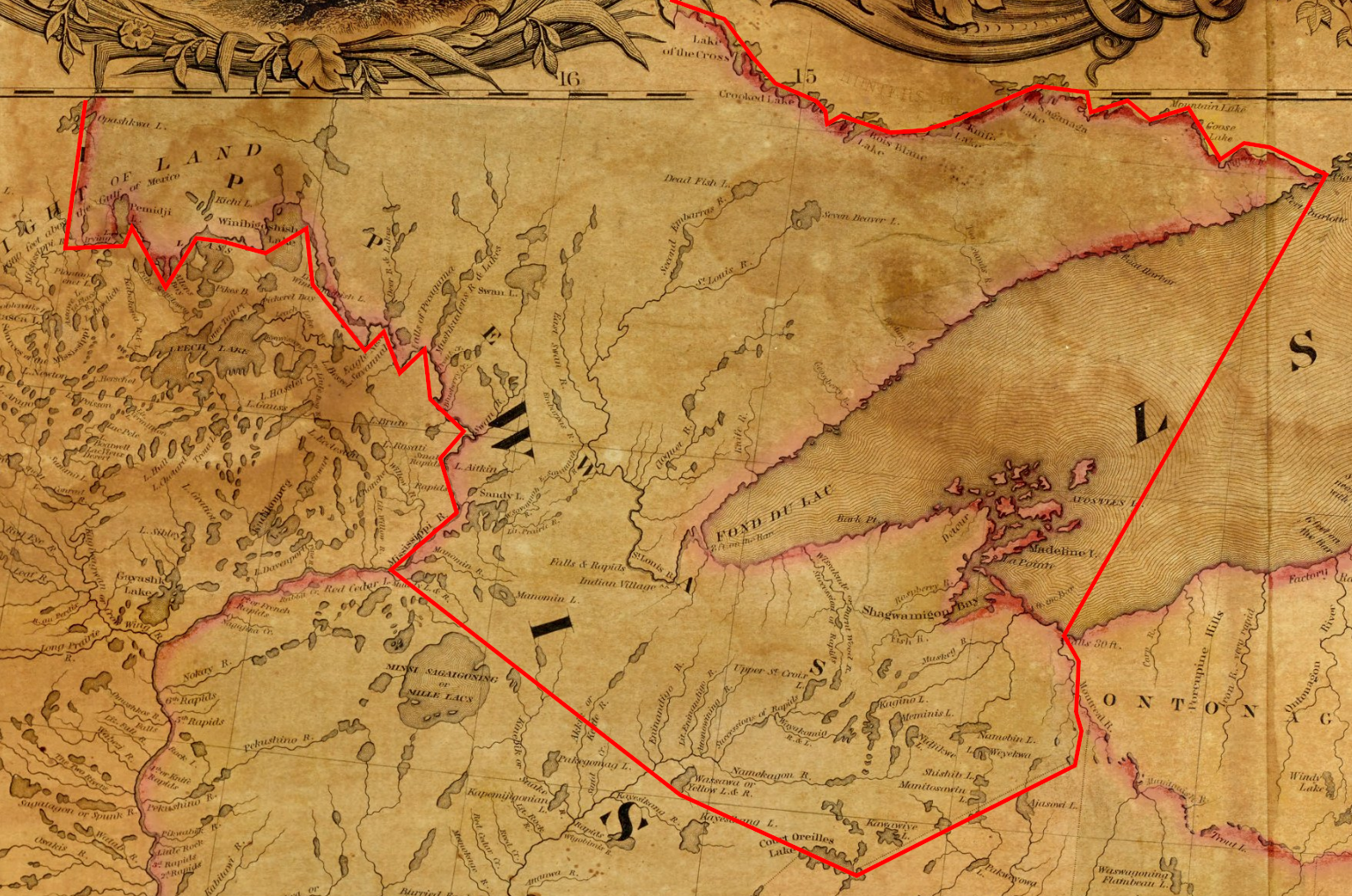
1845 United States map by J. Calvin Smith, with the original 1845 boundaries of La Pointe County added in red outline.
“beginning at the mouth of Muddy Island river [on the Mississippi River], thence running in a direct line to Yellow Lake, and from thence to Lake Courterille, so to intersect the eastern boundary line at that place, of the county of St Croix, thence to the nearest point on the west fork of Montreal river, thence down said river to Lake Superior.”
Finally the county of La Pointe was formed, embracing all Wisconsin bordering upon the lake and extending to town forty north. “Squire Bell,” as he was always called, became one of the county as well as town officers of the town and county of La Pointe, and for more than thirty years continued to hold office, being at different times chairman of supervisors, register of deeds, justice of the peace, clerk of the circuit court and county judge. This last office he held for many years.
He was a man of genial nature and robust frame. About four years ago, while in Ashland he fell and fractured his thigh, and was never able to walk again. His sufferings from this accident were great and his pleasant face was never seen again in Ashland. He enjoyed the esteem and friendship of his neighbors, so far as is known without exception. He was clear headed and of commanding appearance. His influence among the Indians and the French who for many years were the only inhabitants in the country was very great, and continued to the last. For years his dictum was the last resort for the settlement of the quarrels in this primitive community, and it seems to have been just and satisfactory. He was often called “The King of La Pointe,” and for years no one disputed his supremacy.

Edwin Ellis, M.D.
Dr. Edwin Ellis, of this city, said in speaking of the dead old pioneer:
“Thus one by one the early settlers are passing away, and ere long an entirely new generation will occupy the old haunts. He will rest upon the beautiful isle overlooking Chequamegon bay, where the landscape has been familiar to him for more than a generation. We a little longer linger on the shores of time, waiting the summons to cross the river. While we consign the body of an old friend to the earth we will in all heartfelt sorrow say: ‘Requiescat in Pace.'”

Superior Times
Saturday, January 7, 1888, Page 2
The Lake Superior Monarch
Judge Bell, the ‘king of the Apostle islands,’ who died the other day on Madeline Island at the age of eighty-three, was a conspicuous character in the early history of the Lake Superior region. He was the “king” of the county known as La Pointe, which was organized in 1846 by himself. The county was as large as many states of the Union, its borders including nearly all of Wisconsin north of the Chippewa river, the Apostle islands, and to an almost endless distance west. The white population consisted of a handful of French voyagers, traders and trappers, most of whom made their rendezvous at La Pointe. The country was hardly known by the state, and Bell’s realm was practically a little monarchy. He “bossed” everything and everybody, but in such a way that every Indian and every white was his friend and follower. Judge Bell rarely left the island except to make occasional pilgrimages through the settlements. During his eventful life he held every office in the county, and of late years had served as county judge. He was a man of great native ability, and was possessed of a courage that controlled the rough element that surrounded him in the early days when there was no law except his will. He was an honest, fearless, natural-born ruler of men. Through his efforts the poor and needy were cared for. His power departed only when the advanced guard of civilization reached the great inland sea. For many years he had been feeble, and of late had become a charge upon the town. He spent thousands upon the people.
To be continued in Fooled the Austrian Brothers…
Asaph Whittlesey Incidents: Number VIII
April 20, 2023
Collected & edited by Amorin Mello

Originally published in the April 6, 1878, issue of The Ashland Press. Transcribed with permission from Ashland Narratives by K. Wallin and published in 2013 by Straddle Creek Co.
… continued from Number VII.
Early Recollections of Ashland: Number VIII
by Asaph Whittlesey
We now offer a few comments upon our experience in common, and our appreciation of Doctor Edwin Ellis. I observe first that the inherent modesty of the man left him with next to no thought of himself in his “Early Recollections of Ashland,” and therefore the weightier of the task falling upon me. Had the question been raised “who is Dr. Ellis?” a proper reply would have been “Dr. Ellis is Dr. Ellis.”
In all my acquaintance I find no person more clearly identified than is this man. His manner of shaking hands, the music of his voice, and his unconscious habit of setting his hair on end, belong to no one but the man Edwin Ellis. For near a quarter of a century have I known him in the relationship of neighbor, physician, oarsman, farmer, speculator, preacher, merchant and as one skilled in back gammon, and can testify that he is a man who does with his might whatsoever his hands find to do. Those of us who were known as pre-emptors or town site claimants had occasion to regard the arrival of Dr. Ellis with no little suspicion, as certainly an emergency only would have induced him to make the trip from La Pointe during the most inclement season of the year. I remember well my anxiety to know whether or not he was a married man, and so direct were my inquiries as to this, that seemingly there was no way left but for him to satisfy our curiosity by simply saying yes or no. However we soon discovered that we were only wasting words in pressing the subject, and abandoned all further inquiry regarding it. Is it not strange that so good a man and one possessing so admirable a wife should be found so unwilling to satisfy our inquisitive minds in regard to this matter?
There was still another peculiarity noticeable in the Doctor, and that was his proclivity for secret organizations. He was chosen Chairman of a secret organization having for its object protection to pre-emptors from having their claims jumped, though one writer informs us that in the eye of the law they were all trespassers, – but by this means those holding claims felt a security in being absent from them the greater portion of their time. Perhaps the existence of this organization may explain why there has been so many little acres of early clearings discovered by brother Pratt, in the vicinity of Ashland.
Again, Dr. Ellis is one who thinks for himself, but is ever free to weigh the arguments of others, that he may be convinced of the right, and having formed his conclusion is outspoken, so that no one can mistake his position. Being of a hopeful and cheerful turn of mind, his company is courted. All in all whether as to his fitness for the life of a pioneer or as a neighbor and Christian friend I never knew a better.
I have been with him also in times of very great peril, when seemingly we were destined to a watery grave. But through presence of mind and well directed effort we succeeded in reaching the shore amid a feeling of profound gratitude toward our Great Protector above, for sparing our lives. As it is my intention hereafter to refer briefly to the history of a few of the ladies who first settled in and about Ashland. I will omit any special reference to Mrs. Ellis at this time.
HON. SAMUEL S. VAUGHN
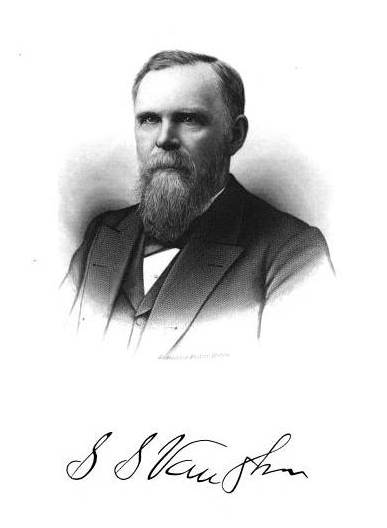
First arrived at La Pointe in 1852. At the time of my arrival there in 1854, I found him running a one horse store in an old frame building, standing in the sand near the present residence of George A. Stahl. So far as I am enabled to bring to mind the succession of events, my first sight of this man was at his own store where I invested in a very poor pocket compass, and this I soon after deposited on the copper range while upon an exploring trip with Ervin Leihy, Esq. Mr. Vaughn, however, claims that he first caught sight of me on the occasion of my aiding Rev. L. H. Wheeler in a social talk with the La Pointe people upon the subject of temperance one Sunday afternoon, in the store of Julias Austrian, Esq.

Reverend
Leonard H Wheeler
The leading man then engaged in the grocery business, as it was called, was one Peter B. Vanderventer, who subsequently left the country at a midnight hour rather than remain and meet a worse doom. Vanderventer was a large sized man and more a hellish countenance, and in exhibition of his bravery at the temperance meeting to which I have referred, he planted himself directly in front of me, and not more than three feet distant, so that I presume he did not mistake my language.

I cannot let slip the opportunity now furnished for informing the public of what seemed to me a rather severe practical joke inflicted upon Vaughn and Vanderventer, as it is too good to be lost, we will mention it right here. It seems that at the time Mr. Austrian made so extended entries of land upon the island, Messrs. Vaughn and Vanderventer discovered that Austrian had failed to enter a fraction shown upon the official plot, as reaching quite a distance into the bay, from what was known as Boyd’s Point and containing some forty acres or more. As La Pointe seemed likely to hold prominence as a business place, they saw the necessity of forthwith securing the tract of land in question. The two therefore suddenly disappeared amid the coldest days of a Lake Superior winter, and footed it under very adverse circumstances through to Willow River, something like one hundred and seventy-five miles, and returned, but yet were quite satisfied to know that they had secured to themselves what they had started for. From this time forward for several years these gentlemen paid their taxes promptly, until they finally employed a surveyor to re-survey and plot their promising possessions. Right here is where they discovered the point of the joke, by being informed that there was not a single foot of their land left, but all and much more had been washed away. Perhaps it was cruel in me to do so, but I could not resist making frequent inquiries as to their real estate.

Section 6 from 1852 GLO PLSS survey of T49N-R3W-4PM showing Boyds Point (now Grants Point) on Madeline Island.
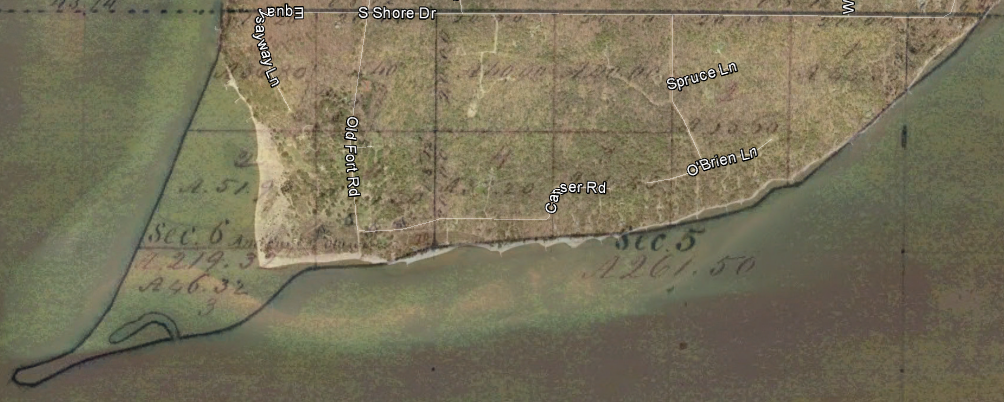
Modern aerial imagery overlay showing Vanderventer & Vaughn’s Lot 3 lost to the sands of time (along with parts of Boyd & Rowley’s Lots 1 & 2).
In 1855 Vaughn removed his stock of goods to a building near where Thomas Stahl, Esq., now resides, where I often shared his bed and board, and it remains a pleasure to me to this day to testify to his qualities as a No. one cook, while biscuits of his make were entitled to special mention. It was a standing rule with him to have a controversy of words with Mr. McElroy, neither being specially noted for the refinement of their language. I think it was during the August term of the Circuit Court in 1860 that Mr. Vaughn and Andrew Tate were admitted to the practice of law before the Hon. S.N. Fuller, Judge of the Eighth Circuit of Wisconsin. It is said that they passed a very creditable examination.
This was the first term of Circuit Court held in the County of La Pointe, Elisha Pike being honored as foreman of the first grand jury convened within the county. Although Mr. Vaughn is but forty-eight years of age he can boast of having held the following positions of trust: Post-master, Justice of the Peace, Chairman of Town and County Boards, also member of the Wisconsin legislature in 1871, (having a constituency of 6,365 souls). In the practice of law his maiden effort was that of procuring papers of divorce in a somewhat renowned case. It is thought that but for the public trust which he held as a Chairman of the School Board he probably would never have known married life, – but as it was so foreordained they accepted the situation, while the people shouted, Amen!
On the arrival of business at Ashland in 1873, Mr. Vaughn removed his family to that place where he once more engaged as trader and forwarding and commission merchant.
To be continued in Number IX…
Copper Creek Mining Location
November 18, 2016
By Amorin Mello

—
COPPER CREEK MINING LOCATION.
—
This location embraces the east half of the southeast quarter of Section 15, and the west half of the southwest quarter of Section 14, in Township 47, Range 14 west, being 160 acres in Douglas County, Wisconsin. It is about thirteen and one-half miles by the County road from the town and harbor of Superior, and at an elevation of 300 feet above the level of the lake.
The Aminecon Trap Range, in crossing it from southwest to northeast, is cut by Copper Creek, a rapid and never-failing stream, exposing at several points veins of native copper.
~ Mine Register: Successor to the Mines Handbook; Volumes 8-9, page 205.
“We all lived in the log house until December 31, 1845, when I left for Iron River [Michigan] under agreement to mine for the Boston North American Mining company, organized by the American Fur company, under the management of Messrs. Borup and Oakes.”
~ Michigan Historical Collections: Volume 2; page 688.
These surface exposures attracted, at an early day, the attention of the agents of the American Fur Company, then the only civilized occupants of that part of the country, and in the years 1846 and 1847 some attempts at mining were made under their direction. A particular description of their operations will be found in another part of this pamphlet. As they had no title to the land and were working at great expense in a region which was at that time wholly remote from civilization, it is not surprising that like many other pioneers in Lake Superior copper-mining, they abandoned their enterprise, or postponed it to a more convenient season.
Eight years afterwards, the whole southern shore of Lake Superior had ceased to be exclusively known to hunters and trappers. The land had been surveyed and brought into market, and settlement had extended to the extreme western end of the lake.

James H. C. McKinzey was issued his patent to the Copper Creek Mining Location by the Willow River Land Office on August 1st, 1854.
~ General Land Office Records
The Copper Creek location was then entered under a preëmption claim by J. H. C. McKinzey, and after a litigation at the Land Office with a rival preëmptor in the interest of members of the Fur Company (who now made a persistent effort to secure a title to the land), McKinzey’s claim was sustained, and a patent was duly issued to him. From him the title passed, with but one intervening link, to the present proprietor.
The location has been visited from time to time by explorers, practical miners, and geologists; numerous rich specimens have been taken from it, and it has long been reputed to be the most promising mining location west of Ontonagon. During the past season a regular exploration has been made upon it, with the view of ascertaining more definitely its value for mining purposes.
“This Township has a clay soil. The small streams are all muddy and go nearly dry in summer. A copper bearing trap range extends through the middle of Township. On the south side of these hills it is well timbered with valuable Pine Cedar Sugar & Black Ash. Copper has been obtained on the SE 1/2 of Section 21 & upon Sections 14 & 15. The streams [reaching?] into Black River are all very rapid.”
~ Wisconsin Public Land Survey Records
A Report of this exploration is presented herewith. Mr. George R. Stuntz, under whose superintendence it was conducted, is an explorer of great experience, with a knowledge of the geological formations characteristic of the copper-bearing districts of Lake Superior, acquired by careful study in the field. He was the original surveyor, under government contract, of the whole Wisconsin shore of the lake, and has, perhaps, a more thorough acquaintance with that region than any person could be named. His Report is a plain statement of facts, and as the undersigned was himself present and taking part in the exploration, he is able to vouch for its accuracy. In connection with the maps, and with the specimens to which it refers (which were marked and packed on the ground by the writer’s own hand), it will furnish a correct idea of the character of the location.
It will be seen that there are three well-defined veins, two of which, including the one from which the richest specimens were obtained, run with the formation. This last mentioned lode rests upon a foot-wall of the most productive veins of the Minnesota mine. Although only three veins have been actually traced, there is reason to believe that others would be discovered by a further exploration, as many points inviting examination were passed by, owing to the lateness of the season.
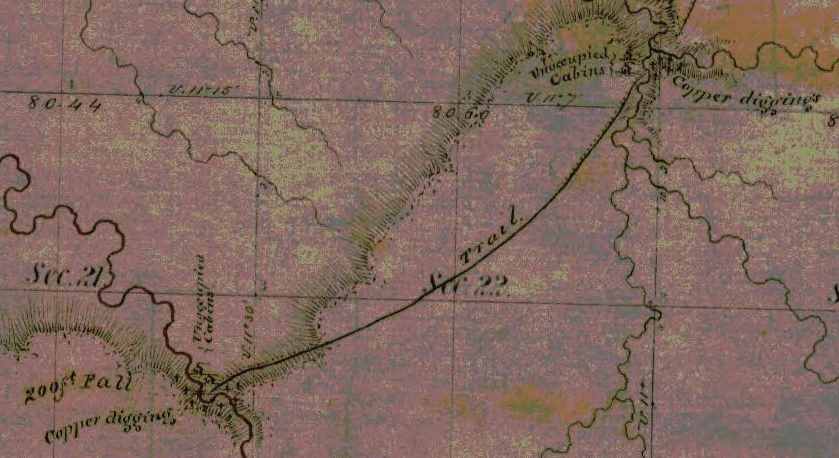
Detail from George Riley Stuntz’s original survey map of Township 47 North, Range 14 West: copper mines, abandoned cabins, and a tote road in what is now Pattison State Park. The northeast feature is Copper Creek and the southwest feature is Big Manitou Falls.
~ Wisconsin Public Land Survey Records
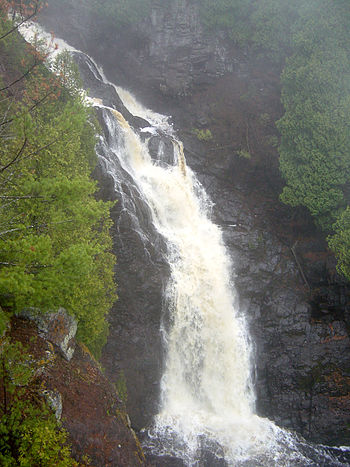
“Big Manitou Falls, the tallest waterfall in Wisconsin, in Pattison State Park just south of Superior, Wisconsin, USA.” Photograph from
Bobak Ha’Eri shared with a Creative Commons license.
The facilities furnished by Copper Creek for stamping purposes will be apparent from an inspection of the map. The town of Superior, having a good harbor, with piers and warehouses, erected by private enterprise, presents every convenience for shipping copper and obtaining supplies. Beef cattle, driven over from Minnesota, on the military road, can be purchased here much cheaper than at the Michigan mines, which are now largely supplied from this point. Pork can be advantageously procured in the same way. Another advantage is found in the price of lumber, an article for which the pineries and sawmills in this region now find a market at the lower mines. One of the finest bodies of pine in the north-west is found on the Brulé and Iron Rivers, about twenty-four miles east of this point.
With reference to the transportation between Superior and Copper Creek, it may be mentioned that, besides the wagon road (which is now available during the winter, and at no great expense can be made so at all times), the Nemadji River which, at ordinary stages of water is navigable for small boats to a point within four miles of the location, affords an additional route.
There is reason to believe that the whole country at the westerly end of Lake Superior will receive a new stimulus to its development before many years, by the opening of railroad communication with the Mississippi River, an enterprise which is becoming the absolute necessity to the interests of Minnesota. Meanwhile communication is kept open by means of the Point Douglas military road and a regular line of stages between St. Paul and Superior, which place is thus rendered accessible at all seasons.
JAMES O. SARGENT.
Boston, Dec. 8th, 1863.
—
REPORT OF EXPLORATION.
(ACCOMPANYING SPECIMENS.)
—
Superior, Oct. 17, 1863.
JAMES O. SARGENT, ESQ.
SIR : Under instructions from you, I have made a survey of the east half of the southeast quarter of Section 15, and the west half of the southwest quarter of Section 14, Township 47 north, Range 14 west, in Douglas county, Wisconsin, and have explored the same as thoroughly as the limited time and the small force under my direction would permit.
I herewithin submit a copy of the field-notes of the survey, and a map of the location.
In making the exploration I had the services of Mr. George Walker, an English miner, who has had several years’ experience in the various copper mines on this lake.
The tract is thickly timbered with spruce, fir, aspen, sugar, oak, white pine, and birch. This timber is small in size.

The Aminecon Trap Range crosses the location. This Range makes its appearance above the sandstone on the east side of Township 48 north, Range 12 west, about the middle of the township, runs in a southeasterly course across the township, and across Township 47, Range 13, Township 47, Range 14, Township 46, Range 15, and leaves Wisconsin. It is cut by the Aminecon River, Copper Creek, and Black River, and numerous small streams. Throughout the extent described it gives promise of being a productive mining district.
Two small streams unite near the centre of the location, forming Copper Creek, which runs in a northwest direction, and leaves the tract about twenty rods south of the northwest corner. Owing to the extremely dry season, this stream was lower at the time of my examination than it has been known to be in ten years; but it affords at all times abundance of water for the purposes of a mine employing steam power.
By a measurement, taken October 1st, I found the amount of water passing through it to be 58 5/10 cubic feet per minute, and this is very much below the average. In ordinary seasons the amount of fall in the stream (which is from fifty to a hundred feet within the location) would give a water power sufficient for all the purposes of a mine.
From my examination I believe that there are three veins, as represented in the map, in all of which we obtained native copper.
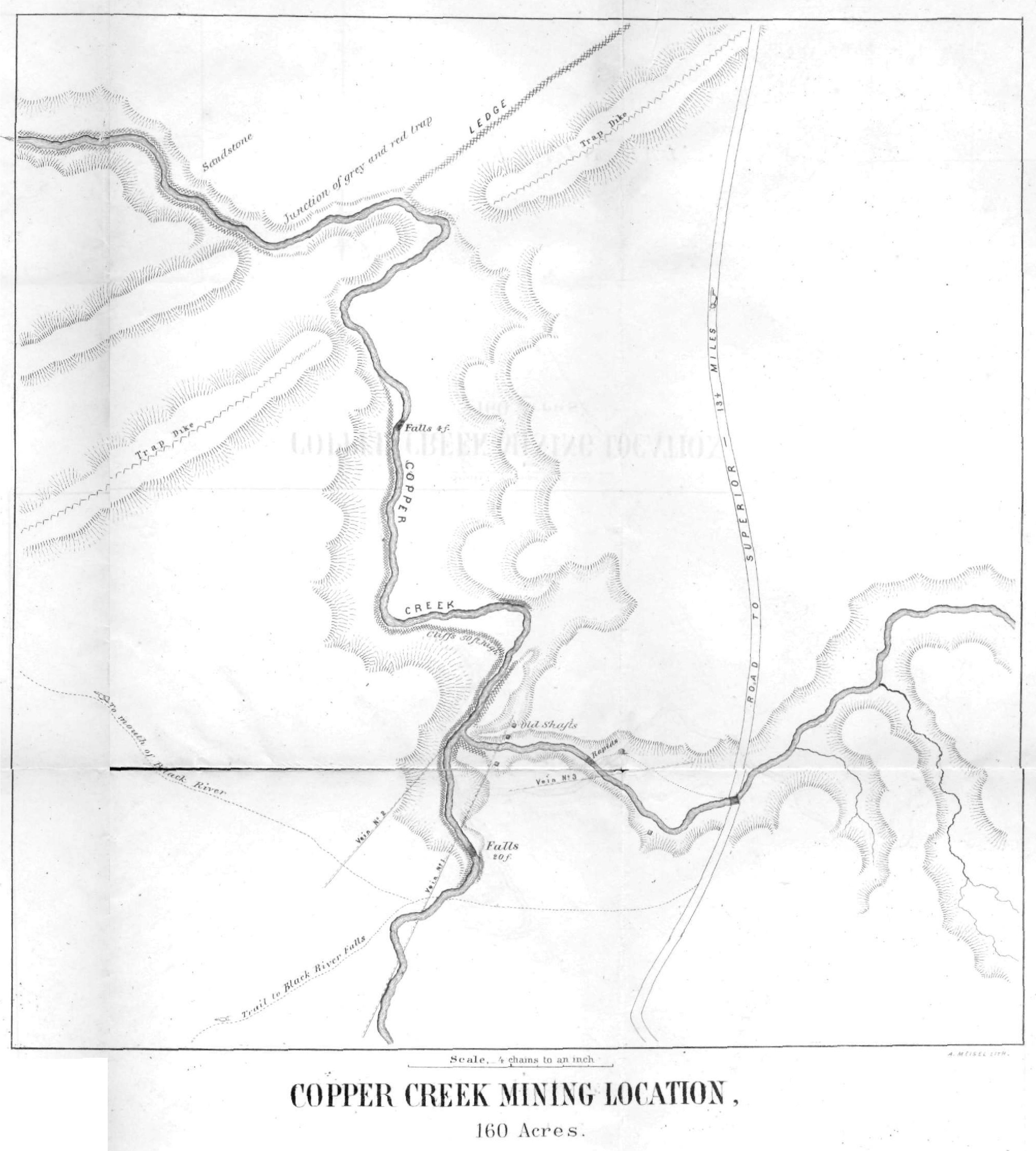
Vein No. 1 shows a breast in the east bank of the west branch of the stream, of nearly twenty feet wide, and bears south twenty-four degrees west. The specimens taken from this locality are numbered, and, as you will perceive, exhibit a quality of vein-stone which gives promise of productiveness. This vein has been traced to the southwest and adjoining location. It dips to the southeast at an angle of thirty-three degrees. The productive part of the lode lies upon the foot-wall, specimens of which I furnish with this Report, as also of the hanging wall.
Vein No. 2 shows a breast of over thirty feet in the bluff east of the stream, and appears to run in a northeast course. My explorations were not carried far enough to fully define its course in that direction. Surface specimens of the vein and of the adjacent trap are furnished herewith.
Vein No. 3 cuts the east branch of the creek, and bears north eighty-two degrees east. We opened this vein in four places at the creek, within two hundred feet. It has the appearance of being very much disturbed. On the west side of the stream, it is very compact and filled with quartz-lined cavities interspersed with crystals supposed to be malachite. It dips to the northwest. Specimens from this locality, a full collection of which is furnished, warrant a more thorough examination.
Vein No. 2, before referred to, as showing a breast of thirty feet in the east bluff, appears to branch or to be thrown out about eighty feet in crossing the creek bottom; my limited time and means did not permit me to determine which.

About two hundred feet below the junction of the two branches of the creek it shows at the foot-wall in the bed of the stream. A few feet west of this, the lode rises in the bluff on the west side of the stream. Course of stream at this point north twenty-eight degrees east. Course of vein north forty-two and one-half degrees east. At this junction of the streams, the lode, stripped of its hanging-wall, rises to the top of the cliff, a height of forty or fifty feet. At this point, we blasted into the lode, and found it rich in copper, some pieces weighing from six to fifteen pounds, and with rich stamp-work. See specimens marked Vein No. 2, west of stream.
About fifty feet above the forks of the stream the lode rests upon a bed of conglomerate. This conglomerate is highly metamorphosed, and is amygdaloidal. See specimens.
About one hundred feet west of this, we opened the vein on the brow of the hill. It there shows a breast of twenty feet, and dips to the southeast at an angle of thirty-five degrees.
~ Duluth and St. Louis County, Minnesota: Their Story and People; Volume 1, page 66.
This location was worked to some extent in the years 1846 and 1847, under a lease from the General Government, by the American Fur Company. They sunk four shafts, but appear to have done very little surface exploring.
Three of these shafts are sunk on the course of Vein No. 1, and from my examination appear to have been perpendicular. Their location is given on the map. The timbering is so much decayed that I did not venture to work in them. From soundings, I found the shaft between the streams forty-six feet deep, the next one on the east side of east branch twenty-eight feet deep, and the one east of section line twenty-eight feet deep. All of them have water to within about twelve feet of the surface. The fourth shaft is sunk at the bend of the east branch. This is thirty-five feet deep, and does not appear from the burrow to have been upon any vein.
The first three shafts above described were sunk perpendicularly upon the outcrop of a vein dipping thirty-three degrees, and therefore pass into a foot-wall. Had they been continued, they would have cut Vein No. 2. They may perhaps be made available in a further exploration.
Upon the adjoining location, to the westward, is a vein discovered by John Parry, some years ago. I have taken some specimens from it which are herewithin furnished. This vein runs north eighty-two degrees east, and intersects your western boundary six chains north of the southwest corner. It appears to be a continuation of Vein No. 3.
At the junction of the trap with the sandstone, in the northwest corner of the location, in the bed of Copper Creek, a bed of bluish-white grindstone grit of first-rate quality is found. The layers are from one inch to several inches in thickness. This white sandstone appears to belong to a different period from the red sandstone of Lake Superior. It only shows to the height of a few feet, and is overlaid by sixty feet of the red sandstone.
In the vicinity of the trap dike it is bent and fractured and considerably hardened. Near the junction, as marked on the map, it is tilted until some of the layers stand perpendicular. There are no ripple-marks on this white sandstone, while the red, resting upon it, shows evidence of a strong current.

Portrait of George Riley Stuntz from The Eye of the North-west: First Annual Report of the Statistician of Superior, Wisconsin, by Frank Abial Flower, 1890, page 26.
This tract of land is thirteen and one-half miles from the town of Superior, at the west end of Lake Superior. It is on a County Road which has been nearly completed, is now practicable for winter use, and can be made a good summer road at an expenditure not exceeding $2,000.
The soil is a sandy loam, with a subsoil of red clay containing a large per centage of marl, and is quite productive, being capable of producing a large portion of the vegetables needed by the operatives at a mine. It is especially adapted to the cultivation of grass and oats. Timber for lumber and fuel can be obtained conveniently and in unlimited quantity.
Respectfully submitted,
GEORGE R. STUNTZ,
Surveyor in charge of Exploration.
Barber Papers: “The Gardens” Fall of 1856
December 29, 2015
By Amorin Mello
Selected letters of the Joel Allen Barber Papers
… continued from the Summer of 1856.
Lapoint Oct. 12th 1856
Dear Mother
This afternoon I returned from Bad River where I have been attending an Indian payment. Father will tell you all about it. I will only say I had a good time, saw many old friends and made some acquaintances among the government officials that I deem very portinate. I also got a contract from the Indian agent on which I ought to make more than a thousand dollars.
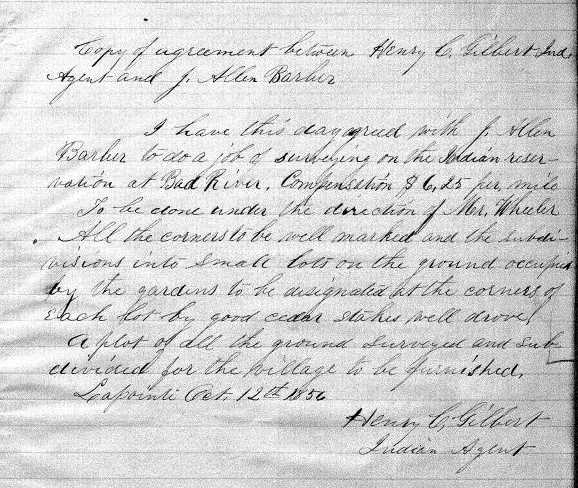
Copy of contract between the LaPointe Indian Agency and Joel Allen Barber to survey the LaPointe Indian Reservation and “the gardens” town-site (Old Odanah), to be done under the direction of Reverend Leonard Wheeler.
~ Board of Commissioners of Public Lands
~ History of Northern Wisconsin, page 64.
I could easily if I had means to carry it on to my liking. It is surveying at $6.25 per mile.
Father has gone to Ironton. I could not go as I wished to stay and conclude my business with the agent.
[You might?] I have been offered $50.00 per share for Ironton I took on which I have only paid 25 dollars per share, but I refused to take it. It may cause you pain to see that I am everyday becoming more and more fastened to this country but I cannot think of deserting it yet. As yet I have not realized one cent for my sojourn in the wilderness but I am far from being discouraged. I have seen fortunes made and have seen men make tens of thousands by taking chances that I might as well have had but I was green and could not read the future.
I am not in a mood for writing my thoughts to you [see rum?] principally upon many matters. Perhaps that is because I have been to payment and and because there is a gambling table in full opperation in the room where I am writing.
It is strange that father never told you the facts in regards to the $600.
There was never any mystery about it to me. Stuntz & Dr. Ellis had the money and returned over $400 of it. It is all right or will be. I nearly forgot to mention that I just got a letter from you to Father of Sept. 25th.
We are both well. Please excuse haste and carelessness.
Your affectionate Son
Allen
[Incomplete copy of letter]
~ Scope and Summary of Joel Allen Barber Papers
There is a young Englishman aboard who has been quite a tourist. He was in the Crimeran? army, went East of there to Ferlizand through Syria to their Holy land to Jerusalem to Egypt the Pyramids the Catacombs. Through all the Country in the South of Europe and northward through Scotland to the [Shetwood Jelas?], has been travelling in the U.S. the past season & is now returning from Superior, got there the day we left [songs her?] visited that poor [Ratefu?] that lost his foot every day till he died. He is a rich land lord & nobleman as I suppose and has a happy way of communicating information upon all subjects especially upon Geology, Mineralogy, Geography [overrated spy?] as well as all other “ologies” He is laying [w/a Speciation?] & [conavasated ??? ??? from?] to England.

1860 photograph of the Paddle Steamboat “Lady Elgin”.
~ Ship-Wrecks.net
The boat has just put to the Canal & [???? ? ????] Do be careful of your life & health and let us hear from you as often as you can.
May God bless and preserve you for many
yearsG. A. Barber
Give my respect to Jo & William.
Interior Field Notes
La Pointe Indian Reservation
Township 47 North, Range 2 West
Notebook ID: [N/a]

Contract awarded by La Pointe Indian Agency to Joel Allen Barber on October 12th, 1856. These survey notes are not available from the General Land Office or the Wisconsin Board of Commissioners of Public Lands.
Lapoint Nov 9th 1856
Dear Mother
I start today for Bad river with four others to commence my job of surveying on the reserve. I am well and in pretty good spirits. Father left on the S.b. Lady Elgin last week.
I am in such a hurry that I can scarcely write legibly. I was elected county Surveyor of this county last Tuesday. My term of office commences Jan 2nd.
I would not like to have this known in Lancaster as it might cause me a little difficulty. I am writing this in a [gragshop?] where there are several men talking so I couldn’t write very sensibly so you must excuse levity. I will write as often as possible but don’t expect me every week as the mails are very irregular and it will be very inconvenient for me to write sometimes. I expect to have a good time this winter. Shall not be far from the very best kind of folks about the Mission and I beg of you don’t grieve because I remain here this winter.
I am very anxious to go home but you see I had something to stay for.
With best love to Am, Aunt Betsy and yourself.
I remain your affectionate Son
Allen
Lapoint Wis. Nov. 9th 1856
Dear Father
Joel Allen Barber;
William W Ward;
Larry Marston;
Joseph Latham.
I expect to get away today for Bad River with one party – Bill & I Larry Marston and Joseph Latham.
I went to Ironton on Saturday before election so I was not there on that interesting day. That mound of earth has scarcely changed at all and will not materially in years. Business is going on pretty well at Ironton. The house is probably up [?? this?].
Joel Allen Barber;
Asaph Whittlesey;
Major McAboy;
[Fremont?];
James Buck;
and others.
The election came off here all right as far as I am concerned. Whittlesey 11 or 12 and McAboy 1. Whole number of votes 108. [Fremont?] got ten votes. The Buck ticket was carried throughout. We only start with one party because no steamboat has come yet and it is doubtful where we shall get a large supply of provisions.
We are all well and prospering. Give my love to all friends in Lancaster
Your affectionate Son
Allen
Excuse haste.
Interior Field Notes
La Pointe Indian Reservation
Township 48 North, Range 2 West
Notebook ID: [N/a]

Contract awarded by La Pointe Indian Agency to Joel Allen Barber on October 12th, 1856. These survey notes are not available from the General Land Office or the Wisconsin Board of Commissioners of Public Lands.
Cambridge Nov 9th 1856
Dear Son.
Now that your father has left you I suppose you will be very glad to hear from Am and me sometimes; at least I hope you have not so much forgotten us that you do not look for a letter whenever the boat arrives and have one prepared to send home by every one. But I forgot that there will be no boats for 5 or 6 long tedious months to come and I fear we shall hear from you but seldom. Let me entreat you to have a letter ready to send to me at least by every visit that leaves your region. I cannot imagine how any one can think of surveying in the deep, dark forest during the winter months to be exposed to storms, day and night without shelter – how you lived do tell me. I am sure no one could live here through the winter in the woods without a pretty warm house and a good fire. Were it not that I know you have had some experience in the business & manner of living I should feel certain you would be frozen or perish in some way. But I suppose you have no such fears.
I have sent 2 or 3 letters for you and father to Lancaster supposing he would be there and hoping you would also. In one I mentioned the happy marriage of M. C. Heath to a most excellent pious young lady who taught school in the village center last summer named Mott. No one suspected his intention – not even his own family till he brought her home and presented her as his wife. Every body is much pleased at the matter.
Mr. J Woodruff has departed this life after lingering and suffering much longer than his friends expected. He tried every possible remedy, but nothing – not even Dr. Hunter’s boasted inhaling method could arrest the fated disease. The latter remedy has been tried in several cases of Consumption in Johnson and equally failed in every case.
You have never said any thing about the trouble in your head and throught since you left home. How is it – does it increase or has that climate proved beneficial in that affliction, as in other respects, to your health?
I am pained to have to announce the death of one more of your dear friends and school mates. Julia Whiting has gone to the spirit world to join the happy throng of the young the beautiful and the good who have passed on before. This is the fourth daughter that afflicted family have been called to mourn – they have but one left. I mentioned the sickness of the rest of the family before – at last Julia was taken unwell with slow fever – then Typhoid symptoms which ended in death. We heard of it the morning of the funeral and Amherst and I went to J to attend it, and do some errands.
I have had a little good fortune –. Mr. Pike has at length drawn a small sum from the pensions office for me on account of my father’s services so [Serjeant?]. He only drew 80 dollars a year as private when he was entitled to 100 dollars as [Serjeant?]. The sum drawn was $209.86 out of which Pike takes about 25.00 for the expenses of getting it. I never expected to get so much if I get anything – but trouble and expense.
If you stay at the lake this winter what will become of your title to the land you bought in Grant? You will have to improve it some before June or you will lose it. I wrote to you about Lewis Wilson. I understand he has gone into the Blake house for this winter but has bought nothing. I have not seen him since I wrote you but would go to see them if we had a horse we could drive. “Old Grey” is so lame in her fore foot she cannot go farther than a walk so we do not drive her far and [Fate?] has a bad trick of starting and turning short about when she is a little frightened so that Dow thinks her unsafe for Am or I to drive. She is a large, beautiful beast and perfectly gentle when not mad.
Oh, how I do wish you were going to spend the winter at home – you would have such nice times riding about and visiting the young people here. There are several young ladies still single that would no doubt like to take a side. There is not a large number to be sure but some of them are worthy of the attention of any good young man. There is Miss Anna Bryant who is said to be a prodigy of learning and good sense – and Carry C – your old school mate – lovely as a rose – accomplished in all domestic affairs, and, as you well know, an excellent schollar. But of all those with which we are acquainted there is no one so perfectly amiable and good – who would, if I am not deceived and misinformed be so desirable a companion for life as Miss C Griswold. I believe she is beloved by old and young – one of the excellent of the earth. And M. A. Chadwick who is always with her. But I suppose none but little David can come near her.
According to your father’s description of the people in your country, you must see a great deal of vice – drunkenness, gambling, quarreling, and I should expect fighting. But I hope and pray with a strong faith that you in no way participate in such scenes. With all my fears for your personal safety I have never had the sorrow of knowing or fearing that my dear sons would be tempted from the path of virtue.
What must be the agony of parents who have vicious children. I believe that whenever a man conforms to the will of his Maker by using all in his own power – through the exercise of all his faculties he may safely trust in his protection.
That you may be as protected is the prayer of your affectionate Mother
Nov 10th 56
Dear brother Allen,
I have but little to write at this time but I thought I would put in a few lines to let you know that I still read [lest?] you & can write to you. We suppose by father’s letters that you are yet to remain at the lake through the winter. We were in hopes that you would go to Lancaster, or come home with father, but I don’t know but it will be best that you stay there. But I wish you were to spend the winter in some more congenial & convenient situation if possible. It is already pretty cold weather here & it freezes considerably. Mother & I have been living in the old west room pretty comfortably this fall. I have provided wood as fast as we needed it but I guess Dow will have to get it for us after this. I am going to the Centre school now and enjoy it quite well. Mr. Ed. Bryant, my teacher, is very well liked here, & is going to stay & teach select school through the winter. We have a tolerable good [Scycum?] here now & I have some speaking & writing to do for it. Last week was appointed to get up a dissertation, which I am now writing. My subject is Noses. There is not much going on here but the school & [Scycum?]. & it’s pretty dull times now. Hardly any one here will talk polities except the business of whom there are 74 in town. We got partial returns from election Saturday night which set the Democrats all right greatly. That day we heard cannon all over the country.
Atwood’s folks are over here occasionally; all is well as usual; & Levi is I think improving in health as he works considerably now. The Johnson school is flourishing nicely under their new teacher. Old Bent, the former preceptor is now 2nd clerk of the Senate at Montpelier. Mother & things at Johnson are getting along about as usual & the same in Cambridge. Allen, I have not written near as much as I ought, but some other time I’ll write a longer & better letter. Now father is gone do let us hear from you often. We will write you often.
Good bye
A. W. Barber
Lancaster 13th Nov 1856
Dear Son
I [improve?] this 1st Mail to inform you of my safe arrival here night before last at 8 P.M. & that all the friends here are well &c &c
November 25, 1856
“Nov. 11 – The Steamer Lady Elgin, which left the St. Mary’s River for Chicago, Nov. 1st, had not, at latest advices, reached her port or been heard from elsewhere.”
~ MarinetimeHistoryOfTheGreatLakes.ca
I wrote you from the Sault by which you will learn my progress to that place. Left there at 1 P.M. & ran down the river 40 miles when wind & fog threatened an unpleasant night & the Capt ran to a Sawmill dock & tied up for the night. Next morning showed the wisdom of stopping for it was that awful snow storm Election day. We land there 2 nights & on Wednesday started again stopped at Mackinaw 3 hours & then put out again against a dead head wind that increased in violence till 3 next morning when the Capt put about & ran 15 miles back for shelter under the North Manitou where we laid till 7 o’clock drifting down the shore & then storming up to the head of the Island. Anchor was then thrown over & held untill 2 next morning when the boat drifted off with the anchor & we drifted down & steamed up the east shore till toward night when we made the dock on the Island the wind heaving about & changed from South to N.E. & blew like the D’l till just night next day (Saturday) when we started again for the [west?] shore of the Lake & [p????ed] our voyage till we reached Chicago toward might Sunday night.

These locations are on a page of this letter to Allen from his Father.
The handwriting appears to be of Allen’s, not of his Father’s:
“Lot 1 Sec 19 Town 48 R 4 con 44.37
Lot 1 39.99 and NE 1/4 of NE 1/4 39.99
Sec 24 Town 48 R 5 W containing 40.00
Lots 124.36
Lots 1 and 2 Sec 36 and NE 1/4 of SE 1/4
And SE 1/4 of NE 1/4 Sec 25 Town 48 R 5 West”
These locations are along the shoreline of Barksdale on either side of Boyd Creek (and underneath Chequamegon Bay). Was this “Barbers Camp“?
Monday I came to [Galena?]. Found on the [car?] John [Muskler?] & Sarah [Le???] on her way to live with Mr. L.O. Stevens in Iowa. From them I heard direct from Johnson. There is much sickness there this fall. Dexter Whiting had been sick unto death of Typhoid fever but was getting well but had his upper lip all eaten off. Mrs. W had also been sick & poor Julian was sick & died of some fever rather unexpectedly. She had been asleep 30 hours & died [?] Sarah said she saw Mother & Amherst at the Funeral. Mr. Woodruff died 3 or 4 weeks ago. It is about Mail time & I cannot be brief. Tell Jo that Jay paid his taxes last spring so that he is all right there.
Algebra equations on the backside of a sheet from this letter.
“Dexter Ward was born in Chittenden VT and came to Grant County on February 8, 1843. He settled in Lancaster where he was a carpenter and builder. He was elected Counstable in 1857 (? Possibly 1847) and held that job for 5 years. He was a deputy sheriff under Matthew Woods and George Stuntz.”
~ GrantCountySheriffWisconsin.com
Take good care of your life & health and do as well as you can for yourself. I will write you again before leaving for VT. You may be [apsment?] that it looks rather better about here where there are [lesasy?] crops all about me than about the Lake where there is nothing. I called at the Sherriffs & left William’s letter, found all well.
In haste your affectionate father
G. A. Barber
Interior Field Notes
Odanah Townsite aka “The Gardens”
La Pointe Indian Reservation
Township 48 North, Range 3 West
November, 1856
Notebook ID: [N/a?]
!["For Plat of Townsite Odanah LaPointe Indian Reservation [...] See Large Plat Book [s]Next to last page[/s] Middle of Book" ~ Board of Commissioners of Public Lands](https://chequamegonhistory.com/wp-content/uploads/2015/12/1856-odanah-town-plat.jpg)
“For Plat of Townsite Odanah
LaPointe Indian Reservation
and Resurvey of Sec 23, 24, 25, 26, 35, & 36
See Large Plat BookNext to last page
Middle of Book”
~ Board of Commissioners of Public Lands

“*Note Sections 23, 24, 25, 26, 35 & 36 having been previous surveyed by Mr George R Stuntz have been omitted by J. Allen Barber Dept. Surveyor, under Henry C. Gilbert, Indian Agent, so says Mr Barber but no evidence can be found to support his declaration either in the Gen’l L. Office or Indian Bureau. Secs 23, 24, 25, 26, 35 & 36 were recently surveyed by A.C. Stuntz so says the Comm’r Indian Affairs in his letter of Feb’y 6, 1865, inclosing a diagram thereof.”
~ General Land Office Records
LaPoint Nov. 22nd 1856
Dear Mother

Detail of the “Chippewa Gardens” at Odanah from Summary narrative of an exploratory expedition to the sources of the Mississippi River, in 1820, by Henry Rowe Schoolcraft, page 105.
—
The steamer Superior was lost near Grand Island, Lake Superior, October 29, 1856, during a violent storm. Her rudder was carried away and the boat fell into the trough of the sea. She commenced making, the fires were put out and she struck the rocks, soon after going to pieces. Thirty-five lives, including 11 passengers, were lost, and 16, including five passengers, were saved. Capt. Hiram J. Jones was among the lost. The Superior was considered one of the best sea boats in the trade, and had lived through many a storm. She left Chicago October 25, loaded principally with supplies for miners.”
~ History of the Great Lakes, Chapter 37.
Yesterday I arrived here from Bad River in a Macinaw boat with two fair men, we have been surveying nearly two weeks although we have scarcely made a beginning. Thus far we have been at work at “the Gardens” as the settlement at Bad River is called to layout out an Indian Village. I was over to Bay City [???] Wednesday to see about getting provisions for the winter but got [clism?] appointed and found others in the same fix. Mr. Stuntz had promised to furnish us with provisions but all his supplies were last on the Superior. You have probably seen an account of that said disaster. The boat was last on the pictured rocks in the night, 45 or 50 lives were lost, only 16 saved. As for us I have heard no one was lost that I know personally. No one may prove Superior with [3 Sisters?] were lost. [This?] father lived in Superior – his name is [Mentar?]. I have not much news to make. I think my prospects [to get?] surveying are pretty fair. I have been successful in getting a fair supply of provisions and if anything happened I believe we will do a pretty fair lot of work within the next month or two. My provisions are not thought to be scarce but so navigation is closed prices will be high.
Pork is 30 dollars per Barrel, Sugar 15 or 15 cents per pound.
I have not yet decided when to go below but I should probably see Lancaster before many months.
Last night I attended a half breed ball – not as a participant but as a spectator. The balls are rather an important affair as they generally last three days.
Last night was the third night and was necessarily the last as the ball was very suddenly “broken” by the Catholic priest about 8 o’clock. The priest and Bishop came to the door and demanded admittance and the priest went in and after asking a few questions commanded them to disperse and you may depend on it there was a scattering.
Ironton is prospering finally. Today I sold 6 shares at $60 per share. They were sold to two men who are at work for me and are good men. I am writing this in Squire Bell’s office and the others present are getting [warm?] and it is getting dark so I will fold this up.
Your affectionate Son
Allen
Interior Field Notes
La Pointe Indian Reservation
Township 47 North, Range 3 West
December, 1856
Notebook ID: [N/a]
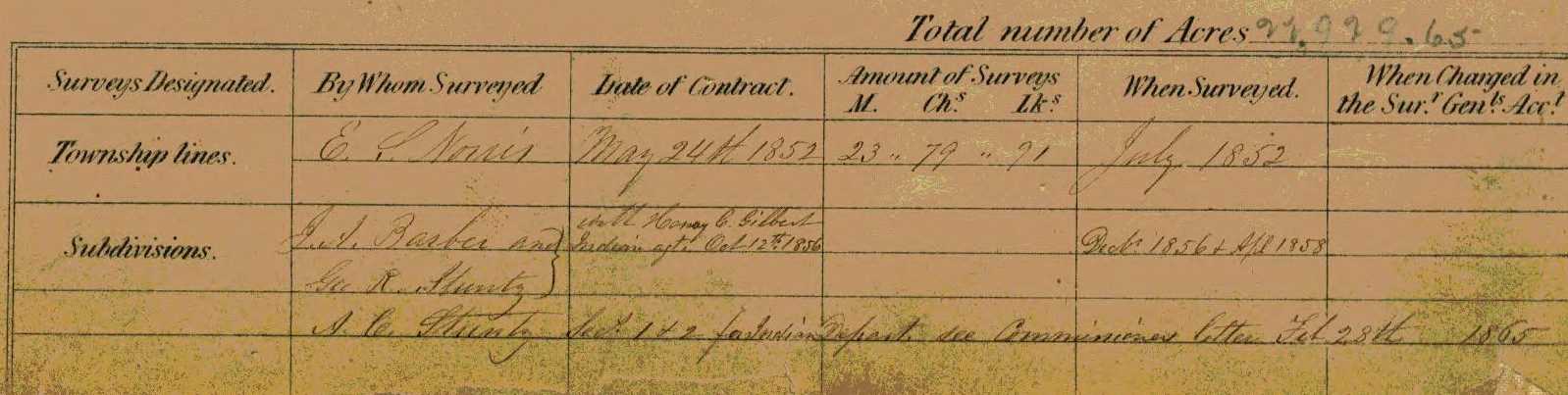
Contract awarded by La Pointe Indian Agency to Joel Allen Barber and George R Stuntz on October 12th, 1856. Survey partially completed by Barber and Stuntz during December, 1856. These survey notes are not available from the General Land Office or the Wisconsin Board of Commissioners of Public Lands.

Detail of Sturgeon Falls on the Bad River omitted from Barber’s resurvey during 1858.

Detail of the White River omitted from Barber’s resurvey during 1858.
Lancaster, Sunday Dec 7th 1856
Dear Son Allen
Here I am yet, amid my friends in this beautiful country. It was far from my intention to have spent so long a time here, but one hindrance after another has prevented my getting away. It is my design to leave the present week & stop at Sandusky probably over next Sunday. I have now passed by my friends three times, and feel as though to do so any more would look like studied neglect of them.
My disappointment at not getting any thing from you up to this time is great, & I now begin to hope you have sent a letter or two to Vermont instead of here, & that I shall find them all right when I get there. Though to tell the truth I am in some concern for your safety, fearing that you have been wrecked on your journey from La Pointe to Ironton or Bad River. I am still in hopes to get a letter from you tomorrow or before I leave the place. Your friends are all well hereabouts, and everything carry on swimmingly.
Thode Burr was dismissed from Ryland & Swab’s employment last Monday, not for any fault but because Ryland has got well enough to work in the Store “[the St Louis?]” are able to do all their business. He is doing nothing at present though he could have $30.00 per Month to go into a school at [Baserbol?]. I mistake perhaps in saying that he is doing nothing, for he is attending [any/my?] [earnestly?] to his [hymn?] & nothing else.
George Parker & Lincoln of [Midden?] (you know him) are in DTP [stom?]. Lincoln was in College 2 years & had to quit on account of sore eyes after trying to resume study twice. He gave me the following items concerning some of the Johnson Boys.
[Thuler?] was expelled last June for participating in the annual mock training contrary to the command of the College Officers. He talked of going to [knive Coll. Schunistudy?], but has not yet. Hotchkiss had to quit College & has gone to work on the farm. [Spurr?] is Married to a Miss [Denny?] of [Largage?] a real visage and was teaching in Mass. receiving $1000. for his & his wife’s services for [canninor?].
This is all that he told me of them. Had there been any thing else worthy of note, he would have told of it.
I wrote you about the Small pox being in the town & that there had been some deaths. Whether there have been any since my last I cannot say. Only 3 in all. There are no new cases for some 10 days or more & it is hoped that it will spread no further. Mr. James Mc[Gonigal?] brother to William from Tennessee was was buried last Sunday. He was taken sick of fever the Sunday previous, & went to bed saying, that was the last time, & was expecting to die untill he breathed his last on Friday night at 10’o’clock. He was a very fine young man, had lost a wife & only child, before he came here, & has been clerk for D.T.P. for some time.
Wm Carter & Miss [Rawdon?] were married last Thursday.
I should feel much better if you were living in this country than I do now, when my mind is constantly worried by thoughts of you suffering from cold, fatigue, hunger & all sorts of privations, to say nothing of being deprived of all society congenial to your natural taste.
I cannot sit down to a good meal or get into one of the warm soft comfortable beds, without thinking of my poor son who is where all such things are unknown, and may be suffering for want of the comforts that here so much abound and especially did I think of you last Sunday when there was the worst storm of snow from the N.E. ever known in the Western part of Wisconsin, so said by all the badgers. Snow fell 18 in deep in the timber, but it piled up in the roads & streets like it does in Vermont. The snow was drifted into one place East of Galena 40 feet on the track with a freight train beneath. They got the [cars?] through yesterday. The weather has been very cold here for this time of the year. Thursday Morning 4th Therm 11* below 0, Friday 14* below 0, & Saturday 6th at 14* below 0. I do not believe Vermont ever beat that in the 1st week of December, & in all that time I have been thinking how you & your company must suffer if out in the woods surveying.
I hope you keep warm nights, if so, you can do enough in the day to keep from suffering. My greatest fears at present for your [sloping?].
Allen Hyde has been very swift to purchase the little farm and has offered $35.00 per acre by my taking $415.00 of it in two lots of land. One of five acres South of the burying grounds at $315, & directly opposite the new schoolhouse. The other is a meadow of 8 acres out towards where [Sprader?] used to live at $[6.00/600?] which is cheap for either place. But I shall not be in great haste about selling for I should prefer that that little piece of land should remain in the family even if I do not live to come on it myself. There is quite a stir about farms at present. There was a Mr. Hayward from N.Y. State wishing to purchase & bartered for Jay’s farm & I think would have paid $50.00 per acre for it but Jay would not sale without he could put in his 2 ½ acres of an out lot with it. Mr. H. offered Frank Hyde $36.40 per acre for his land, East of Hollaway’s & did buy Hyde’s new brick house built the summer past near Esq. Philp’s new house, at $1,000.
Tell Jo that I think I shall want to buy his land when I can see him. I went to it soon after I got here, but I was sick all the time so I could scarcely move, consequently did not see much of it & cared very little for what I did see. Tell Wm. W. Ward that I did as I promised to do, & went to his Father’s and had a good meal that would astonish any body from Lake Superior. I have been there three times since I came, I wish you boys could have had some of the chicken din & other fixings… Wm’s eldest sister played on the [a Melodron?] & sang a number of [piren?]… Mr. Richard [Myers?], an old country Dutchman who married Martha Phelps’ sister to your Aunt [Lucy?], is erecting a steam Sawmill just across the brook due East from your Uncle Allen’s & intends to have it ready for business in the spring & Mr. [Kirke?] of Philadelphia talks of coming here to erect a Steam Gristmill in the springs.
Some things are as dear here as in the country around you. Coffe 6 lbs per $1.00. Sugar 7 lbs per 1 doll. Butter 25¢ for [good/gevd?] but Pork sells for 5. to 5.50 [gevd?] fat beef rather better than [Cousin?] Ox for [?] for [foze grs?] & 5. for Hind do. Flour $2.50 per 100 lbs, &c. Venison is brought in and sold frequently & on the whole I think there is more comfort in living here than there you can be on the Lake.
I find considerable difficulty in settling off with Old Black for the proceeds of the little farm but shall get through with him tomorrow I now hope he has drawn some [manners?] on the orchard & and done some [plervisy?] for [Sish?] he charges exorbitantly, all done before I came & he had harvested most of the corn, but I am confident the dishonest whelp will cheat me out of a good deal any way I can fix it, but I will get shut of him some way and remain so ever afterward. He has sold his tavern stand today & taken a farm 4 miles north of the Village in payment of a Mr. Wilhinson. There is a new store opened in the [forver?] East of the Burnett House where J. M. Otis over traded by two men under the firm of Baily & Carroll who are giving the build a new Gristmill below Handall’s Sawmill.

Portrait of Uncle Joel Allen Barber from page 199 of the Proceedings of the State Bar Association of Wisconsin, Volume 1900.
The prospect now is that your Uncle Allen will be elected U.S. Senator for the next 6 years after the 4th March next. I would not write this had I not good reasons for believing that it will be so. And now in regard to yourself, I do hope you will be careful of your life and health, that you will avoid exposure to the dangers of the cold & the treacherous ice as much as possible. That you will not trust yourself on the ice, long distances in the cold or storms, or alone. Finally I beseech you to take all possible care of yourself. If you have not got blankets enough to keep you sufficiently warm nights do so & get more & not suffer or be uncomfortable without or for want of them. I do not feel reconciled to the thought of going home without hearing from you, & knowing that you are alive & well. I overhauled the trunk of our dear lamented Augustus yesterday and [leave?] nearly every thing as I found it. There are some good clothes, that may be of service to you, should God spare you to ever come down here. I have rec’d a number of letters from home since I got here, but none lately, as they are probably expecting me home about this time, all were well. I do not know whether I mentioned in my letter to you that your mother had drawn $209. from Government additional pension money.
Adieu my dear son.
That our Heavenly father will bless and preserve you is the daily prayer of your affectionate as well as afflicted father.
Giles A. Barber
To be continued in the Winter of 1857…
“A real bona fide, unmitigated Irishman”
December 7, 2014
By Leo

“The Usual Irish Way of Doing Things”, by Thomas Nast Published 2 September 1871 in Harper’s Weekly. Nast, who battled Tammany Hall and designed the modern image of Santa Claus, is one of the most famous American political cartoonists. However, he frequently depicted Irish-Americans as drunken, monkey-like monsters (Wikimedia Images).
It has been a while since I’ve posted anything new. My personal life has made it impossible to meet my former quota of three new posts a month. Now, it seems like I’ll be lucky to get one every three months. I haven’t forgotten about this site, however, and there is certainly no shortage of new topics. Unfortunately, most of them require more effort than I am able to give right now. Today, however, I have a short one.
Regular readers will know that the 1855 La Pointe annuity payment to the Lake Superior Chippewa bands is a frequent subject on Chequamegon History. To fully understand the context of this post, I recommend reading some of the earlier posts on that topic. The 1855 payment produced dozens of interesting stories and anecdotes: some funny, some tragic, some heroic, some bizarre, and many complicated. We’ve covered everything from Chief Buffalo’s death, to Hanging Cloud the female warrior, to Chief Blackbird’s great speech, to the random arrival of several politicians, celebrities, and dignitaries on Madeline Island.
Racism is an unavoidable subject in nearly all of these stories. The decisive implementation of American power on the Chequamegon Region in the 1850s cannot be understood without harshly examining the new racial order that it brought.
The earlier racial order (Native, Mix-blood, European) allowed Michel Cadotte Jr., being only of one-eighth European ancestry to be French while Antoine Gendron, of full French ancestry, was seen as fully Ojibwe. The new American order, however, increasingly defined ones race according to the shade of his or her skin.
But there are never any easy narratives in the history of this area, and much can be missed if the story of American domination is only understood as strictly an Indian/White conflict. There are always misfits, and this area was full of them.
I recently found an example from the November 7, 1855 edition of the Western Reserve Chronicle in Warren, Ohio shows just how the suffocating paternalism directed toward the Ojibwe at the 1855 payment hit others as well:
A GENUINE IRISHMAN
A correspondent of the Home Journal relates the following characteristic incident of Irish tactic. He says:
Does the wide world contain another paradox that will compare with a real bona fide, unmitigated Irishman? Imagination and sensuality, poetry and cupidity, generosity and avarice, heroism and cowardice–and so on, to the end of the list; all colors, shades and degrees of character congregated together, and each in most intimate association with its intensest antithesis–a very Joseph’s coat, and yet, most marvelous of marvels! a perfect harmony pervading the whole.
Among the reminiscences of a month’s sojourn at La Pointe, Lake Superior, during the annual Indian payment of the last summer, I find the following truly ‘representative’ anecdote:
One day while Commissioner Monypenny was sitting in council with the chiefs, intelligence was brought to Mr. Gilbert (the Indian agent) that two or three Indians were drunk and fighting, at a certain wigwam. With his usual promptitude, Mr. Gilbert summoned one of his interpreters, and proceeded directly to the lodge, where he seized the parties and locked them in the little wooden jail of the village, having first ascertained from them where they obtained their liquor. He then went immediately to the house they had designated, which was a private dwelling, occupied by an Irishman and his wife, and demanded if they kept liquor to sell to the Indians.

Henry C. Gilbert was the Indian Agent during the Treaty of 1854 and oversaw the 1855 annuity payment along with Commissioner of Indian Affairs George Manypenny (Branch County Photographs).
Both the man and woman, with rational vehemence and volubility–and both at once, of course, utterly denied having ‘a dhrop in the house, more nor a little jug full, which we just kape by us, like, for saysonin’ the vittals, and sickness.’ But, unfortunately for the veracity of the parties, on searching the premises, the interpreter discovered, in a little back wood-shed, two barrels of whiskey, besides the ‘little jug’ which proved to be a two gallon one, and full.
Mr. Gilbert ordered some of his men to roll the barrels out on the green, where in the presence of the whole council, they knocked in head, and the jug broken. But the flow of whisky was as nothing compared with the Irish wife’s temper, meanwhile. I had never conceived it possible for a tongue to possess such leverage; it seemed literally to be ‘hung in the middle and to work both ways.’ However, mother Earth drank the whisky, and the abuse melted into ‘the circumambient air’–though one would not have suspected their volubility, they seemed to be such concrete masses of venom.
In the evening of the same day, as Col. Monypenny was walking out with a friend, he encountered and was accosted by, the Irish whisky vender.
‘The first star of the avenin’ to yees, Misther Commissioner! An’ sure it was a bad thrick ye were putting on a poor mon, this mornin’. Och, murther! to think how ye dissipayted the illegant whisky; but ye’ll not be doin’ less nor payin’ me the first cost of it, will ye?’
‘On the contrary,’ said the commissioner, ‘we are thinking of having you up in the morning, and fining you; and if we catch you selling another drop to the Indians, we shall forcibly remove you from the island.’
Quick as–but I despair of a simile, for surely there is no operation of nature or art that will furnish a parallel to the agility of an Irishman’s wit–his whole tone and manner changed, and dropping his voice to the pitch confidential, he said:
‘Wll, Misther Commissioner, an’ its truth I’m tellin’ ye–its mighty glad I was, intirely, to see the dirty barrels beheaded; sure I’d a done it meself, for the moral of the thing, ef it hadn’t been for the ould woman. Good avenin’ to ye, Misther Commissioner.’
It is hardly necessary to add that no further application was made for the ‘first cost of it.’
Very truly yours.
~ Western Reserve chronicle. (Warren, Ohio) November 07, 1855
(Library of Congress Chronicling America Historic Newspaper Collection)
The sale of alcohol was illegal at La Pointe at that time. However, the law was generally impossible to enforce and liquor flowed freely into and out of the island.
Admittedly I chuckled at the depiction of the Irish wit and the temper of the “Irish wife,” but as a descendant of immigrants who fled the Great Famine in the 1840s, it’s hard to read the condescending stereotypes my ancestors would have been subjected to.
That said, it’s important to note that the two or three Ojibwe people in this story were imprisoned without charges or trial for drinking, while the couple selling the illegal liquor only lost his stock and wasn’t fined. This is something those of us of European descent need to be careful of when trying to draw equivalencies.
So then who was the bona fide, unmitigated Irishman?
Hundreds of thousands of Irish immigrants came to America during the 1840s and ’50s. Inevitably, some of them ended up in this area. However, by 1855 it was only a handful.
Just a few weeks prior to the payment, Alexis Carpentier, a former voyageur from a mixed French-Ojibwe family was charged with taking the Wisconsin State Census for La Pointe County. He found 37 residents of foreign birth. Most of these were French or mix-blooded men, born in Canada, who married into local Ojibwe and mix-blood families.
In only one household, more than one person is listed as being foreign-born. This was the home of Patric Sullivan. State censuses only listed the name of the head of household and do not list country of origin. However, in the 1860 Federal census, we find Patrick and Johanna Sullivan living with their three sons in La Pointe township. Both were born in Ireland.

Page 1 of 1855 Wisconsin State Census for La Pointe County (familysearch.org)
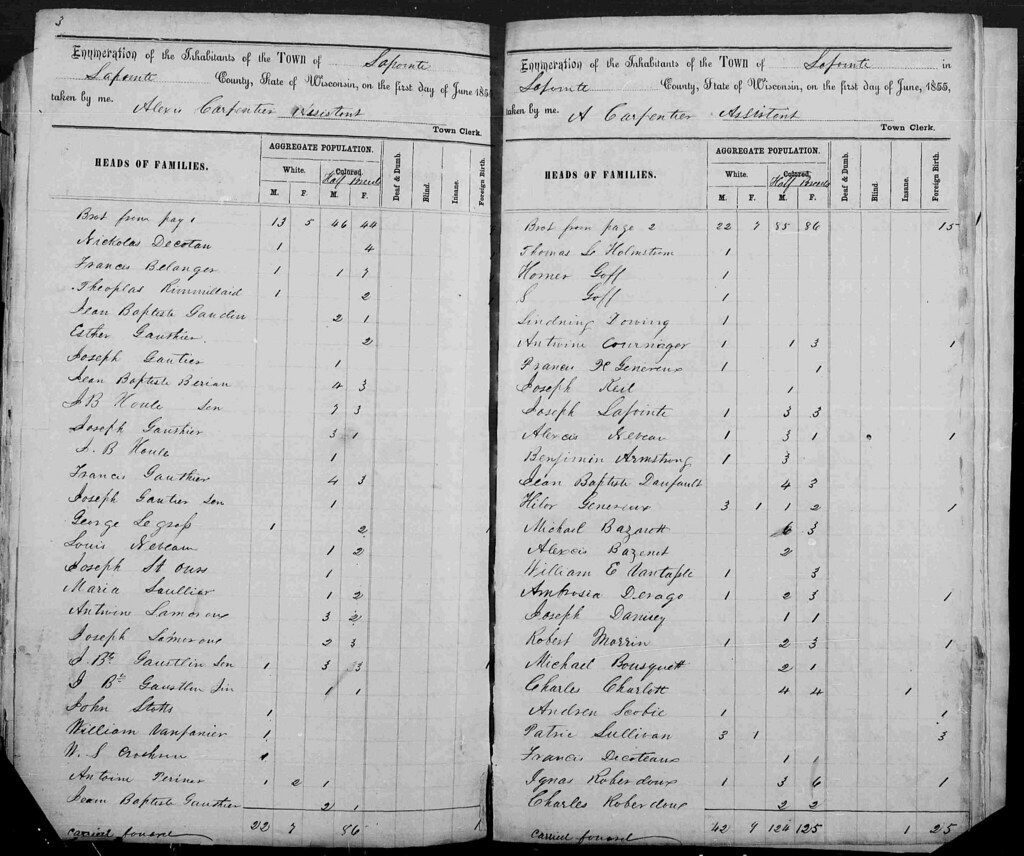
Pages 2 and 3. Patric Sullivan is fourth from the bottom on the right side. enlarge

Pages 4 and 5.
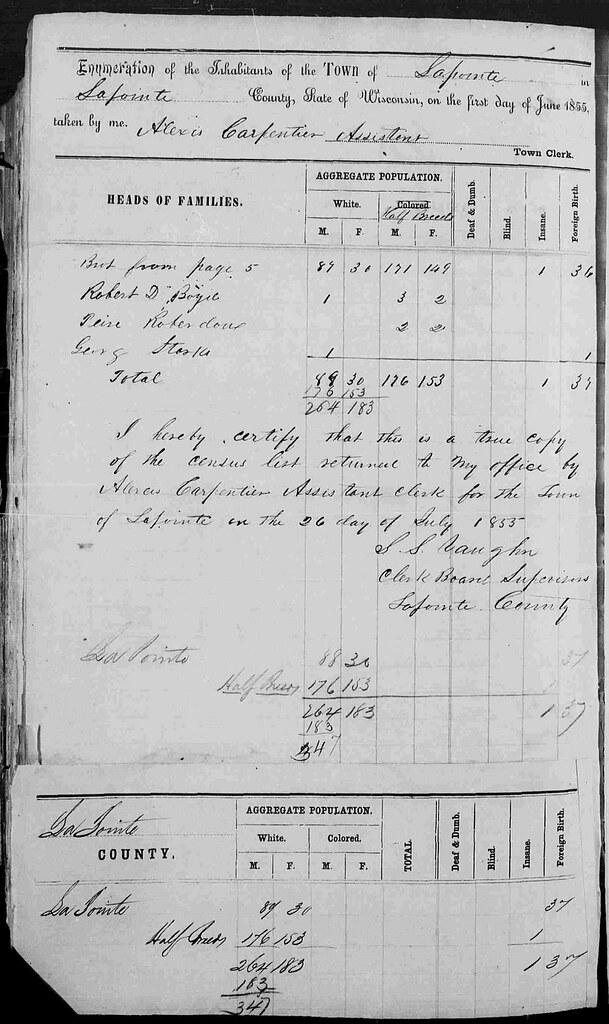
Page 6 with totals.
Patrick Sullivan did not sign the LaPoint Agreement to Stop Whiskey Trade of September 10, 1855. In fact, I haven’t been able to find much information at all about Patrick and Johanna Sullivan in later years. It does appear the family stayed in the area and their children were still living in Ashland at the dawn of the 20th century.
Finally, since this post deals with the 1855 census and issues of race and identity, it’s worth noting another interesting fact. The state census had only two categories for race: “White” and “Colored.” As non-citizens, full-blooded Ojibwe people would not have been counted among the 447 names on the census. However, it seems that Carpentier and his boss, La Pointe town clerk Samuel S. Vaughn, were not sure how to categorize by race.
Carpentier crossed out the designation “Colored” and replaced it with “Half-Breed.” By their count, 329 “Half-Breeds” and 118 Whites (many of them in mixed families) lived in La Pointe County in 1855. Mix-bloods were considered Ojibwe tribal members under the Treaty of 1847. However, they traditionally had their own identity and were thought eligible for U.S. citizenship.
One wonders what conversations were had as the census was completed, but in the final compilation, all 447 names (including several core Red Cliff and Bad River families) were submitted to the state as “White” rather than “Colored.” Despite America’s best efforts to create a racial duality, which would only intensify following the Civil War, this region would continue to defy such categorization for the remainder of the 19th century.
Sources:
Kohl, J. G. Kitchi-Gami: Life among the Lake Superior Ojibway. St. Paul: Minnesota Historical Society, 1985. Print.
Miller, Kerby A. Emigrants and Exiles: Ireland and the Irish Exodus to North America. New York: Oxford UP, 1985. Print.
NOTES: Research originally featured on Chequamegon History is featured in the new Changing Currents exhibit opening today at the Chippewa Valley Museum in Eau Claire. I had a chance to preview the exhibit on Friday, and John Vanek and crew have created an incredibly well-done display of Ojibwe treaty and removal politics of the mid 1800s. See their website for more information. The research found in this exhibit, which extends into several topics, is very deep and does not shy away from uncomfortable topics. I highly recommend it.
There may be some exciting guest research featured on Chequamegon History in the coming months dealing with the aftermath of the 1854 Treaty and fraudulent land claims in the Penokee Iron Range. Stay tuned.
 Chequamegon History