Memoirs of Doodooshaboo: Joseph Austrian at Eagle River 1854-1859
November 2, 2024
By Amorin Mello
This post is the seventh of our Memoirs of Doodooshaboo series reproducing the memoirs of Joseph Austrian at the Chicago History Museum. The previous post began in 1852 when the Leopold & Austrian family transferred Joseph from their La Pointe store to work at their other store in Eagle River on the Keweenaw Peninsula, and ended up spending the Winter of 1853 at the family headquarters in Cleveland to greet his mother and siblings upon their arrival immigrating from Bavaria.
This post begins in 1854 upon Joseph’s return from Cleveland to Eagle River to continue the family business at their new storefront, and provides insights into the growing pains of the pioneering copper mining companies on the Keweenaw Peninsula, Joseph somehow fails to mention much else about life on Lake Superior during 1854-1859.
1854-1859 were the boom and bust years of La Pointe County land speculation, which arose from the La Pointe Treaty of 1854 and Soo Locks of 1855, and crashed with the 1857 Financial Panic of 1857 and American Civil War of 1861. It is unfortunate how Joseph’s memoirs do not mention anything about his Leopold & Austrian family’s business at La Pointe during 1854-1859, when they were capitalizing on Chippewa Treaty Allotments in the Penokee Mountains to form the La Pointe Iron Company.
Some of that story can be told through other records in our Austrian Papers and upcoming posts on Chequamegon History. Until then, we’ll continue with Joseph’s memoirs.
Memoirs of Doodooshaboo
… continued from after La Pointe 1852-54.
Partner of Leopolds in Eagle River Store. 1854.
Louis Leopold & Babette Austrian;
Hannah Leopold & Julius Austrian.
On our arrival in Eagle River, May 1854, I found the work on the store had not been properly finished by the contractor, and I had my hands full to get the new store in shape quickly for business without unnecessary delay. Henry Leopold & wife (my sister Ida) occupied the apartment over the store and I boarded with them as soon as they started housekeeping, which as a matter of course was a great improvement over our former mode of living, and fresh meat was no longer scarce.

Sketch of the Cliff Mine, 1849.
~ The Cliff Mine Archeology Project Blog
The additional store now permitted us to add, various new departments in; grain, heavy provisions, hard ware, &c. We also opened up in connection with our business a meat market located at the Cliff Mine, managed by Henry F. Leopold with a branch at Eagle River. I took sole charge of the Eagle River business making the daily rounds to the Cliff and other near by mines, boarding houses and miners homes, soliciting orders. In the evenings I worked at the books, as I had no one to assist me in this work.
Sam went to Mackinaw to wind up the old business affairs of his brother Louis, then he went to New York and settled with his creditors. After this he went to Eagle River in the fall and we jointly attended to the business. He went to New York every season to buy goods, consisting of clothing, dry goods, boots & shoes & mens furnishing goods.
During the second winter of our settling at Eagle River, he went to Europe and became engaged to Babette Guttman, a cousin of mine, and the following winter he went to Europe again to be married and returned in the Spring with his wife. A Mr. Henry Guttman, Babette’s brother who had been interested with us in the meat market at the Cliff Mine assisted me in our store during Sam’s absence.
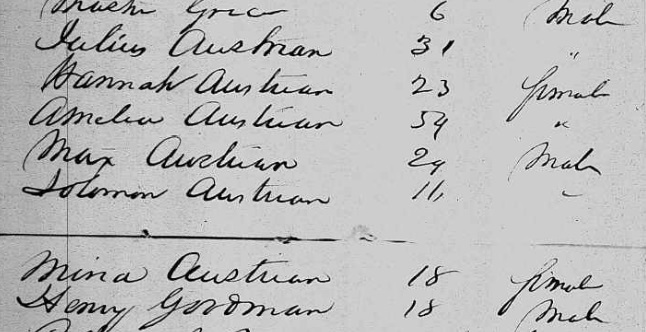
Henry Guttman (Goodman) immigrated with the Austrians.
~ 17 October 1853 passenger manifest of the steamer Atlantic.
Business Increases.
Later on I found it necessary to engage a book keeper owing to the rapid growth of our business, and for that purpose I engaged a Mr. Moses Hanauer, a son of the teacher in the native place of the Leopolds.
I made it my duty to solicit orders and deliver goods, and went the rounds in a delivery wagon daily, soliciting new orders. Of course I had a hostler to attend to the horses & wagons and who assisted in loading the goods. By the next year our store had again become too small and I contracted for a new wing to be added, which made a great improvement and gave us better facilities for carrying on our business.
Phoenix Mining Company’s Drafts Protested.
By an arrangement with the Phoenix Mining Co. we agreed to attend to the payment of their miners, taking the drafts of the Company’s agent in Boston in settlement each month. We did this on account of the business which came to us through it.

~ The Mining Magazine: Devoted to Mines, Mining Operations, Metallurgy, &c., &c., Volume 2, 1854, pg. 404.
After this thing had gone on for some time, the several drafts had amounted to a big sum, and unexpectedly to our consternation the drafts came back protested.
We had quite a struggle and wrangle trying to get them to make good their drafts. Finally Sam Leopold went to Boston and proposed that we would take the mine in payment of their debt if they though it was not worth the protested drafts. This proposition brought them to their senses and they made immediate arrangements then for funds by calling an assessment on the Stockholders to satisfy our claim.
The success we had met with in the Eagle River business in course of years gave us sufficient capital for new enterprises.
To be continued on the Keweenaw Range 1860-1864…
Treaty Allotments at Copper Falls
February 17, 2022
Collected & edited by Amorin Mello

Chippewa Treaty (blue) and Sioux Script (red) treaty land allotments in the Penokee Mountains located along mineral deposits near Mellen, Wisconsin.
[LaPointe County Register of Deeds: Volume 2 Deeds Page 419]

Julius Austrian had better success entering lands with Chippewa Certificates along the iron range for the Leopold & Austrian family’s La Pointe Iron Company than here along the copper range.
Be it known to all men that I Julius Austrian of Lapointe County State of Wisconsin am held and firmly Bound unto Julius [Bernault?], Peter King, Abraham Comartin, John W Bell & Henry Merryweather and to Each of them Separately in the Sum of One thousand Dollars for which payment will and truly to be made I bind my self my heirs executors and administrators firmly by these presents.
The condition of the above obligations are such that whereas the above mentioned Julius [Bernault?], Peter King, Abraham Comartin, John W Bell & Henry Merryweather having Squatted and improved the following mentioned Lands in Lapointe County with the intent of Claiming the Same as a Town Site namely the East half of Section No Seventeen (17) of Township number Forty five (45) of Range no two (2) and have agreed with the said Julius Austrian that he may enter the above described lands by Chippewa Script or otherwise at his option.

The “East half of Section No Seventeen (17) …” is where the Bad River and Tyler Forks River join spectacularly at what is now Brownstone Falls in Copper Falls State Park.
Now if the said Julius Austrian shall with due diligence enter the same as provided and obtain a Patent or Patents as Early as possible from the United States, and within 10 Days from the time he may procure and obtain said Patent or Patents for the above mentioned lands whether in his name or in the names of other parties, make execute & deliver or cause so to be done, to each of the above mentioned parties a Good & Sufficient Deed of warrantee clear of all incumbrances of an undivided Four ninetieths part of the whole mentioned East half of said Section no 17 as above specified. Then this obligation to be null & voice, otherwise to Remain in full force and virtue.
Given under my hand and seal at Lapointe this 30th day of April 1858.
Julius Austrian {Seal}
In presence of
Henry Smitz
M H Mandelbaum
State of Wisconsin } S.S.
County of Lapointe }
Personally came before the undersigned a Notary Public in & For the County of Lapointe the within named Julius Austrian to me well known who acknowledged that he did execute sign & seal the within Bond as his free Act and Deed.
{Seal} M H Mandelbaum
Notary Public
[Ashland County Register of Deeds: Volume 1 Deeds Pages 264-268]
{$180.00 Stamp Int Revenue U.S.}
This Indenture made the twenty fifth day of May in the year one thousand eight hundred and sixty four Between Louis Stein of the City and State of New York individually, Margaret Dupuis by Loius Stein her attorney, Charlotte Mercier by Louis Stein her attorney, Hypolite Auger by Louis Stein her attorney, Julia Renville by Louis Stein her attorney and Louise Moreau by Louis Stein her attorney, parties of the first part, and the Ashland Copper Mining Company, a Corporation created under and by virtue of the laws of the State of Wisconsin, party of the second part.
Whereas the north half of the North East quarter of Section Seventeen (17) in Township number Forty five (45) of Range Two (2) west in the District of Lands subject to Sale at Bayfield Wisconsin containing eighty acres according to the Government Survey was located on the 14th day of October 1863 with Chippewa Half Breed Scrip No 228 by John B Corbin,
and also the South Half of the North East Quarter of of Section Seventeen (17) Township Forty Five (45) Range Two (2) in the District of Lands subject to Sale at Bayfield Wisconsin containing eighty acres according to Government Survey was located on the 28th day of September 1863 with Chippewa Scrip Number 209 by John P Hamlin attorney for John Baptiste Denomie,
and also the North East half of South East quarter of Section Seventeen (17) Township Forty five (45) Range two (2) West in the District of Lands subject to Sale at Bayfield Wisconsin containing eighty acres according to the Government Survey was located October 14th 1863 with Chippewa Half Breed Scrip No 161 issued to John Haskins by John P Hamlin attorney,
and also the North East Quarter of South West quarter of Section Seventeen (27) Township Forty Five (45) Range Two (2) west in the District of lands subject to sale at Bayfield Wisconsin containing Forty acres according to the Government Survey was located October 20th 1863 with Sioux Scrip No 212 B by Louis Stein attorney for Margaret Dupuis,
And also the North West Quarter of South West quarter of Section Seventeen (17) Township number Forty five North of Range Two (2) West in the District of Lands subject to Sale at Bayfield Wisconsin containing Forty acres according to the Government Survey was located on November 25th 1863 with Sioux Half Breed Scrip No 102 B by Louis Stein attorney for Charlotte Mercier,
And also the South East Quarter of Section Eighteen (18) Township Forty five (45) North of Range Two (2) West in the District of Lands subject to Sale at Bayfield Wisconsin containing one hundred and sixty acres according to the Government Survey, was located on the 25th day of November 1863 with Sioux Half Breed Scrip No 487 C by Louis Stein attorney for Hypolite Auger,
And also the South half of South West Quarter of Section Seventeen (17) Township Forty five (45) Range Two (2) in the District of Lands subject to Sale at Bayfield Wisconsin containing eighty acres according to the Government Survey was located October 18th 1863 with Sioux Half Breed Scrip No 212 Letter C by Louis Stein attorney for Margaret Dupuis,
And also the North half of the North West quarter of Section Twenty (20) Township Forty five (45) North of Range 2 west in the District of lands subject to Sale at Bayfield Wisconsin containing eighty acres according to the Government Survey was located September 10th 1863 with Chippewa Half Breed Scrip No 158 by Julius Austrian attorney,
And also the South Half of South East Quarter of Section Seventeen (17) Township Forty five (45) Range Two (2) West in the District of Lands subject to Sale at Bayfield Wisconsin containing eighty acres according to the Government Survey was located on the 14th day of October 1863 with Chippewa Half Breed Scrip No 281 issued to Michael Lambert by John P Hamlin attorney,
And also the North East quarter of Section nineteen (19) Township No Forty five (45) Range Two (2) West in the District of Lands subject to Sale at Bayfield Wisconsin containing one hundred and Sixty acres according to the Government Survey was located on the 19th day of October 1863 with Sioux Half Breed Scrip No 29 by Louis Stein attorney for Julia Renville,
And also the North half of South East quarter and East Half of the South West quarter of Section Number nineteen (19) Township No Forty five (45) Range Two (2) West in the District of Lands subject to Sale at Bayfield Wisconsin containing One hundred and Sixty acres according to the Government Survey was located on the 19th day of October 1963 with Sioux Half Breed Scrip No 17 C by Louis Stein attorney for Louise Moreau.
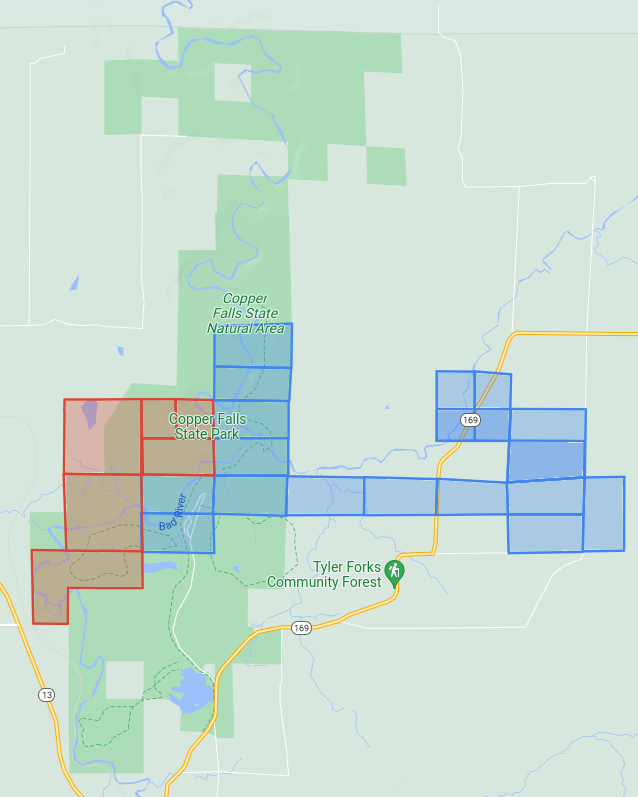
Chippewa and Sioux treaty land allotments in and contiguous to Copper Falls State Park. There are more Chippewa allotments here than those claimed by Ashland Copper Mining Company. Others went to Robert Morrin, Joseph Roy, Francis S. Gurnoe, John Chapman, Francis Fournier, Rosalie Trocquer, John Baptiste Visneau, Henry Davenport, Edward Ashman, Henry Graham, Mary Graham, Joseph Blanchard, and Reuben Chapman.
And whereas said North Half of North East Quarter of Section Seventeen (17) in Township No Forty five (45) of Range Two west was conveyed by John B Corbin and Wife to John P Hamlin by Deed dated October 17th 1863, and Recorded in the Office of Register of Deeds of Ashland County Wisconsin in Book of Deeds Vol 1 pages 218 & 219 October 18, 1863 and was further conveyed by said John P Hamlin to Louis Stein by Deed dated October 31st 1863, and Recorded in said Registers office in Book of Deeds Vol 1 Page 225 November 9th 1863,

John Baptiste Denomie Jr of Odanah; son of allottee Jean Baptiste Denomie Sr.
~ Noble Lives of a Noble Race, A Series of Reproductions by the Pupils of Saint Mary’s, Odanah, Wisconsin, 1909, page 213-217.
And whereas said South Half of the North east quarter of Section Seventeen (17) Township Forty five (45) Range Two (2) has been conveyed by the said John Baptiste Denomie to Louis Stein by Deed dated May 25th 1864,
and said North East Half of South East Quarter of Section Seventeen (17) Township Forty five (45) Range Two(2) west has been conveyed by said John Haskins to said Louis Stein by Deed dated May 25th 1864,
and said South East Quarter of Section Eighteen (18) Township Forty five (45) North of range two (2) west has been conveyed by Hypolite Auger to said Louis Stein by Deed Dated January 1, 1862 and recorded in said Office of Register of Deeds in Vol 1 of Deeds page 227 January 23 1864,

The Ashland Copper Mine was mapped by Irving in 1873 for the Geology of Wisconsin: Volume III. This was located at what is now the main picnic area on Michael Lambert’s Chippewa Allotment in Copper Falls State Park.
and said South Half of South East quarter of Section Seventeen (17) Township Forty five (45) Range two (2) West has been conveyed by the said Michael Lambert to the said Louis Stein by Deed dated May 25th 1864,
and the said Louis Stein has also acquired the title of the said North Half of the North West quarter of Section twenty (20) Township Forty five (45) North of Range two (2) West from the said Julius Austrian.
And whereas the said parties of the first part to these presents have sold and agreed to convey to the said party of the second part to these presents a tract of land situated in the County of Ashland in the State of Wisconsin which includes the whole or parts of the several tracts pieces and parcels of land herein before described which said tract of land so sold and agreed to be conveyed to the said party of the second part is hereinafter particularly described.
Now Therefore this Indenture Witnesseth that the said parties of the first part for and in consideration of Twenty thousand shares of the Capital Stocks of the said party of the second part of the value of five dollars for each Share, which have been issued or transferred and assigned to them the said parties of the first part or as they have appointed and directed, the receipt of which is hereby acknowledged, have granted, bargained, sold, released, conveyed, and confirmed and by these presents do grant, bargain, sell, release, convey and confirm unto the said party of the second part its successors and assigns forever

Copper Falls by Emily Fritts, August 2016.
~ WikiMedia Commons
All that certain tract and parcel of Land situate, lying and being in the County of Ashland in the State of Wisconsin, known bounded and described as follows to wit;
Beginning at a point in the center of Bad River in Township Number Forty five (45) North Range Number Two (2) West of the Fourth Meridian where said river crosses the northerly boundary of Section number Seventeen (17) in the North East quarter, thence running west eight hundred (800) feet more or less to the North West corner of said North East quarter Section; thence South twenty six hundred and forty (2640) feet to the center of Section number Seventeen (17); thence West Five thousand two hundred and eighty feet (5280) to the center of Section number eighteen (18); thence South Five thousand two hundred and eighty (5280) feet to the center of Section number nineteen (18); thence west thirteen hundred and twenty (1320) feet; thence South twenty six hundred and forty (2640) feet; thence East thirteen hundred and twenty (1320) feet; thence North twenty three hundred and ninety (2390) feet more or less to the center of said Bad River and thence North Easterly along the center of said Bad River as it runs to the place of beginning, containing six hundred and fifty three acres (653) more or less and being portions of Section numbers seventeen (17), eighteen (18), nineteen (19) and twenty (20) in the aforesaid Township.

Brownstone Falls in Copper Falls State Park by Yinan Chen.
~ WikiMedia Commons
To have and to hold the above described and hereby granted premises and every part and parcel thereof together with all and singular the tenements hereditaments and appurtenances thereunto belonging or in anywise appertaining unto the said party of the second part its successors and assigns to its and their own purpose, use, benefit and behoof forever. And the said parties of the first part severally for himself and herself and not the one for the other, and for his and her heirs executors and administrators do hereby covenant promise and agree to and with the said party of the second part, its successors and assigns to make, execute, sign, seal, acknowledge and deliver at the Cost and expense of the said party of the second part its successors and assigns all such other and further Deeds, grants, conveyances and instruments in writing as the said party of the second part its successors and assigns or its or their Counsel learned in the law shall at any times advise, devise or require for the [more?] effectually conveying to and vesting in the said party of the second part its successors and assigns the fee simple of the above described and hereby granted, promised and every part thereof with the appurteances. And the said Margaret DuPuis, Charlotte Mercier, Hypolite Auger, Julia Renville and Louise Moreau severally and not the one for the other and each of them only in respect to so much of the hereby conveyed premises as is located by or for him or her as herein before stated and set forth and is hereby conveyed by him or her or intended so to be for himself and herself, his and her heirs, executors and administrators covenant and agree to and with the said party of the second part its successors and assigns in the manner and form following that is to say That he or she at the time of the ensealing and delivery of these presents is the true, lawful and rightful owner of the said hereby conveyed premises, and has therein a good sure, perfect and indefeasible estate in fee simple; and that he and she has full right, power and authority to grant, bargain, sell, remise, release, convey and confirm the said premises unto the said party of the second part its successors and assigns in manner and form aforesaid and that the said party of the second part its successors and assigns shall quietly enjoy and possess the said premises and that he and she will Warrant and Defend the title to the same against all lawful claims.
In Witness Whereof the said parties of the first part have hereunto set their hands and Seals they day and year first above written
Louis Stein {S.S.}
Margaret Dupuis by Louis Stein atty {S.S.}
Charlotte Mercier by Louis Stein atty {S.S.}
Hypolite Auger by Louis Stein attorney {S.S.}
Julia Renville by Louis Stein Attorney {S.S.}
Louis Moreau by Louis Stein attorney {S.S.}
Sealed and delivered in Presence
A H Wallis
Andrew Clerk
State of New York } S.S.
County of New York }
Be it Remembered that on this seventh day of June in the year eighteen hundred and sixty four before the subscriber a Commissioner in and for the said State, appointed by the Governor of the State of Wisconsin to take acknowledgment and proof of the execution of Deeds, or other conveyances or leases and of any contract, letter of attorney or other writing under seal or not administer oaths and take and certify depositions to be used or recorded in the said State of Wisconsin appeared Louis Stein whom I know to be the person described in and who executed the foregoing instrument and acknowledged that he executed the same in his own behalf as his own act and deed and also acknowledged that he executed the same as the act and deed of Margaret Dupuis, Charlotte Mercier, Hypolite Auger, Julia Renville & Louise Moreau therein descried by virtue of a Power of Attorney severally executed by them authorizing the same, and which Power of Attorney have been duly exhibited to me by the said Louis Stein.
Given under my hand and Official Seal
{Seal} Charles E Jenkins Commissioner for the State of Wisconsin, residing in the city of New York.
Julius Austrian Papers: James Hughes Affair
May 15, 2017
By Amorin Mello
Madeline Island Museum
Julius Austrian Papers
Folder 6: James Hughes Affair (1853-1866)
J. Austrian
Power of Attorney to
J. Hughes
“State of Wisconsin”
“La Pointe County”
“Office of Register of Deeds”
Received for Record on this 10th day of December 1853 at 7 O Clock P.M. and Recorded on Pages 20 and 21 in Book A of Records of Deeds.

Robt. D. Boyd
Register of Deeds
– – – – – – – – – –

James Bibb Hughes of St. Paul, MN, and Hudson, WI.
Newsman; Politician; Abolitionist.
~ Wikipedia.org
Know all men
by these presents that I Julius Austrian of La Pointe, Lapointe County and state of Wisconsin, have made, constituted, and appointed and do by these presents, make, constitute and appoint James Hughes now of La Pointe my lawful Attorney for me and in my name, place and stead to, to sell, alien, and convey, any and all rights, title claim and interest that I have or may have unto any lands or lands purchased by me as the public land sales at Willow River or the second day of May A. D. 1853 for which I hold a Duplicate No 242 signed by Moses S. Gibson received Dated May 2, 1853.
Giving and granting unto my said Attorney full power and Authority to do and perform all and every act or thing whatsoever, requisite and necessary to be done and performed in and about the Premises, as fully & completely, to all intents and purposes as I myself might or could do if I were personally present with full authority to make deeds or deeds for lands sold & to receive money & receipt for same here by ratifying and confirming all the acts or acts of my said Attorney (as fully as I myself could do & [cause?] to be [owner?]) by virtue thereof.
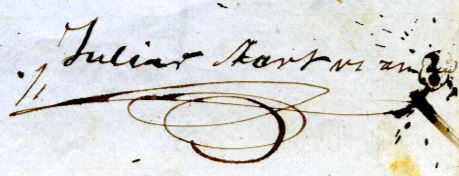
In testimony whereof I have hereunto set my hands & seal this 30th day of May AD 1853
Julius Austrian
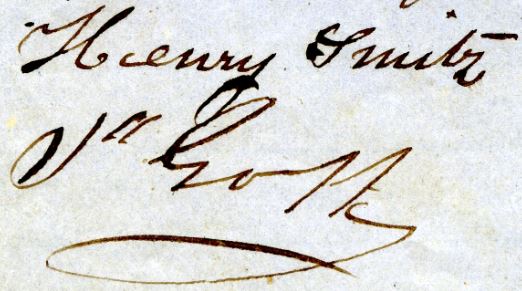 Signed Sealed & delivered
in Presence of
Henry Smitz
S Goff
State of Wisconsin
County of La Pointe
S. Goff came personally before me and being duly sworn according to laws, Says, That, he signed the annexed foregoing power of Attorney from Julius Austrian to James Hughes bearing date on the 30 day of May AD 1853, as one of the subscribing witnesses thereto, and that his Deponents signature thereon and thereto, is genuine, that Deponents was then and still is acquainted with and personally knew the said Julius Austrian who signed the said Power of Attorney, and that he signed the same in the presence of this Deponent at the time the same bears date. To wit: on the 30th day of May AD 1853, and the said Julius Austrian’s signature thereto and thereon is genuine.

S. Goff
Subscribed and Sworn
to before me the 10th day
of december AD 1853

John W. Bell
Justice of the peace
This Agreement
made and entered into between Charles H Oakes, Michael E Ames and Isaac Van Etten of St Paul, Minnesota Territory of the first part and James Hughes of Hudson Wisconsin, of the second part witnesseth:
That the said parties of the first part do hereby agree to pay or cause to be paid, the sum of Three Hundred and fifty Dollars, to be paid unto the said James Hughes, party of the second part, as soon as two certain Warranty Deeds made and executed by Julius Austrian through and by the said James Hughes, his Attorney in fact, to the parties of the first part of even date herewith, shall by duly Recorded in the office of the Register of La Pointe county, Wisconsin, upon the express condition however, that no deed or other instrument of conveyance of the lands described in the said Deed, or any part of them, has been executed or Recorded in said County or State from Julius Austrian, or from his Attorney in fact previous to the Record of the above deeds, to the parties of the first part.
And upon the further condition that the entry or purchase from the United States Government, of the said Austrian of said lands mentioned and described in said Deeds to the parties of the first part, shall be held good and valid by the Government and not vacated or cancelled, and that a patent issue from the United States Government therefore and perfecting the title thereof in the parties of the first part.
And the parties of the first part further agree to pay unto the said James Hughes the further sum of Six Hundred Dollars after and out of the proceeds of the sale of a portion of the property ( Real Estate described in the said two Deeds of Julius Austrian, executed and delivered to the parties of the first, by said James Hughes, as Attorney in fact, for said Austrian above named, after the same shall have been sold and proceeds therefrom realized and not before.

Charles Henry Oakes
La Pointe fur trader; Chippewa treaties signatory; father of a mixed-bloods family; St. Paul banker and Free Mason.
~ Findagrave.com
It is further understood and agreed by and between the parties of the first part, and the party of the second part hereto that the payments of the above sums or either of them, is dependent and upon the express condition, that the said Warranty Deed, bearing even date herewith, to the parties of the first part above herewith, to the parties of the first part above described, does and shall convey and vest a good perfect and legal title of the lands describe therein, in and to the parties of the first part, their heirs and assigns in fee simple, free of all adverse title or titles, and free from all incumbrance (Excepting a certain Mortgage upon a part of the premises to secure the payments of about fifteen Hundred Dollars, from the said Austrian to Charles H Oakes of the parties of the first part).
Otherwise it is understood and agreed that the party of the second part, has not and shall not have any claim whatever when the parties of the first part for the payment of the above mentioned sums, or any part thereof.
In witness whereof, we have hereto set our hands the 1st day of December AD 1853
in duplicate form
Signed Chas H Oakes
[Other signatories cut off in scan]
In presence of
I V D Heard
Julius Austrian
To.
Charles H Oakes
Michael E Ames
Isaac Van Etten
Warranty Deed
“State of Wisconsin”
“County of La Pointe”
“Office of Register of Deeds”
Received for Record on the 10th day of December 1853 at 7 O Clock P.M. and Recorded on Pages 22, 23, and 24 in Book A of Records of Deeds.
Robt. D. Boyd
Register of Deeds
– – – – – – – – – –
THIS INDENTURE,
made this first (1st) day of December is the year of our Lord one thousand eight hundred and fifty three.
BETWEEN
Julius Austrian (by James Hughes his attorney in fact)
of the county of La Pointe and State of Wisconsin of the first part, and
Charles H Oakes Michael E Ames and Isaac Van Etten
of the second part,
WITNESSETH, that the said party of the first part, for and is in consideration of the sum of
One Thousand ($1000)
Dollars, in hand paid by the said parties of the second part – the receipt whereof is hereby acknowledged – has given, granted, bargained, sold, conveyed, and confirmed, and by these presents, does give, grant, bargain, sell, convey and confirm unto the said parties of the second part, their heirs and assigns, forever, all the following described pieces or parcels of land, situate, lying and being in the County of La Pointe ^and State of Wisconsin^ and known and designated as follows, vis:
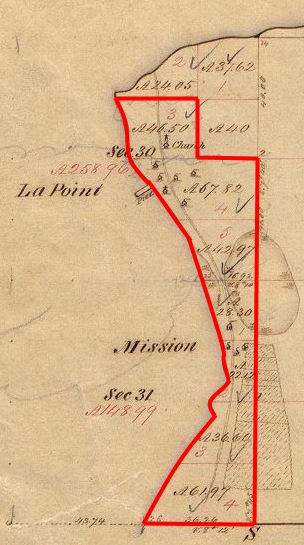
The lots of this deed are outlined in red, describing La Pointe (New Port and Middleport) for a total of 306.28 acres. This is roughly 80 acres short of “Containing 382 23/100 Acres of land”.
~ General Land Office
Lots numbered three (3) four (4) and five (5) in Section No thirty (30) in Township No. fifty (50) North of Range NO. three (3) west, and Lots Numbered One (1) two (2) three (3) and four (4) in Section Number thirty one (31) in said Township No fifty (50), Range No three (3) aforesaid, according to the Survey of the United States government and Platts thereof, [ben?] and hereby intending, to convey the same, and all of the pieces, [pared?] or lots of land heretofore entered, bids of or purchases by the said party of the first part from the United States Government, on or about the second day of May AD 1853, or at any other time. Containing 382 23/100 Acres of land.
TO HAVE AND TO HOLD THE SAME,
together with all and singular the appurtenances and privileges thereunto belonging, or in any wise appertaining, and all the Estate, Right, Title, Interest and Claim whatsoever, of the said party of the first part, either in Law or Equity, in and to the above described premises, to the only proper use, benefit, and behoof of the said parties of the second part, their heirs, and assigns forever. And the said party of the first part, for himself his heirs, executors, and administrators, does COVENANT AND AGREE to and with the said parties of the second part, their heirs and assigns, that he is well seized in fee of the aforesaid premises, and has good right to SELL and CONVEY the same in manner and form as above written, and that the same are free of all incumbrances whatever ; and that the aforesaid premises in the quiet and peaceable possession of the said parties of the second part, their heirs and assigns, against every person lawfully claiming or to claim the whole or any part thereof, he will forever WARRANT AND DEFEND.
IN TESTIMONY WHEREOF, the said party of the first part, has hereunto set his hand and seal the day and year first above written.

Julius Austrian
By James Hughes
his Attorney in fact
Sealed and Delivered in Presence of
The words “and State of Wisconsin” first [intertriced?] before signing.
I V D Heard
Truman M Smith
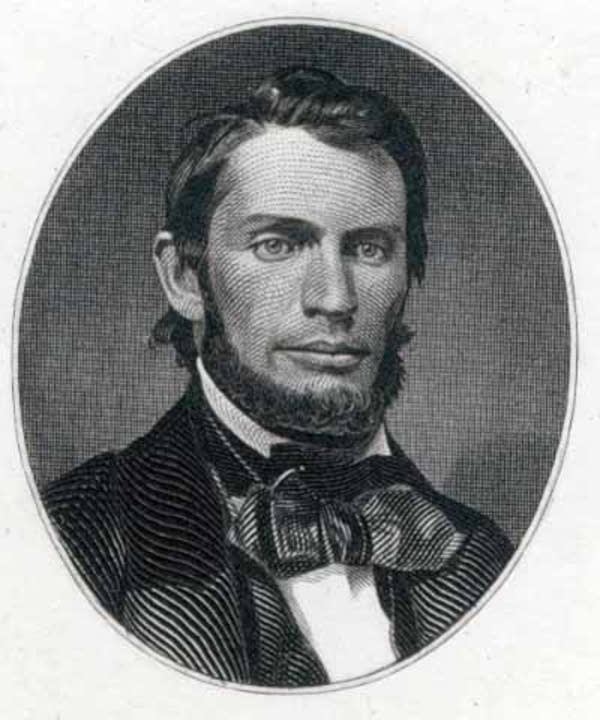
Truman Mott Smith was also a banker.
~ Minnesota Historical Society via Minnesota Public Radio
Territory of Minnesota,
COUNTY OF Ramsey
BE IT KNOWN, that on the first (1st) day of December A. D., before the undersigned, personally came James Hughes (the attorney in fact of the said Julius Austrian) the grantor to the foregoing and within DEED, from him as such grantor to Charles H Oakes Michael E Ames and Isaac Van Etten grantors, and to me personally known to be the identical person described in, and who by James Hughes his said attorney in fact executed the said deed, and the said James Hughes his attorney in fact acknowledged that he executed the said deed, freely and voluntarily, for the uses and purposes therein expressed, for in behalf and on the part of the said Julius Austrian [grantors?], aforesaid,
Truman M Smith
Justice of the Peace
– – – – – – – – – –
Territory of Minnesota
County of Ramsey
I do hereby certify that Truman M Smith, Esq before whom this within acknowledged [guest?] was taken was at the time the same bears date, a Justice of the Peace in and for said County, duly Elected & qualified to act as such, & to take Acknowledgement of Deeds,
that I am well acquainted with his hand writing & believe the within signature purporting to be his, to be his genuine signature. And that the within Deed is Executed & Acknowledged according to the laws of said Territory.
In testimony whereof I have hereunto set my hand & affirm the seal of the District Court of said County, at St. Paul, this 3rd day of December A. D. 1853. [A. J. Mutney?] Clerk.
by Sherwood Hough
Dept. Clerk of said Court
Julius Austrian
To
Charles H. Oakes
M E Ames
Isaac Van Etten
Warranty Deed
“State of Wisconsin”
“Lapointe County”
“Office of Register of Deeds”
Received for Record on this 10th day of December, 1853 at 7 O Clock P.M. and Recorded on pages 24, 25, and 26 in Book A of Records of Deeds.
Robt. D. Boyd
Register of Deeds
– – – – – – – – – –
THIS INDENTURE,
made this first (1st) day of December is the year of our Lord one thousand eight hundred and fifty three.
BETWEEN
Julius Austrian (by James Hughes his attorney in fact)
of the county of Lapointe and State of Wisconsin of the first part, and
Charles H Oakes Michael E Ames and I Van Etten
of the second part,
WITNESSETH, that the said party of the first part, for and is in consideration of the sum of
One hundred and fifty ($150~)
Dollars, in hand paid by the said parties of the second part – the receipt whereof is hereby acknowledged – has given, granted, bargained, sold, conveyed, and confirmed, and by these presents, does give, grant, bargain, sell, convey and confirm unto the said parties of the second part, their heirs and assigns, forever, all the following described pieces or parcels of land, situate, lying and being in the County of La Pointe ^and State of Wisconsin^ and known and designated as follows, vis:

Roughly 80 acres are highlighted in blue, labeled as “Austrian’s Sawmill“ on the 1852 PLSS survey map. This is located along what is now Pike’s Creek south of the Bayfield Road on the mainland.
~ General Land Office
The South West quarter of the North West quarter of Section No twenty one (21) and the North west quarter of the south west quarter of said section No. twenty one (21) in Township No fifty (50) North, of Range No. four (4) containing Eighty Acres more or less.
~ The Sawmill Community At Roy’s Point by Mary E. Carlson, 2009, page 14.
TO HAVE AND TO HOLD THE SAME,
together with all and singular the appurtenances and privileges thereunto belonging, or in any wise appertaining, and all the Estate, Right, Title, Interest and Claim whatsoever, of the said party of the first part, either in Law or Equity, in and to the above described premises, to the only proper use, benefit, and behoof of the said parties of the second part, their heirs, and assigns forever. And the said party of the first part, for himself his heirs, executors, and administrators, does COVENANT AND AGREE to and with the said parties of the second part, their heirs and assigns, that he is well seized in fee of the aforesaid premises, and has good right to SELL and CONVEY the same in manner and form as above written, and that the same are free of all incumbrances whatever ; and that the aforesaid premises in the quiet and peaceable possession of the said parties of the second part, their heirs and assigns, against every person lawfully claiming or to claim the whole or any part thereof, he will forever WARRANT AND DEFEND.
IN TESTIMONY WHEREOF, the said party of the first part, has hereunto set his hand and seal the day and year first above written.
Julius Austrian
By James Hughes
his Attorney in fact
Sealed and Delivered in Presence of
The words “and State of Wisconsin” first [introduced?] before signing.
I V D Heard
Truman M Smith
Territory of Minnesota,
COUNTY OF Ramsey
BE IT KNOWN, that on the first (1st) day of December A. D., before the undersigned, personally came James Hughes the attorney in fact of the said Julius Austrian the grantor to the foregoing and within DEED, from him as such grantor to Charles H Oakes Michael E Ames and I Van Etten grantors, and to me personally known to be the identical person described in, and who by James Huges his said attorney in fact executed the said deed, and by James Hughes his attorney in fact and who acknowledged that he executed the said deed, freely and voluntarily, for the uses and purposes therein expressed, for in behalf and on the part of the said Julius Austrian [grantors?], aforesaid,
Truman M Smith
Justice of the Peace
– – – – – – – – – –
Territory of Minnesota
County of Ramsey
I do hereby certify that Truman M. Smith Esq. before whom the within Acknowledgment was taken, was at the date thereof, a Justice of the Peace in and for said County, duly Elected & qualified to act as such, & to take the Acknowledgement of Deeds, that I am well acquainted with his hand writing and believe the signature to the within certificate purporting to be his, to be his genuine signature. And that the within Deed is Executed & Acknowledged according to the laws of this Territory.
In Testimony whereof I have hereunto set my hand & affix the Seal of the District Court of said County at St. Paul this 2nd day of December A.D. 1853. Clerk.
by Sherwood Hough
Dept. [Crt?] Clerk
of the Dist Court
of said County
Hudson, Wisconsin
Dec. 4th 1853
Julius Austrian Esq.
Dear Sir,
~ Fifty Years in the Northwest, by W. H. C. Folsom, 1888, page 169.
I have first learnt, by report, that Col. Hughes by virtue of a power of att’y given him by you, has sold to Borup and Oaks the whole La Pointe property, for the sum of four thousand dollars. You had better at once draw, execute and have placed on record a written revocation of the Power of Attorney. The revocation should be acknowledged before a justice of the peace as same as a deed.
If this report be true you had better come down at once.
Yours truly
W. H. Semmes
Notice to the Public
Julius Austrian
~ Madeline Island Museum
Whereas James Hughes of Hudson in the County of St Croix and State of Wisconsin, on the first day of December AD 1853, did execute to Charles H Oakes, Michael E Ames and Isaac Van Etten, under a pretended power of attorney from Julius Austrian and without any authority from him, or either of the under signed, two several deeds, one of which deeds had described therein, the following described lands, lying in the County of La Pointe and State of Wisconsin, to wit:
the south west quarter of the north west quarter of Section No twenty one (21), and the north west quarter of the south west quarter of Section No Twenty one (21) in Township No fifty (50) North of Range No four (4) containing eighty acres more or less,
and the other of said deeds had described therein the following described lands to wit:
Lots numbered Three (3) four (4) and five (5) in Section No Thirty (30) in Township No fifty (50) north of Range No Three (3) west and Lots numbered one (1) two (2) three (3) and four (4) in Section No Thirty one (31) in said Township No fifty (50) Range No Three (3) aforesaid.
And whereas the said lands were entered and purchased by Julius Austrian from the Government of the United States on the 2nd day of May 1853. And whereas the said Julius Austrian, did, on the 23rd day of May AD 1853, execute and deliver to one Henry Smitz of La Pointe County, a deed of conveyance in fee simple of the undivided one sixth part of the following described lands, to wit:
Lots Nos three (3) four (4) and five (5) in Section No thirty (30), and Lots Nos one (1) two (2), three (3) and four (4) of Section No Thirty one (31) in Township No fifty (50) North of Range No three (3) in the said County of La Pointe.
And whereas neither the said Julius Austrian, nor the said Henry Smitz, has conveyed any part or portion of the rel estate above described & any person. And whereas further the said James Hughes had no legal or equitable power or authority from the said Julius Austrian and Henry Smitz or either of them, to sell or convey the said above described lands, on the said first day of December AD 1853 or at any time previous or subsequent of that day.
Now therefore notice in hereby given to all persons, that the said Julius Austrian and Henry Smitz, nor either of them do not, and never have recognized the authority of the said James Hughes to make the deeds aforesaid of the said laws, and do not recognize the acts of the said James Hughes in the premises. And that the said Julius Austrian and Henry Smitz, do now claim and have ever since the said 23rd day of May 1853, claimed the legal title to and ownership of, and the sole right to sell and convey the following described lands; to wit;
Lots Nos three (3), four (4) and five (5) in Section No Thirty (30) and lots Nos one (1) two (2), three (3) and four (4) of Section No Thirty one (31) in Township No fifty (50) North of Range No three (3) West.
And that the said Julius Austrian does now claim and has ever since the 2nd day of May 1853, claimed the legal title to and the ownership of and the sole right to sell and convey the following described lands, to wit;
the South West quarter of the North West quarter of Section No Twenty one (21) and the North West quarter of the South West quarter of Section No Twenty one (21) in Township No fifty (50) North of Range No four (4) West, containing eighty acres more or less.
And all persons are therefore hereby warned, notified and forbidden from purchasing of, or receiving any manner of conveyance or conveyances from the said Charles H Oakes, Michael E Ames and Isaac Van Etten, or either of them, of any part or portion of the above described lands.
Hudson, St Croix County, Wisconsin
December 23 1853
Julius Austrian
Henry Smitz
To Messrs Charles H. Oakes, Michael E. Ames and Isaac Van Etten and to each and everyone of you
You are hereby notified that the conveyances made to you by James Hughes on the first day of December A.D. 1853 under a pretended power of attorney from Julius Austrian, of the following described lands to wit:
the South West quarter of the North West quarter of Section No. twenty one (21), and the North West quarter of the South West quarter of Section No. twenty one (21) in Township No. fifty (50) North of Range No. four (4) containing eighty acres more or less; and also Lots numbered three (3) four (4) and five (5) in Section No thirty (30) in Township No. fifty (50) North of Range No. three (3) West, and Lots numbered one (1) two (2) three (3) and four (4) in Section No. thirty one (31) in said Township No. fifty (50) Range No. three (3) aforesaid in the County of La Pointe and state of Wisconsin,
were made in fraud of the rights of the said undersigned, the said Julius Austrian and Henry Smitz to the said lands and without any authority from the said Julius Austrian and Henry Smitz or either of them, either by power of attorney or otherwise, to the said James Hughes.
And you are therefore hereby notified that we the said Julius Austrian and Henry Smitz claim the legal title to and the ownership of the following described lands to wit:
lots numbered three (3) four (4) and five (5) in Section No. thirty (30) in Township No. fifty (50) North of Range No. three (3) west and Lots numbered one (1) two (2) three (3) and four in section No. thirty one (31) in said Township No. fifty (50) Range No. three (3) aforesaid being in the County of La Pointe and state of Wisconsin.
And you are further notified hereby that the said Julius Austrian claims the legal title to and ownership of the following described lands to wit:
the South West quarter of the North West quarter of Section No. twenty one (21) and the North West quarter of the South West quarter of Section No. twenty one (21) in Township No. fifty (50) North of Range No. for (4) containing eighty acres more or less.
And that we the said Julius Austrian and Henry Smitz do not and neither of us does, recognize the acts of the said James Hughes concerning the said above described lands and hereby forbid you and each of you from executing any conveyance or in any manner encumbering the title to the lands above described or any part thereof.
Dated at Hudson December 23d 1853
Julius Austrian
Henry Smitz
Mr. [McCloud?]
You will please deliver to Julius Austrian the enclosed papers upon my sending you a quit claim deed signed by Chas. H. Oakes & wife, Michael E. Ames & wife & I. Van Etten & wife for the lands embraced in two certain Deeds executed by said Austrian by James Hughes his atty-in- fact to said Oakes, Ames & Van Etten which deeds will accompany said Quit Claim Deeds. The [?????ed ??? you?].
I Van Etten
[????] discharge of [??????]
I Van Etten
– – – – – – – – – –
Quit Claim Deed
Chas. H. Oakes
and others
to
Julius Austrian
Office of Register of Deeds
La Pointe County Wis
I hereby Certify that the within Deed was filed in this Office for Record October 10th 1859 a [M?] and was duly Recorded in Book A of Deed Vol 3 on pages 333 & 334.
John W Bell
Register of Deeds
Fee 10$
– – – – – – – – – –
Know all men by these present.
That we Charles H Oakes and Julia B., his wife, Issac Van Etten & Jan I., his wife & Michael E. Ames & Josephine, his wife, of the County of Ramsey in the State of Minnesota. & the first part in consideration of the sum of three Hundred Dollars were?] in [hand?] [paid?] by Julius Austrian of La Pointe County in the State of Wisconsin, the receipt whereof is hereby a acknowledged, have bargained, sold, and quit claimed, deed of these presents do bargain, sell and quit claim unto the said Julius Austrian, his heirs and assigns forever, all [our?] rights, title, intersets, claim and severance in and [wled?] following described pieces or parcels of land situate and being in the County of La Pointe and State of Wisconsin [as is?] described as follows, to wit:
Lots Number three four & five (3, 4 & 5) in Section Number thirty (30) in Township No fifty (50) North of Range No Three (3) West, and lots one (1) two (2) three (3) and four (4) in Section number thirty-one (31) in said Township No fifty (50) Range No Three (3), and the South West quarter of the North West quarter of Section Number twenty one (21), and the North West quarter of the South West quarter of said Section number twenty one (21) in Township Number fifty (50) North of Range No four (4), being the same lands conveyed by said Julius Austrian by James Hughes his Attorney in fact to said Oakse & Van Etten & Michael E. Ames, by Deeds dated Dec [1?] 1853.
To Have and to Hold the above Quit claimed Premises with all the privileges and appurtenances thereto belonging to the said Julius Austrian, his heirs and assigns forever, so [cleat?] neither [we do?] said parties of [wofeist?] part, [??] in heirs or assigns shall have any claims, rights, or title in [?] to the aforesaid premises.
In Witness [????] We have hereunto set our [hand?] and seal, the thirtieth day of September, AD; 1859.

Isaac Van Etten
Jane I. Van Etten
M. E. Ames
Josephine Ames
Chas. H. Oakes
Julia B. Oakes
Signed, Sealed & Delivered
in presence of
[Harvey Affrcer?]
Thomas Van Etten
– – – – – – – – – –
State of Minnesota
County of Ramsey
Be it Remembered that in this 18th day of September AD. 1859, at St Paul in said County & State formerly same before nee, [Iwrue denjued?]. Charles H Oakes and Julia B. his wife, Isaac Van Etten and Jane I. his wife and Michael E Ames and Josephine his wife [fernaly? Rumb? me? who? elusegues?] & [seates?] of [deepering?] deed and acknowledge that they embrace the same for [lew? o? wiwre?] therein expressed, and the said Julia B. Jane I. and Josephine afersaid being by nee examined separate and apart from their said husbands acknowledge that they executed said deed freely.
United States of America
State of Minnesota,
Secretary’s Office.

Francis Baasen
“He was born in Luxembourg, Germany and came to America when he was 19 years of age. […] He was Minnesota’s first Secretary of State, assuming office on May 4, 1858.”
~ Findagrave.com
In Testimony Whereof, I have hereunto set my hand and affixed the Great Seal of the State, at the Capitol, in Saint Paul, this Fifteenth day of September A. D. 1859
Francis Baasen
Secretary of State,
Rec’d August 11, 1866,
of Julius Austrian $766.50 (by draft for 450$ & 210 94/100 acres of land valued at $1.50 per acre) in full satisfaction of a certain deed presents rendered & [d???etece] in the District Court of the United States for the District of Wisconsin in July 3, 1861 for $1127.94 damages & $74.70 cents in my favor & against said Austrian.
C. H. Oakes
by I. Van Etten
his Atty.
Bayfield Aug 11, 1866
Mr Julius Austrian
Dr Sir
In consideration of my settlements this day made I agree to obtain & file a [satisfactuis?] of the Judgement I obtained against you July 3, 1861, in the District Court of the United States for the District of Wisconsin, as soon as I leave [reach?] Madison.
[Y?? ? ?]
I. Van Etten
for C. H. Oakes
Asaph Whittlesey Incidents: Number I
February 9, 2017
By Amorin Mello

Originally published in the February 16, 1878, issue of The Ashland Press. Transcribed with permission from Ashland Narratives by K. Wallin and published in 2013 by Straddle Creek Co.
Early Recollections of Ashland: Number I
by Asaph Whittlesey
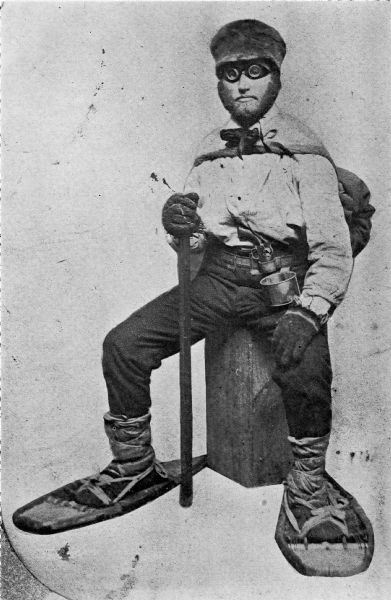
Photograph of Asaph Whittlesey from the Wisconsin Historical Society.
Our first arrival at La Pointe being so intimately associated with the settlement of Ashland, I have determined to make our arrival there the subject of my first letter.
It was among the first days of June, 1854, that George Kilburn, Jr., myself and wife and only child, Eugenia, (then some eighteen months old,) made a landing at La Pointe with a view to remain permanently in the country. Well do I remember the beautiful “town,” spread before us as we merged from the “old log warehouse” through which we passed in reaching the shore, while the general appearance was that of neatness and comfort.
Photograph of Julius Austrian from the Madeline Island Museum.
We had already made the acquaintance of Mr. and Mrs. Julius Austrian, having had the pleasure of their company up the Lakes, and had made many inquiries of them as to the place of our destination. From this time forward we found Mr. and Mrs. Austrian to be most agreeable neighbors and associates, and these young “brides” spent much of their time together, and not unfrequently did the evening air carry to listening crowds our notes of “Good old Colony times,” and “There’s no place like home,” still fresh in our memory.
La Pointe at this time was the second in importance of towns upon the Lakes, Ontonagon taking the lead.
Within a few days after our landing, we were fully organized as “house keepers,” under the same roof with Mr. and Mrs. George Starks, now residents of Bayfield; who proved to be most excellent neighbors, and never did a single roof cover a more harmonious trio of families.
We had, however, a common “foe” to encounter, visions of which filled our dreams and harassed our waking moments. This “foe” was the everlasting “bed bug,” more numerous and more determined in their onslaught than is the “Russian Army;” while this mixture of Dutch and Yankee blood served to satisfy their ravenous appetites. We had heard of this race before, but this was the first time we had met in open combat, face to face. It was our custom regularly before retiring to rest to go into combat with them armed with “wooden spads,” with which we slaughtered them by the quart. Our plan was to remain awake an hour or so after retiring to bed, when we would strike a light which was a signal for a field fight. It was an exciting scene to witness their ranks surrounding us on every hand, while the sheets of our bed seemed dyed in human blood. One means of our defense was to have the bed posts stand in molasses; but this only put them to the trouble of marching to the ceiling above from which they dropped upon us like hail; of course all these contingencies helped to make my wife good natured, and strengthen her attachments to the country. This condition of things lasted while we remained occupants of the building, and when we, in our weakness from loss of blood, staggered forth to make us a home elsewhere, we were filled with anxiety as to the safety of our German neighbors.
“Dr. Borup, the agent for the American Fur Company, (who have an extensive trading-post at this place,) has a superb garden. In walking through it with him, I saw very fine crops of the usual garden vegetables growing in it. His red currant bushes were literally bent down beneath their weight of ripe fruit. His cherry-trees had also borne well. Gooseberries also succeed well. The doctor also had some young apple-trees, that were in a thriving condition. Poultry, likewise, does well. Mrs. B. had her yard well stocked with turkeys, geese, ducks, and chickens.”
~ “Morgan“ at La Pointe during 1845.
As I have before stated, the general appearance of the island was most attractive. The garden of Mr. Austrian was laid out most tastily. We found there a large variety of fruit trees, apples, plums, cherries, etc. Also large quantities of currants and strawberries; but the crowning attraction was the “grape bower,” affording a most attractive lounging place. Here also a merry party, consisting, so far as my recollection serves me, of the following persons: Mr. and Mrs. Julius Austrian, Rev. John Chebohm, (who, I remember, asked the blessing at the table,) Marks Austrian, Mr. H. Mandelbaum, Henry Smit, Mr. and Mrs. Hocksteiner, Mr. and Mrs. George Starks, old Mr. and Mrs. Perinier, Mr. and Mrs. Asaph Whittlesey, and I think Mrs. William Herbert, and a Mr. Roy, celebrated the
“FORTH OF JULY,” 1854.
Being a curious mixture of Americans, Jews, Germans, French and Austrians, no two of whom could carry on a very extensive conversation, for want of a knowledge of the languages, so that our toasts were mainly received in silence, nevertheless the day was passed most pleasantly, while the reading of the Declaration of Independence by Asaph Whittlesey, marked it as a day for national celebration.
To be continued in Number II…
An Interesting Family History
February 2, 2015
By Amorin Mello

1856 Colton Map of Prussia and Saxony, Germany (WikiMedia.org).
This is a reproduction of “An Interesting Family History” from The Jews of Illinois : their religious and civic life, their charity and industry, their patriotism and loyalty to American institutions, from their earliest settlement in the State unto the present time, by Herman Eliassof, Lawrence J. Gutter Collection of Chicagoana (University of Illinois at Chicago), 1901, pages 383-386:
The goal of this post is to provide genealogical information about the illustrious Austrian and Leopold families as a companion to the Joseph Austrian Memoir and as a reference for future stories. In this post, we will explore events within and outside of the Chequamegon region for context about this family’s history. We recommend reading this Opinion by Andrew Muchin, director for the Wisconsin Small Jewish Communities History Project, for more information about Jewish immigration to Wisconsin in general. Coming soon to Chequamegon History, we will explore some of Julius Austrian’s adventures and his impact upon the Village of La Pointe, the La Pointe Iron Company of the Penokee Mountains, and the Lake Superior Chippewa.
——-
AN INTERESTING FAMILY HISTORY.
——-
The two families of Austrian and Leopold have been prominent in Chicago for many years. They came to Chicago from the Lake Superior region and formed the Lake Michigan and Lake Superior Transportation Co., engaging in freight and passenger transportation on Lake Michigan and Lake Superior, to Mackinac, Sault Ste. Marie and Duluth and did an extensive business. For a number of years, until recently, their luxuriously furnished passenger boat, Manitou, has been extensively patronized by summer pleasure seekers, who wished to enjoy the cool and delightful climate of the Lake Superior region. The boat was then sold to a company, in which Mr. Nathan F. Leopold still holds the largest interest. Mr. N. F. Leopold is the son of one of the Leopold brothers who settled in Mackinac in the early forties, and were the first Jews in that region. He married a daughter of the late Mr. Gerhard Foreman, who is related to the Greenebaum family, and who was a prominent banker of Chicago, the founder of the Foreman Bros. Banking Co., a. very popular financial institution of today.
The history of this old Jewish family, favorably known as successful merchants in the Lake Superior region and in Chicago, appeared in 1866, in the Portage, Mich., Gazette, and was copied in the American Israelite under date of April 13th, 1866. We believe that the history of this popular and highly respected family will be read with interest by their many relatives and friends, and we therefore publish it here. They were brave, honest and upright business men, and the story of their pioneer life in a sparsely settled region, of their struggles, hardships and ultimate success will serve as an encouraging example for many a young beginner.
Following is their history as we find it in the American Israelite:
A BAND OF BROTHERS.
Dissolution of the Oldest Merchant Firm on Lake Superior – The Leopold Brothers – Sketch of their Operations – A Pioneer History.
Abraham Isaac Oestreicher &
Malka Heule
Falk Austrian
Julius Austrian
Marx Austrian
Babette Austrian
Joseph Austrian
Ida Austrian
Fanny Austrian
Samuel Solomon Austrian
Bernard Austrian
Mina Austrian
Jette H.S.H Freudenthaler
Louis F. Leopold
Aaron F. Leopold
Henry F. Leopold
Samuel F. Leopold
Hannah Leopold
Karolina Freudenthaler
Ascher Freudenthaler
In our last issue we made a brief notice of the dissolution of the well known firm of Leopold & Brothers, doing business in Hancock, Chicago and Eagle River, the oldest business firm on Lake Superior after a successful existence of over twenty years. The firm has been composed of Louis F., Henry F., Aaron F., and Samuel F. Leopold and Joseph, Julius and Samuel Austrian, the latter being the last admitted partner, and not so intimately connected with the history of the firm. From the very inception of business transactions within the wilds of Lake Superior down to the present day, the firm of the brothers has been identified with the struggles, hardships, successes, and all the varying interests of the country, have participated with its good and ill fortunes, many times carrying burdens that less confident competitors shrank from bearing; never once fearing that all would be well in the end, and after gathering a rich reward retired from the field, leaving an untarnished history, and brilliant record as an incentive to their successors.
~ Joseph Austrian Memoir
Louis Leopold + Babette Austrian
Hannah Leopold + Julius Austrian
Henry Leopold + Ida Austrian
Samuel Leopold + Babette Guttman
Joseph Austrian + Mary Mann
Solomon Austrian + Julia Mann
The Messrs. Leopold are natives of the little town of Richen, in the Great Duchy of Baden, Germany, and there received the elementary education which fitted them to become the shrewd and successful merchants they have proven to be. They first began business life as clerks in an ordinary country store, as it may not be inaptly termed, as Richen was but a small place, having a less population than either Hancock or Houghton, here on Portage Lake.
Early in the year 1842, Louis, the elder brother, who has since become the “father” of the firm, left his home to try his fortunes in the New World, with a stout heart, and but a very moderate amount of means whereon to build up a fortune, upon arriving in this country he very shrewdly foresaw that the great West, then but just attracting attention, was the most promising field for men of enterprise and limited capital, and instead of joining in the precarious struggle for position and existence, even so peculiar to the crowded cities of the Eastern states, he at once wended his way to Michigan, then considered one of the Western states.
~ Joseph Austrian Memoir, pg. 9
Early in the year 1843 he opened a small depot for fishermen’s supplies on the island of Mackinac, providing for them provisions, salt, barrels, etc., and purchasing the fish caught, and forwarding them by vessels to better markets. The business could not have been a very extensive one, for when joined by his brothers three years afterward, their united capital is stated as being but little more than $3,000, but which has since been increased by their energy, prudence and foresight, at least one hundred fold.
In the year 1844, Louis was joined by his brother Henry (Aaron and Samuel serving their time in the store of Richen), who for a short time became his assistant at Mackinac. At that time there was but one steamboat plying on the headwaters of Lake Huron and Michigan, the old General Scott, which made regular trips between Mackinac and Sault Ste. Marie.
By the 1850’s the Leopolds, Samuel, Henry, and Aaron, and their brother-in-law Julius Austrian had moved westward from Mackinac into Lake Superior and had settled in the Wisconsin island town of La Pointe, not too far from present-day Duluth. They helped also to found the nearby mainland town of Bayfield. Nevertheless the Leopolds and Austrians were not Wisconsin’s Jewish pioneers; Jacob Franks of Montreal had bought peltries and traded with the Indians since the early 1790’s using Green Bay as his base. The town, the oldest in that part of the country, was strategically located on the water highways linking the Mississippi to the Great Lakes and the eastern tidewater. At first Franks was an agent for a Canadian firm; by 1797 he was on his own. He enjoyed several years of prosperity before the game, the furs, and the Indians began to fade away and before he had to cope with the competition of John Jacob Astor’s formidable American Fur Company. Franks was an innovative entrepreneur. Around the turn of the century he built a blacksmith shop, a dam for water power, a saw and grist mill, ran a farm and began a family of Indian children, before he finally went back to Mackinac and then to Montreal where he rejoined his Jewish wife.”
~ United States Jewry, 1776-1985, Volumes 1-2 by Jacob Rader Marcus, pg. 94
Shortly after his arrival at Mackinac, Henry conceived the idea of going to La Pointe with a small stock of goods, and attending the Indian payment, an enterprise never before undertaken by a trader from below the Sault. At that time Lapointe was a much larger place than it is now, was the principal station of Lake Superior, of the American Fur Company and the leading business point above the Sault. Every fall, the government disbursed among the Indians some $40,000 to $50,000, which before the arrival of the Leopold Brothers found its way almost entirely into the coffers of the Fur Company.
In the latter part of the spring the brothers left Mackinac on the old General Scott, and went to the Sault with their goods, and after much difficulty succeeded in chartering the schooner Chippewa, Captain Clark, to take them to Lapointe for $300. There were but four small schooners on Lake Superior that season, the Chippewa, Uncle Sam, Allegonquin and Swallow. The trip from the Sault to Lapointe occupied some three weeks, but one stop being made at Copper Harbor, which was then beginning its existence. The building of Ft. Wilkins was then going on. Little or no thought of mining then occurred to the inhabitants, and did not until two or three years subsequently.
Arrived safely at Lapointe, they at once opened a store in opposition to that of the Fur Company, and were, much to the surprise of the latter, the first white traders who undertook an opposition trade with the Indians. They sold their goods for furs, fish, etc., and prospered well. In the fall they were joined by Julius Austrian (now at Eagle River) and Louis leaving him with Henry, returned to Mackinac.
Before Minnesota became a territory in 1849 it was for a time part of Wisconsin and Iowa territories. In Minnesota as in most states there was a wave of Jewish pioneers who came early, often a decade or more before some form of Jewish institutional life made its appearance. Jewish fur traders roamed in the territory from the 1840’s on, bartering with the Indians on the rivers and on the reservations. They were among the first white settlers in Minnesota. Julius Austrian had a trading post in Minnesota in the 1840’s and he may once have owned the land on which Duluth now stands. In 1851 in the dead of winter he drove a dog sled team loaded with hundreds of pounds of supplies into St. Paul; his arrival created a sensation.”
~ United States Jewry, 1776-1985, Volumes 1-2 by Jacob Rader Marcus, pg. 100-1
In the summer of 1845 Henry also returned to Mackinac, leaving Julius to attend to the business at Lapointe. He remained in Mackinac until the year 1846, when Aaron and Samuel came out from Germany and joined them at that place. The four brothers at once united their fortunes; in fact in all their business career they do not appear to have thought of dividing them. Everything they had was, from the outset, common property, and each labored for the general welfare. They appeared to have fully understood the truthfulness of the adage, that, in “Unity there is strength,” and however varied and scattered may have been their operations, the profits went into the general fund.
In the season of 1846 Henry and Samuel went to Green Bay, and opened a store in Follett’s block, remained there until early in 1848, but did not succeed as well as they anticipated. Green Bay was then a miserable place in comparison with what it is now, and its growth very much retarded by the grasping policy of the site owners, John Jacob Astor and Mr. Whitney, a brother of the present postmaster. They would not sell lots at anything near what was considered a reasonable figure, and the result was that after many vain endeavors to secure property very many business men left for other places, holding out better inducements for settlement. While at Green Bay, Samuel began the study of the English language, under the tutelage of a young Methodist minister who considered himself liberally rewarded by return instruction in the German language.

“This represents the home of Julius and Hannah Austrian, after their marriage in the spring of 1848. Premises located at La Pointe, Madeline Island, Lake Superior. Resided there 19 years, happy and contented among Indians, Half-breeds and two Missionaries who represented the inhabitants of the island. Photograph taken summer of 1850.”
~ Julius Austrian Papers (Madeline Island Museum)
Solomon Austrian“also went up to La Pointe by advice of brother Julius where he stayed but a short time…”
~ Joseph Austrian Memoir, pg. 76
Early in 1847, Joseph Austrian, the subsequent brother-in-law of the Leopolds, came out from Germany, and joined his brother, Julius, at Lapointe, where he remained until the next spring, when he joined Henry Leopold at Eagle River, who had opened a small store in an old stable, the habitation of one cow. A partition was put up, and about two-thirds of her ladyship’s parlor fitted up for the sale of dry goods, groceries, etc. The shanty stood on the lot now owned by John Hocking, the second from the corner in the turn of the road down to the old bridge across Eagle River.
Was Simon Mandelbaum of Eagle River related to M.H. Mandelbaum of Bayfield?
There was then but one opposition store in Eagle River, that of Messrs. Senter and Mandlebaum, with whom Henry and Joe entered into lively competition for the trade of the place.
The same season Samuel joined Aaron and Louis at Mackinac, where their business had materially increased, and remained there until the season of 1855, when they left and returned to Lake Superior. Louis had previously left and established himself at Cleveland, where he remained until he went to Chicago in the fall of 1862. During this period he acted as the purchasing agent of the brothers on the lake.
Stories about the early days of the Keweenaw copper mining industry are told in the Memoirs of Doodooshaboo (Joseph Austrian).
In the fall of 1855 Samuel started a branch store at Eagle Harbor in a small shanty not more than twenty feet square, situated on the lot now owned by Hoffenbecker, and the shanty now forms a part of his building. At the time there were five mines working in that vicinity, as follows: Copper Falls, S. W. Hill, agent; Northwestern (Pennsylvania), M. Hopkins, agent; Summit (Madison), Jonathan Cox, agent; Connecticut (Amygdaloid), C. B. Petrie, agent.
The Copper Falls and Northwest were the two great mines of the District, the others doing but little beyond exploration at that time.
In 1856 Samuel bought out Upson and Hoopes, who had been doing a good business in the building now occupied by Messrs. Raley, Shapley & Co., and was that season joined by Aaron, who, since leaving Mackinac, had been spending his time with Louis, in Cleveland. Samuel was appointed postmaster at Eagle Harbor, and acceptably filled the office till his departure in 1859.
Julius Austrian advertisements
(Bayfield Mercury, August 22nd, 1857)

The three brothers, Henry, Samuel and Aaron, and their brother-in-law, Jos. Austrian, might now be said to be operating in the same field with the elder brother, Louis, at Cleveland, as their ever wide-awake purchasing agent. For a year or two they prospered as well as they could desire, but the hard times of 1857-8 tried them pretty severely, but by the most adroit management they came through safely. At Eagle River, in 1857, there were four mines at work, the Garden City, Phoenix, Bay State and Cliff. This was after the great silver excitement at the Phoenix, and when the reaction had fully set in. The assessments were grudgingly paid, if at all, and the workmen at the mine that winter were paid in orders on Leopold Brothers, who paid them in goods and currency. To enable the company to get along as easily as possible they took thirty day drafts on the treasurer in Boston, which were paid when due and presented. As the winter passed, the time of the drafts were extended from thirty to sixty, ninety, and finally to one hundred and twenty days, and in the spring, the firm was astonished by a notification that the drafts had gone to protest. The mine then owed them about $20,000, a large sum, especially when it is considered that they were also carrying nearly $10,000 for the Garden City Mine, which was also struggling along like the Phoenix.
The first news received by the public of the protesting of the drafts was communicated by the clerk of one of the steamboats, and created no small amount of excitement, especially among the employees of the mine, who naturally became fearful and clamorous for their back pay. The Leopold Brothers told them to go on and work, and they would be responsible for their pay. This quieted them, and the work of the mine continued as before.
Upon receiving information of the protesting of the Phoenix drafts, Samuel was at once dispatched to Boston to consult with the company about their payment. To secure themselves they could have attached the mining property, improvements and machinery, but such was their confidence in the integrity of the agent, Mr. Farwell, President, Mr. Jackson, and Secretary, and Treasurer, Mr. Coffin, that this was not done. Upon his arrival in Boston, Samuel found that Mr. Farwell had held a consultation with the Directors, and in his most emphatic manner demanded that Messrs. Leopold should be reimbursed the money they had advanced for the mine.
~ The Mining Magazine: Devoted to Mines, Mining Operations, Metallurgy, &c., &c., Volume 2, 1854, pg. 404.
Another meeting was called and Samuel presented a statement of the amount due his firm, and inquired what they intended to do. It was difficult for them to say, and after many long consultations no definite course of action was decided upon. Believing that delays were dangerous Samuel proposed that he and his brothers would take the property in satisfaction of their demand, pay off the Company’s indebtedness, amounting to nearly $10,000, and perhaps pay them a few thousand dollars on the head of the bargain.
Another consultation followed this offer, and it was finally concluded that if a merchant firm considered the property sufficiently valuable to pay therefor nearly $40,000, it must be worth at least that much to the company. Some three thousand shares of Phoenix stock had been forfeited for the non-payment of an assessment of $1.50 per share, and these shares were offered Mr. Leopold in satisfaction of his claim. He, of course, declined, saying he would take the whole property, or nothing. Another consultation was held and a meeting of stockholders was called, an assessment was levied and In a few days enough paid in to liquidate his demands, and he started for home mentally determining that in future the Phoenix should give sight drafts for all. future orders, and that they would no longer assume, or be identified with its obligations. It required no small amount of finesse to make the discouraged stockholders of the Phoenix believe that there was a sufficiently valuable property to further advance $2 or $3 per share on its stock, but the cool offer to take its property for its indebtedness, completely assured them and saved the Messrs. Leopold their $20,000.
But it is said ill fortune never comes singly; and this was true of the affairs of Leopold & Brothers. Samuel had scarcely arrived in Cleveland when Louis informed him that their Garden City drafts had been protested and the same night he hurried on to Chicago to provide security for the indebtedness. Arriving there he did not find the Company as tractable as the Phoenix, and after much parleying found the best they were willing to do was to give him a mortgage on their stamp mill, as security for the $10,000. Very correctly deeming this insufficient, he returned home, and got out an attachment for the whole property of the Company. This had the desired effect, and the claim was secured by a mortgage and the attachment withdrawn. Shortly afterward the mine passed into the hands of a new party of men, with Judge Canton at their head, and in a short time the claim was satisfactorily adjusted.
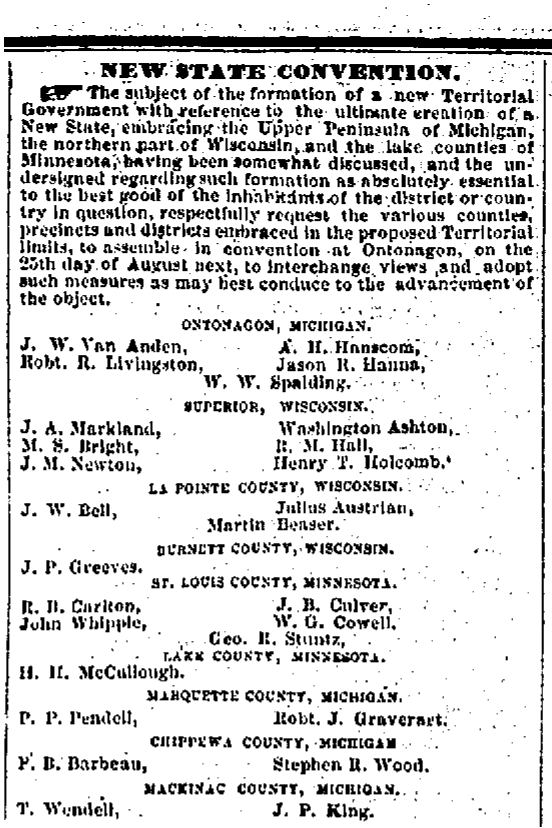
Julius Austrian, along with Martin Beaser and John W. Bell, attended the New State Convention of Lake Superior to represent La Pointe County ~ Superior Chronicle, August 3rd, 1858.
In 1858, the firm had much difficulty in collecting their orders on the mines in the vicinity of Eagle Harbor, and it was finally determined to sell out their store and build up a business elsewhere. S. W. Hill, Esq., had then left the Copper Falls and assumed the direction of the Quincy Mine here at this place. He foresaw that Portage Lake, possessing as it did so many natural advantages, would eventually become the grand business point or the copper region, and with his accustomed energy began the laying out of the town site now occupied by the village of Hancock. Soon after this was done he wrote to the Messrs. Leopold, urging them to come over and open a store there, but they did not give the offer much consideration that year, as nearly everybody in Keweenaw County ridiculed the idea of Portage Lake ever becoming anything of a place.
That year, however, they sold out their business at Eagle Harbor, and removed to Eagle River, where Samuel was for the second time appointed Postmaster, and their business conducted by him and Jos. Austrian. Their present store site at Eagle River had been previously purchased, and additions annually made to their main building, as their business demanded, until they were of a much greater extent than the original frame.
Aaron Leopold was the first Tyler of the Quincy Lodge No. 135 in Hancock. M.H. Mandelbaum was a member.
In the summer of 1859, Jos. Austrian, who was the building man of the firm, came over from Eagle River to Hancock with Geo. D. Emerson, C. E., and selected a site for their new store, and chose the lots on which now stands the Mason House and the Congregational Church, and the dock front now owned by Little, Heyn & Eytenbenz, but Louis, who came up about that time, changed to the present site, deeming the other too remote from what would be the business center of the town. This was judged from the line of the road coming down from the mine, and the location of the Stamp Mill, around which he naturally concluded the workmen’s dwellings would cluster. In this he was slightly mistaken, though the real difference was unimportant; we give it merely to show how easily the most careful and calculating men may make a mistake.
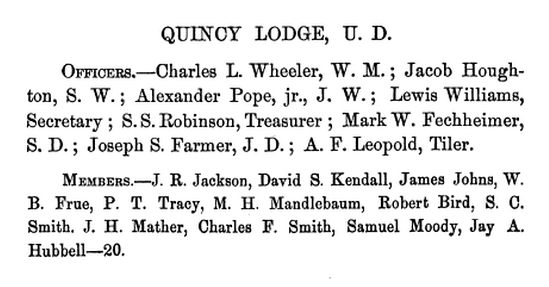
Transactions of the Grand Lodge of Free and Accepted Masons, of the State of Michigan, at Its Annual Communication, 1861, pg. 71.
After the site was determined upon, building was commenced, but as their faith in the future growth of the place was small, they did not propose to erect a large store, or even construct a substantial cellar underneath. Mr. Hill, hearing of their intention, at once paid them a visit and strongly protested against it. “This is going to be a leading town,” he said, “and I want a good large store, and a stone cellar underneath it.” He carried the day, and a larger building was completed, which two years afterward was too small for the business, even with the addition of a large warehouse for storing additional supplies.
As soon as the building was commenced, Louis began to send up goods from Cleveland, and Aaron came over from Eagle River to take charge of the new business. He scarcely reached here before the goods arrived, and were stored in the building before it was closed in, and he for several weeks had to make his bed on the goods virtually in the open air. As this was in the fall of the year, it was not pleasant, as may be at first supposed. Since then their principal business has been done at Hancock, the old head concern at Eagle River having been a branch.
Additional sources about this festive celebration for the Freudenthaler family in Richen have not been located yet.
In the fall of 1861, Aaron concluded to visit his home in Germany, to attend the golden wedding anniversary of his parents, and Samuel came over from Eagle River to take his place in the store. The celebration of the golden wedding was the grandest event which had happened in the little town of Richen for fully one hundred years, and, probably, will not be equaled in the present century. It would be impossible within the limits of this article to give a full description of the proceedings on that festival occasion, suffice it to say, that all the inhabitants of Richen and the neighboring towns, to the number of full five thousand assembled, and under the guidance of the mayor and municipal officers, for three days kept up a continuous round of merry-making and rejoicing. On the anniversary wedding day a procession over a mile in length waited upon the “happy couple,” and escorted them to the church, where appropriate and imposing services were performed. In the name of his brothers Aaron presented the church with a copy of the Sacred Writings, beautifully engrossed on parchment, which, with its ornamented silver case, cost over $600. All the halls and hotels were opened to the public, where for three days and nights they feasted, drank and danced without intermission and free of expense. The celebration of this golden wedding cost the brothers over $5,000, but which they rightfully considered the grandest event in their history.

In the fall of 1862, Joseph Austrian joined the firm at Hancock, and Louis removed from Cleveland to Chicago, which point they had concluded would soon monopolize the trade of Lake Superior. In the spring of 1864 he commenced a shipping business in that city, and early in the following winter was joined by Jos. Austrian, and the purchase of the propeller Ontonagon effected, and a forwarding and commission business regularly organized. Lately they have purchased the light-draft propeller Norman, intending it to run in connection with the Ontonagon.
While this was the end of Julius Austrian’s presence at La Pointe, he was still attached to the region for the remainder of this life by social ties and legal affairs. Julius eventually moved to St. Paul and became President of the Mount Zion Temple.“The Austrians retained their generous spirit even after moving to St. Paul for it was on a mission to the poor with a cutter full of good things to eat that Mr. Austrian was run over by a beer wagon (we don’t have them nowadays) and killed.”
~ The Lake Superior Country in History and in Story by Guy M. Burnham, 1996, pg. 288As aforementioned, Moses Hanauer was son to Moritz Hanauer, elementary educator of the Leopold brothers in their hometown of Richen. Moses’ brother-in-law was Henry Smitz of La Pointe.
In 1862 their branch house at Lapointe was given up, and Julius Austrian returned to Eagle River, and, in connection with Solomon, conducted the branch at that place. The firm now is composed of Solomon and Julius Austrian and Moses G. Hanauer, who for several years has acted as bookkeeper for the firm, under the firm name of S. Austrian & Co. The Hancock firm is composed of H. F. Leopold, Joseph and Solomon Austrian, under the title of Leopold, Austrian & Bro. The Chicago firm is composed of L. F. Leopold and Joseph Austrian, under the name of Leopold & Austrian. Mr. S. F. Leopold will return to Germany, upon the opening of navigation, and spend a year in pleasure and relaxation, which he certainly merits after twenty years constant labor. Aaron will remain here during the coming summer, and in the fall will go below and establish a wholesale business in Detroit, where it is probable he will be joined by Samuel after his return from Europe.
“CHICAGO AND LAKE SUPERIOR LINE.
This line is owned in Chicago, but is included in our list with other lines plying between Michigan ports. Those enterprising and well known gentlemen, Leopold & Austrian, for many years proprietors of this line, have consolidated their navigation interests with those of the Spencer, Lake Michigan and Lake Superior Transportation Co., their boats running between Chicago and Duluth, touching at all intermediate ports in Illinois, Michigan and Wisconsin. The steamers are the Peerless, J. L. Hurd, City of Duluth, City of Fremont and barge Whiting.”
~ Tackabury’s atlas of the State of Michigan : including statistics and descriptions of its topography, hydrography, climate, natural and civil history, railway and steam boat history, educational institutions, material resources, etc. (1884), pg. 23Louis F. Leopold and his sons, Asa F. and Henry F. Jr, started the first mercantile house in Duluth in 1869. Asa and Henry were the first Jewish residents in Duluth and enjoyed success as prominent businessmen.
That the Messrs. Leopold have been more than ordinarily successful in their mercantile career of over twenty years is made evident from the extent and variety of their business transactions within the past five years, and the very large amount of capital required to carry it on successfully and properly. We feel confident that the joint capital of $3,000, with which they commenced business in 1843, had been increased one hundred times by the close of the past year, and we should not be surprised if it had augmented even more than that. It has been the result of no particularly good fortune, but of persistent application in one direction, and the only exception to the ordinary course of operation which can be said to have contributed to their success, has been the remarkable unity which has pervaded all their business transactions, whether located at Mackinac, Green Bay, Lapointe, Eagle River, Cleveland, Eagle Harbor, Portage Lake or Chicago, each member of the firm has labored, not for his benefit alone, but that of the whole brotherhood.
“S. Solomon Austrian, a merchant from the copper country of Upper Michigan married Julia R. Mann, ten years his junior and not yet out of school, of Natchez, Mississippi, about 1866. Their first home was in Hancock, Michigan. In writing of her mother at a later time, Delia describes the young wife’s inexperience as she entered this strange new country, and the difficulties she had learning homemaking from her pioneer neighbors, along with her fear of Indians. Here, their first child, Bertha, was born. After two years of residence, they moved to Cleveland. In 1870, a son, Alfred S., was born in Chicago, but there is no evidence to show they were residents of that city at the time. However, they were still living in Cleveland in 1874 when twin daughters, Celia and Delia, were born.”
~ Guide to the Celia and Delia Austrian Papers 1921-1932, Special Collections Research Center, University of Chicago Library.
And at this partial termination of their active associations, it is with a pride which but few firms experience after so long connection, they can say that in all their twenty years’ relation with each other there has never been a disagreement to mar the harmony and unity of their operations. Whatever has been done by one, even though it did not result as anticipated, has met with the immediate sanction of the others, who had unlimited confidence in the integrity of his intentions to benefit them all. Until now there has been no division of the accumulated profits; all has been placed in one general fund, from which each has drawn as the wants or exigencies of their business demanded. Neither of them have indulged in any private outside investments or speculations, the profits of which has resulted to his own pecuniary benefit. Profit and loss has been shared alike by them all. Such unanimity of action is very rarely to be met with, especially In these modern days of “every man for himself and the devil take the hindmost,” and is, therefore, the more commendable. Although nominally dissolved, at present, we are of the opinion that after S. F. Leopold has returned from his vacation in Europe the old order of things will again prevail, for, after such a lengthy and intimate association, it will be difficult for either of them to operate independent of the rest, after such a practical verification of the truthfulness of the adage on which they founded their business existence, that “In union there is strength.”
We also copy the following letter, which, in our estimation, forms a part of and belongs to the history of the Leopold family. We understand that the son of whose birth the writer of the letter to the “Israelite” speaks, was the first Jewish child born in the northern region of Michigan:
Chicago, July 18, 1863.
Editor of The Israelite:
I have just now returned from Lake Superior, where I have found all my brothers and friends and the readers of The Israelite and Deborah in perfect good health. I cannot refrain from giving you a little history of a very noble act, the fruit of which in hereby enclosed, being a draft for $30, which you will please to appropriate to the purpose for which it has been destined, namely at a Berith which took place on a child of my brother at his house in Hancock, Lake Superior. After about forty participants had done justice to a very luxurious dinner, with the permission of Mr. Hoffman of Cleveland, the operator, a motion was made that the saying of grace should be sold, and the proceeds appropriated to some charitable purpose, whereupon Brother Samuel made an amendment that the proceeds should be sent to Dr. Wise of Cincinnati, to be appropriated by him for the monument to be erected for Dr. Rothenhelm; the sheriff, Mr. Fechheimer, seconded the motion, and the same was unanimously carried. Brother A. F. was the last bidder with $30, consequently he was the lucky purchaser, and bestowed the honor on your humble correspondent.
The act is worth imitating, and if you think it worth mentioning you may give it publicity in The Israelite and Deborah.
Yours truly,
L. F. Leopold.
By Leo Filipczak
When we last checked in with Joseph Austrian, or Doodooshaaboo (milk) as he was known in these parts, we saw some interesting stories and insights about La Pointe in 1851. The later La Pointe stories, however, are where the really good stuff is.
Austrian’s brief stay on the island came at arguably one of the most important periods in our area’s history, spanning from a few months after the Sandy Lake Tragedy, until just after Chief Buffalo’s return from Washington D.C. Whether young Joseph realized it or not, he recorded some valuable history. In his memoir, we see information about white settlement and land speculation prior to the Treaty of 1854, as well as corroborating accounts of the La Pointe and Bayfield stories found in the works of Carl Scherzer and Benjamin Armstrong.
Most importantly, there is a dramatic scene of a showdown between the Lake Superior chiefs and Agent John Watrous, one of the architects of the Sandy Lake removal. In this, we are privileged to read the most direct and succinct condemnation of the government, I’ve ever seen from Chief Buffalo. It is a statement that probably deserves to be memorialized alongside Flat Mouth’s scathing letter to Governor Ramsey.
So, without further ado, here is the second and final installment of Joseph Austrian’s memoirs of La Pointe, and fifth of this series. Enjoy:
~~~~~~~~~~~~~~~~~~~~~~~~~~~~~~~~~~~~~~~~~~~~~~~~~~
Memoirs of Doodooshaboo
… continued from La Pointe 1851-1852 (Part 1).
Scherzer, Noted Traveller Pays Us a Visit. 1851.

Carl Scherzer and his companion Moritz Wagner recorded their travels in Reisen in Nordamerkia in der Jahren 1852 und 1853. An e-translation of Chapter 21 appeared in English for the first time this fall on the Chequamegon History website. You can read it here, here, and here. The second installment records his time with Joseph Austrian. From Austrian’s account, it appears Wagner did not accompany Scherzer through the Lake Superior country. (Wikimedia Images)
During this summer a noted Austrian traveler Carl Scherzer arrived one Sept. night. He had been commissioned by the “Academy of Science” of Vienna (a Government Institution) to make a tour of America to familiarize himself with the country and gather information to write a book for the Academy. This interesting book which he wrote is called “Scherzer’s Reisen.” Mr. S. sent me a copy of this book which I have in my library. In this book, mention is made of me and my cordial reception of him and his travelling companion, an Attache of the French Legation of Washington who accompanied him on his trip. Scherzer was a highly educated gentleman, cultured and charming, tall and of imposing appearance. Scherzer arrived at La Pointe at midnight coming from Ontonagan 90 miles in a small row boat. To his dismay, he found that there was not a hotel in the place. The boatman told him that he thought that one Austrian might give him shelter for the night, so he came to the house and knocked at the door. Henry Schmitz, my fellow employee, who roomed with me opened the door and called out “Joe step auf freund von below sind da,” whereupon I cordially invited them to enter and made them as comfortable as possible. They remained with us about three days and profoundly appreciated our hospitality. Even making mention of it later on in his book. Once on going to a fishing boat for our supply of fish, Scherzer went with me and begged the privilege of carrying two of the large fine white fish, one suspended from each hand. He much enjoyed meeting the good Father Skolla, his country-mate, also an Austrian, and from him obtained more valuable and authentic information concerning that part of Lake Superior country that he could have otherwise gained. From La Point Scherzer planned to go to St. Paul. There were no railroads here at that time. There were but two roads leading to St. Paul. One was simply a footpath of several hundred miles through the woods. The other led via St. Croix [Brule?] & St. Croix river shortening the foot travel considerably. Scherzer chose the latter road. I fitted out for him, at his request, a birch bark canoe and utensils and all necessary for the trip and Scherzer and his companion started on their way to St. Paul.
He had engaged one “Balange” their voyageur who had brought them from Ontonoagan and a friend of his to take them through. They were well acquainted with the route which at times necessitated their carrying the canoes around through the woods across the portage, where the river was inaccessible through rapids, obstacles and otherwise. Scherzer arrived at St. Paul safely and wrote thanking me for my assistance and requesting me to send him a copy of the wording of a French rowing song (the oarsmen usually sang keeping time with their oars). I sent it to him and received a letter of thanks from New Orleans whence he had gone from St. Paul by steamer via the Mississippi River. This song is embodied in his book also.
A Steamer was a rare occurrence at La Point and when one did come, we often got up an Indian war dance or other Indian exhibit for the amusement of its passengers, and which they enjoyed greatly. In the fall of the year steamers were sometimes driven there by the storms prevailing on the lakes, as the harbor offered the best of shelter. We kept a good supply of cord wood on the dock which we sold to the steamers when they needed fuel.
Indians Decline to be Removed by Gov. I attend Grand Council. 1851.
During the first summer of my stay at La Point, the Indian Agent, Mr. Watrous was directed by the Secretary of the Indian Dept. at Washington to summon the chiefs of that part of the Chippewa tribe residing in the vicinity of Bad River, Bayfield, & Red River for a council. The Agent accordingly sent runners around to the chiefs of the different lodges some of which were quite remote, summoning them to meet him on a certain day at La Point. They came in obedience to the summons many bringing their squaws, papooses and their Indians of their lodges with them. Near the lake shore the put up their wigwams, which were made of birch bark leaving an opening over hung with a blanket which served as a doorway. It made an interesting Indian settlement. The meeting was held on the appointed day, in my brother’s store which was a long wooden structure. When the meeting opened the chiefs sat on the floor arranged along the left side of the room, with their blankets wrapped around them, and each one smoking a long stemmed pipe, which they make themselves, the sign of peace, many ornamented with paint and feathers. On the other side of the room was seated the Indian Agent with an interpreter who translated what either had said.
I naturally felt greatly interested in witnessing their proceedings. The President of the U. S. was known by the Indians as the Great Father and the Agent addressed them telling them what the Great Father wanted of them; namely that they remove from their reservations to interior points in order to make room for while settlers; pointing out to them that the proposed location was more suited for them, there being good fishing and hunting grounds. The government offered to pay them besides certain annuities, partly in money and partly in Indian goods–such as blankets, cotton, beads, provisions, etc. The proposition of the Government was met with murmurs of disapproval by the chiefs & Indians present, and Chief Buffalo made a most eloquent and impassioned speech saying,
“Go back to the ‘Great Father’ and tell him to keep the money and his goods. We do not want them but we wish to be left in peace. Tell him we will not move from the land that is our own, that we have always been peaceable and were always happy until the white man came among our people and sold ‘Matchie Mushkiki [majimashkiki (bad medicine)]’ (poison-whiskey) to them.“
(The real name of whiskey in Indian is “Ushkota wawa [ishkodewaaboo]” – fire water).
The Indians did remain and to this day are still occupying the same land. I was present at this meeting and it so impressed me, that although it took place over fifty years ago it is still vivid in my mind. Later on the Government encouraged the same Indians to engage in farming work on the reservation, and furnishing them with implements and seeds for that purpose, and in the course of a few years they had their own little farms on which they raised potatoes and other vegetables easily cultivated. Schools also were established by the Government. One of their large settlements today is on Bad River, and not far from Ashland Wis., known by the name of Odana.
Brother Marx Experience with Indians. 1851 .
Our blind brother Marx Austrian with brother Julius’ assistance at that time, preempted 160 acres of land near Bayfield from La Point, complying with preemption laws. He built a small log house living there with his wife. One night during their first winter in their new house, there was a knock at the door, and when opened they were confronted by a number of Indians, who were evidently under the influence of liquor and who swinging their tomahawks vigorously, making all sorts of threatening demands. An old Indian who knew Marx interceded and enabled him and his wife to escape without injury who thoroughly scared fled panic stricken in the dark about two miles at night, over the ice, on the Bay which was covered with a foot of snow to La Point for safety. The poor woman having the hazardous task of leading her blind husband over this long and difficult road, not to come back again and glad to escape with their lives and thus abandoning their right of preemption. This place was later on platted and is now known as the Bayfield Addition.
My Experience in Lumbering
Brother Julius had a small saw mill operated by water power about two miles back of Bayfield on Pike’s Creek, near which were Pine lands. In the winter I was sent with some woodsmen to look after the cutting and hauling of Pine logs for the mill. These logs were hauled by ox teams to the mill. In the spring I was again sent there to assist in the sawing of these logs into lumber. We lived in a little log hut near by. When the snow melted toward spring time, the creek was high and swollen. One day the force of the waters burst through the dam, carrying it away and the great volume of water rushing down cut a new channel in the bed of which had become a river, and undermining to foundation of our little log house causing it to topple over into it, also carrying away the logs, many of which floated down into Lake Superior and were lost.
Pg. 218-219 (Armstrong, Benj G., and Thomas P. Wentworth. Early Life among the Indians: Reminiscences from the Life of Benj. G. Armstrong : Treaties of 1835, 1837, 1842 and 1854 : Habits and Customs of the Red Men of the Forest : Incidents, Biographical Sketches, Battles, &c. Ashland, WI: Press of A.W. Bowron, 1892).
In the winter when logging was going on, once I was sent across from La Point with a heavy load of provisions and supplies for the men. This was loaded on a so called “Canadian flat sleigh.” The road on the way to the mill led down a very steep high hill which half way down had a sharp bend and at this curve stood a tree. After having started down the hill, the horse was not strong enough to hold back the load, which got the better of him, and pushed him swiftly down the hill with his hind legs dragging after him wedging him against and partly into the tree with his front legs up in the air. I could not move the heavily laden sleigh with the horse wedged in so tightly I found it impossible to extricate him, and had to go to the mill for assistance. The sled had to be unloaded before we could free the horse. See Armstrong’s book in which mention and illustration is given of this as “Austrian up the tree.” The book is in my library.
Ferrying Oxen Across the Bay in Row Boat.
My brother Julius had also a large tract of meadow land on Bad River, where he had a number of men employed in making hay, in order to gather this hay for stacking, a span of cattle and a wagon were needed to haul it. There being no other means of ferrying them across the bay, one of the large Mackinaw boats of about twenty-five feet keel by six feet beam had to be used to get these over to the other side across a distance of about three miles to the mainland from where they could be driven to the meadow. I was commissioned to attend to this assisted by four competent boatmen, we finally managed with coaxing and skill to get the two big oxen into the boat, standing them crosswise in it. We tied their horns to the opposite side of the boat. The width of the boat was not sufficient to allow them to stand in their natural position which made them restless. The first thing we knew one of the oxen raised his hind leg and stuck it out over the side of the boat into the water, his other leg soon followed and we had aboard an ox half in the boat, with the weight of his body resting on and threatening to capsize the boat. We quickly cut the rope which held his head and he fell backward overboard floundering in the water. Little did I think that we would see the ox alive again. Imagine my surprise on my return to the Island to find he had swam back to shore safe and sound. When the other ox saw his mate go overboard, he tried to follow and it required much coaxing and extra feeding to restrain him and finally landed him all right on the opposite shore.
Lost in the Woods
I returned to the Island and the next morning I started for the meadow fields in a birch bark canoe with a Mr. Lehigh who had a little saw mill about five miles up Bad River. We were obliged to sit in the bottom of the little boat in a most uncomfortable and cramped position, having been warned by the boatman in charge not to move as the least motion is apt to cause the frail craft to capsize. On arrival at the meadow I found the men busily at work. They were about to take dinner and I gladly consented to join them, and being hungry relished the spread of fried pork, crackers, and tea. My companion Mr. Lehigh was bound for his little saw mill up the river where he lived, and I having business to attend to there started with him on a foot trail through the woods. He loitered on the way picking wild raspberries, just ripe and tempting, but musquitos were thick and vicious and pestered us terribly. I not being accustomed suffered more than my companion. Asking him the distance we were still to go, and on his telling me three miles, I became impatient and went ahead alone to get away from the musquitos. After walking on some time I came to a potato field into which the trail led, but was concealed by the high vines. Crossing the field I struck a trail on the other side and took for granted it was the one leading to the mill. On and on I went when it struck me that I had gone further than the three miles, and it dawned on me that I must have taken the wrong path from the potato field and I concluded to turn back and try to reach the meadow. The sun had gone down, it grew dusk very soon amongst the tall pine and maple trees, in the dense forrest. It grew so dark that I could not see my trail and became entangled in the underbrush and roots of trees, tripping and falling many times. I had with me my double barrel shot gun, both barrels being loaded I shot these off to attract Lehigh’s attention. I listened breathlessly for some answer but there was no sign of a human soul and I became thoroughly frightened at the prospect of being lost in the woods but resolved to make the best of it. I stumbled around and found a log hut near by, which had been put up for temporary use by the Indians in sugar making time. I had neither matches nor ammunition, by feeling around, I discovered that what had been the doorway was closed up with birch bark. By climbing up I also discovered that the roof had been taken off the hut and I let myself down to see what might be inside. I found there three rolls of birch bark and a rude bench made of rough poles laid along on one side lengthwise about a foot along the floor, which served as seats for the Indians while boiling the maple sap. Being tired out I laid down on the rough bench and tried to rest, tying a handkerchief over my face, and with each hand up in the boot sleeves to protect myself from large and ravenous musquitos which tortured me nigh to desperation. Having no matches with me to kindle a fire or create a smoke I was entirely at their mercy. Presently I heard a noise on the outside as though of something stealthily climbing over the wall. The moon was then shining brightly, the sky was clear and on looking up I saw the outlines of a young bear sticking his head over the wall looking down on me. I sprang up and as I did so the bear jumped back and ran off. No doubt the odor of the sugar attracted him more than I did. Under these circumstances rest was out of the question. I climbed out of the hut and made another attempt to find the lost trail by moonlight, crawling on hands and feet in some places. In doing so, I placed my gun against a tree and had a hard time to find it again. I decided there was no use to trip further and climbed back in the hut to stay there till day-light, then with renewed effort after repeated disappointment I finally struck a trail, but at this point I was confused and at a loss to know which direction to take. I reached a steep hill that I did not remember having passed the day before. As a last resort I ran up this hill and hallowed & yelled. An answer came from the valley, from me working there. Following the sound I reached the meadow. My face was so swollen from the musquito bites that I was a sight to behold. After resting and partaking of some food, I again started out for Lehigh’s place one of the me volunteering to show me the way and I arrived there a couple of hours after, and found that it was only one mile from the potato field where I had lost the trail.
For many miles in all other directions in this dense forrest there was not a single habitation nor likelihood of meeting with a soul and here a short time ago a man had been lost and never heard from again. Hence I was lucky indeed to have found my way out of the woods. Lehigh cooly informed me that when I saw him that he heard the report of my gun, but had paid no heed to it thinking I would eventually turn up.
Lost on the Ice and Night
One time during the winter Brother Julius sent me with his trusted Frenchman Alexis, to look up certain Indians who owed him for goods and whom he thought would have considerable fur. This tramp meant about ten miles each way through the woods on an Indian trail the ground being covered with snow. Taking our faithful dog, who had been trained to hauling with the little toboggan sled, on which to bring back the fur which he hoped to get in payment for our debt. We started from La Point, and I met with good success gathering quite a little fur. On our return we reached the Bay shore late in the evening from where we had four or five miles to cross on the ice in order to reach the Island. We rested for about an hour at an Indian wigwam and partook of some tea (such as it was) that the Indian squaw made for us and then started on. Alexis, acting as pilot went ahead, followed by the dog & then by me. It was a clear cold night the moon shown brightly, but about half an hour afterwards snow clouds sprang up shutting out the moonlight, Still we pushed ahead. Soon however Alexis lost his bearings and was uncertain as to direction, but on we went for several hours without reaching the Island. Presently we encountered ice roughly broken and piled high by the force of a gale from the open lake, which indicated that we were too near the open water and that we had gone too far around the Island instead of the straight for La Point. We stumbled along, and after having been out about two hours on the ice, with continued walking we managed to reach the shore and with guidance of Alexis tramped along toward La Point reaching there two hours afterwards almost exhausted by the hardships we had endured.
Trip to Ontonagon in Row Boat for Winter Supplies. 1851
It was in 1851 when brother Julius expected the last boat of the season would touch at La Point which was usually the case and deliver all his supplies but the quantity was not sufficient to induce the Captain to run in there and consequently he skipped La Pointe, thus leaving us short of necessary provisions for the winter, hence it was necessary to procure the same as best we could. I was commissioned by my brother Julius to undertake the job which I did by manning a mackinaw boat with five voyageurs. The boat was loaded with as many barrels of fish as we could carry. We started for Ontonagon about the middle of November, intending to trade the fish for supplies required. It was cold, the ground frozen and covered with snow. The wind was fair. We hoisted our two sails and made good time reaching Montreal River late in the evening where we ran in and tied up for the night. We had no tent with us but found a deserted log house by the river in which we spent the night. There was a large open fire place, and my man cutting down a dry tree kindled a brisk wood fire in the fire place. I slipped into a rough bunk in the room wrapped myself in my blankets and tried to sleep, but in vain. The smoke from the fire was so dense it nearly suffocated me. My met lighting a few tallow candles amused themselves playing cards until late at night.
The next morning early, we set sail and again had fair wind, reaching Iron River about noon and Ontonagon that night, next day succeeded in exchanging my fish for provisions and the following day started on our return trip to La Point. We had mostly fair wind and reached there on the third day in good shape.
Another Trip to Ontonagon for Provisions. 1852.
The following year, in 1852, I agains made a similar trip for like reasons but did not have nearly as good luck as on the previous trip. It was fraught with some danger and combined with a great deal of hardship. The distance from La Point to Ontonagon is nearly 100 miles, all exposed to the storms of Lake Superior which in the Fall are generally very severe. On our first day out we encountered a severe snow storm, which compelled us to make a landing near the mouth of Bad River to save the boat, which was threatened to be dashed to pieces on the shore or carried out into the open lake. So she had to be beached and in order to do this her cargo of fish had all to be thrown overboard when we touched the beach, to lighten her and when this was done she was hauled up on the beach with a block and tackle and fastened to stump of a tree. The boatmen had to go almost waist deep in the water and roll the heavy barrels up on the beach. After completing the landing we sought shelter in the nearby woods from the raging storm, we were not equipped for camping, so we took the sail from the boat and stretched it over as far as it would reach for our own protection. As before the men cut down a dead tree kindled a fire, hanging over it our camp kettle, made tea, tried some pork and this together with some crackers with which we were supplied composed our supper. To get further away from the wind and snow we had gone further back into the woods to find some protection and there we rolled ourselves in our grey blankets and laid down keeping our faces under the protection of the sail as much as possible. Being very much exhausted, we fell asleep, in spite of unfavorable conditions. Toward morning when I awoke I tried to pull my blanket over me a little more but found I could not move it, and discovered that the snow had drifted over us to such an extent that we were fairly buried in it, nothing visible but part of our faces, our breath having kept that free for the time. After daybreak we again started a fire, and this made things worse as the heat melted the snow on the trees around and water dripped down on our blankets, getting them wet. We had to hang them near the fire to dry as we collected them later on. They fairly steamed and we were delayed a whole day in getting arrangements completed to start again on our trip. Toward morning the wind had subsided considerably, and the snow storm had abated somewhat and again we ventured on our trip. After going through the same routine of reloading as on our previous occasion. At 10 A.m. we started on our perilous voyage making good head way, the wind being favorable. We reached Iron River after midnight. We detected an Indian wigwam near by, thinking we might be able to get something to eat. We tied up and investigated. We peeped into the wigwam and found the same occupied with an Indian family. The Indian squaw and papooses all tight asleep. Not wishing to arouse them or to lose further time we moved on stopping early the next morning in a small bay on our route. Kindling a fire as previously described, preparing a meager breakfast , the best scant supplies would permit. These boatmen were accustomed to cooking (such as it was) as well as boating it being often a necessity, as they were accustomed to make long coasting trips in the pioneer days of the Lake Superior regions, which was sparsely settled and vessels were very scarce. Supplies and all merchandise had to be transported all the way from Detroit to Lake Superior on those small Mackinaw boats. After breakfast we set sail and continued our journey with fair wind enabling us to make good time, but it had grown bitterly cold and as we were but poorly protected for such severe weather. It cost us untold suffering.
We finally reached Ontonagon River after dark, and to our great consternation found that the river was frozen over about an inch thick with ice. This was not easy to break through with flimsy craft, but desperation gave strength to our men and they were equal to the situation. With their heavy oars they pounded and broke the ice managing finally to get inside of the river to the dock of the merchant with whom I expected to do my trading in the town of Ontonagon, which was the Lakeport for the Minnesota and other copper mines in that vicinity, at that time being just developed. On the following morning I attended to the selling of the load of fish, purchased our supplies and intending to start back for La Point the next morning.
Ordered to go to Eagle River. 1852.
In the meantime the propeller Napoleon arrived from there bringing for me a letter from brother Julius, instructing me if still in Ontonagon to take this steamer for Eagle River and to enter the employ of Mr. Henry Leopold, who had a small store there. His man had left suddenly and he was anxious for my services. I started for Eagle River just as I was and not until the following spring did I get my trunk. I began working for Mr. Leopold as bookkeeper and general clerk, and thus abruptly terminated my business career at La Point. My boatmen under direction of Mr. Henry Schmitz started without me on their return trip to La Point as planned when between Montreal River and Bad River, they encountered a terrific gale and snow storm. It was so severe that to remain outside meant to be lost, and as a last resort, they ran their boat through the breakers, trying to beach her. She was swamped with all the supplies, and tossed up on the beach and had to be abandoned for the time being. Later on another boat was sent on from La Point to get the damaged cargo. The Napoleon got abreast of Eagle River, this place being on the open shore of Lake Superior without any protection, it being too rough there for the boat to make a landing, therefore she went on to Eagle Harbor, about nine miles distant, where she could safely land. On arrival there I put up at Charley King boarding house for the night.
To be continued after La Pointe 1852-1854…
~~~~~~~~~~~~~~~~~~~~~~~~~~~~~~~~~~~~~~~~~~~~~~~~~~~~~~~~
Special thanks to Amorin Mello and Joseph Skulan for sharing this document and their important research on the Austrian brothers and their associates with me. It is to their credit that these stories see the light of day. This is the end of the La Pointe section, but the original handwritten memoir of Joseph Austrian is held by the Chicago History Museum and contains many interesting stories from the life of this brief resident of La Pointe.
By Leo Filipczak
Joseph Oesterreicher was only eighteen years old when he arrived at La Pointe in 1851. Less than a year earlier, he had left his native Germany for Mackinac, where he’d come to work for the firm of his older brother Julius and their in-laws, the Leopolds, another Bavarian Jewish family trading on Lake Superior.
In America, the Oesterreichers became the Austrians, but in his time at Mackinac, Joseph Austrian picked up very little English and even less of the Ojibwe and Metis-French that predominated at La Pointe. So, when Joseph made the move to his brother’s store at Madeline Island, it probably felt like he was immigrating all over again.
In the spring of 1851, he would have found at La Pointe, a society in flux. American settlement intensified as the fur trade economy made its last gasps. The island’s mix-blooded voyageurs found it harder and harder to make a living, and the Fur Company, and smaller traders like Julius Austrian, began to focus more on getting Ojibwe money from treaty annuity payments than they did from the actual trade in fur. This competition for Indian money had led to the deaths of hundreds of Ojibwe people in the Sandy Lake tragedy just a few months earlier.
The uncertainty surrounding Ojibwe removal would continue to hang heavily over the Island for both of Joseph’s years at La Pointe, as the Ojibwe leadership scrambled to process the horror of Sandy Lake and tried to secure a permanent homeland on the lakeshore.
The Austrians, however, found this an opportune time to be at the forefront of all the new business ventures in the Lake Superior country. They made money in merchandise, real estate, shipping, mining, lumber, government contracts, and every other way they could. This was not without controversy, and the name of Julius Austrian is frequently attached to documents showing the web of corruption and exploitation of Native people that characterized this era.
It’s difficult to say whether Joseph realized in 1851, while sweeping out his brother’s store or earning his unfortunate nickname, but he would become a very wealthy man. He lived into the 20th century and left a long and colorful memoir. I plan to transcribe and post all the stories from pages 26-66, which consists of Joseph’s time at La Pointe. Here is the first fourth [our original] installment:
Memoirs of Doodooshaboo
… continued from Mackinac 1850-1851.
Left for La Point: My First Trip on Lake Superior
1851
Julius Austrian
~ Madeline Island Museum
Mr. Julius Austrian was stationed at La Pointe, Madaline Island, one of the Apostle Group in Lake Superior, where he conducted an Indian Trading post, buying large quantities of fur and trading in fish on the premises previously occupied by the American Fur Co. whose stores, boats etc. the firm bought.
Julius Austrian, one of the partners had had charge of the store at La Point for five years past, he was at this time expected at Mackinaw and it had been arranged that I should accompany him back to La Pointe when he returned there, on the first boat of the season leaving the Sault Ste. Marie. I was to work in the store and to assist generally in all I was capable of at the wages of $10 a month. I gladly accepted the proposition being anxious for steady employment. Shortly after, brother Julius, his wife (a sister of H. Leopold) and I started on the side wheel steamer Columbia for Sault Ste. Marie, generally called “The Soo,” and waited there five days until the Napoleon, a small propellor on which we intended going to La Point, was ready to sail. During this time she was loading her cargo which had all to be transported from the Soo River to a point above the rapids across the Portage (a strip of land about ¾ of a mile connecting the two points) on a train road operated with horses. At this time there were only two propellers and three schooners on the entire Lake Superior, and those were hauled out below the rapids and moved up and over the portage and launched in Lake Superior. Another propeller Monticello, which was about half way across the Portage, was soon to be added to the Lake Superior fleet, which consisted of Independence & Napoleon and the Schooners Algonquin, Swallow, and Sloop Agate owned by my brother Julius. Quite different from the present day, where a very large number of steel ships on the chain of Lakes, some as much as 8000 tons capacity, navigate through the canal to Lake Superior from the lower lakes engaged in transporting copper, iron ore, pig iron, grain & flour from the various ports of Marquette, Houghton, Hancock, Duluth, and others. It was found necessary in later years to enlarge the locks of the canal to accomodate the larger sized vessels that had been constructed.
Building Sault Ste. Marie Canal. 1851.

Map of proposed Soo canal and locks 1852 (From The Honorable Peter White by Ralph D. Williams, 1910 pg. 121)
The ship canal at that time had not been constructed, but the digging of it had just been started. The construction of this canal employed hundreds of laborers, and it took years to complete this great piece of work, which had to be cut mostly through the solid rock. The State of Michigan appropriated thousands of sections of land for the purpose of building this canal, for the construction of which a company was incorporated under the name of Sault Ste. Marie Ship Canal & Land Co., who received the land in payment for building this canal, and which appropriation entitled the Co. to located in any unsold government land in the State of Michigan. The company availed itself of this privilege and selected large tracts of the best mineral and timber land in Houghton, Ontonagan & Kewanaw Counties, locating some of the land in the copper district, some of which proved afterwards of immense value, and on which were opened up some of the richest copper mines in the world, namely: Calumet, Hecla, and Quincy mines, and others. There were also very valuable timber lands covered by this grant.
The canal improved and enlarged as it now stands, is one of the greatest and most important artificial waterways in the world. A greater tonnage is transported through it annually that through the Suez or any other canal. In later years the canal was turned over by the State of Mich. to the General Government, which made it free of toll to all vessels and cargoes passing through it, even giving Canadian vessels the same privilege; whereas when operated by the State of Mich. toll was exacted from all vessels and cargoes using it.
The Napoleon, sailed by Capt. Ryder, had originally been a schooner, it had been turned into a propeller by putting in a small propeller engine. She had the great (?) speed of 8 miles an hour in calm weather, and had the reputation of beating any boat of the Lake in rolling in rough weather, and some even said she had rolled completely over turning right side up finally.

To return to my trip, after passing White Fish Point, the following day and getting into the open lake, we encountered a strong north wind raising considerable sea, causing our boat to toss and pitch, giving us our first experience of sea sickness on the trip. Beside the ordinary crew, we had aboard 25 horses for Ontonogan where we arrived the third day out. The Captain finding the depth of water was not sufficient to allow the boat to go inside the Ontonogan river and there being no dock outside, he attempted to land the horses by throwing them overboard, expecting them to swim ashore, to begin with, he had three thrown overboard and had himself with a few of his men lowered in the yawl boat to follow, he caught the halter of the foremost horse intending to guide him and the others ashore. The lake was exceedingly rough, and the poor horses became panic stricken and when near the shore turned back swimming toward the boat with hard work. The Captain finally succeeded in land those that had been thrown overboard, but finding it both hazardous to the horses and the men he concluded to give up the attempt to land the other horses in this way, and ordered the life boat hoisted up aboard. She had to be hoisted up the stern, in doing so a heavy wave struck and knocked it against the stern of the boat before she was clear of the water with such force as to endanger the lives of the Capt. and men in it, and some of the passengers were called on to assist in helping to hoist the life boat owing to its perilous position. Captain and the men were drenched to the skin, when they reached the deck. Capt. vented his rage in swearing at the hard luck and was so enraged that he did not change his wet clothing for some time afterward. The remaining horses were kept aboard to be delivered on the return trip, and the boat started for her point of destination La Point.
Arrived at La Point and Started in Employ of Brother Julius. 1851
Next morning we sighted land, which proved to be the outer island of the Apostle Group. Captain flew into the wheel room and found the wheelsman fast asleep. He grasped the wheel and steered the boat clear of the rocks, just in time to prevent the boat from striking. Captain lost no time in changing wheelsman. We arrived without further incidents at La Point the same afternoon. When she unloaded her cargo, work was at once begun transferring goods to the store, in which I assisted and thus began my regular business career. These goods were hauled to the store from the dock in a car, drawn by a horse, on wooden rails.
There were only about 6 white American inhabitants on the Island, about 50 Canadian Frenchmen who were married to squaws, and a number of full blooded Indians, among whom was chief Buffalo who was a descendant of chiefs & who was a good Indian and favorably regarded by the people.

Fr. Otto Skolla (self-portrait contained in History of the diocese of Sault Ste, Marie and Marquette (1906) by Antoine Ivan Rezek; pg.360; Digitized by Google Books)
The most conspicuous building in the place was an old Catholic Church which had been created more than 50 years before by some Austrian missionaries. This church contained some very fine and valuable paintings by old masters. The priest in charge there was Father Skolla, an Austrian, who himself was quite an artist, and spent his leisure hours in painting Holy pictures. The contributions to the church amounted to a mere pittance, and his consequent poverty allowed him the most meager and scant living. One Christmas he could not secure any candles to light up his church which made him feel very sad, my sister-in-law heard of this and sent me with a box of candles to him, which made him the happiest of mortals. When I handed them to him, his words were inadequate to express his gratitude and praise for my brother’s wife.
There was also a Methodist church of which a man by the name of Hall was the preacher. He had several sons and his family and my brother Julius and his wife were on friendly terms and often met.
The principle man of the place was Squire Bell, a very genial gentleman who held most of the offices of the town & county, such as Justice of the Peace & Supervisor. He also was married to a squaw. This was the fashion of that time, there being no other women there.

 John W. Bell, “King of the Apostle Islands” as described by Benjamin Armstrong (Digitized by Google Books) .
There was a school in the place for the Indians and half breeds, there being no white children there at this time. I took lessons privately of the teacher of this school, his name was Pulsevor. I was anxious to perfect myself in English. I also picked up quite a bit of the Chippewa language and in very short time was able to understand enough to enable me to trade with the Indians.
My brother Julius was a very kind hearted man, of a very sympathetic and indulgent nature, and to his own detriment and loss he often trusted needy and hungry Indians for provisions and goods depending on their promise to return the following year with fur in payment for the goods. He was personally much liked and popular with the Indians, but his business with them was not a success as the fur often failed to materialize. The first morning after my arrival, my brother Julius handed me a milk pail and told me to go to the squaws next door, who having a cow, supplied the family with the article. He told me to ask for “Toto-Shapo” meaning in the Indian language, milk.
I repeated this to myself over and over again, and when I asked the squaw for “Toto Shapo” she and all the squaws screamed with delight and excitement to think that I had just arrived and could make myself understood in the Indian tongue. This fact was spread among the Indians generally and from that day on while I remained on the Island I was called “Toto Shapo.” One of the Indian characteristics is to name people and things by their first impression–for instance on seeing the first priest who work a black gown, they called him “Makada-Conyeh,” which means a black gown, and that is the only name retained in their language for priests. The first soldier who had a sword hanging by his side they called “Kitchie Mogaman” meaning “a big knife” in their language. The first steamboat they saw struck them as a house with fire escaping through the chimney, consequently they called it “Ushkutua wigwam” (Firehouse) which is also the only name in their language for steamboat. Whiskey they call “Ushkutua wawa” meaning “Fire Water.”
My brother Julius had the United States mail contract between La Point & St. Croix. The mail bag had to be taken by a man afoot between these two places via Bayfield a distance of about 125 miles, 2 miles of these being across the frozen lake from the Island to Bayfield.
Dangerous Crossing on the Ice.
An Indian named Kitchie (big) Inini (man) was hired to carry it. Once on the way on he started to cross on the ice but found it very unsafe and turned back. When my brother heard this, he made up his mind to see that the mail started on its way across the Lake no matter what the consequence. He took a rope about 25 ft. long tying one end around his body and the other about mine, and he and I each took a long light pole carrying it with two hands crosswise, which was to hold us up with in case we broke through the ice. Taking the mail bag on a small tobogan sled drawn by a dog, we started out with the Indian. When we had gone but a short way the ice was so bad that the Indian now thoroughly frightened turned back again, but my brother called me telling me not to pay any attention to him and we went straight on. This put him to shame and he finally followed us. We reached the other side in safety, but had found the crossing so dangerous, that we hesitated to return over it and thought best to wait until we could return by a small boat, but the time for this was so uncertain that after all we concluded to risk going back on the ice taking a shorter cut for the Island, and we were lucky to get back all right.
In the summer when the mail carrier returned from these trips, he would build a fire on the shore of the bay about 5 miles distant, as a signal to send a boat to bring him across to the Island. Once I remember my brother Julius not being at home when a signal was given. I with two young Indian boys (about 12 yrs. of age) started to cross over with the boat, when about two miles out a terrific thunder and hail storm sprang up suddenly. The hail stones were so large that it caused the boys to relax their hold on the oars and it was all I could do to keep them at the oars. I attempted to steer the boat back to the Island, and barely managed to reach there. The boat was over half full of water when we reached the shore. When I landed we were met by the boys’ mothers who were greatly incensed at my taking their boys on this perilous trip, nearly resulting in drowning them. They didn’t consider I had no idea of this terrible thunder storm which so suddenly came up and had I known it for my own safety would not dreamed of attempting the trip.
Nearly Capsize in a Small Boat.
Once I went out in a small sail boat with two Frenchmen to collect some barrels of fish near the Island at the fishing ground near La Point. We got two barrels of fish which they stood up on end, when a sudden gust of wind caused the boat to list to one side so that the barrels fell over on the side and nearly capsized the boat. By pulling the barrels up the boat was finally righted after being pretty well filled with water. I could not swim, and as a matter of self-preservation grabbed the Frenchman nearest me. He was furious, expressing his anger half in French and half in English, saying, “If I had drowned, I would have taken him with me.” which no doubt was true.
A Young Indian Locked up for Robbery
One day brother Julius went to the Indian payment. During his absence I with another employee, Henry Schmitz, were left in charge. A young Indian that night burglarized the store stealing some gold coins from the cash drawer. The same were offered to someone in the town next day who told me, which led to his detection. He admitted theft and was committed to jail by the Indian agent Mr. Watrous, which the Indians consider a great disgrace.
Some inquisitive boys peering through the window discovered that the young Indian had attempted to commit suicide and spread the alarm. His father was away at the time and his mother and friends were frenzied and their threats of vengeance were loud. The jailer was found but he had lost the key to the jail (the jail was in a log hut) the door of which was finally forced open with an axe, and the young culprit with his head bleeding was handed over to his people who revived him in their wigwam. The next day the money was returned and we and the authorities were glad to call it quits.
To be continued at La Pointe 1851-1852 (Part 2)…
Special thanks to Amorin Mello and Joseph Skulan for sharing this document and their important research on the Austrian brothers and their associates with me. It is to their credit that these stories see the light of day. The original handwritten memoir of Joseph Austrian is held by the Chicago History Museum.
 Chequamegon History