Bayfield’s Beginnings
March 6, 2016
By Amorin Mello
This is a reproduction of Captain Robinson Darling Pike’s speech for the 50th anniversary celebrations of Bayfield, Wisconsin on March 24th, 1906. It was originally digitized and reproduced onto RootsWeb.com by John Griener, a great-grandson of Currie G. Bell. The Bayfield County Press was in the Bell family from the Fall of 1882 until July of 1927. Pike’s obituary was not included in this reproduction.

Portrait of Bayfield from History of Northern Wisconsin, by the Western Historical Company, 1881, page 80.
Capt. R. D. PIKE on
Bayfield’s Beginnings
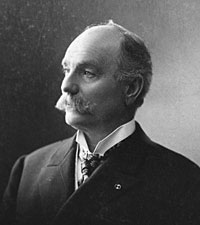
Captain Robinson Derling Pike
~ A gift that spawns Great Lakes fisheries:The legacy of Bayfield pioneer R.D. Pike, by Julia Riley, Darren Miller and Karl Scheidegger for the Wisconsin Department of Natural Resources, October 2011.
Robinson Darling PIKE, son of Judge Elisha and Elizabeth Kimmey PIKE, was a lumbering giant in early Bayfield history. Capt. R. D. Pike, as his name appeared weekly in the Press, was one of the most influential men in the county, associated not only with timber interests, but with the Bayfield Brownstone Company, the electric light company, the fish hatchery, etc. Just before his death on March 27, 1906, he wrote the following recollections of early Bayfield. The paper was read at the Bayfield 50th anniversary celebrations and was published in the March 30, 1906 issue of the Press along with Capt. PIKE’s obituary:
I regret very much not being able to be with you at the celebration of the fiftieth anniversary of the town of Bayfield. As you may be aware, I have been ill for the past few weeks, but am pleased to state at this time I am on the gain and hope to be among you soon. If my health permitted I would take great pleasure in being present with you this evening.
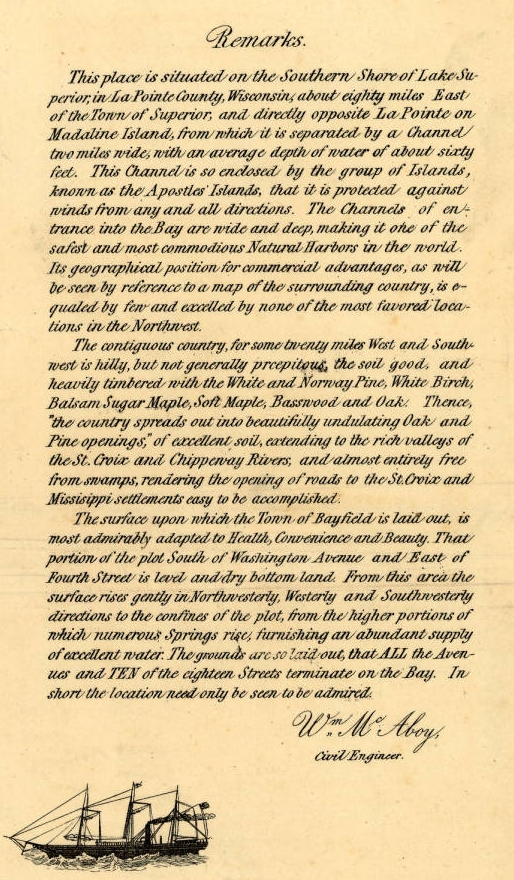
Detail from Major William McAboy‘s 1856 Map of Bayfield.
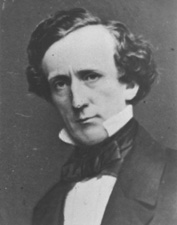
Senator Henry Mower Rice
~ United States Senate Historical Office
I remember very distinctly that the first stake was driven in the town of Bayfield by Major McABOY who was employed by the Bayfield Townsite Company to make a survey and plat same, (the original plat being recorded at our county seat.) This Bayfield Townsite Company was organized with Hon. Henry M. RICE of St. Paul at the head and some very enterprising men from Washington D.C. Major McABOY arrived here about the first of March and made his headquarters with Julius AUSTRIAN of LaPointe. Julius AUSTRIAN in those days being the Governor General of all that part of the country west of Ontonagon to Superior; Ashland and Duluth being too small to count The major spent probably two weeks at LaPointe going back and forth to Bayfield with a team of large bay horses owned by Julius AUSTRIAN, being the only team of horses in the country.
For more information about Julius Austrian, see other Austrian Papers.
I remember very well being in his office at LaPointe with father, (I being then a mere lad of seventeen,) and I recollect hearing them discuss with Mr. AUSTRIAN the question of running the streets in Bayfield north and south and avenues east and west, or whether they should run them diagonally due to the topography of the country, but he decided on the plan as the town is now laid out. Mr. AUSTRIAN and quite a little party from LaPointe came over here on the 24th of March, 1856, when they officially laid out the town, driving the first stake and deciding on the name Bayfield, named after Lieutenant Bayfield of the Royal Navy who was a particular friend of Senator RICE, and it was he who made the first chart for the guidance of boats on Lake Superior.

“Map of Bayfield situate in La Pointe County, Wisconsin” by Major William McAboy, 1856 for the Bayfield Land Company.
~ Wisconsin Historical Society

For more information about Indian interpreter Frederick Prentice, see his appearances in the Barber Papers.
~ Portrait of Prentice from History of the Maumee Valley by Horace S Knapp, 1872, pages 560-562.
The summer of 1855 father was in poor health, filled up with malaria from the swamps of Toledo, and he was advised by Mr. Frederick PRENTICE, now of New York, and known by everybody here as “the brownstone man,” to come up here and spend the summer as it was a great health resort, so father arrived at LaPointe in June, 1855, on a little steamer that ran from the Soo to the head of the lakes, the canal at that time not being open, but it was opened a little later in the season.

Detail of “Austrian’s Saw Mill” on Pike’s Creek, Chequamegon Bay, Lake Superior, circa 1852.
~ Wisconsin Public Land Survey Records
Upon arrival at LaPointe father entered into an agreement with Julius AUSTRIAN to come over to Pike’s creek and repair the little water mill that was built by the North American Fur Company, which at that time was owned by Julius AUSTRIAN. He made the necessary repairs on the little mill, caught plenty of brook trout and fell in love with the country on account of the good water and pure air and wrote home to us at Toledo glowing letters as to this section of the country. Finally he bought the mill and I think the price paid was $350 for the mill and forty acres of land, and that largely on time; however the mill was not a very extensive affair. Nearly everything was made of wood, except the saw and crank-pin, but it cut about two thousand feet of lumber in twelve hours. Some of the old shafting and pulleys can be seen in the debris at the old mill site now. Remember these were not iron shafts as we used wooden shafts and pulleys in those days. This class of the mill at the time beat whip-sawing, that being the usual way of sawing lumber.
Father left LaPointe some time in September 1855 for Toledo to move his family to Pike’s creek, which stream was named after we moved up here. Onion river and Sioux river were named before that time. On father’s arrival from Toledo from this country we immediately began to get ready to move. We had a large fine yoke of red oxen and logging trucks. He sold out our farm at Toledo, packed up our effects, and boarded a small steamer which took us to Detroit. Our family then consisted of father, mother, grandma PIKE, and my sister, now Mrs. BICKSLER, of Ashland. We stayed several days in Detroit to give father time to buy supplies for the winter; that is feed for the oxen and cow and groceries for the family to carry us through until Spring.
We then boarded the steamer Planet, which was a new boat operated by the Ward Line, considered the fastest on the lake. It was about two hundred fifty tons capacity. We came to Sault Ste. Marie, it being the Planet‘s first trip through the Soo, the canal as I remember was completed that fall. During this year the Lady Elgin was running from Chicago and the Planet and North Star running from Detroit, they being about the only boats which were classed better than sail boats of the one hundred and fifty tons.

Portrait of the Steamer North Star from American Steam Vessels, by Samuel Ward Stanton, page 40.
~ Wikimedia.org
We arrived at LaPointe the early part of October, 1855. On our way up we stopped at Marquette, Eagle Harbor, Eagle River, and Ontonagon. We left Ontonagon in the evening expecting to arrive at LaPointe early the next morning, but a fearful storm arose and the machinery of the Planet became disabled off Porcupine mountains and it looked for a while as though we were never going to weather the storm, but arrived at LaPointe the next day. There were some parties aboard for Superior who left LaPointe by sail.
We remained at LaPointe for a week or ten days on account of my mother’s health and then went to Pike’s bay with all our supplies, oxen and cow on what was known as the Uncle Robert MORRIN’s bateau. Uncle Robert and William MORRIN now of Bayfield, and if I remember rightly, each of the boys pulled an oar taking us across. We landed in Pike’s bay just before sundown, hitched up the oxen and drove to the old mill. Now, this was all in the fall of 1855.

Detail from William McAboy‘s 1856 Map of Bayfield.
“HON. JOHN W. BELL, retired, Madeline Island, P.O. La Pointe, was born in New York City, May 3, 1805, where he remained till he was eight years of age. His parents then took him to Canada, where his father died. He had gotten his education from his father and served an apprenticeship at three trades – watchingmaking, shipbuilding, and coopering. He then moved to Ft. La Prairie, and started a cooper shop, where he remained till 1835, when he came to La Pointe, on the brig “Astor,” in the employ of the American Furn Company as cooper, for whom he worked six months, when he took the business into his own hands, and continued to make barrels as late as 1870. It was in 1846 or 1847 that Robert Stewart, then Commissioner, granted him a license, and he opened a trading post at Island River, and became interested in the mines. he explored and struck a lead in the Porcupine Range, on Onion River, which he sold to the Boston Company, and then came back to La Pointe. In 1854 he was at the treaty between the Chippewas of Lake Superior and the Mississippi River, and was appointed Enrolling Agent on their new reservation, on the St. Louis River, where he went, but soon came back, as the Indians were not willing to stay there. He was then appointed by the Indians to look up their arrearages, and while at this work visited the national capital. He was appointed to County Judge for La Pointe County, and helt till 1878. He was elected on the town board in 1880. Has been Register of Deeds a great many years. Has held most all the different county and town offices, and at one time held or did principally the business for the whole county. He has seen La Pointe in all of its glory dwindle down to a little fishing hamlet; is now Postmaster at his island home, where he occupies a house put up by the old fur company. He was married in 1837 to Miss Margaret Brebant, in the old Catholic Church, by Rev. Bishop Baraga. They had seven children – John(deceased), Harriette (now Mrs. La Pointe), Thomas (deceased), Alfred (now Town Clerk), Sarah F., Margaret (deceased), and Mary (now Mrs. Denome).”
~ History of Northern Wisconsin, by the Western Historical Company, 1881.
As I said before, the town was laid out on March 24th, 1856, and record made same at LaPointe by John W. BELL, who at that time was the “Witte” of all the country between Ontonagon and Superior; Julius AUSTRIAN being the “Czar” of those days and both God’s noblemen. [Note: This was a reference to Count Sergei Witte and Tsar Nicholas II, contemporaries of Capt. Pike. Witte was responsible for much industrial development of Tsarist Russia in the 1890’s.] The Territory now comprising the town of Bayfield was taken from LaPointe county. There were a number of very prominent men interested in laying out the townsite and naming our avenues and streets, such as Hon. H. M. RICE and men of means from Washington after whom some of our avenues were named.
Very soon after this they wished to build a large mill in order to furnish lumber necessary for building up the town. The Washington people decided upon a man by the name of CAHO, an old lumberman of Virginia, so he was employed to come up here and direct the building of the mill. A hotel was built directly across from the courthouse by the Mr. BICKSLER who afterwards married my sister. The saw mill was built about a block west of where my saw mill now stands. The mill had a capacity of five or six thousand feet per day and I think the machinery came from Alexandria, Virginia. Joe LaPOINTE was the only man recognized as being capable of running a mill from the fact that he could do his own filing and sawing. While they were constructing the mill they had a gang of men in the woods getting out hard wood for fuel, not thinking of using any of the sawdust, and they piled the sawdust out with the slabs as useless. Charley DAY, whom many of you will remember, who was the party who got out the hardwood as fuel for the mill.
Time has wrought many changes in our midst. As far as I know, I am the only white man living who was here at the time the town was laid out.
In conclusion I wish to say that at a banquet given in Bayfield some two or three years ago, I made the statement that when the last pine tree was cut from the peninsula on which Bayfield is located the prosperity of our town and vicinity will have just commenced. The pine has gone and now we are cutting the hemlock and hardwood which will last ten to fifteen years; and long before this is exhausted the cut over lands will be taken up and farms tilled, as is the history of other sections of the country.

“Elisha and R.D. Pike owned a private fish hatchery [at Julius Austrian’s former sawmill] in Bayfield County from the 1860s to 1895. The Wisconsin State Legislature mandated the construction of a fish hatchery in northern Wisconsin in 1895, so R.D. Pike donated 405 acres (1.64 km2) from his hatchery to serve as the state hatchery. The state built the main hatchery building in 1897 using brownstone from nearby Pike’s Quarry. The Chicago, St. Paul, Minneapolis and Omaha Railway built a siding to the hatchery, and a special railcar known as The Badger brought fish from the hatchery to Wisconsin waterbodies. In 1974, new buildings and wells were constructed to modernize the hatchery. The hatchery was renamed in honor of longtime Wisconsin Department of Natural Resources secretary Les Voigt in 2006, and the main building was named for R.D. Pike in 2011. The hatchery currently spawns five types of trout and salmon and also includes a visitor’s center and aquarium.”
~ Wikipedia.org
1848 La Pointe Annuity Payments
March 2, 2016
By Amorin Mello

American Fur Company Papers: “Map of La Pointe”
drawn by Lyman Marcus Warren, 1834.
~ Wisconsin Historical Society
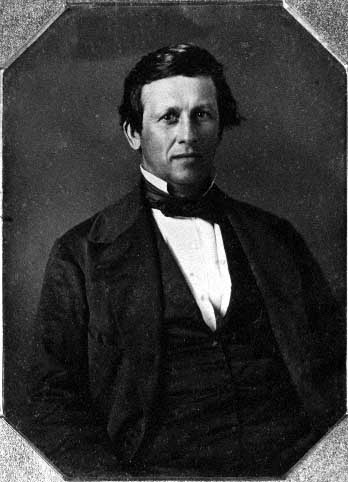
Hercules Louis Dousman
“In 1827, the American Fur Company (AFC) achieved a monopoly on the fur trade in what is now Minnesota. The Company suddenly increased its prices by 300 percent; American Indians, returning from the hunt with expectations of trading for their yearly supplies, found themselves cast into a debt cycle that would increase in the decades ahead. American Indians would receive virtually unlimited credit as long as they maintained the most precious collateral: land.
As game was overhunted and demands for furs changed, the system collapsed under a burden of debt. In 1834, AFC departments were sold to partners who included the Chouteaus, Henry Sibley, and Hercules Dousman. The business strategy of the reorganized companies changed from fur trading to treaty making. In 1837, economically stressed Dakota and Ojibwe people began selling land in what became Minnesota. Fur traders, through their political connections, were able to divert government payments for American Indian land into their own pockets. In effect, land cession treaties became a vast government bailout of fur trade corporations.”
~ Relations: Dakota & Ojibwe Treaties
Henry Hastings Sibley Papers 1826-1848

Henry Hastings Sibley
~ Minnesota Historical Society
Northern Great Lakes Visitor Center
History Center & Archives
“Papers of Minnesota’s first governor during his years as a fur trader, consisting primarily of correspondence among the various American Fur Company agents located in the Wisconsin Territory. Correspondence concerns internal company business; business with Hudson Bay Fur Company; company agreements with the Dakota Indians; company interest in United States government treaties with the Dakota, Ojibwa, and Winnebago Indians; attempts by the company to prevent war between the Dakota and the Sauk and Fox Indians; relations with missionaries to the Indians of the region; and company disputes with Indian agents Henry R. Schoolcraft and Lawrence Taliaferro.
Correspondents prominent in the early history of Minnesota and Wisconsin include William Aitken, Frederick Ayer, Alexis Bailly, Bernard Brisbois, Ramsay Crooks, Henry Dodge, James Doty, Hercules Dousman, Jean Faribault, Alexander Faribault, Joseph Nicollet, Henry Rice, Joseph Rolette, Henry Schoolcraft, Lawrence Taliaferro, and Lyman Warren.”
New York April 17, 1848
To Geo Ebninger Esq.
Assignee Am. Fur Co.
Dear Sir,

Pierre Chouteau, Jr.; son of French Creole fur trader, merchant, politician, and slaveholder Jean-Pierre Chouteau.
~ Wikipedia.org
We hasten to reply to you, of this date offering to sell “The American Fur Co Establishments at Lapointe” all the Northern Outfit Posts: – “The whole for twenty five hundred dollars ($2500)” provided we will take the goods remaining on hand there after this spring’s trade at New York cash for sound Merchantable goods everything else as its fair actual value & say that we regret you waited until the moment our senior was leaving for the west before making the above proposition & also some days after the departure of Mr. Rice. It is probable, if your letter had been received during his stay here, that we would have accepted it or made other propositions which would have been agreeable. We thought if you were desirous of selling the Establishments & goods that you would have apprised us earlier of your intentions & given us time to consult or reflect upon it. And we expect, and hope that you will give us time to communicate your proposition to the persons interested with us in Upper Mississippi & particularly with Mr. Rice who alone has visited the posts & has a correct idea of their value.
Believing that the delay we ask will not or cannot be prejudicial to your interests we will wait your answer.
Very respectfully
yr obd svt
P Chouteau Junr
New York 28th June, 1848
Mister P Chouteau Jr & Co
New York
Gentlemen,
Agreeably to what I had the pleasure to address you on the 14th April last, copy of which letter is annex I will sell you the late American Fur Company’s Establishment at La Pointe & as the terms and conditions as before named, delivery to be made to you or your agent on a date to be hereafter agreed upon between the First day of September and Fifteenth day of October next and ending Payments for the same to be made in New York to me in October or November next.
Please let me have your written reply to this proposition.
I am gentlemen bestly
Your Obedt Servt
George Ebninger
Assignee to P Chouteau Jr, St Louis
New York 30th June, 1848
To George Ebninger Esq.
Assignee Am Fur Co.Dear Sir,

View of La Pointe, circa 1843.
“American Fur Company with both Mission churches. Sketch purportedly by a Native American youth. Probably an overpainted photographic copy enlargement. Paper on a canvas stretcher.”
~ Wisconsin Historical Society
In reply to yours of 28th inst (with copy annexed of similar letters under date 14th April last) we have to say that under advises lately received from our Saint Louis house we accept in general terms your proposition for the sale of the American Fur Co’s trading Establishment at Lapointe and interior for the sum offered, of Twenty Five Hundred dollars. It may be well enough to observe how ever that we consider the sale as dating only from the time of delivery to our authorized agents. Until then received we shall consider the posts as the property of Late American Fur Co and to be as their risk and any destruction of property between now and the time you may fix for delivery to be their loss and not ours.
The terms of payments proposed by you are entirely acceptable. But we think it might be better to make it more definite and accordingly suggest that our agents who received the property draw upon us as forty days & nights for the amount. Hoping that these slights exchanged may meet your sanctions and that you will name an early day for the delivery of posts & we remain very truly,
Your Obedt Servt
P. Chouteau Jr & Co
New York 5th July 1848
P Chouteau Jr Esq
Saint LouisDear Sir

“Ramsey Crooks (also spelled Ramsay) was born in Scotland in 1787. He immigrated to Canada in 1803 where he worked as a fur trader and explorer around the Great Lakes. He began working for the American Fur Company, which was started by John Jacob Astor, America’s first multi-millionaire, and made an expedition to the Oregon coast from 1809-1813 for the company. By doing so he also became a partner in the Pacific Fur Company. In 1834 he became acting president of the American Fur Company following Astor’s retirement to New York. A great lakes sailing vessel the Ramsey Crooks was constructed in 1836 by the American Fur Co. A nearly identical sister ship was built in the same year and was called the Astor. Both ships were sold by the dissolving fur company in 1850. Ramsay Crooks passed away in 1859, but had made a name for himself in the fur trade not only in Milwaukee and the Great Lakes, but all the way to the Pacific Ocean.” ~ Milwaukee County Historical Society
On the 28th June I sold to your house the Establishments of the late American Fur Company at Lapointe agreeably to the letter I had written to you on the 14th April. Cash delivery to be made at some period to be agreed upon hereafter between the first day of September and fifteenth day of October next. I hope that it may be in my power to get to Lapointe and attend to the delivery to your agents but if not we must select some other to act for me, Mr. Crooks and myself are not on good terms in [cou-bethee?] ease as he has been opposed to the sale being made by from the bush. I have lately heard that Mr. Crooks has written the Establishment & at Lapointe (Mr. [Ludgem?] of Detroit told me so while in the city lately) and he must have written to him shortly after the offer was made to you here, and it remains to be seen what authority he can have to dish use of the property which has been assigned to me and over which I have acted as assignee for nearly the last six years. Mr. Crooks acts of leaving here shortly for the Northern Posts. Before then I shall know what he proposes to do to annul the sale I have (under the authority vested in me as assignee) made to you, and which has been made agreeably to his only Suggestions on the 14th day of April last, and the only objection he can make to the Sale is that you did not as once accepts of his but required only a reasonable time to reply to which I was willing to grant and would again give under such circumstances you being there on the eve of leaving here, but it was clear enough that Mr. Crooks never wished that you should have the Northern Outfit Establishment, but that his friend Borrup should. I shall however do all that I can to oppose his injust views on that score.
I am In Most Truly
Your Obedt Servt
George Ebninger
Aspring politician and future Senator Henry Mower Rice represented the Chippewas at the 1847 Treaty of Fond du Lac, and appears frequently here on Chequamegon History.
~ United States Senate Historical Office
St. Louis July 14, 1848
Mr.s Sibley & Rice
St. PetersDr. Sirs
We had this pleasure of the 7th inst by [Shamus Highland Many?] enclosing Invoice & Bill of Landing of C.O. English goods which we hope you will have received in good order and due time – The same day and as the time the boat was pushing off we addressed you a few lines in haste, advising you of the purchase made by our House in New York, of the posts at Lapointe. We have just received several documents in relation to that purchase of which you will find copies herewithin.
You will perceive from their contents how Mr. Crooks has acted in the matter, and that it has become urgent for us to take such steps as will answer the possession of the said posts. How we will be able to succeed, Doctr. Borrup being now in possession & having apparently purchased from Mr. Crooks, is a matter of doubt and can only be ascertained at Lapointe. We have purchased Bona Fide from Mr. G. Ebninger, the only person authorized to make sale, as the assigner of the late American F. Co. Mr. Borrup we are afraid, will (as you can see by Mr. Sanford’s letter) refuses to give possession, and in that case, in a country where there is no way of enforcing law, we may not be able to obtain possession before next year. Now, would it be desirable or advantageous to make the purchase and not get possession before that time? We think not.

Oil painting of Doctor Charles William Wulff Borup from the Minnesota Historical Society:
“Borup and Oakes were headmen for the [American Fur Company]. All voyageurs, ‘runners,’ as they were called, were employed by said company. They would leave La Pointe about the beginning of September, stay away all fall and winter among the Indians in their respective districts, collect furs, and return about the beginning of June. They would take along blankets, clothes, guns, etc., to trade with the Indians for their furs. They took along very little provisions, as they depended mostly on hunting, fishing, wild reice, and trade with the Indians for their support. There were several depots for depositing goods and collecting furs, for instance at Fond du Lac (Minnesota,) Sandy Lake, Courtes Oreilles, Lac du Flambeau Mouth of Yellow River, etc.”
~ Proceedings of the [Wisconsin Historical] Society at its Sixty-fourth Annual Meeting, 1917, pages 177-9
We are writing this day to our home in New York and to Mr. G. Ebninger that he must proceed immediately to Lapointe so as to be here from the 1st to the 15th September, and claim himself & in person the delivery of the posts. Any agent would not probably succeed, or objections would no doubt be made by Doctr. Borrup which said agent could not face or answer. You will therefore do the necessity of either of you going to Lapointe and meet them with Mr. Ebninger on the time appointed above.
Very truly yours,
P. Chouteau Jr & Co
It was only on the 10th inst that we were handed your forms of 25 june enclosing packing ‘℅’ of the U.S. postal M.R. #01037 for ℅ St Louis ℅ Chippewa outfit. Capt. Ludwick ought to be more particular with papers confided to his care.
Bernard Walter Brisbois was an agent for the American Fur Company.
Duplicates of this letter and documents enclosed, sent to the care of Mr. Brisbois of Prairie du Chien, by mail
You will notice by copy of telegraphic dispatch of the 10th that the Chippewa annuity will be paid at Lake Superior as heretofore.
[Illegible]
The New York Times
September 29, 1851
“Indian Moneys”
There is no greater abuse in the governmental policy of the United States, than the past and present system of Indian payments; and the Indians would be benefited if the money thus appropriated were cast into the Lakes, rather than made the cause of such much distress and swindling as it is.
The author of this article is not identified.
In the August of 1848 we were present at a payment at La Pointe, and we have no hesitation in saying that every dollar paid to the Indians there was a disadvantage rather than a benefit to them.
The payment was fixed for August, and Indians from West of the Mississippi were called together at La Pointe to receive it. They gathered at the appointed time, and the payment was not made for three weeks after the time specified.
The money collected at the Saut Ste. Marie Land Office, the most convenient point, had been transported, as per Government order, to Chicago, and the Paymaster received drafts on that point where he was compelled to go for the specie, and the payment was thus delayed.

La Pointe Beaver Money of the American Fur Company’s Northern Outfit from “The Beaver in Early Wisconsin” by A. W. Schorger, Wisconsin Academy of Science, Arts, & Letters, Volume 54, page 159.
Meantime, the Indians gathered at La Pointe were without the necessaries of life, and the agents of the North American Fur Company, and a few old traders who were posted in the business, supplied them with provisions at exorbitant rates, and forced them to buy with every ounce of pork or flour which they needed, an equal amount of dry-goods and gewgaws, which had no value for them. These sales were made on credit, to be settled at the pay-table. At the payment, some $30,000 in cash, and a stipulated quantity of blankets, guns, powder, tin pails, calicoes, ribbons, &c., were distributed; and this American Fur Company, and the favored traders, raked from the Paymaster’s table as it was counted out to the bands, over $12,000 for provisions furnished to, and trash forced upon the Indians, while they were delayed after being summoned to the payment.
Some $14,000 more was spent among forty traders and the remaining $4,000 the Indians carried home; about one dollar each.
Their blankets, about the only valuable thing they received in the way of dry goods, were on the night after payment, mostly transferred to a mercenary set of speculators, at a cost of a pint of whiskey each, and came down to the Saut as private property on the same propeller that took them up as government gratuity.
Such was the result of a payment for which thousands of Indians traversed many miles of forest, wasted six weeks’ time, and lost the crop of wild rice upon which they depended for their winter’s subsistence.
If a white man with a white soul, writes the history of the Indians of the West, the American government will gain little credit from his record of Indian payments.
For more context about these American Fur Company partners and their affairs following the 1848 La Pointe annuity payments, please read pages 133-136 of Last Days of the Upper Mississippi Fur Trade by Rhonda R. Gilman, Minnesota History, Winter 1970.
But the swindle of 1848 was not gross enough to suit certain grasping parties. La Pointe was too easy of access. So many traders sought a market for their goods there, that the old monopolists could not obtain a thousand per cent on the goods they sold; and even in 1848, it was whispered that they were using all their influence to have the future payments made at some point so far West that competition would not force them to be content with moderate profits.
For more context about the Lake Superior Chippewa following the 1848 La Pointe annuity payments, please read our The Sandy Lake Tragedy and Ojibwe Removal series here on Chequamegon History.
To effect this it was necessary to remove the Chippewas further West, and by some influence, not, perhaps, distinctly marked, but yet more than suspected, this order of removal was secured.
It was uncalled for, useless, and abominable; and we are glad, for the sake of humanity and justice, that the Administration have resolved that for the present the edict shall not be enforced. We trust it may never be.
CAUTION: This translation was made using Google Translate by someone who neither speaks nor reads German. It should not be considered accurate by scholarly standards.
When we last left Moritz Wagner and Carl Scherzer, the two Austrian adventurers who traveled across Lake Superior in 1852, they had avoided certain death when caught in a storm halfway through the crossing between Bad River and La Pointe. In this post, we find them on Madeline Island in the wee hours of the morning, looking for a place to stay.
In the three days they spent in La Pointe, they produced a description of the island as colorful as any I’ve come across. Enjoy:

A View of La Pointe from Report of a Geological Survey of Wisconsin, Iowas, and Minnesota (1852) by David Dale Owen (Digitized by Google Books)
XXI
From Ontonagon to the mouth of the Bois-brule River–Canoe ride to Magdalen Island–Porcupine Mountains–Camping in the open air–A dangerous canoe landing at night–A hospitable Jewish family–The island of La Pointe–The American Fur Company–The voyageurs or courriers de bois–Old Buffalo, the 90 year-old Chippewa chief–A schoolhouse and an examination–The Austrian Franciscan monk–Sunday mass and reflections on the Catholic missions–Continuing the journey by sail–Nous sommes degrades–A canoeman and apostle of temperance–Fond du lac–Sauvons-nous!
It was 1 o’clock in the morning, and the whole settlement was in a deep sleep. We were at a loss as to which door to knock at. Among 200 Indians, only a few white families live there. One of the boatmen gave us a name, with which we found Mr. Austrian (a name meaning Oestreicher) a descendent of the Mosaic.
We knocked confidently by rattling at the window showing the distinguishing hemp of Austrian. We have always had a favorable bias for our Jewish countrymen in this nation. They have brought over so many ancient patriarchal customs of antiquity unadulterated, faithful, and pure in their sympathetic breasts. Here the noble manners of hospitality sweep away the cold breath of selfishness found among the Americans. The Jews are always ready to welcome strangers and donate a warm and magnanimous hand with every occasion.
They opened and the young doorman yelled out to the person in the next room, “Joe, steh auf, Leut from below, sind da!” and because it could not be doubted that we were, “One of our people!” We were then bombarded with all the tastes of the kosher delicatessen: belek, kugel, kindeln, and other tidbits of the Jewish frying pan. We were offered a nice, clean room and did not suspect that the close Yom Kippur (Jewish fast day) should frustrate our feast.
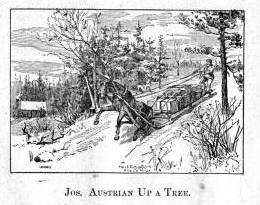
Jewish-immigrant brothers, Julius and Joseph Austrian, were prominent La Pointe residents at this time. This image depicts an incident from Benjamin Armstrong’s Early Life Among the Indians (Engraving by Marr & Richards Co.).
17 September, early, 61° Fahr. The actual owner of the home was absent. However, his younger brother received us with all the warmth of a Bayreuth Jew. He had only been in the country a short time, and spoke English with a Spanish-sounding accent as he called to us in the room, “Waken sie!” He showed us a pair of Indian snowshoes, and asked, “Haben sie snow shoes noch nie geused?*” He finally told of the fish trade in the same mixed gibberish, “Below werden die Fische umgepakt, inspected, und dann weider vereignepakt again.”
(*German immigrants all have a peculiar manner of acquiring the English language. As they hear a strange new name, they mix it together immediately with the words of their native language, without regard for how the expression works in English. A carpenter told us, “Wenn sie ein loghouse bauen wollen un dasselbe inwendig geplastered und von außen geclapboarded wird, so wird es 700 dollars kosten!”
In Pennsylvania, all counties speak an unintelligible German-English slang. It may be that after a few generations, a whole new language is emerging. So, some German immigrants are a tragic example of how one can forget his native language without having to learn another language as a substitute.)
La Pointe is the largest of several islands known under the collective name of Isles des Apotres. It has an unusual history. One of the earliest points on Lake Superior where men of faith planted the cross of salvation in 1665, it wasn’t until a century later that the progress of civilization began to push the two and four-legged forest dwellers further and further west . For several years it was the home depot (post) of the Fur Trading Company. This trading company was founded in 1808 by John Jacob Astor as the American Fur Trading Company, by an act of law of the State of New York. It granted exclusive right of trade and intercourse with the Indians, and in earlier times, provided an immense source of power and wealth. Currently, the business is divided between a Company of the West and the North West, of which the latter united with the Hudson’s Bay Company* and created unrestricted competition and limited the field of activity. The company of the west, currently under the leadership of J. Chouteau and Company, trades with the Indians of the Missouri and Mississippi. Its headquarters are at the upper Mississippi. The company owns 25 stations (trading posts) employing 200 voyageurs who take care of transporting commodities in the business season and bring the furs to the businesses located in St. Paul, Mendota, and Crow Wing in the Minnesota Territory.
(*[This footnote goes on for several pages on the history and structure of the Hudson Bay Company. As it interrupts the narrative, and can be found in other sources, I’ve omitted it.])
The different Indian tribes will kill the animals of the forest in the course of the year and then gather at certain points for the individual bands. Every year there is a caravan of agents (traders) of the fur company who obtain this rich quantity of valuable animal skins from the ignorant Indians for a lowly price of trade items.
This commercial agent will bring birch canoes full of presents across Lake Superior, and usually in 26 to 30 days will bring back the skins of bears, wolves, silver and other foxes, beavers, raccoon, martens, wolverine, otters, muskrats, weasels, and buffalos. Whether their fate is to be a winter covering for the delicate lady’s hands or the lining of a skirt in the princely salons is yet to be determined.
Next door, in perhaps richer numbers and selection, but certainly of far less value, are items of the clever broker. The eyes glare as he flaunts his manufactures. One sees, woolen blankets, cloth fabrics, firearms, ammunition, tin kettles, earrings, finger rings, brass buttons, breastplates, wampum, chopping knives, birch canoes, and mirrors. There is makeup of red, blue, black, and green color, but all the items together carry only one color, that of speculation and dizzying purpose.
Although the furs are barter items, they have an adopted value determined so that the price of the animal fur always corresponds with a certain number of exchanged wares. But the furs are usually valued very low and in contrast, the reverse items are priced very high. The total traffic area with the Indians in the West should produce 1 million dollars annually. Together, the furs are shipped, via New York, to London which is the main market for the American fur trade.
Since we did not visit these remote areas during the season of barter, we could not bear witness to this certainly most-interesting and instructive spectacle, but we cannot omit some words and impart some pressure as we become aware of the facts which throw a sad light on the business of the whites with the Indians. We believe it is the same, and more truthful, to be told as it is by Schoolcraft, the highly-respected American historian, on his travels among the tribes on Lake Superior.
A shotgun worth 10 guineas was sold by an agent to an Indian chief for 120 pounds of beaver skins, or 480 dollars of value. A caravan of 6 bales of barter commodities was traded for $2000. In Athabasca, 96 sacks of beaver skins weighing 8640 pounds brought back four dollars of value when their real worth was $34,560!
Another scholarly researcher, Coldon,writing in 1741 in the area of the Five Nations, describes how the whites in general and the traders in particular, create debts. The vice of drunkenness among the wild Indians occurs so frequently because the greed of the traders allows them to shrink to the lowest means and intentionally put the foolish aborigines in a state of intoxication causing an even more advantageous position for fraud. This evil passion has wreaked more havoc among the Indians than disease or war. It has destroyed more than instruction in Christianity could ever be capable of building up.
Among the Indian tribes there is a strongly-held opinion that if you murder a fur trader, he will retaliate by intentionally bringing back infected goods.* This belief probably arose from the sensitivity caused by the way the whiteskins associate with the redskins. They treat the actual natives of American soil as their subjects and servants, and consider it their privilege to satisfy their greed and passion and claim material and bodily impunity.**
(*[Here the authors insert an extensive footnote about smallpox infections in the Lake Superior region. As it disrupts the narrative and is information that can be found in Schoolcraft’s Narrative of an Expedition Through the Upper Mississippi River to Itasca Lake, I’ve omitted it here.])
(**Two residents of La Pointe told us how a former agent convinced several Indians and mix-bloods to entrust him with their savings due to them from the sale of the Indian country to the government. He used the advantage of his position to gain their trust and did not issue receipts for the borrowed. He had about $800 from everyone but when it was claimed, the fraudulent agent told them they would have to be content with repayment in commodities, flour, sausage, and potatoes, for which the he charged an exorbitant price. We started this narrative not wanting to believe it, but two good Catholics swore on the host. The agent has since left this island, to general contempt, taking the gold pieces of the Indians with him.)

The Voyageurs (1846) by Charles Deas (Wikimedia Images)
After this discussion of the of the rates of the American Fur Company and its agents, we want to add some details about the men whose labor and time exerted such a great influence on the fate and culture of the Indian tribes. We wish to add a few explanatory words about the sad presence on La Pointe of the voyageurs or courriers du bois.
This peculiar class of people, which is like a vein of metal that suddenly disappears within the bedrock and reappears many hundreds of miles away under the same geological conditions, their light reaches the borders of the eastern Canadas. The British people, with their religion and customs, reappeared on the shores of these northern lakes only in 1808 with the Fur Company. For labor they drew on those who could carry their wares across the lakes and communicate with the Indians.
Many young men of adventurous natures left the old wide streets of Montreal and moved into the trackless primeval forests of the West. Young and strong as laborers, they soon started to adopt the lifestyle and language of the aborigines. They married with the Indians and inhabit small settlements scattered throughout those mighty lands which begin at Mackinow Island and come up the upper lake to the region of Minnesota. They almost all speak the Canadian patois along with the language of the Chippewas, the tribe with which they came into kinship. We found only a few, even among the younger generation, who understood English.
Since then, every day the population of the otherwise deserted shore of Lake Superior increases with the discovery of copper mines. The animals driven away by the whirlwind of civilization toward the west, attract the Indians with their sensitive guns, leaving La Pointe, abandoned by the Company for their headquarters at St. Paul in Minnesota. Most voyageurs left the island, having seen their business in ruins and lacking their former importance. Just a few families remain here, making a meager livelihood of hunting, fishing, and the occasional convoy of a few travelers led by business, science, or love of nature who purchase their limited resources.*
(*Except for us, this year they had only two travelers visit this area for scientific interest. The scarcity of this type of tourist seems to be the reason why the price the voyageurs and their companions ask is high. We paid all our leaders one and one half dollars a day and just as many for the days necessary for their return. The voyageurs are democratic and truly similar to those Alpine villagers who charged the emperor two Louis d’or for a breakfast of two eggs.)
A devout Franciscan friar, the family of a Methodist preacher, a school teacher, and a skilled tradesman, together with some old canoe houses, remains of the once large voyageur legion, make up the small numbers of the white population.
The island is 15 miles long, 5.6 miles wide, and has 30 miles in circumference. The main formation is sandstone and red clay. Vegetation proliferates in spruce, pine, cedar, birch, tamarack (Larix americana), etc. The oval horseshoe shape of the island makes it one of the best ports of the entirety of Lake Superior, and this, despite current unemployment, promises hope for a comfortable future.
Add to that, the infinite abundance of fish on their shores. Delicious, but only edible in the spring, are the Siscawit (Salmo siscowet), and the trout (Salmo amethystus). The whitefish (Coregonus albus) are available in uncommon quantities. The most successful fishmonger here sent during the past years, 300 barrels of various species of fish, each 200 pounds, to the markets of Cleveland and Detroit.

The Siscowet, or Fat Trout, is a subspecies of Lake Trout (Drawn by David Starr Jordan, and Barton Warren Evermann, 1911; Digitized by University of Washington)
At the invitation of the zealous schoolteacher*, we toured the schoolhouse. Here we met Old Buffalo (Chi Waishki or Pezhickee), the 90-year-old hereditary chief of the Chippewa band. He was wrapped in a blue striped shirt and a wool blanket. He carried a royal scepter made from a broken wooden base of a bed as a symbol of his authority. He was looking for some glue to repair a garment for a young Indian. We find it necessary here to mention that of the many Chippewas on this island, very few are full-blood Indians. Having crossed frequently with the European race, and through the efforts of Christian missionaries, they have adopted the habits of civilization. They inhabit the abandoned wooden shacks of the Fur Company, and are even given to industrial employment.
(*Mr. Pulcifer, the schoolmaster is a highly-educated teacher. He gives the Sabbath service in the absence of the Methodist preacher. The Methodist mission on the island of La Pointe was founded in 1831).
The Indian chief, worthy by his age, heredity, and his imposing figure, told us he was born near the island and left the area only once to travel in the matters of his tribe to the Great Father* in Washington. His stay was accompanied by many consoling words but little actual success. Since then, he’s been back to the chase. One winter, he brought in 150 fox skins. Despite this wealth of skins in a game-rich area, he is now poor. Here we have the hereditary Chippewa chief, whose generations (totem) are carved in the ancient birch bark,** giving us profuse thanks for just a modest silver coin and a piece of dry cloth. What time can bring to a ruler!
(*”Great Father” is what the Indians call the President and other agents of the United States government.)
(**Almost all Indian tribes have the custom of preserving their lineage from oblivion by carving characters, that correspond to the names of their tribe, on trees, canoes, weapons and everywhere else.
Strangely, we later learned that the majestic Old Buffalo was violently opposed for years to the education and spiritual progress of the Indians. Probably, it’s because he suspected a better instructed generation would no longer obey. Presently, he tacitly accepts the existence of the school and even visits sometimes, where like ourselves, he has the opportunity to see the gains made in this school with its stubborn, fastidious look of an old German high council.)
Although made of simple planks, the school hall is clean and well-ventilated. The youth, consisting of 25 mix-blooded children, are instructed by the Methodist teachers in reading, writing, arithmetic, geography, and natural history. The teacher takes 6 to 8 children to the teacher’s desk and tells them to read their lessons or recite them from memory. Most often, there are questions which are subjected to discussion, questions that relate to the everyday world. This gives the youth the advantage of preparation for practical life.*
(*One of these practical textbooks is similar to Guide to Knowledge, a popular textbook in England: Conversations on common things by a teacher. Boston, Munroe and Francis. 1849.)
For example, a student may read a sentence in which the word “lead” occurs. This immediately gives rise to an instructive conversation about this noble metal, such as where lead is most found, what it is used for, the compounds in which it is used, etc. The youth, by learning this way about various natural phenomena, learns at the same time to know and admire the sources of a country’s wealth. It is an early and delicate way to teach the students the important parts of the geographical, physical, and political history of the country before their own history.

The front page of the Kladderadatsh, a German-languague satirical newspaper published in Berlin. Despite it’s popularity among the masses in Europe, I’m not sure the kids in La Pointe had subscriptions (Wikimedia Images).
At the conclusion of the lesson, the older children, by their own reflection but encouraged by their teacher, asked us several questions about European life: if many European children went to school, and what they learned there…
It was shamefully difficult answering these simple questions asked by the children.
We told these smart young half-Indians that here in Europe the same God lives and moves as in their hemisphere, and that His sun is the only true light that rises for the peoples of the East. We replied further that children learn a tremendous amount but usually know incredibly little, and finally, that the Berliner Kladderadatsch is the most widely read political journal. This last answer left the little indigene who asked the pointed questions bewildered and seemed to discourage the asking of any further information about Europe. At that point, the school meeting was cancelled to our great relief.
Another no-less worthy host received us with warm greetings of the heart. It was the worthy Franciscan monk, Father Scolla, from Rudolphswerth in Carinthia. We went to deliver the pleasure of a recommendation to our pious countryman. We knocked at the meager gate of the little boarded house that grew out from the rear part of the church. We are now almost ashamed of the worldly manner in which we approached, given the distinguished reception we received at the hands of such a pious priest.

Alternate translation of this passage found in History of the diocese of Sault Ste, Marie and Marquette (1906) by Antoine Ivan Rezek pg.367 (Digitized by Google Books)
Our traveling way of life often finds us witness to scenes of parting, separation, and reunion, but we have never seen any man become so pale, taken, and overcome with intimate emotion as this Franciscan when he learned through language and handshake that we were compatriots from the Imperial City.
We can reasonably account for this surprise in that almost 20 years had passed since the lone missionary had seen a countryman “of the Imperial City” and had been addressed in his language, and felt the warm shake of an Austrian hand. His whole religious intercourse with the faithful, be it preaching the gospel at the pulpit, forgiving sin in confessional, or donating food for the journey to the deathbed, happens in a foreign tongue, in French and Indian language.
What troubled us most about his monastic life was the poverty and helplessness with which this devout priest remains continually fights to preach the Way. The greater part of his church consists of converted Indians and mix-bloods, who all live in such poor circumstances that there is no thought of support for this priest. The maintenance costs for the church and its priests must therefore be restricted to those means which fall from the general missionary funds of the Catholic Church.
The quota, that makes its way to the Church of Our Lady of La Pointe, is extremely low, and sometimes isn’t received for so many years that one gets the impression that the bishop in Milwaukee has forgotten the lonely forests of Madeline Island, its Lady, and Father Scolla. The pious Franciscan, whose destitution has denied him any assistance in church and house, must therefore do as priests and lay ministers do. He decorates and adorns the high altar, paints the images of saints, rings the bell, and worries about the upkeep of his small house at the same time.

cntd. translation in Rezek pg.368
On the Sunday before we left, we attended the service. The small church was quite filled with Indian women, mix-bloods, and Canadian voyageurs. The women wore long cloth of dark green, blue, and black covering them from hips to head and wrapping them in one whole soft shape. The men were all dressed in European clothing. During the vicarious sacrifice of the mass, four half-Indians in white surplices sang the Latin text shouldering such edification that you would have sworn they understood every word.
The sermon was held in French, the most common language of the island, and it was appropriate for the comprehension of the people in the audience. In the afternoon, the tireless Franciscan monk preaches in Indian for his neophytes, which prevents age from weakening his intellectual ability to learn a foreign tongue.
Much more edification of the faithful would have prevailed if not for the wailing cries of the infants disturbed by the devotion, who were brought along on the backs of the countless “squaws.” But these grumpy little citizens of the world seemed to understand even less than the adult choir of the plot of the Latin score.

Fr. Otto Skolla was from Novo Mesto (Rudolfswert) in today’s Slovenia not far from the Slovenian homeland of his fellow Lake Superior priest, Bishop Frederick Baraga (Rezek pg. 360)
When we speak of the conviction in his calling and pure enthusiasm of the priest’s benediction, of the faithful community dropping to their knees, covering their faces, and reverently making the sign of the cross, we could not help but feel sadness that such a worthy and pious work could not flourish better due to a lack of temporal goods.
What ability to spread blessings the Catholic missionary would have if equipped with the necessary material resources: a teacher for the youth, a doctor for the sick, a support for the poor. How can the Church win over humanity when right now the distressing spectacle is such that the Catholic youth, lacking the funds for a teacher, get no education, and the narrow-minded principles of their spiritual board keep them from getting permission to attend the Methodist school?
If you watch the incredible speed of the other religious sects, such as the Methodists, Baptists, and Presbyterians, and the extraordinary sums taken in and put out for education and missionary purposes– they have missionaries in all ports in the Union–and how without consideration of their religion, they receive immigrants, comfort the sick, the suffering, and take care of the children, while the Herald of Catholic teaching to foreign lands moves slowly. It may not surprise you, especially here in the United States that foreign religious sects are gaining converts while the ranks of the Catholic Church, despite the massive influx of Catholic populations from Ireland and Germany, not only aren’t increasing, but are actually seeing a decrease in numbers.

The Catholic church on Madeline Island as drawn by Skolla (Rezek pg.361).
CAUTION: This translation was made using Google Translate by someone who neither speaks nor reads German. It should not be considered accurate by scholarly standards.
Note: This is the first of four posts about Lt. James Allen, his ten American soldiers and their experiences on the St. Croix and Brule rivers. They were sent from Sault Ste. Marie to accompany the 1832 expedition of Indian Agent Henry Schoolcraft to the source of the Mississippi River. Each of the posts will give some general information about the expedition and some pages from Allen’s journal. The journal picks up July 26, 1832, after the expedition has already reached the source, proceeded downriver to Fort Snelling (Minneapolis) and was on its way back to Lake Superior.
Henry Rowe Schoolcraft (1793-1864)
Although I’ve been aware of it for some time, and have used parts of it before, I only recently read Henry Schoolcraft’s, Narrative of an Expedition Through the Upper Mississippi to Itasca Lake: The Actual Source of this River from cover to cover. The book, first published in 1834, details Schoolcraft’s 1832 expedition through northern Wisconsin and Minnesota. As Indian agent at Sault Ste. Marie, he was officially sent by the Secretary of War, Lewis Cass, to investigate the ongoing warfare between the Ojibwe and Dakota Sioux. His personal goal, however, was to reach the source of the Mississippi River and be recognized as its discoverer.
Schoolcraft’s expedition included a doctor to administer smallpox vaccinations, an interpreter (Schoolcraft’s brother-in-law), and a protestant missionary. Having been west before, Schoolcraft knew what it would take to navigate the country. He hired several mix-blooded voyageurs who are hardly mentioned in the narrative, but who paddled the canoes, carried the portage loads, shot ducks, and did the other work along the way.

Ozhaawashkodewekwe (Susan Johnston) was the mother-in-law of Schoolcraft and the mother of expedition interpreter George Johnston. Born in the Chequamegon region, she is a towering figure in the history of Lake Superior during the late British and early American periods.
Attached the the expedition was Lt. James Allen and a detachment of ten soldiers, whose purpose was to demonstrate American power over the Ojibwe lands. The United States had claimed this land since the Treaty of Paris, but it was only after the War of 1812 that the British withdrew allowing American trading companies to move in. Still, by 1832 the American government had very little reach beyond its outposts at the Sault, Prairie du Chien, and Fort Snelling. The Ojibwe continued to trade with the British and war with the Dakota in opposition to their “Great Father” in Washington’s wishes.
This isn’t to say the Ojibwe were ignorant of the Americans and their military. By 1832, the Ojibwe were well aware of and concerned about the chimookomaanag (long knives) and what they were doing to other Indian nations to the south and east. However, the reality on the ground was that the Ojibwe were still in power in their lands.

Doc. 323, pg 55

Doc. 323, pg. 56

Doc. 323, pg. 57
Allen’s journal is part of Phillip P. Mason’s edition of Schoolcraft’s Expedition to Lake Itasca: The Discovery of the Source of the Mississippi (1958). However, these Google Books pages come from the original publication as part of the United States Congress Serial Set.
 Chequamegon History