From individual historical documents, it can be hard to sequence or make sense of the efforts of the United States to remove the Lake Superior Ojibwe from ceded territories of Wisconsin and Upper Michigan in the years 1850 and 1851. Most of us correctly understand that the Sandy Lake Tragedy was caused an alliance of government and trading interests. Through greed, deception, racism, and callous disregard for human life, government officials bungled the treaty payment at Sandy Lake on the Mississippi River in the fall and winter of 1850-51, leading to hundreds of deaths. We also know that in the spring of 1852, Chief Buffalo and a delegation of La Pointe Ojibwe chiefs travelled to Washington D.C. to oppose the removal. It is what happened before and between those events, in the summers of 1850 and 1851, where things get muddled.
This well-known engraving, found in Benjamin Armstrong’s Early Life Among the Indians does not list the members of the 1852 delegation by name. At least three of the men who signed this letter took the trip: Kecheueshki (Buffalo), Kishkitauʋg (Cut Ear), and Oshoge (Heron)
Confusion arises because the individual documents can contradict our narrative. A particular trader, who we might want to think is one of the villains, might express an anti-removal view. A government agent, who we might wish to assign malicious intent, instead shows merely incompetence. We find a quote or letter that seems to explain the plans and sentiments leading to the disaster at Sandy Lake, but then we find the quote is dated after the deaths had already occurred.
Therefore, we are fortunate to have the following letter, written in November of 1851, which concisely summarizes the events up to that point. We are even more fortunate that the letter is written by chiefs, themselves. It is from the Office of Indian Affairs archives, but I found a copy in the Theresa Schenck papers. It is not unknown to Lake Superior scholarship, but to my knowledge it has not been reproduced in full.
The context is that Chief Buffalo, most (but not all) of the La Pointe chiefs, and some of their allies from Ontonagon, L’Anse, Upper St. Croix Lake, Chippewa River and St. Croix River, have returned to La Pointe. They have abandoned the pay ground at Fond du Lac in November 1851, and returned to La Pointe. This came after getting confirmation that the Indian Agent, John S. Watrous, has been telling a series of lies in order to force a second Sandy Lake removal–just one year removed from the tragedy. This letter attempts to get official sanction for a delegation of La Pointe chiefs to visit Washington. The official sanction never came, but the chiefs went anyway, and the rest is history.
La Pointe, Lake Superior, Nov. 6./51
To the Hon Luke Lea
Commissioner of Indian Affairs Washington D.C.
Our Father,
We send you our salutations and wish you to listen to our words. We the Chiefs and head men of the Chippeway Tribe of Indians feel ourselves aggrieved and wronged by the conduct of the U.S. Agent John S. Watrous and his advisors now among us. He has used great deception towards us, in carrying out the wishes of our Great Father, in respect to our removal. We have ever been ready to listen to the words of our Great Father whenever he has spoken to us, and to accede to his wishes. But this time, in the matter of our removal, we are in the dark. We are not satisfied that it is the President that requires us to remove. We have asked to see the order, and the name of the President affixed to it, but it has not been shewn us. We think the order comes only from the Agent and those who advise with him, and are interested in having us remove.
The Indian Department in Washington had actually sent a telegram to La Pointe in September, cancelling the removal order, a fact Watrous wanted to keep from the chiefs. Rev. William T. Boutwell, a trader/retired missionary and Watrous’ superintendent of removal wrote to Alexander Ramsey, I would only add, on the 3d of Sept. a Telegraphic Dispatch came to hand viz “suspend active operations in the removal until further orders”. The purport of the order remains a secret & as the Inds. are ready to go I shall start them.
We will now tell you the words of the Commissioner spoken to us when our lands were sold at La Pointe. “Your Great Father” he said “does not want the land to cultivate. It is only the mineral on it which he wants. The Whites do not wish to come and occupy your country now–until they want it you will be permitted to live and hunt on your lands as before. So far as you may live on land which will be wanted by the miners you will have to remove one side; but if you are not in the way of the whites, and live on terms of friendship with them, it will be a great while before you will be required to remove. I don’t believe you or I will ever see the day when you will be troubled about your lands.” He said that we and our children after us might be permitted to live on our land fifty years and even a hundred if we lived on friendly terms with the Whites.
The promises made by Robert Stuart at the Treaty of La Pointe 1842 were controversial from the moment of signing and a major source of Ojibwe grievance. The “countrymen” comment probably refers to the lower St. Croix bands, pulled into a series of violent incidents associated with the liquor trade among lumbermen. Akiwenzii of Lac Courte Oreilles would later accuse the bands on the lake (Fond du Lac, La Pointe, Ontonagon, L’Anse) of getting their removals suspended while the interior bands still vulnerable. However, this letter is signed by some chiefs from the interior. Traders in the ceded territory were overwhelmingly opposed to the removal of their friendly Ojibwe neighbors. However, it wasn’t entirely altruistic. In what historian Michael Witgen calls “the political economy of plunder,” living next to tribal communities receiving annuities was incredibly lucrative. The Ojibwe removal was fueled by interests who wanted to use that plunder to develop the Minnesota Territory.
It is true, our Father, that some of our countrymen have had trouble with the Whites; but this is not true of us who live on the Lake. We have never shed the blood of the whites; nor killed their cattle; nor done them any injury and we are not in their way. And why is it that we may hear this order to remove? We do not understand it. Mr. Stuart, the Commissioner, promised us when the treaty was made that our payment should be made at La Pointe for twenty five years. But now the one you have sent to be our Agent has removed our payment to a distant place. The commissioner (Mr. Stuart) promised us too, carpenters, Farmers, Blacksmiths, and Teachers, to work for us and teach us how to build houses–cultivate the soil and become wise like the whites. These the Agent has now taken away. It is when we think of the promises made to us by the Com. who bought our lands, and think too, of the conduct of our present Agent that we cannot believe that he is acting according to the instructions our Great Father, in trying to effect our removal. We wish to speak now of our payment at Sandy Lake, how we suffered and were received there by our Agent. This was what our Agent told us, “Come my children, come to Sandy Lake and you shall have plenty to eat and be fat, and I will make your payment quick.” We went, but did not find him there. His Secretary and Mr. Warren were there to take care of the goods, but he had gone down the River to get the money. Instead of having a good supply of provisions to eat, we had but little; and the pork & flour furnished us, had been washed in the water, and was so much damaged that we could not eat it.
The petition Buffalo carried to Washington in 1852, which strongly resembles this document, described the flour as resembling “green clay.” At the time, varying figures were given number of total deaths. However, the figures given by officials and missionaries were estimates. This indicates that Buffalo’s claims of 400 was from a thorough accounting.
It was this that caused so much sickness among us. After being kept there two months waiting for our payment, the Agent at length arrived and paid us our goods, but our money, we did not get at all. By this time the rivers had frozen and we had to throw away our canoes go to our distant homes with our families on foot. As the Agent did not supply us with provisions we were obliged to sell our blankets and buy on credit of the traders, that our children might be kept from starving, and we have something to eat during our journey home. When we left for home, we saw the ground covered with the graves of our children and relatives. One hundred seventy had died during the payment. Many too, of our young men and women fell by the way, and when we had reached home and made a careful estimate of our loss of life, we found that two hundred and thirty more had died on their way home. This is what makes us so sad to think that the payment should be removed to that place. We will now speak of what has taken place this summer. In the spring the Agent wrote to the Chief at La Pointe, telling him not to let his young men plant at Bad River–that he was going to plant for them at Fon du Lac. In the summer came himself, and ordered us to arise quickly and go to Fon du Lac.
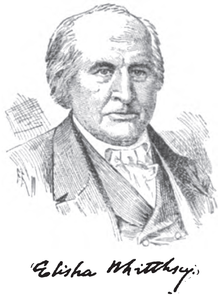
Watrous came to the La Pointe as a trader associated with the Nettleton brothers and was also connected to more powerful Minnesota traders. He obtained his post not through merit, but through the political maneuverings of Elisha Whittlesey, a family friend and powerful Ohio representative. His 1851 letters suggest, however, that his motives and lies weren’t only due to corruption. It had become personal for him to see the removal through, even after the Ojibwe had made it clear they would never go back to Sandy Lake. He repeatedly asked Saint Paul and Washington for troops to assist with the removal, but he appears to have been the only one interested in taking that dangerous step.
We asked him by what authority he requested us to remove. He said it was the order of our Great Father himself, and if we did not promptly obey we should soon see soldiers here to compel us to go. He said we were not required to go any farther that Fon du Lac, on to our own land, and if we would go there, he promised us, that when we should arrive, we should find our money ready for us, and that farms should be opened, and stores of provisions be laid in, and every thing be provided by which we should be made comfortable and happy. He wished us to go to Fon du Lac with our families and go to Sandy Lake for our payment. We said we should not go there–when we die we will lay our bones at La Pointe. We told him if he would pay us well, we would go to Fon du Lac and no farther. He said he would pay us our money at Fon du Lac both our last years payment, and this years, but the goods had been ordered to Sandy Lake and could not be carried to Fon du Lac. He promised our Chief Buffalo, that he should go to Washington to see our Great Father that he might hear with his own ears his words and tell him all about our affairs. He said he himself would go with our Chief, pay his expenses to Washington and back again, and would take good care of the indians and see that they were well fed during our Chief’s absence. We went to Fon du Lac but we were not fed well. Our rations which were given us for four days were not enough for two, and to make them last, we could eat but once a day. We told our Agent that we had come and now wanted our money.
The consensus of the Lake Superior bands was to not remove to the Mississippi. Efforts were made to relocate to British Canada, Armstrong suggests some wanted to fight the United States, and others held out hope for a meeting with the president. However, the repeated message was that it was better to die in one’s own country than at Sandy Lake.
He asked us if we had all come, and brought our things with us. We told him we had not brought our kettles and some of our friends we had left behind sick. He said he should pay only those that had come and brought their things with them to stay. At the next council, we told him we wanted our last years payment, that our children were cold and we had no money to buy their clothing. He said he could not pay us till all the Indians had arrived, which were still behind. At the next council we took our half breed friends with us, and asked him to show us the letter in which our Great Father had instructed him how to make the payment. He said he should not do it, but should do as he himself pleased and immediately left the council. We went to him again and told him we were then going home and should not come there to suffer and be deceived again. We had been to him four times, and had received the same answer–he could not pay us. He had repeatedly said before we left La Pointe, that we should have our money payment as soon as we should arrive at Fon du Lac. He told us that if he did not fulfill his pledges we should have full liberty to return again to our own homes. We did not see them fulfilled. And when we saw that every thing was contrary to what we expected, and to what the Agent had promised, we arose and returned home, but not until he had left, and there was no more hope of our expectations being fulfilled. Believe these words, our Father, which we have spoken about our Agent, that it is in consequence of what he has done, that we are so poor. Our women and children do indeed cry, our Father, on account of their suffering from cold and hunger.
The “Great Father” language of ritual kinship can be off-putting when you first enter the world of historical speeches and negotiations. However, this “fur-trade theater” should not be mistaken for weakness or groveling. See H. Paap, Red Cliff Wisconsin. The delegation to Washington was made in the spring of 1852 without official sanction. William Warren was too sick to act as interpreter, so the ninety-plus year-old Buffalo brought Vincent Roy Jr. and Benjamin Armstrong as interpreters. Initially, they had to pay their own way, partially through public displays of Ojibwe culture. William W. Warren has a mixed legacy in the removal efforts, first supporting it, then working for it, and finally leading much of the charge against it. Watrous ascribed this change of heart to Warren being a stooge of Henry M. Rice, but Theresa Schenck’s William W. Warren: the Life, Letters, and Times of an Ojibwe Leader<. paints a more nuanced picture. Schenck's work may be the best scholarly study of the era.
You, our Father, are at the head of all authority, and you have it in your power to redress all our grievances. We wish to have our future payments made at La Pointe as they formerly were. We wish to have our Farmers, carpenters, Blacksmiths, & Teachers restored to us, and we be permitted to remain here where we were promised we might live, as long as we were not in the way of the whites. We wish to be remunerated for the losses we suffered at Sandy Lake. We ask for not one shilling more than any honest man will say we ought to receive. And finally, that our affairs may be properly investigated and justice be done us, we wish that a delegation of our own choice, in connection with any that you may wish to send for, may be permitted to visit Washington. Especially, would we like to have our friend and half breed child Wm. W. Warren go. In his truth and friendship, we have confidence. He is well acquainted with our affairs and he has ever advised us to listen to the words of our Great Father. One thing more. The indians are especially displeased at seeing the Agent intimate with the traders. The goods and money of the indians, are deposited in their stores. They are the constant advisers of the Agent and we fear extensively control his conduct. We wish our goods and money would be deposited some where else and the Agent have for his counsellors a more disinterested class of persons.
Kicheueshki. Chief. X his mark
Gejiguaio X “
Kishkitauʋg X “
Misai X “
Aitauigizhik X “
Kabimabi X “
Oshoge, Chief X “
Oshkinaue, Chief X “
Medueguon X “
Makudeua-kuʋt X “
Na-nʋ-ʋ-e-be, Chief X “
Ka-ka-ge X “
Kui ui sens X “
Ma-dag ʋmi, Chief X “
Ua-bi-shins X “
E-na-nʋ-kuʋk X “
Ai-a-bens, Chief X “
Kue-kue-Kʋb X “
Sa-gun-a-shins X “
Ji-bi-ne-she, Chief X “
Ke-ui-mi-i-ue X “
Okʋndikʋn, Chief X “
Ang ua sʋg X “
Asinise, Chief X “
Kebeuasadʋn X “
Metakusige X “
Kuiuisensish, Chief X “
Atuia X “
Gete-kitigani[inini? manuscript torn]
The text of the letter is neither written in Rev. Leonard Wheeler’s nor Rev. Sherman’s Hall’s handwriting, but the signatures are recorded in Wheeler’s. The fact that the two Protestant missionaries wrote separate statements here, shows the rift in the A.B.C.F.M. community over the removal. Wheeler was in favor of speaking out directly against the government in what he saw as a moral injustice. He made life difficult for Watrous, who complained to his superiors that Wheeler should be like Hall and stay out of politics. Hall, with his aloof nature, was much more tentative, not wanting to make waves and potentially jeopardize the mission’s government contract to run a manual labor school for the Ojibwe. Hall was present at Sandy Lake in the winter of 1850. Wheeler spent that winter visiting family in New England. Had the situations been reversed, the Ojibwe would have had a much more effective advocate in the circles of influence in the East. Charles Pulsifer was the mission teacher, and Henry Blatchford (a.k.a. Francois Descarreaux) was the mission’s interpreter.
We hereby certify that the above document is authentic, having been written at the special request of those whose names are attached to it.
L. H. Wheeler
We the undersigned, certify, on honor, that the above document was shown to us by the Buffalo, Chief of the Lapointe band of Chippeway Indians and that we believe, without implying and opinion respecting the subjects of complaint contained in it, that it was dictated by, and contains the sentiments of those whose signatures are affixed to it.
S. Hall
C. Pulsifer
H. Blatchford
When I started Chequamegon History in 2013, the WordPress engine made it easy to integrate their features with some light HTML coding. In recent years, they have made this nearly impossible. At some point, we’ll have to decide whether to get better at coding or overhaul our signature “blue rectangle” design format. For now, though, I can’t get links or images into the blue rectangles like I used to, so I will have to list them out here:
Rev. William T. Boutwell, a Protestant missionary turned Indian trader, was Watrous’ supervisor of the 1851 removal efforts
Chequamegon History has looked into the “Great Father” fur trade theater language of ritual kinship before in our look at Blackbird’s speech at the 1855 Payment. You may have noticed Makadebines (Blackbird) didn’t sign this letter. He was working on a different plant to resist removal. Look for a related post soon.
If you’re really interested in why the president was Gichi-noos (Great Father), read these books:
Watrous, and many of the Americans who came to the Lake Superior country at this time, were from northeastern Ohio. Watrous was able to obtain and keep his position as agent because his family was connected to Elisha Whittlesey.
Before you ask, yes, Elisha was related to Charles and Asaph Whittlesey.
Last spring, during one of the several debt showdowns in Congress, I wrote on how similar antics in Washington contributed to the disaster of 1850. My earliest and best understanding of the 1850-1852 timeline, and the players involved, comes from this book:
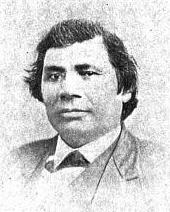
Giishkitaawg “Cut Ear” of Bad/Montreal River–not to be confused with others of the same name. (British Museum)Vincent Roy Jr. From C. Verwyst’s Life and Labors of Rt. Rev. Frederic Baraga, First Bishop of Marquette, Mich: To which are Added Short Sketches of the Lives and Labors of Other Indian Missionaries of the Northwest
One of my first posts on the blog involved some Sandy Lake material in the Wheeler Family Papers, written by Sherman Hall. Since then, having seen many more of their letters, I would change some of the initial conclusions. However, I still see Hall as having committing a great sin of omission for not opposing the removal earlier. Even with the disclaimer, however, I have to give him credit for signing his name to the letter this post is about. Although they shared the common goal of destroying Ojibwe culture and religion and replacing it with American evangelical Protestantism, he A.B.C.F.M. mission community was made up of men and women with very different personalities. Their internal disputes were bizarre and fascinating.





 Chequamegon History